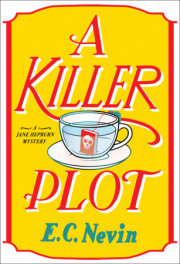
Download high-resolution image
Listen to a clip from the audiobook
audio pause button
0:00
0:00

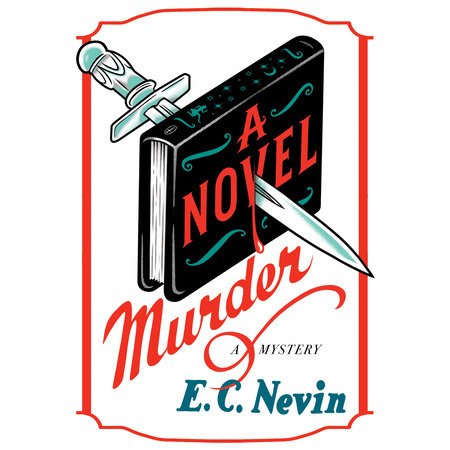
A Novel Murder

A Mystery

Listen to a clip from the audiobook
audio pause button
0:00
0:00
Audiobook Download
On sale Jun 17, 2025 | 10 Hours and 26 Minutes | 9798217078394

See Additional Formats
Welcome to the Killer Lines Crime Fiction Festival, the place for star writers of the genre to meet their adoring fans. But be careful—this year the murders aren’t just on the page.

"Funny, sharply observed and fiendishly clever" —Jennie Godfrey, author of The List of Suspicious Things


In the quaint English town of Hoslewit, the biggest names in crime writing have congregated to celebrate all things bookish and murderous. Author Jane Hepburn is determined to make her time at the Killer Lines festival worthwhile. This is her chance to change her fortunes and make her fictional Private Detective Baker a household name. And if she has to resort to sneaking into the book tent after hours to rearrange some books so hers are front and center, so be it. 

But when Jane encounters the dead body of renowned (and reviled) literary agent Carrie Marks, the festival takes on a decidedly different tone. Joined by Carrie's newest client, debut novelist Natasha Martez, and the agency's hapless intern, Daniel Thurston, Jane decides to put her fictional sleuthing skills to use in the real world—she's going to solve the murder. But the list of suspects is long: seemingly everyone at the festival has a motive to kill Carrie, and the more Jane and her new friends investigate, the closer they come to a dangerous truth—one that’s stranger than fiction.
Chapter One

One day earlier: Thursday, 11 a.m.

“You’re an author? Are you sure? I don’t have you on my list.”

Jane’s face burns, but she forces herself to keep her head up, even as she feels her kitten heels start to sink into the grass. The line of authors, publishing professionals, and avid crime-fiction fans waiting to enter day one of the Killer Lines Crime Fiction Festival is lengthening behind her. Two women nearby stop their conversation to listen in.

“Yes. I’m sure.”

“Hmm. Jane Hopper, yeah?” The woman handing out lanyards looks barely older than a teenager. Blonde, beautiful, fresh-faced, well-spoken—the kind of person who has the world at their feet without even realising it. She glances up from her clipboard with one perfect caterpillar of an eyebrow raised in a question mark.

“No, it’s Jane Hepburn? With Eagle Wing Books?” Jane hates how she phrases everything as a question when she is nervous, which is most of the time. She takes a deep breath. “I’m with Eagle Wing Books.”

The blonde looks back down at her clipboard, furrowing her caterpillars and performatively running a pink nail down the row of names. “Nope. Sorry. I’m afraid you’re not on here.” She cocks her head and pouts her lips in pity, as if telling a child it can’t stay up past bedtime today. Jane smoulders with humiliation, feeling her body tip slowly back as she sinks further into the mud.

“My editor may have forgotten to add me?” It comes out as a whisper; the little confidence there once was draining away. “She is very busy. Can I come in as a guest for now? I’m sure I can sort it when I find her?”

“Sure! Then it’ll be £175 for the weekend pass.” The keeper of the lanyards stabs the jaw-dropping number into her card reader with a smile, and holds it up for Jane to tap. Fishing around in her bag for her ancient iPhone, Jane furiously hopes that the payment will go through. “Insufficient Funds” would be a mortification too far.

Thankfully, it dings a happy tone, approved flashing up on the screen. She’ll try and claim this back from Eagle Wing as soon as she can get hold of her elusive editor, Frankie Reid. Besides, Jane has plans for this weekend that should mean she will see a return on the investment. These next few days will be the making of her, she has a feeling.

As a child, Jane Hepburn had rather fancied becoming a spy, or else a private detective. There would be clingy red dresses, dry martinis and late nights. She’d have trysts with handsome yet morally bankrupt men, from whom she’d coax information before disappearing into the darkness. Long days would be spent tailing people through parks and down busy streets, dodging commuters while wrapped in an elegant camel-coloured trench coat, low heels clicking on the pavement.

However, on reaching adulthood, Jane realised she had grown to fit her name: plain. Too plain for a successful honey trap, and—at six foot tall and as broad as a builder—without the figure for the clinging red dress. Consequently, she’d shut the door on that particular dream, and never mentioned it to a living soul.

Briefly, she’d considered becoming a police officer instead, but that plan was knocked on the head after meeting a harried and furious constable at a school careers day.

“Don’t do it,” Jane had been told by PC Imogen Ross.

“Aren’t you supposed to be persuading us to join?”

“I’m supposed to be giving advice on careers to young people. And my advice is, don’t join the police force. Long hours, shite pay, and mostly you’ll either be telling drunk blokes to put their trousers back on, or filling out tedious forms. Don’t even get me started on traffic duty, which is dull as the proverbial ditchwater.”

PC Ross had wild, wide eyes, and had waved the official police force brochure around violently, hitting a passing student on the ear. “Be an investment banker. Be rich. Or a teacher, if you want to do good. Just not this!”

Looking back, it seemed the woman had been having some sort of mental breakdown, and perhaps Jane should have consulted other police sources. But it’s too late now.

She even studied Criminology at university for a term, until she dropped out and returned to the security of living at home with her mother. It seemed the life of a student hadn’t quite suited her either.

Jane has cycled through multiple versions of her dream to catch criminals and live a life of high glamour. And, at the age of 42, she has been disappointed many times over.

For the past nine years, Jane has been, as well as a full-time admin assistant in a company that insures white goods, a writer of detective novels. No, you probably wouldn’t have heard of her; no, she doesn’t know J. K. Rowling; no, none of her books are being made into a film; and no to almost every other question she is asked repeatedly in taxis and at parties or any other time she tells someone what she does. At least she is a writer though. She is proud of that fact.

But now, she thinks to herself as she pulls the yellow lanyard reading guest over her head, rather than the green one reading author, apparently she isn’t even that.

The Killer Lines Crime Fiction Festival has been running for 32 years now. Through rain or shine, fans and professionals have arrived in Hoslewit, booking hotel rooms and B&Bs—even, occasionally, bringing tents—ready to drink, talk and read.

If they are blessed with sunshine, the party mostly takes place outside. But when the festival falls on a rainy weekend—this is England after all—the crowd forces its way into the bar of the Dog and Bone Inn, the pub-cum-hotel at the heart of the festival, where the famous Killer Lines dagger glints above the outer door. The air smells of damp wool, and the noise rises to an almost unbearable pitch as people edge around each other, spilling pints of pale ale and Sauvignon Blanc on their way back to their tables. Devoted smokers huddle under the large willow tree outside, pulling up their hoods against the spring rain, and sharing gossip.

The Dog is an unassuming name for what was once a rather impressive building. In its day, it would have looked more like a King’s Head, or a Swan, or even a Grand. But almost as if it predicted its own future, it’s always been the Dog, a name that now perfectly suits its scruffy, down-at-heel appearance. In the eighties an extension was added on to the original bar and back rooms, to turn the once enchanting pub into a bigger building with far more space and far less charm.

Despite the peeling wallpaper and outdated carpets, it still looks out over an impressively picturesque vista: a large, bright green lawn—currently scattered with publishers setting up stalls of books—surrounded by carefully tended hedges. Beyond the lawn, fields roll into the distance like an ocean. It reminds Jane, powerfully, of Teletubbies.

Ever since she’s been writing crime novels, she has considered attending Killer Lines. Each year, as the month arrives, she has excused herself from it—too busy, can’t take the time off, there’s no point anyway. Despite Hoslewit only being a short train journey from her home, there is always some reason. But really, she has never come before because she is scared.

This year, however, she has finally made it, and is pleased to see the sky is bright, the grass lush, and Hoslewit coming alive with the love of books. The reason for Jane’s newfound courage is twofold. First, there was the death of her mother, to whom she was exceptionally close. Without her presence, Jane’s life became even smaller and quieter than it had previously been. Realising she’d spent two weeks solid without communicating with anyone, other than emailing people about dishwasher insurance, and subsequently finding herself talking animatedly to a pot plant in her living room, pushed her over the edge.

Second, neither her agent nor her editor has replied to her for two months, and this seemed like the perfect place to pin them down while also making brand-spanking-new contacts. Officially, you see, the whole point of the Killer Lines Crime Fiction Festival is to watch authors answer questions on panels, raise awareness of upcoming titles, and celebrate books. But unofficially, it is a networking event. And, green lanyard or not, Jane is going to network her socks off.

She is currently weighed down with tote bags. She’s brought one full of her own novels, in case someone important wants a copy, and her laptop, thinking that if and when she fails to make friends, she can hide in a corner and get some writing done. Who knows? Maybe she’ll give the impression of being an author suddenly struck with inspiration rather than an awkward social pariah.

Through the entrance now, Jane pauses to untangle her belongings and put away her phone, trying to calm herself down about the money spent by hyping herself up for what is to come. As she is starting to fantasise about who she will thank first when she finally wins the Booker Prize—her late mother? Is that touchingly down to earth or a little pathetic?—someone smacks into her from behind, sending her notepad and festival programme flying.

“Keep it moving, love! Honestly . . .” grumbles the man, stalking past in a blue-and-white striped shirt so tightly tucked into his belted chinos that it frames the perfectly round baby bump of his beer belly.

Jane pulls her heels out of the mud again and tiptoes to the concrete path at the edge of the grass, bending to scrabble for her pen and notebook in the hedge. Why had she worn heels anyway? Anything that accentuates her height is a bad idea, but she’d wanted to look professional, and she’d forgotten about the grass.

“Janet,” squeaks a tiny voice from somewhere. “Is that right?”

“It’s Jane.” With a sigh, she turns to find a woman, or girl really, peering at her, half concealed by the bushy hedge. As the stranger steps out onto the path, Jane notes that she is immaculately dressed in the publishing uniform of flowing, floral dress and bright white platform trainers, but her mousy hair is frizzing in the mild heat, and her lipstick, a cheap bright pink, has smudged onto her chin. Jane immediately feels a kinship with her.

“Jane! Yes, of course, sorry. I’m a bit all over the place. Here.” She hands Jane the festival programme that had become lodged in the hedge. “I don’t think we’ve met, but I’m the assistant at the Marks Literary Agency. I think I recognise you from Carrie’s client list? Oh, and it’s Abi by the way!” She laughs awkwardly and gulps at what looks like a plastic cup of Pimm’s. “Gosh, you’re tall, aren’t you?”

“I’m surprised my photo is still on Carrie’s list, to be honest with you,” Jane mutters, ignoring the comment on her height and accepting the programme.

“You’ve got a new agent?”

Jane hadn’t meant to say that out loud. She really has been alone too long. “No, I just haven’t heard from her in a while. I wasn’t sure . . . Never mind. Anyway. Nice to meet you, Abi.”

“Books not selling well?”

Jane takes a half step back in surprise, almost sending her whole body into the hedge this time. One thing she has learnt over the years is that no one in this industry actually says what they mean, especially if it is unpleasant. Her editor, for example, is always telling Jane how excited she is to read her work, but then won’t respond for months. Jane finds herself matching Abi’s refreshing honesty in a whisper. “You could say that.”
"A fun and well plotted murder mystery with a hugely engaging author amateur sleuth, Jane Hepburn. A great debut by E. C Nevin." —C. L. Miller, USA Today bestselling author of The Antique Hunter’s Guide To Murder.

"Wickedly funny modern cosy with so many twists you'll get whiplash." —Ian Moore, author of Death and Croissants

“With a sympathetic protagonist and a cast of suitably obnoxious suspects, E.C. Nevin's eviscerating portrait of modern publishing is couched within an immensely readable mystery. Rarely will the industry feel so seen. A wicked, wicked book.” —Vaseem Khan, author of The Unexpected Inheritance of Inspector Chopra

"The pseudonymous Nevin, a former publishing professional, has written a fun, tongue-in-cheek debut that spoofs the publishing industry and social media’s impact (BookTok, anyone?). . . . Jane is a delight. Readers will root for the lonely sleuth as she makes new friends and develops joyful self-confidence. . . . An appealing cozy star is born." Kirkus Review

"With its cozy bookish setting and mystery-writer protagonist, this will be a hit with fans of Janice Hallett and Robert Thorogood." Library Journal

"E.C. Nevin transports readers to a lethal literary festival in, A Novel Murder. . . . E.C. Nevin is a pseudonym for a former publishing professional who worked with crime novels and thrillers. That knowledge shapes A Novel Murder, where every character is connected to the literary industry in some way. Nevin threads humor throughout the novel, too, creating a winning combination in this debut cozy mystery."BookPage

"An entertaining whodunit centered on 40- something mystery author Jane Hepburn. . . . With a well-rounded list of suspects and [a] lovably flawed heroine. Cozy fans will hope this is the start of a new series." Publishers Weekly
© Courtesy of the author
E. C. NEVIN is a pseudonym for an ex–publishing professional. E.C. worked for large trade publishers focusing on crime/thriller publishing and established brands. View titles by E. C. Nevin

About

Welcome to the Killer Lines Crime Fiction Festival, the place for star writers of the genre to meet their adoring fans. But be careful—this year the murders aren’t just on the page.

"Funny, sharply observed and fiendishly clever" —Jennie Godfrey, author of The List of Suspicious Things


In the quaint English town of Hoslewit, the biggest names in crime writing have congregated to celebrate all things bookish and murderous. Author Jane Hepburn is determined to make her time at the Killer Lines festival worthwhile. This is her chance to change her fortunes and make her fictional Private Detective Baker a household name. And if she has to resort to sneaking into the book tent after hours to rearrange some books so hers are front and center, so be it. 

But when Jane encounters the dead body of renowned (and reviled) literary agent Carrie Marks, the festival takes on a decidedly different tone. Joined by Carrie's newest client, debut novelist Natasha Martez, and the agency's hapless intern, Daniel Thurston, Jane decides to put her fictional sleuthing skills to use in the real world—she's going to solve the murder. But the list of suspects is long: seemingly everyone at the festival has a motive to kill Carrie, and the more Jane and her new friends investigate, the closer they come to a dangerous truth—one that’s stranger than fiction.

Excerpt

Chapter One

One day earlier: Thursday, 11 a.m.

“You’re an author? Are you sure? I don’t have you on my list.”

Jane’s face burns, but she forces herself to keep her head up, even as she feels her kitten heels start to sink into the grass. The line of authors, publishing professionals, and avid crime-fiction fans waiting to enter day one of the Killer Lines Crime Fiction Festival is lengthening behind her. Two women nearby stop their conversation to listen in.

“Yes. I’m sure.”

“Hmm. Jane Hopper, yeah?” The woman handing out lanyards looks barely older than a teenager. Blonde, beautiful, fresh-faced, well-spoken—the kind of person who has the world at their feet without even realising it. She glances up from her clipboard with one perfect caterpillar of an eyebrow raised in a question mark.

“No, it’s Jane Hepburn? With Eagle Wing Books?” Jane hates how she phrases everything as a question when she is nervous, which is most of the time. She takes a deep breath. “I’m with Eagle Wing Books.”

The blonde looks back down at her clipboard, furrowing her caterpillars and performatively running a pink nail down the row of names. “Nope. Sorry. I’m afraid you’re not on here.” She cocks her head and pouts her lips in pity, as if telling a child it can’t stay up past bedtime today. Jane smoulders with humiliation, feeling her body tip slowly back as she sinks further into the mud.

“My editor may have forgotten to add me?” It comes out as a whisper; the little confidence there once was draining away. “She is very busy. Can I come in as a guest for now? I’m sure I can sort it when I find her?”

“Sure! Then it’ll be £175 for the weekend pass.” The keeper of the lanyards stabs the jaw-dropping number into her card reader with a smile, and holds it up for Jane to tap. Fishing around in her bag for her ancient iPhone, Jane furiously hopes that the payment will go through. “Insufficient Funds” would be a mortification too far.

Thankfully, it dings a happy tone, approved flashing up on the screen. She’ll try and claim this back from Eagle Wing as soon as she can get hold of her elusive editor, Frankie Reid. Besides, Jane has plans for this weekend that should mean she will see a return on the investment. These next few days will be the making of her, she has a feeling.

As a child, Jane Hepburn had rather fancied becoming a spy, or else a private detective. There would be clingy red dresses, dry martinis and late nights. She’d have trysts with handsome yet morally bankrupt men, from whom she’d coax information before disappearing into the darkness. Long days would be spent tailing people through parks and down busy streets, dodging commuters while wrapped in an elegant camel-coloured trench coat, low heels clicking on the pavement.

However, on reaching adulthood, Jane realised she had grown to fit her name: plain. Too plain for a successful honey trap, and—at six foot tall and as broad as a builder—without the figure for the clinging red dress. Consequently, she’d shut the door on that particular dream, and never mentioned it to a living soul.

Briefly, she’d considered becoming a police officer instead, but that plan was knocked on the head after meeting a harried and furious constable at a school careers day.

“Don’t do it,” Jane had been told by PC Imogen Ross.

“Aren’t you supposed to be persuading us to join?”

“I’m supposed to be giving advice on careers to young people. And my advice is, don’t join the police force. Long hours, shite pay, and mostly you’ll either be telling drunk blokes to put their trousers back on, or filling out tedious forms. Don’t even get me started on traffic duty, which is dull as the proverbial ditchwater.”

PC Ross had wild, wide eyes, and had waved the official police force brochure around violently, hitting a passing student on the ear. “Be an investment banker. Be rich. Or a teacher, if you want to do good. Just not this!”

Looking back, it seemed the woman had been having some sort of mental breakdown, and perhaps Jane should have consulted other police sources. But it’s too late now.

She even studied Criminology at university for a term, until she dropped out and returned to the security of living at home with her mother. It seemed the life of a student hadn’t quite suited her either.

Jane has cycled through multiple versions of her dream to catch criminals and live a life of high glamour. And, at the age of 42, she has been disappointed many times over.

For the past nine years, Jane has been, as well as a full-time admin assistant in a company that insures white goods, a writer of detective novels. No, you probably wouldn’t have heard of her; no, she doesn’t know J. K. Rowling; no, none of her books are being made into a film; and no to almost every other question she is asked repeatedly in taxis and at parties or any other time she tells someone what she does. At least she is a writer though. She is proud of that fact.

But now, she thinks to herself as she pulls the yellow lanyard reading guest over her head, rather than the green one reading author, apparently she isn’t even that.

The Killer Lines Crime Fiction Festival has been running for 32 years now. Through rain or shine, fans and professionals have arrived in Hoslewit, booking hotel rooms and B&Bs—even, occasionally, bringing tents—ready to drink, talk and read.

If they are blessed with sunshine, the party mostly takes place outside. But when the festival falls on a rainy weekend—this is England after all—the crowd forces its way into the bar of the Dog and Bone Inn, the pub-cum-hotel at the heart of the festival, where the famous Killer Lines dagger glints above the outer door. The air smells of damp wool, and the noise rises to an almost unbearable pitch as people edge around each other, spilling pints of pale ale and Sauvignon Blanc on their way back to their tables. Devoted smokers huddle under the large willow tree outside, pulling up their hoods against the spring rain, and sharing gossip.

The Dog is an unassuming name for what was once a rather impressive building. In its day, it would have looked more like a King’s Head, or a Swan, or even a Grand. But almost as if it predicted its own future, it’s always been the Dog, a name that now perfectly suits its scruffy, down-at-heel appearance. In the eighties an extension was added on to the original bar and back rooms, to turn the once enchanting pub into a bigger building with far more space and far less charm.

Despite the peeling wallpaper and outdated carpets, it still looks out over an impressively picturesque vista: a large, bright green lawn—currently scattered with publishers setting up stalls of books—surrounded by carefully tended hedges. Beyond the lawn, fields roll into the distance like an ocean. It reminds Jane, powerfully, of Teletubbies.

Ever since she’s been writing crime novels, she has considered attending Killer Lines. Each year, as the month arrives, she has excused herself from it—too busy, can’t take the time off, there’s no point anyway. Despite Hoslewit only being a short train journey from her home, there is always some reason. But really, she has never come before because she is scared.

This year, however, she has finally made it, and is pleased to see the sky is bright, the grass lush, and Hoslewit coming alive with the love of books. The reason for Jane’s newfound courage is twofold. First, there was the death of her mother, to whom she was exceptionally close. Without her presence, Jane’s life became even smaller and quieter than it had previously been. Realising she’d spent two weeks solid without communicating with anyone, other than emailing people about dishwasher insurance, and subsequently finding herself talking animatedly to a pot plant in her living room, pushed her over the edge.

Second, neither her agent nor her editor has replied to her for two months, and this seemed like the perfect place to pin them down while also making brand-spanking-new contacts. Officially, you see, the whole point of the Killer Lines Crime Fiction Festival is to watch authors answer questions on panels, raise awareness of upcoming titles, and celebrate books. But unofficially, it is a networking event. And, green lanyard or not, Jane is going to network her socks off.

She is currently weighed down with tote bags. She’s brought one full of her own novels, in case someone important wants a copy, and her laptop, thinking that if and when she fails to make friends, she can hide in a corner and get some writing done. Who knows? Maybe she’ll give the impression of being an author suddenly struck with inspiration rather than an awkward social pariah.

Through the entrance now, Jane pauses to untangle her belongings and put away her phone, trying to calm herself down about the money spent by hyping herself up for what is to come. As she is starting to fantasise about who she will thank first when she finally wins the Booker Prize—her late mother? Is that touchingly down to earth or a little pathetic?—someone smacks into her from behind, sending her notepad and festival programme flying.

“Keep it moving, love! Honestly . . .” grumbles the man, stalking past in a blue-and-white striped shirt so tightly tucked into his belted chinos that it frames the perfectly round baby bump of his beer belly.

Jane pulls her heels out of the mud again and tiptoes to the concrete path at the edge of the grass, bending to scrabble for her pen and notebook in the hedge. Why had she worn heels anyway? Anything that accentuates her height is a bad idea, but she’d wanted to look professional, and she’d forgotten about the grass.

“Janet,” squeaks a tiny voice from somewhere. “Is that right?”

“It’s Jane.” With a sigh, she turns to find a woman, or girl really, peering at her, half concealed by the bushy hedge. As the stranger steps out onto the path, Jane notes that she is immaculately dressed in the publishing uniform of flowing, floral dress and bright white platform trainers, but her mousy hair is frizzing in the mild heat, and her lipstick, a cheap bright pink, has smudged onto her chin. Jane immediately feels a kinship with her.

“Jane! Yes, of course, sorry. I’m a bit all over the place. Here.” She hands Jane the festival programme that had become lodged in the hedge. “I don’t think we’ve met, but I’m the assistant at the Marks Literary Agency. I think I recognise you from Carrie’s client list? Oh, and it’s Abi by the way!” She laughs awkwardly and gulps at what looks like a plastic cup of Pimm’s. “Gosh, you’re tall, aren’t you?”

“I’m surprised my photo is still on Carrie’s list, to be honest with you,” Jane mutters, ignoring the comment on her height and accepting the programme.

“You’ve got a new agent?”

Jane hadn’t meant to say that out loud. She really has been alone too long. “No, I just haven’t heard from her in a while. I wasn’t sure . . . Never mind. Anyway. Nice to meet you, Abi.”

“Books not selling well?”

Jane takes a half step back in surprise, almost sending her whole body into the hedge this time. One thing she has learnt over the years is that no one in this industry actually says what they mean, especially if it is unpleasant. Her editor, for example, is always telling Jane how excited she is to read her work, but then won’t respond for months. Jane finds herself matching Abi’s refreshing honesty in a whisper. “You could say that.”

Reviews

"A fun and well plotted murder mystery with a hugely engaging author amateur sleuth, Jane Hepburn. A great debut by E. C Nevin." —C. L. Miller, USA Today bestselling author of The Antique Hunter’s Guide To Murder.

"Wickedly funny modern cosy with so many twists you'll get whiplash." —Ian Moore, author of Death and Croissants

“With a sympathetic protagonist and a cast of suitably obnoxious suspects, E.C. Nevin's eviscerating portrait of modern publishing is couched within an immensely readable mystery. Rarely will the industry feel so seen. A wicked, wicked book.” —Vaseem Khan, author of The Unexpected Inheritance of Inspector Chopra

"The pseudonymous Nevin, a former publishing professional, has written a fun, tongue-in-cheek debut that spoofs the publishing industry and social media’s impact (BookTok, anyone?). . . . Jane is a delight. Readers will root for the lonely sleuth as she makes new friends and develops joyful self-confidence. . . . An appealing cozy star is born." Kirkus Review

"With its cozy bookish setting and mystery-writer protagonist, this will be a hit with fans of Janice Hallett and Robert Thorogood." Library Journal

"E.C. Nevin transports readers to a lethal literary festival in, A Novel Murder. . . . E.C. Nevin is a pseudonym for a former publishing professional who worked with crime novels and thrillers. That knowledge shapes A Novel Murder, where every character is connected to the literary industry in some way. Nevin threads humor throughout the novel, too, creating a winning combination in this debut cozy mystery."BookPage

"An entertaining whodunit centered on 40- something mystery author Jane Hepburn. . . . With a well-rounded list of suspects and [a] lovably flawed heroine. Cozy fans will hope this is the start of a new series." Publishers Weekly

Author

© Courtesy of the author
E. C. NEVIN is a pseudonym for an ex–publishing professional. E.C. worked for large trade publishers focusing on crime/thriller publishing and established brands. View titles by E. C. Nevin
  • More Websites from
    Penguin Random House
  • Common Reads
  • Library Marketing