Close Modal
Download high-resolution image Look inside
Listen to a clip from the audiobook
audio pause button
0:00
0:00

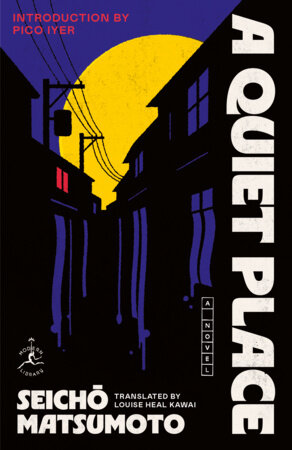
A Quiet Place

A Novel

Translated by Louise Heal Kawai
Introduction by Pico Iyer
Look inside
Listen to a clip from the audiobook
audio pause button
0:00
0:00
An artfully twisty psychological mystery from Seichō Matsumoto, hailed as “Japan’s Agatha Christie” (The Sunday Times), exploring the corrosive power of jealousy, guilt, and doubt

While on an important business trip, Tsuneo Asai receives word that his wife, Eiko, has died suddenly of a heart attack. She had long suffered from heart problems, so the news is not entirely unexpected—though she was far too young for such an end. Shaken but restrained, Asai throws himself into his work as a government official, using routine and responsibility to keep grief at bay. Their marriage, after all, had never been especially passionate.

Yet something about the circumstances of Eiko’s death begins to trouble him. She collapsed while walking alone on a quiet residential street in Tokyo—a place where she seemed to have no reason to be. A visit to the small shop where she died raises further questions, especially when Asai notices a hotel perched at the top of the hill, unmistakably designed as a discreet rendezvous for lovers. He begins to wonder whether his gentle, haiku-loving wife may have been leading a secret life.

As Asai’s suspicions deepen, his mental state begins to unravel, and the boundaries of normalcy slip away. In the process, Matsumoto lays bare the fraught tensions between ambition, domestic life, and emotional repression in postwar Japan—crafting a haunting portrait of a man undone by what he cannot know.
1

Tsuneo Asai was on a business trip to the Kansai region when he heard the news.

Around 8:30 in the evening, he was having dinner and drinks in the banquet room of a high-­class restaurant with businessmen from the food industry. Asai was a section chief in the Staple Food Department of the Ministry of Agriculture and Forestry. He’d arrived in Kobe the day before, accompanying the ministry’s brand-­new director general on a tour of inspection. It had only been a month since Director-­General Shiraishi had been promoted from a different department, and he wasn’t very familiar with the practicalities of the job as yet. For the past couple of days, he and Asai had been visiting canning facilities and ham-­processing plants in the Osaka–­Kobe area, and were off to Hiroshima the next day. This evening they were enjoying the hospitality of some of the local business owners.

The evening was starting to wind down. Shiraishi, who was three years Asai’s senior, was sitting across from the chairman of the Food Manufacturers’ Association. The two men were discussing golf. The director general was known for his low handicap. In addition, he was an expert at shogi—­Japanese chess—­and Go, and a legend within the ministry for his mah-­jong skills. Asai was at his side, sipping sake, pretending to be absorbed in his boss’s story. He believed that listening faithfully to one’s manager’s idle chit-­chat was a mark of respect. Shiraishi’s voice was getting louder, oiled by the whiskey he was drinking. He’d made director general by the age of ­forty-­five—­a rapid rise through the ranks. Unlike Asai, Shiraishi had graduated from the law department of the elite Tokyo University, and was a favorite of the vice-­minister, leader of one of the ministry’s main political factions.

In advance of the personnel change, Asai had approached the manufacturers to warn them that the incoming director general was only planning a two-­year—­well, maybe as little as a year and a half—­temporary stopover in the post before transferring back into one of the ministry’s mainstream departments, and wouldn’t be putting much effort into the job.

“He won’t be at all familiar with the business side of things,” Asai explained. “But don’t worry; he’ll rely on me for everything. Leave him to me. Now, it’s possible he might try to pull off some sort of impressive stunt to draw more attention to himself, but I’ll be right there as a guide. I’ll be able to rein him in, don’t you worry.”

The manufacturers, anxious to gain their government certification, were all too happy to defer to Asai’s veteran experience. Asai had developed a pretty cozy relationship with them, but he never let it show while Director-­General Shiraishi was around. Shiraishi had spent his free time at Tokyo University brushing up on his Go, shogi, mah-­jongg, and golf; Asai, the kid from a poor family who’d struggled to graduate from a small private university and work his way up through the civil service ranks, was an entirely different species.

There were also about twenty geishas in attendance; the life and soul of the party knelt on a cushion across from the director general. It turned out that she was a golfer too, and she’d joined in their conversation about scores. The party was starting to wind down, and her placement directly opposite Shiraishi looked suspiciously like the work of the vice-­chairman of the local Association of Food Manufacturers, Mr. Yagishita. At least that was what Asai reckoned. Yagishita was a big name in the ham-­ and sausage-­manufacturing business. A little while earlier, Asai had seen him carefully observing the director general’s reaction to the geisha. He must have now got up from his spot by the chairman and come around to whisper in Asai’s ear.

But it wasn’t Yagishita who was whispering in his ear. It was one of the waitresses.

“There’s a telephone call for you from Tokyo.”

Asai didn’t get up right away. It would be disrespectful to the director general for him to rush off. He picked up his cup of sake from the table and took a sip. Still feigning interest in his boss’s golfing tale, he wondered what could be so important for someone to call him this late. He’d been on all kinds of business trips, but his wife, Eiko, practically never called him. And she was his only family member. Whenever Asai went off on a long trip, she would invite her younger sister to stay and keep her company. This was a five-­day trip, so Asai’s sister-­in-­law ought to be there. He could think of no reason for Eiko to need to get in touch with him. He’d been out during the day, of course, but what could possibly be so urgent for her to call the restaurant?

After about a minute, Asai rose slowly from his floor cushion. His boss was facing away from him, in conversation with the chairman. The geisha glanced his way, but quickly turned her attention back to the director general. Around twenty-­seven or -­eight, round-­cheeked, she was definitely Shiraishi’s type.

Outside the party room, Asai followed the waitress along the corridor, around two corners to a glass-­doored telephone booth. The receiver was off the hook.

“Hello, it’s me,” he began, but there was no one on the other end. His heart began to beat harder. He could hear other voices in the background, too faint to make out the words, but there was definitely some sort of commotion. Close by, he thought he could hear a woman sobbing. He recognized it as the voice of his sister-­in-­law, Miyako. That was why there had been no response—­Miyako was in tears.

“Miyako! What’s the matter?” There was a slight tremor in his voice. He realized that something must have happened to Eiko for her not to come to the phone in person.

“Eiko’s . . .”

Asai couldn’t really follow the rest. Miyako was so emotional it was hard to tell whether she was laughing or crying.

Then he thought he made out the word “dead.”

“What?” he asked. “What did you say?”

“Eiko’s dead.”

“Dead? Are you sure?”

A waitress passed by in the corridor outside the glass booth. The door was tightly closed, and she didn’t even glance at him.

“When?”

Miyako’s speech was distorted by a huge wave of sobbing.

“Just over four hours ago.”

She’d been dead for more than four hours, and he was only just hearing about it? When he left for his trip he’d made sure to write down his schedule and the telephone numbers of the hotels he’d be staying at. Miyako would have called the hotel and been given the number of the restaurant. She should have called him here right away. There must have been an accident—­that would have caused a delay. And it couldn’t have happened at home—­she must have died elsewhere, otherwise Miyako would have called him immediately. But if they’d taken her to the hospital, surely someone would have called to let him know.

“Was it a traffic accident?” he asked.

“It’s me.” Eiko’s father was on the line. “No, not a traffic accident.”

So his father-­in-­law had already arrived from the suburbs.

“She had a heart attack. It was very sudden.”

Asai’s seventy-­year-­old father-­in-­law sounded shaken. He couldn’t stop coughing.

“She was walking in the street, was suddenly overcome with pain, and collapsed in a nearby shop. The owner called Miyako and she got a taxi straight there, but it was already too late.”

“Did the shopkeeper call an ambulance?”

Asai was struggling to keep his emotions under control.

“No, she didn’t. There was a private clinic about two hundred yards away, so she got the doctor to come right over, but Eiko’s heart had already stopped beating.”

Eiko had a weak heart. She’d already suffered a mild heart attack two years ago.

“Where is she now?”

“They brought her back to the house about an hour ago. Miyako called your hotel to find out where you were.”

He could still hear Miyako weeping, and what sounded like his brother-­in-­law in the background, too.

“So what train will you be coming back on?” Eiko’s father asked.

“There won’t be any more bullet trains this evening. I’ll fly back if I can make it to the airport in time. Otherwise it’ll be the overnight train that gets into Tokyo in the morning.”

“We’ll all be waiting. I just can’t believe it. It’s such a shock. You should . . .”

His father-­in-­law had been going to tell him to try to stay calm and come home, but his voice petered out. It was almost as if the pain of causing trouble for his son-­in-­law was harder to deal with than the death of his daughter.

Asai left the telephone booth and called over one of the waitresses.

“Can I make it to the airport to catch a Tokyo flight tonight?”

The waitress folded back the violet-­colored sleeve of her kimono and looked at her wristwatch.
Seicho Matsumoto was born in 1909 in Fukuoka, Japan. Self-educated, Matsumoto published his first book when he was forty-one years old and he quickly established himself as a master of crime fiction. His exploration of human psychology and Japanese post-war malaise, coupled with the creation of twisting, dark mysteries, made him one of the most acclaimed and bestselling writers in Japan. He received the prestigious Akutagawa Literary Prize in 1953 and the Kikuchi Kan Prize in 1970. He died in 1992.​

About

An artfully twisty psychological mystery from Seichō Matsumoto, hailed as “Japan’s Agatha Christie” (The Sunday Times), exploring the corrosive power of jealousy, guilt, and doubt

While on an important business trip, Tsuneo Asai receives word that his wife, Eiko, has died suddenly of a heart attack. She had long suffered from heart problems, so the news is not entirely unexpected—though she was far too young for such an end. Shaken but restrained, Asai throws himself into his work as a government official, using routine and responsibility to keep grief at bay. Their marriage, after all, had never been especially passionate.

Yet something about the circumstances of Eiko’s death begins to trouble him. She collapsed while walking alone on a quiet residential street in Tokyo—a place where she seemed to have no reason to be. A visit to the small shop where she died raises further questions, especially when Asai notices a hotel perched at the top of the hill, unmistakably designed as a discreet rendezvous for lovers. He begins to wonder whether his gentle, haiku-loving wife may have been leading a secret life.

As Asai’s suspicions deepen, his mental state begins to unravel, and the boundaries of normalcy slip away. In the process, Matsumoto lays bare the fraught tensions between ambition, domestic life, and emotional repression in postwar Japan—crafting a haunting portrait of a man undone by what he cannot know.

Excerpt

1

Tsuneo Asai was on a business trip to the Kansai region when he heard the news.

Around 8:30 in the evening, he was having dinner and drinks in the banquet room of a high-­class restaurant with businessmen from the food industry. Asai was a section chief in the Staple Food Department of the Ministry of Agriculture and Forestry. He’d arrived in Kobe the day before, accompanying the ministry’s brand-­new director general on a tour of inspection. It had only been a month since Director-­General Shiraishi had been promoted from a different department, and he wasn’t very familiar with the practicalities of the job as yet. For the past couple of days, he and Asai had been visiting canning facilities and ham-­processing plants in the Osaka–­Kobe area, and were off to Hiroshima the next day. This evening they were enjoying the hospitality of some of the local business owners.

The evening was starting to wind down. Shiraishi, who was three years Asai’s senior, was sitting across from the chairman of the Food Manufacturers’ Association. The two men were discussing golf. The director general was known for his low handicap. In addition, he was an expert at shogi—­Japanese chess—­and Go, and a legend within the ministry for his mah-­jong skills. Asai was at his side, sipping sake, pretending to be absorbed in his boss’s story. He believed that listening faithfully to one’s manager’s idle chit-­chat was a mark of respect. Shiraishi’s voice was getting louder, oiled by the whiskey he was drinking. He’d made director general by the age of ­forty-­five—­a rapid rise through the ranks. Unlike Asai, Shiraishi had graduated from the law department of the elite Tokyo University, and was a favorite of the vice-­minister, leader of one of the ministry’s main political factions.

In advance of the personnel change, Asai had approached the manufacturers to warn them that the incoming director general was only planning a two-­year—­well, maybe as little as a year and a half—­temporary stopover in the post before transferring back into one of the ministry’s mainstream departments, and wouldn’t be putting much effort into the job.

“He won’t be at all familiar with the business side of things,” Asai explained. “But don’t worry; he’ll rely on me for everything. Leave him to me. Now, it’s possible he might try to pull off some sort of impressive stunt to draw more attention to himself, but I’ll be right there as a guide. I’ll be able to rein him in, don’t you worry.”

The manufacturers, anxious to gain their government certification, were all too happy to defer to Asai’s veteran experience. Asai had developed a pretty cozy relationship with them, but he never let it show while Director-­General Shiraishi was around. Shiraishi had spent his free time at Tokyo University brushing up on his Go, shogi, mah-­jongg, and golf; Asai, the kid from a poor family who’d struggled to graduate from a small private university and work his way up through the civil service ranks, was an entirely different species.

There were also about twenty geishas in attendance; the life and soul of the party knelt on a cushion across from the director general. It turned out that she was a golfer too, and she’d joined in their conversation about scores. The party was starting to wind down, and her placement directly opposite Shiraishi looked suspiciously like the work of the vice-­chairman of the local Association of Food Manufacturers, Mr. Yagishita. At least that was what Asai reckoned. Yagishita was a big name in the ham-­ and sausage-­manufacturing business. A little while earlier, Asai had seen him carefully observing the director general’s reaction to the geisha. He must have now got up from his spot by the chairman and come around to whisper in Asai’s ear.

But it wasn’t Yagishita who was whispering in his ear. It was one of the waitresses.

“There’s a telephone call for you from Tokyo.”

Asai didn’t get up right away. It would be disrespectful to the director general for him to rush off. He picked up his cup of sake from the table and took a sip. Still feigning interest in his boss’s golfing tale, he wondered what could be so important for someone to call him this late. He’d been on all kinds of business trips, but his wife, Eiko, practically never called him. And she was his only family member. Whenever Asai went off on a long trip, she would invite her younger sister to stay and keep her company. This was a five-­day trip, so Asai’s sister-­in-­law ought to be there. He could think of no reason for Eiko to need to get in touch with him. He’d been out during the day, of course, but what could possibly be so urgent for her to call the restaurant?

After about a minute, Asai rose slowly from his floor cushion. His boss was facing away from him, in conversation with the chairman. The geisha glanced his way, but quickly turned her attention back to the director general. Around twenty-­seven or -­eight, round-­cheeked, she was definitely Shiraishi’s type.

Outside the party room, Asai followed the waitress along the corridor, around two corners to a glass-­doored telephone booth. The receiver was off the hook.

“Hello, it’s me,” he began, but there was no one on the other end. His heart began to beat harder. He could hear other voices in the background, too faint to make out the words, but there was definitely some sort of commotion. Close by, he thought he could hear a woman sobbing. He recognized it as the voice of his sister-­in-­law, Miyako. That was why there had been no response—­Miyako was in tears.

“Miyako! What’s the matter?” There was a slight tremor in his voice. He realized that something must have happened to Eiko for her not to come to the phone in person.

“Eiko’s . . .”

Asai couldn’t really follow the rest. Miyako was so emotional it was hard to tell whether she was laughing or crying.

Then he thought he made out the word “dead.”

“What?” he asked. “What did you say?”

“Eiko’s dead.”

“Dead? Are you sure?”

A waitress passed by in the corridor outside the glass booth. The door was tightly closed, and she didn’t even glance at him.

“When?”

Miyako’s speech was distorted by a huge wave of sobbing.

“Just over four hours ago.”

She’d been dead for more than four hours, and he was only just hearing about it? When he left for his trip he’d made sure to write down his schedule and the telephone numbers of the hotels he’d be staying at. Miyako would have called the hotel and been given the number of the restaurant. She should have called him here right away. There must have been an accident—­that would have caused a delay. And it couldn’t have happened at home—­she must have died elsewhere, otherwise Miyako would have called him immediately. But if they’d taken her to the hospital, surely someone would have called to let him know.

“Was it a traffic accident?” he asked.

“It’s me.” Eiko’s father was on the line. “No, not a traffic accident.”

So his father-­in-­law had already arrived from the suburbs.

“She had a heart attack. It was very sudden.”

Asai’s seventy-­year-­old father-­in-­law sounded shaken. He couldn’t stop coughing.

“She was walking in the street, was suddenly overcome with pain, and collapsed in a nearby shop. The owner called Miyako and she got a taxi straight there, but it was already too late.”

“Did the shopkeeper call an ambulance?”

Asai was struggling to keep his emotions under control.

“No, she didn’t. There was a private clinic about two hundred yards away, so she got the doctor to come right over, but Eiko’s heart had already stopped beating.”

Eiko had a weak heart. She’d already suffered a mild heart attack two years ago.

“Where is she now?”

“They brought her back to the house about an hour ago. Miyako called your hotel to find out where you were.”

He could still hear Miyako weeping, and what sounded like his brother-­in-­law in the background, too.

“So what train will you be coming back on?” Eiko’s father asked.

“There won’t be any more bullet trains this evening. I’ll fly back if I can make it to the airport in time. Otherwise it’ll be the overnight train that gets into Tokyo in the morning.”

“We’ll all be waiting. I just can’t believe it. It’s such a shock. You should . . .”

His father-­in-­law had been going to tell him to try to stay calm and come home, but his voice petered out. It was almost as if the pain of causing trouble for his son-­in-­law was harder to deal with than the death of his daughter.

Asai left the telephone booth and called over one of the waitresses.

“Can I make it to the airport to catch a Tokyo flight tonight?”

The waitress folded back the violet-­colored sleeve of her kimono and looked at her wristwatch.

Author

Seicho Matsumoto was born in 1909 in Fukuoka, Japan. Self-educated, Matsumoto published his first book when he was forty-one years old and he quickly established himself as a master of crime fiction. His exploration of human psychology and Japanese post-war malaise, coupled with the creation of twisting, dark mysteries, made him one of the most acclaimed and bestselling writers in Japan. He received the prestigious Akutagawa Literary Prize in 1953 and the Kikuchi Kan Prize in 1970. He died in 1992.​
  • More Websites from
    Penguin Random House
  • Common Reads
  • Library Marketing