The Traveler

One Man's Quest for Humanity from the South Seas to Revolutionary Paris

Author Andrea Wulf On Tour
Look inside
Step into the life and times of George Forster, the eighteenth-century naturalist who sailed the world and made waves with his revolutionary ideas about humanity and freedom—from the bestselling author of The Invention of Nature.

"[A] thrilling biography-cum-adventure story." —Hampton Sides, author of The Wide Wide Sea

“Enthralling. Superb. The Traveler is hypnotically successful and wonderfully restores George Forster as a major historical figure.” —Richard Holmes, author of The Age of Wonder


From an early age, it was clear that George Forster possessed a brilliant mind. At just ten years old, he became a botanist when he accompanied his irascible father, Reinhold, on a wild expedition to Russia. By the time he was twelve, they had moved to London and the young boy soon became the breadwinner by publishing translations of the most popular travel accounts of the day. Then, in 1772, at the age of seventeen, George Forster joined Cook’s second voyage, the most daring expedition of the time.

The HMS Resolution set sail with orders to find what was then the hypothetical southern continent of Antarctica, stopping at the islands of the South Pacific— including New Zealand, Vanuatu, Tonga, Tahiti, and Easter Island—along the way. The Resolution car­ried the ambitions of the most powerful empire in the world, but Forster brought an understanding that was far ahead of his day. A gifted observer, linguist, artist, and writer, he studied the diverse cultures of the world without prejudice and was one of the first Europeans to talk about universal human rights.

Recognized on his return as one of Europe’s brightest minds, Forster used his fame to advocate for freedom and human rights and wrote against empire, white supremacy, and slavery. He admired strong, educated women, even accepting his wife’s independence—and her love affairs. Driven by his passion for equality, Forster would eventually be pulled into the vortex of the French Revolution and live in Paris during the Reign of Terror. Throughout it all, he held close the radical belief that our common humanity is far greater than what sets us apart. The Traveler recounts the remarkable life of this deeply curious and exceptional man who, though largely forgotten by history, truly belonged to the future.
Prologue

A gunshot pierced the calm.

Then there was silence, followed by sounds of a commotion. A man came running towards them, but turned and hid in a bush as soon as he saw George Forster and his companion. Other islanders they passed looked at them with disgust. A woman trembled in fear. George couldn’t understand what was happening, but as they hurried on, several men waved their arms, urging them on towards the beach. When they finally stepped out of the jungle, they found two islanders on the ground, cradling a third man in their arms. There was blood everywhere. George saw the gunshot wound just under the ribs. ‘Marokee’, the two men cried out and it was obvious that it meant ‘he is killed’.

An hour earlier, George had walked through the tropical forest, day-dreaming. He had thought of the previous two weeks and the many hours he had spent with the islanders. They had shared meals of roasted yams and delicious coconut pies with a crust of baked bananas. They had taught each other words, exchanged names, and tried to communicate by pointing and guessing. Young boys, some no older than five or six, showed off their marksmanship by throwing reeds like spears with perfect accuracy, and the men demonstrated their precision with bow and arrow. In the early evenings just before sunset, the islanders lit fires and the women began to cook. To entertain them, George sang German and English songs and they returned the favour by singing harmonious solemn melodies and playing a flute made of eight reeds. It had been, he said, as if they were all ‘members of one great family’.

He had been at peace with the world. It was a warm day but a gentle breeze had tempered the heat as George had meandered across the island. Once in a while the dense vegetation of entangled trees, branches, foliage, climbers and epiphytes had opened up, and he had caught a glimpse of a wide valley surrounded by low hills and numerous plantations. Open thatched huts with roofs that ran down to the ground on two sides were scattered about and thin columns of smoke rose from cooking fires. One islander hummed as he worked a small field. Some villagers sat in the shade of towering fig trees, while others planted yams or dug the soil with tree branches. Banana trees loaded with golden fruit grew under the dappled light of large palms and straight stalks of sugar cane stood upright in small patches of cultivated ground.

It was 19 August 1774 and this was Tanna, a tropical island in the Vanuatu archipelago in the South Pacific, over 1,000 miles north of New Zealand. Nineteen-year-old George Forster was the assistant naturalist and draughtsman on Captain James Cook’s Resolution. Two years after leaving England and sailing tens of thousands of miles to the Antarctic Circle, New Zealand, Tahiti, Tonga and other South Pacific islands, they had arrived at Tanna at the beginning of August – the first Europeans to visit the island.

And then the gunshot.

Rushing out onto the beach, George struggled to comprehend what had happened. It was difficult to make sense of the different stories that the Resolution crew told him, but apparently the dead man had ignored the warnings of a marine who was guarding the beach. When the Resolution had arrived at Tanna, Cook had followed his usual practice and drawn two lines in the sand to mark out an area which the crew would use for landing their dinghies. This line, Cook had tried to explain to the islanders, was a boundary they were not allowed to cross. So when one man had walked towards the line, the marine on guard had pushed him back. Undeterred, the islander had moved forward again, only to be pushed back even harder. He then stumbled but steadied himself and nocked an arrow on his bow. But before he could draw, the marine had pulled the trigger.

George was horrified. ‘Instead of making amends at this place for the many rash acts which we had perpetrated at almost every island in our course,’ he lamented, ‘we had wantonly made it the scene of the greatest cruelty.’ Why kill an innocent man for crossing an arbitrary line in the sand? The islander had simply refused to be controlled by a stranger on his own island. But George wasn’t surprised, having witnessed how the Resolution’s crew treated the indigenous people they had encountered in the previous two years. They used their muskets to intimidate them and several islanders had been killed. Many more had been wounded. The Europeans brought death and disease, George later wrote, and he could only hope that ‘the intercourse which has lately subsisted between Euro-peans and the natives of the South Sea islands may be broken off in time’.

Few Europeans approached indigenous people with such an open mind – most explorers viewed them through a lens of arrogance at best, and with brutal disgust at worst. Across the world they had been enslaved, exploited and murdered. In an era when most Europeans regarded indigenous people as lesser beings – even sometimes as beasts – George Forster’s attitude shines out in the darkness of colonial history.

At the time, racism was so deeply ingrained in Western society that even Immanuel Kant, the most famous philosopher of his age, pub-lished articles in which he declared Black people to be an inferior race who ‘have by nature no feeling that rises above the ridiculous’. George Forster, by contrast, believed all humans equal, and due equal respect. There was good and evil in all societies. The world was neither black and white, he explained, nor clearly divided into virtuous and immoral, but instead was a complex tapestry woven from the many shades of human lives.

A liberal thinker far ahead of his time, he was one of the first to talk about what we now call human rights and believed in the importance of our shared humanity – irrespective of colour, culture or gender. He wrote to his closest friend, Samuel Thomas Soemmerring, ‘what is tol-erance, of which we are such ardent advocates, if not the coexistence of differing opinions?’


By the time he was in his early twenties, George Forster was celebrated across Europe. Kings, poets, scientists and revolutionaries wanted to meet him and sought his advice. I became curious about him when I was researching and writing Magnificent Rebels and the Invention of Nature. He was a trusted friend of Caroline Michaelis-Böhmer-Schlegel-Schelling (a protagonist of the former book) and a mentor to Alexander von Humboldt (the subject of the latter). ‘I have spent half a century, wherever a restless, eventful life has taken me, telling myself and others what I owe to my teacher and friend Georg Forster,’ Humboldt said at the age of eighty-eight in 1858. Any man who was admired by the brilliant Humboldt and the formidable Caroline was worth investigating, but it was George Forster’s own voice that pulled me into this story. His descrip-tion of the murder on the beach in Tanna, for example, made me wonder how someone who was brought up in a society pervaded by racism was able to accept other cultures with such an unbiased mind. And in his letters to his wife, he reveals himself to be more progressive than many men today. ‘So many men seem to be under the delusion that nothing is common sense but their own intuitions,’ he wrote during their courtship, ‘I don’t know this unfair difference between the sexes.’ Today he would be called a feminist and I wanted to understand how he had been able to transcend the conventions of his times in this respect also.

George Forster’s letters portray a man who was honest with himself and the wider world around him. He was a compassionate man who found joy and inspiration in others. ‘I thank God that there is such a deli-cious thing as human love in this world,’ he said, ‘it lifts us up; it chains us to each other, no matter how distant we are; it is the most comforting, happiest feeling in the world!’ There is an immediacy and a directness to his words that I have rarely encountered in any previous research. He despised hypocrisy and was vocal about his opinions – ‘nothing is so irresistible as the truth’. Unlike most men of his age, he was open about his emotions, admitting to sadness and weakness – ‘aching feelings of my loneliness’, ‘I also feel voids in my heart’ – his emotions raw on the page. Who was this eighteenth-century man who seemed too modern for his time?

I began my search for George Forster in libraries and archives through many thousands of letters, pages and words in order to uncover his thoughts, ideas and daily life – but because he was a traveller, I also packed my bags and followed his footsteps through Europe and the South Pacific. I explored European cities with old maps and engravings, trying to work out where he had walked, lived and worked – but I also ventured further afield.

At one point, I found myself sailing towards the crushing surf of Tahiti’s reef in a small outrigger sailing canoe – far too close for my comfort but it felt entirely appropriate because the Resolution was almost ship-wrecked here. I hiked for several days along Queen Charlotte Sound at the northern part of New Zealand’s South Island to absorb the natural world and experience the place where George Forster had walked in 1773. I was unprepared for the mesmerizing otherworldliness of the forests and it made me realize just how strange it must have been for him 250 years ago. I spent five magical days in Dusky Sound at the southern tip of New Zealand’s South Island – a place so wild and remote that the landscape is essentially unchanged since he stayed there. It was cold, wet and magnificent. I saw the stumps of the trees that the Resolution crew had felled to set up their observatory tent, and at the small natural harbour where they had anchored I found the actual tree that they had used as their gangway – still leaning almost horizontally over the water, just as William Hodges, the expedition artist, had painted it. Unbelievable, really, that it still exists. During these moments time and space collided for me.

Everything in The Traveller is based on George Forster’s works, diaries and letters, and those of his contemporaries – friends, family and foes. Nothing is invented or imagined, but travelling to the places which shaped George’s early life helped me to understand him. It also reminded me how much of a nomad he was, never truly at home anywhere, but one of the reasons why he so willingly accepted the ‘otherness’ of others.

He was a traveller – in body and mind – a crosser of borders, a dreamer of worlds, a breaker of boundaries, a seeker of truth, a painter of words and a believer in humanity. He was a traveller without roots to anchor him to a place, to his clod of earth – a lack of belonging that enabled him to think more expansively and be more tolerant than most of his contemporaries. He subscribed to no particular philosoph-ical school or ideology, nor did he feel that he belonged to a nation. Unbound by place, people or establishment, he was able to unfetter himself from prejudice. All he wanted, he said, was ‘to throw more light upon the nature of the human mind’.

The observations he made as a young man on the Resolution voyage painted a portrait of the world as one of connections rather than divisions – and at the heart of The Traveler is George Forster’s quest to find what holds us together rather than what sets us apart. There was unity, he said, behind this ‘beautiful manifestation of the variety’ of peoples and cultures. He didn’t write from the lofty heights of an ivory tower but as an explorer and with a deep love for humankind, ground-ing his ideas in observation and experience but also in feelings. He challenged some of the greatest thinkers of his age – Rousseau, Kant and the Comte du Buffon – and was feted across Europe. He embraced the ideals of the French Revolution wholeheartedly and became one of Germa-ny’s leading revolutionaries. ‘One is either for absolute freedom or for absolute tyranny,’ he declared, ‘there is nothing in between.’ His dream was nothing less than a new reality, a hopeful future free of despotism, ruled by equality and liberty, rather than kings and queens.

Some 250 years ago, George Forster began his search for our common humanity, urging that we – as a species – share the right to equality and freedom. No matter who he encountered – whether Māori, Russian, Tahitian, French, Tongan, English, German or Easter Islander – he was aware ‘of the rights which I possess in common with every individual among them’. People might look different, or have different cultures and value systems, but in essence we’re all the same.

The variety and unity of humankind is like music, George Forster wrote, and our vast diversity ‘brings all individual chords to a harmoni-ous composition’. It is our morality – how we treat others – that makes us human. The pursuit of happiness alone was not enough, he said, for ‘the real guide to how we should live is human dignity.’

This is his story.
"George Forster, a celebrity intellectual in his day, was a man far ahead of his time. In this thrilling biography-cum-adventure story, Andrea Wulf deftly shows us how Forster’s far-flung wanderings inspired and nurtured one of the greatest minds of the Enlightenment era." —Hampton Sides, New York Times bestselling author of The Wide Wide Sea

"The dauntless Andrea Wulf has gone adventuring, and returned with this enthralling account of young, nomadic George Forster. Her superb narrative shimmers with scholarly detail and magnificently sustains the 'breathless exhilaration' of his journeys, his extraordinarily liberal and observant mind and the intense emotional drama of his life. A combination of panoramic travelogue and tender psychological study animated at every point by Wulf’s own travels and research, The Traveler is hypnotically successful and wonderfully restores George Forster as a major historical figure of early European Romanticism." —Richard Holmes, author of The Age of Wonder

“A remarkable biography of a remarkable man. Wulf’s books are always horizon-expanding, but with this one she has excelled herself. I loved it!” —Tom Holland, cohost of The Rest Is History and author of Rubicon

“Andrea Wulf belongs to the small, splendid canon of writers unafraid to render fact with feeling—The Traveler is a work of devotion and rigor that celebrates the courage to look past the horizon of an era’s givens and refuses to take the figments of a culture for facts.” —Maria Popova, author of Traversal

"Unfailingly and inspiringly humane, George Forster is the overlooked tragic hero of the European Enlightenment. With her characteristic combination of scholarship and empathy, Andrea Wulf conjures the global range of his curiosity, and the poignant wilderness of his family life. This book is the memorial that he has long deserved." —Neil MacGregor, author of Germany

“With her beautiful, sensitive, impressively researched biography of George Forster, Andrea Wulf brilliantly narrates the novelistic life of a uniquely curious scholar at a pivotal moment in Western Civilization, a man who embodied the notion that travel breeds empathy. Forster's unquestioning love for his fellow human being, as recounted by Wulf, is a much-needed antidote to the vitriol that courses through present times.” —Julian Sancton, author of Madhouse at the End of the Earth

"As George Forster circumnavigates the globe, Wulf circumnavigates the Enlightenment mind in all its complexity, making for a doubly brilliant and breathtaking adventure." —Sue Prideaux, author of Wild Thing

“A revelatory biography of the little remembered but brilliant polymath and naturalist George Forster. . . . In a narrative that reads partly like a scientific adventure story, partly like a revolutionary bildungsroman, Wulf traces Forster’s mental journey—drawing on his published works and private diaries and letters—as well as his literal journey, following his path throughout Europe and the South Pacific, trying to imagine the world from his perspective as ‘a crosser of borders, a dreamer of worlds’ who was able to see ‘the connections rather than divisions.’ Readers will be rapt by this immersive recreation of an intellectual awakening.”
Publishers Weekly (starred review)

“Wulf amply restores [George Forster’s] stature as a brilliant mind. A stirring, empathetic portrait. . . . His curiosity, tolerance, and humaneness contrasted sharply with the perspective of his Eurocentric contemporaries.” Kirkus Reviews (starred review)
© Antonina Gern
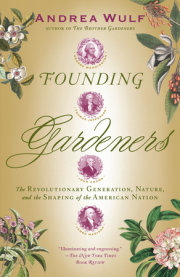
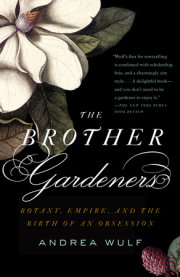
ANDREA WULF was born in India and moved to Germany as a child. She is the award-winning author of several books, including Founding Gardeners, Brother Gardeners, and The New York Times best seller The Invention of Nature, which has been published in twenty-seven languages and won fifteen international literary awards. Wulf has written for many newspapers and magazines, including The New York Times, The Guardian, the Los Angeles Times, The Wall Street Journal, and The Atlantic. She's a member of PEN America Center and a Fellow of the Royal Society of Literature. She lives in London. View titles by Andrea Wulf

About

Step into the life and times of George Forster, the eighteenth-century naturalist who sailed the world and made waves with his revolutionary ideas about humanity and freedom—from the bestselling author of The Invention of Nature.

"[A] thrilling biography-cum-adventure story." —Hampton Sides, author of The Wide Wide Sea

“Enthralling. Superb. The Traveler is hypnotically successful and wonderfully restores George Forster as a major historical figure.” —Richard Holmes, author of The Age of Wonder


From an early age, it was clear that George Forster possessed a brilliant mind. At just ten years old, he became a botanist when he accompanied his irascible father, Reinhold, on a wild expedition to Russia. By the time he was twelve, they had moved to London and the young boy soon became the breadwinner by publishing translations of the most popular travel accounts of the day. Then, in 1772, at the age of seventeen, George Forster joined Cook’s second voyage, the most daring expedition of the time.

The HMS Resolution set sail with orders to find what was then the hypothetical southern continent of Antarctica, stopping at the islands of the South Pacific— including New Zealand, Vanuatu, Tonga, Tahiti, and Easter Island—along the way. The Resolution car­ried the ambitions of the most powerful empire in the world, but Forster brought an understanding that was far ahead of his day. A gifted observer, linguist, artist, and writer, he studied the diverse cultures of the world without prejudice and was one of the first Europeans to talk about universal human rights.

Recognized on his return as one of Europe’s brightest minds, Forster used his fame to advocate for freedom and human rights and wrote against empire, white supremacy, and slavery. He admired strong, educated women, even accepting his wife’s independence—and her love affairs. Driven by his passion for equality, Forster would eventually be pulled into the vortex of the French Revolution and live in Paris during the Reign of Terror. Throughout it all, he held close the radical belief that our common humanity is far greater than what sets us apart. The Traveler recounts the remarkable life of this deeply curious and exceptional man who, though largely forgotten by history, truly belonged to the future.

Excerpt

Prologue

A gunshot pierced the calm.

Then there was silence, followed by sounds of a commotion. A man came running towards them, but turned and hid in a bush as soon as he saw George Forster and his companion. Other islanders they passed looked at them with disgust. A woman trembled in fear. George couldn’t understand what was happening, but as they hurried on, several men waved their arms, urging them on towards the beach. When they finally stepped out of the jungle, they found two islanders on the ground, cradling a third man in their arms. There was blood everywhere. George saw the gunshot wound just under the ribs. ‘Marokee’, the two men cried out and it was obvious that it meant ‘he is killed’.

An hour earlier, George had walked through the tropical forest, day-dreaming. He had thought of the previous two weeks and the many hours he had spent with the islanders. They had shared meals of roasted yams and delicious coconut pies with a crust of baked bananas. They had taught each other words, exchanged names, and tried to communicate by pointing and guessing. Young boys, some no older than five or six, showed off their marksmanship by throwing reeds like spears with perfect accuracy, and the men demonstrated their precision with bow and arrow. In the early evenings just before sunset, the islanders lit fires and the women began to cook. To entertain them, George sang German and English songs and they returned the favour by singing harmonious solemn melodies and playing a flute made of eight reeds. It had been, he said, as if they were all ‘members of one great family’.

He had been at peace with the world. It was a warm day but a gentle breeze had tempered the heat as George had meandered across the island. Once in a while the dense vegetation of entangled trees, branches, foliage, climbers and epiphytes had opened up, and he had caught a glimpse of a wide valley surrounded by low hills and numerous plantations. Open thatched huts with roofs that ran down to the ground on two sides were scattered about and thin columns of smoke rose from cooking fires. One islander hummed as he worked a small field. Some villagers sat in the shade of towering fig trees, while others planted yams or dug the soil with tree branches. Banana trees loaded with golden fruit grew under the dappled light of large palms and straight stalks of sugar cane stood upright in small patches of cultivated ground.

It was 19 August 1774 and this was Tanna, a tropical island in the Vanuatu archipelago in the South Pacific, over 1,000 miles north of New Zealand. Nineteen-year-old George Forster was the assistant naturalist and draughtsman on Captain James Cook’s Resolution. Two years after leaving England and sailing tens of thousands of miles to the Antarctic Circle, New Zealand, Tahiti, Tonga and other South Pacific islands, they had arrived at Tanna at the beginning of August – the first Europeans to visit the island.

And then the gunshot.

Rushing out onto the beach, George struggled to comprehend what had happened. It was difficult to make sense of the different stories that the Resolution crew told him, but apparently the dead man had ignored the warnings of a marine who was guarding the beach. When the Resolution had arrived at Tanna, Cook had followed his usual practice and drawn two lines in the sand to mark out an area which the crew would use for landing their dinghies. This line, Cook had tried to explain to the islanders, was a boundary they were not allowed to cross. So when one man had walked towards the line, the marine on guard had pushed him back. Undeterred, the islander had moved forward again, only to be pushed back even harder. He then stumbled but steadied himself and nocked an arrow on his bow. But before he could draw, the marine had pulled the trigger.

George was horrified. ‘Instead of making amends at this place for the many rash acts which we had perpetrated at almost every island in our course,’ he lamented, ‘we had wantonly made it the scene of the greatest cruelty.’ Why kill an innocent man for crossing an arbitrary line in the sand? The islander had simply refused to be controlled by a stranger on his own island. But George wasn’t surprised, having witnessed how the Resolution’s crew treated the indigenous people they had encountered in the previous two years. They used their muskets to intimidate them and several islanders had been killed. Many more had been wounded. The Europeans brought death and disease, George later wrote, and he could only hope that ‘the intercourse which has lately subsisted between Euro-peans and the natives of the South Sea islands may be broken off in time’.

Few Europeans approached indigenous people with such an open mind – most explorers viewed them through a lens of arrogance at best, and with brutal disgust at worst. Across the world they had been enslaved, exploited and murdered. In an era when most Europeans regarded indigenous people as lesser beings – even sometimes as beasts – George Forster’s attitude shines out in the darkness of colonial history.

At the time, racism was so deeply ingrained in Western society that even Immanuel Kant, the most famous philosopher of his age, pub-lished articles in which he declared Black people to be an inferior race who ‘have by nature no feeling that rises above the ridiculous’. George Forster, by contrast, believed all humans equal, and due equal respect. There was good and evil in all societies. The world was neither black and white, he explained, nor clearly divided into virtuous and immoral, but instead was a complex tapestry woven from the many shades of human lives.

A liberal thinker far ahead of his time, he was one of the first to talk about what we now call human rights and believed in the importance of our shared humanity – irrespective of colour, culture or gender. He wrote to his closest friend, Samuel Thomas Soemmerring, ‘what is tol-erance, of which we are such ardent advocates, if not the coexistence of differing opinions?’


By the time he was in his early twenties, George Forster was celebrated across Europe. Kings, poets, scientists and revolutionaries wanted to meet him and sought his advice. I became curious about him when I was researching and writing Magnificent Rebels and the Invention of Nature. He was a trusted friend of Caroline Michaelis-Böhmer-Schlegel-Schelling (a protagonist of the former book) and a mentor to Alexander von Humboldt (the subject of the latter). ‘I have spent half a century, wherever a restless, eventful life has taken me, telling myself and others what I owe to my teacher and friend Georg Forster,’ Humboldt said at the age of eighty-eight in 1858. Any man who was admired by the brilliant Humboldt and the formidable Caroline was worth investigating, but it was George Forster’s own voice that pulled me into this story. His descrip-tion of the murder on the beach in Tanna, for example, made me wonder how someone who was brought up in a society pervaded by racism was able to accept other cultures with such an unbiased mind. And in his letters to his wife, he reveals himself to be more progressive than many men today. ‘So many men seem to be under the delusion that nothing is common sense but their own intuitions,’ he wrote during their courtship, ‘I don’t know this unfair difference between the sexes.’ Today he would be called a feminist and I wanted to understand how he had been able to transcend the conventions of his times in this respect also.

George Forster’s letters portray a man who was honest with himself and the wider world around him. He was a compassionate man who found joy and inspiration in others. ‘I thank God that there is such a deli-cious thing as human love in this world,’ he said, ‘it lifts us up; it chains us to each other, no matter how distant we are; it is the most comforting, happiest feeling in the world!’ There is an immediacy and a directness to his words that I have rarely encountered in any previous research. He despised hypocrisy and was vocal about his opinions – ‘nothing is so irresistible as the truth’. Unlike most men of his age, he was open about his emotions, admitting to sadness and weakness – ‘aching feelings of my loneliness’, ‘I also feel voids in my heart’ – his emotions raw on the page. Who was this eighteenth-century man who seemed too modern for his time?

I began my search for George Forster in libraries and archives through many thousands of letters, pages and words in order to uncover his thoughts, ideas and daily life – but because he was a traveller, I also packed my bags and followed his footsteps through Europe and the South Pacific. I explored European cities with old maps and engravings, trying to work out where he had walked, lived and worked – but I also ventured further afield.

At one point, I found myself sailing towards the crushing surf of Tahiti’s reef in a small outrigger sailing canoe – far too close for my comfort but it felt entirely appropriate because the Resolution was almost ship-wrecked here. I hiked for several days along Queen Charlotte Sound at the northern part of New Zealand’s South Island to absorb the natural world and experience the place where George Forster had walked in 1773. I was unprepared for the mesmerizing otherworldliness of the forests and it made me realize just how strange it must have been for him 250 years ago. I spent five magical days in Dusky Sound at the southern tip of New Zealand’s South Island – a place so wild and remote that the landscape is essentially unchanged since he stayed there. It was cold, wet and magnificent. I saw the stumps of the trees that the Resolution crew had felled to set up their observatory tent, and at the small natural harbour where they had anchored I found the actual tree that they had used as their gangway – still leaning almost horizontally over the water, just as William Hodges, the expedition artist, had painted it. Unbelievable, really, that it still exists. During these moments time and space collided for me.

Everything in The Traveller is based on George Forster’s works, diaries and letters, and those of his contemporaries – friends, family and foes. Nothing is invented or imagined, but travelling to the places which shaped George’s early life helped me to understand him. It also reminded me how much of a nomad he was, never truly at home anywhere, but one of the reasons why he so willingly accepted the ‘otherness’ of others.

He was a traveller – in body and mind – a crosser of borders, a dreamer of worlds, a breaker of boundaries, a seeker of truth, a painter of words and a believer in humanity. He was a traveller without roots to anchor him to a place, to his clod of earth – a lack of belonging that enabled him to think more expansively and be more tolerant than most of his contemporaries. He subscribed to no particular philosoph-ical school or ideology, nor did he feel that he belonged to a nation. Unbound by place, people or establishment, he was able to unfetter himself from prejudice. All he wanted, he said, was ‘to throw more light upon the nature of the human mind’.

The observations he made as a young man on the Resolution voyage painted a portrait of the world as one of connections rather than divisions – and at the heart of The Traveler is George Forster’s quest to find what holds us together rather than what sets us apart. There was unity, he said, behind this ‘beautiful manifestation of the variety’ of peoples and cultures. He didn’t write from the lofty heights of an ivory tower but as an explorer and with a deep love for humankind, ground-ing his ideas in observation and experience but also in feelings. He challenged some of the greatest thinkers of his age – Rousseau, Kant and the Comte du Buffon – and was feted across Europe. He embraced the ideals of the French Revolution wholeheartedly and became one of Germa-ny’s leading revolutionaries. ‘One is either for absolute freedom or for absolute tyranny,’ he declared, ‘there is nothing in between.’ His dream was nothing less than a new reality, a hopeful future free of despotism, ruled by equality and liberty, rather than kings and queens.

Some 250 years ago, George Forster began his search for our common humanity, urging that we – as a species – share the right to equality and freedom. No matter who he encountered – whether Māori, Russian, Tahitian, French, Tongan, English, German or Easter Islander – he was aware ‘of the rights which I possess in common with every individual among them’. People might look different, or have different cultures and value systems, but in essence we’re all the same.

The variety and unity of humankind is like music, George Forster wrote, and our vast diversity ‘brings all individual chords to a harmoni-ous composition’. It is our morality – how we treat others – that makes us human. The pursuit of happiness alone was not enough, he said, for ‘the real guide to how we should live is human dignity.’

This is his story.

Reviews

"George Forster, a celebrity intellectual in his day, was a man far ahead of his time. In this thrilling biography-cum-adventure story, Andrea Wulf deftly shows us how Forster’s far-flung wanderings inspired and nurtured one of the greatest minds of the Enlightenment era." —Hampton Sides, New York Times bestselling author of The Wide Wide Sea

"The dauntless Andrea Wulf has gone adventuring, and returned with this enthralling account of young, nomadic George Forster. Her superb narrative shimmers with scholarly detail and magnificently sustains the 'breathless exhilaration' of his journeys, his extraordinarily liberal and observant mind and the intense emotional drama of his life. A combination of panoramic travelogue and tender psychological study animated at every point by Wulf’s own travels and research, The Traveler is hypnotically successful and wonderfully restores George Forster as a major historical figure of early European Romanticism." —Richard Holmes, author of The Age of Wonder

“A remarkable biography of a remarkable man. Wulf’s books are always horizon-expanding, but with this one she has excelled herself. I loved it!” —Tom Holland, cohost of The Rest Is History and author of Rubicon

“Andrea Wulf belongs to the small, splendid canon of writers unafraid to render fact with feeling—The Traveler is a work of devotion and rigor that celebrates the courage to look past the horizon of an era’s givens and refuses to take the figments of a culture for facts.” —Maria Popova, author of Traversal

"Unfailingly and inspiringly humane, George Forster is the overlooked tragic hero of the European Enlightenment. With her characteristic combination of scholarship and empathy, Andrea Wulf conjures the global range of his curiosity, and the poignant wilderness of his family life. This book is the memorial that he has long deserved." —Neil MacGregor, author of Germany

“With her beautiful, sensitive, impressively researched biography of George Forster, Andrea Wulf brilliantly narrates the novelistic life of a uniquely curious scholar at a pivotal moment in Western Civilization, a man who embodied the notion that travel breeds empathy. Forster's unquestioning love for his fellow human being, as recounted by Wulf, is a much-needed antidote to the vitriol that courses through present times.” —Julian Sancton, author of Madhouse at the End of the Earth

"As George Forster circumnavigates the globe, Wulf circumnavigates the Enlightenment mind in all its complexity, making for a doubly brilliant and breathtaking adventure." —Sue Prideaux, author of Wild Thing

“A revelatory biography of the little remembered but brilliant polymath and naturalist George Forster. . . . In a narrative that reads partly like a scientific adventure story, partly like a revolutionary bildungsroman, Wulf traces Forster’s mental journey—drawing on his published works and private diaries and letters—as well as his literal journey, following his path throughout Europe and the South Pacific, trying to imagine the world from his perspective as ‘a crosser of borders, a dreamer of worlds’ who was able to see ‘the connections rather than divisions.’ Readers will be rapt by this immersive recreation of an intellectual awakening.”
Publishers Weekly (starred review)

“Wulf amply restores [George Forster’s] stature as a brilliant mind. A stirring, empathetic portrait. . . . His curiosity, tolerance, and humaneness contrasted sharply with the perspective of his Eurocentric contemporaries.” Kirkus Reviews (starred review)

Author

© Antonina Gern
ANDREA WULF was born in India and moved to Germany as a child. She is the award-winning author of several books, including Founding Gardeners, Brother Gardeners, and The New York Times best seller The Invention of Nature, which has been published in twenty-seven languages and won fifteen international literary awards. Wulf has written for many newspapers and magazines, including The New York Times, The Guardian, the Los Angeles Times, The Wall Street Journal, and The Atlantic. She's a member of PEN America Center and a Fellow of the Royal Society of Literature. She lives in London. View titles by Andrea Wulf
  • More Websites from
    Penguin Random House
  • Common Reads
  • Library Marketing