Download high-resolution image Look inside
Listen to a clip from the audiobook
audio pause button
0:00
0:00

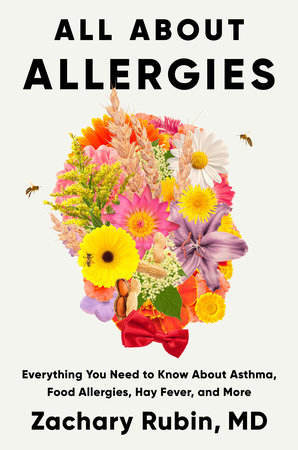
All About Allergies

Everything You Need to Know About Asthma, Food Allergies, Hay Fever, and More

Look inside
Listen to a clip from the audiobook
audio pause button
0:00
0:00
From viral social media sensation Dr. Zachary Rubin, an in-depth look at both common and surprising allergies, spotlighting patient stories, the history and science behind allergies, common myths, treatment options, and more

Millions of people suffer from various allergic diseases. They're some of the most common but widely misunderstood afflictions today, and Dr. Rubin has made it his mission to pull back the curtain and help everyday people understand their allergies and find ways to feel better.

In All About Allergies, Dr. Rubin explores and explains dozens of allergies and diseases and provides actionable treatment options and information. Sections on the history of allergies, asthma, contact dermatitis, sinusitis, food allergies, anaphylaxis, medication allergies, and more pair with treatment info on medications, immunotherapy, and biologics to equip people with the tools they need to tackle their allergies.

Grounded by expert research and propelled by patient stories, science, history, and, of course, Dr. Rubin’s engaging voice, All About Allergies is the ultimate resource for anyone who’s ever felt in the dark about their health.
Chapter 1

The History of Allergies

Quod alii cibus est, aliis fuat acre venenum.
[What is normal food to one, can be deadly poison for others.]

- Titus Lucretius Carus (98-55 BC), De Rerum Natura

When I helped my dad start Dr. Rubin's Mini Medical School geared toward high school students, he and I created a curriculum that started with the history of medicine. My dad felt that even though many medical schools do not routinely teach the history of medicine, it is crucial to understand where medicine came from so that we have a better understanding of where we go from here. When I was growing up, when my family went on trips outside Illinois, he would take us to medical history museums if they were nearby. I became fascinated with how medicine has evolved so quickly. For example, the first recorded vaccine was given on May 14, 1796, by Edward Jenner to James Phipps, an eight-year-old boy, to protect against smallpox. That was less than 250 years ago!

Allergic diseases are nothing new-they have been around for thousands of years. However, over the past several decades, there has been a dramatic increase in the number of people suffering from these diseases. It is not clear why this is happening. While many people believe these diseases did not exist in the past, there is ample evidence that people have suffered from several conditions, such as food allergies and asthma, since antiquity.

Throughout history, allergies have puzzled and afflicted humanity, shaping our daily lives in ways that are often overlooked. This chapter will focus on the evolution of our understanding of allergies throughout time across the globe. Important historical figures in the field of allergy and immunology will be covered as well. I hope this chapter will spark a curiosity in you that will excite you to learn more about allergic diseases.

Allergies During Ancient Times

The earliest writings in human history are found in ancient Mesopotamia, the area between the rivers Euphrates and Tigris, which is modern-day Iraq. The Mesopotamians developed a writing system called cuneiform in around 3200 BC. They had writings about breathing: When the patient suffers from cough, he should drink a mixture of Lolium and rose powder dissolved in oil and honey. Afterwards he should eat a broth of pork meat. When he has to defecate, a fire should be lighted where he should direct his anus. Then he will be cured.

Some of the earliest physicians documented in human history came from ancient Egypt. The first is usually considered to be Imhotep during the 3rd dynasty at around 2600 BC. Two hundred years later, Ni-Ankh-Sekhmet was a physician to King Sahura during the 5th dynasty and is considered to be the first documented allergist. There is a stone at the tomb of the Pharaoh with the inscription "he cured the noses of the kings." One of the oldest Egyptian medical texts, the Papyrus Ebers, was written around 1550 BC and contains twenty-one prescriptions for cough or difficulty breathing (i.e., dyspnea). Some of the ingredients listed include honey, dates, incense, juniper, and beer. A lot of the treatments described may have been used to treat asthma. Honey has been proven to help relieve a cough, but most of these remedies were ineffective for asthma treatment.

Ancient Chinese medicine used various plants to treat airway diseases, including wolfsbane and jimsonweed. A text titled Su Wen (meaning "Open Questions") discussed through dialogue between the Yellow Emperor Huangdi and his minister Qi Po a disease that may have been asthma. One passage described how it was helpful to "avoid eating and drinking cold things and one should not wear chilly clothing." We know today that one of the most common triggers for asthma symptoms is cold temperatures. One of the earliest descriptions of food allergy came from China. In the text Shi Jin-Jing (meaning "Interdictions concerning food"), the Chinese emperors Shen Nong and Huangdi advised pregnant women to avoid foods such as shrimp and meat. Individuals with certain skin lesions that may have been eczema were also advised to avoid certain foods. One of the earliest descriptions of urticaria, also known as hives, is more than 2,000 years old and comes from China, where it was referred to as Feng Yin Zheng (wind type concealed rash), which is similar to one of today's traditional Chinese medical terms, Feng Sao Yin Zhen (wind itch concealed rash). Wind in traditional Chinese medicine is considered to be a major factor for developing urticaria, so other names for urticaria are Feng Zhen Kuai (wind rash lumps) and Feng Zhen (wind rash).

The father of medicine is generally considered to be the Greek physician and philosopher Hippocrates (circa 460-377 BC). In a collection of over sixty of his medical works, called the Corpus Hippocraticum, there is no mention of allergic rhinitis. While it is possible that it did not exist in ancient Greece, the more likely explanation is that the symptoms were not severe enough to warrant the attention of physicians. Asthma was described in this text ten times, and there is one passage that refers to the breathing noise as "if somebody was whistling through a pipe." Hippocrates also described how you could be allergic to exercise: "After exercise the pain occurs in one or another area on the chest or the back and the body will be covered with wheals like after contact with nettles." This passage also infers the concept of contact urticaria. Hippocrates used the word knidosis to describe urticaria. He also observed that some people reacted strangely after eating cheese, which likely referred to a food allergy.

There were some famous individuals who may have suffered from allergic diseases in antiquity. The first likely documented case of a fatal allergic reaction known as anaphylaxis has been attributed to Pharaoh Menes in 2641 BC. Hieroglyphs from his tomb indicate that he most likely died after a sting from a wasp, a cause of death that in most cases is due to anaphylaxis. Roman Emperor Augustus likely suffered from asthma, allergic rhinitis, and eczema. His great-nephew, Emperor Claudius, suffered from allergic rhinitis. Britannicus, the son of Claudius, apparently suffered from an allergy to horses.

Allergies in the Middle Ages
and Renaissance

Significant medical advancements came from the Middle East during the Middle Ages. Abu Bakr al-Razi (865-932), also known as Rhazes, was a Persian physician who gave the first description of "rose fever" in his paper "Dissertation regarding the course of Coryza occurring in spring when the roses emit their odor." The descriptions of rose fever are similar to the symptoms of allergic rhinoconjunctivitis. This concept became pervasive throughout the Middle Ages. German physician Veit Riedlin (1656-1724) performed provocation tests: He hid a pouch of rose leaves in the coat of his patient without their knowing, to see if symptoms were reproducible.

The Jewish physician Moses Maimonides (1135-1204) was the personal physician to Sultan Saladin in Egypt. He wrote a thesis on treating asthma, and many of his recommendations are relevant even today. Maimonides recommended personal hygiene, relaxation, exercise, massage, and avoiding noxious environmental triggers and drugs such as opium. He also recommended that patients with asthma avoid foods such as milk, nuts, and chicken.

Food allergies may have influenced a famous figure in English history. Sir Thomas More (1478-1535), who was a lawyer, reported that King Richard III of England (1452-1485) was sensitive to strawberries because they would cause him to experience hives. The king used this reaction in front of his council to claim that his political opponent, Lord William Hastings, was trying to poison him, so he had Hastings executed.

Up until the nineteenth century, skin disorders were not considered to be a problem because it was believed that the skin was an organ meant to eliminate waste from the body. Therefore, skin eruptions-especially oozing ones-were considered to be beneficial. Physicians for most of human history did not want to treat skin diseases because they thought it was dangerous to try to heal them. This belief was based on the humoral theory, which has often been credited to Hippocrates. In his theory, the human body contains four humors: blood, phlegm, yellow bile, and black bile. If these humors are out of balance, then diseases will occur. This theory was replaced by germ theory by the end of the nineteenth century.

[AQ: Per wikipedia and elsewhere, the theory predates Hippocrates, though he is credited with applying it to medicine--revise here?]

Allergy During the Nineteenth Century

Major strides in our foundational understanding of allergy and immunology started in the nineteenth century. The first thorough description of allergic rhinitis came from John Bostock (1773-1846), who initially called it catarrhus aestivus in 1819. However, by 1828, the more popular term, hay fever, persisted and is often still used today. At that time, it was believed that the smell of hay during the summer and harvest months caused the symptoms. In the 1870s, Charles Blackley (1820-1900) identified the cause of hay fever to be pollen. He invented devices to measure pollen in the atmosphere as well as the first skin-testing devices.

While asthma had been described in the medical literature numerous times at this point, the first classical descriptions of asthma came in 1860 from English physician Henry Hyde Salter (1823-1871). His explanation of asthma was based on hundreds of cases he had seen and his personal experience with the disease. Salter's definition of asthma was "paroxysmal dyspnoea of a peculiar character, generally periodic with intervals of healthy respiration between the attacks." He believed that asthma was a nervous disorder, a notion that has been perpetuated in popular culture even to this day. However, Salter also knew that asthma was due to many other triggers such as exposure to cats and horses. He recommended coffee, which was one of the earliest effective treatments for asthma because caffeine can temporarily relax the muscles in your airways to improve lung function. French physician René Laënnec (1781-1826) invented the stethoscope, which paved the way for the physical diagnosis of chest diseases, including asthma.

Paul Ehrlich (1854-1915) was a Nobel Prize-winning German physician and scientist who was considered one of the fathers of immunology, specifically of the humoral adaptive immune system. His work in staining cells under a microscope led to his discovery of the mast cell in 1878, which is an important cell in causing allergic reactions. Ehrlich initially named them Mästzellen; he thought these cells had a nutritional function because of the granules inside them. The German word maesten means to stuff or force-feed. A year later, Ehrlich discovered eosinophils, which are white blood cells that are also important in causing allergic reactions. He was the first scientist to develop a medication to treat syphilis; it was an arsenic-based compound called Salvarsan. To top it all off, Ehrlich coined the term chemotherapy.

The Russian immunologist Elie Metchnikoff (1845-1916) won the Nobel Prize for his work in immunology. He is considered the father of cell-mediated immunity. This is the arm of the immune system involving immune cells that do not use antibodies. In 1883, he published his first paper on our understanding of phagocytosis, which is the process in which cells ingest foreign substances and other cells. He noticed that foreign materials were being engulfed by the cells of a transparent starfish larva. These cells were called phagocytes, a term derived from the Greek phagein, meaning "to eat," and cyte, meaning "cell." Metchnikoff also coined the term gerontology and is widely recognized as a pioneer in the study of aging. He even theorized that probiotics could improve health and delay aging.

Allergy at the Start of the Twentieth Century

The major breakthroughs in the field of allergy came at the beginning of the twentieth century. In 1902, Charles Richet (1850-1935) and Paul Portier (1866-1962) used a lab on the yacht Princesse Alice II, which belonged to the prince of Monaco, Albert I, to study Physalia (Portuguese man o' war). If you are not familiar with these animals, they are hydrozoans that look like jellyfish. One of their extracts contains a substance called "hypnotoxin," which causes painful hives when skin comes into contact with it. Sailors were accustomed to these uncomfortable stings. While on the voyage, Richet and Portier tried to immunize dogs against this toxin by administering small doses on multiple occasions. However, the opposite occurred. One dog in the experiment, named Neptune, had received two doses of the toxin three days apart that were well tolerated. After twenty-two days, he received the same dose for a third time, but within seconds after the injection, Neptune began to gasp and wheeze, vomited blood and passed away within twenty-five minutes. Richet initially called this phenomenon aphylaxis because of the "lack of protection" from this reaction, but the name was quickly changed to anaphylaxis because it was more appealing. Anaphylaxis is the term describing a severe, potentially life-threatening allergic reaction. Richet ended up winning the Nobel Prize in 1913 for this discovery.

The word allergy was coined in 1906 by Clemens von Pirquet (1874-1929), an Austrian pediatrician. He wrote in the journal Münchener Medizinische Wochenschrift that "we need a new . . . word for the altered state which the organism finds out by the acquaintance with any organic, living or lifeless poison . . . For this general concept of altered responsiveness, I suggest the term allergy." The older term, idiosyncrasy, was replaced very quickly from this point by allergy, from the Greek word allos (other) and ergos (activity). Pirquet also coined the term allergen to describe substances that-upon repeated exposure-lead to a reaction. His initial observations came around 1902 when he took care of children who developed side effects when given horse serum antitoxin to treat diphtheria. He was also a pioneer in medical education. He placed a high value on teamwork between doctors and patients and insisted that his trainees finish a nursing training period to understand problems and take care of patients better.

The word atopy was coined by Arthur Fernandez Coca (1875-1959) and Robert Anderson Cooke (1880-1960) in 1921. This concept describes how there is a genetic tendency to develop allergic diseases such as asthma, eczema, and allergic rhinitis. Sometimes, atopy refers generally to any allergic reaction caused by the antibody called immunoglobulin E (IgE).

Finding the Source of Allergic Reactions

Throughout the early twentieth century, many steps were taken to try and find the source of reactions that were observed. This substance was often referred to as the reagin. In 1919, a thirty-five-year-old waiter with no significant medical history developed anemia and received a blood transfusion. Two weeks later, he entered a horse carriage at Central Park in New York City and developed an asthma attack five minutes later. He was given epinephrine and his symptoms resolved. However, the next day he entered the park and developed a similar asthma attack. He was then seen by Dr. Maximillian Ramirez, who did a battery of allergy testing and found that the young man was allergic to horses. It turned out that the blood donor for this patient was an asthmatic who was also allergic to horses. This showed that the allergy had been transferred to the patient by the blood donation.
“In All About Allergies, Dr. Zachary Rubin delivers the clear, compassionate, and evidence-based guide we've all been waiting for. Whether you're dealing with asthma, food allergies, eczema, or hay fever, this book breaks down the science in a way that empowers you to make informed decisions and advocate for yourself or your family. This is the must-have resource for parents, patients, and anyone who's ever felt lost in the allergy aisle of the pharmacy. If you're ready to take control of your health or support someone you love, start here.” —Dr. Mary Claire Haver, MD, FACOG, MCP, New York Times Bestselling author of The New Menopause

"An accessible and helpful guide for patients and caregivers... An excellent choice for public and consumer health collections seeking a current allergy resource." Library Journal

“Rubin, a pediatrician specializing in allergy treatment and immunology, empathetically and knowledgeably shares his considerable wisdom as a physician and as someone who grew up with eczema and seasonal allergies…Rubin’s far-ranging guide to living with allergies, full of fascinating and lifesaving insights, will help many readers.” —Booklist

"With clear, down-to-earth explanations and practical tips, this book demystifies everything from pollen to peanuts—no medical degree required." —Abby Jimenez, #1 New York Times bestselling author

"Dr. Rubin's book covers a wide variety of allergic conditions, using a personable, compassionate, and scientific approach enhanced by storytelling and case examples throughout the text. He cuts through confusion and misinformation, empowering patients with clear and trustworthy knowledge to better advocate for their health. This definitive guide is a must-have for the allergy community and promises to be an invaluable resource for patients and their families." —Prof. George Du Toit, Professor of Pediatric Allergy, Evelina Children's London, Guy's and St Thomas' NHS Trust, Kings College London

“Dr. Rubin is able to break down the science behind allergies into understandable and actionable steps to help handle them. As a mom, this book is also very helpful as a go-to when I have questions… I highly recommend All About Allergies for anyone who ever wondered about their own symptoms.” –Kristin Davis, actress and film producer

“Allergy sufferers will find this illuminating.” —Publishers Weekly
Dr. Zachary Rubin is a double board-certified pediatrician and allergist/immunologist who practices at Oak Brook Allergists in the Chicago area. A nationally recognized medical educator and public health advocate, he shares evidence-based, accessible information on allergies, asthma, and public health with over four million followers under the handle @rubin_allergy. Dr. Rubin earned his medical degree from Case Western Reserve University, completed his pediatrics residency at the University of Illinois College of Medicine in Chicago, and his allergy/immunology fellowship at Washington University in St. Louis. Outside of medicine, he enjoys swimming, hiking, hula hooping, and spending time with his wife, daughter, and three German shepherds. All About Allergies is his first book, offering a clear, compassionate guide to managing allergic diseases. View titles by Zachary Rubin, MD
Contents

Introduction: You Are Not Alone ix

PART ONE
The Background

Chapter 1
The History of Allergies 3

Chapter 2
The Immune System 17

Chapter 3
The Anatomy of Allergies 29

Chapter 4
What to Expect at the Allergist’s Office 43

PART TWO
Allergic Diseases

Chapter 5
Allergic Rhinitis and Non- Allergic Rhinitis 59

Chapter 6
Sinusitis 75

Chapter 7
Food Allergies 89

Chapter 8
Eczema 107

Chapter 9
Contact Dermatitis 123

Chapter 10
Urticaria and Angioedema 137

Chapter 11
Asthma 151

Chapter 12
Anaphylaxis 165

Chapter 13
Medication and Vaccine Allergies 181

Chapter 14
Mast Cell Disorders 197

PART THREE
Treatment Options

Chapter 15
Over- the- Counter and Prescription Medications 215

Chapter 16
Immunotherapy 231

Chapter 17
Biologics 245

Chapter 18
Future Directions 259

Acknowledgments 275

Bibliography 278

Index 327

About

From viral social media sensation Dr. Zachary Rubin, an in-depth look at both common and surprising allergies, spotlighting patient stories, the history and science behind allergies, common myths, treatment options, and more

Millions of people suffer from various allergic diseases. They're some of the most common but widely misunderstood afflictions today, and Dr. Rubin has made it his mission to pull back the curtain and help everyday people understand their allergies and find ways to feel better.

In All About Allergies, Dr. Rubin explores and explains dozens of allergies and diseases and provides actionable treatment options and information. Sections on the history of allergies, asthma, contact dermatitis, sinusitis, food allergies, anaphylaxis, medication allergies, and more pair with treatment info on medications, immunotherapy, and biologics to equip people with the tools they need to tackle their allergies.

Grounded by expert research and propelled by patient stories, science, history, and, of course, Dr. Rubin’s engaging voice, All About Allergies is the ultimate resource for anyone who’s ever felt in the dark about their health.

Excerpt

Chapter 1

The History of Allergies

Quod alii cibus est, aliis fuat acre venenum.
[What is normal food to one, can be deadly poison for others.]

- Titus Lucretius Carus (98-55 BC), De Rerum Natura

When I helped my dad start Dr. Rubin's Mini Medical School geared toward high school students, he and I created a curriculum that started with the history of medicine. My dad felt that even though many medical schools do not routinely teach the history of medicine, it is crucial to understand where medicine came from so that we have a better understanding of where we go from here. When I was growing up, when my family went on trips outside Illinois, he would take us to medical history museums if they were nearby. I became fascinated with how medicine has evolved so quickly. For example, the first recorded vaccine was given on May 14, 1796, by Edward Jenner to James Phipps, an eight-year-old boy, to protect against smallpox. That was less than 250 years ago!

Allergic diseases are nothing new-they have been around for thousands of years. However, over the past several decades, there has been a dramatic increase in the number of people suffering from these diseases. It is not clear why this is happening. While many people believe these diseases did not exist in the past, there is ample evidence that people have suffered from several conditions, such as food allergies and asthma, since antiquity.

Throughout history, allergies have puzzled and afflicted humanity, shaping our daily lives in ways that are often overlooked. This chapter will focus on the evolution of our understanding of allergies throughout time across the globe. Important historical figures in the field of allergy and immunology will be covered as well. I hope this chapter will spark a curiosity in you that will excite you to learn more about allergic diseases.

Allergies During Ancient Times

The earliest writings in human history are found in ancient Mesopotamia, the area between the rivers Euphrates and Tigris, which is modern-day Iraq. The Mesopotamians developed a writing system called cuneiform in around 3200 BC. They had writings about breathing: When the patient suffers from cough, he should drink a mixture of Lolium and rose powder dissolved in oil and honey. Afterwards he should eat a broth of pork meat. When he has to defecate, a fire should be lighted where he should direct his anus. Then he will be cured.

Some of the earliest physicians documented in human history came from ancient Egypt. The first is usually considered to be Imhotep during the 3rd dynasty at around 2600 BC. Two hundred years later, Ni-Ankh-Sekhmet was a physician to King Sahura during the 5th dynasty and is considered to be the first documented allergist. There is a stone at the tomb of the Pharaoh with the inscription "he cured the noses of the kings." One of the oldest Egyptian medical texts, the Papyrus Ebers, was written around 1550 BC and contains twenty-one prescriptions for cough or difficulty breathing (i.e., dyspnea). Some of the ingredients listed include honey, dates, incense, juniper, and beer. A lot of the treatments described may have been used to treat asthma. Honey has been proven to help relieve a cough, but most of these remedies were ineffective for asthma treatment.

Ancient Chinese medicine used various plants to treat airway diseases, including wolfsbane and jimsonweed. A text titled Su Wen (meaning "Open Questions") discussed through dialogue between the Yellow Emperor Huangdi and his minister Qi Po a disease that may have been asthma. One passage described how it was helpful to "avoid eating and drinking cold things and one should not wear chilly clothing." We know today that one of the most common triggers for asthma symptoms is cold temperatures. One of the earliest descriptions of food allergy came from China. In the text Shi Jin-Jing (meaning "Interdictions concerning food"), the Chinese emperors Shen Nong and Huangdi advised pregnant women to avoid foods such as shrimp and meat. Individuals with certain skin lesions that may have been eczema were also advised to avoid certain foods. One of the earliest descriptions of urticaria, also known as hives, is more than 2,000 years old and comes from China, where it was referred to as Feng Yin Zheng (wind type concealed rash), which is similar to one of today's traditional Chinese medical terms, Feng Sao Yin Zhen (wind itch concealed rash). Wind in traditional Chinese medicine is considered to be a major factor for developing urticaria, so other names for urticaria are Feng Zhen Kuai (wind rash lumps) and Feng Zhen (wind rash).

The father of medicine is generally considered to be the Greek physician and philosopher Hippocrates (circa 460-377 BC). In a collection of over sixty of his medical works, called the Corpus Hippocraticum, there is no mention of allergic rhinitis. While it is possible that it did not exist in ancient Greece, the more likely explanation is that the symptoms were not severe enough to warrant the attention of physicians. Asthma was described in this text ten times, and there is one passage that refers to the breathing noise as "if somebody was whistling through a pipe." Hippocrates also described how you could be allergic to exercise: "After exercise the pain occurs in one or another area on the chest or the back and the body will be covered with wheals like after contact with nettles." This passage also infers the concept of contact urticaria. Hippocrates used the word knidosis to describe urticaria. He also observed that some people reacted strangely after eating cheese, which likely referred to a food allergy.

There were some famous individuals who may have suffered from allergic diseases in antiquity. The first likely documented case of a fatal allergic reaction known as anaphylaxis has been attributed to Pharaoh Menes in 2641 BC. Hieroglyphs from his tomb indicate that he most likely died after a sting from a wasp, a cause of death that in most cases is due to anaphylaxis. Roman Emperor Augustus likely suffered from asthma, allergic rhinitis, and eczema. His great-nephew, Emperor Claudius, suffered from allergic rhinitis. Britannicus, the son of Claudius, apparently suffered from an allergy to horses.

Allergies in the Middle Ages
and Renaissance

Significant medical advancements came from the Middle East during the Middle Ages. Abu Bakr al-Razi (865-932), also known as Rhazes, was a Persian physician who gave the first description of "rose fever" in his paper "Dissertation regarding the course of Coryza occurring in spring when the roses emit their odor." The descriptions of rose fever are similar to the symptoms of allergic rhinoconjunctivitis. This concept became pervasive throughout the Middle Ages. German physician Veit Riedlin (1656-1724) performed provocation tests: He hid a pouch of rose leaves in the coat of his patient without their knowing, to see if symptoms were reproducible.

The Jewish physician Moses Maimonides (1135-1204) was the personal physician to Sultan Saladin in Egypt. He wrote a thesis on treating asthma, and many of his recommendations are relevant even today. Maimonides recommended personal hygiene, relaxation, exercise, massage, and avoiding noxious environmental triggers and drugs such as opium. He also recommended that patients with asthma avoid foods such as milk, nuts, and chicken.

Food allergies may have influenced a famous figure in English history. Sir Thomas More (1478-1535), who was a lawyer, reported that King Richard III of England (1452-1485) was sensitive to strawberries because they would cause him to experience hives. The king used this reaction in front of his council to claim that his political opponent, Lord William Hastings, was trying to poison him, so he had Hastings executed.

Up until the nineteenth century, skin disorders were not considered to be a problem because it was believed that the skin was an organ meant to eliminate waste from the body. Therefore, skin eruptions-especially oozing ones-were considered to be beneficial. Physicians for most of human history did not want to treat skin diseases because they thought it was dangerous to try to heal them. This belief was based on the humoral theory, which has often been credited to Hippocrates. In his theory, the human body contains four humors: blood, phlegm, yellow bile, and black bile. If these humors are out of balance, then diseases will occur. This theory was replaced by germ theory by the end of the nineteenth century.

[AQ: Per wikipedia and elsewhere, the theory predates Hippocrates, though he is credited with applying it to medicine--revise here?]

Allergy During the Nineteenth Century

Major strides in our foundational understanding of allergy and immunology started in the nineteenth century. The first thorough description of allergic rhinitis came from John Bostock (1773-1846), who initially called it catarrhus aestivus in 1819. However, by 1828, the more popular term, hay fever, persisted and is often still used today. At that time, it was believed that the smell of hay during the summer and harvest months caused the symptoms. In the 1870s, Charles Blackley (1820-1900) identified the cause of hay fever to be pollen. He invented devices to measure pollen in the atmosphere as well as the first skin-testing devices.

While asthma had been described in the medical literature numerous times at this point, the first classical descriptions of asthma came in 1860 from English physician Henry Hyde Salter (1823-1871). His explanation of asthma was based on hundreds of cases he had seen and his personal experience with the disease. Salter's definition of asthma was "paroxysmal dyspnoea of a peculiar character, generally periodic with intervals of healthy respiration between the attacks." He believed that asthma was a nervous disorder, a notion that has been perpetuated in popular culture even to this day. However, Salter also knew that asthma was due to many other triggers such as exposure to cats and horses. He recommended coffee, which was one of the earliest effective treatments for asthma because caffeine can temporarily relax the muscles in your airways to improve lung function. French physician René Laënnec (1781-1826) invented the stethoscope, which paved the way for the physical diagnosis of chest diseases, including asthma.

Paul Ehrlich (1854-1915) was a Nobel Prize-winning German physician and scientist who was considered one of the fathers of immunology, specifically of the humoral adaptive immune system. His work in staining cells under a microscope led to his discovery of the mast cell in 1878, which is an important cell in causing allergic reactions. Ehrlich initially named them Mästzellen; he thought these cells had a nutritional function because of the granules inside them. The German word maesten means to stuff or force-feed. A year later, Ehrlich discovered eosinophils, which are white blood cells that are also important in causing allergic reactions. He was the first scientist to develop a medication to treat syphilis; it was an arsenic-based compound called Salvarsan. To top it all off, Ehrlich coined the term chemotherapy.

The Russian immunologist Elie Metchnikoff (1845-1916) won the Nobel Prize for his work in immunology. He is considered the father of cell-mediated immunity. This is the arm of the immune system involving immune cells that do not use antibodies. In 1883, he published his first paper on our understanding of phagocytosis, which is the process in which cells ingest foreign substances and other cells. He noticed that foreign materials were being engulfed by the cells of a transparent starfish larva. These cells were called phagocytes, a term derived from the Greek phagein, meaning "to eat," and cyte, meaning "cell." Metchnikoff also coined the term gerontology and is widely recognized as a pioneer in the study of aging. He even theorized that probiotics could improve health and delay aging.

Allergy at the Start of the Twentieth Century

The major breakthroughs in the field of allergy came at the beginning of the twentieth century. In 1902, Charles Richet (1850-1935) and Paul Portier (1866-1962) used a lab on the yacht Princesse Alice II, which belonged to the prince of Monaco, Albert I, to study Physalia (Portuguese man o' war). If you are not familiar with these animals, they are hydrozoans that look like jellyfish. One of their extracts contains a substance called "hypnotoxin," which causes painful hives when skin comes into contact with it. Sailors were accustomed to these uncomfortable stings. While on the voyage, Richet and Portier tried to immunize dogs against this toxin by administering small doses on multiple occasions. However, the opposite occurred. One dog in the experiment, named Neptune, had received two doses of the toxin three days apart that were well tolerated. After twenty-two days, he received the same dose for a third time, but within seconds after the injection, Neptune began to gasp and wheeze, vomited blood and passed away within twenty-five minutes. Richet initially called this phenomenon aphylaxis because of the "lack of protection" from this reaction, but the name was quickly changed to anaphylaxis because it was more appealing. Anaphylaxis is the term describing a severe, potentially life-threatening allergic reaction. Richet ended up winning the Nobel Prize in 1913 for this discovery.

The word allergy was coined in 1906 by Clemens von Pirquet (1874-1929), an Austrian pediatrician. He wrote in the journal Münchener Medizinische Wochenschrift that "we need a new . . . word for the altered state which the organism finds out by the acquaintance with any organic, living or lifeless poison . . . For this general concept of altered responsiveness, I suggest the term allergy." The older term, idiosyncrasy, was replaced very quickly from this point by allergy, from the Greek word allos (other) and ergos (activity). Pirquet also coined the term allergen to describe substances that-upon repeated exposure-lead to a reaction. His initial observations came around 1902 when he took care of children who developed side effects when given horse serum antitoxin to treat diphtheria. He was also a pioneer in medical education. He placed a high value on teamwork between doctors and patients and insisted that his trainees finish a nursing training period to understand problems and take care of patients better.

The word atopy was coined by Arthur Fernandez Coca (1875-1959) and Robert Anderson Cooke (1880-1960) in 1921. This concept describes how there is a genetic tendency to develop allergic diseases such as asthma, eczema, and allergic rhinitis. Sometimes, atopy refers generally to any allergic reaction caused by the antibody called immunoglobulin E (IgE).

Finding the Source of Allergic Reactions

Throughout the early twentieth century, many steps were taken to try and find the source of reactions that were observed. This substance was often referred to as the reagin. In 1919, a thirty-five-year-old waiter with no significant medical history developed anemia and received a blood transfusion. Two weeks later, he entered a horse carriage at Central Park in New York City and developed an asthma attack five minutes later. He was given epinephrine and his symptoms resolved. However, the next day he entered the park and developed a similar asthma attack. He was then seen by Dr. Maximillian Ramirez, who did a battery of allergy testing and found that the young man was allergic to horses. It turned out that the blood donor for this patient was an asthmatic who was also allergic to horses. This showed that the allergy had been transferred to the patient by the blood donation.

Reviews

“In All About Allergies, Dr. Zachary Rubin delivers the clear, compassionate, and evidence-based guide we've all been waiting for. Whether you're dealing with asthma, food allergies, eczema, or hay fever, this book breaks down the science in a way that empowers you to make informed decisions and advocate for yourself or your family. This is the must-have resource for parents, patients, and anyone who's ever felt lost in the allergy aisle of the pharmacy. If you're ready to take control of your health or support someone you love, start here.” —Dr. Mary Claire Haver, MD, FACOG, MCP, New York Times Bestselling author of The New Menopause

"An accessible and helpful guide for patients and caregivers... An excellent choice for public and consumer health collections seeking a current allergy resource." Library Journal

“Rubin, a pediatrician specializing in allergy treatment and immunology, empathetically and knowledgeably shares his considerable wisdom as a physician and as someone who grew up with eczema and seasonal allergies…Rubin’s far-ranging guide to living with allergies, full of fascinating and lifesaving insights, will help many readers.” —Booklist

"With clear, down-to-earth explanations and practical tips, this book demystifies everything from pollen to peanuts—no medical degree required." —Abby Jimenez, #1 New York Times bestselling author

"Dr. Rubin's book covers a wide variety of allergic conditions, using a personable, compassionate, and scientific approach enhanced by storytelling and case examples throughout the text. He cuts through confusion and misinformation, empowering patients with clear and trustworthy knowledge to better advocate for their health. This definitive guide is a must-have for the allergy community and promises to be an invaluable resource for patients and their families." —Prof. George Du Toit, Professor of Pediatric Allergy, Evelina Children's London, Guy's and St Thomas' NHS Trust, Kings College London

“Dr. Rubin is able to break down the science behind allergies into understandable and actionable steps to help handle them. As a mom, this book is also very helpful as a go-to when I have questions… I highly recommend All About Allergies for anyone who ever wondered about their own symptoms.” –Kristin Davis, actress and film producer

“Allergy sufferers will find this illuminating.” —Publishers Weekly

Author

Dr. Zachary Rubin is a double board-certified pediatrician and allergist/immunologist who practices at Oak Brook Allergists in the Chicago area. A nationally recognized medical educator and public health advocate, he shares evidence-based, accessible information on allergies, asthma, and public health with over four million followers under the handle @rubin_allergy. Dr. Rubin earned his medical degree from Case Western Reserve University, completed his pediatrics residency at the University of Illinois College of Medicine in Chicago, and his allergy/immunology fellowship at Washington University in St. Louis. Outside of medicine, he enjoys swimming, hiking, hula hooping, and spending time with his wife, daughter, and three German shepherds. All About Allergies is his first book, offering a clear, compassionate guide to managing allergic diseases. View titles by Zachary Rubin, MD

Table of Contents

Contents

Introduction: You Are Not Alone ix

PART ONE
The Background

Chapter 1
The History of Allergies 3

Chapter 2
The Immune System 17

Chapter 3
The Anatomy of Allergies 29

Chapter 4
What to Expect at the Allergist’s Office 43

PART TWO
Allergic Diseases

Chapter 5
Allergic Rhinitis and Non- Allergic Rhinitis 59

Chapter 6
Sinusitis 75

Chapter 7
Food Allergies 89

Chapter 8
Eczema 107

Chapter 9
Contact Dermatitis 123

Chapter 10
Urticaria and Angioedema 137

Chapter 11
Asthma 151

Chapter 12
Anaphylaxis 165

Chapter 13
Medication and Vaccine Allergies 181

Chapter 14
Mast Cell Disorders 197

PART THREE
Treatment Options

Chapter 15
Over- the- Counter and Prescription Medications 215

Chapter 16
Immunotherapy 231

Chapter 17
Biologics 245

Chapter 18
Future Directions 259

Acknowledgments 275

Bibliography 278

Index 327
  • More Websites from
    Penguin Random House
  • Common Reads
  • Library Marketing