A dizzying tale of lust, mystery, and murder—from a beloved Japanese crime fiction author and LGBT icon

The Lady Killer leads a double life in Tokyo's shadowy underworld. By day, he is a devoted husband and hard worker; by night, he cruises cabaret bars and nightclubs in search of lonely single women to seduce.

But now the hunter is being hunted, and in his wake lies a trail of gruesome murders. Who is the culprit? The answer lies tangled in a web of clues—and to find it, he must accept that nothing is what it seems.
 
The Lady Killer pulls from author Masako Togawa’s vibrant personal life as a cabaret performer for Tokyo’s gay nightclub scene during the ‘50s and ‘60s. Throughout her writing career, Togawa continued to champion the LGBT community as a queer woman—sealing her reputation as one of Japan’s most prominent crime fiction authors and LGBT heroines.
She was on the second floor of the bar, seated alone in a box seat and gazing down onto the first floor. Faintly, through the whirl of cigarette smoke, she could see a waiter in a white jacket standing by the door, a bartender rattling a cocktail shaker behind the counter below her. As for the other cus- tomers, they were all either seated at the counter or else in boxes on the first floor, almost invisible in the subdued lighting popular in such places. Upstairs where she was, there was another bar counter behind which a bartender was passing the time polishing glasses; at the corner of the counter, two young men sat face to face whispering to each other.
Nobody was paying her any attention whatever. If they had, they would have probably thought that this girl, wearing no makeup and seeming to be no more than twenty, did not look at all like a typical bar customer.

When she had entered a few minutes before, there had been an oddly disturbed look on her face. There were no vacant places on the ground floor, so she had made her way upstairs. As she climbed, the stairs beneath her feet seemed to rise and fall like waves; she floated on them, feeling hollow as a boat. All the chatter and music, the din of a busy bar, seemed to recede from her; she felt strangely alone in a world as black as pitch.

She stretched forward and picked up her half-empty glass, draining its contents, the color of cold tea, in a gulp. This was her third glass of whiskey tonight, and the third she had drunk in all her life. The whiskey warmed her throat, and she began to feel light-headed. She stood up and went to the counter, taking care with each step not to reel or fall.

The bartender looked up and, seeing the empty glass in her hand, smiled.

“Some pace tonight!”

She smiled back at him. It would cost her nothing to be pleasant to him, and besides, she had no idea of where she would go when she left the bar.

“Ready for the fourth one? I’ll bring it over.” He pretended to note the drink on her bill, but in reality wrote nothing. She might as well have this one free.

Giving him another sweet smile, she turned and went back to her table on the balcony. She suddenly felt more cheerful, thanks to this act of kindness, which she had noticed. I must give him a pack of cigarettes before I go, she thought.

The bartender came over, deposited her drink and a fresh saucer of peanuts, and left her as silently as he had come. Once more, she was alone.

When she closed her eyes, she saw clashing shades of red and green still, but fortunately the sharp metallic sound that had rung inside her head had abated. After a while, she heard music, but it was impossible for her to tell if the sounds came from outside or were merely in her head. She didn’t really care which was the case; drifting through her personal world, she beat time with the tips of her feet. One two three, one two three… she became aware that the music was a cheerful polka, the instruments a violin and a guitar.

How I used to love this tune, she thought. Back in the days when I had no worries; I was happy then. She began to cry silently, moved by this sentimental thought. As she wept, the tune changed; first there was a waltz, and then music of an indeterminate rhythm.

And then she heard the bass voice that she would never forget until the day she died. There was something more than human about it; it was more like an organ heard in church. It crept toward her, lapped her feet and climbed steadily until it captured her heart. She recognized the song; it was “Zigeunerliedchen” by Schumann.

Im Schatten des Waldes, im Buchengezweig,
Da regt’s sich und raschelt und flüstert zu gleich.
Es flackern die Flammen, es gaukelt der Schein
Um bunte Gestalten, um Laub und Gestein.

Having completed the first stanza in German, the voice went back to the beginning again and sang in Japanese.

Here ’neath the beeches’ greening shade We feast and frolic in the glade.

The torches burn and brightly light Us sitting on the leaves tonight.

Sing, sing, the greenwoods ring, The gypsy tribe is frolicking!

The deep, sad voice was full of soulfulness and sympathy, overriding the thick tones of drunkards and the off-key soprano voices of the hostesses who were endeavoring to accompany it. Who could it be? She opened her eyes, which she had closed in ecstasy, and peered over the railing that surrounded the balcony. But all she could see were two stroll- ing musicians, one with a violin, the other with a guitar, who had accompanied the song. Shyly she too began to sing the “Zigeunerliedchen,” which had been a compulsory piece at her high school. Her voice seemed to blend perfectly with the bass. They sang together, they were silent together, in a perfect harmony that she could not leave, until at last the guitar and the violin were silent, the bass, too, fading away. Who could this singer have been, she wondered, whose voice so matched hers? Unable to restrain her curiosity, she got up and went downstairs, drawn by the magic voice, no freer than a puppet on a string. As she descended to the first floor, her body was drenched by the hubbub; she peered uncertainly into the unaccustomed dark, but all she could make out through the spirals of smoke were the black heads of the crowd, each one seeming to overlap its neighbor. What was she to do?

And then she had an inspiration. The itinerant violinist was about to leave the bar; she rushed over and blocked his way.

“Excuse me, sir! Would you mind playing that again?” “Of course, young lady, as often as you wish.” The violinist, whose hair receded to the crown of his head, gazed curiously into her eyes, his glance also taking in the hundred-yen note that she was proffering. Accepting the tip, he called his part- ner back; they began to play, and out of the dark and over the babble of voices once again emerged that superb bass voice. The owner turned out to be a man buried in the shadows, sitting alone in the box just behind her. She craned around, trying to see him without seeming too curious.

“Why don’t you sit with me?” said the deep voice, and she obeyed as if it was the most natural thing in the world. It felt almost as if they were meeting by prior agreement.

“Keep playing!” he called out, and the man and the girl sang together in perfect harmony.
As they sang, they stole glances at each other; it was as if they had been friends for years.
“Come on, let’s have something else for a change!” cried another customer.

The violin player lowered his instrument and asked, “What shall I do? O.K. to play something else?”

She looked at her companion, and then turned back to the musician.

“No, that’s enough, thanks. You can go.”

And shortly afterward she left, too, in the company of the stranger, who settled her bill as well as his own. As they walked out of the bar together, the light of a streetlamp fell on him, and for the first time she could see him clearly. He was about thirty, she judged, and had a well-tanned, clean- cut face. His suit was both tasteful and well cut. Although he had the appearance of a maiden’s dream, she felt regretfully, they must seem to others to be an ill-matched couple.

Several hours later, they sank together into the back seat of a taxi. By now, he was clasping her thin body in his long arms, nuzzling her hair with his chin.

“Take us somewhere where we can get a good night’s sleep,” he said to the driver. His voice sounded exhausted, almost monotonous.

“Yes, sir. Western or Japanese style?” The driver plunged dangerously into the traffic. Perhaps she heard the exchange between her partner and the taxi driver, perhaps she did not. She lay motionless in his arms, her eyes tightly closed.
'Full of subtly menacing tensions and sharp psychological insights, told in lean, sparsely ornamented style. This one is a must for the discerning reader.' Kirkus

‘Long established in Japan, [Togawa’s] books have benefited from sensitive translation to enjoy a well-deserved second life.’ — Daily Mail

'The PD James of Japan.' Times Literary Supplement

‘There's a great and distinct timbre to this book … it certainly has the cleverness ultimately to keep a genre reader really satisfied.’ — The Bookbag

"Even when you think you know just where the book is headed… you don’t… Thoroughly enjoyable." — David’s Book World
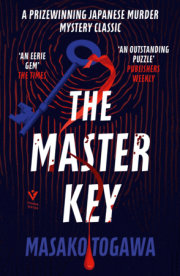
Masako Togawa (1931-2016) was born in Tokyo. Her father died when she was young, and after leaving school she worked as a typist for some years, before stepping onto the stage as a cabaret performer in 1954. She soon began to write backstage during the breaks between her performances, and in 1962, her debut novel The Master Key was published, and won the Edogawa Rampo Prize. She went on to become a hugely successful crime writer, but continued to lead a colourful parallel life as a singer, actress, feminist, nightclub owner and gay icon. She died in 2016 at the age of 83.
Prologue 7
Part 1: The Hunter
The First Victim (November 5) 35
The Second Victim (December 19) 60
The Third Victim (January 15) 74
Interval 93
Part 2: Collecting The Evidence
The Lawyers 99
The Blood Bank 128
The Black Stain 172
Insertion—A Monologue 189
The Black Stain—Continued 192
Epilogue 205

About

A dizzying tale of lust, mystery, and murder—from a beloved Japanese crime fiction author and LGBT icon

The Lady Killer leads a double life in Tokyo's shadowy underworld. By day, he is a devoted husband and hard worker; by night, he cruises cabaret bars and nightclubs in search of lonely single women to seduce.

But now the hunter is being hunted, and in his wake lies a trail of gruesome murders. Who is the culprit? The answer lies tangled in a web of clues—and to find it, he must accept that nothing is what it seems.
 
The Lady Killer pulls from author Masako Togawa’s vibrant personal life as a cabaret performer for Tokyo’s gay nightclub scene during the ‘50s and ‘60s. Throughout her writing career, Togawa continued to champion the LGBT community as a queer woman—sealing her reputation as one of Japan’s most prominent crime fiction authors and LGBT heroines.

Excerpt

She was on the second floor of the bar, seated alone in a box seat and gazing down onto the first floor. Faintly, through the whirl of cigarette smoke, she could see a waiter in a white jacket standing by the door, a bartender rattling a cocktail shaker behind the counter below her. As for the other cus- tomers, they were all either seated at the counter or else in boxes on the first floor, almost invisible in the subdued lighting popular in such places. Upstairs where she was, there was another bar counter behind which a bartender was passing the time polishing glasses; at the corner of the counter, two young men sat face to face whispering to each other.

Nobody was paying her any attention whatever. If they had, they would have probably thought that this girl, wearing no makeup and seeming to be no more than twenty, did not look at all like a typical bar customer.

When she had entered a few minutes before, there had been an oddly disturbed look on her face. There were no vacant places on the ground floor, so she had made her way upstairs. As she climbed, the stairs beneath her feet seemed to rise and fall like waves; she floated on them, feeling hollow as a boat. All the chatter and music, the din of a busy bar, seemed to recede from her; she felt strangely alone in a world as black as pitch.

She stretched forward and picked up her half-empty glass, draining its contents, the color of cold tea, in a gulp. This was her third glass of whiskey tonight, and the third she had drunk in all her life. The whiskey warmed her throat, and she began to feel light-headed. She stood up and went to the counter, taking care with each step not to reel or fall.

The bartender looked up and, seeing the empty glass in her hand, smiled.

“Some pace tonight!”

She smiled back at him. It would cost her nothing to be pleasant to him, and besides, she had no idea of where she would go when she left the bar.

“Ready for the fourth one? I’ll bring it over.” He pretended to note the drink on her bill, but in reality wrote nothing. She might as well have this one free.

Giving him another sweet smile, she turned and went back to her table on the balcony. She suddenly felt more cheerful, thanks to this act of kindness, which she had noticed. I must give him a pack of cigarettes before I go, she thought.

The bartender came over, deposited her drink and a fresh saucer of peanuts, and left her as silently as he had come. Once more, she was alone.

When she closed her eyes, she saw clashing shades of red and green still, but fortunately the sharp metallic sound that had rung inside her head had abated. After a while, she heard music, but it was impossible for her to tell if the sounds came from outside or were merely in her head. She didn’t really care which was the case; drifting through her personal world, she beat time with the tips of her feet. One two three, one two three… she became aware that the music was a cheerful polka, the instruments a violin and a guitar.

How I used to love this tune, she thought. Back in the days when I had no worries; I was happy then. She began to cry silently, moved by this sentimental thought. As she wept, the tune changed; first there was a waltz, and then music of an indeterminate rhythm.

And then she heard the bass voice that she would never forget until the day she died. There was something more than human about it; it was more like an organ heard in church. It crept toward her, lapped her feet and climbed steadily until it captured her heart. She recognized the song; it was “Zigeunerliedchen” by Schumann.

Im Schatten des Waldes, im Buchengezweig,
Da regt’s sich und raschelt und flüstert zu gleich.
Es flackern die Flammen, es gaukelt der Schein
Um bunte Gestalten, um Laub und Gestein.

Having completed the first stanza in German, the voice went back to the beginning again and sang in Japanese.

Here ’neath the beeches’ greening shade We feast and frolic in the glade.

The torches burn and brightly light Us sitting on the leaves tonight.

Sing, sing, the greenwoods ring, The gypsy tribe is frolicking!

The deep, sad voice was full of soulfulness and sympathy, overriding the thick tones of drunkards and the off-key soprano voices of the hostesses who were endeavoring to accompany it. Who could it be? She opened her eyes, which she had closed in ecstasy, and peered over the railing that surrounded the balcony. But all she could see were two stroll- ing musicians, one with a violin, the other with a guitar, who had accompanied the song. Shyly she too began to sing the “Zigeunerliedchen,” which had been a compulsory piece at her high school. Her voice seemed to blend perfectly with the bass. They sang together, they were silent together, in a perfect harmony that she could not leave, until at last the guitar and the violin were silent, the bass, too, fading away. Who could this singer have been, she wondered, whose voice so matched hers? Unable to restrain her curiosity, she got up and went downstairs, drawn by the magic voice, no freer than a puppet on a string. As she descended to the first floor, her body was drenched by the hubbub; she peered uncertainly into the unaccustomed dark, but all she could make out through the spirals of smoke were the black heads of the crowd, each one seeming to overlap its neighbor. What was she to do?

And then she had an inspiration. The itinerant violinist was about to leave the bar; she rushed over and blocked his way.

“Excuse me, sir! Would you mind playing that again?” “Of course, young lady, as often as you wish.” The violinist, whose hair receded to the crown of his head, gazed curiously into her eyes, his glance also taking in the hundred-yen note that she was proffering. Accepting the tip, he called his part- ner back; they began to play, and out of the dark and over the babble of voices once again emerged that superb bass voice. The owner turned out to be a man buried in the shadows, sitting alone in the box just behind her. She craned around, trying to see him without seeming too curious.

“Why don’t you sit with me?” said the deep voice, and she obeyed as if it was the most natural thing in the world. It felt almost as if they were meeting by prior agreement.

“Keep playing!” he called out, and the man and the girl sang together in perfect harmony.
As they sang, they stole glances at each other; it was as if they had been friends for years.
“Come on, let’s have something else for a change!” cried another customer.

The violin player lowered his instrument and asked, “What shall I do? O.K. to play something else?”

She looked at her companion, and then turned back to the musician.

“No, that’s enough, thanks. You can go.”

And shortly afterward she left, too, in the company of the stranger, who settled her bill as well as his own. As they walked out of the bar together, the light of a streetlamp fell on him, and for the first time she could see him clearly. He was about thirty, she judged, and had a well-tanned, clean- cut face. His suit was both tasteful and well cut. Although he had the appearance of a maiden’s dream, she felt regretfully, they must seem to others to be an ill-matched couple.

Several hours later, they sank together into the back seat of a taxi. By now, he was clasping her thin body in his long arms, nuzzling her hair with his chin.

“Take us somewhere where we can get a good night’s sleep,” he said to the driver. His voice sounded exhausted, almost monotonous.

“Yes, sir. Western or Japanese style?” The driver plunged dangerously into the traffic. Perhaps she heard the exchange between her partner and the taxi driver, perhaps she did not. She lay motionless in his arms, her eyes tightly closed.

Reviews

'Full of subtly menacing tensions and sharp psychological insights, told in lean, sparsely ornamented style. This one is a must for the discerning reader.' Kirkus

‘Long established in Japan, [Togawa’s] books have benefited from sensitive translation to enjoy a well-deserved second life.’ — Daily Mail

'The PD James of Japan.' Times Literary Supplement

‘There's a great and distinct timbre to this book … it certainly has the cleverness ultimately to keep a genre reader really satisfied.’ — The Bookbag

"Even when you think you know just where the book is headed… you don’t… Thoroughly enjoyable." — David’s Book World

Author

Masako Togawa (1931-2016) was born in Tokyo. Her father died when she was young, and after leaving school she worked as a typist for some years, before stepping onto the stage as a cabaret performer in 1954. She soon began to write backstage during the breaks between her performances, and in 1962, her debut novel The Master Key was published, and won the Edogawa Rampo Prize. She went on to become a hugely successful crime writer, but continued to lead a colourful parallel life as a singer, actress, feminist, nightclub owner and gay icon. She died in 2016 at the age of 83.

Table of Contents

Prologue 7
Part 1: The Hunter
The First Victim (November 5) 35
The Second Victim (December 19) 60
The Third Victim (January 15) 74
Interval 93
Part 2: Collecting The Evidence
The Lawyers 99
The Blood Bank 128
The Black Stain 172
Insertion—A Monologue 189
The Black Stain—Continued 192
Epilogue 205
  • More Websites from
    Penguin Random House
  • Common Reads
  • Library Marketing