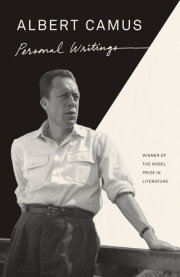
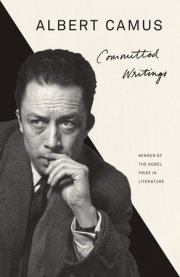
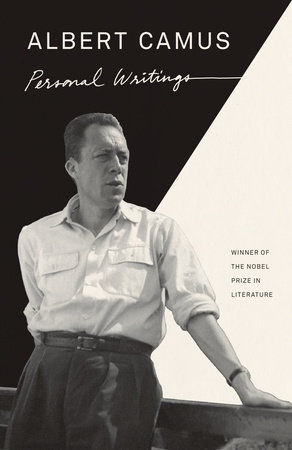
The Nobel Prize winner's most influential and enduring personal writings, newly curated and introduced by acclaimed Camus scholar Alice Kaplan.
Albert Camus (1913-1960) is unsurpassed among writers for a body of work that animates the wonder and absurdity of existence. Personal Writings brings together, for the first time, thematically-linked essays from across Camus's writing career that reflect the scope and depth of his interior life. Grappling with an indifferent mother and an impoverished childhood in Algeria, an ever-present sense of exile, and an ongoing search for equilibrium, Camus's personal essays shed new light on the emotional and experiential foundations of his philosophical thought and humanize his most celebrated works.
"A collection of brief, piercing personal pieces by the 1957 Nobel laureate . . . Camus reveals himself to readers, discussing his affections, regrets, memories, problems, complaints, and ideas about art and writing . . . What will strike many readers is the author’s extraordinarily evocative language, his astonishing facility to create memorable phrases and take readers to places most have never been but who, because of his artistry, feel immediately at home . . . Much eloquent—often lyrical—evidence that the author deserved his Nobel Prize." —KirkusReviews (Starred Review)
"This collection of essays reminds us that Camus offered a more difficult kind of inspiration — the sort that does not put us at ease but makes us uneasy; the sort that does not gloss life but gazes at it with open eyes." —Robert Zaretsky, The Los Angeles Review of Books
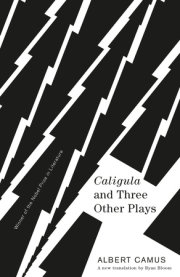
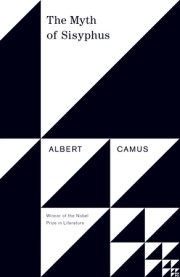
ALBERT CAMUS was born in Algeria in 1913. He spent the early years of his life in North Africa, where he became a journalist. During World War II, he was one of the leading writers of the French Resistance and an editor of Combat, an underground newspaper he helped found. His fiction, including The Stranger, The Plague, The Fall, and Exile and the Kingdom; his philosophical essays The Myth of Sisyphus and The Rebel and his plays The Just Assassins, The Misunderstanding, and Caligula have assured his preeminent position in modern literature and philosophy. In 1957, Camus was awarded the Nobel Prize in Literature. On January 4, 1960, he was killed in a car accident.
View titles by Albert Camus
The Nobel Prize winner's most influential and enduring personal writings, newly curated and introduced by acclaimed Camus scholar Alice Kaplan.
Albert Camus (1913-1960) is unsurpassed among writers for a body of work that animates the wonder and absurdity of existence. Personal Writings brings together, for the first time, thematically-linked essays from across Camus's writing career that reflect the scope and depth of his interior life. Grappling with an indifferent mother and an impoverished childhood in Algeria, an ever-present sense of exile, and an ongoing search for equilibrium, Camus's personal essays shed new light on the emotional and experiential foundations of his philosophical thought and humanize his most celebrated works.
Reviews
"A collection of brief, piercing personal pieces by the 1957 Nobel laureate . . . Camus reveals himself to readers, discussing his affections, regrets, memories, problems, complaints, and ideas about art and writing . . . What will strike many readers is the author’s extraordinarily evocative language, his astonishing facility to create memorable phrases and take readers to places most have never been but who, because of his artistry, feel immediately at home . . . Much eloquent—often lyrical—evidence that the author deserved his Nobel Prize." —KirkusReviews (Starred Review)
"This collection of essays reminds us that Camus offered a more difficult kind of inspiration — the sort that does not put us at ease but makes us uneasy; the sort that does not gloss life but gazes at it with open eyes." —Robert Zaretsky, The Los Angeles Review of Books
Author
ALBERT CAMUS was born in Algeria in 1913. He spent the early years of his life in North Africa, where he became a journalist. During World War II, he was one of the leading writers of the French Resistance and an editor of Combat, an underground newspaper he helped found. His fiction, including The Stranger, The Plague, The Fall, and Exile and the Kingdom; his philosophical essays The Myth of Sisyphus and The Rebel and his plays The Just Assassins, The Misunderstanding, and Caligula have assured his preeminent position in modern literature and philosophy. In 1957, Camus was awarded the Nobel Prize in Literature. On January 4, 1960, he was killed in a car accident.
View titles by Albert Camus