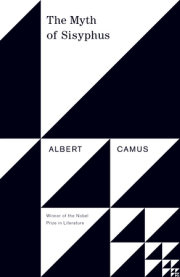
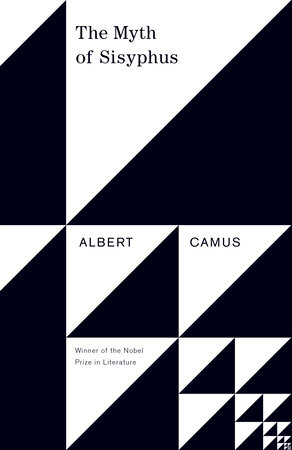
A Nobel Prize-winning author delivers one of the most influential works of the twentieth century, showing a way out of despair and reaffirming the value of existence.
Influenced by works such as Don Juan and the novels of Kafka, these essays begin with a meditation on suicide—the question of living or not living in a universe devoid of order or meaning. With lyric eloquence, Albert Camus brilliantly presents a crucial exposition of existentialist thought.
WINNER
| 1957 Nobel Prize
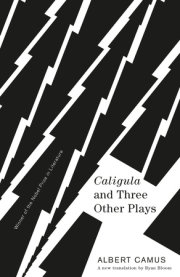
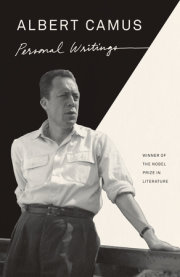
ALBERT CAMUS was born in Algeria in 1913. He spent the early years of his life in North Africa, where he became a journalist. During World War II, he was one of the leading writers of the French Resistance and an editor of Combat, an underground newspaper he helped found. His fiction, including The Stranger, The Plague, The Fall, and Exile and the Kingdom; his philosophical essays The Myth of Sisyphus and The Rebel and his plays The Just Assassins, The Misunderstanding, and Caligula have assured his preeminent position in modern literature and philosophy. In 1957, Camus was awarded the Nobel Prize in Literature. On January 4, 1960, he was killed in a car accident.
View titles by Albert Camus
A Nobel Prize-winning author delivers one of the most influential works of the twentieth century, showing a way out of despair and reaffirming the value of existence.
Influenced by works such as Don Juan and the novels of Kafka, these essays begin with a meditation on suicide—the question of living or not living in a universe devoid of order or meaning. With lyric eloquence, Albert Camus brilliantly presents a crucial exposition of existentialist thought.
Awards
WINNER
| 1957 Nobel Prize
Author
ALBERT CAMUS was born in Algeria in 1913. He spent the early years of his life in North Africa, where he became a journalist. During World War II, he was one of the leading writers of the French Resistance and an editor of Combat, an underground newspaper he helped found. His fiction, including The Stranger, The Plague, The Fall, and Exile and the Kingdom; his philosophical essays The Myth of Sisyphus and The Rebel and his plays The Just Assassins, The Misunderstanding, and Caligula have assured his preeminent position in modern literature and philosophy. In 1957, Camus was awarded the Nobel Prize in Literature. On January 4, 1960, he was killed in a car accident.
View titles by Albert Camus