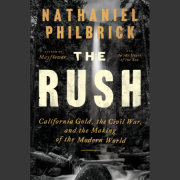
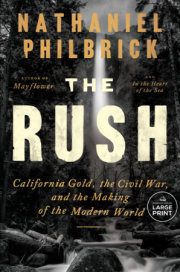
The Rush

California Gold, the Civil War, and the Making of the Modern World

National Book Award winner and Pulitzer Prize finalist Nathaniel Philbrick, author of In the Heart of the Sea and Mayflower, reveals how California’s Gold Rush forged the modern United States—and lit the long fuse to civil war

In January 1848, a carpenter spotted flecks of gold in a shallow stream at Sutter’s Mill in California—triggering the greatest voluntary migration in U.S. history and jolting a fragile republic already sliding toward crisis. In The Rush, Nathaniel Philbrick transforms the Gold Rush from a tale of sudden riches into the origin story of America’s modern contradictions: capital consolidated at dizzying speed, democracy in thrall to private power, xenophobia weaponized in the name of liberty—and a stubborn belief in the American experiment that refuses to die. This is the story of a nation tearing at the seams—a republic tested by its own ideals.

From the feverish gold-mining camps of the Sierra Nevada mountains to the wharves and vigilance committees of San Francisco, Philbrick renders a combustible, all-world society: Chilean brothers reinventing themselves to outrun prejudice; Native communities navigating dispossession and violence; the merchant-showman Samuel Brannan, drawn into the center of early vigilantism; and the politicians vying for control of California’s future—the ambitious free-soil political boss David Broderick, who squared off against William Gwin, the Southern power broker intent on tilting the state toward slavery and the Confederacy. Not until a year after the outbreak of the Civil War, when President Lincoln signed legislation that would unite the nation east to west by building a transcontinental railroad, was California’s loyalty secured.

Philbrick follows the gold as it moves from riverbed to countinghouse to the halls of power, revealing how vigilantism hardened into law and how debates over slavery in the West tipped the balance in Washington. The result is a clear, human story of how a scramble for wealth reshaped ideas of freedom, labor, and belonging—and how California's rise helped push a fractured nation toward war. The Rush is alive with characters whose choices still reverberate: a searing, panoramic epic that captures both the fury and the promise of America.
“Like a concentrated beam of light refracted into a brilliant spectrum, Nathaniel Philbrick masterfully illuminates the forces great and small unleashed by the 1848 gold strike at Sutter’s Mill. This richly researched, vividly told narrative captures the rapacious, lawless quest for land and treasure that helped destabilized a fractured Union—and the astonishing human drama that came with it. Philbrick shows how the explosion of the frontier transformed the West, propelled a divided nation toward civil war, and opened a door through which an entire world rushed in. With an extraordinary cast—including a Chilean fortune seeker, an escaped slave, and a Southern sympathizer who rose to become a U.S. Senator from California—he gives voice to the people who were discarded, remade, and occasionally redeemed in one of the most consequential eras in American history.”
—Doris Kearns Goodwin, Pulitzer Prize–winning historian and author of Team of Rivals: The Political Genius of Abraham Lincoln

“With characteristic eloquence and insight, Nathaniel Philbrick has given us an illuminating and absorbing account of the California Gold Rush, bringing that tumultuous, thrilling, and complex moment to vivid life. Peopled with memorable figures and paced like a great novel, The Rush is a terrific work of history.”
—Jon Meacham, Pulitzer Prize–winning author of And There Was Light

“Nathaniel Philbrick has long been one of our most elegant narrative historians, and he’s back at it again, writing at the height of his powers. The Rush brings new energy and insight to a massively consequential event we only thought we knew. In a richly pleasing weave, he gives us the micro and macro, the intimate and sweeping, and makes us care about an engaging cast of characters who sought a new life in California’s riches. Along the way, Philbrick considers how the gold rush sped up everything it touched and led directly to the restless, frenetic, hyper-adrenalized culture of today's America.”
—Hampton Sides, New York Times bestselling author of Blood and Thunder and The Wide Wide Sea

“Nathaniel Philbrick, our master storyteller, sees in the Gold Rush a Rosetta Stone for pre–Civil War America. It is a confounding and encouraging chronicle told from a myriad of perspectives, a bottom-up, epic tale of an inevitable rush toward profit and near-national suicide.”
—Ken Burns, filmmaker

“With an eye for the perfect detail (sidewalks paved with beef jerky!) and a gift for the panoramic, Nathaniel Philbrick has pinned the Gold Rush, in all its wild color, to the page. Better yet, he follows it across time and across the country, to the slavery debate, the Civil War, and the transcontinental railroad. A sweeping, deeply satisfying narrative, pulsing with frontier energy.”
—Stacy Schiff, Pulitzer Prize–winning author of The Revolutionary: Samuel Adams

“A rush of a narrative that will leave you giddy and full of wonder, turning pages with all the fever of a hopeful prospector. The true gold here is in the pathos beneath the glittering surface: the stories of real people; their brutal contests and conquests; and the breaching and the breaking of the natural terrain. A thrilling and valuable story of the making of America from the maestro of narrative nonfiction.” —Ilyon Woo, Pulitzer Prize–winning author of Master Slave Husband Wife

© Kit Noble
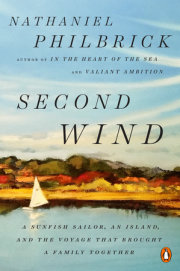
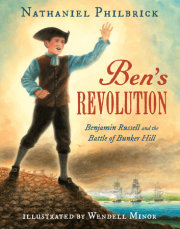
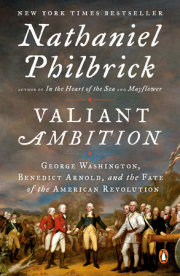
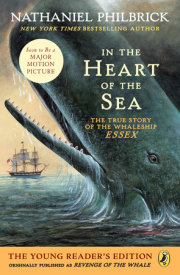
Nathaniel Philbrick is the author of In the Heart of the Sea, winner of the National Book Award; Mayflower, finalist for the Pulitzer Prize; Valiant Ambition, winner of the George Washington Prize; Bunker Hill, winner of the New England Book Award; Travels with George; Away Off Shore; Second Wind; Sea of Glory; and The Last Stand. View titles by Nathaniel Philbrick

About

National Book Award winner and Pulitzer Prize finalist Nathaniel Philbrick, author of In the Heart of the Sea and Mayflower, reveals how California’s Gold Rush forged the modern United States—and lit the long fuse to civil war

In January 1848, a carpenter spotted flecks of gold in a shallow stream at Sutter’s Mill in California—triggering the greatest voluntary migration in U.S. history and jolting a fragile republic already sliding toward crisis. In The Rush, Nathaniel Philbrick transforms the Gold Rush from a tale of sudden riches into the origin story of America’s modern contradictions: capital consolidated at dizzying speed, democracy in thrall to private power, xenophobia weaponized in the name of liberty—and a stubborn belief in the American experiment that refuses to die. This is the story of a nation tearing at the seams—a republic tested by its own ideals.

From the feverish gold-mining camps of the Sierra Nevada mountains to the wharves and vigilance committees of San Francisco, Philbrick renders a combustible, all-world society: Chilean brothers reinventing themselves to outrun prejudice; Native communities navigating dispossession and violence; the merchant-showman Samuel Brannan, drawn into the center of early vigilantism; and the politicians vying for control of California’s future—the ambitious free-soil political boss David Broderick, who squared off against William Gwin, the Southern power broker intent on tilting the state toward slavery and the Confederacy. Not until a year after the outbreak of the Civil War, when President Lincoln signed legislation that would unite the nation east to west by building a transcontinental railroad, was California’s loyalty secured.

Philbrick follows the gold as it moves from riverbed to countinghouse to the halls of power, revealing how vigilantism hardened into law and how debates over slavery in the West tipped the balance in Washington. The result is a clear, human story of how a scramble for wealth reshaped ideas of freedom, labor, and belonging—and how California's rise helped push a fractured nation toward war. The Rush is alive with characters whose choices still reverberate: a searing, panoramic epic that captures both the fury and the promise of America.

Reviews

“Like a concentrated beam of light refracted into a brilliant spectrum, Nathaniel Philbrick masterfully illuminates the forces great and small unleashed by the 1848 gold strike at Sutter’s Mill. This richly researched, vividly told narrative captures the rapacious, lawless quest for land and treasure that helped destabilized a fractured Union—and the astonishing human drama that came with it. Philbrick shows how the explosion of the frontier transformed the West, propelled a divided nation toward civil war, and opened a door through which an entire world rushed in. With an extraordinary cast—including a Chilean fortune seeker, an escaped slave, and a Southern sympathizer who rose to become a U.S. Senator from California—he gives voice to the people who were discarded, remade, and occasionally redeemed in one of the most consequential eras in American history.”
—Doris Kearns Goodwin, Pulitzer Prize–winning historian and author of Team of Rivals: The Political Genius of Abraham Lincoln

“With characteristic eloquence and insight, Nathaniel Philbrick has given us an illuminating and absorbing account of the California Gold Rush, bringing that tumultuous, thrilling, and complex moment to vivid life. Peopled with memorable figures and paced like a great novel, The Rush is a terrific work of history.”
—Jon Meacham, Pulitzer Prize–winning author of And There Was Light

“Nathaniel Philbrick has long been one of our most elegant narrative historians, and he’s back at it again, writing at the height of his powers. The Rush brings new energy and insight to a massively consequential event we only thought we knew. In a richly pleasing weave, he gives us the micro and macro, the intimate and sweeping, and makes us care about an engaging cast of characters who sought a new life in California’s riches. Along the way, Philbrick considers how the gold rush sped up everything it touched and led directly to the restless, frenetic, hyper-adrenalized culture of today's America.”
—Hampton Sides, New York Times bestselling author of Blood and Thunder and The Wide Wide Sea

“Nathaniel Philbrick, our master storyteller, sees in the Gold Rush a Rosetta Stone for pre–Civil War America. It is a confounding and encouraging chronicle told from a myriad of perspectives, a bottom-up, epic tale of an inevitable rush toward profit and near-national suicide.”
—Ken Burns, filmmaker

“With an eye for the perfect detail (sidewalks paved with beef jerky!) and a gift for the panoramic, Nathaniel Philbrick has pinned the Gold Rush, in all its wild color, to the page. Better yet, he follows it across time and across the country, to the slavery debate, the Civil War, and the transcontinental railroad. A sweeping, deeply satisfying narrative, pulsing with frontier energy.”
—Stacy Schiff, Pulitzer Prize–winning author of The Revolutionary: Samuel Adams

“A rush of a narrative that will leave you giddy and full of wonder, turning pages with all the fever of a hopeful prospector. The true gold here is in the pathos beneath the glittering surface: the stories of real people; their brutal contests and conquests; and the breaching and the breaking of the natural terrain. A thrilling and valuable story of the making of America from the maestro of narrative nonfiction.” —Ilyon Woo, Pulitzer Prize–winning author of Master Slave Husband Wife

Author

© Kit Noble
Nathaniel Philbrick is the author of In the Heart of the Sea, winner of the National Book Award; Mayflower, finalist for the Pulitzer Prize; Valiant Ambition, winner of the George Washington Prize; Bunker Hill, winner of the New England Book Award; Travels with George; Away Off Shore; Second Wind; Sea of Glory; and The Last Stand. View titles by Nathaniel Philbrick
  • More Websites from
    Penguin Random House
  • Common Reads
  • Library Marketing