
Q: We love the theme of bringing different nations and languages together in this anthology. Do you remember a time when your library brought people together and made you feel like a part of something bigger?
A: When I was 21, I went to the 50th anniversary celebration of the publisher Farrar, Straus & Giroux at the New York Public Library. I snuck in using someone else’s names. I had spent quite a few of my lunch hours at that very library, reading the poems of Seamus Heaney and the stories of Grace Paley and the novels of Jamaica Kincaid, to name a few. I love how that library’s great reading room welcomes everyone to its noble green tables to read. The height of the ceilings, the quiet of lots of people together imagining, it felt to me what I think people mean when they use the word holy. Then I would have to go back to work. And then, there I was at the library after dark, and there were the authors I had been reading at those very tables. Talking, drinking wine, breathing the same air as I did. I pulled up the courage to tell Heaney he had been a favorite of my college’s head library, Michael Durkan, and we had a chat there in the lobby about what a great librarian Michael Durkan was, about the understanding of Ireland and poetry and many other things he brought to a small town college in Pennsylvania.
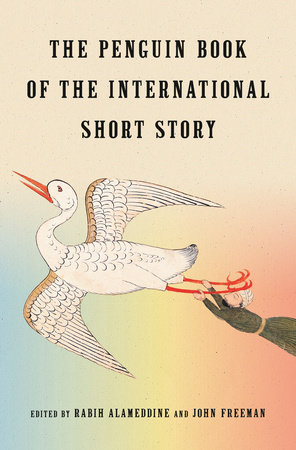
Q: What role did libraries have in the writing process, if any, for The Penguin Book of the International Short Story?
A: So many texts we considered were sourced from Georgetown’s library, because Rabih teaches there, and I often used the New York Public Library to look at anthologies which existed of specific regions and stories in particular languages. At some point, it occurred to me that one day our book would be sourced in a similar way. It felt like we were not just making a book people could buy and enjoy, but a book that would add to something accessible to all, and that promise of democratic access to knowledge which libraries stand for is beautiful.
Q: This anthology includes modern translated works. What inspired each of you to focus on this era of short fiction?
A: Most of us know the short story from long ago, from the work of Chekhov and Poe to Welty and Maupassant. But who are those writers today? And having access through translators to so many different literatures, why not look at the world and see what it is saying?
Q: Do either of you have a favorite or most memorable short story from this collection?
A: I think there were points in reading Can Xue’s story Vertical Motion where I felt like I was on a roller coaster. It is one of the most marvelous texts in any form I’ve ever read. I also love the subtlety of Samanta Schweblin’s story, its poise and magnificent build up of dread. I’ve probably read it ten times but I never tire of it. She is an absolute master of the form. Also, I am partial to it because I published it first in a literary journal ten years ago, but I think Mieko Kawakami’s “The Flower Garden” is every bit as good as “The Tell Tale Heart,” only instead of dread it creates this phenomenal cloud of melancholy, of what it feels like to be overlooked.
Q: What’s something each of you hope readers will take away from this anthology?
A: A sense of joy and wonder at the varieties of brilliance in the short form today. Whether it’s Adania Shibl or Ted Chiang or Mariana Enriquez, Han Kang or Edwidge Danticat, there’s such a depth of talent across the globe committed to the form — and doing some remarkable things inside of it.
Q: Do each of you have a favorite library memory? Either from writing The Penguin Book of the International Short Story, or just browsing the shelves?
A: We made this book together, and so there were stories I brought forward and stories Rabih brought forward, and I think that moment when one of us surprised the other, those
were the best in the process of assembling the book. He had me read a story called “Squatting,” by the Chinese writer Diao Dou, it’s an increasingly absurd story about a provincial government’s battle of wills with its busybody citizens, in which squatting becomes a kind of rule. When we finally talked after reading that I think we laughed for 15 minutes. Similarly, I think Rabih said oh my god in about twenty different tones after he read Gunnhild Øyehaug’s “Apples.”
Q: If you could say one thing to librarians right now, what would it be?
A: Thank you, don’t give up, and I am sorry I kept some of my books so long!