Close Modal
Download high-resolution image Look inside
Listen to a clip from the audiobook
audio pause button
0:00
0:00

Redwood

The Untold Story of the Cold War's Most Extraordinary Spy

Author Ben Macintyre On Tour
Look inside
Listen to a clip from the audiobook
audio pause button
0:00
0:00
Large Print (Large Print - Tradepaper)
$37.00 US
| $50.00 CAN
12 per carton
On sale Oct 06, 2026 | 688 Pages | 9798217411344
Grades 9-12 + AP/IB

See Additional Formats
From the bestselling author of The Spy and the Traitor comes the ultimate true-life Cold War thriller: the untold story of a Russian double agent with a desperate secret—and the key to stopping a nuclear apocalypse.

“Ben Macintyre has a rare ability to turn history and espionage upside down and give us true, colorful stories that astound us as they draw us in. Redwood might be his best.”—John Grisham

In 1981, KGB Major Vladimir Kuzichkin, codenamed “Redwood,” was the best Soviet officer in Iran, running spies in the wake of the Islamic revolution and working with a hidden network of Iranian communists to undermine the new regime. But Kuzichkin had a problem, a sexual secret that, if revealed, would humiliate him with his colleagues, cost him his job, and send him into exile. Desperate for a solution, he reached out to the only place he believed could help: Britain’s MI6.

So begins one of the most astounding true spy stories of the Cold War, set against the terrifying prospect of nuclear armageddon. Taking readers through shadowy back alleys of Tehran, across bloody streets and into cloistered intelligence offices, Ben Macintyre unfolds a world in turmoil, where no one’s motive is what it seems, and exposure means death. As Kuzichkin helps the Soviet leadership plot an overthrow of the Ayatollah’s fledgling regime—and the American government secretly contemplates a nuclear response if they do—it falls on MI6’s resourceful young undercover officer Ian McCredie to spirit Kuzichkin’s vital information back to the West. But when both Iranian intelligence and the KGB close in on the Russian double-agent, McCredie must design an improbable high-stakes escape plan for Kuzichkin, in which failure is almost certain and the direction of the Cold War hangs in the balance.

This is the gripping tale of one man’s courage, and its extraordinary unintended consequences that still shape our world today. It’s about a moving friendship between spies on opposite sides of the global conflict; about marriage, loyalty, and betrayal. Drawing on never-before-seen archival material and revealing interviews with the participants, Redwood plunges readers back into the world of The Spy and the Traitor, where the fate of millions turns on the split-second decisions of spies under pressure.
1

Elite Forces

At the age of twenty-­two, Vladimir Andreevich Kuzichkin discovered he was not who he thought he was.

Kuzichkin’s childhood was privileged, by Moscow standards. His father Andrei was a KGB officer, undistinguished and disgruntled, but enjoying the benefits that came from membership in the Soviet Union’s all-­powerful intelligence and security service. His mother, Elisabeta, was an office typist. Born in 1947, Vladimir was principally raised by his maternal grandmother, who spoiled him. Despite the privations of postwar Russia, the family had enough to eat, clothing coupons, and holidays in a state dacha. When Vladimir was seven, they moved into a three-­room apartment in a cooperative block in the Leningrad District, surrounded by a high fence to keep out the poor from the slums. An only child, little Volodya considered this a life of “luxury.”

But the family had a streak of violent unhappiness running through it, fueled by vodka. Andrei Kuzichkin was a vicious alcoholic. He beat Elisabeta on the weekend and whenever he drank during the week, which was usually. She suffered repeated miscarriages. This added to Andrei’s fury. He hit his son, too, until the boy grew big enough to defend himself. By the age of fourteen, Vladimir was already over six feet tall.

Intelligent and sensitive, Vladimir had hated his father for as long as he could remember. One summer in the dacha, he befriended a domesticated pig named Vasili, feeding the animal leftovers and teaching it to come when he whistled. At the end of the holiday Andrei sternly summoned Vladimir to the barn and insisted the boy watch as he killed his pet with a hatchet. Ten-­year-­old Volodya wept for a week, but not in front of his father. Like many abused children, fear and hatred brought complex secret feelings of guilt and self-­loathing. “What kind of a person am I that I detest the man I came from?” he wondered. Sometimes he imagined killing his father, with an axe.

The boy rebelled, insofar as that was possible in Soviet Russia of the 1960s. He ran with a gang of street toughs and got into fights. His height made him a target. To defy his father, he refused to join Komsomol, the communist youth league. He listened to bootleg pop music from Britain and America and aped the forbidden fashions of the capitalist West. He also discovered the songs of Vladimir Vysotsky, an unruly star of the new Moscow folk underground. With a cousin and two friends, he formed a rock band called The Brothers. At the age of eighteen, wearing flares and two-­inch home-­adapted Cuban heels, Vladimir Kuzichkin imagined himself as a gigantic Russian version of Cliff Richard or Paul McCartney. “We are going to be the Russian Beatles,” he declared. Andrei Kuzichkin said his son’s music was rubbish and that The Brothers would never amount to anything. He was right.

Vladimir Kuzichkin finished school with good grades, a reputation for fistfights, a taste for Western pop, a damaged soul, and no ambition. Called up for three years’ military service, he was sent to Hagenow in East Germany as a radio operator in a nuclear missile launching unit, the front line of the Cold War. “In the event of war,” he recalled, “the division’s task was to annihilate Hamburg with six tactical nuclear missiles” and then be obliterated in turn, in accordance with the logic of mutually assured destruction (MAD). The naïve young conscript was not overly concerned by his assigned role in nuclear Armageddon. He was very bored.

One morning, Kuzichkin was summoned to the commander’s office to take an urgent telephone call from his mother. “Your father is dead,” Elisabeta Kuzichkina said, her voice hoarse. “You must come home.” Granted two days’ compassionate leave, on the train to Moscow he wondered at his own lack of grief. He was unable to cry. His overwhelming feeling was not grief, but relief. “Now I don’t have to hate myself so much,” he reflected.

Opening the apartment front door, he found Andrei Kuzichkin seated at the table, very much alive, and drunk. The older man picked up his bottle without a word and retreated to the bedroom. Between sobs, Elisabeta confessed her lie.

Vladimir’s father was not Andrei Kuzichkin, but Georgi Alexandreevich Larkin, a tall, good-­looking construction engineer of Irish ancestry, hence his unusual surname. Elisabeta and Georgi met after the war, and she had become pregnant. They intended to marry. But then he was sent to Siberia to build a steel factory. Georgi urged her to come too. She refused. What would she do there? Moscow was the only world she knew. Larkin never returned from the east. For a few years Elisabeta struggled on as an unmarried working mother, while her mother cared for the child. Her sister was married to a KGB officer, who introduced her to his brother, also in the KGB. Andrei Kuzichkin was boozy and rough, but he had a good job. Andrei offered a future. He even reluctantly agreed to adopt her child.

And now Georgi Larkin, the only man she had ever loved, was dead from a heart attack on a bear-­hunting expedition in the Siberian wilderness. It was four hours before they discovered his body in the snow.

Vladimir Kuzichkin was baffled and furious. “How could she deceive me all these years?” he wondered. He ignored Andrei from that day on. And yet the discovery explained everything: the dislocation he had always felt; his hatred for the man who had pretended to be his father and beaten that untruth into him. More prosaically, it explained his height and coloring. To his friends, bandmates, and army comrades, he was still Kuzichkin, the lanky would-­be pop star, but inside, secretly, he was Larkin. The discovery of a real father, now invested with imaginary qualities Georgi had never possessed in life, awoke the possibility of making himself into someone else. So that is what he did.

To begin that transformation, he decided, he would need some higher education. Back at the Hagenow base, he plunged into the officers’ library and began reading ravenously. He joined the Communist Party (an unshakable requirement for anyone with ambition in Soviet Russia), but without much conviction. He had recited the mantras of Marxism from his earliest childhood, and believed them, along with everyone else. The discovery of his real father made him question everything he had grown up with, including communism. He did not share these heretical thoughts with anyone else. He barely admitted them to himself.

After three years in uniform, Kuzichkin applied to study at the Institute of Asian and African Countries in Moscow, a specialist university teaching Oriental and African languages. Mastery of a foreign tongue “raised the probability of future work abroad.” Reading down the list of language options, from Arabic to Zulu, he settled on Persian (or Farsi), the language of Iran. It sounded intriguing, and the course was undersubscribed. A model Soviet citizen with good academic grades and a clean military record, Kuzichkin was told to report to the Institute on September 1, 1970.

In addition to Iran’s language, culture, and history, the six-­year course included a substantial ideological component: Communist Party history, dialectical materialism, Marxism-­Leninism, philosophy, and political economy. Each student was required to learn an additional Western language: he chose English. If he was deemed suitable, the fourth year (1973–­1974) would be spent in Iran.

Located on Karl Marx Prospekt opposite the Kremlin, the Institute was controlled by the International Department of the Central Committee of the Communist Party of the Soviet Union (CPSU). Like every other organ of state, its primary function was to bolster communism and spread the doctrine of revolution worldwide. Kuzichkin was now “in the fast lane of Soviet society,” he reflected, a student at a top university with a bright future: “There was nothing to bar my progress.”

Kuzichkin was a shy, awkward young man, as tall people sometimes are. Except when drunk. Alcohol brought out the extrovert in him. In social situations he tended to drink fast and deeply, before seizing a guitar and bursting into song. Women were drawn to this gentle, melodious giant with bright blue eyes and a shock of fair hair. In October, at a party thrown by a friend of his flatmate, Kuzichkin plucked up and soaked up enough Dutch courage to ask a girl to dance. Her name was Galina Lvovna Kokosova, a petite, pale, sweet-­faced woman two years his junior. They swayed to bootlegged Rolling Stones records, her head on his chest, tiny in his arms.

Galina, known as Galya to friends and family, could not understand how such a handsome man could be attracted to her. “I was a very sad and lonely 22-­year-­old girl: I wasn’t in love with anyone; I didn’t have any particularly close friends; and, after my dad departed, everything in my life went almost catastrophically wrong. The period from 1965, when my father passed away, until I met Volodya, were the saddest years of my existence.” He gave her a confidence she had never felt before.
“I grab each new book by Ben Macintyre and read it as fast as possible. He has a rare ability to turn history and espionage upside down and give us true, colorful stories that astound us as they draw us in. Redwood might be his best. Given the current war in Iran, it is certainly his most timely.”—John Grisham

“A crackerjack spy story that only Ben Macintyre could tell so well. He seems to have talked to everyone, and cracked every file, that might shed new light on this remarkable tale. But a word of advice: before starting to read, settle into a comfortable chair and have snacks close to hand, because you won't be going anywhere for a while.”—Scott Anderson, author of King of Kings: The Iranian Revolution: A Story of Hubris, Delusion and Catastrophic Miscalculation

“A tangled tale of spy versus spy . . . As ever, Macintyre delivers an improbable but impeccable tale of true espionage.”Kirkus Reviews


© Justine Stoddart
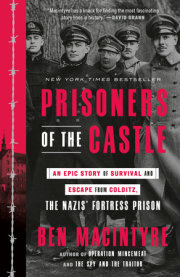
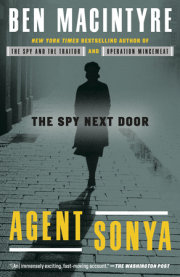
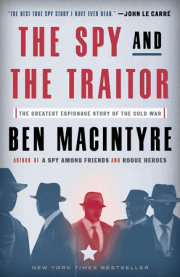
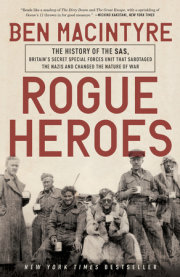
Ben Macintyre is a writer-at-large for The Times (UK) and the bestselling author of Agent Sonya, The Spy and the Traitor, A Spy Among Friends, Double Cross, Operation Mincemeat, Agent Zigzag, Rogue Heroes, and Prisoners of the Castle, among other books. Macintyre has also written and presented BBC documentaries of his work. View titles by Ben Macintyre

Discussion Guide for Redwood

Provides questions, discussion topics, suggested reading lists, introductions and/or author Q&As, which are intended to enhance reading groups’ experiences.

(Please note: the guide displayed here is the most recently uploaded version; while unlikely, any page citation discrepancies between the guide and book is likely due to pagination differences between a book’s different formats.)

About

From the bestselling author of The Spy and the Traitor comes the ultimate true-life Cold War thriller: the untold story of a Russian double agent with a desperate secret—and the key to stopping a nuclear apocalypse.

“Ben Macintyre has a rare ability to turn history and espionage upside down and give us true, colorful stories that astound us as they draw us in. Redwood might be his best.”—John Grisham

In 1981, KGB Major Vladimir Kuzichkin, codenamed “Redwood,” was the best Soviet officer in Iran, running spies in the wake of the Islamic revolution and working with a hidden network of Iranian communists to undermine the new regime. But Kuzichkin had a problem, a sexual secret that, if revealed, would humiliate him with his colleagues, cost him his job, and send him into exile. Desperate for a solution, he reached out to the only place he believed could help: Britain’s MI6.

So begins one of the most astounding true spy stories of the Cold War, set against the terrifying prospect of nuclear armageddon. Taking readers through shadowy back alleys of Tehran, across bloody streets and into cloistered intelligence offices, Ben Macintyre unfolds a world in turmoil, where no one’s motive is what it seems, and exposure means death. As Kuzichkin helps the Soviet leadership plot an overthrow of the Ayatollah’s fledgling regime—and the American government secretly contemplates a nuclear response if they do—it falls on MI6’s resourceful young undercover officer Ian McCredie to spirit Kuzichkin’s vital information back to the West. But when both Iranian intelligence and the KGB close in on the Russian double-agent, McCredie must design an improbable high-stakes escape plan for Kuzichkin, in which failure is almost certain and the direction of the Cold War hangs in the balance.

This is the gripping tale of one man’s courage, and its extraordinary unintended consequences that still shape our world today. It’s about a moving friendship between spies on opposite sides of the global conflict; about marriage, loyalty, and betrayal. Drawing on never-before-seen archival material and revealing interviews with the participants, Redwood plunges readers back into the world of The Spy and the Traitor, where the fate of millions turns on the split-second decisions of spies under pressure.

Excerpt

1

Elite Forces

At the age of twenty-­two, Vladimir Andreevich Kuzichkin discovered he was not who he thought he was.

Kuzichkin’s childhood was privileged, by Moscow standards. His father Andrei was a KGB officer, undistinguished and disgruntled, but enjoying the benefits that came from membership in the Soviet Union’s all-­powerful intelligence and security service. His mother, Elisabeta, was an office typist. Born in 1947, Vladimir was principally raised by his maternal grandmother, who spoiled him. Despite the privations of postwar Russia, the family had enough to eat, clothing coupons, and holidays in a state dacha. When Vladimir was seven, they moved into a three-­room apartment in a cooperative block in the Leningrad District, surrounded by a high fence to keep out the poor from the slums. An only child, little Volodya considered this a life of “luxury.”

But the family had a streak of violent unhappiness running through it, fueled by vodka. Andrei Kuzichkin was a vicious alcoholic. He beat Elisabeta on the weekend and whenever he drank during the week, which was usually. She suffered repeated miscarriages. This added to Andrei’s fury. He hit his son, too, until the boy grew big enough to defend himself. By the age of fourteen, Vladimir was already over six feet tall.

Intelligent and sensitive, Vladimir had hated his father for as long as he could remember. One summer in the dacha, he befriended a domesticated pig named Vasili, feeding the animal leftovers and teaching it to come when he whistled. At the end of the holiday Andrei sternly summoned Vladimir to the barn and insisted the boy watch as he killed his pet with a hatchet. Ten-­year-­old Volodya wept for a week, but not in front of his father. Like many abused children, fear and hatred brought complex secret feelings of guilt and self-­loathing. “What kind of a person am I that I detest the man I came from?” he wondered. Sometimes he imagined killing his father, with an axe.

The boy rebelled, insofar as that was possible in Soviet Russia of the 1960s. He ran with a gang of street toughs and got into fights. His height made him a target. To defy his father, he refused to join Komsomol, the communist youth league. He listened to bootleg pop music from Britain and America and aped the forbidden fashions of the capitalist West. He also discovered the songs of Vladimir Vysotsky, an unruly star of the new Moscow folk underground. With a cousin and two friends, he formed a rock band called The Brothers. At the age of eighteen, wearing flares and two-­inch home-­adapted Cuban heels, Vladimir Kuzichkin imagined himself as a gigantic Russian version of Cliff Richard or Paul McCartney. “We are going to be the Russian Beatles,” he declared. Andrei Kuzichkin said his son’s music was rubbish and that The Brothers would never amount to anything. He was right.

Vladimir Kuzichkin finished school with good grades, a reputation for fistfights, a taste for Western pop, a damaged soul, and no ambition. Called up for three years’ military service, he was sent to Hagenow in East Germany as a radio operator in a nuclear missile launching unit, the front line of the Cold War. “In the event of war,” he recalled, “the division’s task was to annihilate Hamburg with six tactical nuclear missiles” and then be obliterated in turn, in accordance with the logic of mutually assured destruction (MAD). The naïve young conscript was not overly concerned by his assigned role in nuclear Armageddon. He was very bored.

One morning, Kuzichkin was summoned to the commander’s office to take an urgent telephone call from his mother. “Your father is dead,” Elisabeta Kuzichkina said, her voice hoarse. “You must come home.” Granted two days’ compassionate leave, on the train to Moscow he wondered at his own lack of grief. He was unable to cry. His overwhelming feeling was not grief, but relief. “Now I don’t have to hate myself so much,” he reflected.

Opening the apartment front door, he found Andrei Kuzichkin seated at the table, very much alive, and drunk. The older man picked up his bottle without a word and retreated to the bedroom. Between sobs, Elisabeta confessed her lie.

Vladimir’s father was not Andrei Kuzichkin, but Georgi Alexandreevich Larkin, a tall, good-­looking construction engineer of Irish ancestry, hence his unusual surname. Elisabeta and Georgi met after the war, and she had become pregnant. They intended to marry. But then he was sent to Siberia to build a steel factory. Georgi urged her to come too. She refused. What would she do there? Moscow was the only world she knew. Larkin never returned from the east. For a few years Elisabeta struggled on as an unmarried working mother, while her mother cared for the child. Her sister was married to a KGB officer, who introduced her to his brother, also in the KGB. Andrei Kuzichkin was boozy and rough, but he had a good job. Andrei offered a future. He even reluctantly agreed to adopt her child.

And now Georgi Larkin, the only man she had ever loved, was dead from a heart attack on a bear-­hunting expedition in the Siberian wilderness. It was four hours before they discovered his body in the snow.

Vladimir Kuzichkin was baffled and furious. “How could she deceive me all these years?” he wondered. He ignored Andrei from that day on. And yet the discovery explained everything: the dislocation he had always felt; his hatred for the man who had pretended to be his father and beaten that untruth into him. More prosaically, it explained his height and coloring. To his friends, bandmates, and army comrades, he was still Kuzichkin, the lanky would-­be pop star, but inside, secretly, he was Larkin. The discovery of a real father, now invested with imaginary qualities Georgi had never possessed in life, awoke the possibility of making himself into someone else. So that is what he did.

To begin that transformation, he decided, he would need some higher education. Back at the Hagenow base, he plunged into the officers’ library and began reading ravenously. He joined the Communist Party (an unshakable requirement for anyone with ambition in Soviet Russia), but without much conviction. He had recited the mantras of Marxism from his earliest childhood, and believed them, along with everyone else. The discovery of his real father made him question everything he had grown up with, including communism. He did not share these heretical thoughts with anyone else. He barely admitted them to himself.

After three years in uniform, Kuzichkin applied to study at the Institute of Asian and African Countries in Moscow, a specialist university teaching Oriental and African languages. Mastery of a foreign tongue “raised the probability of future work abroad.” Reading down the list of language options, from Arabic to Zulu, he settled on Persian (or Farsi), the language of Iran. It sounded intriguing, and the course was undersubscribed. A model Soviet citizen with good academic grades and a clean military record, Kuzichkin was told to report to the Institute on September 1, 1970.

In addition to Iran’s language, culture, and history, the six-­year course included a substantial ideological component: Communist Party history, dialectical materialism, Marxism-­Leninism, philosophy, and political economy. Each student was required to learn an additional Western language: he chose English. If he was deemed suitable, the fourth year (1973–­1974) would be spent in Iran.

Located on Karl Marx Prospekt opposite the Kremlin, the Institute was controlled by the International Department of the Central Committee of the Communist Party of the Soviet Union (CPSU). Like every other organ of state, its primary function was to bolster communism and spread the doctrine of revolution worldwide. Kuzichkin was now “in the fast lane of Soviet society,” he reflected, a student at a top university with a bright future: “There was nothing to bar my progress.”

Kuzichkin was a shy, awkward young man, as tall people sometimes are. Except when drunk. Alcohol brought out the extrovert in him. In social situations he tended to drink fast and deeply, before seizing a guitar and bursting into song. Women were drawn to this gentle, melodious giant with bright blue eyes and a shock of fair hair. In October, at a party thrown by a friend of his flatmate, Kuzichkin plucked up and soaked up enough Dutch courage to ask a girl to dance. Her name was Galina Lvovna Kokosova, a petite, pale, sweet-­faced woman two years his junior. They swayed to bootlegged Rolling Stones records, her head on his chest, tiny in his arms.

Galina, known as Galya to friends and family, could not understand how such a handsome man could be attracted to her. “I was a very sad and lonely 22-­year-­old girl: I wasn’t in love with anyone; I didn’t have any particularly close friends; and, after my dad departed, everything in my life went almost catastrophically wrong. The period from 1965, when my father passed away, until I met Volodya, were the saddest years of my existence.” He gave her a confidence she had never felt before.

Reviews

“I grab each new book by Ben Macintyre and read it as fast as possible. He has a rare ability to turn history and espionage upside down and give us true, colorful stories that astound us as they draw us in. Redwood might be his best. Given the current war in Iran, it is certainly his most timely.”—John Grisham

“A crackerjack spy story that only Ben Macintyre could tell so well. He seems to have talked to everyone, and cracked every file, that might shed new light on this remarkable tale. But a word of advice: before starting to read, settle into a comfortable chair and have snacks close to hand, because you won't be going anywhere for a while.”—Scott Anderson, author of King of Kings: The Iranian Revolution: A Story of Hubris, Delusion and Catastrophic Miscalculation

“A tangled tale of spy versus spy . . . As ever, Macintyre delivers an improbable but impeccable tale of true espionage.”Kirkus Reviews


Author

© Justine Stoddart
Ben Macintyre is a writer-at-large for The Times (UK) and the bestselling author of Agent Sonya, The Spy and the Traitor, A Spy Among Friends, Double Cross, Operation Mincemeat, Agent Zigzag, Rogue Heroes, and Prisoners of the Castle, among other books. Macintyre has also written and presented BBC documentaries of his work. View titles by Ben Macintyre

Guides

Discussion Guide for Redwood

Provides questions, discussion topics, suggested reading lists, introductions and/or author Q&As, which are intended to enhance reading groups’ experiences.

(Please note: the guide displayed here is the most recently uploaded version; while unlikely, any page citation discrepancies between the guide and book is likely due to pagination differences between a book’s different formats.)

  • More Websites from
    Penguin Random House
  • Common Reads
  • Library Marketing