Our Noble Selves

A Novel

A thrilling tale of post–World War II London, where the peace proves as tricky to navigate as the past, from the #1 international bestselling author of Life After Life.

When crime correspondent turned war reporter Harry Flynn returns to Britain from Singapore in 1945, he takes a quiet job with the Festival of Britain, a government-funded endeavor aimed at celebrating the nation’s creativity, grit, and ingenuity. There, he joins a team of misfits and eccentrics as they help to ready the Festival for launch.

When a Frenchwoman goes missing, Flynn becomes the central suspect in her disappearance—and possible murder. He was the last person to see her alive, yet he has no memory of the evening they spent together. As evidence against him mounts, Flynn begins to wonder if he might actually be to blame. To make matters worse, he is surrounded by people who have their own secret agenda.

There may be a carnival atmosphere in London as the country attempts to throw off the drab privations of war, yet beneath the frivolity there is also a worthy attempt to hold up a mirror to both its history and its future. With her unique voice and her skill at conjuring the past, Kate Atkinson turns her light on a nation reconstructing its image and the lengths to which some might go to manipulate the outcome. Witty, brilliantly plotted, and with an unforgettable cast of characters, Our Noble Selves paints a vivid portrait of a former empire struggling with its identity in the aftermath of war.
1

Presumed Dead

"Harry! Harry Flynn! I hardly recognized you. Good God, man, everyone thought you were dead.”

Flynn had been sitting on a bench in St. James’s Park, dutifully working his way through a corned beef sandwich while observing a skittish pair of moorhens on the water, when he was accosted by Gerald Barry, his old boss at the News Chronicle.

London’s parks provided a welcome midday break from the dingy premises where Flynn was currently employed. When he had come back from the East he was still raw, a ghost of his former self, needing to recuperate in both mind and body. He had found a convalescent kind of work in a small printing press in Westminster that was housed in a gloomy, soot-stained little alleyway. His job was to perch at a desk on a mezzanine floor above the noisy, mechanical toiling taking place below and word everything from wedding invitations to cheap bill posters for local firms. Mr. and Mrs. Dennis Stubbs request the pleasure of your company or All Your Plumbing Needs Met By Us. And so on.

When he had applied, the manager fretted that, having been a journalist in his past life, Flynn was “a bit over-qualified for this kind of thing.”

“Looking for something simple at the moment,” Flynn said.

No further interrogation was deemed necessary and the manager, seeming to understand Flynn’s need for balm, nodded and said softly, “I had a son. Younger than you. Tail gunner on a Lancaster.” After a moment of mutually respectful silence, the manager roused himself and said, “Right, well then, you need to know about the fonts.”

Flynn had been craving a place of safety—an “ordinary” life, or what, in his tender state, he had imagined was ordinary. The healing refuge of a wife, a house, a child, perhaps a dog, and a lawn to mow at the weekend—aspirations to suburbia that he hadn’t found time to contemplate before the chasm of war. It was a vision that might have seemed defeatist to his previous carousing bachelor self, but nonetheless to this end he had made an ill-considered marriage to a smartly dressed war widow called Ivy Shears. Ivy was thirty-five and worked on the perfume counter in Selfridges, and with her tight blond curls and her scarlet lips, not to mention her grandstanding bust, she represented the epitome of womanhood to a man who had barely set eyes on a member of the female sex in over three years. She was the kind of woman Flynn used to be attracted to—sharp and hard-boiled, and able to stand on her own feet. Old habits died hard with him, apparently.

He met her in a bar. Ivy had been on the prowl, he supposed, but then so had he, in his own way. She had been sitting at a table in the middle of a small knot of female friends, any of whom might have caught his eye, but it was Ivy Shears who sauntered up to him and asked for a light.

“Mine’s a port and lemon,” she said, as she leant over to catch the flame from his lighter, revealing just enough of her breasts to remain decorous. For a brief, unchivalrous second, he thought her wares might be for sale. She was bold and smelt wonderful, and within seconds he was hooked and landed. She was exactly the right woman for the old Flynn and exactly the wrong one for this new world-weary incarnation.

To his own eyes, Flynn no longer seemed much of a catch. His health was still in tatters; he was underweight, with the yellow, liverish complexion of a POW who had been no stranger to starvation and disease. He was sporting a demob coat, the belt and straps already greasy with wear. He had no claim on the coat—nor on his status as a POW—as he had never been mobilized in the first place. The coat had been given to him in a great disembarkation hall at Southampton docks, a place that was milling with his returning shipmates and where no one had questioned his right to a half-decent set of clothes after being barefoot and in rags for most of the war.

He had embarked from Glasgow in 1941 on a troopship that had a belly full of rowdy, sweary Gordon Highlanders who spent most of the voyage playing a complicated card game called “Hand and Foot” for money, mostly Flynn’s. He had gone out as a temporary foreign correspondent for the News Chronicle, but by the time he disembarked in Singapore the Japanese had already landed at Kota Bharu and the Prince of Wales and the Repulse were at the bottom of the South China Sea, which meant that Flynn found he had become—for a very brief time anyway—a war reporter. After that he was a prisoner. Four years later, in that disembarkation hall in Southampton, he was nothing very much. The old Flynn had been chrysalized and a new one was yet to emerge.

He was already on his third Scotch of the night when Ivy Shears pouted those scarlet lips around the cigarette he offered her. It was not just the siren call of sex that drew him to her; she came complete with a ready-made life (house, child, dog, lawn), and he had reckoned it would be easy to slip into that life without too much effort on his part. Looking back, his inertia had been extraordinary, shameful even. He would have been better off being shriven by a priest rather than a wife. He had never turned to God, not even in the darkest hours on the Railway. Perhaps he should have done.

The child was an eight-year-old girl called Veronica, and the dog was a small white terrier called Mrs. Betty. The latter had a much better temperament than the former. The dog had been named by the infant Veronica and to Flynn’s ears the name sounded embarrassing, particularly when the dog disappeared from sight in the park and he had to call her back. (It had soon become his job to walk her.) Nonetheless it surprised him how quickly he became accustomed to the “Mrs.,” insisted on by Veronica, to the point where it would have seemed disrespectful to the little dog to drop the matrimonial honorific.

The house was a mock-Tudor semi in Wealdstone, paid for with Ivy’s prudent husband’s life-insurance money. The husband, Reginald, had worked in the National Provincial Bank as a teller and had been the “careful” sort, Ivy said. Not careful enough to avoid standing on a land mine somewhere outside Tobruk. As for the lawn, it had been full of weeds. There had been signs, Flynn just didn’t know how to read them.

He surprised himself when after a few weeks he proposed to her, and Ivy surprised herself even more by saying yes. They had a hasty register office ceremony before either of them could change their mind, followed by a three-night honeymoon in an out-of-season Broadstairs that was still littered with anti-tank emplacements, a backdrop that did little to foster romance. To make matters worse, they were accompanied by a belligerent Veronica. They would have had a more peaceful time taking a tiger on honeymoon with them.

Mrs. Betty, however, was left behind, along with a large dish of dog food that she must have gorged in one go, because when they returned they found the kitchen floor covered in vomit and faeces. “Can you see to that?” a disgusted Ivy asked. Flynn wondered if it was a test of some kind. His obedience, he supposed. In Burma, he had attempted to clean up men made wretched from dysentery and for whom any sense of dignity had been long since jettisoned, along with the contents of their bowels. Others had paid him the same service. He had witnessed the monstrosity that was cholera; bodies swollen with beriberi; stinking tropical ulcers; the torments of malaria—he knew the latter only too well. Really, what was cleaning up one small dog’s shit after that? “Shit” was not, of course, a word to be used in Ivy’s company.

“Poor thing,” he said, kneeling on the ugly brown and yellow linoleum and rubbing the top of the dog’s head while she whined pathetically at him. He supposed the dog must have presumed they had disappeared for good and that she had been abandoned to die on her own. Flynn knew nothing about dogs. He had never had one as a boy because his mother thought that pets brought germs into the house. It had never struck him, therefore, that the poor creature would suffer when they left. Ivy possibly knew, but was cold-hearted that way.

His chest had suddenly heaved with a torrid mix of emotions—grief, pity, as well as a kind of horror—all coming from a deeper well than simply sympathy for a small dog’s misery, although—to his alarm—that in itself was almost enough to break him.

He was surprised at the strength of his feelings for the dog. He had never been taught how to love when he was younger and had never learnt when he was older. He had never loved a woman, not in the way she wanted anyway. He was quietly ashamed that he had never felt love for either of his parents, or even his brother. He sometimes wondered if he had got the definition of love wrong or had been mistaken in his expectations of it. He thought of his heart, if it existed at all, as something that had started to ossify some time ago, petrification that was completed in Burma. The little dog, gazing miserably at him, threatened to crack open the calcified organ as easily as a nut.

Flynn understood. Grief and love were inseparable bedfellows. It seemed as good a reason as any to try to avoid both.

Ivy shouted from the next room that she was going to the butcher’s to buy sausages. The mundanity of this statement made Flynn shrink a little inside. This was to be his life. This was Wealdstone. A practical woman and sausages for tea.

He was still kneeling on the kitchen floor when Ivy looked in on him on her way out of the house and enquired suspiciously, “You’re not praying, are you?” He reassured her that he wasn’t and wondered if he was.

Ivy was a talker, an endless flow of chatter, anecdotes about things that had happened at work, commentaries about people she knew who he had never met, an endless monologue, almost a stream of consciousness that Flynn, taciturn to the point of silence since the war, found it difficult to cope with. And then the stream dried up and one day Flynn realized that Ivy barely spoke to him at all, although even by the end of their three-day honeymoon both had begun to understand what a disappointment they were to each other. By the end of six months, indifference had set in. They had another couple of months, he reckoned, before outright hatred began to show its ugly face.

He could have stayed fettered to Ivy, perhaps he should have done, many men did in the same disheartening circumstances. He could have sacrificed his barely retrieved soul and made some kind of a go of it, although Ivy, being a forthright sort of woman, would probably have kicked him out before long. He pre-empted his eviction from the Wealdstone house when one morning—with no note of farewell or explanation—he caught the Bakerloo line to work and didn’t return home on it in the evening. It turned out that the push-and-pull of the Sunday lawnmower was not the answer to his lingering malaise. He later regretted not taking Mrs. Betty with him.

“Come and work for me again,” Gerald Barry said, taking a seat on the bench next to Flynn. Flynn thought he meant journalism, but apparently not. “The Festival of Britain,” Barry said. “Know about it?”

“Of course.” The proposed Festival was being trumpeted everywhere.

“We’re aiming for it to take place in the summer of ’51. General Lord Ismay’s agreed to be the chair. We’re planning to build it on the south bank of the Thames. A series of temporary exhibition structures—some innovative architecture—Science, Invention, History—the Land and the People, that sort of thing.”

Flynn thought it sounded rather dreary, almost pious. He was reminded of the earnest Schools programmes that the BBC broadcast.

“It’ll give a chance for the younger architects and designers,” Barry said. “Their creativity’s been stifled by the war. They look to Scandinavia these days, you know. Functional—clean lines. Simple and uncluttered. That’s the future. Not the fusty hodge-podge that passes for style in Britain.” He took a deep breath, as if inhaling that future. “Caption-writers and scriptwriters too,” he added.

“Scripts?” Flynn thought he could probably manage scripts if offered.

“It will be a narrative, a story that the people can follow as they move around the site,” Barry said. “It’ll show Britain’s best face.”

“To the world?”

“Hm, well, more to herself, I think. The Empire’s on the way out, Europe’s a dead dog that won’t revive for decades, if ever. This is our story, Flynn, the story of Britain. Our love of country, love of freedom, love of nature, pride in craftsmanship, our reputation for tolerance and fair play. Farming, industry, science—production rather than products. Instead of the Beefeaters at the Tower of London, Chelsea Pensioners and ruined abbeys by moonlight, we’ve new things to show—new industries, new inventions, new techniques, new discoveries. New freedoms as well.”

All this from a summer festival? It sounded exhausting. And such faith in a brave new world. The triumph of hope over adversity, and yet in the whole history of mankind no utopia had ever come to lasting fruition.

“And in case you’re thinking it all sounds rather Reithian [yes, Flynn was], we’re planning a ‘Pleasure Garden’ too, like the old Vauxhall one, possibly in the same place. A fairground, bands playing, a small-gauge railway perhaps. There’ll be room for everything in the Festival. For fun as well as knowledge.”

“Fun?”

“The country’s stuck in the doldrums; we need to see the future and to know we’re in touching distance of it. We hope the whole thing will be a beacon for change, a sort of tonic for the nation after . . . you know.” He paused and then said gently, “What did happen to you out there, Harry?”

Flynn shrugged. Gerald Barry was a kindly man, but it was impossible.

“I tried my utmost to find out, you know,” Barry said. “I felt responsible, naturally—it was me that sent you out East—but there is always so much chaos in the aftermath of war. Missing. Presumed dead.”

“Yes, that’s what they said.”
© Chris Boland
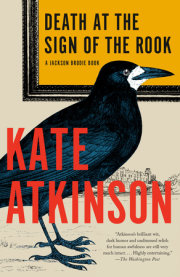
KATE ATKINSON won the Whitbread (now Costa) Book of the Year prize with her first novel, Behind the Scenes at the Museum. Her 2013 novel set around the Second World War, Life After Life, was shortlisted for the Women’s Prize for Fiction and voted Book of the Year by independent booksellers’ associations on both sides of the Atlantic. It also won the Costa Novel Award, as did her subsequent companion novel, A God in Ruins (2015), and was adapted into a critically acclaimed television series in 2022. Her bestselling novels featuring former detective Jackson Brodie became the BBC television series Case Histories, starring Jason Isaacs. She lives in Edinburgh, Scotland. View titles by Kate Atkinson

About

A thrilling tale of post–World War II London, where the peace proves as tricky to navigate as the past, from the #1 international bestselling author of Life After Life.

When crime correspondent turned war reporter Harry Flynn returns to Britain from Singapore in 1945, he takes a quiet job with the Festival of Britain, a government-funded endeavor aimed at celebrating the nation’s creativity, grit, and ingenuity. There, he joins a team of misfits and eccentrics as they help to ready the Festival for launch.

When a Frenchwoman goes missing, Flynn becomes the central suspect in her disappearance—and possible murder. He was the last person to see her alive, yet he has no memory of the evening they spent together. As evidence against him mounts, Flynn begins to wonder if he might actually be to blame. To make matters worse, he is surrounded by people who have their own secret agenda.

There may be a carnival atmosphere in London as the country attempts to throw off the drab privations of war, yet beneath the frivolity there is also a worthy attempt to hold up a mirror to both its history and its future. With her unique voice and her skill at conjuring the past, Kate Atkinson turns her light on a nation reconstructing its image and the lengths to which some might go to manipulate the outcome. Witty, brilliantly plotted, and with an unforgettable cast of characters, Our Noble Selves paints a vivid portrait of a former empire struggling with its identity in the aftermath of war.

Excerpt

1

Presumed Dead

"Harry! Harry Flynn! I hardly recognized you. Good God, man, everyone thought you were dead.”

Flynn had been sitting on a bench in St. James’s Park, dutifully working his way through a corned beef sandwich while observing a skittish pair of moorhens on the water, when he was accosted by Gerald Barry, his old boss at the News Chronicle.

London’s parks provided a welcome midday break from the dingy premises where Flynn was currently employed. When he had come back from the East he was still raw, a ghost of his former self, needing to recuperate in both mind and body. He had found a convalescent kind of work in a small printing press in Westminster that was housed in a gloomy, soot-stained little alleyway. His job was to perch at a desk on a mezzanine floor above the noisy, mechanical toiling taking place below and word everything from wedding invitations to cheap bill posters for local firms. Mr. and Mrs. Dennis Stubbs request the pleasure of your company or All Your Plumbing Needs Met By Us. And so on.

When he had applied, the manager fretted that, having been a journalist in his past life, Flynn was “a bit over-qualified for this kind of thing.”

“Looking for something simple at the moment,” Flynn said.

No further interrogation was deemed necessary and the manager, seeming to understand Flynn’s need for balm, nodded and said softly, “I had a son. Younger than you. Tail gunner on a Lancaster.” After a moment of mutually respectful silence, the manager roused himself and said, “Right, well then, you need to know about the fonts.”

Flynn had been craving a place of safety—an “ordinary” life, or what, in his tender state, he had imagined was ordinary. The healing refuge of a wife, a house, a child, perhaps a dog, and a lawn to mow at the weekend—aspirations to suburbia that he hadn’t found time to contemplate before the chasm of war. It was a vision that might have seemed defeatist to his previous carousing bachelor self, but nonetheless to this end he had made an ill-considered marriage to a smartly dressed war widow called Ivy Shears. Ivy was thirty-five and worked on the perfume counter in Selfridges, and with her tight blond curls and her scarlet lips, not to mention her grandstanding bust, she represented the epitome of womanhood to a man who had barely set eyes on a member of the female sex in over three years. She was the kind of woman Flynn used to be attracted to—sharp and hard-boiled, and able to stand on her own feet. Old habits died hard with him, apparently.

He met her in a bar. Ivy had been on the prowl, he supposed, but then so had he, in his own way. She had been sitting at a table in the middle of a small knot of female friends, any of whom might have caught his eye, but it was Ivy Shears who sauntered up to him and asked for a light.

“Mine’s a port and lemon,” she said, as she leant over to catch the flame from his lighter, revealing just enough of her breasts to remain decorous. For a brief, unchivalrous second, he thought her wares might be for sale. She was bold and smelt wonderful, and within seconds he was hooked and landed. She was exactly the right woman for the old Flynn and exactly the wrong one for this new world-weary incarnation.

To his own eyes, Flynn no longer seemed much of a catch. His health was still in tatters; he was underweight, with the yellow, liverish complexion of a POW who had been no stranger to starvation and disease. He was sporting a demob coat, the belt and straps already greasy with wear. He had no claim on the coat—nor on his status as a POW—as he had never been mobilized in the first place. The coat had been given to him in a great disembarkation hall at Southampton docks, a place that was milling with his returning shipmates and where no one had questioned his right to a half-decent set of clothes after being barefoot and in rags for most of the war.

He had embarked from Glasgow in 1941 on a troopship that had a belly full of rowdy, sweary Gordon Highlanders who spent most of the voyage playing a complicated card game called “Hand and Foot” for money, mostly Flynn’s. He had gone out as a temporary foreign correspondent for the News Chronicle, but by the time he disembarked in Singapore the Japanese had already landed at Kota Bharu and the Prince of Wales and the Repulse were at the bottom of the South China Sea, which meant that Flynn found he had become—for a very brief time anyway—a war reporter. After that he was a prisoner. Four years later, in that disembarkation hall in Southampton, he was nothing very much. The old Flynn had been chrysalized and a new one was yet to emerge.

He was already on his third Scotch of the night when Ivy Shears pouted those scarlet lips around the cigarette he offered her. It was not just the siren call of sex that drew him to her; she came complete with a ready-made life (house, child, dog, lawn), and he had reckoned it would be easy to slip into that life without too much effort on his part. Looking back, his inertia had been extraordinary, shameful even. He would have been better off being shriven by a priest rather than a wife. He had never turned to God, not even in the darkest hours on the Railway. Perhaps he should have done.

The child was an eight-year-old girl called Veronica, and the dog was a small white terrier called Mrs. Betty. The latter had a much better temperament than the former. The dog had been named by the infant Veronica and to Flynn’s ears the name sounded embarrassing, particularly when the dog disappeared from sight in the park and he had to call her back. (It had soon become his job to walk her.) Nonetheless it surprised him how quickly he became accustomed to the “Mrs.,” insisted on by Veronica, to the point where it would have seemed disrespectful to the little dog to drop the matrimonial honorific.

The house was a mock-Tudor semi in Wealdstone, paid for with Ivy’s prudent husband’s life-insurance money. The husband, Reginald, had worked in the National Provincial Bank as a teller and had been the “careful” sort, Ivy said. Not careful enough to avoid standing on a land mine somewhere outside Tobruk. As for the lawn, it had been full of weeds. There had been signs, Flynn just didn’t know how to read them.

He surprised himself when after a few weeks he proposed to her, and Ivy surprised herself even more by saying yes. They had a hasty register office ceremony before either of them could change their mind, followed by a three-night honeymoon in an out-of-season Broadstairs that was still littered with anti-tank emplacements, a backdrop that did little to foster romance. To make matters worse, they were accompanied by a belligerent Veronica. They would have had a more peaceful time taking a tiger on honeymoon with them.

Mrs. Betty, however, was left behind, along with a large dish of dog food that she must have gorged in one go, because when they returned they found the kitchen floor covered in vomit and faeces. “Can you see to that?” a disgusted Ivy asked. Flynn wondered if it was a test of some kind. His obedience, he supposed. In Burma, he had attempted to clean up men made wretched from dysentery and for whom any sense of dignity had been long since jettisoned, along with the contents of their bowels. Others had paid him the same service. He had witnessed the monstrosity that was cholera; bodies swollen with beriberi; stinking tropical ulcers; the torments of malaria—he knew the latter only too well. Really, what was cleaning up one small dog’s shit after that? “Shit” was not, of course, a word to be used in Ivy’s company.

“Poor thing,” he said, kneeling on the ugly brown and yellow linoleum and rubbing the top of the dog’s head while she whined pathetically at him. He supposed the dog must have presumed they had disappeared for good and that she had been abandoned to die on her own. Flynn knew nothing about dogs. He had never had one as a boy because his mother thought that pets brought germs into the house. It had never struck him, therefore, that the poor creature would suffer when they left. Ivy possibly knew, but was cold-hearted that way.

His chest had suddenly heaved with a torrid mix of emotions—grief, pity, as well as a kind of horror—all coming from a deeper well than simply sympathy for a small dog’s misery, although—to his alarm—that in itself was almost enough to break him.

He was surprised at the strength of his feelings for the dog. He had never been taught how to love when he was younger and had never learnt when he was older. He had never loved a woman, not in the way she wanted anyway. He was quietly ashamed that he had never felt love for either of his parents, or even his brother. He sometimes wondered if he had got the definition of love wrong or had been mistaken in his expectations of it. He thought of his heart, if it existed at all, as something that had started to ossify some time ago, petrification that was completed in Burma. The little dog, gazing miserably at him, threatened to crack open the calcified organ as easily as a nut.

Flynn understood. Grief and love were inseparable bedfellows. It seemed as good a reason as any to try to avoid both.

Ivy shouted from the next room that she was going to the butcher’s to buy sausages. The mundanity of this statement made Flynn shrink a little inside. This was to be his life. This was Wealdstone. A practical woman and sausages for tea.

He was still kneeling on the kitchen floor when Ivy looked in on him on her way out of the house and enquired suspiciously, “You’re not praying, are you?” He reassured her that he wasn’t and wondered if he was.

Ivy was a talker, an endless flow of chatter, anecdotes about things that had happened at work, commentaries about people she knew who he had never met, an endless monologue, almost a stream of consciousness that Flynn, taciturn to the point of silence since the war, found it difficult to cope with. And then the stream dried up and one day Flynn realized that Ivy barely spoke to him at all, although even by the end of their three-day honeymoon both had begun to understand what a disappointment they were to each other. By the end of six months, indifference had set in. They had another couple of months, he reckoned, before outright hatred began to show its ugly face.

He could have stayed fettered to Ivy, perhaps he should have done, many men did in the same disheartening circumstances. He could have sacrificed his barely retrieved soul and made some kind of a go of it, although Ivy, being a forthright sort of woman, would probably have kicked him out before long. He pre-empted his eviction from the Wealdstone house when one morning—with no note of farewell or explanation—he caught the Bakerloo line to work and didn’t return home on it in the evening. It turned out that the push-and-pull of the Sunday lawnmower was not the answer to his lingering malaise. He later regretted not taking Mrs. Betty with him.

“Come and work for me again,” Gerald Barry said, taking a seat on the bench next to Flynn. Flynn thought he meant journalism, but apparently not. “The Festival of Britain,” Barry said. “Know about it?”

“Of course.” The proposed Festival was being trumpeted everywhere.

“We’re aiming for it to take place in the summer of ’51. General Lord Ismay’s agreed to be the chair. We’re planning to build it on the south bank of the Thames. A series of temporary exhibition structures—some innovative architecture—Science, Invention, History—the Land and the People, that sort of thing.”

Flynn thought it sounded rather dreary, almost pious. He was reminded of the earnest Schools programmes that the BBC broadcast.

“It’ll give a chance for the younger architects and designers,” Barry said. “Their creativity’s been stifled by the war. They look to Scandinavia these days, you know. Functional—clean lines. Simple and uncluttered. That’s the future. Not the fusty hodge-podge that passes for style in Britain.” He took a deep breath, as if inhaling that future. “Caption-writers and scriptwriters too,” he added.

“Scripts?” Flynn thought he could probably manage scripts if offered.

“It will be a narrative, a story that the people can follow as they move around the site,” Barry said. “It’ll show Britain’s best face.”

“To the world?”

“Hm, well, more to herself, I think. The Empire’s on the way out, Europe’s a dead dog that won’t revive for decades, if ever. This is our story, Flynn, the story of Britain. Our love of country, love of freedom, love of nature, pride in craftsmanship, our reputation for tolerance and fair play. Farming, industry, science—production rather than products. Instead of the Beefeaters at the Tower of London, Chelsea Pensioners and ruined abbeys by moonlight, we’ve new things to show—new industries, new inventions, new techniques, new discoveries. New freedoms as well.”

All this from a summer festival? It sounded exhausting. And such faith in a brave new world. The triumph of hope over adversity, and yet in the whole history of mankind no utopia had ever come to lasting fruition.

“And in case you’re thinking it all sounds rather Reithian [yes, Flynn was], we’re planning a ‘Pleasure Garden’ too, like the old Vauxhall one, possibly in the same place. A fairground, bands playing, a small-gauge railway perhaps. There’ll be room for everything in the Festival. For fun as well as knowledge.”

“Fun?”

“The country’s stuck in the doldrums; we need to see the future and to know we’re in touching distance of it. We hope the whole thing will be a beacon for change, a sort of tonic for the nation after . . . you know.” He paused and then said gently, “What did happen to you out there, Harry?”

Flynn shrugged. Gerald Barry was a kindly man, but it was impossible.

“I tried my utmost to find out, you know,” Barry said. “I felt responsible, naturally—it was me that sent you out East—but there is always so much chaos in the aftermath of war. Missing. Presumed dead.”

“Yes, that’s what they said.”

Author

© Chris Boland
KATE ATKINSON won the Whitbread (now Costa) Book of the Year prize with her first novel, Behind the Scenes at the Museum. Her 2013 novel set around the Second World War, Life After Life, was shortlisted for the Women’s Prize for Fiction and voted Book of the Year by independent booksellers’ associations on both sides of the Atlantic. It also won the Costa Novel Award, as did her subsequent companion novel, A God in Ruins (2015), and was adapted into a critically acclaimed television series in 2022. Her bestselling novels featuring former detective Jackson Brodie became the BBC television series Case Histories, starring Jason Isaacs. She lives in Edinburgh, Scotland. View titles by Kate Atkinson
  • More Websites from
    Penguin Random House
  • Common Reads
  • Library Marketing