Download high-resolution image
Listen to a clip from the audiobook
audio pause button
0:00
0:00

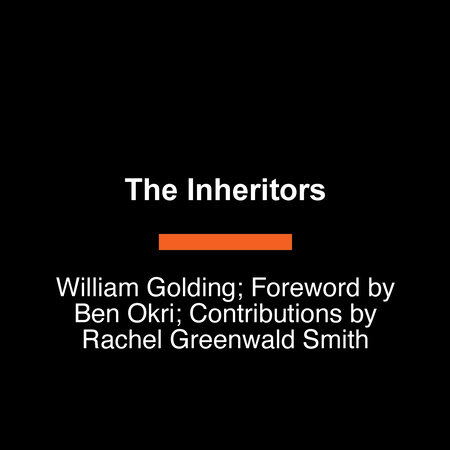
The Inheritors

Read by David Dawson
Foreword by Ben Okri
Contributions by Rachel Greenwald Smith
Listen to a clip from the audiobook
audio pause button
0:00
0:00
Audiobook Download
On sale Mar 03, 2026 | 7 Hours and 48 Minutes | 9798217169702

See Additional Formats
“This was a different voice; not the voice of the people. It was the voice of other.”

A Penguin Classic

William Golding considered The Inheritors his finest novel, a beautifully realized tale about the last days of the Neanderthal people and our fear of the “other.” The action is revealed through the eyes of the Neanderthals, whose peaceful world is threatened by the emergence of Homo sapiens. The struggle between the simple Neanderthals and the malevolent modern humans ends tragically. Featuring similar themes to Lord of the Flies, although with very different content, The Inheritors is about the breakdown of a civilization and uncompromising savagery.

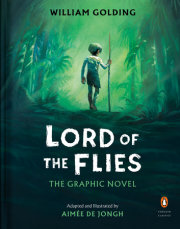
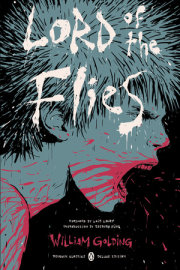
After Lord of the Flies, William Golding wrote novels that further explored the complexities of human nature, not only social tendencies but the psychological underpinnings of human consciousness. This edition provides a Suggestions for Further Exploration section that identifies key themes throughout Golding’s novels—including The Inheritors, first published in 1955—and connections to classic and contemporary fiction, nonfiction, film, and television.

Penguin Classics is the leading publisher of classic literature in the English-speaking world, representing a global bookshelf of the best works throughout history and across genres and disciplines. Readers trust the series to provide authoritative texts enhanced by introductions and notes by distinguished scholars and contemporary authors, as well as up-to-date translations by award-winning translators.
William Golding (1911–1993) was born in Cornwall, England, and educated at Oxford University. His first book, Poems, was published in 1934. Following a stint in the Royal Navy and other activities during and after World War II, Golding wrote his first novel, Lord of the Flies (1954), while teaching school. Many novels followed, including The Inheritors (1955), Pincher Martin (1956), Free Fall (1959), and The Spire (1964), as well as a play, The Brass Butterfly (1958), and a collection of shorter works, The Hot Gates and Other Occasional Pieces (1965). He received the James Tait Black Prize for Darkness Visible (1979) and the Booker Prize for Rites of Passage (1980). In 1983, he was awarded the Nobel Prize in Literature “for his novels which, with the perspicuity of realistic narrative art and the diversity and universality of myth, illuminate the human condition in the world of today.” He was awarded the title “Companion of Literature” by the Royal Society of Literature in 1983 and was knighted by Queen Elizabeth II in 1988. William Golding died in June 1993 and is buried in Holy Trinity churchyard in Bowerchalke, Wiltshire, in England. View titles by William Golding

About

“This was a different voice; not the voice of the people. It was the voice of other.”

A Penguin Classic

William Golding considered The Inheritors his finest novel, a beautifully realized tale about the last days of the Neanderthal people and our fear of the “other.” The action is revealed through the eyes of the Neanderthals, whose peaceful world is threatened by the emergence of Homo sapiens. The struggle between the simple Neanderthals and the malevolent modern humans ends tragically. Featuring similar themes to Lord of the Flies, although with very different content, The Inheritors is about the breakdown of a civilization and uncompromising savagery.

After Lord of the Flies, William Golding wrote novels that further explored the complexities of human nature, not only social tendencies but the psychological underpinnings of human consciousness. This edition provides a Suggestions for Further Exploration section that identifies key themes throughout Golding’s novels—including The Inheritors, first published in 1955—and connections to classic and contemporary fiction, nonfiction, film, and television.

Penguin Classics is the leading publisher of classic literature in the English-speaking world, representing a global bookshelf of the best works throughout history and across genres and disciplines. Readers trust the series to provide authoritative texts enhanced by introductions and notes by distinguished scholars and contemporary authors, as well as up-to-date translations by award-winning translators.

Author

William Golding (1911–1993) was born in Cornwall, England, and educated at Oxford University. His first book, Poems, was published in 1934. Following a stint in the Royal Navy and other activities during and after World War II, Golding wrote his first novel, Lord of the Flies (1954), while teaching school. Many novels followed, including The Inheritors (1955), Pincher Martin (1956), Free Fall (1959), and The Spire (1964), as well as a play, The Brass Butterfly (1958), and a collection of shorter works, The Hot Gates and Other Occasional Pieces (1965). He received the James Tait Black Prize for Darkness Visible (1979) and the Booker Prize for Rites of Passage (1980). In 1983, he was awarded the Nobel Prize in Literature “for his novels which, with the perspicuity of realistic narrative art and the diversity and universality of myth, illuminate the human condition in the world of today.” He was awarded the title “Companion of Literature” by the Royal Society of Literature in 1983 and was knighted by Queen Elizabeth II in 1988. William Golding died in June 1993 and is buried in Holy Trinity churchyard in Bowerchalke, Wiltshire, in England. View titles by William Golding
  • More Websites from
    Penguin Random House
  • Common Reads
  • Library Marketing