Download high-resolution image Look inside
Listen to a clip from the audiobook
audio pause button
0:00
0:00

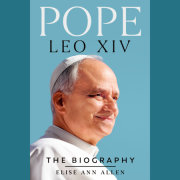
Pope Leo XIV

The Biography

Look inside
Listen to a clip from the audiobook
audio pause button
0:00
0:00
A deeply personal biography of Pope Leo XIV, featuring his first-ever public interview as pope, from Elise Ann Allen, journalist and Rome correspondent for Crux.

“An extraordinary achievement . . . a masterful and amazingly intimate portrait of our new pope.”—Austen Ivereigh, biographer of Pope Francis

On May 8, 2025, the whole world watched with great anticipation as white smoke billowed from the chimney of the Sistine Chapel, and the new pope who emerged to greet us from the balcony of St. Peter’s Basilica was a surprise to all. He was a man no one expected, a “dark horse candidate,” as the media came to call him, and the first-ever American to be elected—Robert Prevost, who took the name Leo XIV.

But why him? What did the other cardinals see in Robert Prevost? Who is Leo XIV? How did his path lead him to the Holy See, and what can we expect from him?

Elise Ann Allen offers here the only biography of Pope Leo XIV, featuring the Holy Father’s very first interview after his election. She gives readers an intimate and detailed account of the life of Robert Prevost, from his birth in Chicago and his first years as a priest in the Augustinian order to his years as a missionary in Peru and the vital role he came to play in the Vatican as head of bishops. The result is an inspiring picture of a man of profound character, spiritual leadership, integrity, warmth, and citizenship in the world.

This biography is replete with revealing stories and reflections from those who know Leo XIV personally, details of his pastoral ministry over the years, and analysis of his global perspective as a dual citizen of the United States and Peru.

Pope Leo XIV is essential reading for anyone who wishes to understand the Church’s pastor—his priorities, convictions, and vision for the future of faith.
1

Roots

Family and the Vocation of the Young Prevost

White smoke. The chimney of the Sistine Chapel had been the most watched place in the world for two consecutive days when it received the sudden visit from two seagulls with white heads and gray wings. This image of them alongside a baby seagull began to circulate on the internet in videos and photos as a positive sign for the Church. These birds often fly to the roof of the Sistine Chapel, when it begins to warm each time there is a smoke signal brewing, whether black or white, indicating an imminent announcement of the cardinals' conclave over sixty feet below. Millions of people from across the world were waiting anxiously for the white smoke to rise after two instances of black smoke and four rounds of voting, one round less than when Pope Francis was elected in March 2013. It was a very quick decision, according to experts, especially considering it took place in the context of a perceived polarized setting with those eagerly awaiting a decision wondering whether the cardinals would elect someone who would continue the path already traced, change it, or take some steps backward. So, at 6:07 p.m. on May 8, 2025, the white smoke was met with commotion and an explosion of applause by the faithful, tourists, and curious bystanders that filled St. Peter's Square and the streets of the Vatican. Just one hour and six minutes later, at 7:13 p.m., Cardinal Protodeacon Dominique Mamberti dispelled all doubts from the balcony of the basilica: Habemus Papam. We have a pope.

One of the biggest mysteries surrounding each conclave is what goes on in the minds of the cardinals-in this case a total of 133-as they elect a new pope. What are they thinking about? What are their criteria? In their minds, who has the profile to be the next pope? Who, in their judgments, are the candidates with the best chance of being elected? No one except the cardinals knows the answers to these questions. Nonetheless, after each historic election by the College of Cardinals, or Collegium Cardinalium, details about the motivations that informed the cardinals' choice of pope begin to emerge.

Around the conclave of May 7-8, 2025, rumors were circulating about who the cardinals wanted: a pope who would continue Pope Francis's agenda of promoting synodality and focusing attention on the poor, and someone with the ability to govern, to deal with the financial problems of the Vatican, and to address the crisis brought on by the allegations of sexual abuse. They wanted a well-balanced figure who would be able to create unity and communion in a Church and wider society marked by division.

The person they chose, with support that far exceeded the two-thirds majority required, or a total of eighty-nine or more votes, was the sixty-nine-year-old American Cardinal Robert Francis Prevost. The new pope took the name of Leo XIV in honor of Pope Leo XIII, the author of the encyclical Rerum Novarum, which established the social doctrine of the Church that dealt with the challenges of the Industrial Revolution. Thus, the new pope chose a name that symbolizes courage, leadership, and vigilance.

The day after Prevost's election, in a press conference on May 9, 2025, the American cardinals explained the criteria that led them to vote for him. They based their decision not on his actions, his words, or even his profile but on his style. "I think what was important was not the substance of what he said, but the manner with which he said it." stated Cardinal Robert McElroy of Washington. The image of The Last Judgment by Michelangelo in the Sistine Chapel, he recounted, was an evocative reminder as he entered the conclave, and it led him to select his candidate carefully. Once Cardinal McElroy entered the chapel, all sense of divisions in the world disappeared. "I felt we were looking at that moment into the souls of one another to find who should carry on this incredibly important mission at this moment in time. I really think in the discernment that went on and in the prayer that went on, we were looking for the soul who has the capacity at this moment to be a really beautiful witness to Christ."

For many present that day, Prevost was a true "citizen of the world," having lived in various countries and being able to speak in different languages. He was a pastor with deep experience and knowledge of many parts of the world due to his many trips in his role as prior general of the Augustinian Order. He was the right person with the right life experience.

The election of the man who would become Leo XIV was not based on extensive political or ideological calculation by the cardinals; rather, it was a spiritual selection based on a common feeling of what the Church needs at this delicate time. The answer was Robert Prevost, an American who became a naturalized Peruvian citizen, with a kind personality and vast experience in many different corners of the world.

Born in Diversity

Robert Prevost, or Rob to his family, was born on September 14, 1955 in Bronzeville, a neighborhood in the south part of Chicago. He was the youngest son of Mildred Agnes Prevost and Louis Marius Prevost and brother to Louis Martin and John Joseph.

His family heritage illustrates the story of an ethnic melting pot. His mother was born in Chicago to a family of mixed Creole heritage from Louisiana, with African, French, and Spanish roots. Mildred's grandmother had been born in Santo Domingo, Dominican Republic. During the years when Mildred was raising her children, she worked as an educator and librarian at Mendel Catholic High School, which was led by the Augustinians and was the school her two older boys attended. This closeness to the order was the first seed of the religious vocation of the future pope.

Pope Leo XIV's father was also born in Chicago and was raised in Hyde Park in the southern part of the city; his heritage was a mix of French and Italian. He served in the Marines during World War II and was the captain of a boat of soldiers that landed on the beaches of Normandy on D-Day. Later, he participated in Operation Dragoon in the liberation of southern France. After the war, he dedicated himself to education and became the superintendent of the 167th school district of Brookwood in Glenwood, Illinois.

From a young age, Robert Prevost was surrounded by cultural diversity and educational influences, which contributed to his leadership skills and ability as an administrator.

In 1990, Robert's mother died. Six years later, his father, Louis, sold the family home in Dolton where he had grown up and where he had raised his own family. Only a short year after this, Louis also passed away. Recently the family home has been remodeled and put back on the market. The real estate agent who has been working with this home has considered the possibility of raising the asking price since the election of Pope Leo.6 Today the city of Dolton is in the process of negotiating with the owners to buy it and possibly turn it into a museum or historic landmark. If the city is able to procure the property, the plan is to cooperate with the archdiocese to determine its use. As soon as the news broke of the pope's election, police were posted to his former home, where large groups of people went to leave flowers and crosses and take pictures. A new tourist destination and pilgrimage site have been born.
“An extraordinary achievement . . . Elise Ann Allen has given us a masterful and amazingly intimate portrait of our new pope, the result of exhaustive research and dozens of field interviews, including one with the pope himself.”—Austen Ivereigh, biographer of Pope Francis

“The most vivid portrait yet of the pope.”—Christopher Hale, co-founder of Millennial and former senior fellow of Catholics in Alliance for the Common Good

“Allen, with the necessary detachment of an outside observer, manages to discern the glimmers of hope we so often fail to see, sculpting the silhouette of a pontiff convinced of the mission of a Church committed to healing. Leo XIV knows that darkness endures but also acknowledges the stubbornness of light.”—Gonzalo Banda, University College London Institute of the Americas
© Pancho Rodriguez
Elise Ann Allen is a correspondent in Rome for the specialized media outlet Crux. Before joining Crux, Allen worked with Catholic News Agency, first as a multimedia and content management assistant in Denver, Colorado. She holds a degree in philosophy and communication from the University of Northern Colorado. View titles by Elise Ann Allen

About

A deeply personal biography of Pope Leo XIV, featuring his first-ever public interview as pope, from Elise Ann Allen, journalist and Rome correspondent for Crux.

“An extraordinary achievement . . . a masterful and amazingly intimate portrait of our new pope.”—Austen Ivereigh, biographer of Pope Francis

On May 8, 2025, the whole world watched with great anticipation as white smoke billowed from the chimney of the Sistine Chapel, and the new pope who emerged to greet us from the balcony of St. Peter’s Basilica was a surprise to all. He was a man no one expected, a “dark horse candidate,” as the media came to call him, and the first-ever American to be elected—Robert Prevost, who took the name Leo XIV.

But why him? What did the other cardinals see in Robert Prevost? Who is Leo XIV? How did his path lead him to the Holy See, and what can we expect from him?

Elise Ann Allen offers here the only biography of Pope Leo XIV, featuring the Holy Father’s very first interview after his election. She gives readers an intimate and detailed account of the life of Robert Prevost, from his birth in Chicago and his first years as a priest in the Augustinian order to his years as a missionary in Peru and the vital role he came to play in the Vatican as head of bishops. The result is an inspiring picture of a man of profound character, spiritual leadership, integrity, warmth, and citizenship in the world.

This biography is replete with revealing stories and reflections from those who know Leo XIV personally, details of his pastoral ministry over the years, and analysis of his global perspective as a dual citizen of the United States and Peru.

Pope Leo XIV is essential reading for anyone who wishes to understand the Church’s pastor—his priorities, convictions, and vision for the future of faith.

Excerpt

1

Roots

Family and the Vocation of the Young Prevost

White smoke. The chimney of the Sistine Chapel had been the most watched place in the world for two consecutive days when it received the sudden visit from two seagulls with white heads and gray wings. This image of them alongside a baby seagull began to circulate on the internet in videos and photos as a positive sign for the Church. These birds often fly to the roof of the Sistine Chapel, when it begins to warm each time there is a smoke signal brewing, whether black or white, indicating an imminent announcement of the cardinals' conclave over sixty feet below. Millions of people from across the world were waiting anxiously for the white smoke to rise after two instances of black smoke and four rounds of voting, one round less than when Pope Francis was elected in March 2013. It was a very quick decision, according to experts, especially considering it took place in the context of a perceived polarized setting with those eagerly awaiting a decision wondering whether the cardinals would elect someone who would continue the path already traced, change it, or take some steps backward. So, at 6:07 p.m. on May 8, 2025, the white smoke was met with commotion and an explosion of applause by the faithful, tourists, and curious bystanders that filled St. Peter's Square and the streets of the Vatican. Just one hour and six minutes later, at 7:13 p.m., Cardinal Protodeacon Dominique Mamberti dispelled all doubts from the balcony of the basilica: Habemus Papam. We have a pope.

One of the biggest mysteries surrounding each conclave is what goes on in the minds of the cardinals-in this case a total of 133-as they elect a new pope. What are they thinking about? What are their criteria? In their minds, who has the profile to be the next pope? Who, in their judgments, are the candidates with the best chance of being elected? No one except the cardinals knows the answers to these questions. Nonetheless, after each historic election by the College of Cardinals, or Collegium Cardinalium, details about the motivations that informed the cardinals' choice of pope begin to emerge.

Around the conclave of May 7-8, 2025, rumors were circulating about who the cardinals wanted: a pope who would continue Pope Francis's agenda of promoting synodality and focusing attention on the poor, and someone with the ability to govern, to deal with the financial problems of the Vatican, and to address the crisis brought on by the allegations of sexual abuse. They wanted a well-balanced figure who would be able to create unity and communion in a Church and wider society marked by division.

The person they chose, with support that far exceeded the two-thirds majority required, or a total of eighty-nine or more votes, was the sixty-nine-year-old American Cardinal Robert Francis Prevost. The new pope took the name of Leo XIV in honor of Pope Leo XIII, the author of the encyclical Rerum Novarum, which established the social doctrine of the Church that dealt with the challenges of the Industrial Revolution. Thus, the new pope chose a name that symbolizes courage, leadership, and vigilance.

The day after Prevost's election, in a press conference on May 9, 2025, the American cardinals explained the criteria that led them to vote for him. They based their decision not on his actions, his words, or even his profile but on his style. "I think what was important was not the substance of what he said, but the manner with which he said it." stated Cardinal Robert McElroy of Washington. The image of The Last Judgment by Michelangelo in the Sistine Chapel, he recounted, was an evocative reminder as he entered the conclave, and it led him to select his candidate carefully. Once Cardinal McElroy entered the chapel, all sense of divisions in the world disappeared. "I felt we were looking at that moment into the souls of one another to find who should carry on this incredibly important mission at this moment in time. I really think in the discernment that went on and in the prayer that went on, we were looking for the soul who has the capacity at this moment to be a really beautiful witness to Christ."

For many present that day, Prevost was a true "citizen of the world," having lived in various countries and being able to speak in different languages. He was a pastor with deep experience and knowledge of many parts of the world due to his many trips in his role as prior general of the Augustinian Order. He was the right person with the right life experience.

The election of the man who would become Leo XIV was not based on extensive political or ideological calculation by the cardinals; rather, it was a spiritual selection based on a common feeling of what the Church needs at this delicate time. The answer was Robert Prevost, an American who became a naturalized Peruvian citizen, with a kind personality and vast experience in many different corners of the world.

Born in Diversity

Robert Prevost, or Rob to his family, was born on September 14, 1955 in Bronzeville, a neighborhood in the south part of Chicago. He was the youngest son of Mildred Agnes Prevost and Louis Marius Prevost and brother to Louis Martin and John Joseph.

His family heritage illustrates the story of an ethnic melting pot. His mother was born in Chicago to a family of mixed Creole heritage from Louisiana, with African, French, and Spanish roots. Mildred's grandmother had been born in Santo Domingo, Dominican Republic. During the years when Mildred was raising her children, she worked as an educator and librarian at Mendel Catholic High School, which was led by the Augustinians and was the school her two older boys attended. This closeness to the order was the first seed of the religious vocation of the future pope.

Pope Leo XIV's father was also born in Chicago and was raised in Hyde Park in the southern part of the city; his heritage was a mix of French and Italian. He served in the Marines during World War II and was the captain of a boat of soldiers that landed on the beaches of Normandy on D-Day. Later, he participated in Operation Dragoon in the liberation of southern France. After the war, he dedicated himself to education and became the superintendent of the 167th school district of Brookwood in Glenwood, Illinois.

From a young age, Robert Prevost was surrounded by cultural diversity and educational influences, which contributed to his leadership skills and ability as an administrator.

In 1990, Robert's mother died. Six years later, his father, Louis, sold the family home in Dolton where he had grown up and where he had raised his own family. Only a short year after this, Louis also passed away. Recently the family home has been remodeled and put back on the market. The real estate agent who has been working with this home has considered the possibility of raising the asking price since the election of Pope Leo.6 Today the city of Dolton is in the process of negotiating with the owners to buy it and possibly turn it into a museum or historic landmark. If the city is able to procure the property, the plan is to cooperate with the archdiocese to determine its use. As soon as the news broke of the pope's election, police were posted to his former home, where large groups of people went to leave flowers and crosses and take pictures. A new tourist destination and pilgrimage site have been born.

Reviews

“An extraordinary achievement . . . Elise Ann Allen has given us a masterful and amazingly intimate portrait of our new pope, the result of exhaustive research and dozens of field interviews, including one with the pope himself.”—Austen Ivereigh, biographer of Pope Francis

“The most vivid portrait yet of the pope.”—Christopher Hale, co-founder of Millennial and former senior fellow of Catholics in Alliance for the Common Good

“Allen, with the necessary detachment of an outside observer, manages to discern the glimmers of hope we so often fail to see, sculpting the silhouette of a pontiff convinced of the mission of a Church committed to healing. Leo XIV knows that darkness endures but also acknowledges the stubbornness of light.”—Gonzalo Banda, University College London Institute of the Americas

Author

© Pancho Rodriguez
Elise Ann Allen is a correspondent in Rome for the specialized media outlet Crux. Before joining Crux, Allen worked with Catholic News Agency, first as a multimedia and content management assistant in Denver, Colorado. She holds a degree in philosophy and communication from the University of Northern Colorado. View titles by Elise Ann Allen
  • More Websites from
    Penguin Random House
  • Common Reads
  • Library Marketing