Download high-resolution image Look inside
Listen to a clip from the audiobook
audio pause button
0:00
0:00

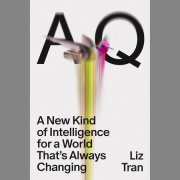
AQ

A New Kind of Intelligence for a World That's Always Changing

Author Liz Tran
Look inside
Listen to a clip from the audiobook
audio pause button
0:00
0:00
Hardcover
$31.00 US
| $41.00 CAN
On sale Feb 03, 2026 | 256 Pages | 9798217086641
Grades 9-12 + AP/IB

See Additional Formats
You’ve heard of IQ and EQ. But in today's world, they’re no longer enough. We need the Agility Quotient (AQ).

In a time defined by nonstop disruptions, when jobs vanish overnight, industries evolve in months, and yesterday’s rules no longer apply, AQ—the Agility Quotient—is the intelligence you need to handle change, uncertainty, and the unknown. The good news is that, with the right toolkit, you can grow your agility and learn to navigate a world of increasing instability.

Drawing on leadership coach and former venture capitalist Liz Tran’s work with over 200 successful founders, executives, and dozens of companies and organizations, AQ reveals a model for how high-performing teams and managers adapt to uncertainty. Tran will show you how to cultivate “durable skills,” essential human abilities that remain valuable no matter what the future holds. With the book’s Agility Archetype assessment, the book personalizes the AQ journey to every kind of individual. No matter their experience level or ambitions.

Written with conversational flair and practical advice, AQ offers readers a wealth of resources, including:
  • Tools to rebuild confidence for when you’re bombarded by life's curveballs or feeling burned out Actionable steps for making a big shift, even when you feel stuck.
  • Advice on finding clarity in moments of professional turbulence.

AQ also takes readers behind the scenes at companies, from NVIDIA and Microsoft to rising startups like Lex, to see AQ in action. You’ll also meet trailblazers like Maggie Lena Walker, the first female bank president in American history, and Emile-Maurice Hermès, who transformed Hermès into a global luxury powerhouse.

As the adage goes, “the only certain thing is change.” AQ is the critical intelligence for our unpredictable future.
Chapter 1

The AQ Archetypes

The privilege of a lifetime is being who you are. —Joseph Campbell

I wonder how long I could last on my own in the Sonoran Desert. It’s a harsh expanse of land stretching from Arizona down to Mexico, where the temperatures climb as high as 120 degrees Fahrenheit, and it rains as little as three inches a year. Thousands of migrants, hikers, and adventurers have died while traversing it. What would I do to survive there?

Going off how I typically handle the unknown, I’d throw myself into research and planning. I would obsessively read all I could about the Sonoran Desert—its flora, fauna, and climate—and write down every worst-case scenario I could imagine. Next, I’d work my way through online forums about desert camping and use this information to pack the perfect gear.

Ninety-nine percent of my preparation for this trip would happen alone, in my mind, far in advance. That’s because my AQ Archetype is the Novelist. I handle change, uncertainty, and the unknown through proactive planning, and while I excel at preparation, I don’t do well with life’s curveballs. I am most comfortable with a premeditated, structured path. Like a novelist who sits at their desk building worlds, I thrive when I have the freedom to design my own future.

Alongside the Novelist, there are three other AQ Archetypes: the Astronaut, the Firefighter, and the Neurosurgeon. They have their own quirks and qualities that allow them to be agile. Novelists like me make plans. Astronauts inspire. Firefighters improvise beautifully, and no matter what, Neurosurgeons never give up.

One is not better than the others. Irrespective of your AQ Archetype, you are capable of thriving in the proverbial Sonoran Desert of life, but the first step is to know what Archetype you are at your core. Are you an Astronaut, a Firefighter, a Neurosurgeon, or a Novelist? What skills do you have at your disposal for handling stress, solving problems, and tackling crises? You’ll find out when you take the personality assessment in this chapter.

This quiz is a mini version of the in-depth assessment that I use with corporate teams to identify their Archetypes, Stages, strengths, and challenges. Both the full assessment and this abridged version were developed from my work interviewing and observing hundreds of founders and executives.

I’m certified to administer and evaluate four personality assessments and have worked with more than a dozen throughout my career, like the Myers-Briggs Type Indicator (MBTI), Hogan, CliftonStrengths, DiSC, and the Enneagram. What I’ve learned is that we humans are notoriously bad at seeing ourselves. We undervalue our strengths, imagining that what comes easily for us is not particularly special, and at the same time we can’t always see what we lack. Personality assessments give us the ability to perceive ourselves clearly, and as an executive coach, I know that there’s no power more potent than that.

Before we jump into the quiz, we need to identify two types of change that occur in our day-to-day: Proactive Change and Reactive Change. The distinction between the two gives us context for understanding the Archetypes.

Proactive Change is the change we initiate ourselves, like upgrading our homes, switching jobs, or deciding to eat healthier. It’s the change we invite into our lives. This change is often considered to be positive and productive, even if it’s not always enjoyable. On the other hand, Reactive Change describes how we handle unwanted and unpredictable events, like flight cancellations, illness, or geopolitical conflict. Because it feels jarring and disruptive, this type of change is generally seen as more negative. For every person in the world, life is a succession of Proactive and Reactive Changes, and each Archetype has either a fast reaction or a slow reaction to it.
“We’re not distracted anymore—we’re disoriented. And right on time, Liz Tran gives us a gift: a framework for living with agility instead of rigidity. AQ does not ask us to do more, achieve more, or accumulate more: It invites us to strip away the illusion of stability and embrace the intelligence that matters most in times of change.”—Greg McKeown, New York Times bestselling author of Essentialism and Effortless

“As technology transforms the workplace, Liz Tran shows how every person can harness agility to thrive in times of change. Practical, inspiring, and impossible to ignore, AQ is the ultimate playbook for the future of work.”—Fiona Cook, international employee experience at Apple

“A practical guide to navigating uncertainty. . . . [Tran] astutely pinpoints how resistance to change holds people back. This will inspire readers to become more comfortable with discomfort.”Publishers Weekly

“[AQ] is well written, with plenty of real-world examples of individuals who have successfully navigated significant changes in their lives.”Booklist
© Tom Scanlan
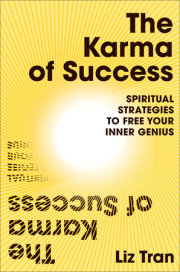
Liz Tran is the founder of Inner Genius and a leadership coach to CEOs and founders of some of the world's fastest-growing companies. She is also the author of The Karma of Success, and her work has been featured by the Today Show, New Yorker, New York Times, Bloomberg, Fast Company, Entrepreneur, and other publications. She lives with her husband and daughter in New York City and Norfolk, Connecticut. View titles by Liz Tran

About

You’ve heard of IQ and EQ. But in today's world, they’re no longer enough. We need the Agility Quotient (AQ).

In a time defined by nonstop disruptions, when jobs vanish overnight, industries evolve in months, and yesterday’s rules no longer apply, AQ—the Agility Quotient—is the intelligence you need to handle change, uncertainty, and the unknown. The good news is that, with the right toolkit, you can grow your agility and learn to navigate a world of increasing instability.

Drawing on leadership coach and former venture capitalist Liz Tran’s work with over 200 successful founders, executives, and dozens of companies and organizations, AQ reveals a model for how high-performing teams and managers adapt to uncertainty. Tran will show you how to cultivate “durable skills,” essential human abilities that remain valuable no matter what the future holds. With the book’s Agility Archetype assessment, the book personalizes the AQ journey to every kind of individual. No matter their experience level or ambitions.

Written with conversational flair and practical advice, AQ offers readers a wealth of resources, including:
  • Tools to rebuild confidence for when you’re bombarded by life's curveballs or feeling burned out Actionable steps for making a big shift, even when you feel stuck.
  • Advice on finding clarity in moments of professional turbulence.

AQ also takes readers behind the scenes at companies, from NVIDIA and Microsoft to rising startups like Lex, to see AQ in action. You’ll also meet trailblazers like Maggie Lena Walker, the first female bank president in American history, and Emile-Maurice Hermès, who transformed Hermès into a global luxury powerhouse.

As the adage goes, “the only certain thing is change.” AQ is the critical intelligence for our unpredictable future.

Excerpt

Chapter 1

The AQ Archetypes

The privilege of a lifetime is being who you are. —Joseph Campbell

I wonder how long I could last on my own in the Sonoran Desert. It’s a harsh expanse of land stretching from Arizona down to Mexico, where the temperatures climb as high as 120 degrees Fahrenheit, and it rains as little as three inches a year. Thousands of migrants, hikers, and adventurers have died while traversing it. What would I do to survive there?

Going off how I typically handle the unknown, I’d throw myself into research and planning. I would obsessively read all I could about the Sonoran Desert—its flora, fauna, and climate—and write down every worst-case scenario I could imagine. Next, I’d work my way through online forums about desert camping and use this information to pack the perfect gear.

Ninety-nine percent of my preparation for this trip would happen alone, in my mind, far in advance. That’s because my AQ Archetype is the Novelist. I handle change, uncertainty, and the unknown through proactive planning, and while I excel at preparation, I don’t do well with life’s curveballs. I am most comfortable with a premeditated, structured path. Like a novelist who sits at their desk building worlds, I thrive when I have the freedom to design my own future.

Alongside the Novelist, there are three other AQ Archetypes: the Astronaut, the Firefighter, and the Neurosurgeon. They have their own quirks and qualities that allow them to be agile. Novelists like me make plans. Astronauts inspire. Firefighters improvise beautifully, and no matter what, Neurosurgeons never give up.

One is not better than the others. Irrespective of your AQ Archetype, you are capable of thriving in the proverbial Sonoran Desert of life, but the first step is to know what Archetype you are at your core. Are you an Astronaut, a Firefighter, a Neurosurgeon, or a Novelist? What skills do you have at your disposal for handling stress, solving problems, and tackling crises? You’ll find out when you take the personality assessment in this chapter.

This quiz is a mini version of the in-depth assessment that I use with corporate teams to identify their Archetypes, Stages, strengths, and challenges. Both the full assessment and this abridged version were developed from my work interviewing and observing hundreds of founders and executives.

I’m certified to administer and evaluate four personality assessments and have worked with more than a dozen throughout my career, like the Myers-Briggs Type Indicator (MBTI), Hogan, CliftonStrengths, DiSC, and the Enneagram. What I’ve learned is that we humans are notoriously bad at seeing ourselves. We undervalue our strengths, imagining that what comes easily for us is not particularly special, and at the same time we can’t always see what we lack. Personality assessments give us the ability to perceive ourselves clearly, and as an executive coach, I know that there’s no power more potent than that.

Before we jump into the quiz, we need to identify two types of change that occur in our day-to-day: Proactive Change and Reactive Change. The distinction between the two gives us context for understanding the Archetypes.

Proactive Change is the change we initiate ourselves, like upgrading our homes, switching jobs, or deciding to eat healthier. It’s the change we invite into our lives. This change is often considered to be positive and productive, even if it’s not always enjoyable. On the other hand, Reactive Change describes how we handle unwanted and unpredictable events, like flight cancellations, illness, or geopolitical conflict. Because it feels jarring and disruptive, this type of change is generally seen as more negative. For every person in the world, life is a succession of Proactive and Reactive Changes, and each Archetype has either a fast reaction or a slow reaction to it.

Reviews

“We’re not distracted anymore—we’re disoriented. And right on time, Liz Tran gives us a gift: a framework for living with agility instead of rigidity. AQ does not ask us to do more, achieve more, or accumulate more: It invites us to strip away the illusion of stability and embrace the intelligence that matters most in times of change.”—Greg McKeown, New York Times bestselling author of Essentialism and Effortless

“As technology transforms the workplace, Liz Tran shows how every person can harness agility to thrive in times of change. Practical, inspiring, and impossible to ignore, AQ is the ultimate playbook for the future of work.”—Fiona Cook, international employee experience at Apple

“A practical guide to navigating uncertainty. . . . [Tran] astutely pinpoints how resistance to change holds people back. This will inspire readers to become more comfortable with discomfort.”Publishers Weekly

“[AQ] is well written, with plenty of real-world examples of individuals who have successfully navigated significant changes in their lives.”Booklist

Author

© Tom Scanlan
Liz Tran is the founder of Inner Genius and a leadership coach to CEOs and founders of some of the world's fastest-growing companies. She is also the author of The Karma of Success, and her work has been featured by the Today Show, New Yorker, New York Times, Bloomberg, Fast Company, Entrepreneur, and other publications. She lives with her husband and daughter in New York City and Norfolk, Connecticut. View titles by Liz Tran
  • More Websites from
    Penguin Random House
  • Common Reads
  • Library Marketing