Download high-resolution image Look inside
Listen to a clip from the audiobook
audio pause button
0:00
0:00

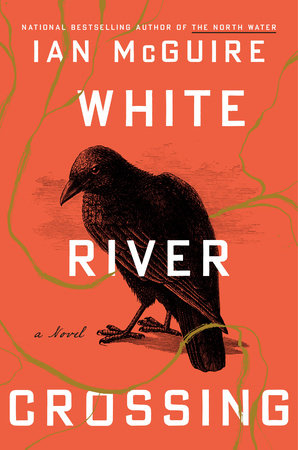
White River Crossing

A Novel

Look inside
Listen to a clip from the audiobook
audio pause button
0:00
0:00
A breathtaking and cinematic novel about the lust for gold and its bloody consequences, set in the unforgiving landscape of the sub-Arctic Canadian wilderness, from the acclaimed author of The North Water

A ragged fur peddler arrives at a remote outpost of the Hudson Bay Company in the winter of 1766 with a lump of gold, claiming that there is plenty more like it further north at a place called Ox Lake. The outpost’s chief factor, Magnus Norton, dreams of instant riches and launches a secret and perilous expedition to find the treasure and bring it back.

Led by a family of native guides, the party of prospectors includes Norton’s brutish deputy, John Shaw, and Thomas Hearn, the insular and intellectual first mate from the factory’s whaling sloop. During their long journey north, Shaw’s callousness and arrogance lead him to commit an act of sexual violence whose disastrous consequences will only fully emerge once they reach their final destination. There, amidst the bleak beauty of the Barren Grounds, as Norton’s carefully crafted plans begin to fall apart and the brutal arctic winter starts to descend, Hearn is forced to make a choice that will define his character and determine his future forever.

Utterly captivating, White River Crossing transports us back to the furthest edges of the eighteenth-century British empire where two radically different worlds—indigenous and European—collide with calamitous and deadly results.
Chapter One

Patterson the pedlar is clad in a suit of greasy winter hides; he has a dark woolen cap pulled low over his ears, and beneath the cap’s ragged fringe his eyes are narrow and close-set and the skin of his cheeks and brow is red raw in patches and scrofulous. When John Shaw sees him standing there next to the battened well in the center of the narrow cobblestone courtyard with his savagelooking cur steaming beside him, he knows from his sly and thievish looks alone just what he is without needing to ask. The pedlars are pirates and brigands who scavenge off the lawful fur trade. Between them and the Hudson’s Bay Company the rivalry is long and bitter, and so to find one bold or foolish enough to visit a factory uninvited is rare. When Shaw asks him to state his business plainly, Patterson says that he has come to speak to the chief factor, Mr. Magnus Norton.

“I won’t take much of Mr. Norton’s precious time,” he explains, calm and unabashed, as if such an intrusion is commonplace, “but I have something special to show him, something that he’ll wish to see.”

“And how would a man like you know what Mr. Norton wishes to see?”

Patterson shrugs and rubs his nose with the back of his snotblackened mitten.

“I hear Norton’s a clever fellow. And this thing I have is something a clever fellow will want to know about.”

“We don’t do any business with pedlars,” Shaw warns him.

“It’s not the furs I’m speaking of now,” he says. “It’s something other.”

“Then show me what you have.”

Patterson flinches at the thought, then shakes his head.

“No, I can’t do that,” he says. “Not out here. It wouldn’t be right.”

John Shaw, who has been Norton’s deputy for as long as anyone can remember and is not a man widely known for either his graciousness or his patience, is inclined at first to direct this intruder back to whatever ramshackle and shit-smirched trading post he’s journeyed from with clear instructions not to return on pain of a whipping. But there is something in Patterson’s demeanor that gives him pause. Later on, when the truth is known, he will claim it was a second sense, a feeling in his balls or his bones. He will say in his usual boastful way that he knew it from the first, but at the time all he really thinks is that there’s something queer about this fellow Patterson and before he sends him packing, Magnus will want to know about it.

“Have you met Mr. Norton before?” he asks him.

Patterson shakes his head.

“But the Indians I trade with vouch for him. They say he can be trusted.”

“And who, pray, will vouch for you?”

Patterson smiles again as if the two of them are sharing a private joke.

“What I have in my pack here will vouch for itself. You’ll see.”

Shaw gives him a long unfriendly stare, then tells him he will speak to Norton.

“In the meantime, you can chain that dog and follow me,” he says. “I don’t want you loitering about the courtyard bothering the other men or causing trouble.”

They walk over to the men’s house and go through the hallway and into the common room. Shaw points to a rush-bottomed chair by the stove, and Patterson sits down with a sigh and takes out his pipe and his tobacco pouch. Edward Hutchins the surgeon and William Cure the shipwright are in the room already, playing at cribbage for a ha’penny a point. Patterson starts to introduce himself, and Shaw tells him to keep quiet until he’s told to speak.

“You’re on Company land now,” he says. “So you’ll play by Company rules.”

Patterson looks amused more than offended by this display of strictness. He makes a somber face and puts his right forefinger up to his lips.

“Hear no evil, speak no evil,” he whispers gaily. “I understand you, Mr. Shaw, and you won’t hear another word from me until I’m asked for my opinion. I can promise you that.” r

Magnus Norton, chief factor, a man who, in his own estimation and that of most in the know, understands more about the Hudson’s Bay fur trade than any other soul living or dead, has no more love for the pedlars than John Shaw—perhaps less, since for the last ten years, their unsanctioned trading has cost him at least two thousand made beaver each season—but he is shrewder and less impulsive than his deputy, and when Shaw tells him who is here, he reasons that if a man has taken the trouble to travel so far in the wintertime, then he must have some story to tell. He instructs Shaw to give Patterson a bowl of soup to eat if he’s hungry and after that they will hear whatever it is he has to say. When Shaw is gone, Norton blots the last page of the ledger, gets up from his desk, and goes across to the fireplace to warm his hands. As he stands there by the andirons, he glances about the room with its brass lamps and tapestries and oil paintings of dogs and horses and feels, as he usually does, a sense of quiet pride and satisfaction in all he has achieved. He arrived on the Bay fifty years ago with nothing in his pockets, a poor and ignorant youth, and he has raised himself up to this prominence through hard work, relentlessness, and guile. He has grown old now, that cannot be denied. Unclothed, the skin sags off his bones in loops and folds like the melted tallow of a candle, and when he notices his face in the looking glass, he wonders sometimes who is the old fool looking back? But his urge to make a profit, he can say with surety, is undiminished. He has made himself rich already (there is no other place so splendid as this one for a thousand miles all around, he is quite certain of that fact), yet still, every day, like the rack-ribbed boy he once was, he yearns to be richer.

After a quarter of an hour has passed, there’s another knock on the door and Shaw steps in from the courtyard, followed by Patterson. The pedlar, whose stench precedes him, takes two steps forward, then stops where he is and gazes about the room with his mouth agape. Norton is well-used to this reaction; he’s seen it before more times than he can count. The bemusement first, then the wonder that such a place—a palace, some have called it—should exist in this otherwise barren wilderness. It is a fine way, he always thinks, to begin any conversation: by reminding the other fellow of the kind of man he’s talking to.

“That couch over there is from Paris,” he says, calmly nodding, “and the rug you are standing on is from Constantinople. I have an agent in London who picks them out on my behalf, a Mr. Alderton.”

Patterson peers down at the swirling red and green patterns between his boots, then looks up again and scratches his head.

“I heard you were something different,” he says. “That’s what I heard.”

Norton, feeling satisfied with this remark, nods, waits a while longer to allow the fixtures and furnishings to achieve their full effect, then moves over to his desk and seats himself.

“Mr. Shaw says you have something to show me,” he says. “Something you claim is of great value.”

“Aye, I do indeed.”
“A staggering portrait . . . brought to vivid life by the author’s keen talent for storytelling and willingness to depict the depths of human cruelty . . . The story’s ending is a shock, as McGuire explores in the final twist how hope and honor can be liabilities in a world of temptation, treachery, and retribution. It’s a stunner.”Publishers Weekly, starred review

“A fast-paced, elegantly written adventure novel about the moral and physical perils of gold lust . . . McGuire inhabits a wide variety of characters here, moving impressively among points of view, between historical sources and his own imaginings, between the literary-psychological mode and old-fashioned adventure yarn. [He] nimbly combines historical narrative and high suspense.”Kirkus Reviews

“McGuire brilliantly portrays the vicissitudes of human nature as pride and greed lead to treachery, jealousy, and deceit, weaving a trenchant tale of man’s inhumanity to man. The prose is both poetic and visceral, while the descriptions of the land and traditions are rich in period detail. A resplendent and masterful tale.”Booklist, starred review
© Paul Wolfgang Webster
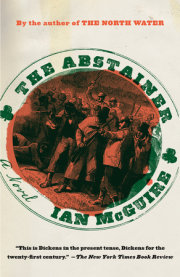
Ian McGuire is the author of The North Water, Incredible Bodies, and The Abstainer. He lives in Manchester, England, where he teaches at the University of Manchester's Centre for New Writing. View titles by Ian McGuire

About

A breathtaking and cinematic novel about the lust for gold and its bloody consequences, set in the unforgiving landscape of the sub-Arctic Canadian wilderness, from the acclaimed author of The North Water

A ragged fur peddler arrives at a remote outpost of the Hudson Bay Company in the winter of 1766 with a lump of gold, claiming that there is plenty more like it further north at a place called Ox Lake. The outpost’s chief factor, Magnus Norton, dreams of instant riches and launches a secret and perilous expedition to find the treasure and bring it back.

Led by a family of native guides, the party of prospectors includes Norton’s brutish deputy, John Shaw, and Thomas Hearn, the insular and intellectual first mate from the factory’s whaling sloop. During their long journey north, Shaw’s callousness and arrogance lead him to commit an act of sexual violence whose disastrous consequences will only fully emerge once they reach their final destination. There, amidst the bleak beauty of the Barren Grounds, as Norton’s carefully crafted plans begin to fall apart and the brutal arctic winter starts to descend, Hearn is forced to make a choice that will define his character and determine his future forever.

Utterly captivating, White River Crossing transports us back to the furthest edges of the eighteenth-century British empire where two radically different worlds—indigenous and European—collide with calamitous and deadly results.

Excerpt

Chapter One

Patterson the pedlar is clad in a suit of greasy winter hides; he has a dark woolen cap pulled low over his ears, and beneath the cap’s ragged fringe his eyes are narrow and close-set and the skin of his cheeks and brow is red raw in patches and scrofulous. When John Shaw sees him standing there next to the battened well in the center of the narrow cobblestone courtyard with his savagelooking cur steaming beside him, he knows from his sly and thievish looks alone just what he is without needing to ask. The pedlars are pirates and brigands who scavenge off the lawful fur trade. Between them and the Hudson’s Bay Company the rivalry is long and bitter, and so to find one bold or foolish enough to visit a factory uninvited is rare. When Shaw asks him to state his business plainly, Patterson says that he has come to speak to the chief factor, Mr. Magnus Norton.

“I won’t take much of Mr. Norton’s precious time,” he explains, calm and unabashed, as if such an intrusion is commonplace, “but I have something special to show him, something that he’ll wish to see.”

“And how would a man like you know what Mr. Norton wishes to see?”

Patterson shrugs and rubs his nose with the back of his snotblackened mitten.

“I hear Norton’s a clever fellow. And this thing I have is something a clever fellow will want to know about.”

“We don’t do any business with pedlars,” Shaw warns him.

“It’s not the furs I’m speaking of now,” he says. “It’s something other.”

“Then show me what you have.”

Patterson flinches at the thought, then shakes his head.

“No, I can’t do that,” he says. “Not out here. It wouldn’t be right.”

John Shaw, who has been Norton’s deputy for as long as anyone can remember and is not a man widely known for either his graciousness or his patience, is inclined at first to direct this intruder back to whatever ramshackle and shit-smirched trading post he’s journeyed from with clear instructions not to return on pain of a whipping. But there is something in Patterson’s demeanor that gives him pause. Later on, when the truth is known, he will claim it was a second sense, a feeling in his balls or his bones. He will say in his usual boastful way that he knew it from the first, but at the time all he really thinks is that there’s something queer about this fellow Patterson and before he sends him packing, Magnus will want to know about it.

“Have you met Mr. Norton before?” he asks him.

Patterson shakes his head.

“But the Indians I trade with vouch for him. They say he can be trusted.”

“And who, pray, will vouch for you?”

Patterson smiles again as if the two of them are sharing a private joke.

“What I have in my pack here will vouch for itself. You’ll see.”

Shaw gives him a long unfriendly stare, then tells him he will speak to Norton.

“In the meantime, you can chain that dog and follow me,” he says. “I don’t want you loitering about the courtyard bothering the other men or causing trouble.”

They walk over to the men’s house and go through the hallway and into the common room. Shaw points to a rush-bottomed chair by the stove, and Patterson sits down with a sigh and takes out his pipe and his tobacco pouch. Edward Hutchins the surgeon and William Cure the shipwright are in the room already, playing at cribbage for a ha’penny a point. Patterson starts to introduce himself, and Shaw tells him to keep quiet until he’s told to speak.

“You’re on Company land now,” he says. “So you’ll play by Company rules.”

Patterson looks amused more than offended by this display of strictness. He makes a somber face and puts his right forefinger up to his lips.

“Hear no evil, speak no evil,” he whispers gaily. “I understand you, Mr. Shaw, and you won’t hear another word from me until I’m asked for my opinion. I can promise you that.” r

Magnus Norton, chief factor, a man who, in his own estimation and that of most in the know, understands more about the Hudson’s Bay fur trade than any other soul living or dead, has no more love for the pedlars than John Shaw—perhaps less, since for the last ten years, their unsanctioned trading has cost him at least two thousand made beaver each season—but he is shrewder and less impulsive than his deputy, and when Shaw tells him who is here, he reasons that if a man has taken the trouble to travel so far in the wintertime, then he must have some story to tell. He instructs Shaw to give Patterson a bowl of soup to eat if he’s hungry and after that they will hear whatever it is he has to say. When Shaw is gone, Norton blots the last page of the ledger, gets up from his desk, and goes across to the fireplace to warm his hands. As he stands there by the andirons, he glances about the room with its brass lamps and tapestries and oil paintings of dogs and horses and feels, as he usually does, a sense of quiet pride and satisfaction in all he has achieved. He arrived on the Bay fifty years ago with nothing in his pockets, a poor and ignorant youth, and he has raised himself up to this prominence through hard work, relentlessness, and guile. He has grown old now, that cannot be denied. Unclothed, the skin sags off his bones in loops and folds like the melted tallow of a candle, and when he notices his face in the looking glass, he wonders sometimes who is the old fool looking back? But his urge to make a profit, he can say with surety, is undiminished. He has made himself rich already (there is no other place so splendid as this one for a thousand miles all around, he is quite certain of that fact), yet still, every day, like the rack-ribbed boy he once was, he yearns to be richer.

After a quarter of an hour has passed, there’s another knock on the door and Shaw steps in from the courtyard, followed by Patterson. The pedlar, whose stench precedes him, takes two steps forward, then stops where he is and gazes about the room with his mouth agape. Norton is well-used to this reaction; he’s seen it before more times than he can count. The bemusement first, then the wonder that such a place—a palace, some have called it—should exist in this otherwise barren wilderness. It is a fine way, he always thinks, to begin any conversation: by reminding the other fellow of the kind of man he’s talking to.

“That couch over there is from Paris,” he says, calmly nodding, “and the rug you are standing on is from Constantinople. I have an agent in London who picks them out on my behalf, a Mr. Alderton.”

Patterson peers down at the swirling red and green patterns between his boots, then looks up again and scratches his head.

“I heard you were something different,” he says. “That’s what I heard.”

Norton, feeling satisfied with this remark, nods, waits a while longer to allow the fixtures and furnishings to achieve their full effect, then moves over to his desk and seats himself.

“Mr. Shaw says you have something to show me,” he says. “Something you claim is of great value.”

“Aye, I do indeed.”

Reviews

“A staggering portrait . . . brought to vivid life by the author’s keen talent for storytelling and willingness to depict the depths of human cruelty . . . The story’s ending is a shock, as McGuire explores in the final twist how hope and honor can be liabilities in a world of temptation, treachery, and retribution. It’s a stunner.”Publishers Weekly, starred review

“A fast-paced, elegantly written adventure novel about the moral and physical perils of gold lust . . . McGuire inhabits a wide variety of characters here, moving impressively among points of view, between historical sources and his own imaginings, between the literary-psychological mode and old-fashioned adventure yarn. [He] nimbly combines historical narrative and high suspense.”Kirkus Reviews

“McGuire brilliantly portrays the vicissitudes of human nature as pride and greed lead to treachery, jealousy, and deceit, weaving a trenchant tale of man’s inhumanity to man. The prose is both poetic and visceral, while the descriptions of the land and traditions are rich in period detail. A resplendent and masterful tale.”Booklist, starred review

Author

© Paul Wolfgang Webster
Ian McGuire is the author of The North Water, Incredible Bodies, and The Abstainer. He lives in Manchester, England, where he teaches at the University of Manchester's Centre for New Writing. View titles by Ian McGuire
  • More Websites from
    Penguin Random House
  • Common Reads
  • Library Marketing