Download high-resolution image
Listen to a clip from the audiobook
audio pause button
0:00
0:00

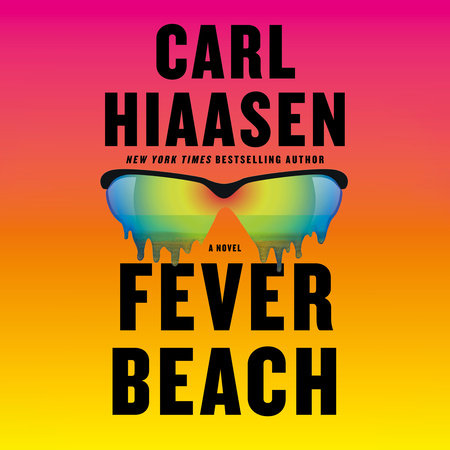
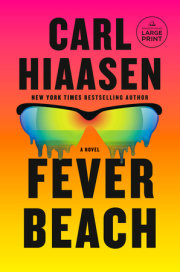
Fever Beach

A Novel

Read by Will Damron
Listen to a clip from the audiobook
audio pause button
0:00
0:00
NEW YORK TIMES BESTSELLER • From the bestselling author of Squeeze Me comes a wildly entertaining Florida caper—a razor-sharp send-up of modern American life, packed with misfits and mayhem.

“No satirist arrived at our dystopian moment better prepared than Carl Hiaasen.Slate

“[Carl Hiaasen’s] reality with a side of escapism is a blessing for our fragile minds at this time.” —Samantha Irby in The Atlantic


Welcome to Fever Beach, where the sun blazes, the politics are unhinged, and the characters are as volatile as a summer storm.

Dale Figgo is a half-baked crusader with the rare distinction of being kicked out of the Proud Boys—for being too dumb. His latest bad decision? Picking up a hitchhiker on a rainy afternoon while running an errand.

That errand sets off a chain reaction involving Viva Morales, a clever, resilient newcomer trying to rebuild her life post-divorce. She’s renting a room in Figgo’s apartment and working at the Mink Foundation—a philanthropic front with something far darker beneath the surface.

Circling them is Twilly Spree, a hotheaded environmentalist with too much cash and a gift for over-the-top revenge.

When dark money and twisted motives bring their worlds crashing together, Viva and Twilly become unlikely allies. Together, they uncover a tangle of corruption and conspiracy led by a plastic-surgery-loving billionaire couple and a clueless congressman with delusions of grandeur.

In his most outrageous and deliciously funny novel yet, Hiaasen delivers a gleefully chaotic portrait of contemporary madness.
1

On the afternoon of September 20th, dishwater-­gray and rainy, a man named Dale Figgo picked up a hitchhiker on Gus Grissom Boulevard in Tangelo Shores, Florida. The hitchhiker, who reminded Figgo of Danny DeVito, asked for a lift to the interstate. Figgo agreed to take him there after finishing an errand.

The distance to the highway wasn’t far, and the hitchhiker would have walked if not for the pounding thunder and wild lightning. As a boy he had witnessed a neighbor’s gelded llama struck to the ground by a bolt that lit up the small Wisconsin pasture like Lambeau Field. The llama had survived the shock, but from then on yipped day and night like an addled collie. The hitchhiker shared this anecdote with Dale Figgo, who agreed that lightning was a thing to be avoided.

Soon they entered a manicured subdivision called Sanctuary Falls, where Figgo eased his Dodge Ram 1500 quad cab to the curb and told the hitchhiker what was about to happen. The hitchhiker placed his backpack on the floorboard and pivoted warily toward the back seat, where he saw an assault rifle, a can of bear spray, a sex doll made to look like the lower torso of a woman, and a pile of clear Ziploc bags. Each bag contained a handful of what appeared to be beach sand and a garishly printed flyer. Reading upside down, the hitchhiker saw that one of the words was “JEWISH.” Figgo began sorting and stacking the bags on the console.

“I’ll drive,” he said. “You throw.”

“Do what?”

“The sand is for weight. Also, so the baggies won’t blow away.”

The hitchhiker said, “I’m pretty sure ‘Holocaust’ isn’t spelled with a k.”

“And I’m pretty sure I didn’t tell you to proof-­teach my business.”

Slowly Figgo began driving up and down the tidy streets, the hitchhiker reluctantly lobbing the slur-­filled Ziplocs onto driveways of multimillion-­dollar properties lush with bougainvilleas, black olive trees, and hybrid palms.

When the hitchhiker noticed a shamrock painted on one of the mailboxes, he asked Figgo if they were in the right neighborhood.

“Never question the mission,” Figgo said.

“What mission exactly?”

“Community outreach, dumbass. To enlight the motherfuckin’ citizenry!”

“ ‘Enlight’?” the hitchhiker said. “For real?”

Figgo reached across and popped him in the jaw.

“What the hell?” cried the hitchhiker, rubbing his chin. It was the first time he’d been slugged by a driver. Propositioned? Sure. Robbed? Too many times to count.

But never once punched—­and he’d thumbed his way from coast to coast.

Figgo said, “You want a ride to 95 or not?”

The rain was falling harder, the thunder more ominous.

“Why’d you hit me? For Christ’s sake, I’m old enough to be your dad.”

“Just keepin’ it real,” said Figgo, grinning. “That’s what I do. My top forte, you might say.”

What’s wrong with this fuckwhistle? wondered the hitchhiker.

After all the bagged tracts were distributed, Figgo made a phone call to somebody named Jonas and reported that the run had been completed without incident.

But then, as Figgo was navigating an exit from Sanctuary Falls, a gangly, middle-­aged blond man stepped into the road. He wore orange Crocs and a terrycloth robe, and he was clutching one of Figgo’s baggies. Heatedly he waved both arms, signaling for the pickup truck to halt. The hitchhiker perceived that this particular citizen was rejecting Figgo’s version of enlightenment.

As soon as Figgo hit the brakes, the man in the robe lurched closer. Figgo grabbed the can of bear spray from the back seat.

“Aw, don’t,” the hitchhiker said.

“Self-­defense. You’re my fuckin’ witness.”

“Seriously, the dude’s wearin’ a damn robe.”

“So did Mike Tyson!”

Figgo rolled down his window. The man in the street was cursing in a wheezy, irate voice. He called Figgo a lowlife racist and scumbag Nazi. Then he reared back and hurled the plastic bag, which, because of the sand, made a thwap when it bounced off Figgo’s forehead.

“Game on!” Figgo crowed, aiming the nozzle of the bear spray at the maniac.

But when he pulled the trigger, nothing happened, not even a squirt. The hitchhiker reached over and snatched away the can.

“It’s empty, bro,” he said.

“Viva,” Figgo muttered. “That stupid bitch.”

The angry homeowner was now endeavoring to spit, through a slanting sheet of rain, at Figgo’s prized Ram. When Figgo stomped on the accelerator, the man tried to jump out of the way but ended up splayed across the hood of the quad cab—­robe unhitched, Crocs airborne, the back of his skull spidering the windshield.

“Stop the truck!” the hitchhiker shouted.

“No way.” Figgo sped up and began to weave erratically.

“You killed him, man!”

“He ain’t dead. He’s hangin’ on like a damn gecko.”

Figgo made a screeching swerve and the pedestrian slid off the hood, landing in a heap on a bike path. Figgo sped away, nervously checking the rearview.

“How come that asshole got so pissed?” he muttered when they were back on A1A. “He sure didn’t look Jewish. Do they even make blond Jews?”

“Let me out,” the hitchhiker pleaded.

“See what he did to my truck?”

It wouldn’t have been necessary for Figgo to hit-­and-­run the man if only the bear spray had worked. The container was empty because Figgo’s tenant, a woman named Viva Morales, had in a moment of panic mistaken it for Raid and blasted the blinding contents at a cockroach, rendering the townhouse apartment she and Figgo shared uninhabitable for thirty-­six hours. Thrifty by nature, Figgo had saved the bear spray can, trusting it was good for another shot or two.

“That shit ain’t cheap,” he groused to the hitchhiker.

“Seriously, I’ll get out now.”

“Chill, brah. That old geezer’s fine,” Figgo said.

“You need to call 911.”

“No way. He flipped me the finger when we took off.”

The hitchhiker, who had observed no such gesture from the man crumpled on the bike path, fell silent. Soon the fleeing pickup truck got stuck in traffic, inching through the downpour.

“So, where you headed for?” Figgo asked.

“Austin, Texas.” The hitchhiker gathered his backpack onto his lap, prepping for departure.

“What’s the woke situation down in Austin? I heard it was bad.”

“Austin’s cool,” the hitchhiker answered. “Great music.”

“But mostly country, right?”

“All kinds of music.”

“That rap shit, too?”

“Hip-­hop, sure.”

“See, that’s what I’m gettin’ at. The rotten lib-­tards, that’s the whole crust of the problem.”

“Ah.” The hitchhiker stole another worried glance at the big gun on the back seat.

“Sorry about the punch in the face,” Figgo said.

“Yeah, I’m not sure why you did that.”

“Wanna make some money?”

“Thanks, but I’m set,” the hitchhiker said.

Traffic had come to a stop. The hitchhiker figured there was an accident somewhere up ahead.

Figgo said, “It’s easy work. I’ll pay ya fifty bucks cash.”

“To do what?”

“Stuff more baggies. I got the carpy tuna bad, so I could use some help.” Figgo extended one hand for inspection. It appeared totally functional.

“Plus there’s some people you should meet,” Figgo went on. “Good dudes. Colleagues of mine.”

He pronounced it “collig-­yoos.”

“We’re workin’ up somethin’ so freaking big it’ll blow your mind. You can crash at my place, downstairs on the sleeper sofa.”

“Sweet,” said the hitchhiker, a millisecond before he flung open the door, rolled out of the truck, and ran.


The flight to Orlando was packed. Twilly Spree felt lucky to score an aisle seat. The man and woman sharing the row told him they were going to Disney World for their honeymoon. At first Twilly thought they were joking, the Magic Kingdom being as romantic as a food court. But it turned out the young couple wasn’t kidding. Twilly felt bound to warn them that they were doomed to return to Disney every time their family expanded, the woman seeming to absorb this forecast with less cheer than her husband. They were a gregarious duo, however, with numerous questions about Florida in general. Was it safe? What about the alligators? When’s the next space launch? Where’s the best place to swim with a manatee?

His patience soon sapped, Twilly faked an asthmatic episode and turned away to drag on a realistic-­looking inhaler. It was a prop he carried at all times in public. Across the aisle sat an attractive woman in her early forties, auburn hair pinned up. She was wearing tortoiseshell glasses and reading a New Yorker magazine, which made Twilly self-­conscious about the USA Today on his lap. Seeing no wedding band on the woman’s ring finger, he uncharacteristically made a stab at conversation.

“Do you live in Orlando?” he asked, pocketing the mock inhaler.

“Hush,” she said firmly but gently, as if speaking to a child in church. She didn’t look up from the article she was reading.

Twilly wondered if she’d purchased the magazine on the trip or brought it from home. In any case, her surgical concentration on the contents was alluring.

He folded his newspaper into the seat pocket and opened a book on his iPad. It was a biography of a poet he’d never heard of, a supposedly volcanic talent who remained obscure and unappreciated until his tragic death at age thirty-­two. Twilly assumed that the misunderstood soul had taken his own life, but it turned out that he’d perished in an electric skateboard accident after partying all night with Lululemon models. Death by suicide would have been a cliché, his biographer wrote solemnly in the foreword, and the rebellious young poet was a sworn enemy of clichés. Evidently, skating into the path of a Coors truck on the Pacific Coast Highway had certified the stature of his untamed genius. Twilly deleted the remainder of the book, having no idea how it had gotten downloaded in the first place. Perhaps the prankster had been Janine, back in happier times.

The flight got bumpy, and the honeymooners clutched each other’s hands. Twilly waited for the auburn-­haired woman across the aisle to put down the magazine, which the plane’s bouncing would have made impossible to read. After a time she gave up trying, took off her glasses, and closed her eyes.

“You okay?” Twilly asked.

“What?”

“I’ve got a Valium if you need it.”

“Behave,” the woman said, still with her eyes shut.

The pilots were weaving around one of those towering mid-­Florida thunderstorms. Twilly could see deep purple clouds through the aircraft’s windows on one side, bright and deceiving sunshine through the other.
“I think we’re in a holding pattern,” he said to the woman.

“The plane, you mean.”

“Yes. Of course.”

A few minutes later, the woman said, “So, I actually have your book.”

“Wow, which one?”

How to Let Happiness Find You.

“And?”

“Did nothing for me,” the woman said. “Completely useless.”

“I’m sorry to hear that.”

“Are you working on a new one?”

“No, I’m not.”

“Good,” the woman said, putting her glasses back on.

Twilly had never written a book, and had never heard of the one she was complaining about. Still, he was intrigued that she thought she recognized him from a photograph on a jacket flap—­and without seeming to even glance in his direction.

“I’m not qualified to do a self-­help guide,” he said.

“No kidding.”

“Do you want your money back?”

The woman sighed and said no. He liked her attitude. She wasn’t going to smile, no matter what.

“Was that albuterol?” she asked.

“Sorry, what?”

“Your inhaler.”

“Oh. Right,” Twilly said, patting his pocket. “For my asthma.”

“I had a husband who used that stuff. Kept him up all night.”

“That’s when I do my best writing.”

“Maybe switch to cocaine,” the woman said.

The plane found smooth air again, on final approach, and the young newlyweds sitting beside Twilly began reciting one of the lesser-­known Psalms. He was impressed by the couple’s courage to pray out loud in front of Florida-­bound strangers. After the landing, he allowed the devout duo to file out ahead of him and—­not wishing to further annoy the cool, pretty woman across the aisle—­remained in his seat until all the passengers had debarked.

Right away Twilly noticed that the woman had left her New Yorker behind, so he put it in his backpack before leaving the plane. On the Uber ride from the airport he took out the magazine and smiled when he saw an address label on a bottom corner of the cover; she wasn’t just a casual reader, she was a subscriber.
"Hiaasen is working in a grand tradition that stretches back to Mikhail Bulgakov satirizing Stalinism and Charlie Chaplin mocking Hitler. At his best, he can pack a paragraph with so many little parodic bangs that it feels like a fireworks display when the explosions come so fast you stop saying “Ahhh” and just stand in slack-jawed bedazzlement…. While white-shoe lawyers, university presidents and media moguls cower before the MAGA assaults on American democracy and decency, this mischievous 72-year-old writer is fighting back with every political gag and sex joke he can get his hands on.” Ron Charles, The Washington Post
"Carl Hiaasen’s Fever Beach turns, like many of his novels, on the actions of a collection of enthusiastic, comically unfocused malcontents....Mr. Hiaasen’s eye for the absurd, like his ear for dialogue, is as sharp as ever." — Anna Mundow, Wall Street Journal

"Fever Beach. . . features a witty, wounded hero with a heart of gold, boyish charm and profound anger at all despoilers of natural Florida. The author is each of those things, with a double dose of charm — but in real life he leaves the maiming, killing and vigilante butt-kicking to his alter egos, always in pursuit of righteous causes." —David Von Drehle, The Washington Post

"Nearly 40 years and 20-plus books later, what was happening to Florida is now happening to the entire country. The United States is being despoiled, corrupted, perverted, bulldozed into a playground for the wealthy. The archetype Hiaasen helped invent, the Florida Man, was once just an overconfident moron who, say, drowned while wrestling a gator for his beer. Now America is run by Florida Men. No satirist arrived at our dystopian moment better prepared than Carl Hiaasen. The bad guys in Hiaasen’s books have always been dangerous and mockable. These days they’re more dangerous than ever, and an infuriated Hiaasen mocks them just as viciously as they deserve —punishes them in ways that, thus far, the real world has been unable to do. At age 72, unexpectedly more relevant than he’s ever been, Carl Hiaasen is on a hot streak that rivals his early career. Fever Beach is among Hiaasen’s best novels, because it faces the horrors of our stupid times and portrays them in all their grotesquerie. . . . Forty years ago, Carl Hiaasen started writing novels because he was upset about what he saw happening to his own little corner of the world. These days, he might be the only writer mean enough, and funny enough, to chronicle what’s happening to us all." Dan Kois, Slate

"Heavily plotted but peppily paced, bursting with quips and blazing with anger...” Justin Taylor, The New York Times Book Review

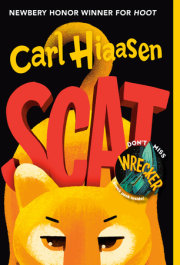
"Remember Twilly Spree? The independently wealthy sometime ecowarrior who appeared in Hiaasen’s Sick Puppy (2000), and Scat (2009)? He’s in this new book, too, which is one of many things the novel has going for it. It also has Dale Figgo, a right-wing nutcase who was too crazy for the Proud Boys; Viva Morales, who’s renting a room from Dale, and whose bosses, a pair of alleged philanthropists, are almost certainly up to no good; an ambitious and deeply corrupt congressman; Dale’s mom, who isn’t thrilled about what her son is doing with his life; and a bunch of other delightfully weird characters. There is a serious story to be told about right-wing conspiracists, corrupt politicians, and shady philanthropists, and Hiaasen is sort of telling that story, but mostly he’s making us laugh—and not polite little giggles, either. We’re talking giant belly laughs, embarrass-yourself-in-public spleen-busters. This could be his funniest book yet." —Booklist
© Elena Seibert
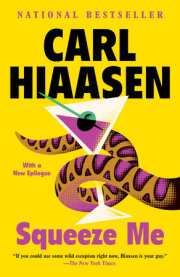
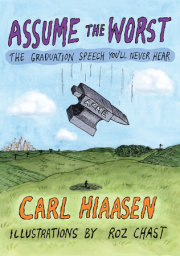
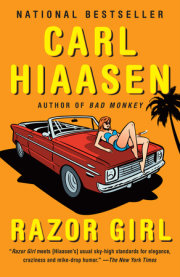
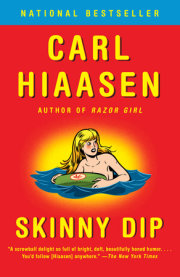
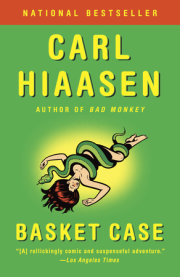
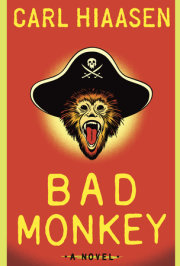
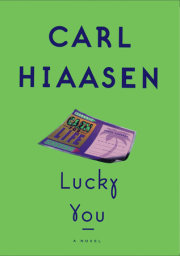
CARL HIAASEN was born and raised in Florida. He is the author of fourteen previous novels, including the bestsellers Squeeze Me, Razor Girl, Bad Monkey, Star Island, Nature Girl, Skinny Dip, Sick Puppy, and Lucky You, and six bestselling children’s books, Hoot, Flush, Scat, Chomp, Skink, and Squirm. His most recent work of nonfiction is Assume the Worst.

carlhiaasen.com

CARL HIAASEN is available for select readings and lectures. To inquire about a possible appearance, please contact Penguin Random House Speakers Bureau at speakers@penguinrandomhouse.com or visit prhspeakers.com. View titles by Carl Hiaasen

About

NEW YORK TIMES BESTSELLER • From the bestselling author of Squeeze Me comes a wildly entertaining Florida caper—a razor-sharp send-up of modern American life, packed with misfits and mayhem.

“No satirist arrived at our dystopian moment better prepared than Carl Hiaasen.Slate

“[Carl Hiaasen’s] reality with a side of escapism is a blessing for our fragile minds at this time.” —Samantha Irby in The Atlantic


Welcome to Fever Beach, where the sun blazes, the politics are unhinged, and the characters are as volatile as a summer storm.

Dale Figgo is a half-baked crusader with the rare distinction of being kicked out of the Proud Boys—for being too dumb. His latest bad decision? Picking up a hitchhiker on a rainy afternoon while running an errand.

That errand sets off a chain reaction involving Viva Morales, a clever, resilient newcomer trying to rebuild her life post-divorce. She’s renting a room in Figgo’s apartment and working at the Mink Foundation—a philanthropic front with something far darker beneath the surface.

Circling them is Twilly Spree, a hotheaded environmentalist with too much cash and a gift for over-the-top revenge.

When dark money and twisted motives bring their worlds crashing together, Viva and Twilly become unlikely allies. Together, they uncover a tangle of corruption and conspiracy led by a plastic-surgery-loving billionaire couple and a clueless congressman with delusions of grandeur.

In his most outrageous and deliciously funny novel yet, Hiaasen delivers a gleefully chaotic portrait of contemporary madness.

Excerpt

1

On the afternoon of September 20th, dishwater-­gray and rainy, a man named Dale Figgo picked up a hitchhiker on Gus Grissom Boulevard in Tangelo Shores, Florida. The hitchhiker, who reminded Figgo of Danny DeVito, asked for a lift to the interstate. Figgo agreed to take him there after finishing an errand.

The distance to the highway wasn’t far, and the hitchhiker would have walked if not for the pounding thunder and wild lightning. As a boy he had witnessed a neighbor’s gelded llama struck to the ground by a bolt that lit up the small Wisconsin pasture like Lambeau Field. The llama had survived the shock, but from then on yipped day and night like an addled collie. The hitchhiker shared this anecdote with Dale Figgo, who agreed that lightning was a thing to be avoided.

Soon they entered a manicured subdivision called Sanctuary Falls, where Figgo eased his Dodge Ram 1500 quad cab to the curb and told the hitchhiker what was about to happen. The hitchhiker placed his backpack on the floorboard and pivoted warily toward the back seat, where he saw an assault rifle, a can of bear spray, a sex doll made to look like the lower torso of a woman, and a pile of clear Ziploc bags. Each bag contained a handful of what appeared to be beach sand and a garishly printed flyer. Reading upside down, the hitchhiker saw that one of the words was “JEWISH.” Figgo began sorting and stacking the bags on the console.

“I’ll drive,” he said. “You throw.”

“Do what?”

“The sand is for weight. Also, so the baggies won’t blow away.”

The hitchhiker said, “I’m pretty sure ‘Holocaust’ isn’t spelled with a k.”

“And I’m pretty sure I didn’t tell you to proof-­teach my business.”

Slowly Figgo began driving up and down the tidy streets, the hitchhiker reluctantly lobbing the slur-­filled Ziplocs onto driveways of multimillion-­dollar properties lush with bougainvilleas, black olive trees, and hybrid palms.

When the hitchhiker noticed a shamrock painted on one of the mailboxes, he asked Figgo if they were in the right neighborhood.

“Never question the mission,” Figgo said.

“What mission exactly?”

“Community outreach, dumbass. To enlight the motherfuckin’ citizenry!”

“ ‘Enlight’?” the hitchhiker said. “For real?”

Figgo reached across and popped him in the jaw.

“What the hell?” cried the hitchhiker, rubbing his chin. It was the first time he’d been slugged by a driver. Propositioned? Sure. Robbed? Too many times to count.

But never once punched—­and he’d thumbed his way from coast to coast.

Figgo said, “You want a ride to 95 or not?”

The rain was falling harder, the thunder more ominous.

“Why’d you hit me? For Christ’s sake, I’m old enough to be your dad.”

“Just keepin’ it real,” said Figgo, grinning. “That’s what I do. My top forte, you might say.”

What’s wrong with this fuckwhistle? wondered the hitchhiker.

After all the bagged tracts were distributed, Figgo made a phone call to somebody named Jonas and reported that the run had been completed without incident.

But then, as Figgo was navigating an exit from Sanctuary Falls, a gangly, middle-­aged blond man stepped into the road. He wore orange Crocs and a terrycloth robe, and he was clutching one of Figgo’s baggies. Heatedly he waved both arms, signaling for the pickup truck to halt. The hitchhiker perceived that this particular citizen was rejecting Figgo’s version of enlightenment.

As soon as Figgo hit the brakes, the man in the robe lurched closer. Figgo grabbed the can of bear spray from the back seat.

“Aw, don’t,” the hitchhiker said.

“Self-­defense. You’re my fuckin’ witness.”

“Seriously, the dude’s wearin’ a damn robe.”

“So did Mike Tyson!”

Figgo rolled down his window. The man in the street was cursing in a wheezy, irate voice. He called Figgo a lowlife racist and scumbag Nazi. Then he reared back and hurled the plastic bag, which, because of the sand, made a thwap when it bounced off Figgo’s forehead.

“Game on!” Figgo crowed, aiming the nozzle of the bear spray at the maniac.

But when he pulled the trigger, nothing happened, not even a squirt. The hitchhiker reached over and snatched away the can.

“It’s empty, bro,” he said.

“Viva,” Figgo muttered. “That stupid bitch.”

The angry homeowner was now endeavoring to spit, through a slanting sheet of rain, at Figgo’s prized Ram. When Figgo stomped on the accelerator, the man tried to jump out of the way but ended up splayed across the hood of the quad cab—­robe unhitched, Crocs airborne, the back of his skull spidering the windshield.

“Stop the truck!” the hitchhiker shouted.

“No way.” Figgo sped up and began to weave erratically.

“You killed him, man!”

“He ain’t dead. He’s hangin’ on like a damn gecko.”

Figgo made a screeching swerve and the pedestrian slid off the hood, landing in a heap on a bike path. Figgo sped away, nervously checking the rearview.

“How come that asshole got so pissed?” he muttered when they were back on A1A. “He sure didn’t look Jewish. Do they even make blond Jews?”

“Let me out,” the hitchhiker pleaded.

“See what he did to my truck?”

It wouldn’t have been necessary for Figgo to hit-­and-­run the man if only the bear spray had worked. The container was empty because Figgo’s tenant, a woman named Viva Morales, had in a moment of panic mistaken it for Raid and blasted the blinding contents at a cockroach, rendering the townhouse apartment she and Figgo shared uninhabitable for thirty-­six hours. Thrifty by nature, Figgo had saved the bear spray can, trusting it was good for another shot or two.

“That shit ain’t cheap,” he groused to the hitchhiker.

“Seriously, I’ll get out now.”

“Chill, brah. That old geezer’s fine,” Figgo said.

“You need to call 911.”

“No way. He flipped me the finger when we took off.”

The hitchhiker, who had observed no such gesture from the man crumpled on the bike path, fell silent. Soon the fleeing pickup truck got stuck in traffic, inching through the downpour.

“So, where you headed for?” Figgo asked.

“Austin, Texas.” The hitchhiker gathered his backpack onto his lap, prepping for departure.

“What’s the woke situation down in Austin? I heard it was bad.”

“Austin’s cool,” the hitchhiker answered. “Great music.”

“But mostly country, right?”

“All kinds of music.”

“That rap shit, too?”

“Hip-­hop, sure.”

“See, that’s what I’m gettin’ at. The rotten lib-­tards, that’s the whole crust of the problem.”

“Ah.” The hitchhiker stole another worried glance at the big gun on the back seat.

“Sorry about the punch in the face,” Figgo said.

“Yeah, I’m not sure why you did that.”

“Wanna make some money?”

“Thanks, but I’m set,” the hitchhiker said.

Traffic had come to a stop. The hitchhiker figured there was an accident somewhere up ahead.

Figgo said, “It’s easy work. I’ll pay ya fifty bucks cash.”

“To do what?”

“Stuff more baggies. I got the carpy tuna bad, so I could use some help.” Figgo extended one hand for inspection. It appeared totally functional.

“Plus there’s some people you should meet,” Figgo went on. “Good dudes. Colleagues of mine.”

He pronounced it “collig-­yoos.”

“We’re workin’ up somethin’ so freaking big it’ll blow your mind. You can crash at my place, downstairs on the sleeper sofa.”

“Sweet,” said the hitchhiker, a millisecond before he flung open the door, rolled out of the truck, and ran.


The flight to Orlando was packed. Twilly Spree felt lucky to score an aisle seat. The man and woman sharing the row told him they were going to Disney World for their honeymoon. At first Twilly thought they were joking, the Magic Kingdom being as romantic as a food court. But it turned out the young couple wasn’t kidding. Twilly felt bound to warn them that they were doomed to return to Disney every time their family expanded, the woman seeming to absorb this forecast with less cheer than her husband. They were a gregarious duo, however, with numerous questions about Florida in general. Was it safe? What about the alligators? When’s the next space launch? Where’s the best place to swim with a manatee?

His patience soon sapped, Twilly faked an asthmatic episode and turned away to drag on a realistic-­looking inhaler. It was a prop he carried at all times in public. Across the aisle sat an attractive woman in her early forties, auburn hair pinned up. She was wearing tortoiseshell glasses and reading a New Yorker magazine, which made Twilly self-­conscious about the USA Today on his lap. Seeing no wedding band on the woman’s ring finger, he uncharacteristically made a stab at conversation.

“Do you live in Orlando?” he asked, pocketing the mock inhaler.

“Hush,” she said firmly but gently, as if speaking to a child in church. She didn’t look up from the article she was reading.

Twilly wondered if she’d purchased the magazine on the trip or brought it from home. In any case, her surgical concentration on the contents was alluring.

He folded his newspaper into the seat pocket and opened a book on his iPad. It was a biography of a poet he’d never heard of, a supposedly volcanic talent who remained obscure and unappreciated until his tragic death at age thirty-­two. Twilly assumed that the misunderstood soul had taken his own life, but it turned out that he’d perished in an electric skateboard accident after partying all night with Lululemon models. Death by suicide would have been a cliché, his biographer wrote solemnly in the foreword, and the rebellious young poet was a sworn enemy of clichés. Evidently, skating into the path of a Coors truck on the Pacific Coast Highway had certified the stature of his untamed genius. Twilly deleted the remainder of the book, having no idea how it had gotten downloaded in the first place. Perhaps the prankster had been Janine, back in happier times.

The flight got bumpy, and the honeymooners clutched each other’s hands. Twilly waited for the auburn-­haired woman across the aisle to put down the magazine, which the plane’s bouncing would have made impossible to read. After a time she gave up trying, took off her glasses, and closed her eyes.

“You okay?” Twilly asked.

“What?”

“I’ve got a Valium if you need it.”

“Behave,” the woman said, still with her eyes shut.

The pilots were weaving around one of those towering mid-­Florida thunderstorms. Twilly could see deep purple clouds through the aircraft’s windows on one side, bright and deceiving sunshine through the other.

“I think we’re in a holding pattern,” he said to the woman.

“The plane, you mean.”

“Yes. Of course.”

A few minutes later, the woman said, “So, I actually have your book.”

“Wow, which one?”

How to Let Happiness Find You.

“And?”

“Did nothing for me,” the woman said. “Completely useless.”

“I’m sorry to hear that.”

“Are you working on a new one?”

“No, I’m not.”

“Good,” the woman said, putting her glasses back on.

Twilly had never written a book, and had never heard of the one she was complaining about. Still, he was intrigued that she thought she recognized him from a photograph on a jacket flap—­and without seeming to even glance in his direction.

“I’m not qualified to do a self-­help guide,” he said.

“No kidding.”

“Do you want your money back?”

The woman sighed and said no. He liked her attitude. She wasn’t going to smile, no matter what.

“Was that albuterol?” she asked.

“Sorry, what?”

“Your inhaler.”

“Oh. Right,” Twilly said, patting his pocket. “For my asthma.”

“I had a husband who used that stuff. Kept him up all night.”

“That’s when I do my best writing.”

“Maybe switch to cocaine,” the woman said.

The plane found smooth air again, on final approach, and the young newlyweds sitting beside Twilly began reciting one of the lesser-­known Psalms. He was impressed by the couple’s courage to pray out loud in front of Florida-­bound strangers. After the landing, he allowed the devout duo to file out ahead of him and—­not wishing to further annoy the cool, pretty woman across the aisle—­remained in his seat until all the passengers had debarked.

Right away Twilly noticed that the woman had left her New Yorker behind, so he put it in his backpack before leaving the plane. On the Uber ride from the airport he took out the magazine and smiled when he saw an address label on a bottom corner of the cover; she wasn’t just a casual reader, she was a subscriber.

Reviews

"Hiaasen is working in a grand tradition that stretches back to Mikhail Bulgakov satirizing Stalinism and Charlie Chaplin mocking Hitler. At his best, he can pack a paragraph with so many little parodic bangs that it feels like a fireworks display when the explosions come so fast you stop saying “Ahhh” and just stand in slack-jawed bedazzlement…. While white-shoe lawyers, university presidents and media moguls cower before the MAGA assaults on American democracy and decency, this mischievous 72-year-old writer is fighting back with every political gag and sex joke he can get his hands on.” Ron Charles, The Washington Post

"Carl Hiaasen’s Fever Beach turns, like many of his novels, on the actions of a collection of enthusiastic, comically unfocused malcontents....Mr. Hiaasen’s eye for the absurd, like his ear for dialogue, is as sharp as ever." — Anna Mundow, Wall Street Journal

"Fever Beach. . . features a witty, wounded hero with a heart of gold, boyish charm and profound anger at all despoilers of natural Florida. The author is each of those things, with a double dose of charm — but in real life he leaves the maiming, killing and vigilante butt-kicking to his alter egos, always in pursuit of righteous causes." —David Von Drehle, The Washington Post

"Nearly 40 years and 20-plus books later, what was happening to Florida is now happening to the entire country. The United States is being despoiled, corrupted, perverted, bulldozed into a playground for the wealthy. The archetype Hiaasen helped invent, the Florida Man, was once just an overconfident moron who, say, drowned while wrestling a gator for his beer. Now America is run by Florida Men. No satirist arrived at our dystopian moment better prepared than Carl Hiaasen. The bad guys in Hiaasen’s books have always been dangerous and mockable. These days they’re more dangerous than ever, and an infuriated Hiaasen mocks them just as viciously as they deserve —punishes them in ways that, thus far, the real world has been unable to do. At age 72, unexpectedly more relevant than he’s ever been, Carl Hiaasen is on a hot streak that rivals his early career. Fever Beach is among Hiaasen’s best novels, because it faces the horrors of our stupid times and portrays them in all their grotesquerie. . . . Forty years ago, Carl Hiaasen started writing novels because he was upset about what he saw happening to his own little corner of the world. These days, he might be the only writer mean enough, and funny enough, to chronicle what’s happening to us all." Dan Kois, Slate

"Heavily plotted but peppily paced, bursting with quips and blazing with anger...” Justin Taylor, The New York Times Book Review

"Remember Twilly Spree? The independently wealthy sometime ecowarrior who appeared in Hiaasen’s Sick Puppy (2000), and Scat (2009)? He’s in this new book, too, which is one of many things the novel has going for it. It also has Dale Figgo, a right-wing nutcase who was too crazy for the Proud Boys; Viva Morales, who’s renting a room from Dale, and whose bosses, a pair of alleged philanthropists, are almost certainly up to no good; an ambitious and deeply corrupt congressman; Dale’s mom, who isn’t thrilled about what her son is doing with his life; and a bunch of other delightfully weird characters. There is a serious story to be told about right-wing conspiracists, corrupt politicians, and shady philanthropists, and Hiaasen is sort of telling that story, but mostly he’s making us laugh—and not polite little giggles, either. We’re talking giant belly laughs, embarrass-yourself-in-public spleen-busters. This could be his funniest book yet." —Booklist

Author

© Elena Seibert
CARL HIAASEN was born and raised in Florida. He is the author of fourteen previous novels, including the bestsellers Squeeze Me, Razor Girl, Bad Monkey, Star Island, Nature Girl, Skinny Dip, Sick Puppy, and Lucky You, and six bestselling children’s books, Hoot, Flush, Scat, Chomp, Skink, and Squirm. His most recent work of nonfiction is Assume the Worst.

carlhiaasen.com

CARL HIAASEN is available for select readings and lectures. To inquire about a possible appearance, please contact Penguin Random House Speakers Bureau at speakers@penguinrandomhouse.com or visit prhspeakers.com. View titles by Carl Hiaasen
  • More Websites from
    Penguin Random House
  • Common Reads
  • Library Marketing