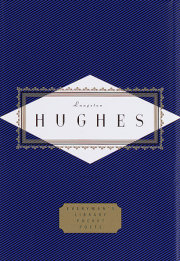
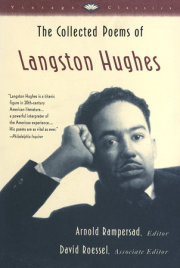
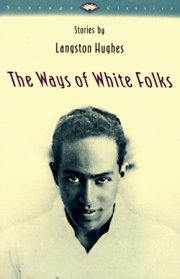
The Weary Blues; Not Without Laughter; The Ways of White Folks

Introduction by Joshua Bennett On Tour
Hardcover
$35.00 US
| $48.00 CAN
On sale Jan 13, 2026 | 600 Pages | 9798217007769

A major hardcover compendium of poetry and fiction by the legendary Black American poet of the Harlem Renaissance

One of the most important writers to emerge from the Harlem Renaissance, Langston Hughes may be best known as a poet, but he was also a brilliant storyteller, blending elements of blues and jazz, speech and song, into a triumphant and wholly original idiom. Perhaps more than any other writer, Langston Hughes made the white America of the 1920s and 1930s aware of the Black culture thriving in its midst. Hughes's poetry and fiction works are messages from that America, sharply etched vignettes of its daily life, cruelly accurate portrayals of Black and white collisions.

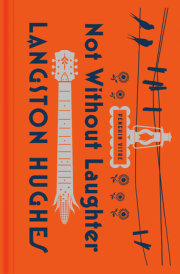
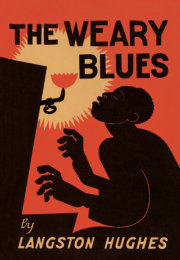
This Everyman's Library compendium comprises Hughes's debut poetry collection, The Weary Blues, which catapulted him into literary stardom at just twenty-four years old; his award-winning debut novel, Not Without Laughter, published in 1930 to critical raves; and his 1933 collection of short stories The Ways of White Folks, currently only available in Vintage Classics trade paperback.

Everyman's Library pursues the highest production standards, printing on acid-free paper, with full-cloth cases with two-color foil stamping, decorative endpapers, silk ribbon markers, European-style half-round spines, and a full-color illustrated jacket.
1
STORM

Aunt Hager Williams stood in her doorway and looked out at the sun. The western sky was a sulphurous yellow and the sun a red ball dropping slowly behind the trees and house-tops. Its setting left the rest of the heavens grey with clouds.

“Huh! A storm’s comin’,” said Aunt Hager aloud.

A pullet ran across the back yard and into a square-cut hole in an unpainted piano-box which served as the roosting-house. An old hen clucked her brood together and, with the tiny chicks, went into a small box beside the large one. The air was very still. Not a leaf stirred on the green apple-tree. Not a single closed flower of the morning-glories trembled on the back fence. The air was very still and yellow. Something sultry and oppressive made a small boy in the doorway stand closer to his grandmother, clutching her apron with his brown hands.

“Sho is a storm comin’,” said Aunt Hager.

“I hope mama gets home ’fore it rains,” remarked the brown child holding to the old woman’s apron. “Hope she gets home.”

“I does, too,” said Aunt Hager. “But I’s skeared she won’t.”

Just then great drops of water began to fall heavily into the back yard, pounding up little clouds of dust where each drop struck the earth. For a few moments they pattered violently on the roof like a series of hammer-strokes; then suddenly they ceased.

“Come in, chile,” said Aunt Hager.

She closed the door as the green apple-tree began to sway in the wind and a small hard apple fell, rolling rapidly down the top of the piano-box that sheltered the chickens. Inside the kitchen it was almost dark. While Aunt Hager lighted an oil-lamp, the child climbed to a chair and peered through the square window into the yard. The leaves and flowers of the morning-glory vines on the back fence were bending with the rising wind. And across the alley at the big house, Mrs.
Kennedy’s rear screen-door banged to and fro, and Sandy saw her garbage-pail suddenly tip over and roll down into the yard, scattering potato-peelings on the white steps.

“Sho gwine be a terrible storm,” said Hager as she turned up the wick of the light and put the chimney on. Then, glancing through the window, she saw a black cloud twisting like a ribbon in the western sky, and the old woman screamed aloud in sudden terror: “It’s a cyclone! It’s gwine be a cyclone! Sandy, let’s get over to Mis’ Carter’s quick, ’cause we ain’t got no cellar here. Come on, chile, let’s get! Come on, chile! . . . Come on, chile!”

Hurriedly she blew out the light, grabbed the boy’s hand; and together they rushed through the little house towards the front. It was quite dark in the inner rooms, but through the parlor windows came a sort of sooty grey-green light that was rapidly turning to blackness.

“Lawd help us, Jesus!”

Aunt Hager opened the front door, but before she or the child could move, a great roaring sound suddenly shook the world, and, with a deafening division of wood from wood, they saw their front porch rise into the air and go hurtling off into space. Sailing high in the gathering darkness, the porch was soon lost to sight. And the black wind blew with terrific force, numbing the ear-drums.

For a moment the little house trembled and swayed and creaked as though it were about to fall. “Help me to shut this do’,” Aunt Hager screamed; “help me to shut it, Lawd!” as with all her might she struggled against the open door, which the wind held back, but finally it closed and the lock caught. Then she sank to the fl oor with her back against the wall, while her small grandson trembled like a leaf as she took him in her lap, mumbling: “What a storm! . . . O,
Lawdy! . . . O, ma chile, what a storm!”

They could hear the crackling of timbers and the rolling limbs of trees that the wind swept across the roof. Her armstightened about the boy.

“Dear Jesus!” she said. “I wonder where is yo’ mama? S’pose she started out fo’ home ’fore this storm come up!” Then in a scream: “Have mercy on ma Annjee! O, Lawd, have mercy on this chile’s mama! Have mercy on all ma chillens! Ma Harriett, an’ ma Tempy, an’ ma Annjee, what’s maybe all of ’em out in de storm! O, Lawd!”

A dry crack of lightning split the darkness, and the boy began to wail. Then the rain broke. The old woman could not see the crying child she held, nor could the boy hear the broken voice of his grandmother, who had begun to pray as the rain crashed through the inky blackness. For a long while it roared on the roof of the house and pounded at the windows, until finally the two within became silent, hushing their cries.

Then only the lashing noise of the water, coupled with the feeling that something terrible was happening, or had already happened, fi lled the evening air.

After the rain the moon rose clear and bright and the clouds disappeared from the lately troubled sky. The stars sparkled calmly above the havoc of the storm, and it was still early evening as people emerged from their houses and began to investigate the damage brought by the twisting cyclone that had come with the sunset. Through the rubbish-fi lled streets men drove slowly with horse and buggy or automobile. The fire-engine was out, banging away, and the soft tang-tang-tang of the motor ambulance could be heard in the distance carrying off the injured.

Black Aunt Hager and her brown grandson put their rubbers on and stood in the water-soaked front yard looking at the porchless house where they lived. Platform, steps, pillars, roof, and all had been blown away. Not a semblance of a porch was left and the front door opened bare into the yard. It was grotesque and funny. Hager laughed.

“Cyclone sho did a good job,” she said. “Looks like I ain’t never had no porch.”

Madam de Carter, from next door, came across the grass, her large mouth full of chattering sympathy for her neighbor. “But praise God for sparing our lives! It might’ve been worse, Sister Williams! It might’ve been much more calamitouser! As it is, I lost nothin’ more’n a chimney and two wash-tubs which was settin’ in the back yard. A few trees broke down don’t ’mount to nothin’. We’s livin’, ain’t we? And we’s more importanter than trees is any day!” Her gold teeth
sparkled in the moonlight.

“’Deed so,” agreed Hager emphatically. “Let’s move on down de block, Sister, an’ see what mo’ de Lawd has ’stroyed or spared this evenin’. He’s gin us plenty moonlight after de storm so we po’ humans can see this lesson o’ His’n to a sinful world.”

The two elderly colored women picked their way about on the wet walk, littered with twigs and branches of broken foliage. The little brown boy followed, with his eyes wide at the sight of baby-carriages, window-sashes, shingles, and treelimbs scattered about in the roadway. Large numbers of people were out, some standing on porches, some carrying lanterns, picking up useful articles from the streets, some wringing their hands in a daze. Near the corner a small crowd had gathered quietly.

“Mis’ Gavitt’s killed,” somebody said.

“Lawd help!” burst from Aunt Hager and Madam de Carter simultaneously.

“Mister and Mis’ Gavitt’s both dead,” added a nervous young white man, bursting with the news. “We live next door to ’em, and their house turned clean over! Came near hitting us and breaking our side-wall in.”

“Have mercy!” said the two women, but Sandy slipped away from his grandmother and pushed through the crowd. He ran round the corner to where he could see the overturned house of the unfortunate Gavitts.

Good white folks, the Gavitts, Aunt Hager had often said, and now their large frame dwelling lay on its side like a doll’s mansion, with broken furniture strewn carelessly on the wet lawn—and they were dead. Sandy saw a piano fl at on its back in the grass. Its ivory keys gleamed in the moonlight like grinning teeth, and the strange sight made his little body shiver, so he hurried back through the crowd looking for his grandmother.

Langston Hughes (1901–1967), a central figure of the Harlem Renaissance and one of the most influential and esteemed writers of the twentieth century, was born in Joplin, Missouri, and spent much of his childhood in Kansas before moving to Harlem. His first book of poetry, The Weary Blues, was published in 1926; its success helped him to win a scholarship to Lincoln University, in Pennsylvania, from which he received his B.A. in 1929 and an honorary Litt.D. in 1943. Among his other awards and honors were a Guggenheim Fellowship, a Rosenwald Fellowship, and a grant from the American Academy of Arts and Letters. Hughes published more than thirty-five books, including works of poetry, short stories, novels, an autobiography, musicals, essays, and plays. View titles by Langston Hughes

About

A major hardcover compendium of poetry and fiction by the legendary Black American poet of the Harlem Renaissance

One of the most important writers to emerge from the Harlem Renaissance, Langston Hughes may be best known as a poet, but he was also a brilliant storyteller, blending elements of blues and jazz, speech and song, into a triumphant and wholly original idiom. Perhaps more than any other writer, Langston Hughes made the white America of the 1920s and 1930s aware of the Black culture thriving in its midst. Hughes's poetry and fiction works are messages from that America, sharply etched vignettes of its daily life, cruelly accurate portrayals of Black and white collisions.

This Everyman's Library compendium comprises Hughes's debut poetry collection, The Weary Blues, which catapulted him into literary stardom at just twenty-four years old; his award-winning debut novel, Not Without Laughter, published in 1930 to critical raves; and his 1933 collection of short stories The Ways of White Folks, currently only available in Vintage Classics trade paperback.

Everyman's Library pursues the highest production standards, printing on acid-free paper, with full-cloth cases with two-color foil stamping, decorative endpapers, silk ribbon markers, European-style half-round spines, and a full-color illustrated jacket.

Excerpt

1
STORM

Aunt Hager Williams stood in her doorway and looked out at the sun. The western sky was a sulphurous yellow and the sun a red ball dropping slowly behind the trees and house-tops. Its setting left the rest of the heavens grey with clouds.

“Huh! A storm’s comin’,” said Aunt Hager aloud.

A pullet ran across the back yard and into a square-cut hole in an unpainted piano-box which served as the roosting-house. An old hen clucked her brood together and, with the tiny chicks, went into a small box beside the large one. The air was very still. Not a leaf stirred on the green apple-tree. Not a single closed flower of the morning-glories trembled on the back fence. The air was very still and yellow. Something sultry and oppressive made a small boy in the doorway stand closer to his grandmother, clutching her apron with his brown hands.

“Sho is a storm comin’,” said Aunt Hager.

“I hope mama gets home ’fore it rains,” remarked the brown child holding to the old woman’s apron. “Hope she gets home.”

“I does, too,” said Aunt Hager. “But I’s skeared she won’t.”

Just then great drops of water began to fall heavily into the back yard, pounding up little clouds of dust where each drop struck the earth. For a few moments they pattered violently on the roof like a series of hammer-strokes; then suddenly they ceased.

“Come in, chile,” said Aunt Hager.

She closed the door as the green apple-tree began to sway in the wind and a small hard apple fell, rolling rapidly down the top of the piano-box that sheltered the chickens. Inside the kitchen it was almost dark. While Aunt Hager lighted an oil-lamp, the child climbed to a chair and peered through the square window into the yard. The leaves and flowers of the morning-glory vines on the back fence were bending with the rising wind. And across the alley at the big house, Mrs.
Kennedy’s rear screen-door banged to and fro, and Sandy saw her garbage-pail suddenly tip over and roll down into the yard, scattering potato-peelings on the white steps.

“Sho gwine be a terrible storm,” said Hager as she turned up the wick of the light and put the chimney on. Then, glancing through the window, she saw a black cloud twisting like a ribbon in the western sky, and the old woman screamed aloud in sudden terror: “It’s a cyclone! It’s gwine be a cyclone! Sandy, let’s get over to Mis’ Carter’s quick, ’cause we ain’t got no cellar here. Come on, chile, let’s get! Come on, chile! . . . Come on, chile!”

Hurriedly she blew out the light, grabbed the boy’s hand; and together they rushed through the little house towards the front. It was quite dark in the inner rooms, but through the parlor windows came a sort of sooty grey-green light that was rapidly turning to blackness.

“Lawd help us, Jesus!”

Aunt Hager opened the front door, but before she or the child could move, a great roaring sound suddenly shook the world, and, with a deafening division of wood from wood, they saw their front porch rise into the air and go hurtling off into space. Sailing high in the gathering darkness, the porch was soon lost to sight. And the black wind blew with terrific force, numbing the ear-drums.

For a moment the little house trembled and swayed and creaked as though it were about to fall. “Help me to shut this do’,” Aunt Hager screamed; “help me to shut it, Lawd!” as with all her might she struggled against the open door, which the wind held back, but finally it closed and the lock caught. Then she sank to the fl oor with her back against the wall, while her small grandson trembled like a leaf as she took him in her lap, mumbling: “What a storm! . . . O,
Lawdy! . . . O, ma chile, what a storm!”

They could hear the crackling of timbers and the rolling limbs of trees that the wind swept across the roof. Her armstightened about the boy.

“Dear Jesus!” she said. “I wonder where is yo’ mama? S’pose she started out fo’ home ’fore this storm come up!” Then in a scream: “Have mercy on ma Annjee! O, Lawd, have mercy on this chile’s mama! Have mercy on all ma chillens! Ma Harriett, an’ ma Tempy, an’ ma Annjee, what’s maybe all of ’em out in de storm! O, Lawd!”

A dry crack of lightning split the darkness, and the boy began to wail. Then the rain broke. The old woman could not see the crying child she held, nor could the boy hear the broken voice of his grandmother, who had begun to pray as the rain crashed through the inky blackness. For a long while it roared on the roof of the house and pounded at the windows, until finally the two within became silent, hushing their cries.

Then only the lashing noise of the water, coupled with the feeling that something terrible was happening, or had already happened, fi lled the evening air.

After the rain the moon rose clear and bright and the clouds disappeared from the lately troubled sky. The stars sparkled calmly above the havoc of the storm, and it was still early evening as people emerged from their houses and began to investigate the damage brought by the twisting cyclone that had come with the sunset. Through the rubbish-fi lled streets men drove slowly with horse and buggy or automobile. The fire-engine was out, banging away, and the soft tang-tang-tang of the motor ambulance could be heard in the distance carrying off the injured.

Black Aunt Hager and her brown grandson put their rubbers on and stood in the water-soaked front yard looking at the porchless house where they lived. Platform, steps, pillars, roof, and all had been blown away. Not a semblance of a porch was left and the front door opened bare into the yard. It was grotesque and funny. Hager laughed.

“Cyclone sho did a good job,” she said. “Looks like I ain’t never had no porch.”

Madam de Carter, from next door, came across the grass, her large mouth full of chattering sympathy for her neighbor. “But praise God for sparing our lives! It might’ve been worse, Sister Williams! It might’ve been much more calamitouser! As it is, I lost nothin’ more’n a chimney and two wash-tubs which was settin’ in the back yard. A few trees broke down don’t ’mount to nothin’. We’s livin’, ain’t we? And we’s more importanter than trees is any day!” Her gold teeth
sparkled in the moonlight.

“’Deed so,” agreed Hager emphatically. “Let’s move on down de block, Sister, an’ see what mo’ de Lawd has ’stroyed or spared this evenin’. He’s gin us plenty moonlight after de storm so we po’ humans can see this lesson o’ His’n to a sinful world.”

The two elderly colored women picked their way about on the wet walk, littered with twigs and branches of broken foliage. The little brown boy followed, with his eyes wide at the sight of baby-carriages, window-sashes, shingles, and treelimbs scattered about in the roadway. Large numbers of people were out, some standing on porches, some carrying lanterns, picking up useful articles from the streets, some wringing their hands in a daze. Near the corner a small crowd had gathered quietly.

“Mis’ Gavitt’s killed,” somebody said.

“Lawd help!” burst from Aunt Hager and Madam de Carter simultaneously.

“Mister and Mis’ Gavitt’s both dead,” added a nervous young white man, bursting with the news. “We live next door to ’em, and their house turned clean over! Came near hitting us and breaking our side-wall in.”

“Have mercy!” said the two women, but Sandy slipped away from his grandmother and pushed through the crowd. He ran round the corner to where he could see the overturned house of the unfortunate Gavitts.

Good white folks, the Gavitts, Aunt Hager had often said, and now their large frame dwelling lay on its side like a doll’s mansion, with broken furniture strewn carelessly on the wet lawn—and they were dead. Sandy saw a piano fl at on its back in the grass. Its ivory keys gleamed in the moonlight like grinning teeth, and the strange sight made his little body shiver, so he hurried back through the crowd looking for his grandmother.

Author

Langston Hughes (1901–1967), a central figure of the Harlem Renaissance and one of the most influential and esteemed writers of the twentieth century, was born in Joplin, Missouri, and spent much of his childhood in Kansas before moving to Harlem. His first book of poetry, The Weary Blues, was published in 1926; its success helped him to win a scholarship to Lincoln University, in Pennsylvania, from which he received his B.A. in 1929 and an honorary Litt.D. in 1943. Among his other awards and honors were a Guggenheim Fellowship, a Rosenwald Fellowship, and a grant from the American Academy of Arts and Letters. Hughes published more than thirty-five books, including works of poetry, short stories, novels, an autobiography, musicals, essays, and plays. View titles by Langston Hughes
  • More Websites from
    Penguin Random House
  • Common Reads
  • Library Marketing