King Comus

A Novel

Introduction by Melanie Masterton
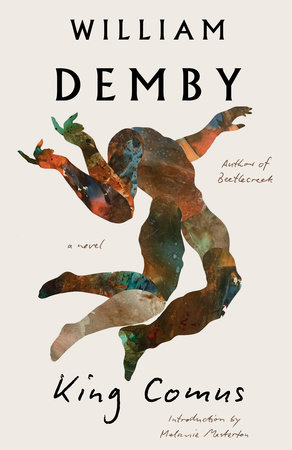
Past and present collide in this posthumous, semiautobiographical masterpiece by the author of Beetlecreek.

In the present day, a Black American expat to Rome named D. reconnects with his former Army friend, Tillman, and their former commanding officer, Joe Stabat, to organize a gospel summit for the singer Little Antioch. In the 1940s, as D. becomes enmeshed in Tillman’s large and boisterous family for the first time, Tillman recounts the story of his fabled ancestor King Comus. And in the early nineteenth century, master musician King Comus embarks on a grand journey to freedom from enslavement.

In this time-bending tale of survival and kinship, the product of more than twenty years of literary labor, William Demby weaves elements of the neo-slave narrative and Afrofuturism into a panoramic vision encompassing the forces of empire, race, gender, and religion.
1
(If, God willing, the prescient and guileless spirit of the angel does indeed continue to bless our understanding—not only of those things already come to pass but also of certain other events and coincidences now being revealed to me even as I hasten to write this all down—then, perhaps, you, too (who for whatever reason will have undertaken to follow us through the tortuous byways of this tale) will also become convinced as I have long since been convinced that the enigmatic and prophetic lyrics of a gospel song written by a black teenage gospel singer from a Bedford-Stuyvesant housing project in Brooklyn, New York, known to her millions of fans around the world as “Little Antioch,” provide us with the only plausible interpretation of what took place in clear view of everyone present at that improbable “Gospel Summit” in Rome billed by its enthusiastic though perhaps overly venal promoters as “A Day of Glory Reenacting the Roman Emperor Constantine’s ‘Vision of the Cross,’ ” a unique once in a lifetime media event featuring thirty-three gospel/rock choirs from all over the world which in spite of the perhaps overly enthusiastic hyperbole of its promoters is now believed by sociologists, advertisers, religious conservatives and gospel/rock fans all over the world to have actually saved our planet from its hysterical rush to nuclear disaster—

For then and only then, that is if you, witness or reader, can in your heart accept as flesh and blood truth that a Negro slave with the fanciful name King Comus, born in the year 1817c. in the New Orleans slave market while his mother was being sold on the block was, both in legend and fact, the reincarnation of Prester John, that wise Ethiopic king of antiquity, in our day all but forgotten, but whose amazing and otherwise inexplicable reappearance a few short weeks ago at the above mentioned Gospel Summit, had in fact been predicted in the lyrics of the title song of the Angel, Little Antioch’s most recent and most sensationally successful album, “Lord, Lordy Lord, I Need an Explanation!” which album, in the few short weeks since the astonishing sequence of events which I will now attempt to relate has sold more copies worldwide than any previous album in the history of pop music; only the Holy Bible has beat it on
the bestseller lists.)


2
But forgive me for I am rambling and the truth is I don’t know quite how to proceed, for I am an ant traveling over one of those enormous Tapestries of Time, and I shall make mistakes of fact and observation, and may not see in time what was there to see before attempting to climb up yet another mountain of colored thread—so first things first, and so as to doubly reassure ourselves that what follows is the workings of Our Lord and not the workings of the Demon it may be wise for us, at least for the time being, to abandon certain vain and useless literary conventions as to the nature or not of narrative realism (which in any case in light of newly discovered laws of physics make such guarantees at best illusory and academically vain) and so, therefore, and without further ado and unseemly apologies before the fact, let us now hasten swiftly back in time to a certain night in Vienna, the night of June 8, 1815, where in this very instant, just moments before the church bells will begin to toll at midnight, a talented young musician with blue eyes and a straggly blonde beard, a virtuoso instrumentalist who has mastered almost every instrument in the orchestra of his day, including the rarely used musette and his first loves, the pianoforte and violin, an orphan steeped in the Hassidic lore of doting grandparents, they too emigrants from the claustrophobic oppression of the Warsaw ghetto, with whom our soon to become hero shares a dank, windowless and rat-infested basement but from
whom, alas (perhaps because of certain wild and golden dreams that have recently begun to torment his nights), he has begun to feel estranged—summoned that very morning to the royal court orchestra’s rehearsal hall to substitute for the second violinist, a Freemason whose sudden death the night before had had (so it was whispered) something to do with the man’s surly and illadvised opposition to the concertmaster’s choice of the very Catholic Bolinski’s crowd-pleasing “Te Deum” as the final number on the program of the Royal Gala Concert to be attended by all the crowned heads of Europe and which, in the words of Viscount Castlereagh (whose elegant but alas evasive proposal for ending the slave trade had been met with pious indifference by the now bored and distracted delegates impatient to adjourn), “will hopefully and with the Grace of Our Lord bring this oft cantankerous Congress of Vienna to a most joyous, harmonious, and optimistic conclusion—”

This talented young Polish musician, who for the time being shall remain without name, instead of heading straight home with the money paid him for three rehearsals and the gala concert (and where his aged and loving grandparents were eagerly awaiting his return so as to surprise him with a rare pot of rabbit stew and a cup or two of real Peking tea) and alas with characteristic perversity, joined two of his fellow musicians on their way to a nearby brothel and tavern where, in the course of two hours of feckless drinking, he managed to spend every farthing in his pocket buying drinks for one and all while running up an astronomical tab he had no hopes of ever being able to pay while getting so drunk himself he no longer knew who or where he was—

So now we find him, still drunk but sober enough to be tormented by gnawing all-too-familiar feelings of inadequacy and guilt, staggering aimlessly in the middle of the main highway that from the northern suburbs leads north to the sea and south to the Italian Alps, conversing wildly with himself—

“Abolish the slave trade indeed—!” he ranted, shaking his head back and forth with theatrical disgust,“—these so-called aristocrats, hypocritical assholes every single one of them, it’s easy for them to talk! Me, I’d gladly sell myself into slavery if I thought it’d get me out from under this mountain of debt and I could live out the rest of my days on some cozy plantation in the American Southland with nary a worry about who’s going to pay for the rent and food—!”

No sooner were these words out of his mouth than a wayward cloud suddenly darkened the dazzling full moon and the silence of the night was shattered by the urgent wild clatter of rapidly approaching hoof-beats.

Immediately sober and alert, the young musician staggered to the middle of the road to see from which direction the unholy commotion was coming—just in time to leap out of the way of a runaway team of horses pulling an elegant but wildly careening carriage, its lighted lamps banging furiously against the crested doors, its driver struggling to keep his balance as with one hand he waved the drunk musician out of the way and with the other strained backwards on the reins in a vain effort to bring the horses to a halt—

But almost frozen stiff by fear, though still capable of admiring the elegant lines of what obviously was a royal carriage, the bulging eyes of the high-born horses were almost upon him
before, and at the very last moment, he managed to leap out of the way and in doing so (and in response to some entirely unexpected playful instinct) seized hold of the dangling reins as they came slapping against his chest and thighs, leaned back, dug in his heels, all the while pulling back as hard as he could, until suddenly the carriage toppled over on its side and the wild-eyed frothing horses came to an abrupt halt—

His hands bruised and painfully seared by the whip-like slapping of the reins, the by now sober but frightened young musician came running up to the overturned carriage, its wheels still spinning wildly, only to discover the phantom driver was nowhere in sight—

Thinking the man had been bounced off the driver’s seat and was lying in a ditch nearby, perhaps unconscious, he got down on his knees—finally flattening himself face down on the rocky slope—and had snaked his way halfway to the opposite side of the toppled carriage when suddenly two strong hands began yanking on his ankles—

Twisting his head around he caught a glimpse of a pug-nosed giant with enraged bloodshot eyes—

“You shitty bugger of a sheepherder!” the man shrieked in high-pitched but surprisingly cultivated German, “—how dare you block the Imperial Highway! How!!! Dare!!! You?!!!”

Then as enraged spittle sprayed the young musician’s face and as the full moon soared from behind a cloud, he suddenly recognized his assailant as a certain Baron von Gugelstein, a notorious young man-about-town whose signature caricature (usually the head and face of a foppishly-dressed dandy on the body of a pig with a tiny weenie) appeared almost daily in the satirical broadsheets of the day, usually in connection with some largely fictitious amatory exploit, which nevertheless had earned him the satirical accolade, “The Boudoir Prince”—
“One of the great novelists of the last 100 years.” —Ishmael Reed, author of Mumbo Jumbo

“Necessary reading.” —Los Angeles Review of Books

“A splendid finale to the career of a profoundly gifted and vastly underappreciated American writer.” —Mosaic magazine
© Fabio Coen
William Demby was born in Pittsburgh, Pennsylvania, on December 25, 1922, and attended college in Clarksburg, West Virginia, before enlisting in World War II and serving in Italy. He graduated from Fisk University in 1947 then moved abroad to Rome, where he spent the next two decades working as a novelist, journalist, and script translator and screenwriter for the Italian cinema. In the late 1960s, Demby joined the faculty at The College of Staten Island, dividing his time between the United States and Italy. His works include Beetlecreek, The Catacombs, Love Story Black, and King Comus. In 2006, he was the recipient of the Anisfield-Wolf Book Award for Lifetime Achievement. He died in Sag Harbor, New York, in 2013. View titles by William Demby

About

Past and present collide in this posthumous, semiautobiographical masterpiece by the author of Beetlecreek.

In the present day, a Black American expat to Rome named D. reconnects with his former Army friend, Tillman, and their former commanding officer, Joe Stabat, to organize a gospel summit for the singer Little Antioch. In the 1940s, as D. becomes enmeshed in Tillman’s large and boisterous family for the first time, Tillman recounts the story of his fabled ancestor King Comus. And in the early nineteenth century, master musician King Comus embarks on a grand journey to freedom from enslavement.

In this time-bending tale of survival and kinship, the product of more than twenty years of literary labor, William Demby weaves elements of the neo-slave narrative and Afrofuturism into a panoramic vision encompassing the forces of empire, race, gender, and religion.

Excerpt

1
(If, God willing, the prescient and guileless spirit of the angel does indeed continue to bless our understanding—not only of those things already come to pass but also of certain other events and coincidences now being revealed to me even as I hasten to write this all down—then, perhaps, you, too (who for whatever reason will have undertaken to follow us through the tortuous byways of this tale) will also become convinced as I have long since been convinced that the enigmatic and prophetic lyrics of a gospel song written by a black teenage gospel singer from a Bedford-Stuyvesant housing project in Brooklyn, New York, known to her millions of fans around the world as “Little Antioch,” provide us with the only plausible interpretation of what took place in clear view of everyone present at that improbable “Gospel Summit” in Rome billed by its enthusiastic though perhaps overly venal promoters as “A Day of Glory Reenacting the Roman Emperor Constantine’s ‘Vision of the Cross,’ ” a unique once in a lifetime media event featuring thirty-three gospel/rock choirs from all over the world which in spite of the perhaps overly enthusiastic hyperbole of its promoters is now believed by sociologists, advertisers, religious conservatives and gospel/rock fans all over the world to have actually saved our planet from its hysterical rush to nuclear disaster—

For then and only then, that is if you, witness or reader, can in your heart accept as flesh and blood truth that a Negro slave with the fanciful name King Comus, born in the year 1817c. in the New Orleans slave market while his mother was being sold on the block was, both in legend and fact, the reincarnation of Prester John, that wise Ethiopic king of antiquity, in our day all but forgotten, but whose amazing and otherwise inexplicable reappearance a few short weeks ago at the above mentioned Gospel Summit, had in fact been predicted in the lyrics of the title song of the Angel, Little Antioch’s most recent and most sensationally successful album, “Lord, Lordy Lord, I Need an Explanation!” which album, in the few short weeks since the astonishing sequence of events which I will now attempt to relate has sold more copies worldwide than any previous album in the history of pop music; only the Holy Bible has beat it on
the bestseller lists.)


2
But forgive me for I am rambling and the truth is I don’t know quite how to proceed, for I am an ant traveling over one of those enormous Tapestries of Time, and I shall make mistakes of fact and observation, and may not see in time what was there to see before attempting to climb up yet another mountain of colored thread—so first things first, and so as to doubly reassure ourselves that what follows is the workings of Our Lord and not the workings of the Demon it may be wise for us, at least for the time being, to abandon certain vain and useless literary conventions as to the nature or not of narrative realism (which in any case in light of newly discovered laws of physics make such guarantees at best illusory and academically vain) and so, therefore, and without further ado and unseemly apologies before the fact, let us now hasten swiftly back in time to a certain night in Vienna, the night of June 8, 1815, where in this very instant, just moments before the church bells will begin to toll at midnight, a talented young musician with blue eyes and a straggly blonde beard, a virtuoso instrumentalist who has mastered almost every instrument in the orchestra of his day, including the rarely used musette and his first loves, the pianoforte and violin, an orphan steeped in the Hassidic lore of doting grandparents, they too emigrants from the claustrophobic oppression of the Warsaw ghetto, with whom our soon to become hero shares a dank, windowless and rat-infested basement but from
whom, alas (perhaps because of certain wild and golden dreams that have recently begun to torment his nights), he has begun to feel estranged—summoned that very morning to the royal court orchestra’s rehearsal hall to substitute for the second violinist, a Freemason whose sudden death the night before had had (so it was whispered) something to do with the man’s surly and illadvised opposition to the concertmaster’s choice of the very Catholic Bolinski’s crowd-pleasing “Te Deum” as the final number on the program of the Royal Gala Concert to be attended by all the crowned heads of Europe and which, in the words of Viscount Castlereagh (whose elegant but alas evasive proposal for ending the slave trade had been met with pious indifference by the now bored and distracted delegates impatient to adjourn), “will hopefully and with the Grace of Our Lord bring this oft cantankerous Congress of Vienna to a most joyous, harmonious, and optimistic conclusion—”

This talented young Polish musician, who for the time being shall remain without name, instead of heading straight home with the money paid him for three rehearsals and the gala concert (and where his aged and loving grandparents were eagerly awaiting his return so as to surprise him with a rare pot of rabbit stew and a cup or two of real Peking tea) and alas with characteristic perversity, joined two of his fellow musicians on their way to a nearby brothel and tavern where, in the course of two hours of feckless drinking, he managed to spend every farthing in his pocket buying drinks for one and all while running up an astronomical tab he had no hopes of ever being able to pay while getting so drunk himself he no longer knew who or where he was—

So now we find him, still drunk but sober enough to be tormented by gnawing all-too-familiar feelings of inadequacy and guilt, staggering aimlessly in the middle of the main highway that from the northern suburbs leads north to the sea and south to the Italian Alps, conversing wildly with himself—

“Abolish the slave trade indeed—!” he ranted, shaking his head back and forth with theatrical disgust,“—these so-called aristocrats, hypocritical assholes every single one of them, it’s easy for them to talk! Me, I’d gladly sell myself into slavery if I thought it’d get me out from under this mountain of debt and I could live out the rest of my days on some cozy plantation in the American Southland with nary a worry about who’s going to pay for the rent and food—!”

No sooner were these words out of his mouth than a wayward cloud suddenly darkened the dazzling full moon and the silence of the night was shattered by the urgent wild clatter of rapidly approaching hoof-beats.

Immediately sober and alert, the young musician staggered to the middle of the road to see from which direction the unholy commotion was coming—just in time to leap out of the way of a runaway team of horses pulling an elegant but wildly careening carriage, its lighted lamps banging furiously against the crested doors, its driver struggling to keep his balance as with one hand he waved the drunk musician out of the way and with the other strained backwards on the reins in a vain effort to bring the horses to a halt—

But almost frozen stiff by fear, though still capable of admiring the elegant lines of what obviously was a royal carriage, the bulging eyes of the high-born horses were almost upon him
before, and at the very last moment, he managed to leap out of the way and in doing so (and in response to some entirely unexpected playful instinct) seized hold of the dangling reins as they came slapping against his chest and thighs, leaned back, dug in his heels, all the while pulling back as hard as he could, until suddenly the carriage toppled over on its side and the wild-eyed frothing horses came to an abrupt halt—

His hands bruised and painfully seared by the whip-like slapping of the reins, the by now sober but frightened young musician came running up to the overturned carriage, its wheels still spinning wildly, only to discover the phantom driver was nowhere in sight—

Thinking the man had been bounced off the driver’s seat and was lying in a ditch nearby, perhaps unconscious, he got down on his knees—finally flattening himself face down on the rocky slope—and had snaked his way halfway to the opposite side of the toppled carriage when suddenly two strong hands began yanking on his ankles—

Twisting his head around he caught a glimpse of a pug-nosed giant with enraged bloodshot eyes—

“You shitty bugger of a sheepherder!” the man shrieked in high-pitched but surprisingly cultivated German, “—how dare you block the Imperial Highway! How!!! Dare!!! You?!!!”

Then as enraged spittle sprayed the young musician’s face and as the full moon soared from behind a cloud, he suddenly recognized his assailant as a certain Baron von Gugelstein, a notorious young man-about-town whose signature caricature (usually the head and face of a foppishly-dressed dandy on the body of a pig with a tiny weenie) appeared almost daily in the satirical broadsheets of the day, usually in connection with some largely fictitious amatory exploit, which nevertheless had earned him the satirical accolade, “The Boudoir Prince”—

Reviews

“One of the great novelists of the last 100 years.” —Ishmael Reed, author of Mumbo Jumbo

“Necessary reading.” —Los Angeles Review of Books

“A splendid finale to the career of a profoundly gifted and vastly underappreciated American writer.” —Mosaic magazine

Author

© Fabio Coen
William Demby was born in Pittsburgh, Pennsylvania, on December 25, 1922, and attended college in Clarksburg, West Virginia, before enlisting in World War II and serving in Italy. He graduated from Fisk University in 1947 then moved abroad to Rome, where he spent the next two decades working as a novelist, journalist, and script translator and screenwriter for the Italian cinema. In the late 1960s, Demby joined the faculty at The College of Staten Island, dividing his time between the United States and Italy. His works include Beetlecreek, The Catacombs, Love Story Black, and King Comus. In 2006, he was the recipient of the Anisfield-Wolf Book Award for Lifetime Achievement. He died in Sag Harbor, New York, in 2013. View titles by William Demby
  • More Websites from
    Penguin Random House
  • Common Reads
  • Library Marketing