Download high-resolution image
Listen to a clip from the audiobook
audio pause button
0:00
0:00

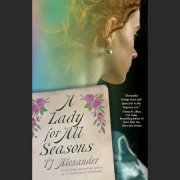
A Lady for All Seasons

A Novel

Author TJ Alexander On Tour
Listen to a clip from the audiobook
audio pause button
0:00
0:00
From the acclaimed author of Chef’s Kiss and A Gentleman’s Gentleman comes a riotous Regency romp, featuring a charming and unforgettable genderfluid lead.

“The perfect blend of rich Regency romance and frothy screwball, Alexander has brewed a queer and cozy cup of something sure to delight.”
L.C. Rosen, author of Lavender House


It is a truth universally acknowledged that a woman who has lost her fortune must be in need (not want) of a husband. Beautiful, cunning Verbena Montrose must marry to save herself and her odious family from abject poverty. Fortunately, what she lacks in a dowry, she makes up for in the currency of gossip. 

When she hears an alarming rumor about her very dear, very queer friend Étienne that could ruin him, she comes to his aid with a proposal—for a marriage of convenience, that is. But when Verbena discovers that a mysterious and celebrated poet by the name of Flora Witcombe has been publishing verses that hint she is onto their scheme, Verbena has no choice but to pretend to be a poet herself to confront her in a local salon. And—unexpectedly—be charmed by her.

Flora, in turn, is terrified by and smitten with Verbena in equal measure. But she holds a secret of her own: he is also William Forsyth, a struggling novelist and fifth son of a minor noble family. And if circumstances don’t allow Flora to woo Verbena, perhaps William can. Faced with two suitors and a fiancé, Verbena, who has always had to be clever to survive in society, starts to realize she may need to think outside of society’s constraints to find true happiness.
Chapter 1

July 1820

It was a damp and dreary afternoon near the end of the London season in the year the regent had become King. After six months of rule, even the densest members of the ton were finally referring to His Majesty correctly on the first try. All of London—and, indeed, the empire—found itself at a turning point, but as is usual in such circumstances, hardly anyone understood what was happening in the moment. Some people had more pressing matters to consider.

For example, all the social machinations and maneuverings of a midsummer picnic.

Verbena Montrose surveyed the scene. The hostess had outdone herself. On a patch of flat grass, footmen had erected canopies to provide protection from the intermittent drizzle, and low tables were being laid with cold roast chicken and platters of minuscule foodstuffs. Turkish rugs were unfurled and goose-down pillows arranged so those who wished could recline. Some distance away, beneath their own canopy, a string quartet was tuning their instruments. Everywhere one looked, glasses of cold lemonade and champagne were being offered on silver salvers by liveried servants in powdered wigs.

To Verbena, this was all on par with watching armies prepare for an onslaught. A social event such as this may not involve the same amount of bloodshed, but in her mind, it was war all the same. When one was searching for a husband as she was, there was no sense in pretending society was anything else.

“Everyone! Shall we play a game before we eat?” their hostess called over the faint murmur of the gathering crowd.

Verbena turned to regard the handsome woman of middle age. Her mind supplied all the relevant facts without hesitation: the dowager countess, Lady Croydon. Recently out of mourning. Very rich, and very eager to return to society.

The lady sipped at her glass of wine and gestured to a knot of young bucks. “Find something we can use as a blindfold,” she directed.

While the men tried to locate an extra cravat that someone swore had been brought for just this purpose, Verbena exchanged amiable greetings with her mutual acquaintances. There was an earl whose daughter was rumored to have run off to Spain to become a nun; a lady who had almost certainly poisoned her first husband so she might marry her second; the twins who had a gambling habit and laudanum addiction, respectively; and three Howe sisters who, Verbena knew for a fact, were all in love with the same man, who in turn was in love with a butcher’s daughter from Kent.

Verbena knew these things because she had made it her business to know. The trick was to take in all conversation, no matter how boring, and piece it together with all the other conversations she had absorbed. Whereas others might see pointless chatter, with all the bits and baubles combined, she was able to form a complete picture. It was during one of these interminable chats, where Verbena was politely listening to one guest talk about the weather (unseasonably cool), that she heard the eldest Howe sister mention “a most unnatural death.”

Her ears attuned to this instantly, being a student of the macabre and well-versed in broadside stories of murderous intrigue. It was an interest that Verbena often hid in polite company, unladylike as it was, so the opportunity to hear some tawdry tidbit was a welcome one.

“That is the title?” the conversation partner asked.

“Yes, Flora Witcombe’s latest,” Miss Howe insisted, “is the most amusing collection of poems yet. By far my favorite, even better than her first!”

Poetry. Bah. Verbena would gain more by listening to someone speak about the weather. At least then, the speaker might divulge some future plans that could be stymied or helped along by rain or sun. If the murder was a mere metaphor, what was the point?

“Aha!” Lady Croydon waved the white strip of silk someone had finally procured. “Now we may begin.” She looked over her guests, her eyes alighting upon Verbena. Not for the first time, Verbena cursed her bright red hair, which often made her stand out in a crowd. She tried to tuck the fashionably errant wisps back under her bonnet, but it was too late. “Shall you be ‘it’ in our first round of blindman’s bluff, Miss Montrose?” their hostess asked.

“It would bring me great pleasure,” Verbena lied. She shut her parasol and leaned it against a nearby tree, as many of the other ladies had already done.

“Careful, dear,” warned Lady Croydon as she fastened the silk around Verbena’s head. “In a game like this, who knows where one’s hands will alight?” Several gentlemen chuckled.

Verbena was very glad for the blindfold. It allowed her to roll her eyes without being seen.

“Over here, Miss Montrose!” A high-pitched voice dissolved into giggles, joined by the titters of a dozen other guests. Verbena could hear clumsy feet scampering in the opposite direction quite clearly, but she feigned confusion with a pleasant smile. It was important to be a good sport, no matter how much one would rather be elsewhere.

“Dear me,” she murmured, arms outstretched. “I’m hopeless at this! How am I supposed to catch anyone?”

Someone to the left whispered something Verbena could not quite make out, but the recipient of the remark snickered cruelly. Verbena’s head whipped in that direction. If someone had something to say about her, she very much wished to know who had said it. She made for the perpetrator, marching quickly and changing course as she heard dainty shoes shuffling along the grass.

“Ah, no!” cried her prey.

Verbena knew well the sound of skirts being lifted in preparation for running. When one had played as many rounds of blindman’s bluff at picnics as she had, it was impossible not to.

She struck with assured deftness, catching hold of a soft arm. “Now I’ve got you.” Verbena lifted her blindfold in triumph.

Her captive was Miss Landsbury, second daughter of the Cheshire Landsburys. A middling family of no real consequence. Her cheeks were aflame, and not, Verbena suspected, from their playful exertions. The girl knew she had been caught gossiping, and she had no choice but to weather Verbena’s hard stare.

“Good showing, Miss Montrose,” she said, attempting to reclaim her dignity by standing taller. “You give yourself too little credit. You make a wonderful ‘it’ after all.”

“The trick is to listen and stay as quiet as possible,” Verbena said. She gave Miss Landsbury’s arm a shake to drive home her meaning. “A bit of advice I hope will serve you well, now that you are . . . it.” She held the blindfold aloft on the crook of one finger.

Miss Landsbury took it with a sullen sneer that did her no favors. Verbena noticed Lady Croydon whisper something to one of the twins whilst holding out her glass for a servant to refill. Society could not countenance a slip in a lady’s feminine façade.

Verbena’s smile widened. Silly girls with no head for strategy should not play for such high stakes against a more experienced player.

Still, the encounter disturbed Verbena. She thought it over as she collected her parasol in case the rain began again. There was little doubt in her mind that Miss Landsbury had made some remark about Verbena’s recent difficulties in finding a husband. That she felt free to do so without repercussion was troubling.

In truth, word of her father’s financial state had spread despite Verbena’s efforts to stem the tide. A household could not release a flock of footmen and three chambermaids from employment whilst neglecting to hire replacements without some comment. Even second daughters from Cheshire now knew Mr. Lewis Montrose had been bilked out of his fortune by scoundrels and charlatans. His creditors were being held at bay with promises of some future windfall, which was to say, Verbena’s future marriage.

If Verbena ever managed to find a suitable husband, of course.

“Ah, Miss Montrose!”

Verbena shook herself from her dour thoughts as a gentleman approached from across the lawn. It was Lord Newham, a pale man of forty-some years with a distinct lack of chin. He possessed a wife twenty years his junior and a hat in dire need of brushing.

“My lord.” Verbena dropped a curtsy. “Do you wish to join our game?” She gestured to the blindfolded Miss Landsbury, who was currently headed directly for an elm.

“No, no,” said the baron. “I was hoping to have a word with you.”

Verbena could hardly refuse the polite request, surrounded as she was by curious eyes. “Of course.”

Parasol raised above her head, she allowed the baron to escort her some distance away so they could speak privately, although Verbena did keep an eye on the game. After all, one couldn’t miss the chance to watch Miss Landsbury walk face-first into a tree with an undignified yelp.

The baron appeared distracted, though not by Miss Landsbury’s folly. He looked at the sky, the ground, the flowerbeds—everywhere but Verbena. “Lovely day,” he said as if by rote.

“Yes, isn’t it perfect?” This was a lie, of course, but one the English collectively indulged in anytime they found themselves at a party in the open air. Verbena hoped the damp grass would not seep through her soft shoes; her feet were already quite chilled. “And how fares Lady Newham?” The baron’s wife was heavy with their third child, or so people said. She was not present at the picnic, so the rumor seemed likely.

“Oh, she . . . ,” The baron trailed off, waving a hand through the air as if his wife’s health was of no consequence. “But what of you? Have you formed any attachments this season?”

Verbena controlled her face into a pleasant, blank mask. It was extremely forward of Newham to ask if she had any suitors, but some people did not have the gift of subtlety. She elected to ignore the rudeness; the baron might have an unattached nephew or cousin, and perhaps his impertinent question was only in service of making a match.

“I have fostered many excellent friendships”—another lie; most of these people were awful bores—“but I am not entertaining a suit at the moment, if that is what you mean.”

Not for lack of trying. Her family’s dire financial situation and her subsequent nonexistent dowry made it difficult to attract a proposal.

“Capital, capital.” In addition to his hat, the baron’s shave also needed tending. Whoever had done the job had left several bristles where his chin should be. “I wonder, then, if you might entertain a proposal of my own.”

“And what is that, my lord?” asked Verbena. While she still held out hope for an unattached nephew in the wings, the hairs on the back of her neck prickled in warning. She glanced about to see if anyone could overhear, but all the other guests were still absorbed in the game.

“I think we could come to quite a beneficial arrangement,” the baron murmured, more to Verbena’s décolletage rather than her entire person.

Verbena felt a flush of anger overtake her. It straightened her spine and sharpened her mind. Already her thoughts were in motion, not in a distressed whirl, but in the focused way a cobra might stalk a mouse. Despite his wealth and title, Newham was not immune to the whispers of the ton. She had heard tidbits here and there of his private dealings; it was not difficult for her to piece them together to create a vivid tapestry. He thought her fit for nothing more than a clandestine romp? She would prove him wrong.

“Lord Newham,” she said with ice in her tone, “I am certain I misheard you. Surely a man of your stature could not say what I erroneously believe you said.”

“Now, don’t be coy.” His upper lip twitched with mirth as he leaned in closer. Verbena leaned away, gripping her parasol handle. “I would be very kind to you, yes, very kind. Two pounds a month, perhaps, and the use of some rooms where we might meet thrice a week or so.”

Verbena reminded herself that beating a baron with a parasol in the middle of a picnic was not the polite thing to do. Not to mention, the parasol would hardly inflict the desired amount of damage. Her true weapon was information, and she possessed that in droves.

She forced a smile to her lips.

“My lord, I would rather perish,” she said cheerfully.

“Three pounds, then. Not a bad deal for a girl who can’t procure the affections of a husband,” Newham drawled.

She drew herself up to her full height. “This is not a negotiation, sir. My quibble is not with the price; it is with your person, which is abhorrent to me.”

The horror of spending time in the baron’s private company aside, Verbena knew what happened to women who agreed to similar arrangements. She could hardly escape such knowledge, as devoted as she was to reading the news of the day, from the most opaque political dealings to the tawdriest tales of the criminal underworld—and, yes, stories of girls in untenable situations. High-class or low, they tended to be tossed out on the street on the man’s fickle whim—usually with child, always with a black mark on their reputation. Better for women skilled in those arts to be their own masters and ply their expert trade on their own terms, in her view. But of course, that was not what men like the baron sought.

Lord Newham’s amused smirk fell into a scowl. “Think it over carefully before you rebuff me,” he hissed. “By now, all of London knows your dire situation. You’re lucky to have caught my interest at all. Do you imagine Lady Croydon might extend future invitations to you if I told her that you’ve already offered yourself to me?”

“Do you imagine Lady Croydon will believe that once I tell her how you allow your brothers to lay with your wife?”

That shut his foul mouth. His lips pursed, his cheeks flaming a ludicrous red.

“I noticed,” Verbena said, all innocence, “that Admiral Newham was in town about nine months before your last child was born, was he not? And your youngest brother—was he not seen escorting Lady Newham in the park several months ago? I excel at arithmetic, you know.” She fixed her steely gaze on the baron. “Society will forgive a man his vices. They will even encourage them. But they will never respect a cuckold, and a willing one at that.”

It was entirely possible he and Lady Newham had resorted to using the brothers to produce an heir if Lord Newham was unable to produce one himself, but the reason behind the arrangement was none of Verbena’s concern. It was the result that would cause a scandal. Was it unfair for her to use such a thing against him? Perhaps, but it was equally unfair of him to threaten her as he had. Cobras, when taunted, attack. A creature cannot be faulted for doing what is in its nature.

Newham quivered with rage. His hands balled into fists at his sides. Verbena noted all this coolly.

“Strike me in view of everyone,” she said, “and see which of us receives their sympathy. Who knows? You might even win me a husband.”

“Vixen,” Newham said under his breath. “Witch.”

Verbena cleared her throat, speaking loudly enough that the other guests might hear her. “Farewell, baron. A pity you must leave the festivities so early. Give my love to your wife.”

Puffing like an overworked cart horse, Lord Newham could only sketch the shallowest of bows before storming off across the lawn. Verbena watched him disappear over a hill with a sort of grim satisfaction.
MOST ANTICIPATED: PUBLISHERS WEEKLY
LIBRARY JOURNAL’S ROMANCE PICK OF MARCH

A Lady for All Seasons is the queer, trans Regency romance I desperately needed. Elegant prose meets messy Shakespearean romantic entanglements, threaded with hilarious witticisms, resulting in a book that few will be able to read in more than one sitting. Alexander—just like their characters—truly has the soul of a lover and the heart of a poet.”
Lindz McLeod, author of The Unlikely Pursuit of Mary Bennet

“Intoxicatingly delicious—Alexander’s wonderful characters feel so real.”
Megan Frampton, author of The Scot’s Seduction

“TJ Alexander truly doesn’t miss. As clever as it is heartwarming, A Lady for All Seasons is a Twelfth Night-style Regency romance that asks what happinesses might exist if we just allow ourselves to dream beyond society’s confines.”
Tara Tai, author of Single Player

“Deliciously juicy, A Lady for All Seasons is a fabulously raucous romp through scandal, schemes, identity, and love. A feast for any romance reader.”
Ashley Herring Blake, author of Delilah Green Doesn't Care

“A series of comedic errors [that] ends with two perfectly matched souls finally coming together.”
Swoon, “13 Best Romance Books of March 2026"

“Features a gender-fluid lead paired with a quick-witted woman whose machinations outsmart the ton to find happiness. . . . Highly recommended for historical romance fans who enjoy a mix of humor, cunning, and tenderness.”
—Eve Stano, Library Journal (starred review)

“Witty and bighearted. . . [Alexander’s] clever conceit queers the long-standing historical romance plot device of cross-dressing. . . . A unique, humorous, and hopeful slow burn that’s sure to please.”
—Publishers Weekly
TJ Alexander is a Lambda Literary Award finalist and USA Today bestselling author who writes about queer love. Originally from Florida, they received their MA in writing and publishing from Emerson College in Boston. They live in New York City with their wife, cats, and various houseplants. View titles by TJ Alexander

About

From the acclaimed author of Chef’s Kiss and A Gentleman’s Gentleman comes a riotous Regency romp, featuring a charming and unforgettable genderfluid lead.

“The perfect blend of rich Regency romance and frothy screwball, Alexander has brewed a queer and cozy cup of something sure to delight.”
L.C. Rosen, author of Lavender House


It is a truth universally acknowledged that a woman who has lost her fortune must be in need (not want) of a husband. Beautiful, cunning Verbena Montrose must marry to save herself and her odious family from abject poverty. Fortunately, what she lacks in a dowry, she makes up for in the currency of gossip. 

When she hears an alarming rumor about her very dear, very queer friend Étienne that could ruin him, she comes to his aid with a proposal—for a marriage of convenience, that is. But when Verbena discovers that a mysterious and celebrated poet by the name of Flora Witcombe has been publishing verses that hint she is onto their scheme, Verbena has no choice but to pretend to be a poet herself to confront her in a local salon. And—unexpectedly—be charmed by her.

Flora, in turn, is terrified by and smitten with Verbena in equal measure. But she holds a secret of her own: he is also William Forsyth, a struggling novelist and fifth son of a minor noble family. And if circumstances don’t allow Flora to woo Verbena, perhaps William can. Faced with two suitors and a fiancé, Verbena, who has always had to be clever to survive in society, starts to realize she may need to think outside of society’s constraints to find true happiness.

Excerpt

Chapter 1

July 1820

It was a damp and dreary afternoon near the end of the London season in the year the regent had become King. After six months of rule, even the densest members of the ton were finally referring to His Majesty correctly on the first try. All of London—and, indeed, the empire—found itself at a turning point, but as is usual in such circumstances, hardly anyone understood what was happening in the moment. Some people had more pressing matters to consider.

For example, all the social machinations and maneuverings of a midsummer picnic.

Verbena Montrose surveyed the scene. The hostess had outdone herself. On a patch of flat grass, footmen had erected canopies to provide protection from the intermittent drizzle, and low tables were being laid with cold roast chicken and platters of minuscule foodstuffs. Turkish rugs were unfurled and goose-down pillows arranged so those who wished could recline. Some distance away, beneath their own canopy, a string quartet was tuning their instruments. Everywhere one looked, glasses of cold lemonade and champagne were being offered on silver salvers by liveried servants in powdered wigs.

To Verbena, this was all on par with watching armies prepare for an onslaught. A social event such as this may not involve the same amount of bloodshed, but in her mind, it was war all the same. When one was searching for a husband as she was, there was no sense in pretending society was anything else.

“Everyone! Shall we play a game before we eat?” their hostess called over the faint murmur of the gathering crowd.

Verbena turned to regard the handsome woman of middle age. Her mind supplied all the relevant facts without hesitation: the dowager countess, Lady Croydon. Recently out of mourning. Very rich, and very eager to return to society.

The lady sipped at her glass of wine and gestured to a knot of young bucks. “Find something we can use as a blindfold,” she directed.

While the men tried to locate an extra cravat that someone swore had been brought for just this purpose, Verbena exchanged amiable greetings with her mutual acquaintances. There was an earl whose daughter was rumored to have run off to Spain to become a nun; a lady who had almost certainly poisoned her first husband so she might marry her second; the twins who had a gambling habit and laudanum addiction, respectively; and three Howe sisters who, Verbena knew for a fact, were all in love with the same man, who in turn was in love with a butcher’s daughter from Kent.

Verbena knew these things because she had made it her business to know. The trick was to take in all conversation, no matter how boring, and piece it together with all the other conversations she had absorbed. Whereas others might see pointless chatter, with all the bits and baubles combined, she was able to form a complete picture. It was during one of these interminable chats, where Verbena was politely listening to one guest talk about the weather (unseasonably cool), that she heard the eldest Howe sister mention “a most unnatural death.”

Her ears attuned to this instantly, being a student of the macabre and well-versed in broadside stories of murderous intrigue. It was an interest that Verbena often hid in polite company, unladylike as it was, so the opportunity to hear some tawdry tidbit was a welcome one.

“That is the title?” the conversation partner asked.

“Yes, Flora Witcombe’s latest,” Miss Howe insisted, “is the most amusing collection of poems yet. By far my favorite, even better than her first!”

Poetry. Bah. Verbena would gain more by listening to someone speak about the weather. At least then, the speaker might divulge some future plans that could be stymied or helped along by rain or sun. If the murder was a mere metaphor, what was the point?

“Aha!” Lady Croydon waved the white strip of silk someone had finally procured. “Now we may begin.” She looked over her guests, her eyes alighting upon Verbena. Not for the first time, Verbena cursed her bright red hair, which often made her stand out in a crowd. She tried to tuck the fashionably errant wisps back under her bonnet, but it was too late. “Shall you be ‘it’ in our first round of blindman’s bluff, Miss Montrose?” their hostess asked.

“It would bring me great pleasure,” Verbena lied. She shut her parasol and leaned it against a nearby tree, as many of the other ladies had already done.

“Careful, dear,” warned Lady Croydon as she fastened the silk around Verbena’s head. “In a game like this, who knows where one’s hands will alight?” Several gentlemen chuckled.

Verbena was very glad for the blindfold. It allowed her to roll her eyes without being seen.

“Over here, Miss Montrose!” A high-pitched voice dissolved into giggles, joined by the titters of a dozen other guests. Verbena could hear clumsy feet scampering in the opposite direction quite clearly, but she feigned confusion with a pleasant smile. It was important to be a good sport, no matter how much one would rather be elsewhere.

“Dear me,” she murmured, arms outstretched. “I’m hopeless at this! How am I supposed to catch anyone?”

Someone to the left whispered something Verbena could not quite make out, but the recipient of the remark snickered cruelly. Verbena’s head whipped in that direction. If someone had something to say about her, she very much wished to know who had said it. She made for the perpetrator, marching quickly and changing course as she heard dainty shoes shuffling along the grass.

“Ah, no!” cried her prey.

Verbena knew well the sound of skirts being lifted in preparation for running. When one had played as many rounds of blindman’s bluff at picnics as she had, it was impossible not to.

She struck with assured deftness, catching hold of a soft arm. “Now I’ve got you.” Verbena lifted her blindfold in triumph.

Her captive was Miss Landsbury, second daughter of the Cheshire Landsburys. A middling family of no real consequence. Her cheeks were aflame, and not, Verbena suspected, from their playful exertions. The girl knew she had been caught gossiping, and she had no choice but to weather Verbena’s hard stare.

“Good showing, Miss Montrose,” she said, attempting to reclaim her dignity by standing taller. “You give yourself too little credit. You make a wonderful ‘it’ after all.”

“The trick is to listen and stay as quiet as possible,” Verbena said. She gave Miss Landsbury’s arm a shake to drive home her meaning. “A bit of advice I hope will serve you well, now that you are . . . it.” She held the blindfold aloft on the crook of one finger.

Miss Landsbury took it with a sullen sneer that did her no favors. Verbena noticed Lady Croydon whisper something to one of the twins whilst holding out her glass for a servant to refill. Society could not countenance a slip in a lady’s feminine façade.

Verbena’s smile widened. Silly girls with no head for strategy should not play for such high stakes against a more experienced player.

Still, the encounter disturbed Verbena. She thought it over as she collected her parasol in case the rain began again. There was little doubt in her mind that Miss Landsbury had made some remark about Verbena’s recent difficulties in finding a husband. That she felt free to do so without repercussion was troubling.

In truth, word of her father’s financial state had spread despite Verbena’s efforts to stem the tide. A household could not release a flock of footmen and three chambermaids from employment whilst neglecting to hire replacements without some comment. Even second daughters from Cheshire now knew Mr. Lewis Montrose had been bilked out of his fortune by scoundrels and charlatans. His creditors were being held at bay with promises of some future windfall, which was to say, Verbena’s future marriage.

If Verbena ever managed to find a suitable husband, of course.

“Ah, Miss Montrose!”

Verbena shook herself from her dour thoughts as a gentleman approached from across the lawn. It was Lord Newham, a pale man of forty-some years with a distinct lack of chin. He possessed a wife twenty years his junior and a hat in dire need of brushing.

“My lord.” Verbena dropped a curtsy. “Do you wish to join our game?” She gestured to the blindfolded Miss Landsbury, who was currently headed directly for an elm.

“No, no,” said the baron. “I was hoping to have a word with you.”

Verbena could hardly refuse the polite request, surrounded as she was by curious eyes. “Of course.”

Parasol raised above her head, she allowed the baron to escort her some distance away so they could speak privately, although Verbena did keep an eye on the game. After all, one couldn’t miss the chance to watch Miss Landsbury walk face-first into a tree with an undignified yelp.

The baron appeared distracted, though not by Miss Landsbury’s folly. He looked at the sky, the ground, the flowerbeds—everywhere but Verbena. “Lovely day,” he said as if by rote.

“Yes, isn’t it perfect?” This was a lie, of course, but one the English collectively indulged in anytime they found themselves at a party in the open air. Verbena hoped the damp grass would not seep through her soft shoes; her feet were already quite chilled. “And how fares Lady Newham?” The baron’s wife was heavy with their third child, or so people said. She was not present at the picnic, so the rumor seemed likely.

“Oh, she . . . ,” The baron trailed off, waving a hand through the air as if his wife’s health was of no consequence. “But what of you? Have you formed any attachments this season?”

Verbena controlled her face into a pleasant, blank mask. It was extremely forward of Newham to ask if she had any suitors, but some people did not have the gift of subtlety. She elected to ignore the rudeness; the baron might have an unattached nephew or cousin, and perhaps his impertinent question was only in service of making a match.

“I have fostered many excellent friendships”—another lie; most of these people were awful bores—“but I am not entertaining a suit at the moment, if that is what you mean.”

Not for lack of trying. Her family’s dire financial situation and her subsequent nonexistent dowry made it difficult to attract a proposal.

“Capital, capital.” In addition to his hat, the baron’s shave also needed tending. Whoever had done the job had left several bristles where his chin should be. “I wonder, then, if you might entertain a proposal of my own.”

“And what is that, my lord?” asked Verbena. While she still held out hope for an unattached nephew in the wings, the hairs on the back of her neck prickled in warning. She glanced about to see if anyone could overhear, but all the other guests were still absorbed in the game.

“I think we could come to quite a beneficial arrangement,” the baron murmured, more to Verbena’s décolletage rather than her entire person.

Verbena felt a flush of anger overtake her. It straightened her spine and sharpened her mind. Already her thoughts were in motion, not in a distressed whirl, but in the focused way a cobra might stalk a mouse. Despite his wealth and title, Newham was not immune to the whispers of the ton. She had heard tidbits here and there of his private dealings; it was not difficult for her to piece them together to create a vivid tapestry. He thought her fit for nothing more than a clandestine romp? She would prove him wrong.

“Lord Newham,” she said with ice in her tone, “I am certain I misheard you. Surely a man of your stature could not say what I erroneously believe you said.”

“Now, don’t be coy.” His upper lip twitched with mirth as he leaned in closer. Verbena leaned away, gripping her parasol handle. “I would be very kind to you, yes, very kind. Two pounds a month, perhaps, and the use of some rooms where we might meet thrice a week or so.”

Verbena reminded herself that beating a baron with a parasol in the middle of a picnic was not the polite thing to do. Not to mention, the parasol would hardly inflict the desired amount of damage. Her true weapon was information, and she possessed that in droves.

She forced a smile to her lips.

“My lord, I would rather perish,” she said cheerfully.

“Three pounds, then. Not a bad deal for a girl who can’t procure the affections of a husband,” Newham drawled.

She drew herself up to her full height. “This is not a negotiation, sir. My quibble is not with the price; it is with your person, which is abhorrent to me.”

The horror of spending time in the baron’s private company aside, Verbena knew what happened to women who agreed to similar arrangements. She could hardly escape such knowledge, as devoted as she was to reading the news of the day, from the most opaque political dealings to the tawdriest tales of the criminal underworld—and, yes, stories of girls in untenable situations. High-class or low, they tended to be tossed out on the street on the man’s fickle whim—usually with child, always with a black mark on their reputation. Better for women skilled in those arts to be their own masters and ply their expert trade on their own terms, in her view. But of course, that was not what men like the baron sought.

Lord Newham’s amused smirk fell into a scowl. “Think it over carefully before you rebuff me,” he hissed. “By now, all of London knows your dire situation. You’re lucky to have caught my interest at all. Do you imagine Lady Croydon might extend future invitations to you if I told her that you’ve already offered yourself to me?”

“Do you imagine Lady Croydon will believe that once I tell her how you allow your brothers to lay with your wife?”

That shut his foul mouth. His lips pursed, his cheeks flaming a ludicrous red.

“I noticed,” Verbena said, all innocence, “that Admiral Newham was in town about nine months before your last child was born, was he not? And your youngest brother—was he not seen escorting Lady Newham in the park several months ago? I excel at arithmetic, you know.” She fixed her steely gaze on the baron. “Society will forgive a man his vices. They will even encourage them. But they will never respect a cuckold, and a willing one at that.”

It was entirely possible he and Lady Newham had resorted to using the brothers to produce an heir if Lord Newham was unable to produce one himself, but the reason behind the arrangement was none of Verbena’s concern. It was the result that would cause a scandal. Was it unfair for her to use such a thing against him? Perhaps, but it was equally unfair of him to threaten her as he had. Cobras, when taunted, attack. A creature cannot be faulted for doing what is in its nature.

Newham quivered with rage. His hands balled into fists at his sides. Verbena noted all this coolly.

“Strike me in view of everyone,” she said, “and see which of us receives their sympathy. Who knows? You might even win me a husband.”

“Vixen,” Newham said under his breath. “Witch.”

Verbena cleared her throat, speaking loudly enough that the other guests might hear her. “Farewell, baron. A pity you must leave the festivities so early. Give my love to your wife.”

Puffing like an overworked cart horse, Lord Newham could only sketch the shallowest of bows before storming off across the lawn. Verbena watched him disappear over a hill with a sort of grim satisfaction.

Reviews

MOST ANTICIPATED: PUBLISHERS WEEKLY
LIBRARY JOURNAL’S ROMANCE PICK OF MARCH

A Lady for All Seasons is the queer, trans Regency romance I desperately needed. Elegant prose meets messy Shakespearean romantic entanglements, threaded with hilarious witticisms, resulting in a book that few will be able to read in more than one sitting. Alexander—just like their characters—truly has the soul of a lover and the heart of a poet.”
Lindz McLeod, author of The Unlikely Pursuit of Mary Bennet

“Intoxicatingly delicious—Alexander’s wonderful characters feel so real.”
Megan Frampton, author of The Scot’s Seduction

“TJ Alexander truly doesn’t miss. As clever as it is heartwarming, A Lady for All Seasons is a Twelfth Night-style Regency romance that asks what happinesses might exist if we just allow ourselves to dream beyond society’s confines.”
Tara Tai, author of Single Player

“Deliciously juicy, A Lady for All Seasons is a fabulously raucous romp through scandal, schemes, identity, and love. A feast for any romance reader.”
Ashley Herring Blake, author of Delilah Green Doesn't Care

“A series of comedic errors [that] ends with two perfectly matched souls finally coming together.”
Swoon, “13 Best Romance Books of March 2026"

“Features a gender-fluid lead paired with a quick-witted woman whose machinations outsmart the ton to find happiness. . . . Highly recommended for historical romance fans who enjoy a mix of humor, cunning, and tenderness.”
—Eve Stano, Library Journal (starred review)

“Witty and bighearted. . . [Alexander’s] clever conceit queers the long-standing historical romance plot device of cross-dressing. . . . A unique, humorous, and hopeful slow burn that’s sure to please.”
—Publishers Weekly

Author

TJ Alexander is a Lambda Literary Award finalist and USA Today bestselling author who writes about queer love. Originally from Florida, they received their MA in writing and publishing from Emerson College in Boston. They live in New York City with their wife, cats, and various houseplants. View titles by TJ Alexander
  • More Websites from
    Penguin Random House
  • Common Reads
  • Library Marketing