Interbeing, 4th Edition

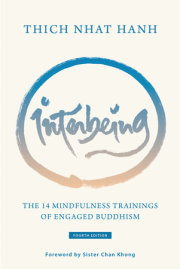
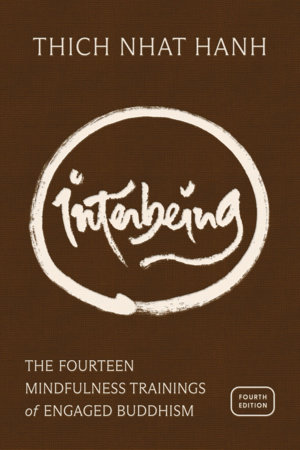
The 14 Mindfulness Trainings of Engaged Buddhism

Formulated by Thich Nhat Hanh during the Vietnam War, the Fourteen Mindfulness Trainings of the Order of Interbeing are a penetrating expression of traditional Buddhist morality coming to terms with contemporary issues. In this new third edition, Thich Nhat Hanh introduces the term “mindfulness trainings” for “precepts.” Thich Nhat Hanh is a Zen master, scholar, and peacemaker. He was nominated by Dr. Martin Luther King, Jr., for the Nobel Peace Prize and is author of over thirty books, including Being Peace, Living Buddha Living Christ, and Teachings on Love. He is the founder of Plum Village, a meditation community in France that leads retreats on “the art of mindful living.”
The Mindfulness Trainings

In the spirit of interbeing, each one of the trainings contains all the others. The First Mindfulness Training includes all the others, and all the other trainings contain the first. We can see clearly that the first is the basis of the twelfth training, which urges us to protect all life. In Buddhism, actions are seen to arise in three domains: in body, speech, and mind. We usually think that killing is a
physical action and occurs in the domain of the body, but a fanatical mind can cause the killing of not just one, but millions of human beings. If we were to truly follow the guidance of the First Mindfulness Training, all weapons would become obsolete.

The teachings and practices found in Buddhism may vary, but all of them aim at liberating the mind. Openness and nonattachment to views are the guiding principles for all endeavors leading to reconciliation and peace. They are also the doors that lead to the world of ultimate reality and absolute freedom.

The Buddha regarded his own teachings as a raft to cross the river and not as an absolute truth to be worshipped or clung to. Ideological inflexibility is responsible for so much of the conflict and violence in the world. Many Buddhist texts, including the Kālāma Sūtra, the Arittha Sūtra (Knowing the Better Way to Catch a Snake), and the Vajracchedikā Sūtra (The Diamond That Cuts through Illusion), address this important subject.

"This small book is one of the gems of spiritual literature. Thich Nhat Hanh's Buddhist precepts of acceptance, patience, and extending oneself are as necessary as rain to parched earth. Short, sweet, and direct...a book to read and treasure." —Academic Library Book Review
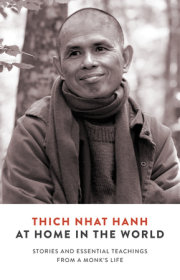
Thich Nhat Hanh is one of the most revered Zen teachers in the world today. His best-selling books include Be Free Where You Are and Peace of Mind. He lives in Plum Village in southwest France. Nhat Hanh has been teaching the art of mindful living for more than 70 years. 

Jason DeAntonis is an award-winning Bay Area artist, known for his sumi ink illustrations, and his fine carpentry and custom furniture. He has also worked in sculpture, costume design, glass blowing, painting, printmaking, and book illustration. His work has appeared in Mindfulness in the Garden, How to Sit, How to Eat, How to Walk, How to Love, and How to Relax. He lives in Berkeley, California.

About

Formulated by Thich Nhat Hanh during the Vietnam War, the Fourteen Mindfulness Trainings of the Order of Interbeing are a penetrating expression of traditional Buddhist morality coming to terms with contemporary issues. In this new third edition, Thich Nhat Hanh introduces the term “mindfulness trainings” for “precepts.” Thich Nhat Hanh is a Zen master, scholar, and peacemaker. He was nominated by Dr. Martin Luther King, Jr., for the Nobel Peace Prize and is author of over thirty books, including Being Peace, Living Buddha Living Christ, and Teachings on Love. He is the founder of Plum Village, a meditation community in France that leads retreats on “the art of mindful living.”

Excerpt

The Mindfulness Trainings

In the spirit of interbeing, each one of the trainings contains all the others. The First Mindfulness Training includes all the others, and all the other trainings contain the first. We can see clearly that the first is the basis of the twelfth training, which urges us to protect all life. In Buddhism, actions are seen to arise in three domains: in body, speech, and mind. We usually think that killing is a
physical action and occurs in the domain of the body, but a fanatical mind can cause the killing of not just one, but millions of human beings. If we were to truly follow the guidance of the First Mindfulness Training, all weapons would become obsolete.

The teachings and practices found in Buddhism may vary, but all of them aim at liberating the mind. Openness and nonattachment to views are the guiding principles for all endeavors leading to reconciliation and peace. They are also the doors that lead to the world of ultimate reality and absolute freedom.

The Buddha regarded his own teachings as a raft to cross the river and not as an absolute truth to be worshipped or clung to. Ideological inflexibility is responsible for so much of the conflict and violence in the world. Many Buddhist texts, including the Kālāma Sūtra, the Arittha Sūtra (Knowing the Better Way to Catch a Snake), and the Vajracchedikā Sūtra (The Diamond That Cuts through Illusion), address this important subject.

Reviews

"This small book is one of the gems of spiritual literature. Thich Nhat Hanh's Buddhist precepts of acceptance, patience, and extending oneself are as necessary as rain to parched earth. Short, sweet, and direct...a book to read and treasure." —Academic Library Book Review

Author

Thich Nhat Hanh is one of the most revered Zen teachers in the world today. His best-selling books include Be Free Where You Are and Peace of Mind. He lives in Plum Village in southwest France. Nhat Hanh has been teaching the art of mindful living for more than 70 years. 

Jason DeAntonis is an award-winning Bay Area artist, known for his sumi ink illustrations, and his fine carpentry and custom furniture. He has also worked in sculpture, costume design, glass blowing, painting, printmaking, and book illustration. His work has appeared in Mindfulness in the Garden, How to Sit, How to Eat, How to Walk, How to Love, and How to Relax. He lives in Berkeley, California.
  • More Websites from
    Penguin Random House
  • Common Reads
  • Library Marketing