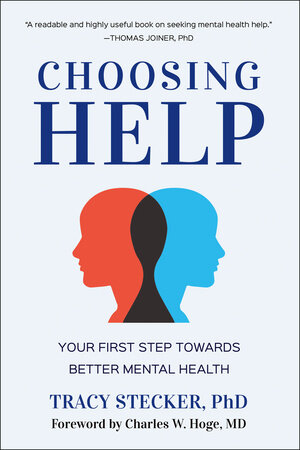
Choosing Help

Your First Step Towards Better Mental Health

Foreword by Charles Hoge
Why do so many people resist getting help—even when their lives depend on it?

In Choosing Help, psychologist Tracy Stecker, PhD, offers a compassionate and evidence-based guide to understanding the deep-rooted reasons why individuals avoid treatment for mental health and substance use issues—and how to help them move toward change.

Drawing on decades of clinical research and real-world experience, Dr. Stecker explores the psychological barriers that keep people from seeking support, from fear and shame to mistrust and denial. Rather than placing the burden solely on families or communities, Choosing Help introduces a groundbreaking intervention model designed to shift the individual's own mindset—making the decision to seek help not just possible, but empowering.

Each chapter of Choosing Help dives into a specific mindset that keeps people from seeking support. You’ll meet individuals who believe treatment won’t work, who insist they’re not ready, or who feel they don’t need help at all. Others are convinced they can handle it on their own, fear being forced into the wrong kind of treatment, or struggle with the vulnerability of opening up.

Through these stories and insights, Dr. Stecker reveals how these beliefs form—and how they can be gently challenged and transformed.

With clear analysis, relatable case studies, and actionable strategies, Choosing Help equips readers with the tools to recognize resistance, respond with empathy, and guide themselves or others toward healing.

Whether you're a clinician, caregiver, loved one, or someone wrestling with your own reluctance, this book is a vital resource for making help feel like a choice—not a confrontation.
“Grounded in cutting-edge science and brought to life through deeply human stories, this book offers practical tools for navigating the most common—and often most difficult—reasons people avoid getting help.”
—Sudie Back, PhD, Director of Drug Abuse Research Training, Medical University of South Carolina

“A readable and highly useful book on seeking mental health help. A highly recommended read from a world’s authority on the topic.”
—Thomas Joiner, PhD, Director, FSU Psychology Clinic

“Friends, parents, teachers, counselors, doctors, and other health providers, especially those who are not familiar with cognitive behavior therapy, will find this book educational and useful.”
—Bob Drake, MD, PhD, Professor of Clinical Psychiatry, Columbia University

“...provides practical techniques and easy to understand examples that not only build confidence to initiate that conversation, but to help get your loved one, co-worker, or patient into the treatment they need.”
—Lisham Ashrafioun, PhD, Associate Professor of Psychiatry, University of Rochester Medical Center

“As a clinician and researcher, I see the same barrier over and over: people want help, but anxiety, stigma, and logistics win. This book targets that barrier directly with practical, stepwise strategies and clear measurement.”
—Nik Allan, PhD, Assistant Professor, Department of Psychiatry and Behavioral Health, The Ohio State University

“...an invaluable tool for families, healthcare professionals and students learning to build trust and foster meaningful conversations.”
—Teresa Kelechi, PhD, Dean of Research in the College of Nursing, Medical University of South Carolina

“...provides concrete, real-life strategies and small steps, to help your loved one say yes to life-changing mental health treatment.”
—Bobbi Conner, producer and host of the Health Focus radio series & podcast

“Dr. Tracy Stecker breathes compassion into the challenging landscape of supporting loved ones who are struggling with their mental health.”
—Jennifer M. Gómez, PhD, Associate Professor of Social Work at Boston University

Tracy Stecker, PhD, is a psychologist at the Medical University of South Carolina and at the Center of Excellence for Suicide Prevention in the Department of Veterans Affairs. Dr. Stecker’s work focuses on help-seeking behavior among individuals with mental health and substance use concerns. Her work has been nationally recognized, including by the Presidential Task Force PREVENTS in 2020. She has been funded from the National Institute of Mental Health, the National Institute of Alcoholism and Alcohol Abuse, the National Institute of Drug Abuse, the Department of Defense, and the Department of Veterans Affairs.

Charles W. Hoge, MD, Colonel, U.S. Army (Retired) directed the U.S. military's premiere research program on the mental health and neurological effects of the wars in Afghanistan and Iraq from 2002 to 2009 at Walter Reed Army Institute of Research. He deployed to Iraq in 2004 to improve combat stress care. A national expert on war-related mental health issues and traumatic brain injury, Dr. Hoge has testified to Congress and is interviewed frequently by national news organizations. He continues to work as a staff psychiatrist treating service members, veterans, and family members. He lives in the Washington, D.C. area.

About

Why do so many people resist getting help—even when their lives depend on it?

In Choosing Help, psychologist Tracy Stecker, PhD, offers a compassionate and evidence-based guide to understanding the deep-rooted reasons why individuals avoid treatment for mental health and substance use issues—and how to help them move toward change.

Drawing on decades of clinical research and real-world experience, Dr. Stecker explores the psychological barriers that keep people from seeking support, from fear and shame to mistrust and denial. Rather than placing the burden solely on families or communities, Choosing Help introduces a groundbreaking intervention model designed to shift the individual's own mindset—making the decision to seek help not just possible, but empowering.

Each chapter of Choosing Help dives into a specific mindset that keeps people from seeking support. You’ll meet individuals who believe treatment won’t work, who insist they’re not ready, or who feel they don’t need help at all. Others are convinced they can handle it on their own, fear being forced into the wrong kind of treatment, or struggle with the vulnerability of opening up.

Through these stories and insights, Dr. Stecker reveals how these beliefs form—and how they can be gently challenged and transformed.

With clear analysis, relatable case studies, and actionable strategies, Choosing Help equips readers with the tools to recognize resistance, respond with empathy, and guide themselves or others toward healing.

Whether you're a clinician, caregiver, loved one, or someone wrestling with your own reluctance, this book is a vital resource for making help feel like a choice—not a confrontation.

Reviews

“Grounded in cutting-edge science and brought to life through deeply human stories, this book offers practical tools for navigating the most common—and often most difficult—reasons people avoid getting help.”
—Sudie Back, PhD, Director of Drug Abuse Research Training, Medical University of South Carolina

“A readable and highly useful book on seeking mental health help. A highly recommended read from a world’s authority on the topic.”
—Thomas Joiner, PhD, Director, FSU Psychology Clinic

“Friends, parents, teachers, counselors, doctors, and other health providers, especially those who are not familiar with cognitive behavior therapy, will find this book educational and useful.”
—Bob Drake, MD, PhD, Professor of Clinical Psychiatry, Columbia University

“...provides practical techniques and easy to understand examples that not only build confidence to initiate that conversation, but to help get your loved one, co-worker, or patient into the treatment they need.”
—Lisham Ashrafioun, PhD, Associate Professor of Psychiatry, University of Rochester Medical Center

“As a clinician and researcher, I see the same barrier over and over: people want help, but anxiety, stigma, and logistics win. This book targets that barrier directly with practical, stepwise strategies and clear measurement.”
—Nik Allan, PhD, Assistant Professor, Department of Psychiatry and Behavioral Health, The Ohio State University

“...an invaluable tool for families, healthcare professionals and students learning to build trust and foster meaningful conversations.”
—Teresa Kelechi, PhD, Dean of Research in the College of Nursing, Medical University of South Carolina

“...provides concrete, real-life strategies and small steps, to help your loved one say yes to life-changing mental health treatment.”
—Bobbi Conner, producer and host of the Health Focus radio series & podcast

“Dr. Tracy Stecker breathes compassion into the challenging landscape of supporting loved ones who are struggling with their mental health.”
—Jennifer M. Gómez, PhD, Associate Professor of Social Work at Boston University

Author

Tracy Stecker, PhD, is a psychologist at the Medical University of South Carolina and at the Center of Excellence for Suicide Prevention in the Department of Veterans Affairs. Dr. Stecker’s work focuses on help-seeking behavior among individuals with mental health and substance use concerns. Her work has been nationally recognized, including by the Presidential Task Force PREVENTS in 2020. She has been funded from the National Institute of Mental Health, the National Institute of Alcoholism and Alcohol Abuse, the National Institute of Drug Abuse, the Department of Defense, and the Department of Veterans Affairs.

Charles W. Hoge, MD, Colonel, U.S. Army (Retired) directed the U.S. military's premiere research program on the mental health and neurological effects of the wars in Afghanistan and Iraq from 2002 to 2009 at Walter Reed Army Institute of Research. He deployed to Iraq in 2004 to improve combat stress care. A national expert on war-related mental health issues and traumatic brain injury, Dr. Hoge has testified to Congress and is interviewed frequently by national news organizations. He continues to work as a staff psychiatrist treating service members, veterans, and family members. He lives in the Washington, D.C. area.
  • More Websites from
    Penguin Random House
  • Common Reads
  • Library Marketing