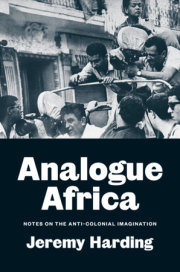
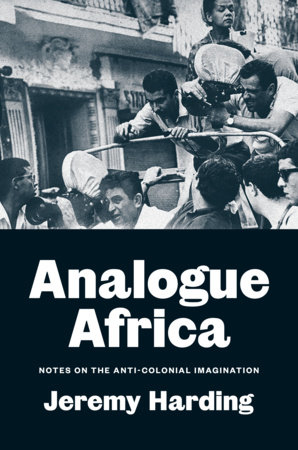
Analogue Africa

Notes on the Anti-Colonial Imagination

Look inside
A COLLECTION OF INCISIVE ESSAYS ABOUT AFRICAN ART, CULTURE AND THE CONTINENT’S STRUGGLE TO SHAKE OFF EUROPEAN RULE

Too many of our convictions about the fifty-four nations of Africa come from non-African sources. Western media often treat the continent as a simulacrum of Western anxieties. In contrast, Jeremy Harding focuses on specific historical episodes and cultural practices – cinema, art, ethnography and journalism – to steer us away from treacherous generalisations.

Analogue Africa celebrates the ingenuity with which African artists – and a handful of Europeans – have reimagined the colonial encounter and voiced their impatience with white minority rule. Among his illustrious cast of filmmakers, photographers, writers and painters are Seydou Keïta, Sanlé Sory, Ernest Cole, Sarah Maldoror, John Akomfrah, William Kentridge and Binyavanga Wainaina. Harding argues that Western museums with priceless African holdings – the British Museum, the Musée du Quai Branly, the Royal Museum of Central Africa in Belgium – are now the sites of a struggle over the colonial past, adding the latest chapter to an unfinished history.
"Jeremy Harding's essays and reportage have established him as one of our most remarkable writers, equally fluent in the languages of aesthetics and international affairs. In Analogue Africa, he is writing at the peak of his powers: eloquent, perceptive, attentive at once to questions of form and to the moral and political stakes involved in the creation of postcolonial culture."
—Adam Shatz, author of The Rebel's Clinic
JEREMY HARDING is a Contributing Editor at the London Review of Books. His books include Border Vigils; Small Wars, Small Mercies; and Mother Country.
Introduction

I: Finders Keepers
Chapter 1: Report from Sirius B: Colonial Curiosity on the Rampage
Chapter 2: A Visitor’s Guide to Three Museums
-Jungle Fever at Quai Branly
-RIP 2000: The British Museum at the Turn of the Century
-Decolonisation for Beginners: The AfricaMuseum, Tervuren

II: Unauthorised Versions
Chapter 3: This site is under Reconstruction: Albert Camus and Kamel Daoud
Chapter 4: Mangy-Dog in Mozambique: Bertina Lopes and Luís Bernardo Honwana
Chapter 5: ‘Women who struggle’: Sarah Maldoror

III: A Pathway for the Colonised
Chapter 6: The West African Photographer’s Studio
-One Pose, A Single Exposure: Seydou Keïta, Studio Photographer, Mali
-We’re dancing tonight: Sanlé Sory, Studio Photographer, Burkina Faso
Chapter 7: Apartheid in Monochrome
-White Dreams and Proprieties: David Goldblatt, Photographer at Large
-Raise, Focus, Shoot, Conceal: Ernest Cole, Photographer at Large

IV. Remasters
Chapter 8: Binyavanga Wainaina: Writer, Sampler, Spam
Chapter 9: William Kentridge and John Akomfrah
-Descent of the Coffee Plunger: William Kentridge
-Archive Science: John Akomfrah

Additional Sources
Listening Booth

About

A COLLECTION OF INCISIVE ESSAYS ABOUT AFRICAN ART, CULTURE AND THE CONTINENT’S STRUGGLE TO SHAKE OFF EUROPEAN RULE

Too many of our convictions about the fifty-four nations of Africa come from non-African sources. Western media often treat the continent as a simulacrum of Western anxieties. In contrast, Jeremy Harding focuses on specific historical episodes and cultural practices – cinema, art, ethnography and journalism – to steer us away from treacherous generalisations.

Analogue Africa celebrates the ingenuity with which African artists – and a handful of Europeans – have reimagined the colonial encounter and voiced their impatience with white minority rule. Among his illustrious cast of filmmakers, photographers, writers and painters are Seydou Keïta, Sanlé Sory, Ernest Cole, Sarah Maldoror, John Akomfrah, William Kentridge and Binyavanga Wainaina. Harding argues that Western museums with priceless African holdings – the British Museum, the Musée du Quai Branly, the Royal Museum of Central Africa in Belgium – are now the sites of a struggle over the colonial past, adding the latest chapter to an unfinished history.

Reviews

"Jeremy Harding's essays and reportage have established him as one of our most remarkable writers, equally fluent in the languages of aesthetics and international affairs. In Analogue Africa, he is writing at the peak of his powers: eloquent, perceptive, attentive at once to questions of form and to the moral and political stakes involved in the creation of postcolonial culture."
—Adam Shatz, author of The Rebel's Clinic

Author

JEREMY HARDING is a Contributing Editor at the London Review of Books. His books include Border Vigils; Small Wars, Small Mercies; and Mother Country.

Table of Contents

Introduction

I: Finders Keepers
Chapter 1: Report from Sirius B: Colonial Curiosity on the Rampage
Chapter 2: A Visitor’s Guide to Three Museums
-Jungle Fever at Quai Branly
-RIP 2000: The British Museum at the Turn of the Century
-Decolonisation for Beginners: The AfricaMuseum, Tervuren

II: Unauthorised Versions
Chapter 3: This site is under Reconstruction: Albert Camus and Kamel Daoud
Chapter 4: Mangy-Dog in Mozambique: Bertina Lopes and Luís Bernardo Honwana
Chapter 5: ‘Women who struggle’: Sarah Maldoror

III: A Pathway for the Colonised
Chapter 6: The West African Photographer’s Studio
-One Pose, A Single Exposure: Seydou Keïta, Studio Photographer, Mali
-We’re dancing tonight: Sanlé Sory, Studio Photographer, Burkina Faso
Chapter 7: Apartheid in Monochrome
-White Dreams and Proprieties: David Goldblatt, Photographer at Large
-Raise, Focus, Shoot, Conceal: Ernest Cole, Photographer at Large

IV. Remasters
Chapter 8: Binyavanga Wainaina: Writer, Sampler, Spam
Chapter 9: William Kentridge and John Akomfrah
-Descent of the Coffee Plunger: William Kentridge
-Archive Science: John Akomfrah

Additional Sources
Listening Booth
  • More Websites from
    Penguin Random House
  • Common Reads
  • Library Marketing