"The collection strikes a blackly comic but erudite tone."
–Sophia Nguyen, The Washington Post

Kissinger is dead but his blood-soaked legacy endures


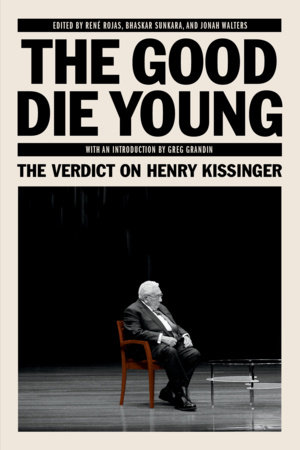
If the American foreign policy establishment is a grand citadel, then Henry Kissinger is the ghoul haunting its hallways. For half a century, he was an omnipresent figure in war rooms and at press briefings, dutifully shepherding the American empire through successive rounds of growing pains. For multiple generations of anti-war activists, Kissinger personified the depravity of the American war machine.

The world Kissinger wrought is the world we live in, where ideal investment conditions are generated from the barrel of a gun. Today, global capitalism and United States hegemony are underwritten by the most powerful military ever devised. Any political vision worth fighting for must promise an end to the cycle of never-ending wars afflicting the world in the twenty-first century. And breaking that cycle means placing the twin evils of capitalism and imperialism in our crosshairs.

In this book, Jacobin follows Kissinger’s fiery trajectory around the world — not because he was evil incarnate, but because he, more than any other public figure, illustrates the links between capitalism, empire, and the feedback loop of endless war-making that still plagues us today.
"Among all this catharsis, no one could surpass the 'unbeatable levels of hater' reached by the lefty publishers Jacobin magazine and Verso Books...[The Good Die Young] features essays by celebrated scholars like Gerald Horne and Carolyn Eisenberg on the wide-spanning breadth of Kissinger's noxious foreign-policy legacy and the areas of the world still hurting thanks to his time in power."
—Nitish Pahwa, Slate

"The collection strikes a blackly comic but erudite tone, opening with an introduction by Yale professor Greg Grandin that explores how Kissinger's intellectual and professional trajectory unfolded across presidential administrations and in parallel with American power at large."
—Sophia Nguyen, The Washington Post
Preface - René Rojas, Bhaskar Sunkara, and Jonah Walters
Introduction: To Die at the Right Time - Greg Grandin


Americas
1. Kissinger and the South American Revolutions - Aldo Marchesi
2. Kissinger in Chile - René Rojas
3. Kissinger in Argentina - Leandro Morgenfeld
4. Kissinger in Central America - Hilary Goodfriend


Europe
5. Kissinger in Cyprus - Leandros Fischer


Middle East and Africa
6. Kissinger in Angola - Piero Gleijeses
7. Kissinger in South Africa - Gerald Horne
8. Kissinger in Western Sahara - Aubrey Bloomfield
9. Kissinger in the Gulf - Chip Gibbons

Asia
10. Kissinger in East Pakistan/Bangladesh - Mukhtar Mirjan
11. Kissinger in East Timor - Alex de Jong
12. Kissinger in Cambodia - Brett S. Morris
13. Kissinger in Vietnam and China - An Interview with Carolyn Eisenberg
14. From the War Room to Wall Street - Christy Thornton

Acknowledgments

About the Contributors
Notes

About

"The collection strikes a blackly comic but erudite tone."
–Sophia Nguyen, The Washington Post

Kissinger is dead but his blood-soaked legacy endures


If the American foreign policy establishment is a grand citadel, then Henry Kissinger is the ghoul haunting its hallways. For half a century, he was an omnipresent figure in war rooms and at press briefings, dutifully shepherding the American empire through successive rounds of growing pains. For multiple generations of anti-war activists, Kissinger personified the depravity of the American war machine.

The world Kissinger wrought is the world we live in, where ideal investment conditions are generated from the barrel of a gun. Today, global capitalism and United States hegemony are underwritten by the most powerful military ever devised. Any political vision worth fighting for must promise an end to the cycle of never-ending wars afflicting the world in the twenty-first century. And breaking that cycle means placing the twin evils of capitalism and imperialism in our crosshairs.

In this book, Jacobin follows Kissinger’s fiery trajectory around the world — not because he was evil incarnate, but because he, more than any other public figure, illustrates the links between capitalism, empire, and the feedback loop of endless war-making that still plagues us today.

Reviews

"Among all this catharsis, no one could surpass the 'unbeatable levels of hater' reached by the lefty publishers Jacobin magazine and Verso Books...[The Good Die Young] features essays by celebrated scholars like Gerald Horne and Carolyn Eisenberg on the wide-spanning breadth of Kissinger's noxious foreign-policy legacy and the areas of the world still hurting thanks to his time in power."
—Nitish Pahwa, Slate

"The collection strikes a blackly comic but erudite tone, opening with an introduction by Yale professor Greg Grandin that explores how Kissinger's intellectual and professional trajectory unfolded across presidential administrations and in parallel with American power at large."
—Sophia Nguyen, The Washington Post

Table of Contents

Preface - René Rojas, Bhaskar Sunkara, and Jonah Walters
Introduction: To Die at the Right Time - Greg Grandin


Americas
1. Kissinger and the South American Revolutions - Aldo Marchesi
2. Kissinger in Chile - René Rojas
3. Kissinger in Argentina - Leandro Morgenfeld
4. Kissinger in Central America - Hilary Goodfriend


Europe
5. Kissinger in Cyprus - Leandros Fischer


Middle East and Africa
6. Kissinger in Angola - Piero Gleijeses
7. Kissinger in South Africa - Gerald Horne
8. Kissinger in Western Sahara - Aubrey Bloomfield
9. Kissinger in the Gulf - Chip Gibbons

Asia
10. Kissinger in East Pakistan/Bangladesh - Mukhtar Mirjan
11. Kissinger in East Timor - Alex de Jong
12. Kissinger in Cambodia - Brett S. Morris
13. Kissinger in Vietnam and China - An Interview with Carolyn Eisenberg
14. From the War Room to Wall Street - Christy Thornton

Acknowledgments

About the Contributors
Notes
  • More Websites from
    Penguin Random House
  • Common Reads
  • Library Marketing