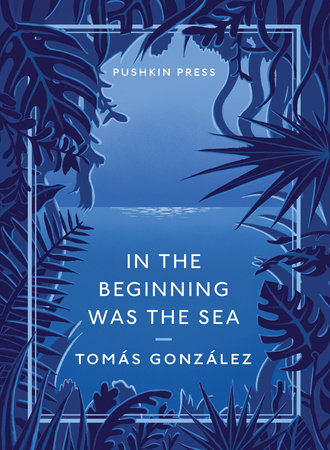
In the Beginning Was the Sea

Translated by Frank Wynne
Ebook (EPUB)
On sale Feb 24, 2015 | 224 Pages | 9781782271116

The first-ever English translation of the classic Latin American novel—dubbed ‘Sisyphus in the Caribbean’—for fans of Paul Theroux’s Mosquito Coast and Alex Garland’s The Beach.

A couple experiences a downward spiral on the Caribbean coast in this “taut, uncompromising study of the fault lines in all of us,” hailed as “‘the best-kept secret of Colombian literature’” (The Guardian).

The young intellectuals J. and Elena abandon the parties, the drinking, and the money of the city to start a new life on a remote tropical coast. Among mango trees, hot sands, and everlasting sunshine, they plan to live the Good Life—self-sufficient and close to nature.

But with each day comes small defeats and imperceptible dramas. Gradually, paradise turns into hell, as brutal weather, mounting debts, the couple’s brittle relationship, and the sea itself threaten to destroy them.

Based on a true story, In the Beginning Was the Sea is a dramatic and searingly ironic account of the disastrous encounter of the imagined life with reality—a satire of hippyism, ecological fantasies, and of the very idea that man can control fate.
The luggage was transported on the roof of the bus. Two leather suitcases containing their clothes, a trunk containing his books, and her sewing machine. Their belong-ings were surrounded by bunches of plantains, sacks of rice, blocks of unrefined sugar cane wrapped in dried banana leaves, and other suitcases.

Elena and J. were heading for the sea.

There were stops in dusty villages. Elena and J. got out of the bus, numb, drank coffee in bars that smelt like urinals where pot-bellied men sat steeping their endless entrails in the golden glow of beer. There were stops in dismal, dirty service stations littered with discarded engine filters and empty oil cans where the bus would fill up with petrol before setting off again. By day, the bus picked up passengers carrying bewildered chickens; at night, empty-handed individuals boarded the bus in dark, desolate places only to get off in equally dark and desolate places twenty or thirty kilometres further on. Silent men with machetes slung from their belts and dirty, battered hats on their heads.

When, finally, the bus arrived at the port, the sea was not magnificent and blue. The harbour was built on a narrow inlet that looked more like a canal—a filthy canal three kilometres long that spilt into the sea. At 4 p.m. the bus pulled in to the main plaza. There was no sign of the sea, though the air smelt of salt and the fetid stench of open drains. The tall almond trees in the middle of the plaza were wheeled about by flights of swallows. Amid the trees, perched on the backs of granite benches, people sat chatting. The undersides of the granite benches seemed eroded. In the shade of the trees were kiosks selling fruit juice; split papayas, their exposed bellies gorged with seeds and teeming with flies; large glass jars filled with cubes of mango ready to be liquidized.

Parked all around the plaza were lines of Jeeps. Some looked new, but most were rusty broken-down Willys half eaten by rust or clapped-out Gaz or Carpatis. The newer models had metal driver’s cabs with small red or blue fans mounted on the dashboard while older models sported grubby statues of a saint next to the steering wheel and faded, patched tarpaulin roofs. The dusty streets around the plaza would become quag-mires in the rainy season. Traffic was heavy: trucks full with packages arrived as the jeeps teeming with passengers left. Garishly painted buses pulled up, their roofs piled high with live chickens, multi-coloured tin trunks and bunches of plantains. The squat buildings of concrete and brick—mostly grain stores and seedy bars—were roofed with corrugated iron or asbestos tiles. There was no attempt at elegance or style; the walls themselves were grimy. The people teeming on the plaza were ugly: the white men were garrulous, potbellied traders with a yellowish tinge to their skin; the blacks, raised far from
the sea and cheap fish, had prematurely rotting teeth.

“You get the bags unloaded and I’ll go see about a boat.”

“OK,” said Elena, then yelled up to the boy, “Hey! Careful with our luggage, hermano!”
Her sewing machine—the one thing that she had kept from her first marriage—had spent almost twenty hours riding on the roof of the bus. The wooden case that housed the mechanism was wrapped with cardboard boxes held in place with packing tape and twine; the feet and the pedal were exposed.

It tumbled to the ground with a dull clatter.

Elena unleashed a torrent of hurried, confused abuse before composing herself and calmly swearing at the boy, choosing her insults with silky venom.

“It ain’t my fault, seño,” the boy said simply.
“Eight years ago, González was branded ‘the best-kept secret of Colombian literature’ . . . He has since become one of his country's foremost novelists, and In the Beginning Was the Sea – this taut, uncompromising study of the faultlines in all of us – is earning a wide readership. Perhaps it's time to call him something else.”
The Guardian

In the Beginning Was the Sea [is] a book that simultaneously works as a political parable, a novel, and a mournful confessional […] written in a fashion meant to hold up his own grief and disorientation as its own strange flower, an emotional germination meant both to stand on its own and be inseparable from all that surrounds it, an individual “you,” straining to emerge from a ceaseless body of discovery, loss, memory, and their insatiable repetition.”
—Los Angeles Review of Books
 
“What makes the characters so recognizable, so uncomfortable and so relevant, particularly in today's hipster-dominated culture, is how their intent to live consciously is thwarted by an utter lack of self-awareness. . . The strength of description, and the menacing tone that runs beneath In the Beginning Was the Sea, however, are ultimately what give the slim novel its haunting power."
The Chicago Tribune
 
“[T]he novel leaves its mark […] the arresting prose and complex characters shine.”
Kirkus Reviews

“Colombian novelist González tells a common story with uncommon economy […] For readers following J's fantasies and hopes, it is impossible not to think of Kafka's K […] González’s work has been translated into six languages, but this is his first book to appear in English, an auspicious beginning.”
—Booklist
 
“Gonzalez poetically and comically captures the inevitable destruction of those who live in a world of fantasy and hubris, depicting beauty and despair by turns.”
Publishers Weekly

“González impresses with his enactment of initial dream and subsequent nightmare. His tropical idyll is expertly depicted through a succession of richly conveyed sights and sounds… Based on a true story, In the Beginning Was the Sea is a gripping cautionary tale about how hard, cruel reality sooner or later impinges upon our seemingly imperishable fantasies. It is González’s first book to be published in English. If this is a measure of what he is capable of, with luck there will be many more.”
The Star Tribune

“Aided by a devastatingly evocative translation from Frank Wynne and armed with the skill of a master storyteller, over the course of 200 some odd pages Gonzalez constructs a chilling, brilliantly plotted tale . . . From the very beginning the author, and his translator, transport the reader into a scintillating, unsettling dreamlike world where every sentence comes to life in vibrant detail.”
Typographical Era

“The lyrical, haunting story has the feel of a fable—a young man and his beautiful wife abandon their hectic, intellectual, night-clubbing life in the city to buy a farm on an undeveloped stretch of coast—while the spare, disquieting prose suggests the start of an art-house horror film.”
Daniel Levine, Words Without Borders
Tomás González was born in 1950 in Medellín, Colombia. He studied Philosophy before becoming a barman in a Bogotá nightclub, whose owner published his first novel in 1983. González has lived in Miami and New York, where he wrote much of his work while making a living as a translator. After twenty years in the US, he returned to Colombia, where he now lives. His books have been translated into six languages, and his previous novel, The Storm, was published by Archipelago with translator Andrea Rosenberg. View titles by Tomas Gonzalez

About

The first-ever English translation of the classic Latin American novel—dubbed ‘Sisyphus in the Caribbean’—for fans of Paul Theroux’s Mosquito Coast and Alex Garland’s The Beach.

A couple experiences a downward spiral on the Caribbean coast in this “taut, uncompromising study of the fault lines in all of us,” hailed as “‘the best-kept secret of Colombian literature’” (The Guardian).

The young intellectuals J. and Elena abandon the parties, the drinking, and the money of the city to start a new life on a remote tropical coast. Among mango trees, hot sands, and everlasting sunshine, they plan to live the Good Life—self-sufficient and close to nature.

But with each day comes small defeats and imperceptible dramas. Gradually, paradise turns into hell, as brutal weather, mounting debts, the couple’s brittle relationship, and the sea itself threaten to destroy them.

Based on a true story, In the Beginning Was the Sea is a dramatic and searingly ironic account of the disastrous encounter of the imagined life with reality—a satire of hippyism, ecological fantasies, and of the very idea that man can control fate.

Excerpt

The luggage was transported on the roof of the bus. Two leather suitcases containing their clothes, a trunk containing his books, and her sewing machine. Their belong-ings were surrounded by bunches of plantains, sacks of rice, blocks of unrefined sugar cane wrapped in dried banana leaves, and other suitcases.

Elena and J. were heading for the sea.

There were stops in dusty villages. Elena and J. got out of the bus, numb, drank coffee in bars that smelt like urinals where pot-bellied men sat steeping their endless entrails in the golden glow of beer. There were stops in dismal, dirty service stations littered with discarded engine filters and empty oil cans where the bus would fill up with petrol before setting off again. By day, the bus picked up passengers carrying bewildered chickens; at night, empty-handed individuals boarded the bus in dark, desolate places only to get off in equally dark and desolate places twenty or thirty kilometres further on. Silent men with machetes slung from their belts and dirty, battered hats on their heads.

When, finally, the bus arrived at the port, the sea was not magnificent and blue. The harbour was built on a narrow inlet that looked more like a canal—a filthy canal three kilometres long that spilt into the sea. At 4 p.m. the bus pulled in to the main plaza. There was no sign of the sea, though the air smelt of salt and the fetid stench of open drains. The tall almond trees in the middle of the plaza were wheeled about by flights of swallows. Amid the trees, perched on the backs of granite benches, people sat chatting. The undersides of the granite benches seemed eroded. In the shade of the trees were kiosks selling fruit juice; split papayas, their exposed bellies gorged with seeds and teeming with flies; large glass jars filled with cubes of mango ready to be liquidized.

Parked all around the plaza were lines of Jeeps. Some looked new, but most were rusty broken-down Willys half eaten by rust or clapped-out Gaz or Carpatis. The newer models had metal driver’s cabs with small red or blue fans mounted on the dashboard while older models sported grubby statues of a saint next to the steering wheel and faded, patched tarpaulin roofs. The dusty streets around the plaza would become quag-mires in the rainy season. Traffic was heavy: trucks full with packages arrived as the jeeps teeming with passengers left. Garishly painted buses pulled up, their roofs piled high with live chickens, multi-coloured tin trunks and bunches of plantains. The squat buildings of concrete and brick—mostly grain stores and seedy bars—were roofed with corrugated iron or asbestos tiles. There was no attempt at elegance or style; the walls themselves were grimy. The people teeming on the plaza were ugly: the white men were garrulous, potbellied traders with a yellowish tinge to their skin; the blacks, raised far from
the sea and cheap fish, had prematurely rotting teeth.

“You get the bags unloaded and I’ll go see about a boat.”

“OK,” said Elena, then yelled up to the boy, “Hey! Careful with our luggage, hermano!”
Her sewing machine—the one thing that she had kept from her first marriage—had spent almost twenty hours riding on the roof of the bus. The wooden case that housed the mechanism was wrapped with cardboard boxes held in place with packing tape and twine; the feet and the pedal were exposed.

It tumbled to the ground with a dull clatter.

Elena unleashed a torrent of hurried, confused abuse before composing herself and calmly swearing at the boy, choosing her insults with silky venom.

“It ain’t my fault, seño,” the boy said simply.

Reviews

“Eight years ago, González was branded ‘the best-kept secret of Colombian literature’ . . . He has since become one of his country's foremost novelists, and In the Beginning Was the Sea – this taut, uncompromising study of the faultlines in all of us – is earning a wide readership. Perhaps it's time to call him something else.”
The Guardian

In the Beginning Was the Sea [is] a book that simultaneously works as a political parable, a novel, and a mournful confessional […] written in a fashion meant to hold up his own grief and disorientation as its own strange flower, an emotional germination meant both to stand on its own and be inseparable from all that surrounds it, an individual “you,” straining to emerge from a ceaseless body of discovery, loss, memory, and their insatiable repetition.”
—Los Angeles Review of Books
 
“What makes the characters so recognizable, so uncomfortable and so relevant, particularly in today's hipster-dominated culture, is how their intent to live consciously is thwarted by an utter lack of self-awareness. . . The strength of description, and the menacing tone that runs beneath In the Beginning Was the Sea, however, are ultimately what give the slim novel its haunting power."
The Chicago Tribune
 
“[T]he novel leaves its mark […] the arresting prose and complex characters shine.”
Kirkus Reviews

“Colombian novelist González tells a common story with uncommon economy […] For readers following J's fantasies and hopes, it is impossible not to think of Kafka's K […] González’s work has been translated into six languages, but this is his first book to appear in English, an auspicious beginning.”
—Booklist
 
“Gonzalez poetically and comically captures the inevitable destruction of those who live in a world of fantasy and hubris, depicting beauty and despair by turns.”
Publishers Weekly

“González impresses with his enactment of initial dream and subsequent nightmare. His tropical idyll is expertly depicted through a succession of richly conveyed sights and sounds… Based on a true story, In the Beginning Was the Sea is a gripping cautionary tale about how hard, cruel reality sooner or later impinges upon our seemingly imperishable fantasies. It is González’s first book to be published in English. If this is a measure of what he is capable of, with luck there will be many more.”
The Star Tribune

“Aided by a devastatingly evocative translation from Frank Wynne and armed with the skill of a master storyteller, over the course of 200 some odd pages Gonzalez constructs a chilling, brilliantly plotted tale . . . From the very beginning the author, and his translator, transport the reader into a scintillating, unsettling dreamlike world where every sentence comes to life in vibrant detail.”
Typographical Era

“The lyrical, haunting story has the feel of a fable—a young man and his beautiful wife abandon their hectic, intellectual, night-clubbing life in the city to buy a farm on an undeveloped stretch of coast—while the spare, disquieting prose suggests the start of an art-house horror film.”
Daniel Levine, Words Without Borders

Author

Tomás González was born in 1950 in Medellín, Colombia. He studied Philosophy before becoming a barman in a Bogotá nightclub, whose owner published his first novel in 1983. González has lived in Miami and New York, where he wrote much of his work while making a living as a translator. After twenty years in the US, he returned to Colombia, where he now lives. His books have been translated into six languages, and his previous novel, The Storm, was published by Archipelago with translator Andrea Rosenberg. View titles by Tomas Gonzalez
  • More Websites from
    Penguin Random House
  • Common Reads
  • Library Marketing