Close Modal

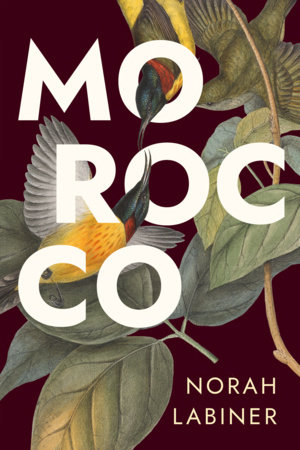
Morocco

Author Norah Labiner On Tour
Paperback
$21.99 US
| $26.99 CAN
44 per carton
On sale Sep 22, 2026 | 240 Pages | 9781685892852

See Additional Formats
In this intricate tale, a woman untangles her enduring bond with an heiress who she is still trying to understand…

Chicago, the turn of the 21st century. Our narrator—always there and never entirely present—recounts her decades-long relationship with the heiress, Katherine Stern. Through the years since boarding school, she has seen Katherine as a daughter who wants for nothing but respect from her psychotherapist father, as a woman with a kind, but fortune-hunting fiancée, and as a mystery even more confounding than the gothic horror stories she evaluates from the slush pile at her job. Sometimes, despite their estrangement, she has even seen Katherine as a friend.

Inspired by the classic story Washington Square by Henry James, Norah Labiner reimagines the prolific tale. Moving through wintery Michigan avenue to the creeping mansions of the rich to the world of melodrama, ghosts, and girls. Morocco confronts the ambiguity of memory, the horrors of history, and what it means, or does not mean, to read a book and tell a story.
CHAPTER ONE

Katherine Stern, she was never called Kate or Kit, nor Kitty, let alone Kat, so far as I know or recall, she was always called Katherine, in long drawn-out syllables, as though her name alone explained some essential aspect of her being; well, perhaps it did. I did not know her well, but I went to school with her, and even after, years later, I might run into her now and again, in unlikely places. There she was in a train station—wearing a coat with gold buttons. Or—I passed before the window of a bakery—and I walked quickly on, as I was sure that it was Katherine I saw sitting alone. She did not notice me. Her attention was unabashedly on her chocolate éclair. Once during a snowstorm, she took my arm in the basement of an art gallery. She assured me that she had no interest in the exhibit; she had only run down the stairs out of the rain. We had coffee then, that time, and she told me how glad she was to find me just the same as ever; from someone else this might have been a sideways jab, but Katherine was sincere. Nothing mattered so much to her as constancy. And even when it was strange to find her out in the world, she acted as though we had just seen each other the day before in history class.

We met at boarding school—. There were woods and a lake of swan—in the dining hall, under its vaulted ceilings, girls in cashmere cardigans argued the virtues of vampires—; I spent most of my time in the library. I was a scholarship student, and I admit, I was defiant about the fact of it. I did not belong among the swan—, but this is not a story about me. I have told enough of those. This is a story about Katherine. She had everything a girl could want. Do not judge her too harshly for this; her inheritance was a practical joke more, or rather less, than an accident of fate. She was not cruel. She was not even unkind. When I think of Katherine—I realize with dismay, or at least, regret—it is easier to list what she was not, than what, or who, she was. Let me say that she was her father’s daughter, and begin there. When Katherine and I were at school together, girls kept memory boxes. The boxes held—little things— photographs, foreign coins, rings and marbles, candy, letters, or a postcard. Mine was a Montecristo cigar box in which I kept amongst other curiosities: my baby teeth, a rock-hard marzipan orange, and a thimble. Katherine had a cedar treasure chest. It opened with a lock and key, and in it she kept a strand of pearls. She told me that I could try them on if I liked. This happened a long time ago; I still have the thimble. And even now I find myself saving scraps of paper on which I have written one word, say, apricot or penicillin. I am nostalgic—sentimental—I suppose, to a fault. I get things wrong, but I know in my heart when I am right. I remember that when I met Katherine’s father, he made a point of pronouncing my name properly, which almost no one does. He was fastidious about names, about history, about, as odd as it sounds these days, the difference between right and wrong.

I liked him, the doctor—wrong or right—good or bad.

Dr. Stern collected books in Morocco leather, model train sets, and prehistoric figurines of dogs, gods of war, and fertility goddesses; he liked glass inkwells, tin drums, and fountain pens. His favorites to find, though, were wristwatches with stopped hands—time fixed forever and broken at some long-ago minute— wrong, but right still twice a day. Dr. Stern (I don’t recall knowing his first name until I saw it on a book cover—) was the foremost proponent of what came to be known as the Stern Method. He was so interchangeable with his therapeutic technique that the word doctor was seldom used amongst those who knew him. He was Stern, just as surely as his daughter was Katherine. And that is how you might have heard them spoken of back then: Stern and Katherine are coming to dinner; don’t forget to pick up the cake!

He was the last of the great psychoanalysts, so it was said. He had argued with Freud. He may or may not have gotten into a fistfight with Jung. Either way, Stern was a monument to—or, perhaps, a bas-relief relic of—the past imperfect—.

"This is subtle but spectacular." - Publishers Weekly, STARRED review


"Ultimately this dreamy novel is a reflection on how stories are stronger than memory, people from the past become characters, and moments" - Booklist
Norah Labiner is the author of the novels Our Sometime Sister, Miniatures, German for Travelers, and Let the Dark Flower Blossom. She has received a Minnesota Book Award for Literary Fiction and currently lives in Minnesota.

About

In this intricate tale, a woman untangles her enduring bond with an heiress who she is still trying to understand…

Chicago, the turn of the 21st century. Our narrator—always there and never entirely present—recounts her decades-long relationship with the heiress, Katherine Stern. Through the years since boarding school, she has seen Katherine as a daughter who wants for nothing but respect from her psychotherapist father, as a woman with a kind, but fortune-hunting fiancée, and as a mystery even more confounding than the gothic horror stories she evaluates from the slush pile at her job. Sometimes, despite their estrangement, she has even seen Katherine as a friend.

Inspired by the classic story Washington Square by Henry James, Norah Labiner reimagines the prolific tale. Moving through wintery Michigan avenue to the creeping mansions of the rich to the world of melodrama, ghosts, and girls. Morocco confronts the ambiguity of memory, the horrors of history, and what it means, or does not mean, to read a book and tell a story.

Excerpt

CHAPTER ONE

Katherine Stern, she was never called Kate or Kit, nor Kitty, let alone Kat, so far as I know or recall, she was always called Katherine, in long drawn-out syllables, as though her name alone explained some essential aspect of her being; well, perhaps it did. I did not know her well, but I went to school with her, and even after, years later, I might run into her now and again, in unlikely places. There she was in a train station—wearing a coat with gold buttons. Or—I passed before the window of a bakery—and I walked quickly on, as I was sure that it was Katherine I saw sitting alone. She did not notice me. Her attention was unabashedly on her chocolate éclair. Once during a snowstorm, she took my arm in the basement of an art gallery. She assured me that she had no interest in the exhibit; she had only run down the stairs out of the rain. We had coffee then, that time, and she told me how glad she was to find me just the same as ever; from someone else this might have been a sideways jab, but Katherine was sincere. Nothing mattered so much to her as constancy. And even when it was strange to find her out in the world, she acted as though we had just seen each other the day before in history class.

We met at boarding school—. There were woods and a lake of swan—in the dining hall, under its vaulted ceilings, girls in cashmere cardigans argued the virtues of vampires—; I spent most of my time in the library. I was a scholarship student, and I admit, I was defiant about the fact of it. I did not belong among the swan—, but this is not a story about me. I have told enough of those. This is a story about Katherine. She had everything a girl could want. Do not judge her too harshly for this; her inheritance was a practical joke more, or rather less, than an accident of fate. She was not cruel. She was not even unkind. When I think of Katherine—I realize with dismay, or at least, regret—it is easier to list what she was not, than what, or who, she was. Let me say that she was her father’s daughter, and begin there. When Katherine and I were at school together, girls kept memory boxes. The boxes held—little things— photographs, foreign coins, rings and marbles, candy, letters, or a postcard. Mine was a Montecristo cigar box in which I kept amongst other curiosities: my baby teeth, a rock-hard marzipan orange, and a thimble. Katherine had a cedar treasure chest. It opened with a lock and key, and in it she kept a strand of pearls. She told me that I could try them on if I liked. This happened a long time ago; I still have the thimble. And even now I find myself saving scraps of paper on which I have written one word, say, apricot or penicillin. I am nostalgic—sentimental—I suppose, to a fault. I get things wrong, but I know in my heart when I am right. I remember that when I met Katherine’s father, he made a point of pronouncing my name properly, which almost no one does. He was fastidious about names, about history, about, as odd as it sounds these days, the difference between right and wrong.

I liked him, the doctor—wrong or right—good or bad.

Dr. Stern collected books in Morocco leather, model train sets, and prehistoric figurines of dogs, gods of war, and fertility goddesses; he liked glass inkwells, tin drums, and fountain pens. His favorites to find, though, were wristwatches with stopped hands—time fixed forever and broken at some long-ago minute— wrong, but right still twice a day. Dr. Stern (I don’t recall knowing his first name until I saw it on a book cover—) was the foremost proponent of what came to be known as the Stern Method. He was so interchangeable with his therapeutic technique that the word doctor was seldom used amongst those who knew him. He was Stern, just as surely as his daughter was Katherine. And that is how you might have heard them spoken of back then: Stern and Katherine are coming to dinner; don’t forget to pick up the cake!

He was the last of the great psychoanalysts, so it was said. He had argued with Freud. He may or may not have gotten into a fistfight with Jung. Either way, Stern was a monument to—or, perhaps, a bas-relief relic of—the past imperfect—.

Reviews

"This is subtle but spectacular." - Publishers Weekly, STARRED review


"Ultimately this dreamy novel is a reflection on how stories are stronger than memory, people from the past become characters, and moments" - Booklist

Author

Norah Labiner is the author of the novels Our Sometime Sister, Miniatures, German for Travelers, and Let the Dark Flower Blossom. She has received a Minnesota Book Award for Literary Fiction and currently lives in Minnesota.
  • More Websites from
    Penguin Random House
  • Common Reads
  • Library Marketing