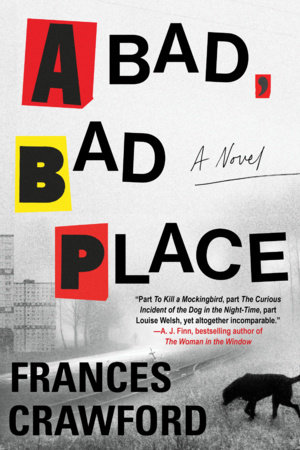
A gritty and poignant debut about a young working-class girl in 1979 Glasgow who happens upon the body of a murdered woman—and must face an insular community desperate for answers, as well as herself.

Glasgow, 1979: If it hadn’t been for her wee stupid dog, Sid Vicious, twelve-year-old Janey Devine might never have stumbled upon the corpse of Samantha Watson. And then maybe she’d still be able to sleep at night. And maybe her nana wouldn’t be so worried all the time. And maybe Billy “The Ghost” Watson, a
notorious gangster, wouldn’t be on her tail—for it’s Billy’s daughter who was left for dead on those train tracks, and now Billy wants answers.

Fear and gossip have spread through the tight-knit community of Possilpark, and while Janey swears she can’t remember the details of that morning, the cops think she’s hiding something—and indeed, there’s something she knows that she’s not quite ready to tell anyone, not even her nana, who won’t rest until this whole thing is behind them.

Shot through with remarkable humor, Frances Crawford’s stunning debut is a coming-of-age whodunit, an intimate portrait of a working-class neighborhood that weaves Janey’s innocent candor and her nana’s hard-earned wisdom into a sweeping tale of grief and survival that marks the arrival of a major new voice in crime fiction.
Chapter 1
-5 days-
Sid Vicious is under the table waiting to see if there’s any dropped food. When Nana isn’t looking, I kick him. Right in the belly.

“That poor dog must be bursting,” Nana says. “Will you no take him out, Janey?”

She says this every day but I can’t, not anymore. It’s Sid’s fault that I found the dead body.

Chapter 2
The police want to interview Janey again. The wee soul has told them everything, so what in God’s name do they want from her?

My nerves are shot so we sit upstairs on the bus so I can smoke. It’s full fare at this time of day and no doubt Tottie-Heid will dock my wages when he finds I’m away. It was nice of Cathy to take over, especially with all that mess in the Gents. She’s been one of the good ones through this. It’s funny because I’ve never liked her much. Same with Mrs. Khan on the tenth floor, no a word between us in years, then this happens and she’s bringing food and wee treats for Janey. Funny.

Janey’s sitting cooried in tight beside me, the way she used to as a wean. Every now and then I feel her twitch, like Sid Vicious dreaming about rabbits. It’s been happening since the day at the old railway and I’m no even sure she notices it.

“Look at this one sitting behind us, the shoes on him,” I say to try and give her a laugh, “like those clowns with the big banana feet.”

“Clowns,” she says, no even bothering to look. “Do you think it’ll be the baldy policeman again, Nana?”

“I don’t know, sweetheart. He’s no so bad, is he?” Janey looks at me from under her fringe. It’s desperately needing cut and I’m embarrassed no to have noticed. “This Saturday, Miss Eveline’s. Shampoo and set for me, and flicks like the blond lassie in Abba for you. What do you say?” The electricity bill can wait.

“It was ages ago I wanted flicks. I can’t stand Abba.”

It doesn’t seem that long since she and the Callaghan lassie were showing me their Abba routine. What was the song again? They had all the dance moves. Couldn’t sing for toffee right enough but I clapped and cheered and said they were stars. “The Dance Queen,” is that it? Christ, what’s wrong with me these days? This past two weeks seems to have brought back memories I don’t want and shoved everything else to the side.

I reach over and move the fringe from Janey’s face, thick black hair like her poor daddy. There’s a smell from the back of the bus, the heat’s making it worse, and I feel bad about leaving Cathy to deal with the toilet. Somebody must’ve emptied their whole stomach last night. Stuart’s likely serving slops on the fly again, Tottie-Heid pretends that doesn’t happen in his pub. Turns a blind eye to everything that man, except the staff. He’s got it in for the Catholics and likely I’m only there to offend with pope jokes. What can I do though? No many people want pensioners and it’s cash in hand.

Janey stares out the bus window. Since her first class at school, every single teacher has complained about her constant talking. Oh, they all say, she’s bright enough and popular too, but she needs to stop chattering. Stopped now all right. Breaks my heart to sit here and no a word.

“Here, is that no him you like?” I try again. “What’s his name from the Star War? Mr. Kirk, is it? The one with the ears. See there, outside Woolworths.”

“Everything about that’s wrong,” she says, and even that teeny smile makes her face shine. “It’s Star Trek, it’s Mr. Spock and no way would he be in Glasgow.” She tells me about the actor and where he lives in America and about the film they’re making. But then the silence again and I know she’s back thinking about the murdered woman.

I had to collect her from school and she’s still in her uniform. I worry whether sending her back was the right thing.

For a week after it happened, the two of us stayed home in that dark place that comes after a death when time stops and you can’t see to anything any more. Then Tottie-Heid sent word that if I wasn’t back on Monday morning, he was getting a new cleaner. I thought it would help Janey to be at school with her pals. But I don’t know, I just don’t know what’s for the best.

The heat is going for my ankles and the strap on my sandals has burst again. It’d be just the thing if it came flying off in front of these police and me with big sausage feet. Need to stop in at the Red Shop for glue when we get back. I wonder if I’ve enough in my purse to get Janey an ice lolly.

“Give me your jacket off, hen, and I’ll carry it. You must be sweating.”

“I’m cold, Nana. Freezing.”

*

Janey takes my hand outside the police station and I’m glad of it because it’s no just the police making me sick with worry, it’s this feeling.

A day or two after finding the body, she asked if I’d ever done anything bad.

“Jeez-oh, aye. Plenty. But see most bad things? Most of them are just mistakes, daft mistakes that people make. You’re no meaning to be bad, no often anyway.”

“Even big sins? Are they just mistakes?” she said, and I thought she was talking about the murderer.

But here’s the thing, the thing I can’t shake. She’s been to confession three times since that day. What does a twelve-year-old have to confess?

Chapter 3
-13 days-

The police keep us waiting for ages on plastic seats that smell of pish. Nana’s nearly finished a whole packet of Embassy Regal and the smoke curls round her head, the same wispy grey as her perm. There’s a tramp walking up and down, muttering and swearing, and Nana gives him her last fag. She’s like that with tramps and jakeys, talking to them about dead normal stuff like the weather and the terrible price of pies these days. He’s got fingers missing and I don’t want to look at the stumpy bits but I keep staring. Same with his trousers.

A policewoman comes to get us. My legs are sweat-sticky and there’s a farty noise when I stand. Nana nudges me but I don’t laugh.

The policewoman is the one who tells me to call her Val.

“How’s things, Jane?” This is the third time we’ve met and she still can’t get my name right. “You must be excited about going up to Big School after the summer,” Val says.

Big School, what a diddy.

I walk close behind Nana who’s doing a weird shuffle with one of her feet. Val takes us up a lot of stairs to a room with no windows. Two days after I found the body, they came to our flat to ask their questions, so maybe now they know. Maybe this is the bit where they say they know.

Baldy’s sitting at a table, waiting. He doesn’t wear a police uniform, just ordinary man clothes. Not really ordinary, more posh, with a tie and shirt. He shakes Nana’s hand and says he appreciates us coming in.

“I don’t know how yous can’t give us peace,” Nana goes, “the wean told you everything.” She knows I’m no a wean but I see what she’s doing.

“It’s routine, Mrs. Devine. Just in case she’s remembered something.”

“Witnesses often recall details at a later date and our Jane is a very smart girl,” Val says, and smiles like she’s my friend or something.

That day, I call it Dummy Railway Day cos that’s where it happened, Val had taken me into a cubicle at the police station to clean up cos I’d wet my pants. I heard her outside, talking to a man who wanted to know if the witness was any use. “Doubt it,” Val said, “she’s from Possilpark. Bloody lucky if she can remember her own address.”

“My name’s no Jane. It’s Janey,” I tell her, and she makes out she’s writing that down with an invisible pencil. Diddy.

We sit across from Baldy and he tells us he’s going to record the interview. I suddenly need the toilet and maybe that’s why all the chairs in here stink.

“Recording started fourteen-thirty hours, Friday, April twenty-seventh, 1979. Case number . . .” blah blah blah “. . . Janey Rizzo Devine, date of birth March ninth, 1967, residing at Flat 8B . . .”

Rizzo was my da’s name, Vincent Rizzo. It’s my real name and I prefer it but I guess Devine isn’t too bad. Miss Cox has the worst name a teacher could have.

“Also present, Mrs. Margaret Mary Devine, grandmother—” There’s a bit of palaver and Baldy has to switch off the tape. “It’s just for the record, Mrs. Devine.”

“Aye, well, now it’s on the record. I’m no Margaret. Always Maggie. And God help anybody that Peggy’s me.”

Baldy sighs and drags his hands across his huge shiny head. He’s probably got hair but shaves it off cos he thinks he’s Kojak. His name turns out to be Detective Alistair Baxter. He lights a cigarette and gives one to Nana. Val is standing behind us, guarding the door. She must be pure melting in that heavy uniform. I touch my pinkie and blink twice, the trick we did as wee kids when we made a wish. But she doesn’t faint.

“I want to start at the point where you go to Martin Gillespie’s door, hen,” Baldy says at last.

Everybody’s ready. There’s a scab on my knee that’s exactly thirteen days old. I pick it just enough for a tiny blob of blood to appear. And now I’m ready too.
Praise for A Bad, Bad Place

A Bad, Bad Place is a great, great book—my favorite kind, in fact: the kind that illuminates the dark of the past by laying a bonfire of a story at its heart. Frances Crawford, the preternaturally gifted author of this magical new novel, works bright magic here; very rarely have I felt so transported by a story, or so enmeshed in a community of characters, bound by love and fear and language. Part To Kill a Mockingbird, part The Curious Incident of the Dog in the Night-Time, part Louise Welsh, yet altogether incomparable.”
—A. J. Finn, bestselling author of The Woman in the Window

“A moving evocation of working-class lives. It’s clever, honest, heart-rending, and funny too. It doesn’t shy away from the darkness but it also reveals the love and compassion that sustain people. And it’s wonderfully twisty too, giving our assumptions a good shake-up.”
―Val McDermid, internationally #1 bestselling author of Past Lying

“A Bad, Bad Place will stay with me for a long, long time. The writing is raw and visceral, and the story richly layered. One to watch.”
—Jennie Godfrey, author of the List of Suspicious Things

“The very best writing can transport you through time and place—well, A Bad, Bad Place took me to Glasgow, to 1979 and to a young girl who discovers a brutal murder, the repercussions of which resound across a troubled community. It’s hard to believe this richly authentic, funny, moving, and insightful story, beautifully written in local dialect, is actually a debut. Bravo, Frances Crawford!”
―Janice Hallett, bestselling author of The Appeal

“Gripping, gruesome, and so gritty you can smell it. A visceral and exciting debut.”
—Belinda Bauer, author of Blacklands

“A unique Glasgow tale with a universal spirit.”
—Booklist,
Starred Review


“Haunting . . . Crawford shrewdly toggles between Janey’s viewpoint and her grandmother’s as the hunt for the killer slowly unfolds, capturing the fading innocence of a young girl and the complex social dynamics of a struggling but close-knit community. This marks the arrival of a promising new voice.”
Publishers Weekly, Starred Review

“A well-observed, well-told account of trauma, grief and the concomitant magical thinking, this coming-of-age mystery has flashes of humour and pathos that provide fuel for real suspense.”
The Guardian (UK)

“A hugely impressive debut novel . . . It's a damn good read.”
—The Scotsman

“Outstanding debut . . . It’s the unforgettable characters, sparkling dialogue and sharp wit that makes this an extraordinary and unmissable read.”
—Woman & Home


“Love and Janey’s innocence and smarts make this a novel to remember . . . A gem.”
—First Clue Reviews

“[Frances Crawford’s] debut novel will keep readers guessing, even after the final chapter, thanks to an ingenious ending.”
—Press Association

“A rare perspective of violent crime with real-life community at its heart.”
—Sainsbury's Magazine

“I haven't read anything as unique as this since Trainspotting.”
—Scottish Field

“This visceral debut is touching and darkly funny . . . Crawford is one to watch.”
The Mirror (UK)

“[A] wonderfully assured debut . . . it explores memory and silence with real emotional force.”
The i Paper
As a passionate advocate of lifelong learning, Frances Crawford was delighted to graduate with distinction at age sixty from Glasgow University’s Creative Writing program. Frances grew up in North Glasgow and credits the people of Possilpark and Milton as her writing inspiration. She still lives in Glasgow with her family and likes libraries and punk rock. A Bad, Bad Place is her debut novel.

About

A gritty and poignant debut about a young working-class girl in 1979 Glasgow who happens upon the body of a murdered woman—and must face an insular community desperate for answers, as well as herself.

Glasgow, 1979: If it hadn’t been for her wee stupid dog, Sid Vicious, twelve-year-old Janey Devine might never have stumbled upon the corpse of Samantha Watson. And then maybe she’d still be able to sleep at night. And maybe her nana wouldn’t be so worried all the time. And maybe Billy “The Ghost” Watson, a
notorious gangster, wouldn’t be on her tail—for it’s Billy’s daughter who was left for dead on those train tracks, and now Billy wants answers.

Fear and gossip have spread through the tight-knit community of Possilpark, and while Janey swears she can’t remember the details of that morning, the cops think she’s hiding something—and indeed, there’s something she knows that she’s not quite ready to tell anyone, not even her nana, who won’t rest until this whole thing is behind them.

Shot through with remarkable humor, Frances Crawford’s stunning debut is a coming-of-age whodunit, an intimate portrait of a working-class neighborhood that weaves Janey’s innocent candor and her nana’s hard-earned wisdom into a sweeping tale of grief and survival that marks the arrival of a major new voice in crime fiction.

Excerpt

Chapter 1
-5 days-
Sid Vicious is under the table waiting to see if there’s any dropped food. When Nana isn’t looking, I kick him. Right in the belly.

“That poor dog must be bursting,” Nana says. “Will you no take him out, Janey?”

She says this every day but I can’t, not anymore. It’s Sid’s fault that I found the dead body.

Chapter 2
The police want to interview Janey again. The wee soul has told them everything, so what in God’s name do they want from her?

My nerves are shot so we sit upstairs on the bus so I can smoke. It’s full fare at this time of day and no doubt Tottie-Heid will dock my wages when he finds I’m away. It was nice of Cathy to take over, especially with all that mess in the Gents. She’s been one of the good ones through this. It’s funny because I’ve never liked her much. Same with Mrs. Khan on the tenth floor, no a word between us in years, then this happens and she’s bringing food and wee treats for Janey. Funny.

Janey’s sitting cooried in tight beside me, the way she used to as a wean. Every now and then I feel her twitch, like Sid Vicious dreaming about rabbits. It’s been happening since the day at the old railway and I’m no even sure she notices it.

“Look at this one sitting behind us, the shoes on him,” I say to try and give her a laugh, “like those clowns with the big banana feet.”

“Clowns,” she says, no even bothering to look. “Do you think it’ll be the baldy policeman again, Nana?”

“I don’t know, sweetheart. He’s no so bad, is he?” Janey looks at me from under her fringe. It’s desperately needing cut and I’m embarrassed no to have noticed. “This Saturday, Miss Eveline’s. Shampoo and set for me, and flicks like the blond lassie in Abba for you. What do you say?” The electricity bill can wait.

“It was ages ago I wanted flicks. I can’t stand Abba.”

It doesn’t seem that long since she and the Callaghan lassie were showing me their Abba routine. What was the song again? They had all the dance moves. Couldn’t sing for toffee right enough but I clapped and cheered and said they were stars. “The Dance Queen,” is that it? Christ, what’s wrong with me these days? This past two weeks seems to have brought back memories I don’t want and shoved everything else to the side.

I reach over and move the fringe from Janey’s face, thick black hair like her poor daddy. There’s a smell from the back of the bus, the heat’s making it worse, and I feel bad about leaving Cathy to deal with the toilet. Somebody must’ve emptied their whole stomach last night. Stuart’s likely serving slops on the fly again, Tottie-Heid pretends that doesn’t happen in his pub. Turns a blind eye to everything that man, except the staff. He’s got it in for the Catholics and likely I’m only there to offend with pope jokes. What can I do though? No many people want pensioners and it’s cash in hand.

Janey stares out the bus window. Since her first class at school, every single teacher has complained about her constant talking. Oh, they all say, she’s bright enough and popular too, but she needs to stop chattering. Stopped now all right. Breaks my heart to sit here and no a word.

“Here, is that no him you like?” I try again. “What’s his name from the Star War? Mr. Kirk, is it? The one with the ears. See there, outside Woolworths.”

“Everything about that’s wrong,” she says, and even that teeny smile makes her face shine. “It’s Star Trek, it’s Mr. Spock and no way would he be in Glasgow.” She tells me about the actor and where he lives in America and about the film they’re making. But then the silence again and I know she’s back thinking about the murdered woman.

I had to collect her from school and she’s still in her uniform. I worry whether sending her back was the right thing.

For a week after it happened, the two of us stayed home in that dark place that comes after a death when time stops and you can’t see to anything any more. Then Tottie-Heid sent word that if I wasn’t back on Monday morning, he was getting a new cleaner. I thought it would help Janey to be at school with her pals. But I don’t know, I just don’t know what’s for the best.

The heat is going for my ankles and the strap on my sandals has burst again. It’d be just the thing if it came flying off in front of these police and me with big sausage feet. Need to stop in at the Red Shop for glue when we get back. I wonder if I’ve enough in my purse to get Janey an ice lolly.

“Give me your jacket off, hen, and I’ll carry it. You must be sweating.”

“I’m cold, Nana. Freezing.”

*

Janey takes my hand outside the police station and I’m glad of it because it’s no just the police making me sick with worry, it’s this feeling.

A day or two after finding the body, she asked if I’d ever done anything bad.

“Jeez-oh, aye. Plenty. But see most bad things? Most of them are just mistakes, daft mistakes that people make. You’re no meaning to be bad, no often anyway.”

“Even big sins? Are they just mistakes?” she said, and I thought she was talking about the murderer.

But here’s the thing, the thing I can’t shake. She’s been to confession three times since that day. What does a twelve-year-old have to confess?

Chapter 3
-13 days-

The police keep us waiting for ages on plastic seats that smell of pish. Nana’s nearly finished a whole packet of Embassy Regal and the smoke curls round her head, the same wispy grey as her perm. There’s a tramp walking up and down, muttering and swearing, and Nana gives him her last fag. She’s like that with tramps and jakeys, talking to them about dead normal stuff like the weather and the terrible price of pies these days. He’s got fingers missing and I don’t want to look at the stumpy bits but I keep staring. Same with his trousers.

A policewoman comes to get us. My legs are sweat-sticky and there’s a farty noise when I stand. Nana nudges me but I don’t laugh.

The policewoman is the one who tells me to call her Val.

“How’s things, Jane?” This is the third time we’ve met and she still can’t get my name right. “You must be excited about going up to Big School after the summer,” Val says.

Big School, what a diddy.

I walk close behind Nana who’s doing a weird shuffle with one of her feet. Val takes us up a lot of stairs to a room with no windows. Two days after I found the body, they came to our flat to ask their questions, so maybe now they know. Maybe this is the bit where they say they know.

Baldy’s sitting at a table, waiting. He doesn’t wear a police uniform, just ordinary man clothes. Not really ordinary, more posh, with a tie and shirt. He shakes Nana’s hand and says he appreciates us coming in.

“I don’t know how yous can’t give us peace,” Nana goes, “the wean told you everything.” She knows I’m no a wean but I see what she’s doing.

“It’s routine, Mrs. Devine. Just in case she’s remembered something.”

“Witnesses often recall details at a later date and our Jane is a very smart girl,” Val says, and smiles like she’s my friend or something.

That day, I call it Dummy Railway Day cos that’s where it happened, Val had taken me into a cubicle at the police station to clean up cos I’d wet my pants. I heard her outside, talking to a man who wanted to know if the witness was any use. “Doubt it,” Val said, “she’s from Possilpark. Bloody lucky if she can remember her own address.”

“My name’s no Jane. It’s Janey,” I tell her, and she makes out she’s writing that down with an invisible pencil. Diddy.

We sit across from Baldy and he tells us he’s going to record the interview. I suddenly need the toilet and maybe that’s why all the chairs in here stink.

“Recording started fourteen-thirty hours, Friday, April twenty-seventh, 1979. Case number . . .” blah blah blah “. . . Janey Rizzo Devine, date of birth March ninth, 1967, residing at Flat 8B . . .”

Rizzo was my da’s name, Vincent Rizzo. It’s my real name and I prefer it but I guess Devine isn’t too bad. Miss Cox has the worst name a teacher could have.

“Also present, Mrs. Margaret Mary Devine, grandmother—” There’s a bit of palaver and Baldy has to switch off the tape. “It’s just for the record, Mrs. Devine.”

“Aye, well, now it’s on the record. I’m no Margaret. Always Maggie. And God help anybody that Peggy’s me.”

Baldy sighs and drags his hands across his huge shiny head. He’s probably got hair but shaves it off cos he thinks he’s Kojak. His name turns out to be Detective Alistair Baxter. He lights a cigarette and gives one to Nana. Val is standing behind us, guarding the door. She must be pure melting in that heavy uniform. I touch my pinkie and blink twice, the trick we did as wee kids when we made a wish. But she doesn’t faint.

“I want to start at the point where you go to Martin Gillespie’s door, hen,” Baldy says at last.

Everybody’s ready. There’s a scab on my knee that’s exactly thirteen days old. I pick it just enough for a tiny blob of blood to appear. And now I’m ready too.

Reviews

Praise for A Bad, Bad Place

A Bad, Bad Place is a great, great book—my favorite kind, in fact: the kind that illuminates the dark of the past by laying a bonfire of a story at its heart. Frances Crawford, the preternaturally gifted author of this magical new novel, works bright magic here; very rarely have I felt so transported by a story, or so enmeshed in a community of characters, bound by love and fear and language. Part To Kill a Mockingbird, part The Curious Incident of the Dog in the Night-Time, part Louise Welsh, yet altogether incomparable.”
—A. J. Finn, bestselling author of The Woman in the Window

“A moving evocation of working-class lives. It’s clever, honest, heart-rending, and funny too. It doesn’t shy away from the darkness but it also reveals the love and compassion that sustain people. And it’s wonderfully twisty too, giving our assumptions a good shake-up.”
―Val McDermid, internationally #1 bestselling author of Past Lying

“A Bad, Bad Place will stay with me for a long, long time. The writing is raw and visceral, and the story richly layered. One to watch.”
—Jennie Godfrey, author of the List of Suspicious Things

“The very best writing can transport you through time and place—well, A Bad, Bad Place took me to Glasgow, to 1979 and to a young girl who discovers a brutal murder, the repercussions of which resound across a troubled community. It’s hard to believe this richly authentic, funny, moving, and insightful story, beautifully written in local dialect, is actually a debut. Bravo, Frances Crawford!”
―Janice Hallett, bestselling author of The Appeal

“Gripping, gruesome, and so gritty you can smell it. A visceral and exciting debut.”
—Belinda Bauer, author of Blacklands

“A unique Glasgow tale with a universal spirit.”
—Booklist,
Starred Review


“Haunting . . . Crawford shrewdly toggles between Janey’s viewpoint and her grandmother’s as the hunt for the killer slowly unfolds, capturing the fading innocence of a young girl and the complex social dynamics of a struggling but close-knit community. This marks the arrival of a promising new voice.”
Publishers Weekly, Starred Review

“A well-observed, well-told account of trauma, grief and the concomitant magical thinking, this coming-of-age mystery has flashes of humour and pathos that provide fuel for real suspense.”
The Guardian (UK)

“A hugely impressive debut novel . . . It's a damn good read.”
—The Scotsman

“Outstanding debut . . . It’s the unforgettable characters, sparkling dialogue and sharp wit that makes this an extraordinary and unmissable read.”
—Woman & Home


“Love and Janey’s innocence and smarts make this a novel to remember . . . A gem.”
—First Clue Reviews

“[Frances Crawford’s] debut novel will keep readers guessing, even after the final chapter, thanks to an ingenious ending.”
—Press Association

“A rare perspective of violent crime with real-life community at its heart.”
—Sainsbury's Magazine

“I haven't read anything as unique as this since Trainspotting.”
—Scottish Field

“This visceral debut is touching and darkly funny . . . Crawford is one to watch.”
The Mirror (UK)

“[A] wonderfully assured debut . . . it explores memory and silence with real emotional force.”
The i Paper

Author

As a passionate advocate of lifelong learning, Frances Crawford was delighted to graduate with distinction at age sixty from Glasgow University’s Creative Writing program. Frances grew up in North Glasgow and credits the people of Possilpark and Milton as her writing inspiration. She still lives in Glasgow with her family and likes libraries and punk rock. A Bad, Bad Place is her debut novel.
  • More Websites from
    Penguin Random House
  • Common Reads
  • Library Marketing