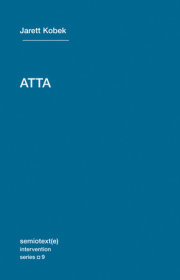
A disorienting portrayal of 9/11 mastermind Mohamed Atta.
On September 11, 2001, Mohamed Atta piloted American Airlines Flight 11 into the North Tower of the World Trade Center. Two years before the explosion, Atta defended a master’s thesis that critiqued the introduction of Western-style skyscrapers in the Middle East.
Using this as a departure point, Jarett Kobek’s novel ATTA offers a psychedelic biography that circles around one question: What if the ideological roots of 9/11 were as much a matter of architectural criticism as religious terrorism? Following the development of a socially awkward boy into one of history’s great villains, Kobek dissects our assumptions about the root causes of stochastic violence. Are all of us, perpetrators and victims alike, seeking an explanation that is not there?
Presented in a new edition with an introduction by Alan Moore, ATTAreads less like a novel of its moment and more like an autopsy performed on our century of fear.
Jarett Kobek is a Turkish-American internationally best-selling writer who lives in California. His books have been translated into eleven languages and published in thirteen countries. Called “the F. Scott Fitzgerald of [his] generation” by E. Jean Carroll, he is one of two twenty-first century writers to receive Page A1 coverage in both The New York Times and The Washington Post while neither committing a crime nor being subject to a fatwa.
Alan Moore is an acclaimed writer who has garnered countless awards for his works. As one of the most important innovators in storytelling since the early 1980s, Moore has influenced an entire generation of creators, and his work continues to inspire an ever-growing audience.
A disorienting portrayal of 9/11 mastermind Mohamed Atta.
On September 11, 2001, Mohamed Atta piloted American Airlines Flight 11 into the North Tower of the World Trade Center. Two years before the explosion, Atta defended a master’s thesis that critiqued the introduction of Western-style skyscrapers in the Middle East.
Using this as a departure point, Jarett Kobek’s novel ATTA offers a psychedelic biography that circles around one question: What if the ideological roots of 9/11 were as much a matter of architectural criticism as religious terrorism? Following the development of a socially awkward boy into one of history’s great villains, Kobek dissects our assumptions about the root causes of stochastic violence. Are all of us, perpetrators and victims alike, seeking an explanation that is not there?
Presented in a new edition with an introduction by Alan Moore, ATTAreads less like a novel of its moment and more like an autopsy performed on our century of fear.
Author
Jarett Kobek is a Turkish-American internationally best-selling writer who lives in California. His books have been translated into eleven languages and published in thirteen countries. Called “the F. Scott Fitzgerald of [his] generation” by E. Jean Carroll, he is one of two twenty-first century writers to receive Page A1 coverage in both The New York Times and The Washington Post while neither committing a crime nor being subject to a fatwa.
Alan Moore is an acclaimed writer who has garnered countless awards for his works. As one of the most important innovators in storytelling since the early 1980s, Moore has influenced an entire generation of creators, and his work continues to inspire an ever-growing audience.