A long out-of-print lost classic, from a pivotal figure of New York’s art and No Wave film scenes.
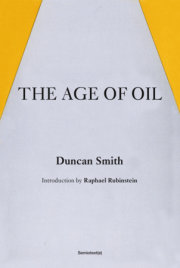
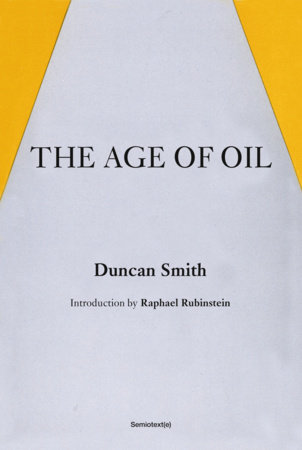
Originally published in 1987 and long impossible to find, The Age of Oil collects fifteen essays by Duncan Smith (1954–1991), a pivotal figure of the downtown New York art and No Wave film scenes. Drawing on Freud, Lacan, and Derrida, Smith developed a unique style that pushed the strategies of poststructuralism into the realm of experimental writing. Smith’s obsessive pursuit of “cryptograms” in essays such as the linguistic tour de force “Calling All Cars” paralleled and almost certainly influenced his friend Jean-Michel Basquiat’s use of text in his paintings. A candid chronicler of New York City gay life and a sharp-eyed observer of American pop culture, Smith also theorized, most notably in his text “On the Current Symbolic Status of Oil,” that the ubiquity of petroleum products has inescapably structured our language and society.
Simultaneously with this new edition of The Age of Oil, Semiotext(e) is bringing out Days in the Clouds, the never-before-published book Smith completed before his death from AIDS.
Duncan Smith (1953–1991) is known for his innovative writings that reflect his extensive research in psychoanalysis, semiotics, Marxist ideology, and literature. In 1976, Smith left undergraduate studies at the University of Washington to move to New York City, where he became a beloved friend for many in downtown avant-garde circles. In 1987, Slate Press published Smith’s first collection of cultural criticism, The Age of Oil. That same year, in the midst of earning his PhD at Cornell University, Smith learned of his HIV-positive status and embarked on a series of essays centered on his experiences with AIDS. These would become Days in the Clouds, completed in Portland, OR, some months before his death in February 1991.
Raphael Rubinstein is a New York–based writer whose books include The Turn to Provisionality in Contemporary Art, The Miraculous, and A Geniza. Since 2008 he has been Professor of Critical Studies at the University of Houston School of Art. He is a recipient of the award of Chevalier in the Order of Arts and Letters from the French government.
A long out-of-print lost classic, from a pivotal figure of New York’s art and No Wave film scenes.
Originally published in 1987 and long impossible to find, The Age of Oil collects fifteen essays by Duncan Smith (1954–1991), a pivotal figure of the downtown New York art and No Wave film scenes. Drawing on Freud, Lacan, and Derrida, Smith developed a unique style that pushed the strategies of poststructuralism into the realm of experimental writing. Smith’s obsessive pursuit of “cryptograms” in essays such as the linguistic tour de force “Calling All Cars” paralleled and almost certainly influenced his friend Jean-Michel Basquiat’s use of text in his paintings. A candid chronicler of New York City gay life and a sharp-eyed observer of American pop culture, Smith also theorized, most notably in his text “On the Current Symbolic Status of Oil,” that the ubiquity of petroleum products has inescapably structured our language and society.
Simultaneously with this new edition of The Age of Oil, Semiotext(e) is bringing out Days in the Clouds, the never-before-published book Smith completed before his death from AIDS.
Author
Duncan Smith (1953–1991) is known for his innovative writings that reflect his extensive research in psychoanalysis, semiotics, Marxist ideology, and literature. In 1976, Smith left undergraduate studies at the University of Washington to move to New York City, where he became a beloved friend for many in downtown avant-garde circles. In 1987, Slate Press published Smith’s first collection of cultural criticism, The Age of Oil. That same year, in the midst of earning his PhD at Cornell University, Smith learned of his HIV-positive status and embarked on a series of essays centered on his experiences with AIDS. These would become Days in the Clouds, completed in Portland, OR, some months before his death in February 1991.
Raphael Rubinstein is a New York–based writer whose books include The Turn to Provisionality in Contemporary Art, The Miraculous, and A Geniza. Since 2008 he has been Professor of Critical Studies at the University of Houston School of Art. He is a recipient of the award of Chevalier in the Order of Arts and Letters from the French government.