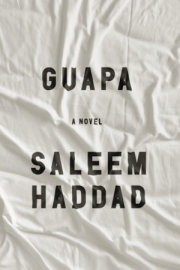
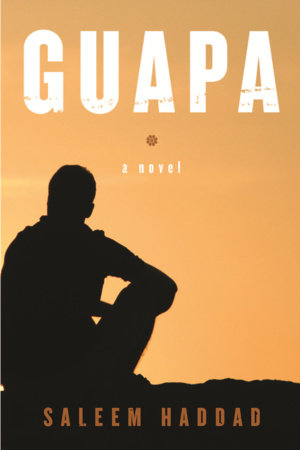
Guapa

A Novel

A gay man in the Middle East wrestles with identity, love, and the upheaval of his country in this “vibrant, wrenching debut novel” (New Yorker).

. . . challenges the notion of what a ‘conventional’ love story should look like . . . As one of few queer novels with an Arab protagonist, it should not be overlooked.” —Lambda Literary

Set over the course of 24 four hours, Guapa follows Rasa, a gay man living in an unnamed Arab country, as he tries to carve out a life for himself in the midst of political and social upheaval. Rasa spends his days translating for Western journalists and pining for the nights when he can sneak his lover, Taymour, into his room.
 
One night Rasa’s grandmother, the woman who raised him, catches them in bed together. The following day his best friend Maj—a fiery activist and drag queen star of the underground bar, Guapa—has been arrested by the police. Ashamed to go home and face his grandmother, and reeling from the potential loss of the 3 most important people in his life, Rasa roams the city’s slums and prisons, the lavish weddings of the country’s elite, and the bars where outcasts and intellectuals drink to a long-lost revolution. Each new encounter leads him closer to confronting his own identity, as he revisits his childhood and probes the secrets that haunt his family. As Rasa confronts the simultaneous collapse of political hope and his closest personal relationships, he is forced to discover the roots of his alienation and try to re-emerge into a society that may never accept him.
I. Castrating Donkeys

The morning begins with shame. This is not new, but as memories of last night begin to sink in, the feeling takes on a terrifying resonance. I grimace, squirm, dig my fingers in my palms until the pain in my hands reflects how I feel. But there is no controlling what Teta saw, and her absence from my bedside means that she doesn’t intend, as she had promised, to file away last night’s mess in a deep corner of her mind.
On any other morning my grandmother’s voice, hoarse from a million smoked cigarettes, would pierce my dreams: Yalla Rasa, yalla habibi! She would hover over me, her cigarette by my lips. I would inhale, feel the smoke travel to my lungs, jolting my insides awake.
On any other morning Doris would be beside her, pulling up the shutters in my room in a quick and violent snap. Removing a bandage to ease the pain of sunlight. One final yalla, then Teta would pull the sheets away and toss them aside. She took particular joy in doing this on cold winter mornings, relishing the way my skin broke out in goose bumps as I leaped across the room to snatch the blanket.
This is not how I wake up this morning. Getting up today involves battling demons more powerful than sloth. There is everything that has ever happened, and then there is this morning. I’ve crossed the red line with Teta.
My mobile rings. I roll over in bed and pick it up.
“Where the fuck are you?” Basma barks. “You should have been here twenty minutes ago. I’ve got to meet a South African journalist who wants to interview some female refugees and the office is empty.”
I clear my throat and rub my eyes. “Basma, I’m sorry — ”
“Don’t be sorry, be at the office. And I suppose I’m your ride to the wedding tonight, yes?”
The wedding. The wedding, the wedding, the wedding.
“Yes?” Basma asks again.
“I’m not feeling well,” I croak. “I don’t think I should go.”
“I’ll pick you up at eight.”
I put the phone down and reach for my cigarettes. The cigarette will stimulate my brain. Thoughts will begin moving. I light one and inhale. My throat is raw from last night’s pleading, and the smoke burns as it makes its way down.
I thought you were doing drugs. It didn’t even cross my mind . . .
I had woken up a few times already, but the air still felt heavy. I wasn’t ready to leave my dreams, so I plunged my face in the pillow and willed myself to sleep. After three or four or a thousand times I could not do it anymore. My eyes were shut but my brain was wide-awake. So here we are. I have no choice now but to face whatever the day may throw at me.
I sit up. Doris has placed a cup of Nescafé on the floor beside the bed. I take a large gulp. The coffee is weak and cold but lubricates the smoke’s passage, leaving only the faint buzz of the nicotine and the silkiness of the tar on my tongue.
Open the door. Open the door right now.
What compelled her to look through that keyhole? Taymour. He always reminded me of a young Robert De Niro. Those honey-colored eyes, those thoughtful lips. I need to see him again, run my fingers across the soft hair on his forearms. I was so foolish to ignore the signs, to believe in a future that would never exist. Now it’s just me here, alone in bed. But I can’t part with him this way, on these terms. Last night can’t be the last we have together. I need to hold him, whisper in his ear that we can get past this. Can I not turn back the clock, turn that damn key in the lock to block the view?
Against my better judgment I send him a text message: We need to talk about last night.
Taymour. The banging. Teta’s screams. I can hear it all again. My stomach turns at the thought of his name. In the three years we’ve been together, this is the first time I can-not bear to think of him. I need to speak to him, to hear his voice, but his name brings back all the shame. I’m an animal, dirty and disgusting, madly hunting after my desires with no care for what is right and wrong. Repulsed, I jump out of bed and survey the bedroom. I had become careless, and now I’ve paid the price. I need to get rid of everything to do with him. I lift the mattress and grab my journal and toss it on the bed. I flick through the pages, tearing out the ones that mention his name. But his name runs through the sentences of every page, like a virus through the bloodstream. I rip out page after page until I am left with the last entry I wrote only a week ago. My eyes fall on the words written on the paper.

He’s making a mistake. I just know it. He tells me I’m unreasonable, that I am expecting miracles. Maybe it’s me who is unrealistic, but I know he can change. Is it okay to force change on someone if it is for the better?

I tear out the final page, crumple it in my hand, and continue the cleansing. Scattered around the room are old mix CDs he made for me, his handwriting scrawled on the silver discs in red and black marker pens: Taymour summer mix; CHILL OUT; GOOD music 4 Rasa (4 a change). I throw them all on top of the journal. Under my bed I find a postcard he had sent from Istanbul last year. The picture on the front is of a clear blue sky over the Bosphorus. He had sent it in a brown envelope so nobody would read the words he had written on the back:

Final day. Bought some shoes from Asian side. Laces snapped as I tried shoes on and shopkeeper said, smiling, that I must be an angry man. Wanted to tell him there is a lot to be angry about, but then thought of you. How can I be angry when I have you? Outside it was raining hard.
Looked out shop window and a seagull swooped in, snapped at a cat sitting by the door. Flew off with a tuft of fur. Writing this on ferry. Rain sliding down window, boats navigating choppy waters, an old man sits next to me reading a newspaper.

I can’t get rid of this, of us. Can I? Maybe it’s best to just hide all this stuff for now, to not throw everything away just yet. I toss the postcard on the growing pile on my bed. Scooping the pile of Taymour’s stuff in my hands, I reach for the top shelf in the closet and dump his things in an old shoe box hidden behind a stack of books. With her bad knee, Teta can’t climb on a chair to get to the top shelf, and even if she could, she won’t be able to move the books with one hand while supporting herself with the other.
I put on an old T-shirt, some trousers, and some socks from the pile of clothes on the floor. When I’m ready, I open the door and step onto the ancient carpet in the hallway. Teta’s door is shut, and the house is still. I start walking down the hall, and when I’m certain no one is around, I turn back to the room, bend over, and peer through the keyhole. There’s a clear view of my bed in the middle of the room, like a crime scene. Above it, shards of sunlight pierce the cracks between the wooden slats of the shutters and shine against the dust particles dancing in the air. The white walls are ridden with mosquito carcasses.
Teta could see everything from here. Last night she told me that after looking in, she tried to go back to sleep but tossed and turned for a while before getting up again and pounding on my door. But what exactly had she seen? Was it when we kissed, or while we were entangled in each other, or maybe afterward? Perhaps she had peered in as we lay naked in bed, forehead to forehead, whispering? No. I can’t think of this anymore.
A 2017 Stonewall Honor Book

“[A] vibrant, wrenching début novel...sensuous and caustic, full of smoke and blood.” —The New Yorker

“An explosive debut. This day in a life of a gay man under a post-Arab spring dictatorship is as compelling as it is insightful…This immensely readable novel is fluent, passionate, and emotionally honest. Equally astute in its analysis of Arab and American mores, the book’s characters are nuanced and dynamic; it gives fresh life to the maxim ‘the personal is political.’” —The Guardian

Guapa challenges the notion of what a ‘conventional’ love story should look like, and as one of few queer novels with an Arab protagonist, it must not be overlooked. Haddad has woven together a fascinating story with elements of a life richly lived, and if Guapa finds its way into the canon of queer literature, we will all be stronger for it.” —Lambda Literary

“Those looking for a nuanced portrait of gay life in the modern Middle East will find plenty to admire in this...promising debut.” —Kirkus Reviews

“Haddad presents a striking look at gay life, the psychological cost of conformity, and what it means to be true to yourself from a Middle Eastern perspective.” —Booklist

“Warmly recommended to all readers who are interested in issues of diversity and the Middle East.” —Library Journal

“A remarkable debut.” —The Huffington Post

“Haddad’s unwavering dedication to detail, narrative arc, and consequence make Guapa necessarily poignant, uncomfortable, and meaningful. Like all good art, it moves beyond itself to shine a light on the world it bears.” —PopMatters

“The deeply personal and effortlessly readable narrative explores the negotiations that a queer, Muslim, American-educated man in love is forced to make in spaces where his identity is constantly called into question.” —The Huffington Post

“Set in an unnamed Middle Eastern country across the course of one day, Guapa follows the story of Rasa, a young gay man who has been caught in bed with a boyfriend by his overbearing grandmother…Rasa exists against a backdrop of civil unrest, heavy-handed police and homophobia. Faced with the prospect of never seeing his lover again, the novel gives us an insight into how it feels to be in love in a society where that love remains strongly forbidden. ‘I dreamt of kissing his cheek, because it struck me that to kiss your lover’s cheek in public was quite ordinary,’ Rasa writes, sharing his painful desire and longing in a story that is equal parts romance and thriller. Through flashbacks, we learn of Rasa’s younger life; his parents deaths, his awakening sexuality, and his time studying in the U.S., where he is distrusted in the wake of terror attacks in the west. Saleem Haddad is London based, but in this novel he draws on his Middle Eastern heritage to paint a truthful image of the manifestations and perceptions of homosexuality within Arab culture. His background as an aid worker, and in assisting refugees from the region, only further enhances his understanding of the wider problems he discusses; notably the fallout from the Arab Spring, and the rise of Islamic extremism. Guapa sets Haddad up as a literary voice capable of narrating untold stories of the modern gay experience, from one of the most complicated parts of the world.” —Attitude Magazine

“Haddad comes from a multi-cultural background: ‘Palestinian, Lebanese, Iraqi, German, Muslim and Christian,’ though he was born in Kuwait City, where same-sex relationships between men is punishable with up to seven years in jail. In his debut novel, Rasa, a young gay translator living in an unnamed Middle Eastern country, is caught with his lover (by his grandmother, no less), and then his best friend is arrested, and we follow the fallout—as well as delve into Rasa’s memories—throughout the day.” —Literary Hub

Guapa
shines beautifully in its moments of sweetness and satire.” —Full Stop

“A provocative and emotional coming of age story, Guapa is an excellent debut novel.” —Bustle

“Haddad’s portrayal of a modern Middle East where being gay is still far from accepted in many places is riveting.” —Read it Forward

“By turns politically nuanced and romantically tender.” —Next Magazine

“An engrossing and timely debut novel by a provocative new voice. Haddad’s characters are unforgettable.” —Randa Jarrar, author of A Map of Home
© Sami Haddad
Saleem Haddad is a writer, filmmaker, and activist born in Kuwait City to a Lebanese-Palestinian father and an Iraqi-German mother, and educated in Jordan, Canada, and the United Kingdom. His critically acclaimed first novel, Guapa, received the 2017 Polari Prize and a Stonewall Honor. His 2019 directorial debut, Marco, was nominated for the 2019 Iris Prize for Best British Short Film. Haddad has worked as an aid worker with Doctors Without Borders in Yemen, Syria, and Iraq, and currently lives in Lisbon. View titles by Saleem Haddad

About

A gay man in the Middle East wrestles with identity, love, and the upheaval of his country in this “vibrant, wrenching debut novel” (New Yorker).

. . . challenges the notion of what a ‘conventional’ love story should look like . . . As one of few queer novels with an Arab protagonist, it should not be overlooked.” —Lambda Literary

Set over the course of 24 four hours, Guapa follows Rasa, a gay man living in an unnamed Arab country, as he tries to carve out a life for himself in the midst of political and social upheaval. Rasa spends his days translating for Western journalists and pining for the nights when he can sneak his lover, Taymour, into his room.
 
One night Rasa’s grandmother, the woman who raised him, catches them in bed together. The following day his best friend Maj—a fiery activist and drag queen star of the underground bar, Guapa—has been arrested by the police. Ashamed to go home and face his grandmother, and reeling from the potential loss of the 3 most important people in his life, Rasa roams the city’s slums and prisons, the lavish weddings of the country’s elite, and the bars where outcasts and intellectuals drink to a long-lost revolution. Each new encounter leads him closer to confronting his own identity, as he revisits his childhood and probes the secrets that haunt his family. As Rasa confronts the simultaneous collapse of political hope and his closest personal relationships, he is forced to discover the roots of his alienation and try to re-emerge into a society that may never accept him.

Excerpt

I. Castrating Donkeys

The morning begins with shame. This is not new, but as memories of last night begin to sink in, the feeling takes on a terrifying resonance. I grimace, squirm, dig my fingers in my palms until the pain in my hands reflects how I feel. But there is no controlling what Teta saw, and her absence from my bedside means that she doesn’t intend, as she had promised, to file away last night’s mess in a deep corner of her mind.
On any other morning my grandmother’s voice, hoarse from a million smoked cigarettes, would pierce my dreams: Yalla Rasa, yalla habibi! She would hover over me, her cigarette by my lips. I would inhale, feel the smoke travel to my lungs, jolting my insides awake.
On any other morning Doris would be beside her, pulling up the shutters in my room in a quick and violent snap. Removing a bandage to ease the pain of sunlight. One final yalla, then Teta would pull the sheets away and toss them aside. She took particular joy in doing this on cold winter mornings, relishing the way my skin broke out in goose bumps as I leaped across the room to snatch the blanket.
This is not how I wake up this morning. Getting up today involves battling demons more powerful than sloth. There is everything that has ever happened, and then there is this morning. I’ve crossed the red line with Teta.
My mobile rings. I roll over in bed and pick it up.
“Where the fuck are you?” Basma barks. “You should have been here twenty minutes ago. I’ve got to meet a South African journalist who wants to interview some female refugees and the office is empty.”
I clear my throat and rub my eyes. “Basma, I’m sorry — ”
“Don’t be sorry, be at the office. And I suppose I’m your ride to the wedding tonight, yes?”
The wedding. The wedding, the wedding, the wedding.
“Yes?” Basma asks again.
“I’m not feeling well,” I croak. “I don’t think I should go.”
“I’ll pick you up at eight.”
I put the phone down and reach for my cigarettes. The cigarette will stimulate my brain. Thoughts will begin moving. I light one and inhale. My throat is raw from last night’s pleading, and the smoke burns as it makes its way down.
I thought you were doing drugs. It didn’t even cross my mind . . .
I had woken up a few times already, but the air still felt heavy. I wasn’t ready to leave my dreams, so I plunged my face in the pillow and willed myself to sleep. After three or four or a thousand times I could not do it anymore. My eyes were shut but my brain was wide-awake. So here we are. I have no choice now but to face whatever the day may throw at me.
I sit up. Doris has placed a cup of Nescafé on the floor beside the bed. I take a large gulp. The coffee is weak and cold but lubricates the smoke’s passage, leaving only the faint buzz of the nicotine and the silkiness of the tar on my tongue.
Open the door. Open the door right now.
What compelled her to look through that keyhole? Taymour. He always reminded me of a young Robert De Niro. Those honey-colored eyes, those thoughtful lips. I need to see him again, run my fingers across the soft hair on his forearms. I was so foolish to ignore the signs, to believe in a future that would never exist. Now it’s just me here, alone in bed. But I can’t part with him this way, on these terms. Last night can’t be the last we have together. I need to hold him, whisper in his ear that we can get past this. Can I not turn back the clock, turn that damn key in the lock to block the view?
Against my better judgment I send him a text message: We need to talk about last night.
Taymour. The banging. Teta’s screams. I can hear it all again. My stomach turns at the thought of his name. In the three years we’ve been together, this is the first time I can-not bear to think of him. I need to speak to him, to hear his voice, but his name brings back all the shame. I’m an animal, dirty and disgusting, madly hunting after my desires with no care for what is right and wrong. Repulsed, I jump out of bed and survey the bedroom. I had become careless, and now I’ve paid the price. I need to get rid of everything to do with him. I lift the mattress and grab my journal and toss it on the bed. I flick through the pages, tearing out the ones that mention his name. But his name runs through the sentences of every page, like a virus through the bloodstream. I rip out page after page until I am left with the last entry I wrote only a week ago. My eyes fall on the words written on the paper.

He’s making a mistake. I just know it. He tells me I’m unreasonable, that I am expecting miracles. Maybe it’s me who is unrealistic, but I know he can change. Is it okay to force change on someone if it is for the better?

I tear out the final page, crumple it in my hand, and continue the cleansing. Scattered around the room are old mix CDs he made for me, his handwriting scrawled on the silver discs in red and black marker pens: Taymour summer mix; CHILL OUT; GOOD music 4 Rasa (4 a change). I throw them all on top of the journal. Under my bed I find a postcard he had sent from Istanbul last year. The picture on the front is of a clear blue sky over the Bosphorus. He had sent it in a brown envelope so nobody would read the words he had written on the back:

Final day. Bought some shoes from Asian side. Laces snapped as I tried shoes on and shopkeeper said, smiling, that I must be an angry man. Wanted to tell him there is a lot to be angry about, but then thought of you. How can I be angry when I have you? Outside it was raining hard.
Looked out shop window and a seagull swooped in, snapped at a cat sitting by the door. Flew off with a tuft of fur. Writing this on ferry. Rain sliding down window, boats navigating choppy waters, an old man sits next to me reading a newspaper.

I can’t get rid of this, of us. Can I? Maybe it’s best to just hide all this stuff for now, to not throw everything away just yet. I toss the postcard on the growing pile on my bed. Scooping the pile of Taymour’s stuff in my hands, I reach for the top shelf in the closet and dump his things in an old shoe box hidden behind a stack of books. With her bad knee, Teta can’t climb on a chair to get to the top shelf, and even if she could, she won’t be able to move the books with one hand while supporting herself with the other.
I put on an old T-shirt, some trousers, and some socks from the pile of clothes on the floor. When I’m ready, I open the door and step onto the ancient carpet in the hallway. Teta’s door is shut, and the house is still. I start walking down the hall, and when I’m certain no one is around, I turn back to the room, bend over, and peer through the keyhole. There’s a clear view of my bed in the middle of the room, like a crime scene. Above it, shards of sunlight pierce the cracks between the wooden slats of the shutters and shine against the dust particles dancing in the air. The white walls are ridden with mosquito carcasses.
Teta could see everything from here. Last night she told me that after looking in, she tried to go back to sleep but tossed and turned for a while before getting up again and pounding on my door. But what exactly had she seen? Was it when we kissed, or while we were entangled in each other, or maybe afterward? Perhaps she had peered in as we lay naked in bed, forehead to forehead, whispering? No. I can’t think of this anymore.

Reviews

A 2017 Stonewall Honor Book

“[A] vibrant, wrenching début novel...sensuous and caustic, full of smoke and blood.” —The New Yorker

“An explosive debut. This day in a life of a gay man under a post-Arab spring dictatorship is as compelling as it is insightful…This immensely readable novel is fluent, passionate, and emotionally honest. Equally astute in its analysis of Arab and American mores, the book’s characters are nuanced and dynamic; it gives fresh life to the maxim ‘the personal is political.’” —The Guardian

Guapa challenges the notion of what a ‘conventional’ love story should look like, and as one of few queer novels with an Arab protagonist, it must not be overlooked. Haddad has woven together a fascinating story with elements of a life richly lived, and if Guapa finds its way into the canon of queer literature, we will all be stronger for it.” —Lambda Literary

“Those looking for a nuanced portrait of gay life in the modern Middle East will find plenty to admire in this...promising debut.” —Kirkus Reviews

“Haddad presents a striking look at gay life, the psychological cost of conformity, and what it means to be true to yourself from a Middle Eastern perspective.” —Booklist

“Warmly recommended to all readers who are interested in issues of diversity and the Middle East.” —Library Journal

“A remarkable debut.” —The Huffington Post

“Haddad’s unwavering dedication to detail, narrative arc, and consequence make Guapa necessarily poignant, uncomfortable, and meaningful. Like all good art, it moves beyond itself to shine a light on the world it bears.” —PopMatters

“The deeply personal and effortlessly readable narrative explores the negotiations that a queer, Muslim, American-educated man in love is forced to make in spaces where his identity is constantly called into question.” —The Huffington Post

“Set in an unnamed Middle Eastern country across the course of one day, Guapa follows the story of Rasa, a young gay man who has been caught in bed with a boyfriend by his overbearing grandmother…Rasa exists against a backdrop of civil unrest, heavy-handed police and homophobia. Faced with the prospect of never seeing his lover again, the novel gives us an insight into how it feels to be in love in a society where that love remains strongly forbidden. ‘I dreamt of kissing his cheek, because it struck me that to kiss your lover’s cheek in public was quite ordinary,’ Rasa writes, sharing his painful desire and longing in a story that is equal parts romance and thriller. Through flashbacks, we learn of Rasa’s younger life; his parents deaths, his awakening sexuality, and his time studying in the U.S., where he is distrusted in the wake of terror attacks in the west. Saleem Haddad is London based, but in this novel he draws on his Middle Eastern heritage to paint a truthful image of the manifestations and perceptions of homosexuality within Arab culture. His background as an aid worker, and in assisting refugees from the region, only further enhances his understanding of the wider problems he discusses; notably the fallout from the Arab Spring, and the rise of Islamic extremism. Guapa sets Haddad up as a literary voice capable of narrating untold stories of the modern gay experience, from one of the most complicated parts of the world.” —Attitude Magazine

“Haddad comes from a multi-cultural background: ‘Palestinian, Lebanese, Iraqi, German, Muslim and Christian,’ though he was born in Kuwait City, where same-sex relationships between men is punishable with up to seven years in jail. In his debut novel, Rasa, a young gay translator living in an unnamed Middle Eastern country, is caught with his lover (by his grandmother, no less), and then his best friend is arrested, and we follow the fallout—as well as delve into Rasa’s memories—throughout the day.” —Literary Hub

Guapa
shines beautifully in its moments of sweetness and satire.” —Full Stop

“A provocative and emotional coming of age story, Guapa is an excellent debut novel.” —Bustle

“Haddad’s portrayal of a modern Middle East where being gay is still far from accepted in many places is riveting.” —Read it Forward

“By turns politically nuanced and romantically tender.” —Next Magazine

“An engrossing and timely debut novel by a provocative new voice. Haddad’s characters are unforgettable.” —Randa Jarrar, author of A Map of Home

Author

© Sami Haddad
Saleem Haddad is a writer, filmmaker, and activist born in Kuwait City to a Lebanese-Palestinian father and an Iraqi-German mother, and educated in Jordan, Canada, and the United Kingdom. His critically acclaimed first novel, Guapa, received the 2017 Polari Prize and a Stonewall Honor. His 2019 directorial debut, Marco, was nominated for the 2019 Iris Prize for Best British Short Film. Haddad has worked as an aid worker with Doctors Without Borders in Yemen, Syria, and Iraq, and currently lives in Lisbon. View titles by Saleem Haddad
  • More Websites from
    Penguin Random House
  • Common Reads
  • Library Marketing