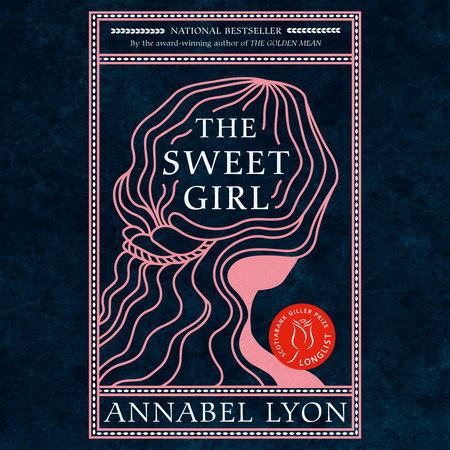
The Sweet Girl

A bold and captivating new novel of ancient Greece, from the celebrated, award-winning author of The Golden Mean.

Pythias is her father's daughter, with eyes his exact shade of unlovely, intelligent grey. A slave to his own curiosity and intellect, Aristotle has never been able to resist wit in another--even in a girl child who should be content with the kitchen, the loom and a life dictated by the womb. And oh his little Pytho is smart, able to best his own students in debate and match wits with a roomful of Athenian philosophers. Is she a freak or a harbinger of what women can really be? Pythias must suffer that argument, but she is also (mostly) secure in her father's regard.

But then Alexander dies a thousand miles from Athens, and sentiment turns against anyone associated with him, most especially his famous Macedonian-born teacher. Aristotle and his family are forced to flee to Chalcis, a garrison town. Ailing, mourning and broken in spirit, Aristotle soon dies. And his orphaned daughter, only 16, finds out that the world is a place of superstition, not logic, and that a girl can be played upon by gods and goddesses, as much as by grown men and women. To safely journey to a place in which she can be everything she truly is, Aristotle's daughter will need every ounce of wit she possesses, but also grace and the capacity to love.
1

The first time I ask to carry a knife to the temple, Daddy tells me I’m not allowed to because we’re Macedonian. Here in Athens, you have to be born an Athenian girl to carry the basket with the knife, to lead the procession to the sacrifice. The Athenians can be awfully snotty, even all these years after our army defeated their army.

“I want to see, though,” I say. I have seven summers. “If you carry the basket, you get to watch from right up front.”

“I know, pet.”

The next morning he takes me to the market. Crowds part for him respectfully; Macedonian or not, he’s famous, my daddy. “Which one?” he asks.

I take my time choosing. It’s late spring, baby season, and there are calves and piglets and trays of pullets too. Around us, men speak of the army and when it will return; surely
soon, now that the Persians are defeated and their king is on the run. I finally choose a white lamb crying for its mother and we walk it home. I hold the tether. In our courtyard, we
lay out the basins and cloths and Daddy’s kit.

“You’ll feel sad, later,” Daddy says, hesitating. “It’s all right to feel sad.”

“Why will I?”

He sits back on his heels, my daddy, to consider the question. He scratches his freckled forehead with a finger and smiles at me with his sad grey eyes. “Because it’s cute,” he says finally.

He has the lamb’s neck pinned with a casual hand. Its eye-ball is straining and rolling, and it’s wheezing. Its tongue is a leathery grey. I pet its head to calm it. Daddy shifts his grip to the jaw. I put my little hand over his big hand and we slit its throat quick and deep. When it’s bled out into the basin, Daddy asks me where I’d like to start.

“The legs are in the way,” I say, so we start there.

“What am I going to do with you?” Daddy says in the middle of the dissection, looking at my hands all bloody, at the blood streaking my face. We’ve disjointed a leg and I’m making it flex by pulling the tendon. He’s holding an eyeball between two fingers, gingerly.

We grin at each other.

“Little miss clever fingers,” Herpyllis says from the arch-way nearest the kitchen. She shifts sleeping Nico to her hip—Nico, her blood-son, my little half-brother—so she can pull a couch into the sun and watch. I remember when he was born, though Herpyllis says I was too young. I remember his wrinkly face and his grip on my finger. I remember kissing and kissing him, and crying when he cried. I would lean against Herpyllis’s knee and open the front of my dress to nurse my doll, Pretty-Head, off my speck of a nipple, while Herpyllis nursed Nico, one hand playing in my hair. I’ve been her daughter since I was four.

“I’ll remind you of this the next time you tell me you’re too clumsy to weave,” Herpyllis says.
I slop some meat into the bowl she’s given us, spattering droplets of blood onto my dress.

“Filthy child,” she says. “Who’s going to want to marry you?”

“One of my students,” Daddy says promptly. “When the time comes. There won’t be a problem.”

From all over the world, students come to Daddy’s school here in Athens, the Lyceum. Kings send their sons; our own Alexander belonged to Daddy, once. Some of them are wealthy enough to please even Herpyllis. They will see my worth, Daddy says.

“What is her worth, exactly?” Herpyllis is irritable now. Carelessly, I’ve spattered blood on the lamb’s wool, which she wants for a tunic. She calls for water to soak it. Nico sighs dramatically
in his sleep, flinging out a pudgy arm.

Daddy sits back on his heels, considering the question. I make a face at Herpyllis, who makes one back. She tucks Nico’s arm in and he sighs again, more quietly.

“It’s interesting.” Daddy looks at Nico. “The face of a child reflects the face of both parents. Perhaps the mind works similarly? If both parents are clever, the offspring—”

Herpyllis harrumphs.

“Then, too, a philosopher might encourage her interests—”

Herpyllis yawns.

“Or not suppress them, at any rate.”

“I’m not getting married,” I say. Usually I’m content to listen to their conversations, but this one is irresistible.

“Of course not, chickpea,” Herpyllis says immediately. “You’re still my baby.”

“Not for a long, long time,” Daddy adds. They think I’m scared, and want to comfort me. “Years and years. Girls marry much too young, these days. We should emulate the Spartans. Seventeen, eighteen summers. The body must finish developing.”

“I’m not getting married,” I say again, happily. “May I keep the skull?”

“We’ll boil it clean,” Daddy says. “What will you do instead, then?”

“Be a teacher, like you.”

Gravely, Daddy and Herpyllis agree this is an excellent ambition.

Tycho, our big slave, brings the bowl of water Herpyllis called for. I smile at him and he nods. He’s my favourite. Last summer he taught me to suck mussels right from their shells, but Herpyllis reproved him. He understood: little girls reach an age when familiarity with slaves must end. She hadn’t been unkind; she’d been a servant herself until Daddy chose her, after my mother died. She was harshest with me, about my manners and appearance and behaviour, and that was because she loved me so much.

I remember the feel of the mussels, plump and wet, and the salt tang. I sneak a lick of lamb’s blood. It’s still warm.
  • LONGLIST | 2012
    Scotiabank Giller Prize
PRAISE FOR THE SWEET GIRL AND THE GOLDEN MEAN:

“I fell in love with Annabel Lyon’s book The Golden Mean years ago and have been dreaming of telling this story ever since.” Jacob Tierney, creator of Heated Rivalry

“The Sweet Girl is a remarkable novel, not just a pleasure to read but also a book that I expect to reread several times.”
—Jeet Heer, The National Post

“The intimate and the infinite are tangled together in this incandescent book, lit by Aristotle’s bright spark of a daughter. Lucid even in nightmare, The Sweet Girl slips sideways around the philosopher to examine the lives of girls and women when we were not yet human.”
—Marina Endicott, author of The Little Shadows and Good to a Fault

“Annabel Lyon is a wonderful writer, adept at breathing life into the ancient past. She reanimates near-mythical characters until we feel we know them intimately—their dreams and desires, their brilliance and their failings—which is an achievement only the finest historical novelists can aspire to. I loved The Golden Mean, and to return to the world of Aristotle and Alexander in The Sweet Girl is a rare pleasure.”
—Jane Johnson, author of The Tenth Gift, The Salt Road and The Sultan’s Wife
© Phillip Chin
ANNABEL LYON published her first book, Oxygen, a collection of stories, in 2000. The Best Thing for You, a collection of three novellas, followed in 2004. Her first novel, The Golden Mean, was published in 2009 and won the Rogers Writers Trust Fiction Prize. Her second novel, The Sweet Girl, a companion to The Golden Mean, was published in fall 2012. Imagining Ancient Women, the text of her Henry Kreisel Memorial Lecture, was published the same year. She won the Engel-Findley award for a body of work in 2015. Her latest novel, Consent, was published in fall 2020. A professor at the University of British Columbia in Vancouver, she is also currently the Director of the School of Creative Writing. View titles by Annabel Lyon

About

A bold and captivating new novel of ancient Greece, from the celebrated, award-winning author of The Golden Mean.

Pythias is her father's daughter, with eyes his exact shade of unlovely, intelligent grey. A slave to his own curiosity and intellect, Aristotle has never been able to resist wit in another--even in a girl child who should be content with the kitchen, the loom and a life dictated by the womb. And oh his little Pytho is smart, able to best his own students in debate and match wits with a roomful of Athenian philosophers. Is she a freak or a harbinger of what women can really be? Pythias must suffer that argument, but she is also (mostly) secure in her father's regard.

But then Alexander dies a thousand miles from Athens, and sentiment turns against anyone associated with him, most especially his famous Macedonian-born teacher. Aristotle and his family are forced to flee to Chalcis, a garrison town. Ailing, mourning and broken in spirit, Aristotle soon dies. And his orphaned daughter, only 16, finds out that the world is a place of superstition, not logic, and that a girl can be played upon by gods and goddesses, as much as by grown men and women. To safely journey to a place in which she can be everything she truly is, Aristotle's daughter will need every ounce of wit she possesses, but also grace and the capacity to love.
Excerpt

1

The first time I ask to carry a knife to the temple, Daddy tells me I’m not allowed to because we’re Macedonian. Here in Athens, you have to be born an Athenian girl to carry the basket with the knife, to lead the procession to the sacrifice. The Athenians can be awfully snotty, even all these years after our army defeated their army.

“I want to see, though,” I say. I have seven summers. “If you carry the basket, you get to watch from right up front.”

“I know, pet.”

The next morning he takes me to the market. Crowds part for him respectfully; Macedonian or not, he’s famous, my daddy. “Which one?” he asks.

I take my time choosing. It’s late spring, baby season, and there are calves and piglets and trays of pullets too. Around us, men speak of the army and when it will return; surely
soon, now that the Persians are defeated and their king is on the run. I finally choose a white lamb crying for its mother and we walk it home. I hold the tether. In our courtyard, we
lay out the basins and cloths and Daddy’s kit.

“You’ll feel sad, later,” Daddy says, hesitating. “It’s all right to feel sad.”

“Why will I?”

He sits back on his heels, my daddy, to consider the question. He scratches his freckled forehead with a finger and smiles at me with his sad grey eyes. “Because it’s cute,” he says finally.

He has the lamb’s neck pinned with a casual hand. Its eye-ball is straining and rolling, and it’s wheezing. Its tongue is a leathery grey. I pet its head to calm it. Daddy shifts his grip to the jaw. I put my little hand over his big hand and we slit its throat quick and deep. When it’s bled out into the basin, Daddy asks me where I’d like to start.

“The legs are in the way,” I say, so we start there.

“What am I going to do with you?” Daddy says in the middle of the dissection, looking at my hands all bloody, at the blood streaking my face. We’ve disjointed a leg and I’m making it flex by pulling the tendon. He’s holding an eyeball between two fingers, gingerly.

We grin at each other.

“Little miss clever fingers,” Herpyllis says from the arch-way nearest the kitchen. She shifts sleeping Nico to her hip—Nico, her blood-son, my little half-brother—so she can pull a couch into the sun and watch. I remember when he was born, though Herpyllis says I was too young. I remember his wrinkly face and his grip on my finger. I remember kissing and kissing him, and crying when he cried. I would lean against Herpyllis’s knee and open the front of my dress to nurse my doll, Pretty-Head, off my speck of a nipple, while Herpyllis nursed Nico, one hand playing in my hair. I’ve been her daughter since I was four.

“I’ll remind you of this the next time you tell me you’re too clumsy to weave,” Herpyllis says.
I slop some meat into the bowl she’s given us, spattering droplets of blood onto my dress.

“Filthy child,” she says. “Who’s going to want to marry you?”

“One of my students,” Daddy says promptly. “When the time comes. There won’t be a problem.”

From all over the world, students come to Daddy’s school here in Athens, the Lyceum. Kings send their sons; our own Alexander belonged to Daddy, once. Some of them are wealthy enough to please even Herpyllis. They will see my worth, Daddy says.

“What is her worth, exactly?” Herpyllis is irritable now. Carelessly, I’ve spattered blood on the lamb’s wool, which she wants for a tunic. She calls for water to soak it. Nico sighs dramatically
in his sleep, flinging out a pudgy arm.

Daddy sits back on his heels, considering the question. I make a face at Herpyllis, who makes one back. She tucks Nico’s arm in and he sighs again, more quietly.

“It’s interesting.” Daddy looks at Nico. “The face of a child reflects the face of both parents. Perhaps the mind works similarly? If both parents are clever, the offspring—”

Herpyllis harrumphs.

“Then, too, a philosopher might encourage her interests—”

Herpyllis yawns.

“Or not suppress them, at any rate.”

“I’m not getting married,” I say. Usually I’m content to listen to their conversations, but this one is irresistible.

“Of course not, chickpea,” Herpyllis says immediately. “You’re still my baby.”

“Not for a long, long time,” Daddy adds. They think I’m scared, and want to comfort me. “Years and years. Girls marry much too young, these days. We should emulate the Spartans. Seventeen, eighteen summers. The body must finish developing.”

“I’m not getting married,” I say again, happily. “May I keep the skull?”

“We’ll boil it clean,” Daddy says. “What will you do instead, then?”

“Be a teacher, like you.”

Gravely, Daddy and Herpyllis agree this is an excellent ambition.

Tycho, our big slave, brings the bowl of water Herpyllis called for. I smile at him and he nods. He’s my favourite. Last summer he taught me to suck mussels right from their shells, but Herpyllis reproved him. He understood: little girls reach an age when familiarity with slaves must end. She hadn’t been unkind; she’d been a servant herself until Daddy chose her, after my mother died. She was harshest with me, about my manners and appearance and behaviour, and that was because she loved me so much.

I remember the feel of the mussels, plump and wet, and the salt tang. I sneak a lick of lamb’s blood. It’s still warm.

Awards

  • LONGLIST | 2012
    Scotiabank Giller Prize

Reviews

PRAISE FOR THE SWEET GIRL AND THE GOLDEN MEAN:

“I fell in love with Annabel Lyon’s book The Golden Mean years ago and have been dreaming of telling this story ever since.” Jacob Tierney, creator of Heated Rivalry

“The Sweet Girl is a remarkable novel, not just a pleasure to read but also a book that I expect to reread several times.”
—Jeet Heer, The National Post

“The intimate and the infinite are tangled together in this incandescent book, lit by Aristotle’s bright spark of a daughter. Lucid even in nightmare, The Sweet Girl slips sideways around the philosopher to examine the lives of girls and women when we were not yet human.”
—Marina Endicott, author of The Little Shadows and Good to a Fault

“Annabel Lyon is a wonderful writer, adept at breathing life into the ancient past. She reanimates near-mythical characters until we feel we know them intimately—their dreams and desires, their brilliance and their failings—which is an achievement only the finest historical novelists can aspire to. I loved The Golden Mean, and to return to the world of Aristotle and Alexander in The Sweet Girl is a rare pleasure.”
—Jane Johnson, author of The Tenth Gift, The Salt Road and The Sultan’s Wife

Author

© Phillip Chin
ANNABEL LYON published her first book, Oxygen, a collection of stories, in 2000. The Best Thing for You, a collection of three novellas, followed in 2004. Her first novel, The Golden Mean, was published in 2009 and won the Rogers Writers Trust Fiction Prize. Her second novel, The Sweet Girl, a companion to The Golden Mean, was published in fall 2012. Imagining Ancient Women, the text of her Henry Kreisel Memorial Lecture, was published the same year. She won the Engel-Findley award for a body of work in 2015. Her latest novel, Consent, was published in fall 2020. A professor at the University of British Columbia in Vancouver, she is also currently the Director of the School of Creative Writing. View titles by Annabel Lyon
  • More Websites from
    Penguin Random House
  • Common Reads
  • Library Marketing