Death Times Seven

A Daniel Pitt Novel

Part of Daniel Pitt

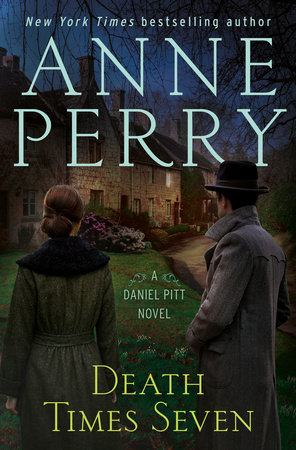
Two violent crimes challenge the investigative skills of young Daniel Pitt and his wife, Miriam, in the final novel of iconic mystery writer Anne Perry's beloved Daniel Pitt series.

“A towering achievement from a towering talent—superb!” —Jeffery Deaver, author of the Colter Shaw series


1913: Junior attorney Daniel Pitt must step in for his friend, fellow attorney Toby Kitteridge, whose parents have been brutally attacked. Toby's mother is dead and his father, a village vicar, is barely alive. With Toby returning to the family home in rural Ipswich, struggling with grief and disbelief, Daniel remains in London to substitute for Toby and defend Peter Ward, on trial for the sexual assault and murder of a young woman.

Daniel is convinced that Ward is innocent, yet the evidence seems to prove otherwise. Eager to assist, his pathologist wife, Miriam fford Croft, offers her forensics expertise and exposes a community of fellow pathologists who may have purposefully omitted information from their autopsy reports. Despite Miriam’s involvement in the case, Daniel finds himself distracted by his desire to help Toby, who is too distraught to investigate the attack on his parents. And when the evidence points to Toby’s father as the killer of Toby’s mother, Daniel faces two of the greatest challenges of his young career: proving the innocence of both Peter Ward and Reverend Kitteridge. One mistake in London and a blameless man will hang. One mistake in Ipswich and Toby’s father will go to prison for life.

Death Times Seven, the seventh and final novel in Anne Perry’s Daniel Pitt series, was completed by Victoria Zackheim, an author and editor as well as Perry’s close friend. Rich in intrigue and courtroom drama, this engrossing novel marks a fitting finale to the career of an author widely praised as the queen of historical crime fiction.
Chapter One

There was a knock at the office door and Daniel looked up to see Impney, the chief clerk, already inside. Daniel was working on a complicated brief and was getting increasingly frustrated by its wording.

Impney closed the door quietly behind him and drew in his breath. His face was so white, he looked as if he might faint.

Daniel swallowed hard. “What is it, Impney?”

“Mr. Kitteridge is in court today, sir.”

“I know,” Daniel said before pausing. “Sit down,” he ordered, “before you fall over.”

“No thank you, sir. I’m perfectly all right.” He held up a hand to stop further comment.

Daniel said nothing and waited. He noticed a sheen of perspiration rising on the clerk’s forehead.

“Sir, we have just had a telephone call from Suffolk, where Mr. Kitteridge’s parents live . . . lived.” He drew a shaky breath. “Sir, they have both been shot. Mrs. Kitteridge is dead. Mr. Kitteridge, or I suppose I should say Reverend Kitteridge, is badly injured, but it is just possible he might live. Possible but . . . it’s unlikely.”

Daniel sat motionless in his chair. He felt sick. It was too horrible to believe. Toby Kitteridge was senior to Daniel, but he had become his closest friend since joining the law firm of fford Croft and Gibson fresh from university. In his mind, he pictured Toby, lanky, awkward, and always looking untidy, even when he made an effort. He was shy, modest . . . and brilliant.

“Sir.” Impney’s voice broke into Daniel’s thoughts. “I’ve checked with the Suffolk police, in case it was some kind of obscene joke or a cruelty.” Impney took another deep breath. “I’m afraid there is no mistake.”

Daniel stared at Impney for a long moment before speaking. “Have you told anyone else? Mr. Hunter?” Gideon Hunter, KC, was their new chief lawyer. KC stood for King’s Counsel, a much-coveted title. But it was Toby who had been named the new Head of Chambers, since the retirement of Marcus fford Croft less than nine months ago. “Or Marcus?”
“No, sir,” Impney replied. “Mr. Hunter is leaving later today for a brief holiday, but I will tell him when he comes in. I’m not certain about Mr. fford Croft. Perhaps your wife should break the news to him? And I’m sorry, sir, but I think you should tell Mr. Kitteridge. He has to know, and best it comes from you.”

Daniel rubbed his hands over his face. “Yes, of course, I’ll go and tell him.” He returned his gaze to Impney, who remained distraught. The clerk had served chambers long enough that he considered its members to be his family. Actually, more like his children, and he was fiercely protective of them all.

“What on earth do they say occurred?” Daniel asked. “I have to be able to tell Toby something. Was it a ridiculous accident? For heaven’s sake, Toby’s father is a village priest! The local vicar! Church of England, I think. Yes, he would be. Or nonconformist of some kind, I suppose.” Again, he noticed the pallor of Impney’s skin, and his very obvious distress, and the hollow feeling inside Daniel was made even worse. “Well?” he said hoarsely.

“There was apparently no one else there, Mr. Pitt. They are saying that Mr. Kitteridge shot his wife and then turned the gun on himself. Maybe something made him stop, or at the last moment he lost his nerve. He is very badly wounded, in his head, but as of a few minutes ago, when I got the news, he was still alive. Possibly, in the circumstances, it would be better if he slipped away. I’m sorry, sir, but that is the sum of what they were able to tell me.”

“Who is they?” Daniel demanded. It was pointless being angry, but so much easier than believing news like this. Toby’s father, a vicar! Why on earth would a vicar kill his wife of nearly forty years and then himself? It could not be true, not just like this—not on an ordinary Wednesday morning.

“Police from the local station, sir,” Impney replied. “In Ipswich. They said they couldn’t reveal more than that. Except that Mr. Kitteridge is in Suffolk General Hospital, in Bury St Edmunds. I’m sorry, sir. Shall I cancel your appointments for the rest of the day? And perhaps tomorrow as well? I’ll find someone to take your place, temporarily. And, of course, Mr. Kitteridge’s.” Impney closed his eyes. “And please give Mr. Kitteridge our deepest sympathy, sir. I hardly know what to say.”

Daniel understood, searching for words befitting of this tragedy. “I don’t think there is anything we can say, Impney. I’m not engaged in a case at the moment,” he added, placing his hand on the brief he had been examining when the clerk entered. “Or nothing pressing, so you’ll have to excuse me, too. I may end up taking Mr. Kitteridge to Suffolk. Of course, he’ll want to go. I think he has a right to be there. He’ll be beside himself to know what to do, or where to turn.” The thought of how Toby would react increased Daniel’s sense of feeling ill.

Impney nodded, and then ran his hands across his jacket, as if making sure he was properly attired. “Yes, sir. Don’t you worry about anything here. I assume you’ll tell your own family where you are, but if you want me to do that, of course I will.”

“No, no thank you,” Daniel replied, getting to his feet slowly, as if unsure of keeping his balance. “I’ll go to court and tell Toby. It’s the Old Bailey, isn’t it?”

“Yes, sir, a big trial, for the murder of Miss Alexandra Stanton. Very nasty business. Murder and attempted rape.”

Daniel well knew what Impney was telling him: that if found guilty, Toby’s client would end up on the gallows, probably within a week or so of the verdict. Time, it was almost always one of the elements. No room to make mistakes. Vindication was no use to the dead.

“I’ll ask for a week’s adjournment,” he said to Impney. “If Toby needs longer, and he may well do, we’ll figure it out. Sometimes, work distracts from grief, but nothing—” He stopped, searching for words powerful enough, and ended by merely shaking his head. “Someone else will have to take over, or at the very least, be there, if it’s needed.”

“Yes, sir. I dare say that Mr. Hunter would do that himself.” He did not add the reasons. The firm of fford Croft and Gibson was small, but highly thought of from the days when Marcus fford Croft had been a star of the court, passionate, articulate, ethical, a fighter who occasionally was beaten, but who never gave up. Those who took over from him must act the same.

There was a moment’s silence, then Daniel thanked Impney again, collected his jacket from the stand in the corner, and went out. He walked briskly across the street and hailed a taxi. It would be far quicker than driving himself, or even trusting the underground railway. Besides, he daren’t think how he was going to deal with this. He had neither time nor attention to give to driving.

“Yes, sir,” the cabby said. It was one of those brand-new black automobiles, neatly designed to give the driver a separate compartment of his own, and safe from the passengers, if necessary. These vehicles were a bit like square boxes on wheels, but they could turn on a sixpence, and the drivers knew the streets of London as if the maps were imprinted on their brain.

“The Old Bailey, please,” Daniel directed, as he climbed in and closed the door sharply.

“You in a hurry, sir?” the driver asked.

Was he? No. He needed time to think how he was going to tell Toby that there had been a murder-suicide in his family, and that he must leave Peter Ward and his defense to someone else. There was no good way to say that. “Not really,” he replied. “I have bad news. Nothing is going to make that better.”

“Yes, sir, I’m sorry, sir.” The driver put the car into gear and they shot forward into the traffic with ease.

Twenty minutes later, Daniel was climbing the steps of the most famous courthouse in London, perhaps all of Great Britain, still with no better idea of what he would say. He went inside. He was startled when one of the ushers recognized him.

“Mr. Pitt, sir. You look disturbed. Are you all right?”

“Yes. Yes, thank you.” Daniel shook his head as if to get rid of something that was clinging to him. “Which court is Mr. Kitteridge in? The trial of Peter Ward.”

The corridor was almost empty, nevertheless the man conducted Daniel as if he were likely to get lost on his own. Thanking the usher, Daniel gently opened the door in front of him.

The room was exactly like any other in this building: magnificent carved benches, high ceilings, the judge on a raised platform in the center of the far wall. The jury was to one side of the room, while the high witness box was to the left of the judge’s chair. The elevated dock, where the defendant remained, was directly across from the judge, on the other side of the chamber.

The gallery was packed. It would have been impossible to cram in another person.

Toby was standing up, his back to the gallery.
“I love mysteries, and this is a fascinating one—Anne Perry and Victoria Zackheim dish out the suspense, the insights, the details of the murders, the feelings and thoughts of the characters, and the setting bit by bit. The more you read, the more you want to know, and you can’t stop. Death Times Seven is irresistible!”—Jane Smiley, author of Lidie

“A towering achievement from a towering talent, Death Times Seven treats us to all of the hallmarks of Anne Perry’s fiction: nonstop plotting, rich psychological portraits of every character (good and bad), and her stunningly distinctive literary voice, unlike any other in the world of literature. . . . Superb.”—Jeffery Deaver, author of the Colter Shaw series

“I loved the characters, the conflicts, the rich descriptions of 1913 London, and—most of all—the surprise ending.”—Robert Dugoni, author of the Tracy Crosswhite series

“A superb finale to a wonderful career . . . Victoria Zackheim completes this work with loving care and admiration. It’s an excellent mystery worthy of a master author.”—Charles Todd, author of the Ian Rutledge series

“Compassionate and deeply alive, rich with historical detail and brimming with suspense and moral intelligence, Death Times Seven is a must-have for any mystery aficionado.”—Caroline Leavitt, author of Days of Wonder

“Completely enthralling—I consumed it with the verve of a starving woman. Our young lawyer, Daniel Pitt, does not disappoint as he struggles to exonerate the innocent, but it is the brilliant Miriam, blazing new trails in a man’s world, who left me cheering and wanting more. . . . A brilliant and wholly satisfying page-turner.”—Connie May Fowler, author of Before Women Had Wings

“Perry’s storytelling skills were sharp until the end. The strong storyline, intricate plotting, incisive exploration of social issues, and [her] trademark active prose make this one of her best. . . . Highly recommended.”Library Journal, starred review


© Melanie Abrams
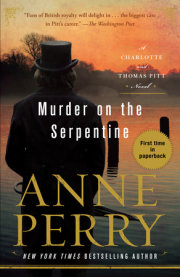
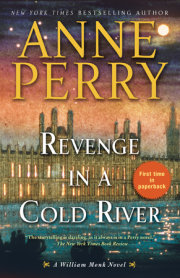
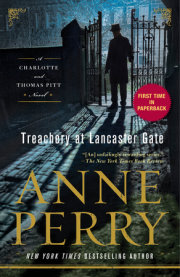
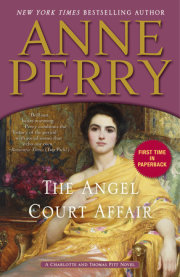
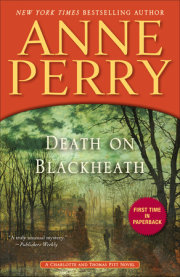
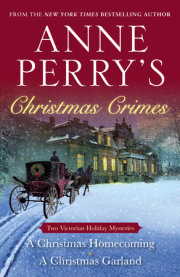
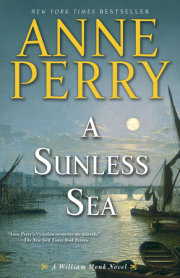
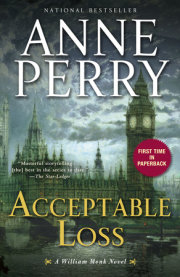
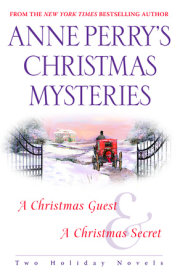
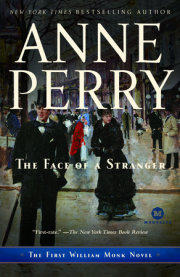
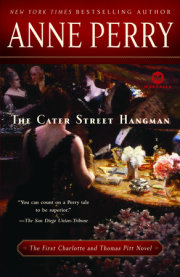
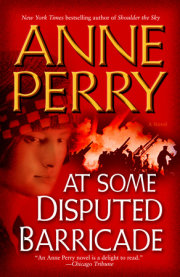
Anne Perry was the bestselling author of two acclaimed series set in Victorian England: the William Monk novels and the Charlotte and Thomas Pitt novels. She was also the author of a series featuring Charlotte and Thomas Pitt's son, Daniel, as well as the Elena Standish series; a series of five World War I novels; twenty-one holiday novels; and a historical novel, The Sheen on the Silk, set in the Byzantine Empire. Anne Perry died in 2023. View titles by Anne Perry

About

Two violent crimes challenge the investigative skills of young Daniel Pitt and his wife, Miriam, in the final novel of iconic mystery writer Anne Perry's beloved Daniel Pitt series.

“A towering achievement from a towering talent—superb!” —Jeffery Deaver, author of the Colter Shaw series


1913: Junior attorney Daniel Pitt must step in for his friend, fellow attorney Toby Kitteridge, whose parents have been brutally attacked. Toby's mother is dead and his father, a village vicar, is barely alive. With Toby returning to the family home in rural Ipswich, struggling with grief and disbelief, Daniel remains in London to substitute for Toby and defend Peter Ward, on trial for the sexual assault and murder of a young woman.

Daniel is convinced that Ward is innocent, yet the evidence seems to prove otherwise. Eager to assist, his pathologist wife, Miriam fford Croft, offers her forensics expertise and exposes a community of fellow pathologists who may have purposefully omitted information from their autopsy reports. Despite Miriam’s involvement in the case, Daniel finds himself distracted by his desire to help Toby, who is too distraught to investigate the attack on his parents. And when the evidence points to Toby’s father as the killer of Toby’s mother, Daniel faces two of the greatest challenges of his young career: proving the innocence of both Peter Ward and Reverend Kitteridge. One mistake in London and a blameless man will hang. One mistake in Ipswich and Toby’s father will go to prison for life.

Death Times Seven, the seventh and final novel in Anne Perry’s Daniel Pitt series, was completed by Victoria Zackheim, an author and editor as well as Perry’s close friend. Rich in intrigue and courtroom drama, this engrossing novel marks a fitting finale to the career of an author widely praised as the queen of historical crime fiction.

Excerpt

Chapter One

There was a knock at the office door and Daniel looked up to see Impney, the chief clerk, already inside. Daniel was working on a complicated brief and was getting increasingly frustrated by its wording.

Impney closed the door quietly behind him and drew in his breath. His face was so white, he looked as if he might faint.

Daniel swallowed hard. “What is it, Impney?”

“Mr. Kitteridge is in court today, sir.”

“I know,” Daniel said before pausing. “Sit down,” he ordered, “before you fall over.”

“No thank you, sir. I’m perfectly all right.” He held up a hand to stop further comment.

Daniel said nothing and waited. He noticed a sheen of perspiration rising on the clerk’s forehead.

“Sir, we have just had a telephone call from Suffolk, where Mr. Kitteridge’s parents live . . . lived.” He drew a shaky breath. “Sir, they have both been shot. Mrs. Kitteridge is dead. Mr. Kitteridge, or I suppose I should say Reverend Kitteridge, is badly injured, but it is just possible he might live. Possible but . . . it’s unlikely.”

Daniel sat motionless in his chair. He felt sick. It was too horrible to believe. Toby Kitteridge was senior to Daniel, but he had become his closest friend since joining the law firm of fford Croft and Gibson fresh from university. In his mind, he pictured Toby, lanky, awkward, and always looking untidy, even when he made an effort. He was shy, modest . . . and brilliant.

“Sir.” Impney’s voice broke into Daniel’s thoughts. “I’ve checked with the Suffolk police, in case it was some kind of obscene joke or a cruelty.” Impney took another deep breath. “I’m afraid there is no mistake.”

Daniel stared at Impney for a long moment before speaking. “Have you told anyone else? Mr. Hunter?” Gideon Hunter, KC, was their new chief lawyer. KC stood for King’s Counsel, a much-coveted title. But it was Toby who had been named the new Head of Chambers, since the retirement of Marcus fford Croft less than nine months ago. “Or Marcus?”

“No, sir,” Impney replied. “Mr. Hunter is leaving later today for a brief holiday, but I will tell him when he comes in. I’m not certain about Mr. fford Croft. Perhaps your wife should break the news to him? And I’m sorry, sir, but I think you should tell Mr. Kitteridge. He has to know, and best it comes from you.”

Daniel rubbed his hands over his face. “Yes, of course, I’ll go and tell him.” He returned his gaze to Impney, who remained distraught. The clerk had served chambers long enough that he considered its members to be his family. Actually, more like his children, and he was fiercely protective of them all.

“What on earth do they say occurred?” Daniel asked. “I have to be able to tell Toby something. Was it a ridiculous accident? For heaven’s sake, Toby’s father is a village priest! The local vicar! Church of England, I think. Yes, he would be. Or nonconformist of some kind, I suppose.” Again, he noticed the pallor of Impney’s skin, and his very obvious distress, and the hollow feeling inside Daniel was made even worse. “Well?” he said hoarsely.

“There was apparently no one else there, Mr. Pitt. They are saying that Mr. Kitteridge shot his wife and then turned the gun on himself. Maybe something made him stop, or at the last moment he lost his nerve. He is very badly wounded, in his head, but as of a few minutes ago, when I got the news, he was still alive. Possibly, in the circumstances, it would be better if he slipped away. I’m sorry, sir, but that is the sum of what they were able to tell me.”

“Who is they?” Daniel demanded. It was pointless being angry, but so much easier than believing news like this. Toby’s father, a vicar! Why on earth would a vicar kill his wife of nearly forty years and then himself? It could not be true, not just like this—not on an ordinary Wednesday morning.

“Police from the local station, sir,” Impney replied. “In Ipswich. They said they couldn’t reveal more than that. Except that Mr. Kitteridge is in Suffolk General Hospital, in Bury St Edmunds. I’m sorry, sir. Shall I cancel your appointments for the rest of the day? And perhaps tomorrow as well? I’ll find someone to take your place, temporarily. And, of course, Mr. Kitteridge’s.” Impney closed his eyes. “And please give Mr. Kitteridge our deepest sympathy, sir. I hardly know what to say.”

Daniel understood, searching for words befitting of this tragedy. “I don’t think there is anything we can say, Impney. I’m not engaged in a case at the moment,” he added, placing his hand on the brief he had been examining when the clerk entered. “Or nothing pressing, so you’ll have to excuse me, too. I may end up taking Mr. Kitteridge to Suffolk. Of course, he’ll want to go. I think he has a right to be there. He’ll be beside himself to know what to do, or where to turn.” The thought of how Toby would react increased Daniel’s sense of feeling ill.

Impney nodded, and then ran his hands across his jacket, as if making sure he was properly attired. “Yes, sir. Don’t you worry about anything here. I assume you’ll tell your own family where you are, but if you want me to do that, of course I will.”

“No, no thank you,” Daniel replied, getting to his feet slowly, as if unsure of keeping his balance. “I’ll go to court and tell Toby. It’s the Old Bailey, isn’t it?”

“Yes, sir, a big trial, for the murder of Miss Alexandra Stanton. Very nasty business. Murder and attempted rape.”

Daniel well knew what Impney was telling him: that if found guilty, Toby’s client would end up on the gallows, probably within a week or so of the verdict. Time, it was almost always one of the elements. No room to make mistakes. Vindication was no use to the dead.

“I’ll ask for a week’s adjournment,” he said to Impney. “If Toby needs longer, and he may well do, we’ll figure it out. Sometimes, work distracts from grief, but nothing—” He stopped, searching for words powerful enough, and ended by merely shaking his head. “Someone else will have to take over, or at the very least, be there, if it’s needed.”

“Yes, sir. I dare say that Mr. Hunter would do that himself.” He did not add the reasons. The firm of fford Croft and Gibson was small, but highly thought of from the days when Marcus fford Croft had been a star of the court, passionate, articulate, ethical, a fighter who occasionally was beaten, but who never gave up. Those who took over from him must act the same.

There was a moment’s silence, then Daniel thanked Impney again, collected his jacket from the stand in the corner, and went out. He walked briskly across the street and hailed a taxi. It would be far quicker than driving himself, or even trusting the underground railway. Besides, he daren’t think how he was going to deal with this. He had neither time nor attention to give to driving.

“Yes, sir,” the cabby said. It was one of those brand-new black automobiles, neatly designed to give the driver a separate compartment of his own, and safe from the passengers, if necessary. These vehicles were a bit like square boxes on wheels, but they could turn on a sixpence, and the drivers knew the streets of London as if the maps were imprinted on their brain.

“The Old Bailey, please,” Daniel directed, as he climbed in and closed the door sharply.

“You in a hurry, sir?” the driver asked.

Was he? No. He needed time to think how he was going to tell Toby that there had been a murder-suicide in his family, and that he must leave Peter Ward and his defense to someone else. There was no good way to say that. “Not really,” he replied. “I have bad news. Nothing is going to make that better.”

“Yes, sir, I’m sorry, sir.” The driver put the car into gear and they shot forward into the traffic with ease.

Twenty minutes later, Daniel was climbing the steps of the most famous courthouse in London, perhaps all of Great Britain, still with no better idea of what he would say. He went inside. He was startled when one of the ushers recognized him.

“Mr. Pitt, sir. You look disturbed. Are you all right?”

“Yes. Yes, thank you.” Daniel shook his head as if to get rid of something that was clinging to him. “Which court is Mr. Kitteridge in? The trial of Peter Ward.”

The corridor was almost empty, nevertheless the man conducted Daniel as if he were likely to get lost on his own. Thanking the usher, Daniel gently opened the door in front of him.

The room was exactly like any other in this building: magnificent carved benches, high ceilings, the judge on a raised platform in the center of the far wall. The jury was to one side of the room, while the high witness box was to the left of the judge’s chair. The elevated dock, where the defendant remained, was directly across from the judge, on the other side of the chamber.

The gallery was packed. It would have been impossible to cram in another person.

Toby was standing up, his back to the gallery.

Reviews

“I love mysteries, and this is a fascinating one—Anne Perry and Victoria Zackheim dish out the suspense, the insights, the details of the murders, the feelings and thoughts of the characters, and the setting bit by bit. The more you read, the more you want to know, and you can’t stop. Death Times Seven is irresistible!”—Jane Smiley, author of Lidie

“A towering achievement from a towering talent, Death Times Seven treats us to all of the hallmarks of Anne Perry’s fiction: nonstop plotting, rich psychological portraits of every character (good and bad), and her stunningly distinctive literary voice, unlike any other in the world of literature. . . . Superb.”—Jeffery Deaver, author of the Colter Shaw series

“I loved the characters, the conflicts, the rich descriptions of 1913 London, and—most of all—the surprise ending.”—Robert Dugoni, author of the Tracy Crosswhite series

“A superb finale to a wonderful career . . . Victoria Zackheim completes this work with loving care and admiration. It’s an excellent mystery worthy of a master author.”—Charles Todd, author of the Ian Rutledge series

“Compassionate and deeply alive, rich with historical detail and brimming with suspense and moral intelligence, Death Times Seven is a must-have for any mystery aficionado.”—Caroline Leavitt, author of Days of Wonder

“Completely enthralling—I consumed it with the verve of a starving woman. Our young lawyer, Daniel Pitt, does not disappoint as he struggles to exonerate the innocent, but it is the brilliant Miriam, blazing new trails in a man’s world, who left me cheering and wanting more. . . . A brilliant and wholly satisfying page-turner.”—Connie May Fowler, author of Before Women Had Wings

“Perry’s storytelling skills were sharp until the end. The strong storyline, intricate plotting, incisive exploration of social issues, and [her] trademark active prose make this one of her best. . . . Highly recommended.”Library Journal, starred review


Author

© Melanie Abrams
Anne Perry was the bestselling author of two acclaimed series set in Victorian England: the William Monk novels and the Charlotte and Thomas Pitt novels. She was also the author of a series featuring Charlotte and Thomas Pitt's son, Daniel, as well as the Elena Standish series; a series of five World War I novels; twenty-one holiday novels; and a historical novel, The Sheen on the Silk, set in the Byzantine Empire. Anne Perry died in 2023. View titles by Anne Perry
  • More Websites from
    Penguin Random House
  • Common Reads
  • Library Marketing