Download high-resolution image Look inside
Listen to a clip from the audiobook
audio pause button
0:00
0:00

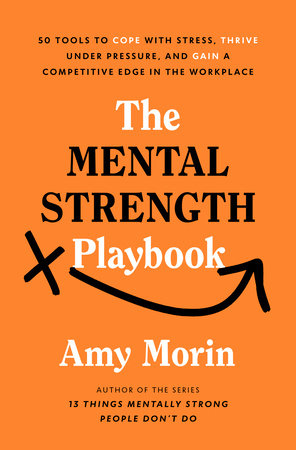
The Mental Strength Playbook

50 Tools to Cope with Stress, Thrive Under Pressure, and Gain a Competitive Edge in the Workplace

Author Amy Morin
Look inside
Listen to a clip from the audiobook
audio pause button
0:00
0:00
Improve your workplace performance with 50 practical, science-backed tools that build emotional resilience and neutralize negative thoughts—from the internationally bestselling author of the 13 Things Mentally Strong People Don't Do series

“When work feels overwhelming, it’s easy to think you just need to push harder or hold it all together. But The Mental Strength Playbook offers a different approach.”—Lori Gottlieb, New York Times bestselling author of Maybe You Should Talk to Someone and New York Times “Ask the Therapist” columnist

Whether you’re dealing with constant demands, the pressure to perform, or the stress of adapting to rapid changes, the workplace is often where you’re tested the most mentally and emotionally. As psychotherapist, speaker, and podcast host Amy Morin discovered, sharpening your mental strength is the key to not only tackling workplace challenges but taking your performance to the next level. The Mental Strength Playbook is specifically designed to help you thrive professionally, with 50 scientifically proven plays you can use right now.

Morin helps you navigate tough but common situations at work, like dealing with anxiety in the middle of a sales call or negotiation, staying on task when you're feeling overwhelmed, or dealing with difficult coworkers. Learning how to manage your thoughts, emotions, and behaviors will help you recover from setbacks faster and optimize your mental game to excel in high-stakes situations. Her workplace-specific strategies are organized to make solving your specific issue quick and easy and include:

  • Dread Defusers (Play Behavior Bingo or Use the 10-Minute Rule)
  • Insight Ignitors (Question Your Question or Brainstorm the Bad Ideas First)
  • Anxiety Alleviators (Schedule Time to Worry or Change the Channel in Your Brain)
  • Confidence Catalysts (Channel Your Alter Ego or Visit Your Victory Vault)

Whether you’re struggling with a tight deadline, delivering a high-pressure presentation, or newly leading a team, The Mental Strength Playbook will give you the skills you need to cope with discomfort, prevent burnout, and excel at work.
Part 1

Plays for Strategic Thinking

Imagine you’re about to share an idea during a brainstorming session. As you consider speaking up, your inner voice whispers, You’re going to embarrass yourself, or Your ideas aren’t good enough.

Now imagine a different script. This time your brain tells you, You’ve got a creative idea here. Just take a deep breath and communicate what you know. Feel the difference?

Your inner dialogue influences your confidence, performance, and even your enjoyment at work. The good news is you have the power to reframe unconstructive scripts once you have the strategies to do so.

Too often, people label themselves as “overthinkers” or say things like, “I’m just a pessimist.” But you don’t have to be stuck with those thinking patterns. With the right game plan, you can develop new thinking patterns and a perspective that helps you thrive.

All you need are some plays that help you respond to unhelpful thoughts. Not only do these plays change your thinking in the moment, but when you run them consistently, you rewire how your brain operates. Practicing them over time builds a stronger, more flexible mindset. And that’s crucial.

Why Your Thoughts Matter

Your mindset isn’t just about the personal conversations that go on inside your head. It can either be a professional asset that helps you rise to new challenges or a liability that holds you back from success. Your thought patterns affect:

• Your ability to solve problems. This is impossible will prevent you from finding solutions. But reframing obstacles as puzzles sparks creative solutions.

• Your openness to change. My manager has no idea what she’s talking about! will keep you on the defensive. Reframing your thoughts to see feedback as a learning opportunity can inspire positive change.

• Your focus under stress. I have way too much to do will fuel your feelings of overwhelm. Choosing to break a task into smaller, strategic steps can create the momentum you need to get things done.

• Your professional growth. I’ll mess this up stops you from taking risks. Reframing those thoughts to I can learn as I go helps you rise to new challenges.

• Your motivation to get work done. I’ll never get this done well enough may lead to procrastination. Thinking about how capable you are can inspire you to get to work, even when it’s difficult.

• Your workplace relationships. My colleague doesn’t respect me will affect how you interact and could fuel unnecessary conflict. Thinking about your ability to develop new relationship skills, however, could help you cooperate.

The Role of Realistic and Constructive Thinking

There’s often the assumption that positive thinking is the ultimate goal. But unrealistically positive thoughts can be just as harmful as unrealistically negative ones. A better goal is to develop realistic and constructive thoughts.

For example, thinking This test is going to be hard isn’t necessarily harmful. It may be true—and thinking realistically about the challenge might motivate you to study harder.

On the flip side, thinking This will be easy! sounds optimistic. But overconfidence might cause you to underprepare, and your performance might suffer.

Building mental strength isn’t about being positive all the time. It’s about recognizing when your thoughts are helpful versus unhelpful. If your inner narrative is working against you, it’s time to call an audible and reframe the story (we’ll discuss how to do that later in this section).

The Most Powerful Types of Thoughts You Can Change

Your brain generates an endless stream of thoughts that review the past, make predictions about the future, and narrate what’s happening right now. Many of your thoughts aren’t accurate—yet we often treat them as facts, and doing so can affect how we approach tasks. Here are the types of thoughts that influence you:

• Stories about the past. Your mind might replay past mistakes and cause you to doubt yourself. On the flip side, it might rewrite past experiences as lessons that strengthen your confidence.

• Beliefs about yourself. Maybe a comment someone made to you as a child, like “You lack creativity” still plays in your head. But you can learn to tell yourself “I’m resourceful when I need to be” so you feel empowered to solve problems.

• Expectations about the future. Thinking I’m going to fail will drain your motivation and potentially become a self-fulfilling prophecy. But replacing that thought with curiosity can help you see things from a different angle, which might increase your chances of success.

Take Control of Your Thoughts

Imagine rewiring your inner dialogue into one that empowers you to take action and solve problems. Not only can you learn to replace unhelpful thoughts with more helpful ones, but you can also become more deliberate about which thoughts you listen to. Taking control of your thoughts can transform how you show up every day.

This section introduces three types of plays that will shift your thinking and strengthen your mental game:

1. Confidence Catalysts. Run plays that help you tackle challenges with the self-assurance you need to do your best.

2. Attitude Adjusters. These strategies reframe your perspective so you can enjoy your work more and perform better.

3. Insight Igniters. Reach for these plays when you need to boost creativity and make the best decisions possible.

The way you think affects how you feel and how you behave. So it’s important to recognize when your thoughts aren’t serving you well so you can shift your thinking. Running these plays will help you develop the mindset you need to excel, no matter what your brain is trying to convince you to believe.
“When work feels overwhelming, it’s easy to think you just need to push harder or hold it all together. But The Mental Strength Playbook offers a different approach. Amy Morin shows you how to feel better and do better—starting right now.”—Lori Gottlieb, New York Times bestselling author of Maybe You Should Talk to Someone and New York Times “Ask the Therapist” columnist

“Mental strength requires having the right tool at the right time. The Mental Strength Playbook delivers exactly that: practical, science-backed strategies you can use in real time, when pressure is high and clarity matters most. If you want to perform better at work without burning out, this book belongs on your desk.”—Nir Eyal, author of Indistractable and Beyond Belief

“Amy Morin is one of the best there is at translating deep psychological insights to help all of us flourish—not only as performers but as people. Mental strength isn’t about white-knuckling your way through life’s inevitable challenges. It’s about having a robust tool kit, and this book is chock-full of great tools.”—Brad Stulberg, author of The Way of Excellence and The Practice of Groundedness

“This is the book we all need. Amy Morin cuts through the noise with a refreshing, evidence-based approach to handling stress and uncertainty. The Mental Strength Playbook shows you exactly how to build the mental muscle required to succeed in our modern, chaotic world . . . A vital playbook for anyone looking to build genuine, sustainable resilience.”—Steve Magness, bestselling author of Do Hard Things

The Mental Strength Playbook is like having a psychotherapist by your side, coaching you through your toughest work moments with science-backed strategies to help you excel. Morin empowers you with fifty distinct ‘plays’ that empower you to choose the approach that fits your situation, so you can perform at your best—and create more happiness in the process.”—Shadé Zahrai, PhD, author of Big Trust and self-leadership educator to Fortune 100s

“Morin accomplishes the challenging task of taking relatable feelings and scenarios and offering simple yet profound ways to move through the discomfort they cause. Practical, accessible and brimming with wisdom, this is a must-read for anyone navigating challenging emotions—in the workplace and beyond.”—Meg Josephson, New York Times bestselling author of Are You Mad at Me?
© Sonya Revell
Amy Morin is a psychotherapist, mental strength trainer, internationally bestselling author, and the award-winning host of the Mentally Stronger With Therapist Amy Morin podcast. Her books on mental strength, including 13 Things Mentally Strong People Don’t Do, have sold more than 1 million copies and been translated into more than 50 languages. She’s practiced therapy for over 20 years, and she’s a sought-after speaker whose TEDx talk, "The Secret of Becoming Mentally Strong," is one of the most viewed talks of all time with more than 25 million views. Amy lives on a sailboat in the Florida Keys. View titles by Amy Morin

About

Improve your workplace performance with 50 practical, science-backed tools that build emotional resilience and neutralize negative thoughts—from the internationally bestselling author of the 13 Things Mentally Strong People Don't Do series

“When work feels overwhelming, it’s easy to think you just need to push harder or hold it all together. But The Mental Strength Playbook offers a different approach.”—Lori Gottlieb, New York Times bestselling author of Maybe You Should Talk to Someone and New York Times “Ask the Therapist” columnist

Whether you’re dealing with constant demands, the pressure to perform, or the stress of adapting to rapid changes, the workplace is often where you’re tested the most mentally and emotionally. As psychotherapist, speaker, and podcast host Amy Morin discovered, sharpening your mental strength is the key to not only tackling workplace challenges but taking your performance to the next level. The Mental Strength Playbook is specifically designed to help you thrive professionally, with 50 scientifically proven plays you can use right now.

Morin helps you navigate tough but common situations at work, like dealing with anxiety in the middle of a sales call or negotiation, staying on task when you're feeling overwhelmed, or dealing with difficult coworkers. Learning how to manage your thoughts, emotions, and behaviors will help you recover from setbacks faster and optimize your mental game to excel in high-stakes situations. Her workplace-specific strategies are organized to make solving your specific issue quick and easy and include:

  • Dread Defusers (Play Behavior Bingo or Use the 10-Minute Rule)
  • Insight Ignitors (Question Your Question or Brainstorm the Bad Ideas First)
  • Anxiety Alleviators (Schedule Time to Worry or Change the Channel in Your Brain)
  • Confidence Catalysts (Channel Your Alter Ego or Visit Your Victory Vault)

Whether you’re struggling with a tight deadline, delivering a high-pressure presentation, or newly leading a team, The Mental Strength Playbook will give you the skills you need to cope with discomfort, prevent burnout, and excel at work.

Excerpt

Part 1

Plays for Strategic Thinking

Imagine you’re about to share an idea during a brainstorming session. As you consider speaking up, your inner voice whispers, You’re going to embarrass yourself, or Your ideas aren’t good enough.

Now imagine a different script. This time your brain tells you, You’ve got a creative idea here. Just take a deep breath and communicate what you know. Feel the difference?

Your inner dialogue influences your confidence, performance, and even your enjoyment at work. The good news is you have the power to reframe unconstructive scripts once you have the strategies to do so.

Too often, people label themselves as “overthinkers” or say things like, “I’m just a pessimist.” But you don’t have to be stuck with those thinking patterns. With the right game plan, you can develop new thinking patterns and a perspective that helps you thrive.

All you need are some plays that help you respond to unhelpful thoughts. Not only do these plays change your thinking in the moment, but when you run them consistently, you rewire how your brain operates. Practicing them over time builds a stronger, more flexible mindset. And that’s crucial.

Why Your Thoughts Matter

Your mindset isn’t just about the personal conversations that go on inside your head. It can either be a professional asset that helps you rise to new challenges or a liability that holds you back from success. Your thought patterns affect:

• Your ability to solve problems. This is impossible will prevent you from finding solutions. But reframing obstacles as puzzles sparks creative solutions.

• Your openness to change. My manager has no idea what she’s talking about! will keep you on the defensive. Reframing your thoughts to see feedback as a learning opportunity can inspire positive change.

• Your focus under stress. I have way too much to do will fuel your feelings of overwhelm. Choosing to break a task into smaller, strategic steps can create the momentum you need to get things done.

• Your professional growth. I’ll mess this up stops you from taking risks. Reframing those thoughts to I can learn as I go helps you rise to new challenges.

• Your motivation to get work done. I’ll never get this done well enough may lead to procrastination. Thinking about how capable you are can inspire you to get to work, even when it’s difficult.

• Your workplace relationships. My colleague doesn’t respect me will affect how you interact and could fuel unnecessary conflict. Thinking about your ability to develop new relationship skills, however, could help you cooperate.

The Role of Realistic and Constructive Thinking

There’s often the assumption that positive thinking is the ultimate goal. But unrealistically positive thoughts can be just as harmful as unrealistically negative ones. A better goal is to develop realistic and constructive thoughts.

For example, thinking This test is going to be hard isn’t necessarily harmful. It may be true—and thinking realistically about the challenge might motivate you to study harder.

On the flip side, thinking This will be easy! sounds optimistic. But overconfidence might cause you to underprepare, and your performance might suffer.

Building mental strength isn’t about being positive all the time. It’s about recognizing when your thoughts are helpful versus unhelpful. If your inner narrative is working against you, it’s time to call an audible and reframe the story (we’ll discuss how to do that later in this section).

The Most Powerful Types of Thoughts You Can Change

Your brain generates an endless stream of thoughts that review the past, make predictions about the future, and narrate what’s happening right now. Many of your thoughts aren’t accurate—yet we often treat them as facts, and doing so can affect how we approach tasks. Here are the types of thoughts that influence you:

• Stories about the past. Your mind might replay past mistakes and cause you to doubt yourself. On the flip side, it might rewrite past experiences as lessons that strengthen your confidence.

• Beliefs about yourself. Maybe a comment someone made to you as a child, like “You lack creativity” still plays in your head. But you can learn to tell yourself “I’m resourceful when I need to be” so you feel empowered to solve problems.

• Expectations about the future. Thinking I’m going to fail will drain your motivation and potentially become a self-fulfilling prophecy. But replacing that thought with curiosity can help you see things from a different angle, which might increase your chances of success.

Take Control of Your Thoughts

Imagine rewiring your inner dialogue into one that empowers you to take action and solve problems. Not only can you learn to replace unhelpful thoughts with more helpful ones, but you can also become more deliberate about which thoughts you listen to. Taking control of your thoughts can transform how you show up every day.

This section introduces three types of plays that will shift your thinking and strengthen your mental game:

1. Confidence Catalysts. Run plays that help you tackle challenges with the self-assurance you need to do your best.

2. Attitude Adjusters. These strategies reframe your perspective so you can enjoy your work more and perform better.

3. Insight Igniters. Reach for these plays when you need to boost creativity and make the best decisions possible.

The way you think affects how you feel and how you behave. So it’s important to recognize when your thoughts aren’t serving you well so you can shift your thinking. Running these plays will help you develop the mindset you need to excel, no matter what your brain is trying to convince you to believe.

Reviews

“When work feels overwhelming, it’s easy to think you just need to push harder or hold it all together. But The Mental Strength Playbook offers a different approach. Amy Morin shows you how to feel better and do better—starting right now.”—Lori Gottlieb, New York Times bestselling author of Maybe You Should Talk to Someone and New York Times “Ask the Therapist” columnist

“Mental strength requires having the right tool at the right time. The Mental Strength Playbook delivers exactly that: practical, science-backed strategies you can use in real time, when pressure is high and clarity matters most. If you want to perform better at work without burning out, this book belongs on your desk.”—Nir Eyal, author of Indistractable and Beyond Belief

“Amy Morin is one of the best there is at translating deep psychological insights to help all of us flourish—not only as performers but as people. Mental strength isn’t about white-knuckling your way through life’s inevitable challenges. It’s about having a robust tool kit, and this book is chock-full of great tools.”—Brad Stulberg, author of The Way of Excellence and The Practice of Groundedness

“This is the book we all need. Amy Morin cuts through the noise with a refreshing, evidence-based approach to handling stress and uncertainty. The Mental Strength Playbook shows you exactly how to build the mental muscle required to succeed in our modern, chaotic world . . . A vital playbook for anyone looking to build genuine, sustainable resilience.”—Steve Magness, bestselling author of Do Hard Things

The Mental Strength Playbook is like having a psychotherapist by your side, coaching you through your toughest work moments with science-backed strategies to help you excel. Morin empowers you with fifty distinct ‘plays’ that empower you to choose the approach that fits your situation, so you can perform at your best—and create more happiness in the process.”—Shadé Zahrai, PhD, author of Big Trust and self-leadership educator to Fortune 100s

“Morin accomplishes the challenging task of taking relatable feelings and scenarios and offering simple yet profound ways to move through the discomfort they cause. Practical, accessible and brimming with wisdom, this is a must-read for anyone navigating challenging emotions—in the workplace and beyond.”—Meg Josephson, New York Times bestselling author of Are You Mad at Me?

Author

© Sonya Revell
Amy Morin is a psychotherapist, mental strength trainer, internationally bestselling author, and the award-winning host of the Mentally Stronger With Therapist Amy Morin podcast. Her books on mental strength, including 13 Things Mentally Strong People Don’t Do, have sold more than 1 million copies and been translated into more than 50 languages. She’s practiced therapy for over 20 years, and she’s a sought-after speaker whose TEDx talk, "The Secret of Becoming Mentally Strong," is one of the most viewed talks of all time with more than 25 million views. Amy lives on a sailboat in the Florida Keys. View titles by Amy Morin
  • More Websites from
    Penguin Random House
  • Common Reads
  • Library Marketing