The Boleyn Secret

A Novel

The New York Times bestselling author of the Six Tudor Queens series explores the dramatic, mysterious life of Katherine Carey, niece of Anne Boleyn, in this surprising novel that delves into one of the deepest secrets of Henry VIII’s court.

“In this vivid and utterly addictive novel, Alison Weir brings to life a fascinating woman who lived at the heart of Henry VIII’s and Elizabeth I’s courts.”—Tracy Borman, author of The House of Boleyn

At twelve years old, Katherine Carey attends her aunt, Queen Anne Boleyn, to the scaffold. Horrified by what she witnesses, Katherine is convinced that King Henry VIII is a murderer and has sent an innocent woman to a terrible death.

Although the Boleyn family, once so influential at court, has now fallen from favor, Katherine still manages to secure a coveted role as companion to her now-motherless cousin, the young Lady Elizabeth. Bound by Boleyn blood, the two girls grow as close as sisters, though Katherine has trouble ignoring the sly looks thrown her way and continual whispers behind her back. Only when her mother lies dying does Katherine learn the life-shattering truth that the Boleyns have been hiding for years.

It is a secret that follows Katherine throughout her life, as she flees religious persecution with her husband and lives abroad in fear, returning home only when Elizabeth becomes queen. But the bond between the Boleyn cousins will never be the same again.

With her usual entertaining and authoritative style beloved by readers, renowned historian Alison Weir exposes a dramatic, little-known Tudor mystery in this fascinating, revelatory novel.
Chapter 1

1536

Kate was at the palace of Greenwich, returning from the gardens with the Princess Elizabeth trying to wriggle out of her hand when she saw Lady Bryan hastening in her direction. The child should have gone back to her household at Hatfield days ago, after celebrating Easter with her royal parents, but no instructions had been received.

“Kate! Kate,” Lady Bryan cried. “You have been summoned to London!”

“London?” Kate echoed.

“Yes, child.” Elizabeth’s plump lady mistress paused to catch her breath, squinting in the May sunshine. “A messenger from the King has arrived with an escort. You are to be conveyed to the Tower.”

Kate felt faint. “The Tower? What have I done wrong?”

“Nothing, my dear. I’m sorry, I did not mean to alarm you. You are to attend on the Queen, your aunt.”

Their eyes met. Everyone except the little Princess knew that Kate’s aunt, Queen Anne, had been arrested and imprisoned in that grim fortress. Just a few days ago, when walking in the gardens at Greenwich, Kate herself had looked up and witnessed a terrible scene between the King and Queen. They had been standing in a window, she with her daughter in her arms, and quarrelling bitterly. It had been the talk of the court, and soon afterward the Queen had been taken away.

No one, however, had any idea of what might happen to Anne now, for never before had a queen been accused of treason. The royal household was holding its collective breath and there had been much gossip and speculation, although Lady Bryan had sternly ensured that none of it was in Elizabeth’s hearing. Not yet three, the child was as sharp as nails and little escaped her.

Kate was astonished. “Did my aunt ask for me?”

“I have no idea,” Lady Bryan said, picking up Elizabeth and steering Kate back toward the palace. Elizabeth struggled in her arms, shaking her long red curls, her pointed face screwed up in protest. “Hush, my Lady Princess. You shall have a sugar comfit when we get back.” The child quietened instantly, but all conversation had to cease.

The King’s groom, very smart in his green and white, was courtesy personified as he greeted Kate and bade her gather her livery things.

“How long will I be staying at the Tower?” she asked, an eye on Elizabeth’s retreating back as she was borne away to the nursery.

“I do not know, Mistress Kate, so I advise taking enough clothes for a week or so. Please be quick. We can still catch the tide upriver.”

No one seemed to know anything, Kate thought, frowning as she sped upstairs to her chamber. She opened her traveling chest, packed her three best gowns and several changes of body linen, two books—would she have leisure for reading?—and the little silver casket containing her few jewels. She would have taken her lute, yet feared that music, which she loved, might not be appropriate in the circumstances. Then she threw her cloak over her arm and ran downstairs.

“My chest is ready,” she told the groom.

When it had been loaded, she followed him to the palace jetty, climbed into the barge, and was carried away, waving back at Lady Bryan, who had watched her departure with a worried countenance. What awaited her at the end of her journey? And when would she be back?

As the barge glided along the Thames, Kate had time to reflect on this strange summons. Had it come from her aunt? It was Queen Anne who, two and a half years ago, had appointed her as a companion for the newborn Princess Elizabeth, a young cousin to keep her daily company in her large household of servants. Kate had been nine then, and she had been glad to leave the tense atmosphere of Hever Castle for the palace at Hatfield where the royal nursery had been established. Hever was Grandfather’s house, where Mother, Kate, and her little brother, Henry, had lived since Father’s death from the sweating sickness when Kate was four. But Grandfather and Mother had not got on for as long as Kate could remember. She hated seeing her plump, comely, sweet-natured mother being bullied by Grandfather, who made it plain that he didn’t want them under his roof. And Grandmother, who was daughter to the Duke of Norfolk, had held aloof. The grandparents didn’t get on well, and Grandmother was often at court, leaving the steward to run the household.

Kate had shed many tears for the loss of her father—or rather, its consequences. She had rarely seen him, for he had spent most of his time at court serving the King, and she could not remember him well, yet his death had rocked her world. Until then, she and Harry, who was just a year her junior, had been living with their mother at the beautiful royal palace of Beaulieu in Essex, of which Father had been appointed keeper. It was a paradise for children, a place to play boisterous games in the gardens or hide-and-seek in the vast chambers. She had a treasured memory of her father, resplendent in a doublet with yellow satin sleeves, picking her up and spinning her around in his arms as she shrieked with delight. She remembered him sitting her on his knee and showing her the pictures in an exquisitely illuminated book. Those had been happy times; she had felt loved and cherished. And then everything had come to an end.

Even now, as a great girl of twelve, Kate sometimes found herself weeping at the memory of what she had lost. For after Father’s death, Mother had been left destitute and they had had no roof over their heads, so they had sought refuge at Hever Castle, the Boleyn family’s home in Kent. Shifting in her cushioned seat, as the barge continued its journey along the Thames, Kate shuddered, remembering Grandfather shouting and Mother crying wildly. He had said that there was no place for them at Hever and that they must leave at once.

“I’ll not have you under my roof!” he had spat at Mother, as if she had done something terrible.

Mother had dragged Kate and Harry up to the court to collect Father’s belongings, then she had sought out her sister, Anne, and begged for her help. At that time, Aunt Anne had been the King’s sweetheart, and he was doing his best to put away his old wife, Queen Katherine (for whom Kate was named), so that he could marry her. It was a source of great pride to the whole Boleyn family, especially Grandfather and Uncle George, that the King wanted to make Anne his queen. Anne had always been eager to advance or assist her kinsfolk. She had gone to the King, as Mother later told Kate, and he had ordered Grandfather to take them in and support them. And horrid Grandfather had had no choice!

But their lives at Hever had been miserable, for it was constantly being made clear to them that they were there on sufferance. Grandfather was often away at court, where he was a very important man, but his servants followed his lead and treated Mother with contempt. Kate could not understand why, for surely a father should love his daughter, as her father had loved her. What had Mother done to deserve such treatment?

“Why is Grandfather so horrible to you?” she had asked one day, when they were making daisy chains in the meadow and Harry was rampaging about on his hobby horse.

Mother’s face had grown pink. She seemed to be struggling to find something to say. “I am not like your aunt Anne and your uncle George,” she said. “They are ambitious to get on in the world. I am a disappointment to him.”

Kate was rather glad that Mother was not like Uncle George, who was loud and full of himself; she could sense a dark streak in him. She didn’t much like his wife, Aunt Jane, who seemed sly and calculating.

She sought to comfort her mother. “But you were married to Father, and he was close to the King.”

“Indeed, I was, but he left me in a poor case. All his wealth is being held in trust until Harry comes of age.”

“But that’s not your fault?” Kate had been indignant.

“No.” Mother sighed. “But Grandfather feels that I have let the family down and am not deserving of his love.”

It had made no sense. Kate had refrained from pressing further, yet she’d been left with the feeling that Mother had done something wrong and that there was some dark secret in her past. Being widowed and poor did not explain Grandfather’s cruelty. She had hoped that one day she would find out the truth. But even now, she was no wiser.

Kate remembered the wild elation that had swept through the Boleyns when Aunt Anne finally became queen. They had all gone to London to play prominent parts in her coronation—all except for Mother. She had never been summoned to court and had never been present at state occasions or involved in her sister’s life. This continued to puzzle Kate. Yet she had not let it bother her too much, for without Mother, she and Harry would have been left at Hever to the tender mercies of Grandfather and, when he was away at court, Great-Grandmother Butler, who was inclined to be a little strange.

Kate had long wished that Mother would marry again, but she was old enough to know that men wanted rich brides, and Mother had nothing. Suitors would not be beating a path to the castle drawbridge. Yet that did not stop her from dreaming. She could see her mother at the church door with a handsome man who looked very much like Father, and herself as bridesmaid, wearing a gorgeous gown.
“In this vivid and utterly addictive novel, Alison Weir brings to life a fascinating woman who lived at the heart of Henry VIII’s and Elizabeth I’s courts but who has remained in the shadows for almost five-hundred years. In so doing, Weir gives us a compelling heroine and breathes new life into one of the most famous periods in English history. The immaculate period details and compelling drama transport the reader to the dazzling, often deadly world of the Tudors. . . . Simply unmissable.”—Tracy Borman, author of The House of Boleyn

“It’s a rare gift for an author to be able to transport their readers to times past, but Alison Weir does so with ease. With each page I felt as though I were eavesdropping on the scandalous world of the Tudors and experiencing their world as they would have done. Full of tension, passion, jealousy, and heartbreak, The Boleyn Secret is an unputdownable tale of one who might’ve been closer to the heart of the Tudor court than was ever acknowledged. When it comes to historical fiction, Alison Weir is unbeatable.”—Nicola Tallis, author of Young Elizabeth

“With her extraordinary breadth of knowledge and scrupulous attention to detail, Alison Weir has excavated from the Tudor records the unsung story of a remarkable woman who had a ringside seat to some of the most precarious and pivotal passages of history. Katherine Carey learned young how to negotiate the knife-edge of court, developing deep loyalties and cautious allegiances. She had fifteen pregnancies, had to flee England and live as a fugitive for a time, and carried a momentous and dangerous secret about her origins for her entire life. Her story is as fascinating as it is gripping.”—Elizabeth Fremantle, author of the Tudor Trilogy

“Beautifully written and full of emotion . . . In telling the vivid, moving story of Katherine Carey, Alison Weir takes you to a front seat of the Tudor court, glittering, treacherous, terrifying. Katherine sees her aunt Anne Boleyn executed, serves her cousin, Elizabeth, and is drawn into the Tudor world of secrets. . . . Fascinating.”—Kate Williams, author of Becoming Queen


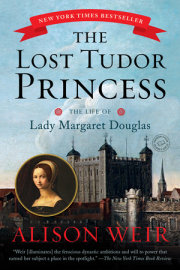
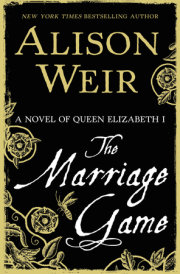
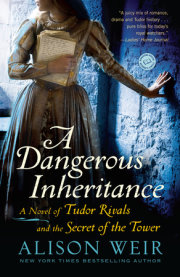
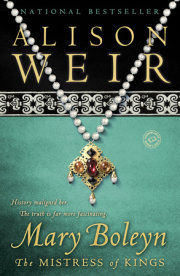
Alison Weir is the New York Times bestselling author of numerous historical biographies, including The Lost Tudor Princess, Elizabeth of York, Mary Boleyn, The Lady in the Tower, Mistress of the Monarchy, Henry VIII, Eleanor of Aquitaine, The Life of Elizabeth I, and The Six Wives of Henry VIII, and the novels Anne Boleyn, A King’s Obsession; Katherine of Aragon, The True Queen; The Marriage Game; A Dangerous Inheritance; Captive Queen; The Lady Elizabeth; and Innocent Traitor. She lives in Surrey, England, with her husband. View titles by Alison Weir

About

The New York Times bestselling author of the Six Tudor Queens series explores the dramatic, mysterious life of Katherine Carey, niece of Anne Boleyn, in this surprising novel that delves into one of the deepest secrets of Henry VIII’s court.

“In this vivid and utterly addictive novel, Alison Weir brings to life a fascinating woman who lived at the heart of Henry VIII’s and Elizabeth I’s courts.”—Tracy Borman, author of The House of Boleyn

At twelve years old, Katherine Carey attends her aunt, Queen Anne Boleyn, to the scaffold. Horrified by what she witnesses, Katherine is convinced that King Henry VIII is a murderer and has sent an innocent woman to a terrible death.

Although the Boleyn family, once so influential at court, has now fallen from favor, Katherine still manages to secure a coveted role as companion to her now-motherless cousin, the young Lady Elizabeth. Bound by Boleyn blood, the two girls grow as close as sisters, though Katherine has trouble ignoring the sly looks thrown her way and continual whispers behind her back. Only when her mother lies dying does Katherine learn the life-shattering truth that the Boleyns have been hiding for years.

It is a secret that follows Katherine throughout her life, as she flees religious persecution with her husband and lives abroad in fear, returning home only when Elizabeth becomes queen. But the bond between the Boleyn cousins will never be the same again.

With her usual entertaining and authoritative style beloved by readers, renowned historian Alison Weir exposes a dramatic, little-known Tudor mystery in this fascinating, revelatory novel.

Excerpt

Chapter 1

1536

Kate was at the palace of Greenwich, returning from the gardens with the Princess Elizabeth trying to wriggle out of her hand when she saw Lady Bryan hastening in her direction. The child should have gone back to her household at Hatfield days ago, after celebrating Easter with her royal parents, but no instructions had been received.

“Kate! Kate,” Lady Bryan cried. “You have been summoned to London!”

“London?” Kate echoed.

“Yes, child.” Elizabeth’s plump lady mistress paused to catch her breath, squinting in the May sunshine. “A messenger from the King has arrived with an escort. You are to be conveyed to the Tower.”

Kate felt faint. “The Tower? What have I done wrong?”

“Nothing, my dear. I’m sorry, I did not mean to alarm you. You are to attend on the Queen, your aunt.”

Their eyes met. Everyone except the little Princess knew that Kate’s aunt, Queen Anne, had been arrested and imprisoned in that grim fortress. Just a few days ago, when walking in the gardens at Greenwich, Kate herself had looked up and witnessed a terrible scene between the King and Queen. They had been standing in a window, she with her daughter in her arms, and quarrelling bitterly. It had been the talk of the court, and soon afterward the Queen had been taken away.

No one, however, had any idea of what might happen to Anne now, for never before had a queen been accused of treason. The royal household was holding its collective breath and there had been much gossip and speculation, although Lady Bryan had sternly ensured that none of it was in Elizabeth’s hearing. Not yet three, the child was as sharp as nails and little escaped her.

Kate was astonished. “Did my aunt ask for me?”

“I have no idea,” Lady Bryan said, picking up Elizabeth and steering Kate back toward the palace. Elizabeth struggled in her arms, shaking her long red curls, her pointed face screwed up in protest. “Hush, my Lady Princess. You shall have a sugar comfit when we get back.” The child quietened instantly, but all conversation had to cease.

The King’s groom, very smart in his green and white, was courtesy personified as he greeted Kate and bade her gather her livery things.

“How long will I be staying at the Tower?” she asked, an eye on Elizabeth’s retreating back as she was borne away to the nursery.

“I do not know, Mistress Kate, so I advise taking enough clothes for a week or so. Please be quick. We can still catch the tide upriver.”

No one seemed to know anything, Kate thought, frowning as she sped upstairs to her chamber. She opened her traveling chest, packed her three best gowns and several changes of body linen, two books—would she have leisure for reading?—and the little silver casket containing her few jewels. She would have taken her lute, yet feared that music, which she loved, might not be appropriate in the circumstances. Then she threw her cloak over her arm and ran downstairs.

“My chest is ready,” she told the groom.

When it had been loaded, she followed him to the palace jetty, climbed into the barge, and was carried away, waving back at Lady Bryan, who had watched her departure with a worried countenance. What awaited her at the end of her journey? And when would she be back?

As the barge glided along the Thames, Kate had time to reflect on this strange summons. Had it come from her aunt? It was Queen Anne who, two and a half years ago, had appointed her as a companion for the newborn Princess Elizabeth, a young cousin to keep her daily company in her large household of servants. Kate had been nine then, and she had been glad to leave the tense atmosphere of Hever Castle for the palace at Hatfield where the royal nursery had been established. Hever was Grandfather’s house, where Mother, Kate, and her little brother, Henry, had lived since Father’s death from the sweating sickness when Kate was four. But Grandfather and Mother had not got on for as long as Kate could remember. She hated seeing her plump, comely, sweet-natured mother being bullied by Grandfather, who made it plain that he didn’t want them under his roof. And Grandmother, who was daughter to the Duke of Norfolk, had held aloof. The grandparents didn’t get on well, and Grandmother was often at court, leaving the steward to run the household.

Kate had shed many tears for the loss of her father—or rather, its consequences. She had rarely seen him, for he had spent most of his time at court serving the King, and she could not remember him well, yet his death had rocked her world. Until then, she and Harry, who was just a year her junior, had been living with their mother at the beautiful royal palace of Beaulieu in Essex, of which Father had been appointed keeper. It was a paradise for children, a place to play boisterous games in the gardens or hide-and-seek in the vast chambers. She had a treasured memory of her father, resplendent in a doublet with yellow satin sleeves, picking her up and spinning her around in his arms as she shrieked with delight. She remembered him sitting her on his knee and showing her the pictures in an exquisitely illuminated book. Those had been happy times; she had felt loved and cherished. And then everything had come to an end.

Even now, as a great girl of twelve, Kate sometimes found herself weeping at the memory of what she had lost. For after Father’s death, Mother had been left destitute and they had had no roof over their heads, so they had sought refuge at Hever Castle, the Boleyn family’s home in Kent. Shifting in her cushioned seat, as the barge continued its journey along the Thames, Kate shuddered, remembering Grandfather shouting and Mother crying wildly. He had said that there was no place for them at Hever and that they must leave at once.

“I’ll not have you under my roof!” he had spat at Mother, as if she had done something terrible.

Mother had dragged Kate and Harry up to the court to collect Father’s belongings, then she had sought out her sister, Anne, and begged for her help. At that time, Aunt Anne had been the King’s sweetheart, and he was doing his best to put away his old wife, Queen Katherine (for whom Kate was named), so that he could marry her. It was a source of great pride to the whole Boleyn family, especially Grandfather and Uncle George, that the King wanted to make Anne his queen. Anne had always been eager to advance or assist her kinsfolk. She had gone to the King, as Mother later told Kate, and he had ordered Grandfather to take them in and support them. And horrid Grandfather had had no choice!

But their lives at Hever had been miserable, for it was constantly being made clear to them that they were there on sufferance. Grandfather was often away at court, where he was a very important man, but his servants followed his lead and treated Mother with contempt. Kate could not understand why, for surely a father should love his daughter, as her father had loved her. What had Mother done to deserve such treatment?

“Why is Grandfather so horrible to you?” she had asked one day, when they were making daisy chains in the meadow and Harry was rampaging about on his hobby horse.

Mother’s face had grown pink. She seemed to be struggling to find something to say. “I am not like your aunt Anne and your uncle George,” she said. “They are ambitious to get on in the world. I am a disappointment to him.”

Kate was rather glad that Mother was not like Uncle George, who was loud and full of himself; she could sense a dark streak in him. She didn’t much like his wife, Aunt Jane, who seemed sly and calculating.

She sought to comfort her mother. “But you were married to Father, and he was close to the King.”

“Indeed, I was, but he left me in a poor case. All his wealth is being held in trust until Harry comes of age.”

“But that’s not your fault?” Kate had been indignant.

“No.” Mother sighed. “But Grandfather feels that I have let the family down and am not deserving of his love.”

It had made no sense. Kate had refrained from pressing further, yet she’d been left with the feeling that Mother had done something wrong and that there was some dark secret in her past. Being widowed and poor did not explain Grandfather’s cruelty. She had hoped that one day she would find out the truth. But even now, she was no wiser.

Kate remembered the wild elation that had swept through the Boleyns when Aunt Anne finally became queen. They had all gone to London to play prominent parts in her coronation—all except for Mother. She had never been summoned to court and had never been present at state occasions or involved in her sister’s life. This continued to puzzle Kate. Yet she had not let it bother her too much, for without Mother, she and Harry would have been left at Hever to the tender mercies of Grandfather and, when he was away at court, Great-Grandmother Butler, who was inclined to be a little strange.

Kate had long wished that Mother would marry again, but she was old enough to know that men wanted rich brides, and Mother had nothing. Suitors would not be beating a path to the castle drawbridge. Yet that did not stop her from dreaming. She could see her mother at the church door with a handsome man who looked very much like Father, and herself as bridesmaid, wearing a gorgeous gown.

Reviews

“In this vivid and utterly addictive novel, Alison Weir brings to life a fascinating woman who lived at the heart of Henry VIII’s and Elizabeth I’s courts but who has remained in the shadows for almost five-hundred years. In so doing, Weir gives us a compelling heroine and breathes new life into one of the most famous periods in English history. The immaculate period details and compelling drama transport the reader to the dazzling, often deadly world of the Tudors. . . . Simply unmissable.”—Tracy Borman, author of The House of Boleyn

“It’s a rare gift for an author to be able to transport their readers to times past, but Alison Weir does so with ease. With each page I felt as though I were eavesdropping on the scandalous world of the Tudors and experiencing their world as they would have done. Full of tension, passion, jealousy, and heartbreak, The Boleyn Secret is an unputdownable tale of one who might’ve been closer to the heart of the Tudor court than was ever acknowledged. When it comes to historical fiction, Alison Weir is unbeatable.”—Nicola Tallis, author of Young Elizabeth

“With her extraordinary breadth of knowledge and scrupulous attention to detail, Alison Weir has excavated from the Tudor records the unsung story of a remarkable woman who had a ringside seat to some of the most precarious and pivotal passages of history. Katherine Carey learned young how to negotiate the knife-edge of court, developing deep loyalties and cautious allegiances. She had fifteen pregnancies, had to flee England and live as a fugitive for a time, and carried a momentous and dangerous secret about her origins for her entire life. Her story is as fascinating as it is gripping.”—Elizabeth Fremantle, author of the Tudor Trilogy

“Beautifully written and full of emotion . . . In telling the vivid, moving story of Katherine Carey, Alison Weir takes you to a front seat of the Tudor court, glittering, treacherous, terrifying. Katherine sees her aunt Anne Boleyn executed, serves her cousin, Elizabeth, and is drawn into the Tudor world of secrets. . . . Fascinating.”—Kate Williams, author of Becoming Queen


Author

Alison Weir is the New York Times bestselling author of numerous historical biographies, including The Lost Tudor Princess, Elizabeth of York, Mary Boleyn, The Lady in the Tower, Mistress of the Monarchy, Henry VIII, Eleanor of Aquitaine, The Life of Elizabeth I, and The Six Wives of Henry VIII, and the novels Anne Boleyn, A King’s Obsession; Katherine of Aragon, The True Queen; The Marriage Game; A Dangerous Inheritance; Captive Queen; The Lady Elizabeth; and Innocent Traitor. She lives in Surrey, England, with her husband. View titles by Alison Weir
  • More Websites from
    Penguin Random House
  • Common Reads
  • Library Marketing