Download high-resolution image Look inside
Listen to a clip from the audiobook
audio pause button
0:00
0:00

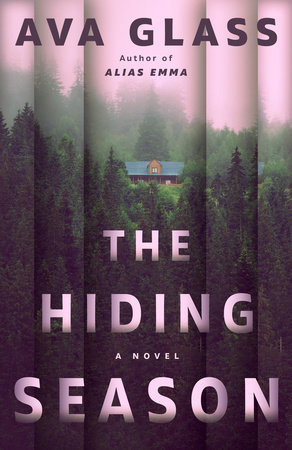
The Hiding Season

A Novel

Author Ava Glass
Look inside
Listen to a clip from the audiobook
audio pause button
0:00
0:00
In this page-turning, atmospheric thriller, a broken woman’s new beginning is upended when she becomes the only witness to a deadly crime . . . making her the next target.

“Impossible to put down!” —Gilly Macmillan, New York Times bestselling author of What She Knew


After a painful divorce, Maya Landry is in desperate need of a fresh start, which she finds deep in the Rocky Mountains of Montana. Maya’s relieved when she’s hired as a summer keeper of billionaire-owned ski lodges left empty after snow season ends, and her new life of peace and isolation is going exactly as hoped . . . until she stumbles across a dead body on the living room floor of one of the lodges. There’s no cell service on the resort, and by the time she’s able to find a signal and call the police, the body is gone. In fact, there’s no evidence a body was ever there at all.

The police think Maya is unstable, and she’s not convinced they are wrong. But later that night, a stranger walks up to her and tells her that someone knows she was up on the mountain that day, someone willing to kill to keep their secrets. She’s not sure whether to believe him . . . until the killers come for her in the dead of night. Maya narrowly escapes, only to find that same mysterious man waiting to rush her away. But can she trust him? Can she trust anyone?

Only one thing is certain: The people who committed the murder are coming for her. Maya is the only person alive who might reveal what happened up on the mountain. And they want her gone.
1

There are moments in your life that change everything. One step left, and the bus doesn’t hit you. One step right, and it’s game over. I stepped right the day I took the job in Montana.

If I’d just stood up during the interview and told Gina, “Thanks, but no thanks. This isn’t for me,” my life would have been so different. But back then I was shattered, flat broke and running out of options, and Gina was offering a lifeline. Or at least that’s what I thought she was offering. So I grabbed the line with both hands. And it dragged me under.

Maybe I should have seen it coming, but I’d been lucky until then. I stopped being lucky six weeks before I met Gina. Six weeks before I took the job. In those days, I was a different person—­married, and living in Lansing, Michigan. No pets, no kids. Brandon and I had talked about babies many times, but he always thought later would be better. And then suddenly I was thirty-­eight and it was later, but still he found reasons. And me? I let it go. I always let things go.

Of course, not having kids meant we could afford a cute three-­bedroom house on a twenty-­five-year mortgage. And after a while I was able to quit my job teaching high school and try to make it as a freelance writer. That had been my dream since college.

And we were happy. Or at least, I was happy.

I found out Brandon wasn’t happy early on April the fourth, when he walked into the kitchen and told me he was leaving.

I remember it all so clearly—­we always remember the worst days best. I was drinking a cup of coffee and writing two hundred words about a new sushi restaurant for a local blog. The early spring sun poured through the window. I was standing at the counter because I worried I sat too much, and I’d read an article somewhere about how we should all stand more. So I was standing when Brandon walked in, his eyes filled with resentment, as if I were the one bringing bad news.

“There’s something we need to talk about,” he said, and his voice was oddly cold and stiff.

I wonder how I looked to him, my smile fading as I realized what he was telling me. The bafflement and hurt in my face. It was the worst thing that had ever happened to me. The most shocking, horrible thing. My luck abandoned me then—­in an instant.

Like a gunshot in a quiet room, that moment split the silence of my life. And the reverberations are with me still.

A month later, a “For Sale” sign went up in front of our house. I didn’t want to sell—­I didn’t want any of this—­but the house was in Brandon’s name, so he could do what he wanted, and what he wanted was to sell it and spend more time with his assistant, Hannah.

It’s the oldest story in the world. It’s almost embarrassing how blindsided I was. But none of my friends were surprised. It turned out they’d seen the signs I’d completely missed.

“I knew Hannah was trouble,” my friend Sarah said ominously when I told her what had happened. “Always clinging to Brandon, and blinking up at him with those big eyes.”

I said nothing, because I’d never noticed Hannah clinging or blinking at Brandon. I’d trusted both of them completely.

Somehow that made it worse, knowing it had been obvious to everyone and I’d simply been a fool.

The humiliation and heartbreak were so crushing, my whole life in Lansing felt tainted. It was impossible to stay. Every place I went—­every corner I turned—­reminded me of all I’d lost.

So I did the only thing I could think of: I ran away.

I didn’t tell anyone what I was doing—­not Sarah, not even my parents. This was my breakdown, and I was going to do it my way. I packed most of my belongings into a storage unit, put everything else in my car, and headed west. I didn’t stop until I reached Montana.

I suppose I wasn’t the first person to try and disappear in the Rocky Mountains, nor the last. There is something about the wilderness that calls to a broken spirit. Frankly, there wasn’t a lot of planning involved. I simply wanted to be as far from the smoking wreckage of my marriage as I could get.

I thought about driving until the land ended somewhere in Washington or Oregon. But I’d gone to college in Bozeman, and it seemed like a safe place to start again, and to heal. That was the plan, anyway.

Bozeman is a lively college town planted right in the middle of the state. Founded by a failed gold prospector, it still has a Wild West scruffiness about it. Low-­slung and unpretentious, the town looks as if it’s been scattered carelessly across a valley surrounded by towering mountains. But that didn’t mean it was cheap and almost immediately I was in trouble. I’d hoped to live on my savings for a few months while I found my feet, but everything cost more than I’d expected. The tiny one-­bedroom apartment I found to rent cost three times what I’d have paid in Michigan.

Even in the haze of my misery, I couldn’t ignore the fact that I needed money. I wasn’t going to last if I didn’t find work.

It was late May by then and schools were out, so I couldn’t get work as a teacher. I made a few phone calls to local magazines, but no one was looking for new writers, and I wasn’t qualified to do anything else.

This shouldn’t have been a surprise. In all of human history, nobody has ever looked around at a job that needed doing and thought, “I know. I’ll hire a poet.”

And I’d never been a serious writer. Most of what I’d written back in Lansing had been listicles. Magazines love them. They’re just short, pithy lists of facts about random things. They’re terrible but addictive.

Here’s a listicle of jobs I applied for in Montana that I didn’t get:

1. Bartender at the Come as You Are

2. Waiter at a café on East Main Street

3. English tutor for a wealthy Russian family

4. Writer at the Montana Live Blog

5. Cleaner at five different hotels

I applied for everything. As the rejections accumulated, I hit rock bottom. Somehow, at thirty-­eight years old I had ended up with nothing. No husband, no children and no talents that were of any use to anyone.

That was my state of mind when I saw this ad on a local jobs website:

Well-­paid post overseeing exclusive development near Bozeman. Flexible working hours. Must own reliable vehicle, be self-­motivated, and be able to handle isolation.

I didn’t have much, but I had a decent car, and isolation was just what I wanted. I applied before I could think about how vague the ad was, and how dangerous vague ads can be.

Less than twenty-­four hours later, my phone rang and a husky voice said my name.

“Maya Landry? This is Gina Kushman from Big Sky Land Management. I’ve got your application here, and I wondered if you could come in tomorrow morning for an interview.”

I had to force my voice to stay steady as I said yes, yes, I could fit that interview into my busy schedule. I scrabbled around for a pen while she gave me the address.

After I hung up, I danced around my living room, hopeful for the first time in months. And then abruptly, I sat down on the floor and cried like a baby.

I hadn’t cried since Brandon left me. For weeks, I’d felt too empty to cry. Hollowed out. Now, suddenly, out of the blue, everything hurt and I couldn’t breathe. I heard myself gasping, a guttural, wounded sound that frightened me, but I couldn’t stop. I ached for the future I would never have. For the plans Brandon and I had made. For my perfect little house. For the babies I’d wanted to have.

I don’t know how long I sat there, poleaxed by grief, tears tumbling from my face onto the gray sweatshirt I’d been wearing for three days straight, until at last my sobs became tiny gasps, and finally just . . . breathing.

It was then, I think, that I made the decision. I was going to sort my life out. I was going to that interview tomorrow, and I was going to get that job.

May is still winter in the Rocky Mountains, and it snowed three inches that night. I woke before dawn to find the city had disappeared, hidden behind a hushed veil of white. There was no sound from the streets. I looked out of the window of my tiny apartment with a kind of awe. Everything was pure and new—­as if the past had been wiped away. Maybe, I told myself, this was a sign. Maybe I really could start over.

I took a long, hot shower, letting the water remove any traces of my tears. Afterward, wrapped in a towel and shivering, I ferreted through the stacks of untouched cardboard boxes until I located the iron and smoothed the creases out of my only blazer.

I dried my hair and put on makeup for the first time in a month. When I was finished, I stood in front of the mirror in the narrow hallway. My cheekbones were sharper than they’d been six weeks ago, and my trousers were a bit loose, but I looked presentable. Nobody would guess I’d spent the day before sobbing on the floor.

I wasn’t sure I liked that fact; that much pain should leave marks.

I arrived at the downtown office building ten minutes early. The marble-­floored lobby was warm and eerily empty as I stamped the snow off my boots.

“Can I help you?”
“One of the best and most classy writers working today . . . The Hiding Season is a stylish, edge-of-your-seat thriller that ratchets up the tension page by page, via stunning locations from Montana to Texas, as Maya Landry tries desperately to outrun a crime she accidentally witnessed, without knowing who she can trust. . . . Impossible to put down!”Gilly Macmillan, New York Times bestselling author of The Nanny and What She Knew

“A twisting cat-and-mouse chase from the mountains of Montana to the heart of Texas that warns the reader: Be careful who you trust!”—Ruth Ware, #1 New York Times bestselling author

“A fast-moving thrill ride filled with twists and turns . . . Ava Glass keeps the surprises coming until the final page!”Laura Griffin, New York Times bestselling author

“A tense, sexy whirlwind of a thriller with captivating characters and vivid settingsI devoured this in a gulp and was gutted when it was over.”Susi Holliday, bestselling author of The Last Resort

“What a book! With a heroine you’ll root for and a setting as chilling as the killer stalking it, The Hiding Season is a master class in suspense. I couldn’t put it down. . . . A pulse-pounding thriller that keeps you looking over your shoulder long after the final page.”Caroline Mitchell, New York Times bestselling author of Truth and Lies
Ava Glass is a pseudonym for a former crime reporter and civil servant. She is the author of Alias Emma, The Traitor, and The Trap. Her time working for the government introduced her to the world of spies, and she's been fascinated by them ever since. She lives and writes in the south of England. View titles by Ava Glass

About

In this page-turning, atmospheric thriller, a broken woman’s new beginning is upended when she becomes the only witness to a deadly crime . . . making her the next target.

“Impossible to put down!” —Gilly Macmillan, New York Times bestselling author of What She Knew


After a painful divorce, Maya Landry is in desperate need of a fresh start, which she finds deep in the Rocky Mountains of Montana. Maya’s relieved when she’s hired as a summer keeper of billionaire-owned ski lodges left empty after snow season ends, and her new life of peace and isolation is going exactly as hoped . . . until she stumbles across a dead body on the living room floor of one of the lodges. There’s no cell service on the resort, and by the time she’s able to find a signal and call the police, the body is gone. In fact, there’s no evidence a body was ever there at all.

The police think Maya is unstable, and she’s not convinced they are wrong. But later that night, a stranger walks up to her and tells her that someone knows she was up on the mountain that day, someone willing to kill to keep their secrets. She’s not sure whether to believe him . . . until the killers come for her in the dead of night. Maya narrowly escapes, only to find that same mysterious man waiting to rush her away. But can she trust him? Can she trust anyone?

Only one thing is certain: The people who committed the murder are coming for her. Maya is the only person alive who might reveal what happened up on the mountain. And they want her gone.

Excerpt

1

There are moments in your life that change everything. One step left, and the bus doesn’t hit you. One step right, and it’s game over. I stepped right the day I took the job in Montana.

If I’d just stood up during the interview and told Gina, “Thanks, but no thanks. This isn’t for me,” my life would have been so different. But back then I was shattered, flat broke and running out of options, and Gina was offering a lifeline. Or at least that’s what I thought she was offering. So I grabbed the line with both hands. And it dragged me under.

Maybe I should have seen it coming, but I’d been lucky until then. I stopped being lucky six weeks before I met Gina. Six weeks before I took the job. In those days, I was a different person—­married, and living in Lansing, Michigan. No pets, no kids. Brandon and I had talked about babies many times, but he always thought later would be better. And then suddenly I was thirty-­eight and it was later, but still he found reasons. And me? I let it go. I always let things go.

Of course, not having kids meant we could afford a cute three-­bedroom house on a twenty-­five-year mortgage. And after a while I was able to quit my job teaching high school and try to make it as a freelance writer. That had been my dream since college.

And we were happy. Or at least, I was happy.

I found out Brandon wasn’t happy early on April the fourth, when he walked into the kitchen and told me he was leaving.

I remember it all so clearly—­we always remember the worst days best. I was drinking a cup of coffee and writing two hundred words about a new sushi restaurant for a local blog. The early spring sun poured through the window. I was standing at the counter because I worried I sat too much, and I’d read an article somewhere about how we should all stand more. So I was standing when Brandon walked in, his eyes filled with resentment, as if I were the one bringing bad news.

“There’s something we need to talk about,” he said, and his voice was oddly cold and stiff.

I wonder how I looked to him, my smile fading as I realized what he was telling me. The bafflement and hurt in my face. It was the worst thing that had ever happened to me. The most shocking, horrible thing. My luck abandoned me then—­in an instant.

Like a gunshot in a quiet room, that moment split the silence of my life. And the reverberations are with me still.

A month later, a “For Sale” sign went up in front of our house. I didn’t want to sell—­I didn’t want any of this—­but the house was in Brandon’s name, so he could do what he wanted, and what he wanted was to sell it and spend more time with his assistant, Hannah.

It’s the oldest story in the world. It’s almost embarrassing how blindsided I was. But none of my friends were surprised. It turned out they’d seen the signs I’d completely missed.

“I knew Hannah was trouble,” my friend Sarah said ominously when I told her what had happened. “Always clinging to Brandon, and blinking up at him with those big eyes.”

I said nothing, because I’d never noticed Hannah clinging or blinking at Brandon. I’d trusted both of them completely.

Somehow that made it worse, knowing it had been obvious to everyone and I’d simply been a fool.

The humiliation and heartbreak were so crushing, my whole life in Lansing felt tainted. It was impossible to stay. Every place I went—­every corner I turned—­reminded me of all I’d lost.

So I did the only thing I could think of: I ran away.

I didn’t tell anyone what I was doing—­not Sarah, not even my parents. This was my breakdown, and I was going to do it my way. I packed most of my belongings into a storage unit, put everything else in my car, and headed west. I didn’t stop until I reached Montana.

I suppose I wasn’t the first person to try and disappear in the Rocky Mountains, nor the last. There is something about the wilderness that calls to a broken spirit. Frankly, there wasn’t a lot of planning involved. I simply wanted to be as far from the smoking wreckage of my marriage as I could get.

I thought about driving until the land ended somewhere in Washington or Oregon. But I’d gone to college in Bozeman, and it seemed like a safe place to start again, and to heal. That was the plan, anyway.

Bozeman is a lively college town planted right in the middle of the state. Founded by a failed gold prospector, it still has a Wild West scruffiness about it. Low-­slung and unpretentious, the town looks as if it’s been scattered carelessly across a valley surrounded by towering mountains. But that didn’t mean it was cheap and almost immediately I was in trouble. I’d hoped to live on my savings for a few months while I found my feet, but everything cost more than I’d expected. The tiny one-­bedroom apartment I found to rent cost three times what I’d have paid in Michigan.

Even in the haze of my misery, I couldn’t ignore the fact that I needed money. I wasn’t going to last if I didn’t find work.

It was late May by then and schools were out, so I couldn’t get work as a teacher. I made a few phone calls to local magazines, but no one was looking for new writers, and I wasn’t qualified to do anything else.

This shouldn’t have been a surprise. In all of human history, nobody has ever looked around at a job that needed doing and thought, “I know. I’ll hire a poet.”

And I’d never been a serious writer. Most of what I’d written back in Lansing had been listicles. Magazines love them. They’re just short, pithy lists of facts about random things. They’re terrible but addictive.

Here’s a listicle of jobs I applied for in Montana that I didn’t get:

1. Bartender at the Come as You Are

2. Waiter at a café on East Main Street

3. English tutor for a wealthy Russian family

4. Writer at the Montana Live Blog

5. Cleaner at five different hotels

I applied for everything. As the rejections accumulated, I hit rock bottom. Somehow, at thirty-­eight years old I had ended up with nothing. No husband, no children and no talents that were of any use to anyone.

That was my state of mind when I saw this ad on a local jobs website:

Well-­paid post overseeing exclusive development near Bozeman. Flexible working hours. Must own reliable vehicle, be self-­motivated, and be able to handle isolation.

I didn’t have much, but I had a decent car, and isolation was just what I wanted. I applied before I could think about how vague the ad was, and how dangerous vague ads can be.

Less than twenty-­four hours later, my phone rang and a husky voice said my name.

“Maya Landry? This is Gina Kushman from Big Sky Land Management. I’ve got your application here, and I wondered if you could come in tomorrow morning for an interview.”

I had to force my voice to stay steady as I said yes, yes, I could fit that interview into my busy schedule. I scrabbled around for a pen while she gave me the address.

After I hung up, I danced around my living room, hopeful for the first time in months. And then abruptly, I sat down on the floor and cried like a baby.

I hadn’t cried since Brandon left me. For weeks, I’d felt too empty to cry. Hollowed out. Now, suddenly, out of the blue, everything hurt and I couldn’t breathe. I heard myself gasping, a guttural, wounded sound that frightened me, but I couldn’t stop. I ached for the future I would never have. For the plans Brandon and I had made. For my perfect little house. For the babies I’d wanted to have.

I don’t know how long I sat there, poleaxed by grief, tears tumbling from my face onto the gray sweatshirt I’d been wearing for three days straight, until at last my sobs became tiny gasps, and finally just . . . breathing.

It was then, I think, that I made the decision. I was going to sort my life out. I was going to that interview tomorrow, and I was going to get that job.

May is still winter in the Rocky Mountains, and it snowed three inches that night. I woke before dawn to find the city had disappeared, hidden behind a hushed veil of white. There was no sound from the streets. I looked out of the window of my tiny apartment with a kind of awe. Everything was pure and new—­as if the past had been wiped away. Maybe, I told myself, this was a sign. Maybe I really could start over.

I took a long, hot shower, letting the water remove any traces of my tears. Afterward, wrapped in a towel and shivering, I ferreted through the stacks of untouched cardboard boxes until I located the iron and smoothed the creases out of my only blazer.

I dried my hair and put on makeup for the first time in a month. When I was finished, I stood in front of the mirror in the narrow hallway. My cheekbones were sharper than they’d been six weeks ago, and my trousers were a bit loose, but I looked presentable. Nobody would guess I’d spent the day before sobbing on the floor.

I wasn’t sure I liked that fact; that much pain should leave marks.

I arrived at the downtown office building ten minutes early. The marble-­floored lobby was warm and eerily empty as I stamped the snow off my boots.

“Can I help you?”

Reviews

“One of the best and most classy writers working today . . . The Hiding Season is a stylish, edge-of-your-seat thriller that ratchets up the tension page by page, via stunning locations from Montana to Texas, as Maya Landry tries desperately to outrun a crime she accidentally witnessed, without knowing who she can trust. . . . Impossible to put down!”Gilly Macmillan, New York Times bestselling author of The Nanny and What She Knew

“A twisting cat-and-mouse chase from the mountains of Montana to the heart of Texas that warns the reader: Be careful who you trust!”—Ruth Ware, #1 New York Times bestselling author

“A fast-moving thrill ride filled with twists and turns . . . Ava Glass keeps the surprises coming until the final page!”Laura Griffin, New York Times bestselling author

“A tense, sexy whirlwind of a thriller with captivating characters and vivid settingsI devoured this in a gulp and was gutted when it was over.”Susi Holliday, bestselling author of The Last Resort

“What a book! With a heroine you’ll root for and a setting as chilling as the killer stalking it, The Hiding Season is a master class in suspense. I couldn’t put it down. . . . A pulse-pounding thriller that keeps you looking over your shoulder long after the final page.”Caroline Mitchell, New York Times bestselling author of Truth and Lies

Author

Ava Glass is a pseudonym for a former crime reporter and civil servant. She is the author of Alias Emma, The Traitor, and The Trap. Her time working for the government introduced her to the world of spies, and she's been fascinated by them ever since. She lives and writes in the south of England. View titles by Ava Glass
  • More Websites from
    Penguin Random House
  • Common Reads
  • Library Marketing