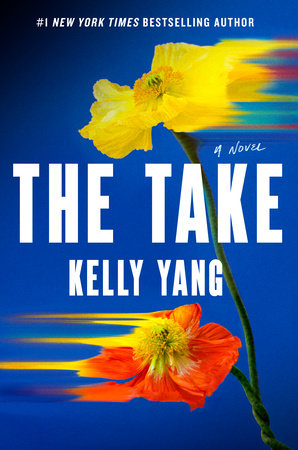
A provocative, fast-paced novel about two creative women—a young writer fighting to be heard and an older producer clinging to relevancy—and the age reversal treatment that intertwines both of their lives…from the #1 New York Times bestselling author of the beloved Front Desk series

Would you sell your youth for $3 million?

Maggie Wang, a broke young Asian American writer, needs a lifeline. Ingrid Parker, a veteran white Hollywood producer with her career on the edge, offers an irresistible deal: $3 million for ten experimental medical sessions to reverse her aging, using Maggie as a transfusion partner, and mentorship.

For Ingrid, it's a chance to reboot her fading career. For Maggie, it's access and freedom—money to support her parents and the connections to finally get her novel published.

What starts as a professional transaction exchanging blood quickly becomes a complex psychological dance. As Maggie gains unprecedented access to Ingrid's hard-earned wisdom, Ingrid sees in Maggie a weapon against an industry that's been trying to sideline her.

As their relationship intensifies, the rules around aging begin to shift. So does the balance of power between the two women, leaving both questioning who holds the upper hand and what they're willing to sacrifice to succeed.

Sharp, timely, and utterly compelling, The Take is perfect for readers of Yellowface and Such a Fun Age—a searing portrait of two women fighting to rewrite their story.
1.

Maggie Wang is late.

She tosses her box of personal items from work onto her bed and dives across the room to her laptop, firing it up. Her heart hammers in her chest. She's not going to think about the fact that she just got fired. Or the half dozen voice memos from her mom she can't bring herself to listen to. Or the two bottles of good shampoo from Target sitting on her desk, which she needs to return. Christ, who returns shampoo? People who don't have their shit together, that's who.

That's going to change after this Zoom. She'll finally stop living in this weird space between thinking she has what it takes to be a writer and wondering if it's all BS. Another cheap trick of capitalism designed to burrow deep into your bone marrow, filling you with hope without actually feeding you. Screw that. She's nauseated from eating hope for dinner. It's burning an ulcer in her stomach. She wants concrete proof that her words matter.

And in exactly two minutes, she'll get it.

Estelle Lu, the head of North Pacifica, Maggie's low-residency MFA program, has agreed to critique Maggie's novella. It took a superhuman level of effort to get her to look at it. First, she took her MFA instructor Kristy out to lunch, begging her for an introduction to Estelle. When she found out that Estelle was swamped because she was also running a literary festival, Maggie volunteered at the literary festival. Driving New York Times bestselling authors around was amazing. Unfortunately, Maggie got so enraptured listening to them talk about their book tours, she took a wrong turn on the 405, which, if you know the 405, is suicide. She ended up forty-five minutes late for her work appointment, and that was how she got fired. But she's not going to think about all that. What matters is that Estelle promised to read Maggie's story! Estelle, one of the foremothers of Asian American literature, the first person who made Maggie want to write! Made her realize that the world is bigger than her roach-infested childhood apartment in Las Vegas. That immigrant stories weren't just poverty porn but nuanced, joyful, multilayered narratives of the human experience.

And now Estelle will tell Maggie what she thinks of her deeply personal novella based on her life. It's twenty thousand words. Maggie knows it's not a novel novel, but it was all she could manage between working her passport agency job, helping her parents, and going to class. The thing about writing that they don't like to talk about in MFA programs is that it takes a hell of a lot of time, and time is not free. She just needs confirmation from someone big that her story's not a complete waste of time before continuing to invest in it. Whatever Estelle has to say about her writing, she will believe. She will believe it more than the words of her MFA instructor, who is very nice and very kind but is equally complimentary to everyone, and the more than fifty literary agents who wrote back saying sorry, novellas don't sell, or, worse, ghosting her.

As she clicks on the Zoom link, Maggie once again feels the intoxicating effect of hope washing over her.

Estelle logs on. She's dressed in a black turtleneck, her silver mane pulled back into a chic bun. Heavy gold hoops dangle from her ears as Estelle unmutes herself and declares, "Meagan, I'm so sorry I'm late. It's been crazy, with the festival and my book coming out and my dogs! How are you?"

"I'm great!" Maggie says. "And no worries, you're not late at all. And it's Maggie."

"Maggie," Estelle repeats. There's barking in the background, and Estelle shushes her dogs before turning her attention back. "Thank you again for volunteering at the literary festival! The authors absolutely adored you from what I hear!"

"That's so kind, and it was my pleasure!"

"You're sweet. It's always so hard to find people to drive these authors during the day. Everyone's so 'busy.'" Estelle rolls her eyes. "Like there's anything more important than listening to your literary hero!"

"Speaking of literary heroes, you're such an inspiration to me! Silk Threads"-Maggie puts a hand to her chest, mentioning Estelle's most famous book-"was incredible. My mother and I both sobbed."

"You know, I didn't expect that book to find commercial success. But some books, they just find a way in with people."

Maggie holds her breath, hoping that her novella found a way in with Estelle, too.

"And did you . . . ?" Maggie swallows hard. She flushes, slightly embarrassed. Just ask her! "Did you have a chance to read my novella?"

"I did." Estelle pauses for an eternity. "How honest do you want me to be?"

"Honest."

"Sometimes I find that people say they want to hear the truth, but they don't really want to hear the truth. They want to hear that they are special. That the way they see the world is profound. But mathematically, that cannot be. It takes an extraordinary person to come up with words that will cut through the noise in today's world. And extraordinary is, by definition . . . rare."

"And based on what you've read . . . am I . . ." She bites her lip. "Rare?"

Estelle answers with a flat "No."

Maggie almost doesn't hear her at first.

The room starts to spin as all her parents' worries and warnings about her dreams tumble into her head (Are you sure you want to write? Why?), and all her bad decisions ricochet off the wall, from the box of personal items she brought from work to the shampoo she can't afford judging her in the corner.

"Your words . . . they're nice sentences," Estelle quickly says.

Maggie nods, trying not to cry.

"But they're hollow. They don't make me feel. The novel's about love. How old are you? Twenty-two?"

"Twenty-three," Maggie corrects.

"Twenty-three. A baby!" Estelle says. "To write a novel about love, you have to have loved! You have to have lived. You have to understand the world to come up with something fresh and original to say about it. You have to have felt!"

Maggie feels her whole face tightening. Now she's just pissed. Of course she's lived! And felt! And loved! What a sick, privileged thing to say to a younger writer. Just because she's in her twenties she's not qualified to express any thoughts? For all she knows, maybe what she has with Bryce, her boyfriend whom she met in her MFA class-that could be love. Half-French and half-Singaporean, Bryce was hot enough to make Maggie pin his picture during their first class Zoom. But the sexiest thing about Bryce was always how sure he was in his vision. Once he wrote a scene, he wasn't changing it. She'd kill to have that now. Instead she leans in toward the screen, trying to convince Estelle not to write her off just because she's young.

"I may be twenty-three, but I've been through more than most people have in a lifetime. I grew up in Las Vegas, on the Strip. I've seen things. I watched a girl OD when I was eight years old-"

"Those are all just pictures with no frames," Estelle says, cutting her off.

"And these frames . . . you're saying it's impossible for me to get them in my twenties?"

"Not impossible. On a rare occasion I'll see it." There's that word again-rare. Maggie wants to scream. "I'm not seeing them from these pages. I'm sorry."

Maggie tries to save the last shred of self-confidence she has left. "But I've been getting published. I wrote an opinion piece in the LA Times about Monterey Park, where my parents live. You know, after the shooting-"

"Journalism's different," Estelle says. "You may have better luck there with the right editor. And certainly, broadcast journalism may be an option with your pretty advantage . . ."

Did she just say pretty advantage?! Oh, this bitch just won't stop!

Maggie says tersely, "Thanks. I'll think about it."

Tears slam against the backs of her eyes as every despicable doubt she ever had about herself resurfaces and fogs up her mind.

"My pleasure," Estelle says. She does a little wave and ends the Zoom with "Go and get some life experience! You'll see what a difference it makes on the page!"

Maggie throws her laptop down. Her phone dings. It's her mom, with a text.

How'd it go??

She made the mistake of telling them about this Zoom. Fuck! Now they're never going to stop pestering her.

Great! she writes back.

Her phone immediately starts ringing. Mom obviously doesn't buy it. She should have sent her a longer adjective. A word Mom doesn't understand so she'd have to look it up and Maggie could buy herself some time and beg her old boss to at least get her job back. She texts Mr. Patel at RightNowPassport.

Please can I have another chance?
I won't be late this time. I'll be focused!

She bites her lip, waiting for Mr. Patel to show her some kindness. She works as a passport proxy for rich people who want to get their passports renewed but don't want to go through the obscene inconvenience of going to their appointment. And OK, so she was thirty-eight minutes late and now Monica and Joe Pierce aren't going to be able to make it to Cabo in two days, but she'll never make the dumb mistake of volunteering for Estelle Lu again! Please, she adds. She just needs this job for a little while longer until she gets another sign that her writing is good, because this-whatever just happened between her and Estelle-can't be it!

Sorry I already filled your position. You should have thought about that before you blew me off. You don't live up to the credo of RightNowPassport.

The credo of RightNowPassport, really? They price gouge rich vacationers for a living! Maggie glares bitterly at the text.

As Mom's frantic texts multiply, Maggie grabs the expensive shampoo from her desk, opens the top, and starts sniffing. How could Estelle say those words? A fellow Chinese American author! Whatever happened to lifting one another up? Is the pie so small for Asian American stories that Estelle has to stab another Asian American woman before she even tries, just to feel good about herself?

Her roommate, Willa, walks into her room. A tall, redhead-turned-blond actress from Fresno who does OnlyFans on the side to make rent, Willa takes one look at her and immediately pulls the shampoo out of Maggie's hands. She sits down and wraps her arms around Maggie.

"Thanks," she mutters, clinging to Willa.

She tries to talk, but every word comes out as a sharp, painful scratch. Willa must guess it's because of Estelle. "Fuck her. It's going to be OK."

Maggie hugs Willa back, grateful. She really hit the roommate jackpot. She could have been stuck with a judgy UCLA law student barking at her to pay her rent early; instead she got kind, free-spirted Willa, who always quietly covers for her when she's a few days late and encourages her to keep writing. The thing is, now she doesn't know if she should. Estelle's devastating critique has taken all the air out of her. What if what she's saying is true? If Maggie was really any good, wouldn't she have more to show for it by now?

"I promised my parents, if the Zoom was bad, I'd get a real job," she chokes out.

"Hey. Don't do this to yourself. It's not their life. It's yours."

Maggie doesn't know how to tell her white friend that when you have immigrant parents, the rules aren't the same. Every minute of every day is filled with a nonstop running list of all the things they've ever done for you.

"If you need some extra cash, there are options. I can show you . . ."

She glances over. It's not the first time Willa's mentioned camming to Maggie. And while Maggie has no problem with sex work-she grew up in Vegas!-something about putting her body out there for strangers to judge, when her words have already been brutally rejected by agents, seems like it might just crush her.

"Thanks," she says, giving Willa her bravest smile.

When her roommate leaves, Maggie puts on some music. She wishes she didn't care what Estelle or anyone else thinks about her writing, and she could just do it. Because she trusts her vision. Because she knows she's good. Because it's not hope that she's living on, it's conviction. When is she ever going to get there?

2.

Ingrid Parker scowls, which, if she had a little less Botox, you'd see as a scowl.

She's sitting in the spa-like office of Dr. Alex Hayes, a concierge doctor she drops five grand a month on-out of pocket-so she can get all her checkups, her Botox, and her fillers in one place.

She hates having to get all this shit done. If it were up to her, she'd never let another needle near her skin, but this is Hollywood, where they gasp if you show an actual wrinkle. How many times has the studio called her with concerns about whether an actress was too old? She'd respond by making her argument that women can and should have a whole life, not just a shelf life. And everyone would say, Of course, of course, but objectively speaking, can she carry the movie?

Which is how she ended up here in this overpriced waiting cell.

She takes off her white blazer and crosses her legs, shifting her weight on Dr. Hayes's minimalist steel chair. She's trying to do Kegels while rereading the new pitch she just delivered to the studio with one of her writers, Mel. Ingrid's been trying to get Summer Rain made for years. It's arguably one of the most influential titles in feminist literature. Ingrid remembers first reading it when she was sixteen; it's about a housewife who dares ask What now? after her husband does not fulfill her. Even then Ingrid knew it had to be a movie. But there was never the right writer and never the right direction until now. This is the moment. She can feel it.

In a way, she's glad she waited. Now, at the age of fifty-three, she can finally appreciate the abyss that is being undervalued and overlooked by society, certainly more than Tasha Collins, the other major female producer at her studio, can. A twenty-eight-year-old novelist turned writer-producer, Tasha tripped sideways onto the scene when she insisted on adapting one of her books. Ingrid likes Tasha. She's happy for her-they need more female producers in the industry, and at least her movies are not gratuitously violent like the shit that Blake James puts out. But what does Tasha know about the torture of being passed up? She's twenty-eight with an overall deal, for God's sake.
Praise for The Take

“One part The Substance, another part The Devil Wears Prada, The Take is a juicy, twisty take on aging, success, and race. Told in a sharp and hilarious voice, The Take is sure to be one of the hottest books of spring.”
Marie Claire

"Kelly Yang is a creative force!"
Chanel Miller, New York Times bestselling author of Know My Name

"Breathlessly plotted and fearlessly told, The Take is a timely, incisive examination of ambition, aging, and who gets to tell whose stories in Hollywood."
Grace D. Li, New York Times bestselling author of Portrait of a Thief

“A propulsive interrogation of privilege, systemic barriers, and white feminism.”
Qian Julie Wang, New York Times bestselling author of Beautiful Country

"I am blown away! Who knew the breadth that Kelly Yang has? She can write it all—children's books, YA, and now she's exploding onto the adult scene with the most intense, breathtaking book. With a wholly original, fresh concept, Yang takes on tough topics like race and socioeconomic discrepancies. Thought-provoking and brilliant."
Jesse Q. Sutanto, bestselling author of Vera Wong's Unsolicited Advice for Murderers

“An exhilarating read about literal and figurative succubuses that sucks you into the dysfunctional spiral of two women who are desperate to change their lives—fast-paced, fun and fantastically unhinged!”
Eve J. Chung, bestselling author of Daughters of Shandong

“Industry drama, naive ambition, a devil’s bargain, and the ever-seductive lure of youth and its illusory trappings drive this propulsive, thrilling romp of a novel. I finished it in one sitting.”
Jemimah Wei, author of GMA book club pick The Original Daughter

"[A] clever satire."
Publishers Weekly

“Wellness horror meets capitalism noir in Kelly Yang’s vicious send-off of the lies we tell to those we exploit.”
Crime Reads
© Jessica Sample
Kelly Yang is the #1 New York Times bestselling author of the Front Desk series, New from Here, Finally Seen, Finally Heard, young adult novels Parachutes and Private Label, and picture books Yes We Will and Little Bird Laila. Her books have earned multiple awards, including the 2019 APALA Award for Children’s Literature and the Strega Prize, and have featured on multiple best of the year lists. Front Desk was named one of the Best Books of the 21st Century by Kirkus Reviews. In addition, Kelly has written screenplays and television pilots for Netflix, CBS Studios, and the CW. Kelly immigrated to the United States when she was six years old and grew up in Southern California. She went to college early and is a graduate of UC Berkeley and Harvard Law School. The Take is her first adult novel. View titles by Kelly Yang

About

A provocative, fast-paced novel about two creative women—a young writer fighting to be heard and an older producer clinging to relevancy—and the age reversal treatment that intertwines both of their lives…from the #1 New York Times bestselling author of the beloved Front Desk series

Would you sell your youth for $3 million?

Maggie Wang, a broke young Asian American writer, needs a lifeline. Ingrid Parker, a veteran white Hollywood producer with her career on the edge, offers an irresistible deal: $3 million for ten experimental medical sessions to reverse her aging, using Maggie as a transfusion partner, and mentorship.

For Ingrid, it's a chance to reboot her fading career. For Maggie, it's access and freedom—money to support her parents and the connections to finally get her novel published.

What starts as a professional transaction exchanging blood quickly becomes a complex psychological dance. As Maggie gains unprecedented access to Ingrid's hard-earned wisdom, Ingrid sees in Maggie a weapon against an industry that's been trying to sideline her.

As their relationship intensifies, the rules around aging begin to shift. So does the balance of power between the two women, leaving both questioning who holds the upper hand and what they're willing to sacrifice to succeed.

Sharp, timely, and utterly compelling, The Take is perfect for readers of Yellowface and Such a Fun Age—a searing portrait of two women fighting to rewrite their story.

Excerpt

1.

Maggie Wang is late.

She tosses her box of personal items from work onto her bed and dives across the room to her laptop, firing it up. Her heart hammers in her chest. She's not going to think about the fact that she just got fired. Or the half dozen voice memos from her mom she can't bring herself to listen to. Or the two bottles of good shampoo from Target sitting on her desk, which she needs to return. Christ, who returns shampoo? People who don't have their shit together, that's who.

That's going to change after this Zoom. She'll finally stop living in this weird space between thinking she has what it takes to be a writer and wondering if it's all BS. Another cheap trick of capitalism designed to burrow deep into your bone marrow, filling you with hope without actually feeding you. Screw that. She's nauseated from eating hope for dinner. It's burning an ulcer in her stomach. She wants concrete proof that her words matter.

And in exactly two minutes, she'll get it.

Estelle Lu, the head of North Pacifica, Maggie's low-residency MFA program, has agreed to critique Maggie's novella. It took a superhuman level of effort to get her to look at it. First, she took her MFA instructor Kristy out to lunch, begging her for an introduction to Estelle. When she found out that Estelle was swamped because she was also running a literary festival, Maggie volunteered at the literary festival. Driving New York Times bestselling authors around was amazing. Unfortunately, Maggie got so enraptured listening to them talk about their book tours, she took a wrong turn on the 405, which, if you know the 405, is suicide. She ended up forty-five minutes late for her work appointment, and that was how she got fired. But she's not going to think about all that. What matters is that Estelle promised to read Maggie's story! Estelle, one of the foremothers of Asian American literature, the first person who made Maggie want to write! Made her realize that the world is bigger than her roach-infested childhood apartment in Las Vegas. That immigrant stories weren't just poverty porn but nuanced, joyful, multilayered narratives of the human experience.

And now Estelle will tell Maggie what she thinks of her deeply personal novella based on her life. It's twenty thousand words. Maggie knows it's not a novel novel, but it was all she could manage between working her passport agency job, helping her parents, and going to class. The thing about writing that they don't like to talk about in MFA programs is that it takes a hell of a lot of time, and time is not free. She just needs confirmation from someone big that her story's not a complete waste of time before continuing to invest in it. Whatever Estelle has to say about her writing, she will believe. She will believe it more than the words of her MFA instructor, who is very nice and very kind but is equally complimentary to everyone, and the more than fifty literary agents who wrote back saying sorry, novellas don't sell, or, worse, ghosting her.

As she clicks on the Zoom link, Maggie once again feels the intoxicating effect of hope washing over her.

Estelle logs on. She's dressed in a black turtleneck, her silver mane pulled back into a chic bun. Heavy gold hoops dangle from her ears as Estelle unmutes herself and declares, "Meagan, I'm so sorry I'm late. It's been crazy, with the festival and my book coming out and my dogs! How are you?"

"I'm great!" Maggie says. "And no worries, you're not late at all. And it's Maggie."

"Maggie," Estelle repeats. There's barking in the background, and Estelle shushes her dogs before turning her attention back. "Thank you again for volunteering at the literary festival! The authors absolutely adored you from what I hear!"

"That's so kind, and it was my pleasure!"

"You're sweet. It's always so hard to find people to drive these authors during the day. Everyone's so 'busy.'" Estelle rolls her eyes. "Like there's anything more important than listening to your literary hero!"

"Speaking of literary heroes, you're such an inspiration to me! Silk Threads"-Maggie puts a hand to her chest, mentioning Estelle's most famous book-"was incredible. My mother and I both sobbed."

"You know, I didn't expect that book to find commercial success. But some books, they just find a way in with people."

Maggie holds her breath, hoping that her novella found a way in with Estelle, too.

"And did you . . . ?" Maggie swallows hard. She flushes, slightly embarrassed. Just ask her! "Did you have a chance to read my novella?"

"I did." Estelle pauses for an eternity. "How honest do you want me to be?"

"Honest."

"Sometimes I find that people say they want to hear the truth, but they don't really want to hear the truth. They want to hear that they are special. That the way they see the world is profound. But mathematically, that cannot be. It takes an extraordinary person to come up with words that will cut through the noise in today's world. And extraordinary is, by definition . . . rare."

"And based on what you've read . . . am I . . ." She bites her lip. "Rare?"

Estelle answers with a flat "No."

Maggie almost doesn't hear her at first.

The room starts to spin as all her parents' worries and warnings about her dreams tumble into her head (Are you sure you want to write? Why?), and all her bad decisions ricochet off the wall, from the box of personal items she brought from work to the shampoo she can't afford judging her in the corner.

"Your words . . . they're nice sentences," Estelle quickly says.

Maggie nods, trying not to cry.

"But they're hollow. They don't make me feel. The novel's about love. How old are you? Twenty-two?"

"Twenty-three," Maggie corrects.

"Twenty-three. A baby!" Estelle says. "To write a novel about love, you have to have loved! You have to have lived. You have to understand the world to come up with something fresh and original to say about it. You have to have felt!"

Maggie feels her whole face tightening. Now she's just pissed. Of course she's lived! And felt! And loved! What a sick, privileged thing to say to a younger writer. Just because she's in her twenties she's not qualified to express any thoughts? For all she knows, maybe what she has with Bryce, her boyfriend whom she met in her MFA class-that could be love. Half-French and half-Singaporean, Bryce was hot enough to make Maggie pin his picture during their first class Zoom. But the sexiest thing about Bryce was always how sure he was in his vision. Once he wrote a scene, he wasn't changing it. She'd kill to have that now. Instead she leans in toward the screen, trying to convince Estelle not to write her off just because she's young.

"I may be twenty-three, but I've been through more than most people have in a lifetime. I grew up in Las Vegas, on the Strip. I've seen things. I watched a girl OD when I was eight years old-"

"Those are all just pictures with no frames," Estelle says, cutting her off.

"And these frames . . . you're saying it's impossible for me to get them in my twenties?"

"Not impossible. On a rare occasion I'll see it." There's that word again-rare. Maggie wants to scream. "I'm not seeing them from these pages. I'm sorry."

Maggie tries to save the last shred of self-confidence she has left. "But I've been getting published. I wrote an opinion piece in the LA Times about Monterey Park, where my parents live. You know, after the shooting-"

"Journalism's different," Estelle says. "You may have better luck there with the right editor. And certainly, broadcast journalism may be an option with your pretty advantage . . ."

Did she just say pretty advantage?! Oh, this bitch just won't stop!

Maggie says tersely, "Thanks. I'll think about it."

Tears slam against the backs of her eyes as every despicable doubt she ever had about herself resurfaces and fogs up her mind.

"My pleasure," Estelle says. She does a little wave and ends the Zoom with "Go and get some life experience! You'll see what a difference it makes on the page!"

Maggie throws her laptop down. Her phone dings. It's her mom, with a text.

How'd it go??

She made the mistake of telling them about this Zoom. Fuck! Now they're never going to stop pestering her.

Great! she writes back.

Her phone immediately starts ringing. Mom obviously doesn't buy it. She should have sent her a longer adjective. A word Mom doesn't understand so she'd have to look it up and Maggie could buy herself some time and beg her old boss to at least get her job back. She texts Mr. Patel at RightNowPassport.

Please can I have another chance?
I won't be late this time. I'll be focused!

She bites her lip, waiting for Mr. Patel to show her some kindness. She works as a passport proxy for rich people who want to get their passports renewed but don't want to go through the obscene inconvenience of going to their appointment. And OK, so she was thirty-eight minutes late and now Monica and Joe Pierce aren't going to be able to make it to Cabo in two days, but she'll never make the dumb mistake of volunteering for Estelle Lu again! Please, she adds. She just needs this job for a little while longer until she gets another sign that her writing is good, because this-whatever just happened between her and Estelle-can't be it!

Sorry I already filled your position. You should have thought about that before you blew me off. You don't live up to the credo of RightNowPassport.

The credo of RightNowPassport, really? They price gouge rich vacationers for a living! Maggie glares bitterly at the text.

As Mom's frantic texts multiply, Maggie grabs the expensive shampoo from her desk, opens the top, and starts sniffing. How could Estelle say those words? A fellow Chinese American author! Whatever happened to lifting one another up? Is the pie so small for Asian American stories that Estelle has to stab another Asian American woman before she even tries, just to feel good about herself?

Her roommate, Willa, walks into her room. A tall, redhead-turned-blond actress from Fresno who does OnlyFans on the side to make rent, Willa takes one look at her and immediately pulls the shampoo out of Maggie's hands. She sits down and wraps her arms around Maggie.

"Thanks," she mutters, clinging to Willa.

She tries to talk, but every word comes out as a sharp, painful scratch. Willa must guess it's because of Estelle. "Fuck her. It's going to be OK."

Maggie hugs Willa back, grateful. She really hit the roommate jackpot. She could have been stuck with a judgy UCLA law student barking at her to pay her rent early; instead she got kind, free-spirted Willa, who always quietly covers for her when she's a few days late and encourages her to keep writing. The thing is, now she doesn't know if she should. Estelle's devastating critique has taken all the air out of her. What if what she's saying is true? If Maggie was really any good, wouldn't she have more to show for it by now?

"I promised my parents, if the Zoom was bad, I'd get a real job," she chokes out.

"Hey. Don't do this to yourself. It's not their life. It's yours."

Maggie doesn't know how to tell her white friend that when you have immigrant parents, the rules aren't the same. Every minute of every day is filled with a nonstop running list of all the things they've ever done for you.

"If you need some extra cash, there are options. I can show you . . ."

She glances over. It's not the first time Willa's mentioned camming to Maggie. And while Maggie has no problem with sex work-she grew up in Vegas!-something about putting her body out there for strangers to judge, when her words have already been brutally rejected by agents, seems like it might just crush her.

"Thanks," she says, giving Willa her bravest smile.

When her roommate leaves, Maggie puts on some music. She wishes she didn't care what Estelle or anyone else thinks about her writing, and she could just do it. Because she trusts her vision. Because she knows she's good. Because it's not hope that she's living on, it's conviction. When is she ever going to get there?

2.

Ingrid Parker scowls, which, if she had a little less Botox, you'd see as a scowl.

She's sitting in the spa-like office of Dr. Alex Hayes, a concierge doctor she drops five grand a month on-out of pocket-so she can get all her checkups, her Botox, and her fillers in one place.

She hates having to get all this shit done. If it were up to her, she'd never let another needle near her skin, but this is Hollywood, where they gasp if you show an actual wrinkle. How many times has the studio called her with concerns about whether an actress was too old? She'd respond by making her argument that women can and should have a whole life, not just a shelf life. And everyone would say, Of course, of course, but objectively speaking, can she carry the movie?

Which is how she ended up here in this overpriced waiting cell.

She takes off her white blazer and crosses her legs, shifting her weight on Dr. Hayes's minimalist steel chair. She's trying to do Kegels while rereading the new pitch she just delivered to the studio with one of her writers, Mel. Ingrid's been trying to get Summer Rain made for years. It's arguably one of the most influential titles in feminist literature. Ingrid remembers first reading it when she was sixteen; it's about a housewife who dares ask What now? after her husband does not fulfill her. Even then Ingrid knew it had to be a movie. But there was never the right writer and never the right direction until now. This is the moment. She can feel it.

In a way, she's glad she waited. Now, at the age of fifty-three, she can finally appreciate the abyss that is being undervalued and overlooked by society, certainly more than Tasha Collins, the other major female producer at her studio, can. A twenty-eight-year-old novelist turned writer-producer, Tasha tripped sideways onto the scene when she insisted on adapting one of her books. Ingrid likes Tasha. She's happy for her-they need more female producers in the industry, and at least her movies are not gratuitously violent like the shit that Blake James puts out. But what does Tasha know about the torture of being passed up? She's twenty-eight with an overall deal, for God's sake.

Reviews

Praise for The Take

“One part The Substance, another part The Devil Wears Prada, The Take is a juicy, twisty take on aging, success, and race. Told in a sharp and hilarious voice, The Take is sure to be one of the hottest books of spring.”
Marie Claire

"Kelly Yang is a creative force!"
Chanel Miller, New York Times bestselling author of Know My Name

"Breathlessly plotted and fearlessly told, The Take is a timely, incisive examination of ambition, aging, and who gets to tell whose stories in Hollywood."
Grace D. Li, New York Times bestselling author of Portrait of a Thief

“A propulsive interrogation of privilege, systemic barriers, and white feminism.”
Qian Julie Wang, New York Times bestselling author of Beautiful Country

"I am blown away! Who knew the breadth that Kelly Yang has? She can write it all—children's books, YA, and now she's exploding onto the adult scene with the most intense, breathtaking book. With a wholly original, fresh concept, Yang takes on tough topics like race and socioeconomic discrepancies. Thought-provoking and brilliant."
Jesse Q. Sutanto, bestselling author of Vera Wong's Unsolicited Advice for Murderers

“An exhilarating read about literal and figurative succubuses that sucks you into the dysfunctional spiral of two women who are desperate to change their lives—fast-paced, fun and fantastically unhinged!”
Eve J. Chung, bestselling author of Daughters of Shandong

“Industry drama, naive ambition, a devil’s bargain, and the ever-seductive lure of youth and its illusory trappings drive this propulsive, thrilling romp of a novel. I finished it in one sitting.”
Jemimah Wei, author of GMA book club pick The Original Daughter

"[A] clever satire."
Publishers Weekly

“Wellness horror meets capitalism noir in Kelly Yang’s vicious send-off of the lies we tell to those we exploit.”
Crime Reads

Author

© Jessica Sample
Kelly Yang is the #1 New York Times bestselling author of the Front Desk series, New from Here, Finally Seen, Finally Heard, young adult novels Parachutes and Private Label, and picture books Yes We Will and Little Bird Laila. Her books have earned multiple awards, including the 2019 APALA Award for Children’s Literature and the Strega Prize, and have featured on multiple best of the year lists. Front Desk was named one of the Best Books of the 21st Century by Kirkus Reviews. In addition, Kelly has written screenplays and television pilots for Netflix, CBS Studios, and the CW. Kelly immigrated to the United States when she was six years old and grew up in Southern California. She went to college early and is a graduate of UC Berkeley and Harvard Law School. The Take is her first adult novel. View titles by Kelly Yang
  • More Websites from
    Penguin Random House
  • Common Reads
  • Library Marketing