Download high-resolution image Look inside
Listen to a clip from the audiobook
audio pause button
0:00
0:00

It Girl

A Novel

Author Allison Pataki On Tour
Look inside
Listen to a clip from the audiobook
audio pause button
0:00
0:00
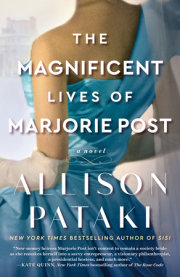
A sweeping, sensational novel of America’s first “It Girl,” whose dramatic journey to center stage echoes through the decades—from the New York Times bestselling author of The Magnificent Lives of Marjorie Post

“As stunning as the incomparable leading lady who inspired it . . . unputdownable, with a twist that will leave you breathless.”—Emily Giffin

At the dawn of the twentieth century, New York’s streets teem with change: electricity, automobiles, the brash young President Teddy Roosevelt—and the It Girls. As artists’ muses and working models, these independent young women soar to stardom not because of their pedigrees or inherited wealth, but because of their talent, charisma, and irresistible beauty. Pop culture is born, and in a world alight with Mr. Edison’s new bulbs, no one shines brighter than America’s sweetheart, Evelyn Talbot.

But the journey to stardom is not simple or straight. While working as a shopgirl, the young Evelyn is recruited as a studio model and soon catches the eye of the preeminent artists of the age. When Broadway comes calling, Evelyn solidifies her status as the first self-made American female celebrity: the iconic Gibson Girl, the most sought-after figure and face of her time. Enter a parade of powerful and power-hungry men, from world-famous architect Stanley Pierce, the visionary behind Manhattan’s mansions and iconic landmarks, to Hal Thorne, the shockingly wealthy railroad heir and premier “playboy” of high society. Each man promises comfort, glamour, security—even love. But fame and fortune are cruel teachers, and Evelyn learns that the only person she can rely on is herself.

When Evelyn finds herself at the center of a murder of passion declared “the Crime of the Century,” she is blamed for the acts of the men in her life. In the media frenzy that spirals around her, Evelyn realizes that to survive, she will have to write her own ending. But can this artists’ muse turned showgirl pull off the greatest act of her life?

It Girl is a breathtaking ride inspired by a singular artist and icon who captured the collective imagination of American society. Allison Pataki has crafted yet another unforgettable leading lady, a heroine who must find the power to change not only the world around her but her own destiny.
Chapter One

New York City

1901

I feel how the air changes when I step into the room. Crowded as Mrs. Vanderbilt’s ballroom is, it all goes charged, crackling like this new electricity that Mr. Edison has begun to brighten our world with. I sense it in their eyes, their voices, the tilts and leans of their silk-clad bodies. I glide in, and the Four Hundred go silent.

My hostess stands in the middle of her guests and offers me the slightest of nods, the quick upward pull of an approving smile. That’s my cue. I sweep farther into the massive space, taking center stage against a backdrop of gleaming marble and framed portraits of the dead Vanderbilts that line the walls. New money, these Vanderbilts. Arrivistes, but that makes them cleverer—and bolder. If they aren’t necessarily welcomed by the likes of these Four Hundred, they’ll settle for acceptance or at the very least tolerance. And they’ll do things the others wouldn’t dream of in order to gain that, like invite me—a fatherless girl from coal country—to their costume party. Give the blue bloods a salacious dance before supper. They won’t pretend to be the arbiters of taste, these Vanderbilts. They are just richer than God, and they’ll throw the best parties if it buys entrée into the clique.

Oh, but the keeper of the gates herself is here tonight, too. And surely that’s part of why Mrs. Vanderbilt smiles so triumphantly as I take my place before her guests in this grand room of hers. It’s because Mrs. Astor has deigned to accept her invitation to this flashy costume party. She’s even donned a tiara for the occasion—dressed as a royal? Or simply herself? Mrs. Astor stands sipping champagne a few paces from her hostess, flanked by two mustached men. One I recognize instantly. He’s always in the society pages. Mrs. Astor’s partner and confidant, her closest ally in keeping people in their places, Mr. Ward McAllister, studies me with an appraising eye. And I can read his lips as he tilts toward his high priestess and whispers, not disapprovingly, “Look at her. Positively sinful.” In reply, Mrs. Astor’s pristine skin reveals the faintest and most tasteful of blushes against her collar of priceless diamonds.

I’m not sure who the mustache on Mrs. Astor’s other side is, but he’s gazing at me like a puzzle he’d like to sort. He’s much taller than Mr. McAllister, and broad, with hair the color of dark copper laced with silver that calls to my mind the pelt of a fox. Under his full copper mustache are widely smiling lips.

Mrs. Vanderbilt’s orchestra strikes up the first notes of the languid melody; they have the sheet music my stage manager provided. Tonight I’ll be giving these fancy ladies and gents one of my most risqué performances, just as Mrs. Vanderbilt requested when she telephoned the theater to hire me. I shall be Salome, dancing beneath my seven veils, the biblical beauty who turned the king mad. The girl who drove Herod so deeply into his lust that he saw no choice but to grant her wish: the head of John the Baptist on a platter.

I close my eyes, draw in a slow, long breath. And as the music picks up volume, I allow it to pull me in, and I begin to move. I tug the first veil from my hair and raise it aloft. As my dark waves tumble loose and long, I flicker my fingers, and the rich scarlet covering flutters slowly to Mrs. Vanderbilt’s floor. Small gasps of shock—and delight. I lock eyes with my hostess, who is done up elaborately as Lady Liberty this evening. Her lips part in a satisfied smirk as she watches my movements. And then my eyes slide to the tall man at her side, who is staring at the skin of my neck, which I’ve just laid bare. He’s enchanted.

I drop the second veil. Deep purple. More scandalized gasps as my arms and wrists flash, uncovered. They are wondering how far I will go with this. Oh, so much farther, ladies and gentlemen. I flit my hands up and down, then over my head. My fingers flicker as the jewels of my rings catch the light of Mrs. Vanderbilt’s thousands of candles. The world is a dirty place. Keep her hands clean. My mind wanders back to the advertisement for which I modeled earlier this week, a soap campaign. I was dolled up like a sweet little shepherdess in a pastoral scene, surrounded by fake flowers as I pretended to wash before a porcelain bowl. Each day a new costume, a new scenario.

I drop the third veil now. Emerald green. I see how they lean forward, and I can tell: I’ve got them. These plump and powdered matrons who hide behind their own veils of propriety, with their thick calling cards and butler-guarded foyers, but who delight in the diversions that women like me can provide. I’m holding them all. One lady nearby is ornamented as a swan, dripping in white feathers and ropes of pearls, and just over her head I spot a framed portrait hanging on the wall: a nude in repose. Some Vanderbilt ancestor? Surely not. More likely some French courtesan whose painted flesh they’ve acquired because the artist is in fashion and they can afford to own her. And yet, I’m positively sinful.

I drop the fourth veil now, ocher, and reveal my ankles, my calves. They titter to one another. They can’t know that the further I unveil, the thicker my armor becomes. It’s not Evelyn they are seeing, the showgirl who will return home to the cramped room in the boardinghouse, where Mamma will be asleep in our shared bed. Or worse, awake and weeping in her rocking chair, quietly lamenting our turn in fortunes.

I drop the fifth veil, sapphire, and the jewels of my necklace glisten alone against the bare skin of my shoulders, my collarbone, my décolletage. I gleam like the sensational new statue, Manhattan’s infamous lady of burnished gold who spins forever and ever at the top of Madison Square Garden. And as the music winds on, I, like her, spin and spin. I don’t grow dizzy, practiced as I am, but I can tell that they do. Fox Mustache at the side of Mrs. Astor is smirking, and Mrs. Astor is hiding half her face behind her rapidly fluttering fan. But she’s not hiding her eyes—no, she’s still looking.

I drop the sixth veil. Fuchsia. Someone cries out now—“Well, I never!”—from farther back in the room. I bite down on my lower lip to stanch my smile, and I keep dancing. The music is fast now, and so are my steps. Bold! Bright! Fresh! That’s what the papers declared as this new century came roaring in. Faster than the subway train that will soon make thunder under Manhattan’s busy streets. Livelier than the jaunty notes of ragtime that bumped the waltz back into the last century. All of it new, the papers hailed, as they’d declared mine to be the face of this fresh century. The face enchanting enough to gain entry into this party of the Four Hundred. To dance before Mrs. Astor herself—something that, last century, would have never been possible.

I pluck the seventh veil. Gold. Hundreds of eyes go wide, taking in the warm sweep of my navel, my hips. My glorious figure that has made me the most in-demand artists’ model on this island, the most sought-after doll to dance in the footlights of Broadway. I can feel it, the power I wield. I stand before them, my entire body thrumming, holding them in my thrall. And then the last notes play, and I raise my scarf before my body once more, ripping the view from their ravenous eyes. And they groan, as if in physical pain, when I take the sight of my figure from them, and I fly from the room. But as I go, I hear the place erupt. Applause, cheers, scandalized chatter. They loved it. They were shocked and horrified—and yet entirely seduced.

Like Salome, I could have whatever I want from them in this moment. But I want a very different ending than the one she got.
“As stunning as the incomparable leading lady who inspired it, It Girl is a captivating story of resilience, splendor, and strength, at times dark, at times deliciously dishy. Allison Pataki pulls back the curtain on a real-life Cinderella story, bringing Evelyn’s glamour and grit vividly to life. It’s unputdownable, with a twist that will leave you breathless.”—Emily Giffin, New York Times bestselling author of The Summer Pact

“Captivating . . . Pataki expertly captures turn-of-the-twentieth-century New York City, where anything is possible, especially for the newly minted Gibson girl. Pataki has fashioned a soaring new tale—I adored it.”—Marie Benedict, New York Times bestselling author of The Personal Librarian

“A scintillating, fictionalized tale of one of America’s first models and superstars. Readers will cheer for Evelyn as she navigates the path from childhood hardship through rising stardom and the sexism and misogyny of the entertainment industry to standing on her own two feet. Inspired by true stories, It Girl is a powerful tale of female empowerment and friendship, immaculately researched and beautifully told. In crafting it, Pataki shines brighter than ever!”—Pam Jenoff, New York Times bestselling author of Last Twilight in Paris

It Girl is a rapid-fire and deliciously innovative period piece that shatters the mold and grabs our attention as we sit up and cheer for its indomitable heroine. I loved it!”—Deborah Goodrich Royce, nationally bestselling author of Reef Road

“Pataki [keeps] the reader intrigued by Evelyn’s slow awakening to reality and the enduring value of female friendship in a male-dominated world. Fans of Downton Abbey and The Gilded Age will enjoy another dip into that world of moneyed elegance.”Historical Novel Society

“Unforgettable characters and a page-turning story come to life in Allison Pataki’s latest historical fiction novel.”—Woman’s World

“[An] irresistible rags-to-riches-to-trauma tale . . . [Pataki] riffs on the real-life Evelyn Nesbit and the notorious 1906 murder of architect Stanford White by her railroad magnate husband, Harry Kendall Thaw. . . . Beneath her woes and hard-earned glamour in an era when women had no rights and few options, Evelyn is strong, courageous, and determined. Scintillating with pinpoint period details and told from Evelyn’s perspective, Pataki’s eventful, suspenseful, turn-of-the-twentieth-century novel is an entrancing progression of shocks and adaptations, suffering and liberation.”Booklist, starred review

“A somewhat fictionalized account of ‘Gibson Girl’ Evelyn Nesbit’s tumultuous fortunes, with a wholly invented ending worthy of the protagonist’s talents . . . Evelyn’s alternate fate might be a feminist sleight of hand, yet as an author’s note explains, ‘What if I give Evelyn the opportunity to reclaim her own agency, even to rewrite her own ending?’ It’s a worthy goal for a novel, and ultimately a very satisfying one. . . . Each character comes alive in this rich, dynamic novel.”—Kirkus Reviews
© Gabrielle Gerard
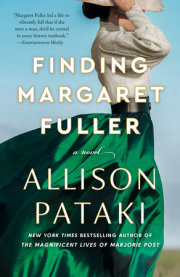
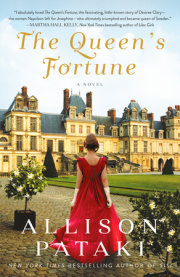
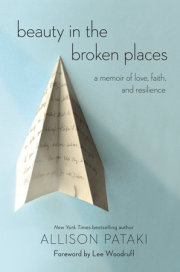
Allison Pataki is the New York Times bestselling author of The Traitors Wife, The Accidental Empress, Sisi, The Queen’s Fortune, The Magnificent Lives of Marjorie Post, Finding Margaret Fuller, Beauty in the Broken Places, and two children’s books (with Marya Myers). Pataki’s novels have been translated into more than twenty languages. A former news writer and producer, Pataki has written for The New York Times, USA Today, and other outlets. She has appeared on Today, Good Morning America, and Morning Joe. Pataki graduated cum laude from Yale University and lives in New York with her husband and family. View titles by Allison Pataki

About

A sweeping, sensational novel of America’s first “It Girl,” whose dramatic journey to center stage echoes through the decades—from the New York Times bestselling author of The Magnificent Lives of Marjorie Post

“As stunning as the incomparable leading lady who inspired it . . . unputdownable, with a twist that will leave you breathless.”—Emily Giffin

At the dawn of the twentieth century, New York’s streets teem with change: electricity, automobiles, the brash young President Teddy Roosevelt—and the It Girls. As artists’ muses and working models, these independent young women soar to stardom not because of their pedigrees or inherited wealth, but because of their talent, charisma, and irresistible beauty. Pop culture is born, and in a world alight with Mr. Edison’s new bulbs, no one shines brighter than America’s sweetheart, Evelyn Talbot.

But the journey to stardom is not simple or straight. While working as a shopgirl, the young Evelyn is recruited as a studio model and soon catches the eye of the preeminent artists of the age. When Broadway comes calling, Evelyn solidifies her status as the first self-made American female celebrity: the iconic Gibson Girl, the most sought-after figure and face of her time. Enter a parade of powerful and power-hungry men, from world-famous architect Stanley Pierce, the visionary behind Manhattan’s mansions and iconic landmarks, to Hal Thorne, the shockingly wealthy railroad heir and premier “playboy” of high society. Each man promises comfort, glamour, security—even love. But fame and fortune are cruel teachers, and Evelyn learns that the only person she can rely on is herself.

When Evelyn finds herself at the center of a murder of passion declared “the Crime of the Century,” she is blamed for the acts of the men in her life. In the media frenzy that spirals around her, Evelyn realizes that to survive, she will have to write her own ending. But can this artists’ muse turned showgirl pull off the greatest act of her life?

It Girl is a breathtaking ride inspired by a singular artist and icon who captured the collective imagination of American society. Allison Pataki has crafted yet another unforgettable leading lady, a heroine who must find the power to change not only the world around her but her own destiny.

Excerpt

Chapter One

New York City

1901

I feel how the air changes when I step into the room. Crowded as Mrs. Vanderbilt’s ballroom is, it all goes charged, crackling like this new electricity that Mr. Edison has begun to brighten our world with. I sense it in their eyes, their voices, the tilts and leans of their silk-clad bodies. I glide in, and the Four Hundred go silent.

My hostess stands in the middle of her guests and offers me the slightest of nods, the quick upward pull of an approving smile. That’s my cue. I sweep farther into the massive space, taking center stage against a backdrop of gleaming marble and framed portraits of the dead Vanderbilts that line the walls. New money, these Vanderbilts. Arrivistes, but that makes them cleverer—and bolder. If they aren’t necessarily welcomed by the likes of these Four Hundred, they’ll settle for acceptance or at the very least tolerance. And they’ll do things the others wouldn’t dream of in order to gain that, like invite me—a fatherless girl from coal country—to their costume party. Give the blue bloods a salacious dance before supper. They won’t pretend to be the arbiters of taste, these Vanderbilts. They are just richer than God, and they’ll throw the best parties if it buys entrée into the clique.

Oh, but the keeper of the gates herself is here tonight, too. And surely that’s part of why Mrs. Vanderbilt smiles so triumphantly as I take my place before her guests in this grand room of hers. It’s because Mrs. Astor has deigned to accept her invitation to this flashy costume party. She’s even donned a tiara for the occasion—dressed as a royal? Or simply herself? Mrs. Astor stands sipping champagne a few paces from her hostess, flanked by two mustached men. One I recognize instantly. He’s always in the society pages. Mrs. Astor’s partner and confidant, her closest ally in keeping people in their places, Mr. Ward McAllister, studies me with an appraising eye. And I can read his lips as he tilts toward his high priestess and whispers, not disapprovingly, “Look at her. Positively sinful.” In reply, Mrs. Astor’s pristine skin reveals the faintest and most tasteful of blushes against her collar of priceless diamonds.

I’m not sure who the mustache on Mrs. Astor’s other side is, but he’s gazing at me like a puzzle he’d like to sort. He’s much taller than Mr. McAllister, and broad, with hair the color of dark copper laced with silver that calls to my mind the pelt of a fox. Under his full copper mustache are widely smiling lips.

Mrs. Vanderbilt’s orchestra strikes up the first notes of the languid melody; they have the sheet music my stage manager provided. Tonight I’ll be giving these fancy ladies and gents one of my most risqué performances, just as Mrs. Vanderbilt requested when she telephoned the theater to hire me. I shall be Salome, dancing beneath my seven veils, the biblical beauty who turned the king mad. The girl who drove Herod so deeply into his lust that he saw no choice but to grant her wish: the head of John the Baptist on a platter.

I close my eyes, draw in a slow, long breath. And as the music picks up volume, I allow it to pull me in, and I begin to move. I tug the first veil from my hair and raise it aloft. As my dark waves tumble loose and long, I flicker my fingers, and the rich scarlet covering flutters slowly to Mrs. Vanderbilt’s floor. Small gasps of shock—and delight. I lock eyes with my hostess, who is done up elaborately as Lady Liberty this evening. Her lips part in a satisfied smirk as she watches my movements. And then my eyes slide to the tall man at her side, who is staring at the skin of my neck, which I’ve just laid bare. He’s enchanted.

I drop the second veil. Deep purple. More scandalized gasps as my arms and wrists flash, uncovered. They are wondering how far I will go with this. Oh, so much farther, ladies and gentlemen. I flit my hands up and down, then over my head. My fingers flicker as the jewels of my rings catch the light of Mrs. Vanderbilt’s thousands of candles. The world is a dirty place. Keep her hands clean. My mind wanders back to the advertisement for which I modeled earlier this week, a soap campaign. I was dolled up like a sweet little shepherdess in a pastoral scene, surrounded by fake flowers as I pretended to wash before a porcelain bowl. Each day a new costume, a new scenario.

I drop the third veil now. Emerald green. I see how they lean forward, and I can tell: I’ve got them. These plump and powdered matrons who hide behind their own veils of propriety, with their thick calling cards and butler-guarded foyers, but who delight in the diversions that women like me can provide. I’m holding them all. One lady nearby is ornamented as a swan, dripping in white feathers and ropes of pearls, and just over her head I spot a framed portrait hanging on the wall: a nude in repose. Some Vanderbilt ancestor? Surely not. More likely some French courtesan whose painted flesh they’ve acquired because the artist is in fashion and they can afford to own her. And yet, I’m positively sinful.

I drop the fourth veil now, ocher, and reveal my ankles, my calves. They titter to one another. They can’t know that the further I unveil, the thicker my armor becomes. It’s not Evelyn they are seeing, the showgirl who will return home to the cramped room in the boardinghouse, where Mamma will be asleep in our shared bed. Or worse, awake and weeping in her rocking chair, quietly lamenting our turn in fortunes.

I drop the fifth veil, sapphire, and the jewels of my necklace glisten alone against the bare skin of my shoulders, my collarbone, my décolletage. I gleam like the sensational new statue, Manhattan’s infamous lady of burnished gold who spins forever and ever at the top of Madison Square Garden. And as the music winds on, I, like her, spin and spin. I don’t grow dizzy, practiced as I am, but I can tell that they do. Fox Mustache at the side of Mrs. Astor is smirking, and Mrs. Astor is hiding half her face behind her rapidly fluttering fan. But she’s not hiding her eyes—no, she’s still looking.

I drop the sixth veil. Fuchsia. Someone cries out now—“Well, I never!”—from farther back in the room. I bite down on my lower lip to stanch my smile, and I keep dancing. The music is fast now, and so are my steps. Bold! Bright! Fresh! That’s what the papers declared as this new century came roaring in. Faster than the subway train that will soon make thunder under Manhattan’s busy streets. Livelier than the jaunty notes of ragtime that bumped the waltz back into the last century. All of it new, the papers hailed, as they’d declared mine to be the face of this fresh century. The face enchanting enough to gain entry into this party of the Four Hundred. To dance before Mrs. Astor herself—something that, last century, would have never been possible.

I pluck the seventh veil. Gold. Hundreds of eyes go wide, taking in the warm sweep of my navel, my hips. My glorious figure that has made me the most in-demand artists’ model on this island, the most sought-after doll to dance in the footlights of Broadway. I can feel it, the power I wield. I stand before them, my entire body thrumming, holding them in my thrall. And then the last notes play, and I raise my scarf before my body once more, ripping the view from their ravenous eyes. And they groan, as if in physical pain, when I take the sight of my figure from them, and I fly from the room. But as I go, I hear the place erupt. Applause, cheers, scandalized chatter. They loved it. They were shocked and horrified—and yet entirely seduced.

Like Salome, I could have whatever I want from them in this moment. But I want a very different ending than the one she got.

Reviews

“As stunning as the incomparable leading lady who inspired it, It Girl is a captivating story of resilience, splendor, and strength, at times dark, at times deliciously dishy. Allison Pataki pulls back the curtain on a real-life Cinderella story, bringing Evelyn’s glamour and grit vividly to life. It’s unputdownable, with a twist that will leave you breathless.”—Emily Giffin, New York Times bestselling author of The Summer Pact

“Captivating . . . Pataki expertly captures turn-of-the-twentieth-century New York City, where anything is possible, especially for the newly minted Gibson girl. Pataki has fashioned a soaring new tale—I adored it.”—Marie Benedict, New York Times bestselling author of The Personal Librarian

“A scintillating, fictionalized tale of one of America’s first models and superstars. Readers will cheer for Evelyn as she navigates the path from childhood hardship through rising stardom and the sexism and misogyny of the entertainment industry to standing on her own two feet. Inspired by true stories, It Girl is a powerful tale of female empowerment and friendship, immaculately researched and beautifully told. In crafting it, Pataki shines brighter than ever!”—Pam Jenoff, New York Times bestselling author of Last Twilight in Paris

It Girl is a rapid-fire and deliciously innovative period piece that shatters the mold and grabs our attention as we sit up and cheer for its indomitable heroine. I loved it!”—Deborah Goodrich Royce, nationally bestselling author of Reef Road

“Pataki [keeps] the reader intrigued by Evelyn’s slow awakening to reality and the enduring value of female friendship in a male-dominated world. Fans of Downton Abbey and The Gilded Age will enjoy another dip into that world of moneyed elegance.”Historical Novel Society

“Unforgettable characters and a page-turning story come to life in Allison Pataki’s latest historical fiction novel.”—Woman’s World

“[An] irresistible rags-to-riches-to-trauma tale . . . [Pataki] riffs on the real-life Evelyn Nesbit and the notorious 1906 murder of architect Stanford White by her railroad magnate husband, Harry Kendall Thaw. . . . Beneath her woes and hard-earned glamour in an era when women had no rights and few options, Evelyn is strong, courageous, and determined. Scintillating with pinpoint period details and told from Evelyn’s perspective, Pataki’s eventful, suspenseful, turn-of-the-twentieth-century novel is an entrancing progression of shocks and adaptations, suffering and liberation.”Booklist, starred review

“A somewhat fictionalized account of ‘Gibson Girl’ Evelyn Nesbit’s tumultuous fortunes, with a wholly invented ending worthy of the protagonist’s talents . . . Evelyn’s alternate fate might be a feminist sleight of hand, yet as an author’s note explains, ‘What if I give Evelyn the opportunity to reclaim her own agency, even to rewrite her own ending?’ It’s a worthy goal for a novel, and ultimately a very satisfying one. . . . Each character comes alive in this rich, dynamic novel.”—Kirkus Reviews

Author

© Gabrielle Gerard
Allison Pataki is the New York Times bestselling author of The Traitors Wife, The Accidental Empress, Sisi, The Queen’s Fortune, The Magnificent Lives of Marjorie Post, Finding Margaret Fuller, Beauty in the Broken Places, and two children’s books (with Marya Myers). Pataki’s novels have been translated into more than twenty languages. A former news writer and producer, Pataki has written for The New York Times, USA Today, and other outlets. She has appeared on Today, Good Morning America, and Morning Joe. Pataki graduated cum laude from Yale University and lives in New York with her husband and family. View titles by Allison Pataki
  • More Websites from
    Penguin Random House
  • Common Reads
  • Library Marketing