Introduction“I’m a chocoholic.”
You might think that term would apply to me, but I’ve never liked it. “Chocoholic” implies that enjoying chocolate is a problem. But I love chocolate and don’t consider that a problem at all. It’s quite the opposite: Chocolate makes me happy, and I know from baking in restaurants, and for friends and family at home, that I’m not the only one who feels this way. When I eat out, I’m always up for whatever chocolate dessert is on the menu. When I visit a bakery, it’s the pastries with chocolate that get my attention. And when I’m baking for guests in my apartment in Paris, the one thing that never fails to get an Ooh la la when brought to the table is something made with chocolate.
I’ve craved chocolate ever since I was a kid and snuck bites from the squares that came individually wrapped in waxed paper that my mother kept in the pantry for baking. That’s also when I learned—the hard way—the difference between semisweet chocolate and unsweetened chocolate, which was called baking chocolate back then. After I discerned which chocolate in the pantry was for eating, and which was for baking, I was off and running.
Nowadays, I enjoy every kind of chocolate I can get my hands on: bittersweet, semisweet, milk, white, and, yes, even unsweetened (though preferably in something baked). I love chopping and melting chocolate. And I love stirring chocolate chips and chunks into cookie doughs, folding chocolate into cake batters, melting it into hot chocolate, and helping a few chunks dissolve in a big pot of chili. After all these years of cooking, baking, and eating chocolate, I still love the taste and sensation that I get from it, even if it’s just one exquisite bonbon from a box of chocolates.
My baking career began at Chez Panisse, where the style of cooking was cuisine du marché, and the focus was on locally produced foods. There, I was introduced to Guittard chocolate, made just south of San Francisco. The family-owned company was founded in 1868 by Etienne Guittard, a French immigrant who came to the San Francisco Bay Area to cash in on the Gold Rush, but instead found success making and selling chocolate to those who struck gold. In the pastry department at Chez Panisse, we bought their chocolate in ten-pound blocks as thick as dictionaries, which we broke into more manageable chunks to make everything from dark chocolate ice cream to French-style chocolate cakes. Years later, people would ask me why I moved to France, and perhaps the seeds had been planted in me then and there.
Meanwhile, back in Berkeley, just down the street was Cocolat, Alice Medrich’s groundbreaking pastry shop devoted exclusively to chocolate. I’d stop in before work for a chocolate-covered truffle the size of a golf ball and devour it before my shift. I’d discovered good chocolate and was hooked; I wanted to learn more.
So I sought out a formal education in chocolate, first going to chocolate school in Belgium. There, I learned how to dip and enrobe chocolates under the tutelage of Jean-Pierre Wybauw, a Belgian chocolatier so renowned he was nicknamed “Monsieur Chocolate.” A few years later, I found myself in France, taking classes in candy-making and classic desserts at the famed École Lenôtre, and eventually at L’École du Grand Chocolat Valrhona, a chocolate school that’s attached to the Valrhona chocolate factory, which was about as close to chocolate heaven as you could get.
After learning so much about chocolate, I wanted to share my passion and began leading chocolate tours in France after moving here. What started off as day tours in Paris, taking guests to my favorite chocolate shops, turned into in-depth excursions that lasted an entire week, giving me more time to share the wider world of chocolate with visitors from around the world. I’d become friendly with some of the top chocolatiers in the city, and they invited us into their kitchens and workshops for exclusive, behind-the-scenes visits, not only to watch them work but also to sample their chocolates right as they came off the moving belts of the enrobing machines. By the time I stopped doing the tours ten years later, the waiting list had grown to a few hundred people. Evidently, I’m not the only one who likes chocolate.
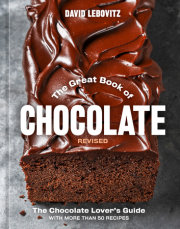
Shortly after I began writing cookbooks, an editor at Ten Speed Press asked me to write a chocolate guidebook with recipes as part of the company’s Great Book series, which offered deep dives into singular ingredients, such as chiles, as well as quintessential libations, such as the margarita. I was thrilled to take on the project. At the time, America was on the cusp of a chocolate revolution led by winemaker John Scharffenberger and Robert Steinberg, a doctor. Together they turned their obsession into the bean-to-bar Scharffen Berger chocolate company, which was such a success that it was eventually acquired for close to $50 million (according to
The New York Times) . . . and, yes, I’m still asking myself: Why didn’t I buy any shares?
As the world of bean-to-bar chocolate grew, I connected with chocolate makers across the country, including Shawn Askinosie, who quit his job as a lawyer to make chocolate; Todd Masonis, who, along with his business partner, sold their tech company and redirected that money into building a chocolate factory in San Francisco’s Mission District called Dandelion Chocolate; and Pam Williams, who founded Ecole Chocolat, teaching people online how to start their own chocolate-making businesses at home.
That era feels like a long time ago, because nowadays there are so many types of chocolates to choose from: imported and domestic chocolates, artisan chocolates, mass-produced chocolates, single-origin chocolates, and even chocolates spiked with cannabis and magic mushrooms. There are organic, fair-trade, and direct-trade chocolates, as well as high-percentage chocolates with at least 70 percent cacao solids, but often more, “dark milk” chocolates, ruby chocolate, and chocolates filled with everything from lusciously smooth ganache to crunchy, nutty nougat. You’ll find chocolates made in Belgium, Mexico, Spain, France, America, Switzerland, and Italy, as well as Vietnam, Canada, India, Australia, South Africa, and Japan. If I were writing this online, surely a number of people would jump in to comment that I missed a few countries, but the world of chocolate has become so vast that it can’t be contained in one sentence. Happily, chocolate doesn’t limit itself to any particular continent or culture.
When it comes to chocolate, everyone has their own preferences. You might be one of those people who seeks out the darkest, most bittersweet chocolate you can find, or you may be someone who craves the sweetness and silky texture of milk chocolate. New York baker Melissa Weller told me she likes desserts made with milk chocolate because the flavor reminds her of childhood. After years of turning up my nose at milk chocolate, with all the good-quality milk chocolates being made these days, I find myself using (and eating) it, too.
And can we talk about white chocolate? People seem to love it or hate it. (Or just feel the need to hate it, so they can proclaim, “Because it’s not chocolate.”) For the record, I love it. Its rich cocoa butter flavor provides a pleasing contrast to bittersweet chocolate, especially when it’s served with the Chocolate soufflé tart (page 135) or melted into a White chocolate custard (page 147), topped with fresh raspberries or shards of dark chocolate.
Motivated by an increasingly interested and educated public, the world of chocolate continues to evolve. We now have everything from mass-market brands to “tree-to-bar” chocolates, which implies that the chocolate maker is producing chocolate from their own cacao-bearing trees. But that’s not a new concept; people who live near cacao trees have been using the fruits of their labor for centuries, originally as drinks. But making solid bars of chocolate in cacao-growing areas presents a few challenges, namely, that it’s too hot to store and ship chocolate bars from there, and the technology and infrastructure to make them, and store them in a cool place, may not exist. This is why cacao beans are usually shipped elsewhere to be turned into chocolate bars. We can and should appreciate the efforts of the workers who bring chocolate to us, from the folks who harvest the beans to the artisans who create fine chocolates from them. People are taking an even closer look at chocolate these days, and I’m interested in seeing where it’s going.
Copyright © 2026 by David Lebovitz. All rights reserved. No part of this excerpt may be reproduced or reprinted without permission in writing from the publisher.