Centennial

The Great Fair of 1876 and the Invention of America's Future

Author Fergus M. Bordewich On Tour
The spectacular story of the Great Centennial Exhibition of 1876, a world's fair to mark America’s hundredth birthday—and a moment of reckoning for a nation barrelling toward the Gilded Age

“Those who were there felt that the wheel of history itself had turned before their eyes.”

Held at Fairmount Park, in Philadelphia, the extravaganza attracted 10 million Americans—nearly 20 percent of the population, among them P. T. Barnum, Frederick Douglass, and Mark Twain—and visitors from around the world, including the emperor of Brazil, Dom Pedro (who couldn’t get enough of the exhibition). On display were inventions that signaled the changing landscape of American life, from the typewriter to the telephone to Heinz Tomato Ketchup.

This celebration of America’s first century came at a moment when its future seemed more precarious than ever—as big money threatened to overwhelm the government, underpaid workers waged the first national labor strike, feminists demanded rights for women, Native tribes went to war to repel the advancing settlement in the West, and Black Americans struggled to exercise their hard-won freedom. Looming over the fair was the presidential race of 1876—a highly contested election that would determine the fate of Reconstruction and permanently shape the Republican party as we know it today.

Fergus Bordewich animates these converging crises through the lives of four protagonists—Rutherford B. Hayes, Alexander Graham Bell, railroad magnate Tom Scott, and sculptor Edmonia Lewis—revealing a country striving to live up to the promise of its founders while bracing for the tidal wave of the twentieth century.
Chapter 1

The Great Fair

★★★★★

Well, Moon, see that the bill is passed; the Centennial must be made a great success.

—Thomas A. Scott

On the morning of May 10, 1876, Ulysses S. Grant stepped from his overnight quarters on Walnut Street in downtown Philadelphia to be greeted by an escort of brass bands, massed sailors and soldiers, cavalry in horse-tailed helmets, admirals and beribboned major generals, state governors, members of the U.S. Supreme Court, magnates of industry, politicians of every rank and stripe, foreign ambassadors, and the president’s guest of honor, the emperor of Brazil, Dom Pedro II. They were the advance guard of the most spectacular public extravaganza to be mounted in Gilded Age America, the long-anticipated celebration of the nation’s first Centennial a figurative stone’s throw from Independence Hall, where the Founding Fathers had signed the Declaration of Independence. In carriages, on horseback, and on foot the festive cavalcade processed along streets festooned with patriotic bunting and the flags of all nations, through roaring crowds of men, women, and children to Fairmount Park, two miles to the north, which a year’s labor had transformed into a phantasmagorical theater of national glory, vaster and grander than anything ever before seen in America.

At the park, Grant and his entourage mounted a vast stage to face a crowd that numbered at least 100,000 and perhaps twice that, packed so densely that it was difficult to move without the aid of police. Boys slack-jawed with excitement perched on statues of the Muses. Bishop Matthew Simpson of the Methodist Church offered thanks to God for the nation’s prosperity and progress, for the courage of its Founding Fathers, and for the labor-saving machinery that eased the lives of the toiling masses. An orchestra of 150 musicians played “La Marseillaise,” “God Save the Queen,” the anthems of Brazil, Germany, Russia, the Netherlands, Spain, and a dozen other powers, followed by a specially commissioned march composed for the occasion by Richard Wagner. A thousand-voiced chorus next sang the official “Centennial Hymn” penned by the aged John Greenleaf Whittier, dedicated to “Our fathers’ god, from whose hand the centuries fall like grains of sand”:

Oh! Make Thou us, through centuries long,

In peace secure, in justice strong.

Then, the popular Quaker poet Bayard Taylor recited his “Song of 1876,” a paean to sectional reconciliation—a vital national concern barely a decade after the Civil War, when the ghosts of 650,000 dead stalked the hearts of Americans North and South:

Waken voice of the Land’s Devotion!

Spirit of Freedom, awaken all!

North and South, we are met as brothers!

At last, the president rose. Grant was a man of modest height, more portly than when he ascended to his office seven years earlier, his chestnut hair beginning to go gray. In big gatherings he was stiff, even shy, his voice difficult to hear from a distance. He gripped his speech in his clenched fist. He felt more beleaguered than ever before, shackled to the country’s wounded economy, grimly watching his effort to save Reconstruction sputter for lack of Northern support, embarrassed by the exposure of venality among his trusted advisors, belittled by defectors from his own party, who sneered at him as incompetent or worse. Wherever he turned some new dishonor seemed to lay concealed. But he never lacked dignity or sincerity, and with them he soldiered on.

“One hundred years ago, our country was new and but partially settled,” he began, in that soft voice. To Grant, the frontier, now unfolding far west of the Missouri River, was no abstraction. He was born in an Ohio cabin in 1822, when settlement extended only in patchwork west of the Appalachians and most of the Midwest was still woodland, from which towns were being hacked by main force. “Our necessities have compelled us to chiefly expend our means and time in felling forests, subduing prairies, building dwellings, factories, ships, docks, warehouses, roads, canals, machinery. Most of our schools, churches, libraries & asylums have been established within a hundred years. Burthened by these great primal works of necessity which could not be pretermitted”—he meant delayed—“we yet have done what this exhibition will shew in the direction of rivalling older and more advanced nations in law, medicine, and theology—in science, literature, philosophy, and the fine arts. And now fellow citizens, I hope careful examination of what is about to be exhibited to you will not only inspire you with a profound respect for the skill and taste of our friends from other nations, but also satisfy you with the attainments made by our own people during the past one hundred years.”

He then declared the Centennial officially open. Cannon boomed. Tens of thousands of voices cheered. As the presidential party descended from the stage, the great choir roared out Handel’s “Hallelujah Chorus.” With Dom Pedro and his family at his side, and senators and congressmen in tow, Grant made his way through the palatial, glass-roofed Machinery Hall, to the foot of the Corliss Engine, the most powerful piece of machinery in the world. At the direction of its inventor, the famous engineer George Corliss, Grant grasped one lever and Dom Pedro the other. In unison, they pulled and the immense iron walking beams began to move and the great wheel began to spin, setting in motion eight miles of shafts, belts, and spindles connected to the hundreds of lesser machines throughout the hall. Gongs clanged, steam whistles shrilled, cannon again boomed, and church bells rang across the city. Those who were there felt that the wheel of history itself had turned before their eyes. A reporter for the Philadelphia Times strained for words: “The obedient looms began their round of six months like an ark of machinery set afloat for a voyage to preserve the creations of man.”

The Centennial Exhibition—sometimes called the Exposition, but most often simply the Centennial—was the most ambitious public event in the nation’s history up to then: a spectacle of industrial might, America’s first World’s Fair, an “Arabian Nights of Modern Times,” as one magazine effusively termed it, evoking an almost magical experience that innumerable visitors would struggle to describe. Harper’s Bazaar quipped that Philadelphia “appears for the nonce to have thrown off her sombre Quaker apparel, and to have ushered in the Centennial with much the air of a venerable old lady endeavoring to execute some difficult steps in the can-can.” Showmanship aside, it marked the country’s first century with an epic celebration of its past and the promise of its future. The roar of the engines and innovations that packed its halls proclaimed that the country could now not only manufacture for itself everything it needed but also sell its burgeoning surpluses to all the world. The Exposition’s menagerie of new farming equipment—giant tractors, harvesters, mechanical planters—foretold the ecological future of the as yet barely settled West, as well as the fate of the still potent Native tribes that blocked the way. A plenitude of works by the nation’s artists challenged the world to take American art seriously. A pavilion designed, built, and staffed entirely by women hoped to upend society’s most basic gendered conventions. Colossal displays of new consumer goods teased the eye and tantalized desire.

Apart from its dazzling exhibits, the Centennial embodied a stock-taking of the nation’s past as it charged toward new existential challenges. Throughout its first century the nation had labored to knit together its disparate, mutually distrustful parts, fissured by slavery and bitter disagreement over the powers of the central government. Only with the Civil War’s end could Americans begin to feel assured that republican government would truly prevail. That the United States would survive as a nation no one but the most unforgiving former Confederates now doubted; slavery was gone and states’ rights had (or so it seemed to victorious Yankees) been consigned to the dustbin of lost causes.

If triumphalism was the Centennial’s dominant idiom, beneath its glittering surface it served as a giant kaleidoscopic lens that revealed much about America at one of its most transformative moments, as big money infiltrated government, technology reshaped everyday American life, Black Americans struggled to exercise their hard-won freedom, feminists demanded rights for women, and Native tribes went to war to repel advancing settlement in the West. Although the Centennial celebrated the spread of mechanization in all aspects of American life, it did so in the midst of massive poverty and unemployment, in the third year of the worst economic depression the United Sates had yet experienced. With the bloody violence of the 1871 Paris Commune still stark in Americans’ memories, fear of what people were beginning to call “communism” entered popular speech for the first time. Even as Bishop Simpson spoke in the opening ceremony of the improved lives of working men, in Chicago mobs of bricklayers armed with clubs and pistols were marching for higher wages, miners were striking in Ohio, and less than a hundred miles north of Philadelphia, Irish American labor leaders were on trial for their lives.

Everyone knew that the future of the country lay at stake in the coming presidential election, barely six months away. The parties readied themselves for what promised to be an epic battle, with the resurgent Democrats pitted against the scandal-ridden Republicans. Even as Americans proclaimed the superiority of their democracy, they felt the country’s political culture and private morality corroding with a new, hustling greed that infected the very institutions that the Centennial celebrated. Describing one notoriously shameless magnate, the society reporter Emily Briggs wrote, “Floating in Congressional waters at all hours of the legislative day may be seen the burly form of [Collis] Huntington, the great, huge devil-fish of the railroad combination. He plows the Congressional main, a shark in voracity of plunder, a devil-fish in tenacity of grip. At the beginning of every session, this representative of the great Central Pacific comes to Washington as certain as a member of either branch of Congress. Every weakness of a Congressman is noted, whilst the wily Huntington decides whether the attack shall be made with the weapon of the male or the female kind.” Revelations of shocking self-dealing tarred prominent members of the administration and Republicans in Congress. Lobbyists handed out wads of cash on the floor of Congress. In Mark Twain’s satirical 1873 novel The Gilded Age, a practiced lobbyist complains, “The fact is that the price is raised so high on a United States Senator now, that it affects the whole market; you can’t get any public improvement through on reasonable terms.”

America also stood at what a later era would call a racial inflection point. The fate of Reconstruction and of the four million Black Americans also hung precariously in the balance. The previous decade had brought them freedom, citizenship, enfranchisement, and new opportunity. But their future depended on the unlikely possibility of a Republican victory at the polls. Unless Republicans somehow overcame the odds, worried John Sherman, brother of General William Tecumseh Sherman and one of the most consequential men in the U.S. Senate, the Southern states would “soon be organized, by violence and intimidation, into a compact political power”—a solid South—that could dominate the national government for generations to come.

The Centennial Exhibition was conceived as a kind of grand theater of national harmony where Americans could come together again in a performance of patriotic self-affirmation. Its promoters predicted that Shiloh, Antietam, and Gettysburg would be forgotten in the remembrance of Lexington, Concord, and Bunker Hill, and visions of a common future. The Exhibition’s organizers paired retired Union and Confederate generals at gala events, and named a relative of Robert E. Lee to read the Declaration of Independence on the Fourth of July. African Americans, too, initially had high hopes: A Black member of Congress, Josiah Walls of Florida, effusively declared that the Centennial would undoubtedly “strengthen the bonds which can unite freemen to their native land, and kindle a blaze of patriotic feeling in whose dazzling light all questions of minor differences and all hurtful recollections of past disagreements will be blotted out.”

But evidence of the shifting public sentiment on race was visible even at the Centennial. Despite plentiful official references to emancipation and equality, Black Americans had been excluded from the Exhibition’s planning and from nearly all the jobs it generated, with the ambiguous, at best, exception of a Southern-themed restaurant, which advertised a band of “old-time darkies” strumming banjos and where Black waiters impersonated slaves. Perhaps significantly, it was the most popular eatery at the Centennial. Frederick Douglass, although invited to sit among the dignitaries on opening day—but not to speak—was initially refused entry to the stage until a U.S. senator personally intervened. Although it was not widely publicized, nativist violence also erupted on opening day, when several Japanese were physically attacked and a Chinese official was nearly stripped of his robes.

In all, some ten million Americans visited the Centennial, about 20 percent of the country’s population, most of them expecting to be inspired by the country’s achievements and hoping to be uplifted by evocations of its history. There were ordinary Americans of all kinds, war veterans from both North and South, presidential candidates, celebrities ranging from P. T. Barnum to Henry Wadsworth Longfellow and Mark Twain. Foreign visitors numbered in the hundreds of thousands, most famous among them Emperor Dom Pedro II of Brazil, the first foreign head of state ever to visit the United States, who loved the Exposition so much that he often wandered among the crowds in disguise. Most visitors were dazzled with what they found. “We are lost in bewilderment,” exclaimed one thrilled young Philadelphian. “The wealth of the world is before us. Where shall we go first? What shall we do? These are the questions one hears on every side.”
“Bordewich’s Centennial immerses us in the wondrous Philadelphia exposition of 1876 with all its patriotic fervor, dynamic displays of industrial might, amazing inventions (the proto-telephone), silly gadgets (the combo suitcase/bathtub), and ambitious art. Outside the fair, the intense societal battles to shape this ascendant Gilded Age America feel at times eerily familiar: electoral convulsions amidst a 'rancorous political climate,' an 'odious oligarchy with its plutocratic privilege,' and rising White Supremacy targeting Blacks and immigrants. And yet . . . the nation’s most democratic ideals are there, too, as America barrels towards the twentieth century.” —Jill Jonnes, author of Empires of Light

"In Centennial, Fergus Bordewich transports us to the dazzling spectacle of the 1876 Centennial Exhibition at Philadelphia, where the sights, sounds, and flavors of a rapidly industrializing nation burst vividly into life. Millions of Americans encountered marvels they had never imagined—from typewriters to telephones, Turkish cafes to Chinese delicacies—revealing a country awakening to the wider world. Yet the country was unraveling in 1876, too. Corporate vigilantes were assassinating their labor union enemies, southern white terrorists were massacring innocent Blacks, and politicians were seizing on disputed election results to fan the flames of constitutional crisis. With cinematic sweep and piercing analysis, Bordewich's Centennial captures both America’s glittering successes and bitter failures at the tail end of the nineteenth century. The story of the Gilded Age has never been told better." —Zaakir Tameez, Winner of the Cooley Prize and author of Charles Sumner: Conscience of a Nation

“As exuberant and immersive as the U. S. centennial itself, Fergus Bordewich’s bracing narrative envelops us in the optimism, patriotic fervor, overweening pride, and limitless ambition of 1876 America. With reunion and peace, the country celebrated itself with inventive abandon, sometimes forsaking its democratic roots. Fergus Bordewich brings his customary, irresistible blend of rich period detail and expert retrospective analysis to a story that should give us both pleasure and pause as we mark America250. A rich and rewarding read.” —Harold Holzer, Winner of the Lincoln Prize and author of Brought Forth on This Continent

“In 1876 the USA threw a spectacular 100th birthday party for itself—the Centennial Exposition in Philadelphia—and Fergus Bordewich is our astute guide and witty companion for an immersive tour. Bursting with delicious details and deft portraits, Centennial introduces us to the industrial titans, genius tech inventors, political strivers, artists, poseurs and protestors who made the fair an international sensation. Bordewich excels in charting the political and racial turbulence just below the glossy surface, and drills deep into the layers of pride and patriotism, hope and hubris animating the whole enterprise. As the nation marks its 250th birthday in 2026, unfolding in another fraught political moment, Centennial reminds us to pay attention to how this milestone is celebrated, how our history is portrayed and our future imagined. Beyond the hoopla and fireworks will be a reflection of our national character.” —Elaine Weiss, author of Spell Freedom and The Woman’s Hour

“With this piercing history of the 1876 Centennial, Fergus Bordewich illustrates the genesis of American exceptionalism and creates a cautionary parable for the Age of Trump. Every chapter dramatizes the gaps between our leaders’ self-congratulatory claims and their flawed, corrupt performance throughout our history.” —Howell Raines, author of Silent Cavalry

© David Altschul
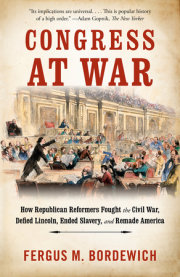
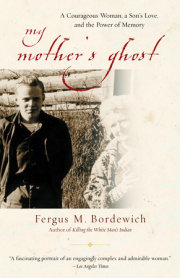
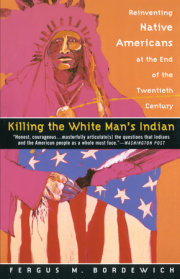
FERGUS M. BORDEWICH is the author of nine previous nonfiction books, including Klan War: Ulysses S. Grant and the Battle to Save Reconstruction; The First Congress: How James Madison, George Washington, and a Group of Extraordinary Men Invented the Government (winner of the 2019 D. B. Hardeman Prize in American History); America’s Great Debate: Henry Clay, Stephen A. Douglas, and the Compromise That Preserved the Union (named best history book of 2012 by the Los Angeles Times); and Bound for Canaan: The Underground Railroad and the War for the Soul of America. He lives in Washington, D.C., and Greensboro, North Carolina, with his wife, Jean Parvin Bordewich, the president of Guilford College and a playwright. View titles by Fergus M. Bordewich

About

The spectacular story of the Great Centennial Exhibition of 1876, a world's fair to mark America’s hundredth birthday—and a moment of reckoning for a nation barrelling toward the Gilded Age

“Those who were there felt that the wheel of history itself had turned before their eyes.”

Held at Fairmount Park, in Philadelphia, the extravaganza attracted 10 million Americans—nearly 20 percent of the population, among them P. T. Barnum, Frederick Douglass, and Mark Twain—and visitors from around the world, including the emperor of Brazil, Dom Pedro (who couldn’t get enough of the exhibition). On display were inventions that signaled the changing landscape of American life, from the typewriter to the telephone to Heinz Tomato Ketchup.

This celebration of America’s first century came at a moment when its future seemed more precarious than ever—as big money threatened to overwhelm the government, underpaid workers waged the first national labor strike, feminists demanded rights for women, Native tribes went to war to repel the advancing settlement in the West, and Black Americans struggled to exercise their hard-won freedom. Looming over the fair was the presidential race of 1876—a highly contested election that would determine the fate of Reconstruction and permanently shape the Republican party as we know it today.

Fergus Bordewich animates these converging crises through the lives of four protagonists—Rutherford B. Hayes, Alexander Graham Bell, railroad magnate Tom Scott, and sculptor Edmonia Lewis—revealing a country striving to live up to the promise of its founders while bracing for the tidal wave of the twentieth century.

Excerpt

Chapter 1

The Great Fair

★★★★★

Well, Moon, see that the bill is passed; the Centennial must be made a great success.

—Thomas A. Scott

On the morning of May 10, 1876, Ulysses S. Grant stepped from his overnight quarters on Walnut Street in downtown Philadelphia to be greeted by an escort of brass bands, massed sailors and soldiers, cavalry in horse-tailed helmets, admirals and beribboned major generals, state governors, members of the U.S. Supreme Court, magnates of industry, politicians of every rank and stripe, foreign ambassadors, and the president’s guest of honor, the emperor of Brazil, Dom Pedro II. They were the advance guard of the most spectacular public extravaganza to be mounted in Gilded Age America, the long-anticipated celebration of the nation’s first Centennial a figurative stone’s throw from Independence Hall, where the Founding Fathers had signed the Declaration of Independence. In carriages, on horseback, and on foot the festive cavalcade processed along streets festooned with patriotic bunting and the flags of all nations, through roaring crowds of men, women, and children to Fairmount Park, two miles to the north, which a year’s labor had transformed into a phantasmagorical theater of national glory, vaster and grander than anything ever before seen in America.

At the park, Grant and his entourage mounted a vast stage to face a crowd that numbered at least 100,000 and perhaps twice that, packed so densely that it was difficult to move without the aid of police. Boys slack-jawed with excitement perched on statues of the Muses. Bishop Matthew Simpson of the Methodist Church offered thanks to God for the nation’s prosperity and progress, for the courage of its Founding Fathers, and for the labor-saving machinery that eased the lives of the toiling masses. An orchestra of 150 musicians played “La Marseillaise,” “God Save the Queen,” the anthems of Brazil, Germany, Russia, the Netherlands, Spain, and a dozen other powers, followed by a specially commissioned march composed for the occasion by Richard Wagner. A thousand-voiced chorus next sang the official “Centennial Hymn” penned by the aged John Greenleaf Whittier, dedicated to “Our fathers’ god, from whose hand the centuries fall like grains of sand”:

Oh! Make Thou us, through centuries long,

In peace secure, in justice strong.

Then, the popular Quaker poet Bayard Taylor recited his “Song of 1876,” a paean to sectional reconciliation—a vital national concern barely a decade after the Civil War, when the ghosts of 650,000 dead stalked the hearts of Americans North and South:

Waken voice of the Land’s Devotion!

Spirit of Freedom, awaken all!

North and South, we are met as brothers!

At last, the president rose. Grant was a man of modest height, more portly than when he ascended to his office seven years earlier, his chestnut hair beginning to go gray. In big gatherings he was stiff, even shy, his voice difficult to hear from a distance. He gripped his speech in his clenched fist. He felt more beleaguered than ever before, shackled to the country’s wounded economy, grimly watching his effort to save Reconstruction sputter for lack of Northern support, embarrassed by the exposure of venality among his trusted advisors, belittled by defectors from his own party, who sneered at him as incompetent or worse. Wherever he turned some new dishonor seemed to lay concealed. But he never lacked dignity or sincerity, and with them he soldiered on.

“One hundred years ago, our country was new and but partially settled,” he began, in that soft voice. To Grant, the frontier, now unfolding far west of the Missouri River, was no abstraction. He was born in an Ohio cabin in 1822, when settlement extended only in patchwork west of the Appalachians and most of the Midwest was still woodland, from which towns were being hacked by main force. “Our necessities have compelled us to chiefly expend our means and time in felling forests, subduing prairies, building dwellings, factories, ships, docks, warehouses, roads, canals, machinery. Most of our schools, churches, libraries & asylums have been established within a hundred years. Burthened by these great primal works of necessity which could not be pretermitted”—he meant delayed—“we yet have done what this exhibition will shew in the direction of rivalling older and more advanced nations in law, medicine, and theology—in science, literature, philosophy, and the fine arts. And now fellow citizens, I hope careful examination of what is about to be exhibited to you will not only inspire you with a profound respect for the skill and taste of our friends from other nations, but also satisfy you with the attainments made by our own people during the past one hundred years.”

He then declared the Centennial officially open. Cannon boomed. Tens of thousands of voices cheered. As the presidential party descended from the stage, the great choir roared out Handel’s “Hallelujah Chorus.” With Dom Pedro and his family at his side, and senators and congressmen in tow, Grant made his way through the palatial, glass-roofed Machinery Hall, to the foot of the Corliss Engine, the most powerful piece of machinery in the world. At the direction of its inventor, the famous engineer George Corliss, Grant grasped one lever and Dom Pedro the other. In unison, they pulled and the immense iron walking beams began to move and the great wheel began to spin, setting in motion eight miles of shafts, belts, and spindles connected to the hundreds of lesser machines throughout the hall. Gongs clanged, steam whistles shrilled, cannon again boomed, and church bells rang across the city. Those who were there felt that the wheel of history itself had turned before their eyes. A reporter for the Philadelphia Times strained for words: “The obedient looms began their round of six months like an ark of machinery set afloat for a voyage to preserve the creations of man.”

The Centennial Exhibition—sometimes called the Exposition, but most often simply the Centennial—was the most ambitious public event in the nation’s history up to then: a spectacle of industrial might, America’s first World’s Fair, an “Arabian Nights of Modern Times,” as one magazine effusively termed it, evoking an almost magical experience that innumerable visitors would struggle to describe. Harper’s Bazaar quipped that Philadelphia “appears for the nonce to have thrown off her sombre Quaker apparel, and to have ushered in the Centennial with much the air of a venerable old lady endeavoring to execute some difficult steps in the can-can.” Showmanship aside, it marked the country’s first century with an epic celebration of its past and the promise of its future. The roar of the engines and innovations that packed its halls proclaimed that the country could now not only manufacture for itself everything it needed but also sell its burgeoning surpluses to all the world. The Exposition’s menagerie of new farming equipment—giant tractors, harvesters, mechanical planters—foretold the ecological future of the as yet barely settled West, as well as the fate of the still potent Native tribes that blocked the way. A plenitude of works by the nation’s artists challenged the world to take American art seriously. A pavilion designed, built, and staffed entirely by women hoped to upend society’s most basic gendered conventions. Colossal displays of new consumer goods teased the eye and tantalized desire.

Apart from its dazzling exhibits, the Centennial embodied a stock-taking of the nation’s past as it charged toward new existential challenges. Throughout its first century the nation had labored to knit together its disparate, mutually distrustful parts, fissured by slavery and bitter disagreement over the powers of the central government. Only with the Civil War’s end could Americans begin to feel assured that republican government would truly prevail. That the United States would survive as a nation no one but the most unforgiving former Confederates now doubted; slavery was gone and states’ rights had (or so it seemed to victorious Yankees) been consigned to the dustbin of lost causes.

If triumphalism was the Centennial’s dominant idiom, beneath its glittering surface it served as a giant kaleidoscopic lens that revealed much about America at one of its most transformative moments, as big money infiltrated government, technology reshaped everyday American life, Black Americans struggled to exercise their hard-won freedom, feminists demanded rights for women, and Native tribes went to war to repel advancing settlement in the West. Although the Centennial celebrated the spread of mechanization in all aspects of American life, it did so in the midst of massive poverty and unemployment, in the third year of the worst economic depression the United Sates had yet experienced. With the bloody violence of the 1871 Paris Commune still stark in Americans’ memories, fear of what people were beginning to call “communism” entered popular speech for the first time. Even as Bishop Simpson spoke in the opening ceremony of the improved lives of working men, in Chicago mobs of bricklayers armed with clubs and pistols were marching for higher wages, miners were striking in Ohio, and less than a hundred miles north of Philadelphia, Irish American labor leaders were on trial for their lives.

Everyone knew that the future of the country lay at stake in the coming presidential election, barely six months away. The parties readied themselves for what promised to be an epic battle, with the resurgent Democrats pitted against the scandal-ridden Republicans. Even as Americans proclaimed the superiority of their democracy, they felt the country’s political culture and private morality corroding with a new, hustling greed that infected the very institutions that the Centennial celebrated. Describing one notoriously shameless magnate, the society reporter Emily Briggs wrote, “Floating in Congressional waters at all hours of the legislative day may be seen the burly form of [Collis] Huntington, the great, huge devil-fish of the railroad combination. He plows the Congressional main, a shark in voracity of plunder, a devil-fish in tenacity of grip. At the beginning of every session, this representative of the great Central Pacific comes to Washington as certain as a member of either branch of Congress. Every weakness of a Congressman is noted, whilst the wily Huntington decides whether the attack shall be made with the weapon of the male or the female kind.” Revelations of shocking self-dealing tarred prominent members of the administration and Republicans in Congress. Lobbyists handed out wads of cash on the floor of Congress. In Mark Twain’s satirical 1873 novel The Gilded Age, a practiced lobbyist complains, “The fact is that the price is raised so high on a United States Senator now, that it affects the whole market; you can’t get any public improvement through on reasonable terms.”

America also stood at what a later era would call a racial inflection point. The fate of Reconstruction and of the four million Black Americans also hung precariously in the balance. The previous decade had brought them freedom, citizenship, enfranchisement, and new opportunity. But their future depended on the unlikely possibility of a Republican victory at the polls. Unless Republicans somehow overcame the odds, worried John Sherman, brother of General William Tecumseh Sherman and one of the most consequential men in the U.S. Senate, the Southern states would “soon be organized, by violence and intimidation, into a compact political power”—a solid South—that could dominate the national government for generations to come.

The Centennial Exhibition was conceived as a kind of grand theater of national harmony where Americans could come together again in a performance of patriotic self-affirmation. Its promoters predicted that Shiloh, Antietam, and Gettysburg would be forgotten in the remembrance of Lexington, Concord, and Bunker Hill, and visions of a common future. The Exhibition’s organizers paired retired Union and Confederate generals at gala events, and named a relative of Robert E. Lee to read the Declaration of Independence on the Fourth of July. African Americans, too, initially had high hopes: A Black member of Congress, Josiah Walls of Florida, effusively declared that the Centennial would undoubtedly “strengthen the bonds which can unite freemen to their native land, and kindle a blaze of patriotic feeling in whose dazzling light all questions of minor differences and all hurtful recollections of past disagreements will be blotted out.”

But evidence of the shifting public sentiment on race was visible even at the Centennial. Despite plentiful official references to emancipation and equality, Black Americans had been excluded from the Exhibition’s planning and from nearly all the jobs it generated, with the ambiguous, at best, exception of a Southern-themed restaurant, which advertised a band of “old-time darkies” strumming banjos and where Black waiters impersonated slaves. Perhaps significantly, it was the most popular eatery at the Centennial. Frederick Douglass, although invited to sit among the dignitaries on opening day—but not to speak—was initially refused entry to the stage until a U.S. senator personally intervened. Although it was not widely publicized, nativist violence also erupted on opening day, when several Japanese were physically attacked and a Chinese official was nearly stripped of his robes.

In all, some ten million Americans visited the Centennial, about 20 percent of the country’s population, most of them expecting to be inspired by the country’s achievements and hoping to be uplifted by evocations of its history. There were ordinary Americans of all kinds, war veterans from both North and South, presidential candidates, celebrities ranging from P. T. Barnum to Henry Wadsworth Longfellow and Mark Twain. Foreign visitors numbered in the hundreds of thousands, most famous among them Emperor Dom Pedro II of Brazil, the first foreign head of state ever to visit the United States, who loved the Exposition so much that he often wandered among the crowds in disguise. Most visitors were dazzled with what they found. “We are lost in bewilderment,” exclaimed one thrilled young Philadelphian. “The wealth of the world is before us. Where shall we go first? What shall we do? These are the questions one hears on every side.”

Reviews

“Bordewich’s Centennial immerses us in the wondrous Philadelphia exposition of 1876 with all its patriotic fervor, dynamic displays of industrial might, amazing inventions (the proto-telephone), silly gadgets (the combo suitcase/bathtub), and ambitious art. Outside the fair, the intense societal battles to shape this ascendant Gilded Age America feel at times eerily familiar: electoral convulsions amidst a 'rancorous political climate,' an 'odious oligarchy with its plutocratic privilege,' and rising White Supremacy targeting Blacks and immigrants. And yet . . . the nation’s most democratic ideals are there, too, as America barrels towards the twentieth century.” —Jill Jonnes, author of Empires of Light

"In Centennial, Fergus Bordewich transports us to the dazzling spectacle of the 1876 Centennial Exhibition at Philadelphia, where the sights, sounds, and flavors of a rapidly industrializing nation burst vividly into life. Millions of Americans encountered marvels they had never imagined—from typewriters to telephones, Turkish cafes to Chinese delicacies—revealing a country awakening to the wider world. Yet the country was unraveling in 1876, too. Corporate vigilantes were assassinating their labor union enemies, southern white terrorists were massacring innocent Blacks, and politicians were seizing on disputed election results to fan the flames of constitutional crisis. With cinematic sweep and piercing analysis, Bordewich's Centennial captures both America’s glittering successes and bitter failures at the tail end of the nineteenth century. The story of the Gilded Age has never been told better." —Zaakir Tameez, Winner of the Cooley Prize and author of Charles Sumner: Conscience of a Nation

“As exuberant and immersive as the U. S. centennial itself, Fergus Bordewich’s bracing narrative envelops us in the optimism, patriotic fervor, overweening pride, and limitless ambition of 1876 America. With reunion and peace, the country celebrated itself with inventive abandon, sometimes forsaking its democratic roots. Fergus Bordewich brings his customary, irresistible blend of rich period detail and expert retrospective analysis to a story that should give us both pleasure and pause as we mark America250. A rich and rewarding read.” —Harold Holzer, Winner of the Lincoln Prize and author of Brought Forth on This Continent

“In 1876 the USA threw a spectacular 100th birthday party for itself—the Centennial Exposition in Philadelphia—and Fergus Bordewich is our astute guide and witty companion for an immersive tour. Bursting with delicious details and deft portraits, Centennial introduces us to the industrial titans, genius tech inventors, political strivers, artists, poseurs and protestors who made the fair an international sensation. Bordewich excels in charting the political and racial turbulence just below the glossy surface, and drills deep into the layers of pride and patriotism, hope and hubris animating the whole enterprise. As the nation marks its 250th birthday in 2026, unfolding in another fraught political moment, Centennial reminds us to pay attention to how this milestone is celebrated, how our history is portrayed and our future imagined. Beyond the hoopla and fireworks will be a reflection of our national character.” —Elaine Weiss, author of Spell Freedom and The Woman’s Hour

“With this piercing history of the 1876 Centennial, Fergus Bordewich illustrates the genesis of American exceptionalism and creates a cautionary parable for the Age of Trump. Every chapter dramatizes the gaps between our leaders’ self-congratulatory claims and their flawed, corrupt performance throughout our history.” —Howell Raines, author of Silent Cavalry

Author

© David Altschul
FERGUS M. BORDEWICH is the author of nine previous nonfiction books, including Klan War: Ulysses S. Grant and the Battle to Save Reconstruction; The First Congress: How James Madison, George Washington, and a Group of Extraordinary Men Invented the Government (winner of the 2019 D. B. Hardeman Prize in American History); America’s Great Debate: Henry Clay, Stephen A. Douglas, and the Compromise That Preserved the Union (named best history book of 2012 by the Los Angeles Times); and Bound for Canaan: The Underground Railroad and the War for the Soul of America. He lives in Washington, D.C., and Greensboro, North Carolina, with his wife, Jean Parvin Bordewich, the president of Guilford College and a playwright. View titles by Fergus M. Bordewich
  • More Websites from
    Penguin Random House
  • Common Reads
  • Library Marketing