Download high-resolution image
Listen to a clip from the audiobook
audio pause button
0:00
0:00

There Are Rivers in the Sky

A novel

Listen to a clip from the audiobook
audio pause button
0:00
0:00
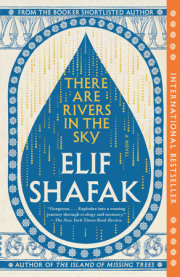
From the Booker Prize finalist, author of The Island of Missing Trees, an enchanting new tale about three characters living along two great rivers, all connected by a single drop of water.

"Make place for Elif Shafak on your bookshelf. Make place for her in your heart too. You won't regret it."—Arundhati Roy, winner of the Booker Prize


In the ancient city of Nineveh, on the bank of the River Tigris, King Ashurbanipal of Mesopotamia, erudite but ruthless, built a great library that would crumble with the end of his reign. From its ruins, however, emerged a poem, the Epic of Gilgamesh, that would infuse the existence of two rivers and bind together three lives. 

In 1840 London, Arthur is born beside the stinking, sewage-filled River Thames. With an abusive, alcoholic father and a mentally ill mother, Arthur’s only chance of escaping destitution is his brilliant memory. When his gift earns him a spot as an apprentice at a leading publisher, Arthur’s world opens up far beyond the slums, and one book in particular catches his interest: Nineveh and Its Remains.

In 2014 Turkey, Narin, a ten-year-old Yazidi girl, is diagnosed with a rare disorder that will soon cause her to go deaf. Before that happens, her grandmother is determined to baptize her in a sacred Iraqi temple. But with the rising presence of ISIS and the destruction of the family’s ancestral lands along the Tigris, Narin is running out of time. 

In 2018 London, the newly divorced Zaleekah, a hydrologist, moves into a houseboat on the Thames to escape her husband. Orphaned and raised by her wealthy uncle, Zaleekah had made the decision to take her own life in one month, until a curious book about her homeland changes everything.  

A dazzling feat of storytelling, There Are Rivers in the Sky entwines these outsiders with a single drop of water, a drop which remanifests across the centuries. Both a source of life and harbinger of death, rivers—the Tigris and the Thames—transcend history, transcend fate: “Water remembers. It is humans who forget.”
By the River Tigris, in olden times

Later, when the storm has passed, everyone will talk about the destruction it left behind, though no one, not even the king himself, will remember that it all began with a single raindrop.

*

It is an early-­summer afternoon in Nineveh, the sky swollen with impending rain. A strange, sullen silence has settled on the city: the birds have not sung since the dawn; the butterflies and dragonflies have gone into hiding; the frogs have abandoned their breeding grounds; the geese have fallen quiet, sensing danger. Even the sheep have been muted, urinating frequently, overcome by fear. The air smells different—­a sharp, salty scent. All day, dark shadows have been amassing on the horizon, like an enemy army that has set up camp, gathering force. They look remarkably still and calm from a distance, but that is an optical illusion, a trick of the eye: the clouds are rolling steadily closer, propelled by a forceful wind, determined to drench the world and shape it anew. In this region where the summers are long and scorching, the rivers mercurial and unforgiving, and the memory of the last flood not yet washed away, water is both the harbinger of life and the messenger of death.

Nineveh is a place like no other: the world’s largest and wealthiest city. Built on a spacious plain on the eastern bank of the Tigris, it is so close to the river that at night babies are hushed to sleep not by a lullaby but by the sound of the waves lapping at the shoreline. This is the capital of a mighty empire, a citadel protected by solid towers, stately battlements, defensive moats, fortified bastions and colossal walls, each rising ninety feet or more. With a population of 175,000 souls, it is an urban gem at the junction of the prosperous highlands of the north and the fertile lowlands of Chaldea and Babylonia to the south. The year is sometime in the 640s bce; and this ancient region, which is lush with perfumed gardens, bubbling fountains and irrigation canals, but which will be forgotten and dismissed by future generations as an arid desert and abject wasteland, is Mesopotamia.

One of the clouds advancing toward the city this afternoon is bigger and darker than the others—­and more impatient. It scuds across the sky’s vast canopy toward its destination. Once there, it slows to a halt and floats suspended thousands of feet above a majestic building adorned with cedar columns, pillared porticos and monumental statues. This is the North Palace, where the king resides in all his might and glory. The mass of condensed vapor settles over the imperial residence, casting a shadow. For, unlike humans, water has no regard for social status or royal titles.

Dangling from the edge of the storm cloud is a single drop of rain—­no bigger than a bean and lighter than a chickpea. For a while it quivers precariously—­small, spherical and scared. How frightening it is to observe the earth below opening like a lonely lotus flower. Not that this will be the first time: it has made the journey before—­ascending to the sky, descending to terra firma and rising heavenwards again—­and yet it still finds the fall terrifying.

Remember that drop, inconsequential though it may be compared with the magnitude of the universe. Inside its miniature orb, it holds the secret of infinity, a story uniquely its own. When it finally musters the courage, it leaps into the ether. It is falling now—­fast, faster. Gravity always helps. From a height of 3,080 feet it races down. Only three minutes until it reaches the ground.

*

Down below in Nineveh, the king walks through a double door and steps on to the terrace. Craning his head over the ornamented balustrade, he gazes at the opulence of the city, which spreads out before him as far as the eye can see. Manicured estates, splendid aqueducts, imposing temples, thriving orchards, charming public parks, verdant fields and a royal menagerie where gazelles, deer, ostriches, leopards, lynxes and lions are kept. The sight fills him with pride. He is particularly fond of the gardens, which are brimming with blooming trees and aromatic plants—­almond, date, ebony, fir, fig, medlar, mulberry, olive, pear, plum, pomegranate, poplar, quince, rosewood, tamarisk, terebinth, walnut, willow . . . He does not just rule over the land and its people, but also the streams and their tributaries. Directing the River Tigris through an intricate network of canals, weirs and dykes, storing water in cisterns and reservoirs, he and his forefathers have turned this region into a paradise.

The king’s name is Ashurbanipal. He has a well-­trimmed, curly beard, a broad sweep of a forehead over thick eyebrows and dark, roundly arched eyes lined with black kohl. He is attired in a pointed headdress studded with jewels that glow like distant stars each time the light strikes them. His robe, deep blue and woven of the finest linen, is embroidered with threads of gold and silver, and embellished with hundreds of shiny beads, gemstones and amulets. On his left wrist he wears a bracelet with a flower motif for good luck and protection. He reigns over an empire so immense that they hail him as “The Emperor of the Four Quarters of the World.” Someday he will also be remembered and renowned as “The Librarian King,” “The Educated Monarch,” “The Erudite Ruler of Mesopotamia”—­titles that will make people forget that, whilst he may have been highly learned and cultured, he was no less cruel than his predecessors.

Tilting his head to the side to scan the cityscape, Ashurbanipal inhales. He does not immediately notice the storm brewing in the distance. The delightful fragrance emanating from the gardens and groves absorbs him. Slowly, he raises his eyes toward the leaden sky. A shiver passes through his sturdy frame, and his thoughts are ambushed by stark warnings and somber portents. Some soothsayers have predicted that Nineveh is fated to be attacked, sacked and burned to the ground, even its stones borne away. This magnificent city will be wiped off the face of the earth, they said, and beseeched everyone to leave. The king has made sure these doom-­mongers were silenced, ordering that their lips be sealed shut and sewn with catgut. But now a sense of foreboding tugs at his insides, like the pull of a river’s undercurrent. What if the prophecies were to come true?

Ashurbanipal shakes off the ominous feeling. Although he has enemies aplenty, including his own flesh-­and-­blood brother, there is no reason to worry. Nothing can destroy this glorious capital so long as the gods are on their side, and he has no doubt that the gods, however capricious and inconsistent in their dealings with mortals, will always come to Nineveh’s defense.

Meanwhile, the raindrop is about to arrive on earth. As it gets closer to the ground, for an instant, it feels so free and weightless it could almost alight anywhere it pleases. To its left is a tall, branchless tree—­a date palm—­whose fronds would make a lovely landing place. To its right is an irrigation canal running through a farmer’s field, where it would be welcome, helping this year’s harvest grow. It could also come to rest on the stairs of a nearby ziggurat dedicated to Ishtar—­the deity of love, sex, beauty, passion and war as well as thunderstorms. That would be an apt destination. Dithering, the droplet has still not resolved where to fall, but that does not matter, for the wind will decide in its stead. A sudden gust lifts and carries its tiny mass straight toward the man standing on a terrace nearby.

A heartbeat later, the king feels something wet plop on to his scalp and nestle in his hair. Annoyed, he tries to wipe it away with one hand, but his ornate headdress is in the way. Frowning ever so slightly, he glances up at the sky one more time. Just as it starts to pour in earnest, he turns his back to the view and retreats to the safety of his palace.

Through the long galleries Ashurbanipal stalks, listening to the echo of his own footsteps. His servants kneel before him, never daring to look him in the eye. On either side, flaring torches tremble high up in their cast-­iron sconces. The eerie light they emit sweeps over the bas-­reliefs that are mounted on the walls—­carved from gypsum and painted in the brightest colors. In some scenes, the king holds a bow and shoots winged arrows, hunting wild animals or butchering his foes. In others, he drives two-­wheeled ceremonial chariots, flogging horses harnessed with triple-­tasseled decorations. Yet in others he pours libations over slain lions—­offerings to the gods in return for their support and protection. All the pictures depict the splendor of the Assyrian Empire, the superiority of men and the grandeur of the emperor. There are almost no women to be seen. One exception is an image in which Ashurbanipal and his wife are drinking wine and enjoying a picnic in an idyllic garden, whilst from the boughs of a tree nearby, amidst ripe fruits, dangles the decapitated head of their enemy, the Elamite king Teumman.

Oblivious to the raindrop still cradled in his hair, the king keeps walking. Briskly, he passes through richly furnished chambers and arrives at a door adorned with elaborate carvings. This is his favorite part of the palace—­the library. Not just a random collection of writings, it is his greatest and proudest creation, his lifetime’s ambition, an achievement unrivaled in scope and scale. More than anything he has accomplished, even more significant than his military conquests and political victories, this will be his legacy for future generations—­an intellectual monument the likes of which has never been seen before.

The entrance to the library is flanked by two gigantic statues: hybrid creatures—­half human, half animal. Lamassus are protective spirits. Hewn from a single slab of limestone, such sculptures have the head of a man, the wings of an eagle and the hulking body of a bull or a lion. Endowed with the best qualities of each of their three species, they represent anthropoid intelligence, avian insight, and taurine or leonine strength. They are the guardians of gateways that open on to other realms.

Most of the lamassus in the palace have five legs, so that when viewed from the front they appear to be standing firm, but seen sideways they are stomping forward, ready to trample on even the most fearsome adversary. In this state, they can both confront unwanted visitors and ward off any evil lurking in the shadows. Though he has not told this to anyone, the king feels safer and more at ease with them around, and that is why he has recently commissioned artists to chisel a dozen more sculptures. One can never have too much protection.

With such thoughts in mind, Ashurbanipal enters the library. In room after room, the walls are lined with floor-­to-­ceiling shelves that hold thousands of clay tablets, arranged in perfect order, organized by subject. They have been collected from near and far. Some were rescued from neglect; others were bought from their former owners for a pittance; but a considerable number were seized by force. They contain all kinds of information, from trade deals to medicinal remedies, from legal contracts to celestial charts . . . For the king knows that in order to dominate other cultures, you must capture not only their lands, crops and assets but also their collective imagination, their shared memories.

Quickening his steps, Ashurbanipal bypasses the sections of the library dedicated to omens, spells, rituals, cures, curses, litanies, lamentations, incantations, hymns, fables, proverbs and elegies, gathered from all corners of the empire. He wends his way through an extensive collection on the use of the entrails of sacrificial animals to divine the destinies of humans and the intrigues of the gods. Although he sets great store by the tradition of haruspicy, and regularly has sheep and goats slaughtered to have their livers and gallbladders read by the oracles, he won’t be studying the auspices today. Instead he heads for a room tucked at the back, half hidden behind a heavy curtain. No one may enter this secluded area apart from the king and his chief counsellor, who is like a second father to him—­a deeply learned man who has tutored and mentored Ashurbanipal since he was a boy.

There are bronze lamps set in alcoves at the entrance to this private area, burning sesame oil, sending up coils of smoke. The king selects one and pulls the curtain behind him. It is morbidly quiet inside, as if the shelves have been holding their breath, waiting for him.
"An odyssey, an epic, a lament, and a tale of redemption, There Are Rivers in the Sky is a clarion call to honor the elemental forces that shape our memories, our histories, and our world. In short, a masterpiece."—Ruth Ozeki, author of The Book of Form and Emptiness

"There Are Rivers in the Sky explodes into a roaring journey through ecology and memory… genuinely moving.”The New York Times Book Review

"Think Cloud Atlas, but with a single drop of water connecting all the stories."—Parade Magazine

"Shafak weaves together a dazzling feat of storytelling that explores the pain of exile and the power of human resilience."—Oprah Daily

"Flows like rivers from ancient Nineveh to present-day London with characters of the distant past as bright and vivid as those of today.” —Philippa Gregory, author of The Other Boleyn Girl

"Elif Shafak discovers the epic in the tiny, the global in the local, the love in the loss, the history in the momentary. An extraordinary novel, fresh and cleansing, like the rain bouncing off the metal roof of our lives.” —Colum McCann, author of Let the Great World Spin

"A brilliant, unforgettable novel, which raises big ideas of 'who owns the past' with nuance and complexity…. both natural and wonderfully unexpected." —Mary Beard, author of SPQR

"From its bravura opening through to its final pages, There Are Rivers in the Sky is a dazzling achievement. Shafak’s imagination is a wonder."—Katie Kitamura, author of Intimacies

"Literature on a grand scale, mythic and timeless." —Nadifa Mohamed, author of The Fortune Men

"There's an elegance to Shafak's storytelling that always draws me, but it is her grit and substance that held me to the last page. Wonderful." —Bonnie Garmus, author of Lessons in Chemistry

"Elif Shafak is a unique and powerful voice in world literature." —Ian McEwan, author of Atonement

"Wide-ranging, eloquent and lavishly detailed, There Are Rivers in the Sky expertly draws its various narratives to a powerful climax." —Abdulrazak Gurnah, author of Afterlives

"Elif Shafak's beautiful and moving new novel bears the reader along on its marvelous currents…. as the fate of a single drop of water weaves an intricate tapestry of love and loss."—Robert MacFarlane, author of Underland

"Gloriously expansive and intellectually rich.... a magnificent achievement." The Spectator (UK)

"Spellbinding.... Like water itself, There Are Rivers in the Sky seeps into the cracks and crevasses of our humanity, unlocking a sense of wonder."— BookPage, starred review*

"A multi-layered marvel.... I turned the pages hungrily, carried by Shafak’s energetic prose.... As ever, Shafak did not disappoint."Max Liu, I Paper

“This is a love song to the keepers of our stories and histories....Elif Shafak is one of them—a master storyteller whose prose thrums with such gorgeous details and propulsive spirit, flowing with a keen-eyed wisdom that only she could conjure. I came away feeling restored."—Safiya Sinclair, author of How to Say Babylon

"A book that is astonishing, ingenious and beautiful. A modern classic. Elif Shafak is one of the great writers of our time."—Peter Frankopan, author of The Earth Transformed

"Elif Shafak approaches the world with grace, lyricism, and courage…. Her words and works—compelling and provocative—leave us in a space of light, a clearing from where we can see this world anew. "—Viet Thanh Nguyen, author of The Sympathizer

"Intricate, exhilarating storytelling that is a poetic reminder of how connected we are to one another and to the past."—Tracy Chevalier, author of Girl With a Pearl Earring
© Ferhat Elik
ELIF SHAFAK is an award-winning British-Turkish author of a dozen novels, including The Island of Missing Trees, which was short-listed for the Costa Novel Award, and 10 Minutes 38 Seconds in This Strange World, which was short-listed for the Booker Prize. Her work has been translated into fifty-six languages. She holds a PhD in political science and has taught at universities in Turkey, the United States and the United Kingdom. She lives in London and is an honorary fellow at Oxford University. View titles by Elif Shafak

Discussion Guide for There Are Rivers in the Sky

Provides questions, discussion topics, suggested reading lists, introductions and/or author Q&As, which are intended to enhance reading groups’ experiences.

(Please note: the guide displayed here is the most recently uploaded version; while unlikely, any page citation discrepancies between the guide and book is likely due to pagination differences between a book’s different formats.)

About

From the Booker Prize finalist, author of The Island of Missing Trees, an enchanting new tale about three characters living along two great rivers, all connected by a single drop of water.

"Make place for Elif Shafak on your bookshelf. Make place for her in your heart too. You won't regret it."—Arundhati Roy, winner of the Booker Prize


In the ancient city of Nineveh, on the bank of the River Tigris, King Ashurbanipal of Mesopotamia, erudite but ruthless, built a great library that would crumble with the end of his reign. From its ruins, however, emerged a poem, the Epic of Gilgamesh, that would infuse the existence of two rivers and bind together three lives. 

In 1840 London, Arthur is born beside the stinking, sewage-filled River Thames. With an abusive, alcoholic father and a mentally ill mother, Arthur’s only chance of escaping destitution is his brilliant memory. When his gift earns him a spot as an apprentice at a leading publisher, Arthur’s world opens up far beyond the slums, and one book in particular catches his interest: Nineveh and Its Remains.

In 2014 Turkey, Narin, a ten-year-old Yazidi girl, is diagnosed with a rare disorder that will soon cause her to go deaf. Before that happens, her grandmother is determined to baptize her in a sacred Iraqi temple. But with the rising presence of ISIS and the destruction of the family’s ancestral lands along the Tigris, Narin is running out of time. 

In 2018 London, the newly divorced Zaleekah, a hydrologist, moves into a houseboat on the Thames to escape her husband. Orphaned and raised by her wealthy uncle, Zaleekah had made the decision to take her own life in one month, until a curious book about her homeland changes everything.  

A dazzling feat of storytelling, There Are Rivers in the Sky entwines these outsiders with a single drop of water, a drop which remanifests across the centuries. Both a source of life and harbinger of death, rivers—the Tigris and the Thames—transcend history, transcend fate: “Water remembers. It is humans who forget.”

Excerpt

By the River Tigris, in olden times

Later, when the storm has passed, everyone will talk about the destruction it left behind, though no one, not even the king himself, will remember that it all began with a single raindrop.

*

It is an early-­summer afternoon in Nineveh, the sky swollen with impending rain. A strange, sullen silence has settled on the city: the birds have not sung since the dawn; the butterflies and dragonflies have gone into hiding; the frogs have abandoned their breeding grounds; the geese have fallen quiet, sensing danger. Even the sheep have been muted, urinating frequently, overcome by fear. The air smells different—­a sharp, salty scent. All day, dark shadows have been amassing on the horizon, like an enemy army that has set up camp, gathering force. They look remarkably still and calm from a distance, but that is an optical illusion, a trick of the eye: the clouds are rolling steadily closer, propelled by a forceful wind, determined to drench the world and shape it anew. In this region where the summers are long and scorching, the rivers mercurial and unforgiving, and the memory of the last flood not yet washed away, water is both the harbinger of life and the messenger of death.

Nineveh is a place like no other: the world’s largest and wealthiest city. Built on a spacious plain on the eastern bank of the Tigris, it is so close to the river that at night babies are hushed to sleep not by a lullaby but by the sound of the waves lapping at the shoreline. This is the capital of a mighty empire, a citadel protected by solid towers, stately battlements, defensive moats, fortified bastions and colossal walls, each rising ninety feet or more. With a population of 175,000 souls, it is an urban gem at the junction of the prosperous highlands of the north and the fertile lowlands of Chaldea and Babylonia to the south. The year is sometime in the 640s bce; and this ancient region, which is lush with perfumed gardens, bubbling fountains and irrigation canals, but which will be forgotten and dismissed by future generations as an arid desert and abject wasteland, is Mesopotamia.

One of the clouds advancing toward the city this afternoon is bigger and darker than the others—­and more impatient. It scuds across the sky’s vast canopy toward its destination. Once there, it slows to a halt and floats suspended thousands of feet above a majestic building adorned with cedar columns, pillared porticos and monumental statues. This is the North Palace, where the king resides in all his might and glory. The mass of condensed vapor settles over the imperial residence, casting a shadow. For, unlike humans, water has no regard for social status or royal titles.

Dangling from the edge of the storm cloud is a single drop of rain—­no bigger than a bean and lighter than a chickpea. For a while it quivers precariously—­small, spherical and scared. How frightening it is to observe the earth below opening like a lonely lotus flower. Not that this will be the first time: it has made the journey before—­ascending to the sky, descending to terra firma and rising heavenwards again—­and yet it still finds the fall terrifying.

Remember that drop, inconsequential though it may be compared with the magnitude of the universe. Inside its miniature orb, it holds the secret of infinity, a story uniquely its own. When it finally musters the courage, it leaps into the ether. It is falling now—­fast, faster. Gravity always helps. From a height of 3,080 feet it races down. Only three minutes until it reaches the ground.

*

Down below in Nineveh, the king walks through a double door and steps on to the terrace. Craning his head over the ornamented balustrade, he gazes at the opulence of the city, which spreads out before him as far as the eye can see. Manicured estates, splendid aqueducts, imposing temples, thriving orchards, charming public parks, verdant fields and a royal menagerie where gazelles, deer, ostriches, leopards, lynxes and lions are kept. The sight fills him with pride. He is particularly fond of the gardens, which are brimming with blooming trees and aromatic plants—­almond, date, ebony, fir, fig, medlar, mulberry, olive, pear, plum, pomegranate, poplar, quince, rosewood, tamarisk, terebinth, walnut, willow . . . He does not just rule over the land and its people, but also the streams and their tributaries. Directing the River Tigris through an intricate network of canals, weirs and dykes, storing water in cisterns and reservoirs, he and his forefathers have turned this region into a paradise.

The king’s name is Ashurbanipal. He has a well-­trimmed, curly beard, a broad sweep of a forehead over thick eyebrows and dark, roundly arched eyes lined with black kohl. He is attired in a pointed headdress studded with jewels that glow like distant stars each time the light strikes them. His robe, deep blue and woven of the finest linen, is embroidered with threads of gold and silver, and embellished with hundreds of shiny beads, gemstones and amulets. On his left wrist he wears a bracelet with a flower motif for good luck and protection. He reigns over an empire so immense that they hail him as “The Emperor of the Four Quarters of the World.” Someday he will also be remembered and renowned as “The Librarian King,” “The Educated Monarch,” “The Erudite Ruler of Mesopotamia”—­titles that will make people forget that, whilst he may have been highly learned and cultured, he was no less cruel than his predecessors.

Tilting his head to the side to scan the cityscape, Ashurbanipal inhales. He does not immediately notice the storm brewing in the distance. The delightful fragrance emanating from the gardens and groves absorbs him. Slowly, he raises his eyes toward the leaden sky. A shiver passes through his sturdy frame, and his thoughts are ambushed by stark warnings and somber portents. Some soothsayers have predicted that Nineveh is fated to be attacked, sacked and burned to the ground, even its stones borne away. This magnificent city will be wiped off the face of the earth, they said, and beseeched everyone to leave. The king has made sure these doom-­mongers were silenced, ordering that their lips be sealed shut and sewn with catgut. But now a sense of foreboding tugs at his insides, like the pull of a river’s undercurrent. What if the prophecies were to come true?

Ashurbanipal shakes off the ominous feeling. Although he has enemies aplenty, including his own flesh-­and-­blood brother, there is no reason to worry. Nothing can destroy this glorious capital so long as the gods are on their side, and he has no doubt that the gods, however capricious and inconsistent in their dealings with mortals, will always come to Nineveh’s defense.

Meanwhile, the raindrop is about to arrive on earth. As it gets closer to the ground, for an instant, it feels so free and weightless it could almost alight anywhere it pleases. To its left is a tall, branchless tree—­a date palm—­whose fronds would make a lovely landing place. To its right is an irrigation canal running through a farmer’s field, where it would be welcome, helping this year’s harvest grow. It could also come to rest on the stairs of a nearby ziggurat dedicated to Ishtar—­the deity of love, sex, beauty, passion and war as well as thunderstorms. That would be an apt destination. Dithering, the droplet has still not resolved where to fall, but that does not matter, for the wind will decide in its stead. A sudden gust lifts and carries its tiny mass straight toward the man standing on a terrace nearby.

A heartbeat later, the king feels something wet plop on to his scalp and nestle in his hair. Annoyed, he tries to wipe it away with one hand, but his ornate headdress is in the way. Frowning ever so slightly, he glances up at the sky one more time. Just as it starts to pour in earnest, he turns his back to the view and retreats to the safety of his palace.

Through the long galleries Ashurbanipal stalks, listening to the echo of his own footsteps. His servants kneel before him, never daring to look him in the eye. On either side, flaring torches tremble high up in their cast-­iron sconces. The eerie light they emit sweeps over the bas-­reliefs that are mounted on the walls—­carved from gypsum and painted in the brightest colors. In some scenes, the king holds a bow and shoots winged arrows, hunting wild animals or butchering his foes. In others, he drives two-­wheeled ceremonial chariots, flogging horses harnessed with triple-­tasseled decorations. Yet in others he pours libations over slain lions—­offerings to the gods in return for their support and protection. All the pictures depict the splendor of the Assyrian Empire, the superiority of men and the grandeur of the emperor. There are almost no women to be seen. One exception is an image in which Ashurbanipal and his wife are drinking wine and enjoying a picnic in an idyllic garden, whilst from the boughs of a tree nearby, amidst ripe fruits, dangles the decapitated head of their enemy, the Elamite king Teumman.

Oblivious to the raindrop still cradled in his hair, the king keeps walking. Briskly, he passes through richly furnished chambers and arrives at a door adorned with elaborate carvings. This is his favorite part of the palace—­the library. Not just a random collection of writings, it is his greatest and proudest creation, his lifetime’s ambition, an achievement unrivaled in scope and scale. More than anything he has accomplished, even more significant than his military conquests and political victories, this will be his legacy for future generations—­an intellectual monument the likes of which has never been seen before.

The entrance to the library is flanked by two gigantic statues: hybrid creatures—­half human, half animal. Lamassus are protective spirits. Hewn from a single slab of limestone, such sculptures have the head of a man, the wings of an eagle and the hulking body of a bull or a lion. Endowed with the best qualities of each of their three species, they represent anthropoid intelligence, avian insight, and taurine or leonine strength. They are the guardians of gateways that open on to other realms.

Most of the lamassus in the palace have five legs, so that when viewed from the front they appear to be standing firm, but seen sideways they are stomping forward, ready to trample on even the most fearsome adversary. In this state, they can both confront unwanted visitors and ward off any evil lurking in the shadows. Though he has not told this to anyone, the king feels safer and more at ease with them around, and that is why he has recently commissioned artists to chisel a dozen more sculptures. One can never have too much protection.

With such thoughts in mind, Ashurbanipal enters the library. In room after room, the walls are lined with floor-­to-­ceiling shelves that hold thousands of clay tablets, arranged in perfect order, organized by subject. They have been collected from near and far. Some were rescued from neglect; others were bought from their former owners for a pittance; but a considerable number were seized by force. They contain all kinds of information, from trade deals to medicinal remedies, from legal contracts to celestial charts . . . For the king knows that in order to dominate other cultures, you must capture not only their lands, crops and assets but also their collective imagination, their shared memories.

Quickening his steps, Ashurbanipal bypasses the sections of the library dedicated to omens, spells, rituals, cures, curses, litanies, lamentations, incantations, hymns, fables, proverbs and elegies, gathered from all corners of the empire. He wends his way through an extensive collection on the use of the entrails of sacrificial animals to divine the destinies of humans and the intrigues of the gods. Although he sets great store by the tradition of haruspicy, and regularly has sheep and goats slaughtered to have their livers and gallbladders read by the oracles, he won’t be studying the auspices today. Instead he heads for a room tucked at the back, half hidden behind a heavy curtain. No one may enter this secluded area apart from the king and his chief counsellor, who is like a second father to him—­a deeply learned man who has tutored and mentored Ashurbanipal since he was a boy.

There are bronze lamps set in alcoves at the entrance to this private area, burning sesame oil, sending up coils of smoke. The king selects one and pulls the curtain behind him. It is morbidly quiet inside, as if the shelves have been holding their breath, waiting for him.

Reviews

"An odyssey, an epic, a lament, and a tale of redemption, There Are Rivers in the Sky is a clarion call to honor the elemental forces that shape our memories, our histories, and our world. In short, a masterpiece."—Ruth Ozeki, author of The Book of Form and Emptiness

"There Are Rivers in the Sky explodes into a roaring journey through ecology and memory… genuinely moving.”The New York Times Book Review

"Think Cloud Atlas, but with a single drop of water connecting all the stories."—Parade Magazine

"Shafak weaves together a dazzling feat of storytelling that explores the pain of exile and the power of human resilience."—Oprah Daily

"Flows like rivers from ancient Nineveh to present-day London with characters of the distant past as bright and vivid as those of today.” —Philippa Gregory, author of The Other Boleyn Girl

"Elif Shafak discovers the epic in the tiny, the global in the local, the love in the loss, the history in the momentary. An extraordinary novel, fresh and cleansing, like the rain bouncing off the metal roof of our lives.” —Colum McCann, author of Let the Great World Spin

"A brilliant, unforgettable novel, which raises big ideas of 'who owns the past' with nuance and complexity…. both natural and wonderfully unexpected." —Mary Beard, author of SPQR

"From its bravura opening through to its final pages, There Are Rivers in the Sky is a dazzling achievement. Shafak’s imagination is a wonder."—Katie Kitamura, author of Intimacies

"Literature on a grand scale, mythic and timeless." —Nadifa Mohamed, author of The Fortune Men

"There's an elegance to Shafak's storytelling that always draws me, but it is her grit and substance that held me to the last page. Wonderful." —Bonnie Garmus, author of Lessons in Chemistry

"Elif Shafak is a unique and powerful voice in world literature." —Ian McEwan, author of Atonement

"Wide-ranging, eloquent and lavishly detailed, There Are Rivers in the Sky expertly draws its various narratives to a powerful climax." —Abdulrazak Gurnah, author of Afterlives

"Elif Shafak's beautiful and moving new novel bears the reader along on its marvelous currents…. as the fate of a single drop of water weaves an intricate tapestry of love and loss."—Robert MacFarlane, author of Underland

"Gloriously expansive and intellectually rich.... a magnificent achievement." The Spectator (UK)

"Spellbinding.... Like water itself, There Are Rivers in the Sky seeps into the cracks and crevasses of our humanity, unlocking a sense of wonder."— BookPage, starred review*

"A multi-layered marvel.... I turned the pages hungrily, carried by Shafak’s energetic prose.... As ever, Shafak did not disappoint."Max Liu, I Paper

“This is a love song to the keepers of our stories and histories....Elif Shafak is one of them—a master storyteller whose prose thrums with such gorgeous details and propulsive spirit, flowing with a keen-eyed wisdom that only she could conjure. I came away feeling restored."—Safiya Sinclair, author of How to Say Babylon

"A book that is astonishing, ingenious and beautiful. A modern classic. Elif Shafak is one of the great writers of our time."—Peter Frankopan, author of The Earth Transformed

"Elif Shafak approaches the world with grace, lyricism, and courage…. Her words and works—compelling and provocative—leave us in a space of light, a clearing from where we can see this world anew. "—Viet Thanh Nguyen, author of The Sympathizer

"Intricate, exhilarating storytelling that is a poetic reminder of how connected we are to one another and to the past."—Tracy Chevalier, author of Girl With a Pearl Earring

Author

© Ferhat Elik
ELIF SHAFAK is an award-winning British-Turkish author of a dozen novels, including The Island of Missing Trees, which was short-listed for the Costa Novel Award, and 10 Minutes 38 Seconds in This Strange World, which was short-listed for the Booker Prize. Her work has been translated into fifty-six languages. She holds a PhD in political science and has taught at universities in Turkey, the United States and the United Kingdom. She lives in London and is an honorary fellow at Oxford University. View titles by Elif Shafak

Guides

Discussion Guide for There Are Rivers in the Sky

Provides questions, discussion topics, suggested reading lists, introductions and/or author Q&As, which are intended to enhance reading groups’ experiences.

(Please note: the guide displayed here is the most recently uploaded version; while unlikely, any page citation discrepancies between the guide and book is likely due to pagination differences between a book’s different formats.)

  • More Websites from
    Penguin Random House
  • Common Reads
  • Library Marketing