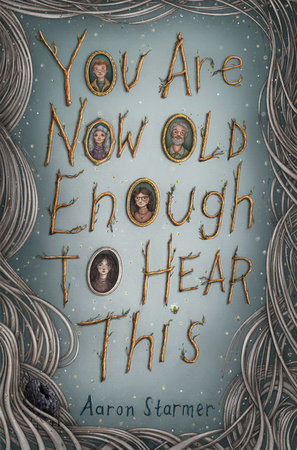
You Are Now Old Enough to Hear This

Hardcover
$18.99 US
| $26.99 CAN
On sale Mar 24, 2026 | 288 Pages | 9780593751091
Age 10 and up | Grade 5 & Up

See Additional Formats
There’s always more to the story.

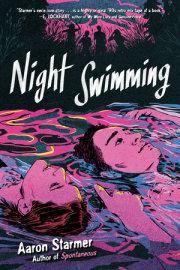
In the latest middle grade speculative novel from Spontaneous author Aaron Starmer, Roman follows the twisted threads of bizarre family legends and magical secrets to write his own chapter in his peculiar family narrative.

"A triumph of imaginative storytelling…"—Booklist, starred review


The Toe Beast looms large in the Barnes family lore—a tale concocted by twelve-year-old Roman’s grandpa to explain his missing toe. But Roman has never actually heard the full story, and after his grandpa dies suddenly, it seems like he never will.

That is, until Roman is tasked with clearing out his grandpa’s house, and stumbles upon some strange things. An old mason jar full of formaldehyde, a mysterious handwritten book about a girl and a pack of dogs, a rusty metal bucket with peculiar abilities. And they all tie back to extraordinary secrets from the distant past.

By unraveling even more unbelievable stories that have been hidden from him, Roman is forced to rethink how he fits into his family’s history. Now it’s up to him to see his own story through to the end. Because the Toe Beast was only the beginning . . .
One Quick Thing

On the eve of his twelfth birthday, Roman Barnes made a wish. Alone in his room, tucked under his covers, he softly said the following words into the dark: “I wish I had someone to talk to, someone who understands me and what I’m going through, someone who will tell me everything is gonna be okay.”

The next morning, he received a gift.

“Oh, a magic eight ball,” he said as he sat cross-​legged on the sofa, opening a box covered in shiny silver paper. “You ask it ‘yes or no’ questions and it tells your fortune, right?”

“Yep, just give it a shake and voilà, the answer will appear,” Roman’s dad said, and then he turned to Roman’s mom. “Where’d you find that?”

She shrugged. “Wasn’t me.”

“Must’ve been from his real parents,” Roman’s brother, Alex, said. “I guess now’s as good a time as ever to reveal the family secret. You’re adopted, Roman.”

“Not true and definitely not funny, Alex,” Roman’s mom said.

Roman was used to this sort of teasing from his brother, so he focused on the magic eight ball instead. He asked it, “Will you be nice to me?”

Roman shook the ball and an answer emerged in the murky waters. It was a definitive:
Yes.

“Well, it is your birthday,” Alex said. “It has to be nice to you on your birthday.”

Maybe that was the case, but it turned out that the magic eight ball was nice to Roman all the time.

Over the next week, he asked it more questions. Countless queries about who he was and what he wanted to be.

“Am I smart?”

“Will I make a difference when I’m older?”

“Do I matter?”

Whatever Roman asked the magic eight ball, it always answered with the same solitary word.

Yes.

Roman knew magic eight balls were supposed to be equipped with a whole slew of answers, phrases like Without a doubt, or Outlook not so good, or even Ask again later. But this particular magic eight ball would only ever answer with that short and sweet yes.

Such unbridled optimism meant the toy was clearly ­defective. Perhaps the floating die inside was unevenly weighted, or maybe the entire thing was misprinted with the same word on every surface. Yes, yes, yes, twenty times over. For this reason, Roman didn’t dare ask it any morbid questions such as “Will my parents die soon?” or “Will I always feel so alone?” because he couldn’t bear to see it confirm these things. Though he did posit a few silly scenarios, like “Will I grow up to be a capybara?” and “If I started training now, could I jump high enough to touch the moon?”

Yes. Yes.

Eventually, Roman grew bored with the toy. He stuffed it away somewhere and forgot where he put it. He didn’t even think to ask it about the Toe Beast.

Part One
The Toe Beast

Chapter 1

Roman’s cousins weren’t afraid of the Toe Beast. Neither was his brother. To them, it was simply a creature in a creepy tale that Grandpa Henry told when he pulled off his slippers and revealed his nine toes.

“How’d you lose that pinkie toe, Grandpa?” one of his grandkids would say.

And Grandpa Henry would arch an eyebrow and reply, “The losing part is the prologue. The real story is what came after the losing.” Then he’d proceed to tell whatever crowd had gathered about the Toe Beast and they’d cringe or laugh or gasp, but they’d all act as if it were harmless fiction.

Roman suspected it was fiction, but he couldn’t know for sure. Because he had never heard the story. At least not the entire thing. Bits and pieces would slip out of his cousins’ mouths when they were crowded around the kids’ table at Thanksgiving or scrunched up in the back of Uncle Pete’s van on trips to the beach.

The storms. The ax. The jar.

Invariably Roman’s brother, Alex, would say something like, “He’s not ready for that yet,” and the others would clam up immediately. Roman found that suspicious, even though he appreciated it. As the youngest of the cousins, his default mode was to be on the defensive. In most other instances, his brother—​and the rest of the Barnes clan—​would not be quite so considerate of his feelings.

The funny thing was, Roman really liked stories. But he couldn’t handle ones with blood and gore, and he suspected the story of the Toe Beast was full of both. So, whenever Grandpa Henry unveiled his foot, Roman would sneak away to another room until the tale was complete. He had no idea what the Toe Beast even was. He told himself he didn’t want to know.

There was a problem, however. Just because a guy tells himself he doesn’t want to know something, it doesn’t mean he won’t wonder about it. So, on some nights—​many, in fact—​Roman would lie awake in bed for hours pondering the Toe Beast. Was it a beast made of toes? Or was it a beast that ate toes? And what did it have to do with his nine-​toed Grandpa Henry?

Grandpa Henry lived alone as a widower in a small house not far from Roman’s home. His wife, Dorothy, was gone by the time Roman was a baby, but the old man still talked about her constantly and lovingly.

“You and your grandma would’ve been the best of pals,” he told Roman on more than one occasion. “She was a thinker like you.”

Roman wasn’t sure if he was a thinker, but his mind often wandered and clearly often wondered.

What does Grandpa Henry do all day alone? He comes to our house for Sunday dinners, and I see him cheering at all my Little League games, but how does he spend the rest of his hours?

It was on a blazing hot summer day when some of the things Roman wondered about began to reveal themselves. He had gone to Grandpa Henry’s house to cut the lawn, something his parents insisted he do because his grandfather, a former barber, had “already done two lifetimes’ worth of cutting.”

Roman found the old man behind the house, attaching a substantial padlock to his red toolshed. Sweat was dripping down his neck, and his hands were trembling.

“Roman!” Grandpa Henry said in shock, spinning around. “Why are you . . . I mean . . . I’m . . . happy to see you.”

He didn’t look happy, though. He looked scared.

“What’s going on?” Roman asked.

“It’s the Toe Beast,” he said, grabbing Roman by the shoulder a little too tightly. “He wants out again.”

Roman wished he hadn’t heard those words, because now he had to do something about them. “You look exhausted, Grandpa,” Roman said, pulling himself away from the old man’s grasp. “Do you have any lemonade inside?”

The boy knew the answer before even asking the question. Lemonade was a fixture in Grandpa Henry’s refrigerator, so of course the old man nodded in response, and Roman was able to take him by the arm and lead him into the house, away from the red toolshed.

When the two were sitting safely at the kitchen counter with tall, full glasses in front of them, Grandpa Henry once again put a firm hand on Roman’s shoulder. “Promise me you won’t let it out.”

“The Toe Beast?” Roman asked.

Grandpa Henry nodded vigorously. “I don’t know how much longer I have to live, but now that it’s fully grown, the Toe Beast might live for hundreds of years. Maybe thousands. They’ve found hair on mummies, you know?”

Roman took a long sip of his lemonade because he didn’t know how to respond. He was so worried.

“I’ve told you about that despicable Toe Beast, haven’t I?” Grandpa Henry said, pushing his glass of lemonade away from him like it was poison.

“You’ve told me many times,” Roman said, which was a lie, of course, but an understandable one. He certainly didn’t want to hear the story now. Not because he feared the Toe Beast but because he was scared for his grandfather. There was something not right about him. Something strange and different. An attitude? An . . . illness? Roman wasn’t clueless. He knew that when people got old, they sometimes suffered from delusions, and he wanted to stop this delusion right in its tracks. He figured the more he agreed with him, the sooner Grandpa Henry would change the subject.

“Hardly anyone believes me about the Toe Beast,” Grandpa Henry said. “Your Grandma Dorothy did. You do too, right?”

“Of course I believe,” Roman said, and he couldn’t feel bad for this lie either because it made his grandfather’s face brighten. But the brightness had a sheen to it, a redness, a simmering anger that didn’t look right on the typically serene old man.

“Good, good, good,” Grandpa Henry said, his lip curling. “You’re the only one I’m telling this. But you know what to do if it gets out, right?”

Roman had no idea what to do if some imaginary creature got out. He nodded just the same, which seemed to satisfy his grandfather, who nodded back and then retreated to the comfort of his bedroom. Before long, it started to rain and Roman realized he would have to wait to cut the lawn. He went home without saying goodbye.

Grandpa Henry died the next day.

Chapter 2

It was sudden—​a stroke while he was on a morning walk. A neighbor found Grandpa Henry facedown, drenched by the sprinkler along the edge of her front yard. She called 911, but by the time the paramedics arrived, he was gone. He was eighty years old. He’d lived a good and long life.

His three children and six grandchildren attended his funeral. This included Roman, Roman’s dad, David, and Roman’s brother, Alex. There was also Uncle Mike, and his kids, Gunnar and Millie. Plus, Uncle Pete with cousins Fiona and Conner. Not to mention all the spouses and friends of Henry’s descendants. The entire Barnes family.

As soon as they arrived at the funeral, Alex took Roman aside and asked him a strange question. “If I told you to follow a dog, what would you say?”

“Is this about Mom and Dad not letting us get a puppy?” Roman responded, genuinely befuddled as to why the subject would come up here of all places.

Alex shook his head. “I’ll say it again. Follow a dog. Does that mean anything to you?”

“I don’t know what the heck you’re talking about,” Roman replied.

Alex seemed satisfied by the answer and lightly punched Roman on the shoulder. “Don’t worry about it then. It’s just something that teenagers say.”

“I’m twelve and that’s almost—”

Alex waved a dismissive hand. “Trust me. If you don’t know right now, then you don’t wanna know. So you should probably hang back here with the parents for a while.”

Then Alex joined the other cousins around the open casket, where they were whispering to each other and surreptitiously peeking in at their grandpa’s feet. Of course, Roman thought. This has something to do with the Toe Beast.

It churned up a variety of feelings in his not-​quite-​teenage body. Fear. Jealousy. And, surprisingly, pity. Roman was the youngest, but at that moment he felt older than anybody. The others may have known the man and his stories, but Roman was the one Grandpa Henry had chosen to warn about the Toe Beast. It didn’t matter that Roman didn’t believe in the Toe Beast. What mattered was that his grandfather trusted him in a way he didn’t trust anyone else. That meant something.

Roman didn’t cry at the funeral, and he wasn’t sure why. Maybe it was because it embarrassed him to show such emotion around more mature people; he saved that sort of thing for when he was alone in his room where no one could see or hear him. Maybe it was because deep down he knew it was Grandpa Henry’s time—​he was eighty, after all. The only thing Roman knew for sure was that he loved his grandfather and would miss him, whether tears were shed or not.

Roman’s cousin Conner, a quiet teenager with a talent for art, had no problem crying, and he did so as he passed out lovely hand-​drawn family trees to everyone in attendance.

“Look at all the life our grandparents brought into the world,” he said with a sniffle. “They weren’t perfect. We all know that. But man, what a gift they’ve given us. Couldn’t wish for anything better.”

It was a nice gesture, but Roman didn’t need a reminder of who was in his family. So, when Conner wasn’t looking, Roman folded up his copy and slipped it into the back pocket of the pants from his hand‑me‑down suit. At home later that night, he threw the pants into a corner of his room.

It was the end of summer. Roman’s parents went to their jobs every morning, and Alex worked as a lifeguard at the lake. Roman had two weeks off from sports camps before school started, which meant he was home alone with his books and video games.

“Tell you what,” Roman’s dad said a few days after Grandpa Henry’s funeral. “Someone needs to go through Grandpa’s things. You know, organize. Get it all in storage containers. Is that something you think you could do? It’d be a good way to spend the rest of the summer. Your uncles and I would pay you for it.”

This didn’t exactly feel like a job offer to Roman. It felt like an order. If he declined, his dad would probably pepper him with questions every afternoon, passive-aggressive stuff like, “So what constructive thing did you do with your leisurely day?” Before long, Roman would feel so guilty that he’d end up accepting the job anyway. So why wait?

“I’ll give it a try,” he told his dad. “Maybe I’ll even learn some more stuff about Grandpa.”
His dad pulled him in for a firm hug and said, “I bet you will. My father was an exceptional man.”

This might have been a good time for Roman to ask his dad about the Toe Beast and what it meant to Grandpa Henry, but he wasn’t sure if it would be appropriate. He didn’t want to tarnish his dad’s memories by explaining that the old man’s last days were spent in a state of paranoia, brought on by some fictional creature.

Instead, Roman told him, “Looking forward to it,” and left it at that.

The next morning, Roman’s mom dropped him off at Grandpa Henry’s house armed with a fully charged phone, dozens of plastic storage containers of varying sizes, multiple rolls of colored labeling tape, and a box of Sharpies. “It’s so good of you to do this,” she said. “He loved you so much.”

“I loved him too,” Roman replied.

To prove that he loved him, the first thing Roman did when his mom pulled away was to walk through the now-​knee-​high grass to the backyard and check on the red toolshed where he had talked to Grandpa Henry over a week ago.

The shed was large, windowless, and made of steel, seemingly impervious to wind, rain, and animals. Nothing about it was particularly creepy. It wasn’t rusted or choked by kudzu. His grandfather had owned the shed for as long as Roman could remember, and it still looked nearly new. Roman had never been inside and had never thought much about what was inside. The lawn mower was always kept in the garage, so Roman was fairly certain the shed was where Grandpa Henry stored less-​­used items. And yet, before he started organizing the things in the house, Roman needed to confirm his assumption that there was nothing to worry about in there, if only to push that idea entirely out of his mind.

The padlock, still attached to the door, was thick and heavy. Getting it off wasn’t going to be easy. Roman didn’t have the key, and the lock was so well made that it was probably impossible to cut, perhaps even bulletproof. As for the shed itself, it rested on a thick concrete slab, so he couldn’t dig his way in. He figured a car or truck could crash into it and knock it over, but Roman wasn’t old enough to drive. Besides, he didn’t want to destroy anything. All he wanted was to make sure there was nothing alive inside.

So, he knocked. And he said, “Hello. Is anyone, or anything, in there?”

There was no answer, but when he pressed his ear to the metal wall, Roman thought he heard something.

So, he knocked again. “Hello!”

Again, there was . . . something. A scraping? A shuffling? A voice? Something. It was so faint, though. It could also have been nothing. A figment of his imagination. A symptom of nervousness.

He pressed his ear against the wall for what felt like minutes but was probably seconds, and when he couldn’t say for sure he heard anything, he decided his mind was playing tricks on him. So, he gave up on the shed and hurried inside to start the task he was there to complete.

Chapter 3

Grandpa Henry’s house was neat and orderly. The kitchen was a model of efficiency, with only the bare minimum of utensils and appliances. It took Roman less than an hour to empty the kitchen cabinets, and organize and store it all in labeled plastic bins. The rest of the house was nearly as spartan, with many surfaces bare, most drawers nearly empty. Roman had visited countless times, but he had never truly noticed how utilitarian the home was. It had plenty of furniture and pictures on the walls, but there was very little stuff.

In the bedroom, Roman found a laptop open on the desk. Tapping the track pad woke it up, and Roman sighed when he discovered it wasn’t password protected—​something his cousin Millie was supposed to help Grandpa Henry with ages ago. The only app running was a web browser, which had a single tab open to a page of text.

Curiosity rarely got the better of Roman, because he knew it wasn’t right to be a snoop. Aside from little things—​eating too many snacks, watching too much TV—​he typically didn’t break the rules. Even though the text on the laptop didn’t appear particularly private at first glance, reading it felt like breaking the rules. So, Roman closed the browser, then snapped the laptop shut and set it aside with some other things he planned to give to his dad later. It was inevitable, though. A few words from the text caught his eye and lodged in his brain.

Peace. Love. Happiness.

It was a phrase used by Grandpa Henry’s generation, a sweet and harmless relic from what must’ve been a simpler time. Roman couldn’t feel too guilty about reading that small bit, because it was comforting to imagine that peace, love, and happiness might’ve been some of the last words his grandpa saw before passing. His grandpa had certainly brought all three into the world.

After surveying the rest of the first two floors, Roman figured he’d be done packing the entire house in a couple of days. That is, until he looked in the one part of the house he’d never been in before. The attic.

The attic wasn’t a complete mess, but there was a lot in it. There were some loose items such as old golf clubs, a rusty metal bucket hanging from a hook, and a stack of folding chairs. Mostly it was cardboard boxes stacked upon cardboard boxes, few of them labeled, some of them falling apart, and every one of them full. He opened three random boxes and was confronted with a little bit of this and a little bit of that. No order, no logic. Roman suspected that rather than clutter his home, Grandpa Henry had simply tossed all the extra items into these boxes. His grandfather had obviously wanted to hold on to these things, but maybe he never wanted to see them again. Because to actually find something in here would’ve been maddening.

Unless a person was looking for one particular box. The red box.

The red box was different from all the others. Yes, because it was the only red one, but also because it was made of wood, and it was quite old. It sat in the corner, away from everything else. Its paint was peeling, and it was covered in a thick film of dust, but Roman could still read the words that were stenciled on the hinged lid: HENRY’S TOYS.

The attic was well lit by a pair of bulbs hung from the rafters, so Roman wasn’t particularly scared while opening his grandfather’s old red wooden toy box. But when the hinges creaked and the first thing he saw was a jar filled with a murky green liquid, he had to take a step back.

What on earth was this? Where were the toys?

There were none. Taking a cautious step forward, Roman noticed there was also a black notebook inside the box. But other than a few cobwebs, that was it. No teddy bears, no Slinkys, no model airplanes, no yo‑yos. The jar and a notebook, that’s all. There wasn’t a label on the jar. It was a simple mason jar with a dented and rusty lid. It looked ancient. The notebook, however, appeared to be relatively new, and it did have a label, one that read A GIRL AND HER DOGS.

Even though it made him nervous, Roman did what anyone would do with a mysterious jar: He twisted the lid off. The liquid inside smelled like pickles—​briny and somewhat sweet. Roman adored pickles and he was almost tempted to sip it. Almost. He may not have been the smartest kid who ever lived, but he wasn’t so stupid that he’d go sipping mystery attic liquid in the hopes it might be pickle juice. He swirled it, though, and held it up to the light as if that might reveal something. It was kind of green, and kind of cloudy, and it smelled like pickles. There wasn’t much more to say about it.

So, he twisted the lid back on and turned to the notebook. The notebook wasn’t entirely black. It had a marbled appearance, and there was a white label on the cover that displayed the title, A GIRL AND HER DOGS, which reminded him of a fairy tale for some reason, though he wasn’t sure why.

He flipped the notebook over and found a message written on the back in red ink. The handwriting was different from the text on the front, which was clear and legible, with an artistic flair, the work of a steady, practiced hand. The writing on the back was the scrawl of a kid. It read She wrote this for us.

Then it was signed: Gunnar

Gunnar was his oldest cousin. So, this notebook was obviously something at least one other person in his family knew about. Plus, the message indicated that it was meant to be shared, and that made it seem vastly different from the situation with the laptop. It wouldn’t be against the rules to look at this. It wouldn’t be snooping. Quite the opposite. It would be doing what was expected of him. At least, that’s how Roman justified what he did next. He peeled back the cover and began reading.

We thought that bad things came with the dark and good things came with the dawn. So, when the girl came at noon, we had no idea what to think . . .

Chapter 4

When Roman was finished reading the notebook, he put it and the jar back in the red toy box. He buried the red toy box under other boxes, so no one else could stumble upon it. Then he went out to the yard and waited nervously for his mom to pick him up.

As she drove him home, he pondered what he had read. He was confused, to say the least. He didn’t know what was in the jar. He didn’t understand what was written in the notebook. Actually, that wasn’t entirely right. He did technically understand the words in the notebook. It told a story. A strange one about a small town that is visited by a girl and some dogs, and the creepy occurrences that arise from the visit. The story didn’t have a proper ending. It was as if someone had given up on it just as it was getting good.

Who had written it? Did it have something to do with the Toe Beast? There was no mention of it in the story, but how could Roman know if there was a connection to the Toe Beast without knowing the story of the Toe Beast? Suddenly not knowing the story made Roman far more nervous than he had been before.

Roman assumed he could ask his cousin Gunnar, because Gunnar knew the story of the Toe Beast and had obviously read the story in the notebook. But Roman didn’t have much of a relationship with him. Gunnar was twice his age, so they were removed by a full generation. Besides a quick handshake at Grandpa Henry’s funeral, it had been at least a couple of years since Roman had even talked to him. The last time had been at a family reunion, where he’d taught Roman how to play a yard game called Kubb.

“Some people call it Viking Chess,” Gunnar had said. “But that’s apocryphal.”

Apocryphal was not a word in Roman’s vocabulary—​still wasn’t—​and when his cousin used it, Roman immediately felt small and uncomfortable. Even being in the same room with Gunnar made him feel that way, so he certainly wasn’t going to reach out to him.

There was another option, of course. Even though he wasn’t going to bring up the notebook, he waited for his dad to return home from work, then cornered him in the living room. “Tell me about the Toe Beast,” Roman pleaded.

His dad furrowed his brow. “You miss your grandpa, huh? I miss him too.”

“I do, but it’s not about that,” Roman said. “I really need you to tell me about the Toe Beast.”

“But you already know that story. Everyone knows that story. It’s part of our family history.”

Roman shook his head. “I don’t know it.”

“Hmm. Not sure I can do it justice.”

“Please try.”

Roman’s dad must have seen the desperation in his son’s eyes, because he didn’t pop into the kitchen for a drink of water, or hurry upstairs to change out of his work clothes first. He simply sat down on the sofa next to the window. As he looked out into the yard, he said, “I guess it’s my job to tell it now, isn’t it?”

His voice quivered ever so slightly when he said this, like a nervous kid lifting a forkful of food he’d never tried before. Roman had always assumed that adults were ready for death. That preparations were made, traditions passed on. Clearly that wasn’t the case here. His dad hadn’t expected to be in this position.

“You’ll do a great job,” Roman assured him.

With a wan smile spreading across his face, his dad nodded and said, “You know when Grandpa was growing up, his family didn’t have much at all, right? Not like us.”

“Didn’t they live in a cabin for a while?” Roman asked.

“They did. Tiny place, no furnace, no running water. They had a stove, a wood-​burning one, for cooking and heating. They’d burn five or six cords of wood a year. At least. His older brother, my Uncle Frank, did most of the wood chopping. When your Grandpa Henry was six years old, he couldn’t heft an ax yet, so he would carry the logs for Frank. He’d set them on the chopping block, then step back and Frank would put the ax to them.

“On a rainy autumn day, Henry’s father delivered some disturbing news to his sons. His father, Henry and Frank’s grandfather, my great-​grandfather, your great-​great-​grandfather, a man they all knew as Old George, had passed away from a stroke. Frank, in particular, loved Old George, and to deal with his anger, he immediately went out to chop some wood. His anger got the best of him, because as your Grandpa Henry was carrying a log, the ax slipped from Frank’s hands mid-​swing, flipped through the air, and landed right on Grandpa Henry’s foot. It chopped his pinkie toe clean off.”

This part made Roman cringe, and why wouldn’t it? His grandfather had been only six when it happened, an innocent little kid. Roman could hardly imagine such intense panic and pain.

“The hospital was more than an hour’s drive,” Roman’s dad went on. “And they didn’t have a car. So, they hitched a ride in the back of a neighbor’s truck that was filled with live chickens and on its way to a local market. Even though Grandpa’s parents put the toe on ice, the drive took too long, and the doctors couldn’t reattach it. So, Grandpa took the toe home with him, and he put it in a jar of formaldehyde to make sure it wouldn’t rot away.”

This part made Roman cringe too, because toes in jars will do that, but also because it turned on a light of recognition. Formaldehyde, that’s what that green liquid was in the toy box! Roman had seen the stuff before, in a museum of medical oddities during a class trip to Philadelphia.

“So, what happened next?” Roman asked, because the story had the toe, but not the beast, and while he wasn’t looking forward to hearing about the beast, he needed to hear about the beast.

“Well, if you were to believe Grandpa’s story,” his dad said, “the toe started talking to him.”

“What?”

“He set the jar on a milk crate next to his bed, and at night the toe would whisper to Grandpa through a little mouth beneath its nail.”

“What would it whisper?”

Roman’s dad’s eyebrows went up. “The weather.”

“Like . . . rain?”

“And snow. And tornadoes. If you believe he heard it from the toe or not is up to you, but I’ll tell you this, Grandpa used to be able to predict the weather.”

“So, he checked the internet a lot?” Roman asked.

“There was no internet when he was a boy,” his dad said.

“Then TV forecasts?”

“No TV forecasts either. They didn’t even own a radio or subscribe to a newspaper. Still, Grandpa predicted the Flood of 1955 and the Blizzard of 1956. Both times he warned the neighbors, and both times they didn’t believe him. But they weren’t going to be foolish a third time. When they realized he had a gift, they started paying him for his predictions. That’s ultimately what pulled his family out of poverty.”

Roman was disappointed in this version of the story, to say the least. “So why didn’t he become a weatherman or something?”

“Because the toe disappeared,” his dad said. “He lost track of it as soon as he moved out of the cabin and into the house where he lived the rest of his life. The house where I grew up.”

“The house where I just found the jar,” Roman added.

“You what?”

“I think I found the jar that he kept the toe in.”

Roman’s dad scratched his chin and let out a small laugh. “Huh. Well, that’s something, isn’t it?”

“It still has the formaldehyde in it.”

“But no toe?”

“No toe.”

His dad snapped his fingers, smiled a knowing smile, and said, “Oh darn. One less thing to fight over in the will.”

“So, is that it?” Roman asked.

“Is that what?”

“Is that the entire story of the Toe Beast?”

His dad put up his hands in surrender. “That’s all he ever told me.”

Roman believed his dad because his dad was an honest man. However, an idea had been worming its way through Roman’s mind of late.

There’s always more to the story.

Which story? Well, every story. When Roman was younger, he didn’t dig deeper into what people told him. Sure, like most kids, he’d ask a lot of whys. Why does the sun look the same size as the moon? Why don’t children grow mustaches? Why do I have to eat carrots when potato chips taste so much better? That said, Roman never had the ability, or the desire, to research such things himself.

Perhaps now he had both. The story of the Toe Beast seemed to explain what the jar was, but it didn’t explain the notebook. Seeing that they were the only things in the red toy box, the two had to be connected, right? So, what did this have to do with a girl and some dogs? Did it explain Grandpa Henry’s paranoia about the red toolshed? Were they all part of one big story?

For quite some time, Roman had been aware that his mom and dad didn’t know everything, but it was only recently that he had begun to realize that many complicated adult ideas were actually accessible to a boy his age.

There was a tradition in Roman’s immediate family. All someone had to do was announce “family movie night” when the rest of the family was within earshot, and then that person had the right to pull out a phone or tablet and show the others a trailer for a movie. If everyone was interested in seeing the movie—​voted via thumbs‑up or thumbs-​down—​then they’d have a family movie night.

Alex was often too busy to participate, but when he did, he would pick strange movies with jumbled timelines and ambiguous or unresolved endings, the types where villains would win, or the screen would fade to black while leaving more questions than answers. Roman’s dad was usually a good sport and would give almost any trailer a thumbs‑up, but when the credits would roll on most of Alex’s picks, he’d invariably say things like, “Well, that’s two hours of my life I’m not getting back,” or “I’m afraid I’m too dumb to even begin to understand the why, what, when, or how of that one.”

The thing was, Roman usually liked the movies Alex selected, even if he didn’t always tell Alex that. (Why give his already cocky older brother the satisfaction of knowing he had good taste?) What Roman enjoyed most was how these movies made him feel, which was far more engrossing than the “why, what, when, or how” that concerned his father. Even though he didn’t always understand them, Roman knew there were big ideas hidden inside the images and dialogue. There was, in other words, more to the stories.

Could Roman uncover more to the story of the Toe Beast, even if some of the older people in his life couldn’t? Did he truly want to?

These were the questions he asked the dark of the night as crickets wailed outside the open window of his bedroom and his clammy foot poked out from under his sheet. He asked them over and over again until he eventually drifted off to sleep.
“A triumph of imaginative storytelling that belongs on the same shelf as other offbeat classics of children’s literature like Lemony Snicket’s A Series of Unfortunate Events and Catherynne M. Valente’s Fairyland series.”—Booklist, starred review

"Roman’s curiosity about his family and his place within it propels him on an unsettlingly strange and seemingly disjointed journey that Starmer (Night Swimming) cleverly conjures into a cohesive, genuinely touching narrative."—Publishers Weekly, starred review

"Starmer’s latest calls to mind Rebecca Stead’s When You Reach Me in the way the intricate plot similarly—and bafflingly—comes together with surprising twists… Intriguingly bizarre and wholly original."—Kirkus

"Starmer (Night Swimming) combines magic, whimsy, and the unexpected in this exploration of one family’s history."—School Library Journal

“A wildly original, deliciously strange tale of family secrets, magical mysteries, and one deeply creepy toe.”—Anne Ursu, author of Not Quite a Ghost

You Are Now Old Enough to Hear This is a twisty, mesmerizing modern fairy tale that hooked me from the very beginning—I needed to know how all the threads fit together. This mysterious fable is filled with heart and will linger with readers long after they’ve read the last page.”—Doug Cornett, author of Finally, Something Mysterious

“There is always a point, when I’m reading one of Aaron’s books, when I look up from a page I’ve just read, and I try to predict where the tale is going to wind up. (I have yet to succeed.) But I also know, every time, that there will be a later page where everything suddenly comes together in a way that is as satisfying (and often heart-shaking) as it is impossible to anticipate. This is one of those tales, but it’s more than just a gloriously twisty puzzle. It’s also a story of love and separation, of wishes and consequences that reverberate through generations, of the ways that families care for each other and the times when love and trust look different than we expect. It’s a strange and beautiful book that I read in one glorious sitting and then, if it hadn’t already been past my bedtime, would have flipped right back to the beginning to start again.”—Kate Milford, New York Times bestselling author of Greenglass House

© Toril Lavender
Aaron Starmer is the author of numerous novels for young readers, including The Only OnesThe Riverman, and his young adult novel, Spontaneous. He lives in Vermont with his wife and daughter.

You can find Aaron online at @AaronStarmer View titles by Aaron Starmer

About

There’s always more to the story.

In the latest middle grade speculative novel from Spontaneous author Aaron Starmer, Roman follows the twisted threads of bizarre family legends and magical secrets to write his own chapter in his peculiar family narrative.

"A triumph of imaginative storytelling…"—Booklist, starred review


The Toe Beast looms large in the Barnes family lore—a tale concocted by twelve-year-old Roman’s grandpa to explain his missing toe. But Roman has never actually heard the full story, and after his grandpa dies suddenly, it seems like he never will.

That is, until Roman is tasked with clearing out his grandpa’s house, and stumbles upon some strange things. An old mason jar full of formaldehyde, a mysterious handwritten book about a girl and a pack of dogs, a rusty metal bucket with peculiar abilities. And they all tie back to extraordinary secrets from the distant past.

By unraveling even more unbelievable stories that have been hidden from him, Roman is forced to rethink how he fits into his family’s history. Now it’s up to him to see his own story through to the end. Because the Toe Beast was only the beginning . . .

Excerpt

One Quick Thing

On the eve of his twelfth birthday, Roman Barnes made a wish. Alone in his room, tucked under his covers, he softly said the following words into the dark: “I wish I had someone to talk to, someone who understands me and what I’m going through, someone who will tell me everything is gonna be okay.”

The next morning, he received a gift.

“Oh, a magic eight ball,” he said as he sat cross-​legged on the sofa, opening a box covered in shiny silver paper. “You ask it ‘yes or no’ questions and it tells your fortune, right?”

“Yep, just give it a shake and voilà, the answer will appear,” Roman’s dad said, and then he turned to Roman’s mom. “Where’d you find that?”

She shrugged. “Wasn’t me.”

“Must’ve been from his real parents,” Roman’s brother, Alex, said. “I guess now’s as good a time as ever to reveal the family secret. You’re adopted, Roman.”

“Not true and definitely not funny, Alex,” Roman’s mom said.

Roman was used to this sort of teasing from his brother, so he focused on the magic eight ball instead. He asked it, “Will you be nice to me?”

Roman shook the ball and an answer emerged in the murky waters. It was a definitive:
Yes.

“Well, it is your birthday,” Alex said. “It has to be nice to you on your birthday.”

Maybe that was the case, but it turned out that the magic eight ball was nice to Roman all the time.

Over the next week, he asked it more questions. Countless queries about who he was and what he wanted to be.

“Am I smart?”

“Will I make a difference when I’m older?”

“Do I matter?”

Whatever Roman asked the magic eight ball, it always answered with the same solitary word.

Yes.

Roman knew magic eight balls were supposed to be equipped with a whole slew of answers, phrases like Without a doubt, or Outlook not so good, or even Ask again later. But this particular magic eight ball would only ever answer with that short and sweet yes.

Such unbridled optimism meant the toy was clearly ­defective. Perhaps the floating die inside was unevenly weighted, or maybe the entire thing was misprinted with the same word on every surface. Yes, yes, yes, twenty times over. For this reason, Roman didn’t dare ask it any morbid questions such as “Will my parents die soon?” or “Will I always feel so alone?” because he couldn’t bear to see it confirm these things. Though he did posit a few silly scenarios, like “Will I grow up to be a capybara?” and “If I started training now, could I jump high enough to touch the moon?”

Yes. Yes.

Eventually, Roman grew bored with the toy. He stuffed it away somewhere and forgot where he put it. He didn’t even think to ask it about the Toe Beast.

Part One
The Toe Beast

Chapter 1

Roman’s cousins weren’t afraid of the Toe Beast. Neither was his brother. To them, it was simply a creature in a creepy tale that Grandpa Henry told when he pulled off his slippers and revealed his nine toes.

“How’d you lose that pinkie toe, Grandpa?” one of his grandkids would say.

And Grandpa Henry would arch an eyebrow and reply, “The losing part is the prologue. The real story is what came after the losing.” Then he’d proceed to tell whatever crowd had gathered about the Toe Beast and they’d cringe or laugh or gasp, but they’d all act as if it were harmless fiction.

Roman suspected it was fiction, but he couldn’t know for sure. Because he had never heard the story. At least not the entire thing. Bits and pieces would slip out of his cousins’ mouths when they were crowded around the kids’ table at Thanksgiving or scrunched up in the back of Uncle Pete’s van on trips to the beach.

The storms. The ax. The jar.

Invariably Roman’s brother, Alex, would say something like, “He’s not ready for that yet,” and the others would clam up immediately. Roman found that suspicious, even though he appreciated it. As the youngest of the cousins, his default mode was to be on the defensive. In most other instances, his brother—​and the rest of the Barnes clan—​would not be quite so considerate of his feelings.

The funny thing was, Roman really liked stories. But he couldn’t handle ones with blood and gore, and he suspected the story of the Toe Beast was full of both. So, whenever Grandpa Henry unveiled his foot, Roman would sneak away to another room until the tale was complete. He had no idea what the Toe Beast even was. He told himself he didn’t want to know.

There was a problem, however. Just because a guy tells himself he doesn’t want to know something, it doesn’t mean he won’t wonder about it. So, on some nights—​many, in fact—​Roman would lie awake in bed for hours pondering the Toe Beast. Was it a beast made of toes? Or was it a beast that ate toes? And what did it have to do with his nine-​toed Grandpa Henry?

Grandpa Henry lived alone as a widower in a small house not far from Roman’s home. His wife, Dorothy, was gone by the time Roman was a baby, but the old man still talked about her constantly and lovingly.

“You and your grandma would’ve been the best of pals,” he told Roman on more than one occasion. “She was a thinker like you.”

Roman wasn’t sure if he was a thinker, but his mind often wandered and clearly often wondered.

What does Grandpa Henry do all day alone? He comes to our house for Sunday dinners, and I see him cheering at all my Little League games, but how does he spend the rest of his hours?

It was on a blazing hot summer day when some of the things Roman wondered about began to reveal themselves. He had gone to Grandpa Henry’s house to cut the lawn, something his parents insisted he do because his grandfather, a former barber, had “already done two lifetimes’ worth of cutting.”

Roman found the old man behind the house, attaching a substantial padlock to his red toolshed. Sweat was dripping down his neck, and his hands were trembling.

“Roman!” Grandpa Henry said in shock, spinning around. “Why are you . . . I mean . . . I’m . . . happy to see you.”

He didn’t look happy, though. He looked scared.

“What’s going on?” Roman asked.

“It’s the Toe Beast,” he said, grabbing Roman by the shoulder a little too tightly. “He wants out again.”

Roman wished he hadn’t heard those words, because now he had to do something about them. “You look exhausted, Grandpa,” Roman said, pulling himself away from the old man’s grasp. “Do you have any lemonade inside?”

The boy knew the answer before even asking the question. Lemonade was a fixture in Grandpa Henry’s refrigerator, so of course the old man nodded in response, and Roman was able to take him by the arm and lead him into the house, away from the red toolshed.

When the two were sitting safely at the kitchen counter with tall, full glasses in front of them, Grandpa Henry once again put a firm hand on Roman’s shoulder. “Promise me you won’t let it out.”

“The Toe Beast?” Roman asked.

Grandpa Henry nodded vigorously. “I don’t know how much longer I have to live, but now that it’s fully grown, the Toe Beast might live for hundreds of years. Maybe thousands. They’ve found hair on mummies, you know?”

Roman took a long sip of his lemonade because he didn’t know how to respond. He was so worried.

“I’ve told you about that despicable Toe Beast, haven’t I?” Grandpa Henry said, pushing his glass of lemonade away from him like it was poison.

“You’ve told me many times,” Roman said, which was a lie, of course, but an understandable one. He certainly didn’t want to hear the story now. Not because he feared the Toe Beast but because he was scared for his grandfather. There was something not right about him. Something strange and different. An attitude? An . . . illness? Roman wasn’t clueless. He knew that when people got old, they sometimes suffered from delusions, and he wanted to stop this delusion right in its tracks. He figured the more he agreed with him, the sooner Grandpa Henry would change the subject.

“Hardly anyone believes me about the Toe Beast,” Grandpa Henry said. “Your Grandma Dorothy did. You do too, right?”

“Of course I believe,” Roman said, and he couldn’t feel bad for this lie either because it made his grandfather’s face brighten. But the brightness had a sheen to it, a redness, a simmering anger that didn’t look right on the typically serene old man.

“Good, good, good,” Grandpa Henry said, his lip curling. “You’re the only one I’m telling this. But you know what to do if it gets out, right?”

Roman had no idea what to do if some imaginary creature got out. He nodded just the same, which seemed to satisfy his grandfather, who nodded back and then retreated to the comfort of his bedroom. Before long, it started to rain and Roman realized he would have to wait to cut the lawn. He went home without saying goodbye.

Grandpa Henry died the next day.

Chapter 2

It was sudden—​a stroke while he was on a morning walk. A neighbor found Grandpa Henry facedown, drenched by the sprinkler along the edge of her front yard. She called 911, but by the time the paramedics arrived, he was gone. He was eighty years old. He’d lived a good and long life.

His three children and six grandchildren attended his funeral. This included Roman, Roman’s dad, David, and Roman’s brother, Alex. There was also Uncle Mike, and his kids, Gunnar and Millie. Plus, Uncle Pete with cousins Fiona and Conner. Not to mention all the spouses and friends of Henry’s descendants. The entire Barnes family.

As soon as they arrived at the funeral, Alex took Roman aside and asked him a strange question. “If I told you to follow a dog, what would you say?”

“Is this about Mom and Dad not letting us get a puppy?” Roman responded, genuinely befuddled as to why the subject would come up here of all places.

Alex shook his head. “I’ll say it again. Follow a dog. Does that mean anything to you?”

“I don’t know what the heck you’re talking about,” Roman replied.

Alex seemed satisfied by the answer and lightly punched Roman on the shoulder. “Don’t worry about it then. It’s just something that teenagers say.”

“I’m twelve and that’s almost—”

Alex waved a dismissive hand. “Trust me. If you don’t know right now, then you don’t wanna know. So you should probably hang back here with the parents for a while.”

Then Alex joined the other cousins around the open casket, where they were whispering to each other and surreptitiously peeking in at their grandpa’s feet. Of course, Roman thought. This has something to do with the Toe Beast.

It churned up a variety of feelings in his not-​quite-​teenage body. Fear. Jealousy. And, surprisingly, pity. Roman was the youngest, but at that moment he felt older than anybody. The others may have known the man and his stories, but Roman was the one Grandpa Henry had chosen to warn about the Toe Beast. It didn’t matter that Roman didn’t believe in the Toe Beast. What mattered was that his grandfather trusted him in a way he didn’t trust anyone else. That meant something.

Roman didn’t cry at the funeral, and he wasn’t sure why. Maybe it was because it embarrassed him to show such emotion around more mature people; he saved that sort of thing for when he was alone in his room where no one could see or hear him. Maybe it was because deep down he knew it was Grandpa Henry’s time—​he was eighty, after all. The only thing Roman knew for sure was that he loved his grandfather and would miss him, whether tears were shed or not.

Roman’s cousin Conner, a quiet teenager with a talent for art, had no problem crying, and he did so as he passed out lovely hand-​drawn family trees to everyone in attendance.

“Look at all the life our grandparents brought into the world,” he said with a sniffle. “They weren’t perfect. We all know that. But man, what a gift they’ve given us. Couldn’t wish for anything better.”

It was a nice gesture, but Roman didn’t need a reminder of who was in his family. So, when Conner wasn’t looking, Roman folded up his copy and slipped it into the back pocket of the pants from his hand‑me‑down suit. At home later that night, he threw the pants into a corner of his room.

It was the end of summer. Roman’s parents went to their jobs every morning, and Alex worked as a lifeguard at the lake. Roman had two weeks off from sports camps before school started, which meant he was home alone with his books and video games.

“Tell you what,” Roman’s dad said a few days after Grandpa Henry’s funeral. “Someone needs to go through Grandpa’s things. You know, organize. Get it all in storage containers. Is that something you think you could do? It’d be a good way to spend the rest of the summer. Your uncles and I would pay you for it.”

This didn’t exactly feel like a job offer to Roman. It felt like an order. If he declined, his dad would probably pepper him with questions every afternoon, passive-aggressive stuff like, “So what constructive thing did you do with your leisurely day?” Before long, Roman would feel so guilty that he’d end up accepting the job anyway. So why wait?

“I’ll give it a try,” he told his dad. “Maybe I’ll even learn some more stuff about Grandpa.”
His dad pulled him in for a firm hug and said, “I bet you will. My father was an exceptional man.”

This might have been a good time for Roman to ask his dad about the Toe Beast and what it meant to Grandpa Henry, but he wasn’t sure if it would be appropriate. He didn’t want to tarnish his dad’s memories by explaining that the old man’s last days were spent in a state of paranoia, brought on by some fictional creature.

Instead, Roman told him, “Looking forward to it,” and left it at that.

The next morning, Roman’s mom dropped him off at Grandpa Henry’s house armed with a fully charged phone, dozens of plastic storage containers of varying sizes, multiple rolls of colored labeling tape, and a box of Sharpies. “It’s so good of you to do this,” she said. “He loved you so much.”

“I loved him too,” Roman replied.

To prove that he loved him, the first thing Roman did when his mom pulled away was to walk through the now-​knee-​high grass to the backyard and check on the red toolshed where he had talked to Grandpa Henry over a week ago.

The shed was large, windowless, and made of steel, seemingly impervious to wind, rain, and animals. Nothing about it was particularly creepy. It wasn’t rusted or choked by kudzu. His grandfather had owned the shed for as long as Roman could remember, and it still looked nearly new. Roman had never been inside and had never thought much about what was inside. The lawn mower was always kept in the garage, so Roman was fairly certain the shed was where Grandpa Henry stored less-​­used items. And yet, before he started organizing the things in the house, Roman needed to confirm his assumption that there was nothing to worry about in there, if only to push that idea entirely out of his mind.

The padlock, still attached to the door, was thick and heavy. Getting it off wasn’t going to be easy. Roman didn’t have the key, and the lock was so well made that it was probably impossible to cut, perhaps even bulletproof. As for the shed itself, it rested on a thick concrete slab, so he couldn’t dig his way in. He figured a car or truck could crash into it and knock it over, but Roman wasn’t old enough to drive. Besides, he didn’t want to destroy anything. All he wanted was to make sure there was nothing alive inside.

So, he knocked. And he said, “Hello. Is anyone, or anything, in there?”

There was no answer, but when he pressed his ear to the metal wall, Roman thought he heard something.

So, he knocked again. “Hello!”

Again, there was . . . something. A scraping? A shuffling? A voice? Something. It was so faint, though. It could also have been nothing. A figment of his imagination. A symptom of nervousness.

He pressed his ear against the wall for what felt like minutes but was probably seconds, and when he couldn’t say for sure he heard anything, he decided his mind was playing tricks on him. So, he gave up on the shed and hurried inside to start the task he was there to complete.

Chapter 3

Grandpa Henry’s house was neat and orderly. The kitchen was a model of efficiency, with only the bare minimum of utensils and appliances. It took Roman less than an hour to empty the kitchen cabinets, and organize and store it all in labeled plastic bins. The rest of the house was nearly as spartan, with many surfaces bare, most drawers nearly empty. Roman had visited countless times, but he had never truly noticed how utilitarian the home was. It had plenty of furniture and pictures on the walls, but there was very little stuff.

In the bedroom, Roman found a laptop open on the desk. Tapping the track pad woke it up, and Roman sighed when he discovered it wasn’t password protected—​something his cousin Millie was supposed to help Grandpa Henry with ages ago. The only app running was a web browser, which had a single tab open to a page of text.

Curiosity rarely got the better of Roman, because he knew it wasn’t right to be a snoop. Aside from little things—​eating too many snacks, watching too much TV—​he typically didn’t break the rules. Even though the text on the laptop didn’t appear particularly private at first glance, reading it felt like breaking the rules. So, Roman closed the browser, then snapped the laptop shut and set it aside with some other things he planned to give to his dad later. It was inevitable, though. A few words from the text caught his eye and lodged in his brain.

Peace. Love. Happiness.

It was a phrase used by Grandpa Henry’s generation, a sweet and harmless relic from what must’ve been a simpler time. Roman couldn’t feel too guilty about reading that small bit, because it was comforting to imagine that peace, love, and happiness might’ve been some of the last words his grandpa saw before passing. His grandpa had certainly brought all three into the world.

After surveying the rest of the first two floors, Roman figured he’d be done packing the entire house in a couple of days. That is, until he looked in the one part of the house he’d never been in before. The attic.

The attic wasn’t a complete mess, but there was a lot in it. There were some loose items such as old golf clubs, a rusty metal bucket hanging from a hook, and a stack of folding chairs. Mostly it was cardboard boxes stacked upon cardboard boxes, few of them labeled, some of them falling apart, and every one of them full. He opened three random boxes and was confronted with a little bit of this and a little bit of that. No order, no logic. Roman suspected that rather than clutter his home, Grandpa Henry had simply tossed all the extra items into these boxes. His grandfather had obviously wanted to hold on to these things, but maybe he never wanted to see them again. Because to actually find something in here would’ve been maddening.

Unless a person was looking for one particular box. The red box.

The red box was different from all the others. Yes, because it was the only red one, but also because it was made of wood, and it was quite old. It sat in the corner, away from everything else. Its paint was peeling, and it was covered in a thick film of dust, but Roman could still read the words that were stenciled on the hinged lid: HENRY’S TOYS.

The attic was well lit by a pair of bulbs hung from the rafters, so Roman wasn’t particularly scared while opening his grandfather’s old red wooden toy box. But when the hinges creaked and the first thing he saw was a jar filled with a murky green liquid, he had to take a step back.

What on earth was this? Where were the toys?

There were none. Taking a cautious step forward, Roman noticed there was also a black notebook inside the box. But other than a few cobwebs, that was it. No teddy bears, no Slinkys, no model airplanes, no yo‑yos. The jar and a notebook, that’s all. There wasn’t a label on the jar. It was a simple mason jar with a dented and rusty lid. It looked ancient. The notebook, however, appeared to be relatively new, and it did have a label, one that read A GIRL AND HER DOGS.

Even though it made him nervous, Roman did what anyone would do with a mysterious jar: He twisted the lid off. The liquid inside smelled like pickles—​briny and somewhat sweet. Roman adored pickles and he was almost tempted to sip it. Almost. He may not have been the smartest kid who ever lived, but he wasn’t so stupid that he’d go sipping mystery attic liquid in the hopes it might be pickle juice. He swirled it, though, and held it up to the light as if that might reveal something. It was kind of green, and kind of cloudy, and it smelled like pickles. There wasn’t much more to say about it.

So, he twisted the lid back on and turned to the notebook. The notebook wasn’t entirely black. It had a marbled appearance, and there was a white label on the cover that displayed the title, A GIRL AND HER DOGS, which reminded him of a fairy tale for some reason, though he wasn’t sure why.

He flipped the notebook over and found a message written on the back in red ink. The handwriting was different from the text on the front, which was clear and legible, with an artistic flair, the work of a steady, practiced hand. The writing on the back was the scrawl of a kid. It read She wrote this for us.

Then it was signed: Gunnar

Gunnar was his oldest cousin. So, this notebook was obviously something at least one other person in his family knew about. Plus, the message indicated that it was meant to be shared, and that made it seem vastly different from the situation with the laptop. It wouldn’t be against the rules to look at this. It wouldn’t be snooping. Quite the opposite. It would be doing what was expected of him. At least, that’s how Roman justified what he did next. He peeled back the cover and began reading.

We thought that bad things came with the dark and good things came with the dawn. So, when the girl came at noon, we had no idea what to think . . .

Chapter 4

When Roman was finished reading the notebook, he put it and the jar back in the red toy box. He buried the red toy box under other boxes, so no one else could stumble upon it. Then he went out to the yard and waited nervously for his mom to pick him up.

As she drove him home, he pondered what he had read. He was confused, to say the least. He didn’t know what was in the jar. He didn’t understand what was written in the notebook. Actually, that wasn’t entirely right. He did technically understand the words in the notebook. It told a story. A strange one about a small town that is visited by a girl and some dogs, and the creepy occurrences that arise from the visit. The story didn’t have a proper ending. It was as if someone had given up on it just as it was getting good.

Who had written it? Did it have something to do with the Toe Beast? There was no mention of it in the story, but how could Roman know if there was a connection to the Toe Beast without knowing the story of the Toe Beast? Suddenly not knowing the story made Roman far more nervous than he had been before.

Roman assumed he could ask his cousin Gunnar, because Gunnar knew the story of the Toe Beast and had obviously read the story in the notebook. But Roman didn’t have much of a relationship with him. Gunnar was twice his age, so they were removed by a full generation. Besides a quick handshake at Grandpa Henry’s funeral, it had been at least a couple of years since Roman had even talked to him. The last time had been at a family reunion, where he’d taught Roman how to play a yard game called Kubb.

“Some people call it Viking Chess,” Gunnar had said. “But that’s apocryphal.”

Apocryphal was not a word in Roman’s vocabulary—​still wasn’t—​and when his cousin used it, Roman immediately felt small and uncomfortable. Even being in the same room with Gunnar made him feel that way, so he certainly wasn’t going to reach out to him.

There was another option, of course. Even though he wasn’t going to bring up the notebook, he waited for his dad to return home from work, then cornered him in the living room. “Tell me about the Toe Beast,” Roman pleaded.

His dad furrowed his brow. “You miss your grandpa, huh? I miss him too.”

“I do, but it’s not about that,” Roman said. “I really need you to tell me about the Toe Beast.”

“But you already know that story. Everyone knows that story. It’s part of our family history.”

Roman shook his head. “I don’t know it.”

“Hmm. Not sure I can do it justice.”

“Please try.”

Roman’s dad must have seen the desperation in his son’s eyes, because he didn’t pop into the kitchen for a drink of water, or hurry upstairs to change out of his work clothes first. He simply sat down on the sofa next to the window. As he looked out into the yard, he said, “I guess it’s my job to tell it now, isn’t it?”

His voice quivered ever so slightly when he said this, like a nervous kid lifting a forkful of food he’d never tried before. Roman had always assumed that adults were ready for death. That preparations were made, traditions passed on. Clearly that wasn’t the case here. His dad hadn’t expected to be in this position.

“You’ll do a great job,” Roman assured him.

With a wan smile spreading across his face, his dad nodded and said, “You know when Grandpa was growing up, his family didn’t have much at all, right? Not like us.”

“Didn’t they live in a cabin for a while?” Roman asked.

“They did. Tiny place, no furnace, no running water. They had a stove, a wood-​burning one, for cooking and heating. They’d burn five or six cords of wood a year. At least. His older brother, my Uncle Frank, did most of the wood chopping. When your Grandpa Henry was six years old, he couldn’t heft an ax yet, so he would carry the logs for Frank. He’d set them on the chopping block, then step back and Frank would put the ax to them.

“On a rainy autumn day, Henry’s father delivered some disturbing news to his sons. His father, Henry and Frank’s grandfather, my great-​grandfather, your great-​great-​grandfather, a man they all knew as Old George, had passed away from a stroke. Frank, in particular, loved Old George, and to deal with his anger, he immediately went out to chop some wood. His anger got the best of him, because as your Grandpa Henry was carrying a log, the ax slipped from Frank’s hands mid-​swing, flipped through the air, and landed right on Grandpa Henry’s foot. It chopped his pinkie toe clean off.”

This part made Roman cringe, and why wouldn’t it? His grandfather had been only six when it happened, an innocent little kid. Roman could hardly imagine such intense panic and pain.

“The hospital was more than an hour’s drive,” Roman’s dad went on. “And they didn’t have a car. So, they hitched a ride in the back of a neighbor’s truck that was filled with live chickens and on its way to a local market. Even though Grandpa’s parents put the toe on ice, the drive took too long, and the doctors couldn’t reattach it. So, Grandpa took the toe home with him, and he put it in a jar of formaldehyde to make sure it wouldn’t rot away.”

This part made Roman cringe too, because toes in jars will do that, but also because it turned on a light of recognition. Formaldehyde, that’s what that green liquid was in the toy box! Roman had seen the stuff before, in a museum of medical oddities during a class trip to Philadelphia.

“So, what happened next?” Roman asked, because the story had the toe, but not the beast, and while he wasn’t looking forward to hearing about the beast, he needed to hear about the beast.

“Well, if you were to believe Grandpa’s story,” his dad said, “the toe started talking to him.”

“What?”

“He set the jar on a milk crate next to his bed, and at night the toe would whisper to Grandpa through a little mouth beneath its nail.”

“What would it whisper?”

Roman’s dad’s eyebrows went up. “The weather.”

“Like . . . rain?”

“And snow. And tornadoes. If you believe he heard it from the toe or not is up to you, but I’ll tell you this, Grandpa used to be able to predict the weather.”

“So, he checked the internet a lot?” Roman asked.

“There was no internet when he was a boy,” his dad said.

“Then TV forecasts?”

“No TV forecasts either. They didn’t even own a radio or subscribe to a newspaper. Still, Grandpa predicted the Flood of 1955 and the Blizzard of 1956. Both times he warned the neighbors, and both times they didn’t believe him. But they weren’t going to be foolish a third time. When they realized he had a gift, they started paying him for his predictions. That’s ultimately what pulled his family out of poverty.”

Roman was disappointed in this version of the story, to say the least. “So why didn’t he become a weatherman or something?”

“Because the toe disappeared,” his dad said. “He lost track of it as soon as he moved out of the cabin and into the house where he lived the rest of his life. The house where I grew up.”

“The house where I just found the jar,” Roman added.

“You what?”

“I think I found the jar that he kept the toe in.”

Roman’s dad scratched his chin and let out a small laugh. “Huh. Well, that’s something, isn’t it?”

“It still has the formaldehyde in it.”

“But no toe?”

“No toe.”

His dad snapped his fingers, smiled a knowing smile, and said, “Oh darn. One less thing to fight over in the will.”

“So, is that it?” Roman asked.

“Is that what?”

“Is that the entire story of the Toe Beast?”

His dad put up his hands in surrender. “That’s all he ever told me.”

Roman believed his dad because his dad was an honest man. However, an idea had been worming its way through Roman’s mind of late.

There’s always more to the story.

Which story? Well, every story. When Roman was younger, he didn’t dig deeper into what people told him. Sure, like most kids, he’d ask a lot of whys. Why does the sun look the same size as the moon? Why don’t children grow mustaches? Why do I have to eat carrots when potato chips taste so much better? That said, Roman never had the ability, or the desire, to research such things himself.

Perhaps now he had both. The story of the Toe Beast seemed to explain what the jar was, but it didn’t explain the notebook. Seeing that they were the only things in the red toy box, the two had to be connected, right? So, what did this have to do with a girl and some dogs? Did it explain Grandpa Henry’s paranoia about the red toolshed? Were they all part of one big story?

For quite some time, Roman had been aware that his mom and dad didn’t know everything, but it was only recently that he had begun to realize that many complicated adult ideas were actually accessible to a boy his age.

There was a tradition in Roman’s immediate family. All someone had to do was announce “family movie night” when the rest of the family was within earshot, and then that person had the right to pull out a phone or tablet and show the others a trailer for a movie. If everyone was interested in seeing the movie—​voted via thumbs‑up or thumbs-​down—​then they’d have a family movie night.

Alex was often too busy to participate, but when he did, he would pick strange movies with jumbled timelines and ambiguous or unresolved endings, the types where villains would win, or the screen would fade to black while leaving more questions than answers. Roman’s dad was usually a good sport and would give almost any trailer a thumbs‑up, but when the credits would roll on most of Alex’s picks, he’d invariably say things like, “Well, that’s two hours of my life I’m not getting back,” or “I’m afraid I’m too dumb to even begin to understand the why, what, when, or how of that one.”

The thing was, Roman usually liked the movies Alex selected, even if he didn’t always tell Alex that. (Why give his already cocky older brother the satisfaction of knowing he had good taste?) What Roman enjoyed most was how these movies made him feel, which was far more engrossing than the “why, what, when, or how” that concerned his father. Even though he didn’t always understand them, Roman knew there were big ideas hidden inside the images and dialogue. There was, in other words, more to the stories.

Could Roman uncover more to the story of the Toe Beast, even if some of the older people in his life couldn’t? Did he truly want to?

These were the questions he asked the dark of the night as crickets wailed outside the open window of his bedroom and his clammy foot poked out from under his sheet. He asked them over and over again until he eventually drifted off to sleep.

Reviews

“A triumph of imaginative storytelling that belongs on the same shelf as other offbeat classics of children’s literature like Lemony Snicket’s A Series of Unfortunate Events and Catherynne M. Valente’s Fairyland series.”—Booklist, starred review

"Roman’s curiosity about his family and his place within it propels him on an unsettlingly strange and seemingly disjointed journey that Starmer (Night Swimming) cleverly conjures into a cohesive, genuinely touching narrative."—Publishers Weekly, starred review

"Starmer’s latest calls to mind Rebecca Stead’s When You Reach Me in the way the intricate plot similarly—and bafflingly—comes together with surprising twists… Intriguingly bizarre and wholly original."—Kirkus

"Starmer (Night Swimming) combines magic, whimsy, and the unexpected in this exploration of one family’s history."—School Library Journal

“A wildly original, deliciously strange tale of family secrets, magical mysteries, and one deeply creepy toe.”—Anne Ursu, author of Not Quite a Ghost

You Are Now Old Enough to Hear This is a twisty, mesmerizing modern fairy tale that hooked me from the very beginning—I needed to know how all the threads fit together. This mysterious fable is filled with heart and will linger with readers long after they’ve read the last page.”—Doug Cornett, author of Finally, Something Mysterious

“There is always a point, when I’m reading one of Aaron’s books, when I look up from a page I’ve just read, and I try to predict where the tale is going to wind up. (I have yet to succeed.) But I also know, every time, that there will be a later page where everything suddenly comes together in a way that is as satisfying (and often heart-shaking) as it is impossible to anticipate. This is one of those tales, but it’s more than just a gloriously twisty puzzle. It’s also a story of love and separation, of wishes and consequences that reverberate through generations, of the ways that families care for each other and the times when love and trust look different than we expect. It’s a strange and beautiful book that I read in one glorious sitting and then, if it hadn’t already been past my bedtime, would have flipped right back to the beginning to start again.”—Kate Milford, New York Times bestselling author of Greenglass House

Author

© Toril Lavender
Aaron Starmer is the author of numerous novels for young readers, including The Only OnesThe Riverman, and his young adult novel, Spontaneous. He lives in Vermont with his wife and daughter.

You can find Aaron online at @AaronStarmer View titles by Aaron Starmer
  • More Websites from
    Penguin Random House
  • Common Reads
  • Library Marketing