Download high-resolution image Look inside
Listen to a clip from the audiobook
audio pause button
0:00
0:00

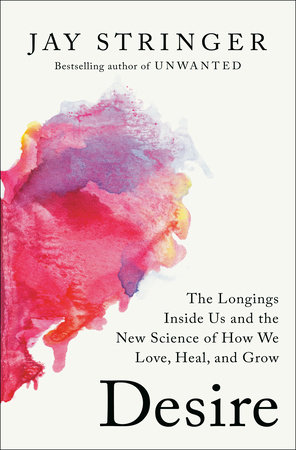
Desire

The Longings Inside Us and the New Science of How We Love, Heal, and Grow

Look inside
Listen to a clip from the audiobook
audio pause button
0:00
0:00
Have you ever wondered why chasing love, success, or pleasure feels like an unending struggle? Or why the things you want are always out of reach?

Drawing on a new study of 4,000 people, renowned therapist and award-winning author Jay Stringer reveals how desire—the most powerful and misunderstood force in our lives—shapes everything: who we love, what we chase, and the life we create.


“A master class in caring for the human spirit.”—Will Guidara, New York Times bestselling author of Unreasonable Hospitality

Desire drives our search for intimacy, meaning, and joy, but it can also lead to shame, betrayal, and self-sabotage. Too often we are encouraged to silence it, distort it, or treat surface-level symptoms like loneliness, low desire, or porn use—without listening to what our longings are really telling us.

In Desire, Stringer shows how to decode those clues and transform your story. Drawing on unforgettable stories from his clinical practice—individuals and couples navigating everything from childhood scars to purity culture, professional exhaustion to sexual difficulties, codependency to self-doubt—he shows you how to ask the questions you’ve been avoiding and move toward the healing you didn’t know how to seek.

This book doesn’t offer quick fixes. Through deep compassion and research, it offers something far more powerful: the invitation to approach your desires with curiosity, so you can stop unhealthy patterns and begin building a life of connection, purpose, and love.
Chapter 1

The Five Core Desires

As a researcher and psychotherapist, I am endlessly curious about desire. While we naturally dread facing issues connected to our love lives, self-worth, or careers, these struggles have so much to reveal to us. The dilemma is that we tend to pathologize our difficulties, thinking, I’m so messed up. What’s wrong with me? Other times, we downplay their significance with a dismissive “It’s not that big of a deal.” Both responses hinder our growth. What we need is a third way, one that encourages us to engage our problems with uncommon kindness and curiosity.

This search for deeper understanding inspired me to create the Holistic Desire Survey, working with researchers to gather insights from over four thousand men and women worldwide. Participants answered deeply vulnerable questions about their childhood, trauma, romantic relationships (if partnered), mental health, sexual desires, and their lives’ deepest longings.

The Holistic Desire Survey revealed that our desires and the problems we encounter related to them are far from random. While some individuals and couples are flourishing and enjoying deep satisfaction in their desires and relationships, others are struggling immensely, stuck in unwanted patterns. We have much to learn from both groups. Their courageous responses illuminate the precise reasons many of us remain stuck in negative cycles. They also reveal that while common solutions—like improving communication, medication, or prioritizing sex—can be helpful, they often oversimplify and overlook the far more complex patterns at play. We might believe we’ve identified the root cause, only to discover later that, like water damage, the issue has spread into areas of our lives we hadn’t considered. Armed with insights from the survey, however, we’ll learn to address problems holistically—viewing them as interconnected systems rather than isolated issues. This approach will help us stop wasting our lives fighting ourselves and our partners, and instead, start focusing on what really matters to each of us.

One of my greatest takeaways from the research is the value of embracing a “learn-it-all” mindset. The moment we feel certain we know what is going on inside of us or in a relationship, we risk closing ourselves off to new insights. Our goal, then, is not to draw hard-and-fast conclusions, or succumb to self-loathing or resignation, but to approach life’s challenges with patience and curiosity.

The Danger of Partial Truths

As I reflected on the Holistic Desire Survey, I began noticing a pattern I had not appreciated in my clinical work. Many individuals and couples turn to me as a last resort, often after trying various therapeutic approaches. Many of them have tried some combination of talk therapy, somatic therapy, couples counseling (if in a relationship), EMDR, Internal Family Systems, or life coaching. Some had ventured into plant-based medicine, while others had sought wisdom from popular books like The Body Keeps the Score (to explore trauma) or Come As You Are (to learn more about human sexuality). Despite all their efforts, they hadn’t achieved the outcomes they desired.

I realized that this wasn’t because their previous therapies or the books they’d read weren’t valuable—though it’s true that not all therapists are created equally. Instead, the issue stemmed from a failure to integrate these diverse perspectives into a cohesive, holistic understanding.

Whether it’s trauma, relationships, or personal growth, our focus on a single paradigm can lead us to overlook or even devalue other important perspectives. American psychologist Abraham Maslow famously remarked, “If the only tool you have is a hammer, you tend to see every problem as a nail.”1 Many clients experience something similar with their preferred tool. It initially works well . . . until it doesn’t. When the paradigm fails to deliver results, they prematurely conclude that something is broken in them, in the relationship, or in the therapy field. Few realize the real issue lies in a lack of integration.

As we discussed in the Introduction, desire is at the center of all that is good, true, and beautiful in our world. Yet for too long, we’ve been walking through life’s complex terrain without a map. If we do not develop a holistic relationship to desire, we risk spending our entire lives as underdeveloped humans, missing meaning, and living with half-hearted passions.

Our Five Core Longings: Developing Holistic Desire

Through my research and clinical practice, I’ve identified five essential desires that predict the quality of our individual and relational well-being. I’ll introduce you to these now, and I’ll spend the rest of the book demonstrating how they can help you understand the roots of your challenges and what it might take for you to build a better life. By cultivating each desire, you can unlock the breakthroughs you’ve been longing for in your personal journey and relationships.

The five core longings are:

A desire for wholeness: our longing to heal the wounds of childhood and make sense of our past

A desire for growth: our longing to live with authenticity and strength through life’s deepest challenges

A desire for intimacy: our longing to know and be known

A desire for pleasure: our longing for touch, vitality, and sexual connection

A desire for meaning: our longing for clarity, purpose, and a life that matters

The book is divided into five parts, each dedicated to one of the core desires. While we’ll explore each desire independently, it’s important to recognize that they are more interconnected than we might realize. For example, as we begin to heal our childhood stories, it can shift the way we approach desires for growth, intimacy, and purpose. Or, when our marriage reveals that we are emotionally and sexually underdeveloped, it may prompt us to examine our early family dynamics and the lack of education around healthy sexuality. Each desire is deeply intertwined with the others.

Our goal throughout this book is to cultivate curiosity for how these desires are at work in our day-to-day lives. For example, my client’s desire to sculpt his body into perfection had far more to do with escaping his story than embracing it with kindness. What we’re all longing for is an integrated life. Developing a holistic relationship to desire is the key to creating it.

As you progress, you may find that one or two of the desires come naturally to you, while others are quite underdeveloped. This is a normal part of the journey. The chapters will empower you to build on your strengths and gently lean into the areas that require growth. While there’s plenty to learn about the science of desire and the practical tools for its cultivation, this journey is less about acquiring information and more about cultivating curiosity about your own story and pondering where you might want it to go.

Now let’s explore each desire in a bit more detail before we dive into them specifically in the next five parts of the book.

One. A Desire for Wholeness: Excavating Your Childhood Story

As we explored earlier, your childhood is the foundation of your relationship to desire. We often believe we’re in the driver’s seat of our adult decisions, but have you ever wondered why you steer toward some desires and away from others? Part One will guide you to excavate the formative experiences of your childhood, revealing the stories that have shaped you into the person you are today, and providing clues into the origins of your deepest longings.

The two key questions for seeking wholeness are:

Excavate Your Story: How has my family shaped my relationship to desire?

Trauma and Desire: How does childhood trauma shape my desires?

Two. A Desire for Growth: The Crucible of Self-Development

Desire problems serve as a crucible for personal growth, yet many of us have not been taught how to value the badlands of our soul. Instead of stepping into this crucible, we avoid it by filling our days with distractions and pursuits that give us the illusion of progress—like optimizing our health or building financial security. While some of these desires may seem beneficial, they often lead us away from the deeper work required for true transformation.

Part Two will explore the inner work necessary to become our strongest, most authentic self. But be warned: While we all want a better life, it will likely cost us the one we have.

The two key questions in this part are:

Developing a Growth Mindset: Do I have hospitality for life’s struggles?

Needing You to Need Me: How am I burdening others with my need for validation?

Three. A Desire for Intimacy: Responding to the Clarion Call to Love and Be Loved

Part Three is written primarily for couples—those who are currently in, have been in, or hope to be in romantic relationships. Intimacy struggles are often seen as indicators of what is wrong in a relationship. In reality, they may be signs that the relationship is working exactly as it should. Relationship challenges have an uncanny way of exposing unsettling truths about us, and for that reason, they act as a clarion call—a strong and clear signal for couples to take action. If we avoid the call, the issues will persist; but if we heed it, we can begin to satisfy our deep need to love and be loved.
“Jay Stringer brilliantly invites us to a well-researched, richly imagined, and compellingly written understanding of what he calls the inner civil war of competing desires. His scholarship and personal honesty will give you a new path to offer kindness to your soul and the conflicts that have beset you. I say with no fear of exaggeration—this will be one of the most important books you will read for knowing yourself and others.”—Dan B. Allender, PhD, professor of counseling psychology, founding president of the Seattle School of Theology and Psychology

“A master class in caring for the human spirit, Desire turns the work of hospitality inward, changing how you understand love, purpose, and what it means to serve those around you, and yourself.”—Will Guidara, New York Times bestselling author of Unreasonable Hospitality

“Jay Stringer wants to give you permission—permission to stop running; to stop trying so hard; to stop the self-criticism; and, most of all, to start desiring again. This book is a much-needed corrective to strategies that get you almost there—but never quite feeling free and healed. Desire has the immense power to actually help people change and grow. Take this invitation to excavate buried desires and move toward an authentic, whole, and integrated you!”—Sheila Wray Gregoire, founder of BareMarriagedotcom, author of The Great Sex Rescue

“We tend to treat desire as a problem to solve or a temptation to resist, but Jay Stringer’s new book argues it’s actually a signal—pointing us toward growth, wholeness, and connection. After reading Desire, you’ll learn to understand what your heart is trying to say and how to work with desire rather than against it. It’s insightful, healing, and genuinely helpful.”—Donald Miller, New York Times bestselling author, CEO of StoryBrand and Business Made Simple

“If you’ve ever felt conflicted about what you want, about who taught you to want it, or why desire can feel like both a miracle and a minefield—Desire is the book you need. This book feels like sitting with a trusted friend who tells you the truth with kindness, inviting you toward compassion instead of shame.”—Jen Hatmaker, New York Times bestselling author, host of the For the Love podcast

“Finally, a book that lays out a roadmap for you to understand your core desires, giving you a clear path and tools to build a life where your desires are satisfied and prioritized, instead of hidden and riddled with shame.”—Connor Beaton, founder of ManTalks and author of Men’s Work

“Stringer offers his readers empathy, understanding, and, surprisingly, a demand that desire be taken seriously in all with which God has imbued it and imagines for us. Read this and begin to practice living what it means for God to give you the desires of your heart.”—Curt Thompson, MD, psychiatrist, author of The Soul of Desire and The Deepest Place
© Eric Ryan Anderson
Jay Stringer is a licensed mental health counselor, researcher, and speaker who helps people uncover the unexpected meaning hidden in life’s hardest challenges. He is the award-winning author of Unwanted: How Sexual Brokenness Reveals Our Way to Healing and lives in New York City with his wife, Heather, and their two children. View titles by Jay Stringer

About

Have you ever wondered why chasing love, success, or pleasure feels like an unending struggle? Or why the things you want are always out of reach?

Drawing on a new study of 4,000 people, renowned therapist and award-winning author Jay Stringer reveals how desire—the most powerful and misunderstood force in our lives—shapes everything: who we love, what we chase, and the life we create.


“A master class in caring for the human spirit.”—Will Guidara, New York Times bestselling author of Unreasonable Hospitality

Desire drives our search for intimacy, meaning, and joy, but it can also lead to shame, betrayal, and self-sabotage. Too often we are encouraged to silence it, distort it, or treat surface-level symptoms like loneliness, low desire, or porn use—without listening to what our longings are really telling us.

In Desire, Stringer shows how to decode those clues and transform your story. Drawing on unforgettable stories from his clinical practice—individuals and couples navigating everything from childhood scars to purity culture, professional exhaustion to sexual difficulties, codependency to self-doubt—he shows you how to ask the questions you’ve been avoiding and move toward the healing you didn’t know how to seek.

This book doesn’t offer quick fixes. Through deep compassion and research, it offers something far more powerful: the invitation to approach your desires with curiosity, so you can stop unhealthy patterns and begin building a life of connection, purpose, and love.

Excerpt

Chapter 1

The Five Core Desires

As a researcher and psychotherapist, I am endlessly curious about desire. While we naturally dread facing issues connected to our love lives, self-worth, or careers, these struggles have so much to reveal to us. The dilemma is that we tend to pathologize our difficulties, thinking, I’m so messed up. What’s wrong with me? Other times, we downplay their significance with a dismissive “It’s not that big of a deal.” Both responses hinder our growth. What we need is a third way, one that encourages us to engage our problems with uncommon kindness and curiosity.

This search for deeper understanding inspired me to create the Holistic Desire Survey, working with researchers to gather insights from over four thousand men and women worldwide. Participants answered deeply vulnerable questions about their childhood, trauma, romantic relationships (if partnered), mental health, sexual desires, and their lives’ deepest longings.

The Holistic Desire Survey revealed that our desires and the problems we encounter related to them are far from random. While some individuals and couples are flourishing and enjoying deep satisfaction in their desires and relationships, others are struggling immensely, stuck in unwanted patterns. We have much to learn from both groups. Their courageous responses illuminate the precise reasons many of us remain stuck in negative cycles. They also reveal that while common solutions—like improving communication, medication, or prioritizing sex—can be helpful, they often oversimplify and overlook the far more complex patterns at play. We might believe we’ve identified the root cause, only to discover later that, like water damage, the issue has spread into areas of our lives we hadn’t considered. Armed with insights from the survey, however, we’ll learn to address problems holistically—viewing them as interconnected systems rather than isolated issues. This approach will help us stop wasting our lives fighting ourselves and our partners, and instead, start focusing on what really matters to each of us.

One of my greatest takeaways from the research is the value of embracing a “learn-it-all” mindset. The moment we feel certain we know what is going on inside of us or in a relationship, we risk closing ourselves off to new insights. Our goal, then, is not to draw hard-and-fast conclusions, or succumb to self-loathing or resignation, but to approach life’s challenges with patience and curiosity.

The Danger of Partial Truths

As I reflected on the Holistic Desire Survey, I began noticing a pattern I had not appreciated in my clinical work. Many individuals and couples turn to me as a last resort, often after trying various therapeutic approaches. Many of them have tried some combination of talk therapy, somatic therapy, couples counseling (if in a relationship), EMDR, Internal Family Systems, or life coaching. Some had ventured into plant-based medicine, while others had sought wisdom from popular books like The Body Keeps the Score (to explore trauma) or Come As You Are (to learn more about human sexuality). Despite all their efforts, they hadn’t achieved the outcomes they desired.

I realized that this wasn’t because their previous therapies or the books they’d read weren’t valuable—though it’s true that not all therapists are created equally. Instead, the issue stemmed from a failure to integrate these diverse perspectives into a cohesive, holistic understanding.

Whether it’s trauma, relationships, or personal growth, our focus on a single paradigm can lead us to overlook or even devalue other important perspectives. American psychologist Abraham Maslow famously remarked, “If the only tool you have is a hammer, you tend to see every problem as a nail.”1 Many clients experience something similar with their preferred tool. It initially works well . . . until it doesn’t. When the paradigm fails to deliver results, they prematurely conclude that something is broken in them, in the relationship, or in the therapy field. Few realize the real issue lies in a lack of integration.

As we discussed in the Introduction, desire is at the center of all that is good, true, and beautiful in our world. Yet for too long, we’ve been walking through life’s complex terrain without a map. If we do not develop a holistic relationship to desire, we risk spending our entire lives as underdeveloped humans, missing meaning, and living with half-hearted passions.

Our Five Core Longings: Developing Holistic Desire

Through my research and clinical practice, I’ve identified five essential desires that predict the quality of our individual and relational well-being. I’ll introduce you to these now, and I’ll spend the rest of the book demonstrating how they can help you understand the roots of your challenges and what it might take for you to build a better life. By cultivating each desire, you can unlock the breakthroughs you’ve been longing for in your personal journey and relationships.

The five core longings are:

A desire for wholeness: our longing to heal the wounds of childhood and make sense of our past

A desire for growth: our longing to live with authenticity and strength through life’s deepest challenges

A desire for intimacy: our longing to know and be known

A desire for pleasure: our longing for touch, vitality, and sexual connection

A desire for meaning: our longing for clarity, purpose, and a life that matters

The book is divided into five parts, each dedicated to one of the core desires. While we’ll explore each desire independently, it’s important to recognize that they are more interconnected than we might realize. For example, as we begin to heal our childhood stories, it can shift the way we approach desires for growth, intimacy, and purpose. Or, when our marriage reveals that we are emotionally and sexually underdeveloped, it may prompt us to examine our early family dynamics and the lack of education around healthy sexuality. Each desire is deeply intertwined with the others.

Our goal throughout this book is to cultivate curiosity for how these desires are at work in our day-to-day lives. For example, my client’s desire to sculpt his body into perfection had far more to do with escaping his story than embracing it with kindness. What we’re all longing for is an integrated life. Developing a holistic relationship to desire is the key to creating it.

As you progress, you may find that one or two of the desires come naturally to you, while others are quite underdeveloped. This is a normal part of the journey. The chapters will empower you to build on your strengths and gently lean into the areas that require growth. While there’s plenty to learn about the science of desire and the practical tools for its cultivation, this journey is less about acquiring information and more about cultivating curiosity about your own story and pondering where you might want it to go.

Now let’s explore each desire in a bit more detail before we dive into them specifically in the next five parts of the book.

One. A Desire for Wholeness: Excavating Your Childhood Story

As we explored earlier, your childhood is the foundation of your relationship to desire. We often believe we’re in the driver’s seat of our adult decisions, but have you ever wondered why you steer toward some desires and away from others? Part One will guide you to excavate the formative experiences of your childhood, revealing the stories that have shaped you into the person you are today, and providing clues into the origins of your deepest longings.

The two key questions for seeking wholeness are:

Excavate Your Story: How has my family shaped my relationship to desire?

Trauma and Desire: How does childhood trauma shape my desires?

Two. A Desire for Growth: The Crucible of Self-Development

Desire problems serve as a crucible for personal growth, yet many of us have not been taught how to value the badlands of our soul. Instead of stepping into this crucible, we avoid it by filling our days with distractions and pursuits that give us the illusion of progress—like optimizing our health or building financial security. While some of these desires may seem beneficial, they often lead us away from the deeper work required for true transformation.

Part Two will explore the inner work necessary to become our strongest, most authentic self. But be warned: While we all want a better life, it will likely cost us the one we have.

The two key questions in this part are:

Developing a Growth Mindset: Do I have hospitality for life’s struggles?

Needing You to Need Me: How am I burdening others with my need for validation?

Three. A Desire for Intimacy: Responding to the Clarion Call to Love and Be Loved

Part Three is written primarily for couples—those who are currently in, have been in, or hope to be in romantic relationships. Intimacy struggles are often seen as indicators of what is wrong in a relationship. In reality, they may be signs that the relationship is working exactly as it should. Relationship challenges have an uncanny way of exposing unsettling truths about us, and for that reason, they act as a clarion call—a strong and clear signal for couples to take action. If we avoid the call, the issues will persist; but if we heed it, we can begin to satisfy our deep need to love and be loved.

Reviews

“Jay Stringer brilliantly invites us to a well-researched, richly imagined, and compellingly written understanding of what he calls the inner civil war of competing desires. His scholarship and personal honesty will give you a new path to offer kindness to your soul and the conflicts that have beset you. I say with no fear of exaggeration—this will be one of the most important books you will read for knowing yourself and others.”—Dan B. Allender, PhD, professor of counseling psychology, founding president of the Seattle School of Theology and Psychology

“A master class in caring for the human spirit, Desire turns the work of hospitality inward, changing how you understand love, purpose, and what it means to serve those around you, and yourself.”—Will Guidara, New York Times bestselling author of Unreasonable Hospitality

“Jay Stringer wants to give you permission—permission to stop running; to stop trying so hard; to stop the self-criticism; and, most of all, to start desiring again. This book is a much-needed corrective to strategies that get you almost there—but never quite feeling free and healed. Desire has the immense power to actually help people change and grow. Take this invitation to excavate buried desires and move toward an authentic, whole, and integrated you!”—Sheila Wray Gregoire, founder of BareMarriagedotcom, author of The Great Sex Rescue

“We tend to treat desire as a problem to solve or a temptation to resist, but Jay Stringer’s new book argues it’s actually a signal—pointing us toward growth, wholeness, and connection. After reading Desire, you’ll learn to understand what your heart is trying to say and how to work with desire rather than against it. It’s insightful, healing, and genuinely helpful.”—Donald Miller, New York Times bestselling author, CEO of StoryBrand and Business Made Simple

“If you’ve ever felt conflicted about what you want, about who taught you to want it, or why desire can feel like both a miracle and a minefield—Desire is the book you need. This book feels like sitting with a trusted friend who tells you the truth with kindness, inviting you toward compassion instead of shame.”—Jen Hatmaker, New York Times bestselling author, host of the For the Love podcast

“Finally, a book that lays out a roadmap for you to understand your core desires, giving you a clear path and tools to build a life where your desires are satisfied and prioritized, instead of hidden and riddled with shame.”—Connor Beaton, founder of ManTalks and author of Men’s Work

“Stringer offers his readers empathy, understanding, and, surprisingly, a demand that desire be taken seriously in all with which God has imbued it and imagines for us. Read this and begin to practice living what it means for God to give you the desires of your heart.”—Curt Thompson, MD, psychiatrist, author of The Soul of Desire and The Deepest Place

Author

© Eric Ryan Anderson
Jay Stringer is a licensed mental health counselor, researcher, and speaker who helps people uncover the unexpected meaning hidden in life’s hardest challenges. He is the award-winning author of Unwanted: How Sexual Brokenness Reveals Our Way to Healing and lives in New York City with his wife, Heather, and their two children. View titles by Jay Stringer
  • More Websites from
    Penguin Random House
  • Common Reads
  • Library Marketing