The Fox and the Devil

Look inside
Hardcover
$30.00 US
| $41.99 CAN
On sale Mar 10, 2026 | 368 Pages | 9780593724439

See Additional Formats
An obsession with an immortal serial killer entangles a vampire hunter’s daughter in a sapphic romance in this enthralling gothic fantasy from the #1 New York Times bestselling author of Lucy Undying.

“Grisly and electrifying, innovating and moving . . . Kiersten White never misses.”—Allison Saft, author of A Dark and Drowning Tide

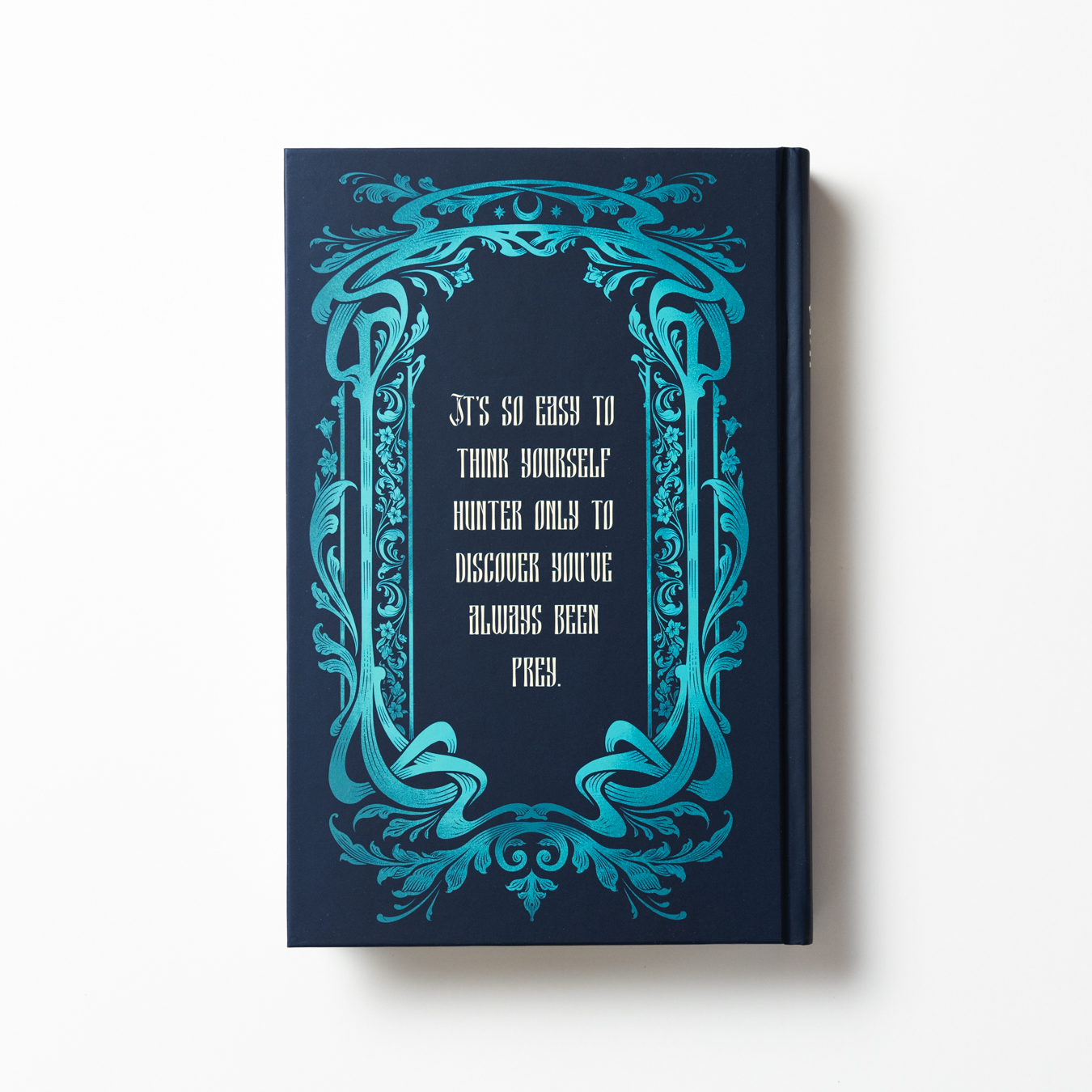
This stunning hardcover edition features an illustrated book case with character art underneath the jacket.

Anneke has a complicated relationship with her father, Abraham Van Helsing—doctor, scientist, and madman devoted to the study of vampires—until the night she comes home to find him murdered, with a surreally beautiful woman looming over his body. A woman who leaves no trace behind, other than the dreams and nightmares that now plague Anneke every night.

Spurred by her desire for vengeance and armed with the latest forensic and investigatory techniques, Anneke puts together a team of detectives to catch this mysterious serial killer. Because her father isn’t the only inexplicable dead body. There’s a trail of victims across Europe, and Anneke is certain they’re all connected.

But during the years spent relentlessly hunting the killer, Anneke keeps crucial evidence to herself: infuriatingly coy letters, addressed only to her, occasionally soaked in blood, and always signed Diavola.

The closer Anneke gets to her devil, though, the less sense the world makes. Maybe her father wasn’t a madman after all. Diavola might be something much worse than a serial killer . . . and much harder to destroy. Yet as Anneke unearths more of Diavola’s tragic past, she suspects there’s still a heart somewhere in that undead body.

A heart that beats for Anneke alone.
1

Amsterdam, September 15, 1895

It is a strange thing to be necessary—­essential, even—­and still merely tolerated. Waves of distrust and anger fill the room around me as I circle the body splayed out on the floor, careful not to let my skirts trail in the pooled blood.

I make a mental note to have my hems tailored a few inches shorter. Not enough to draw attention, but enough that I won’t have to risk disturbing blood splatters.

“Does someone have trousers Miss Van Helsing can borrow?” hateful de Lange drawls. I can see the sneer beneath his thick, pale mustache. “Or do you have a social engagement to attend after this? A meal with the queen, perhaps? Don’t let us detain you.”

Mocking my gender, my family’s fall from grace, and my outfit all at the same time. I should give de Lange more credit. He’s not completely incompetent, after all. He knows how to find sore spots, even if he doesn’t know how to find clues. I bite back my immediate retort. I refuse to argue my qualifications. I trained more extensively in forensic detective work, crime scene analysis, and cadaver examination than any of these men. They need me; otherwise, they would never have sent for me.

Giving de Lange a sickly sweet smile, I say, “Tea with the queen is tomorrow. I have all the time in the world tonight.”

Then I shut him out and look closer at the scene around me, puzzled.

There’s something wrong in the room. Setting aside the flayed man in the center, it’s a beautiful space. The wallpaper is hand-­painted with delicate tulips. There’s a long sofa in dark green silk, a leather reading chair, and a polished side table. The rug is Turkish or a very good imitation, the pattern mostly lost to this new stain. There are three lamps, each angled toward the center of the rug.

The lamps. They’re all positioned and tilted to lend illumination to the hideous tableau. Why would anyone choose to orient the lighting in a room around a rug rather than places for reading or conversation?

I crouch and run my finger along the floorboards. “Every contact leaves a trace,” I whisper.

“Beg pardon, Miss Anneke—­erm, Miss Van Helsing?” a young man with a ruddy complexion and charmingly large ears asks. He stumbles a bit over my name, unsure how to address me. Though I wear my copper waves in as matronly a style as I can stomach, I cannot fake being older than my twenty-­five years. He looks younger than I am, though that may be the ears conveying a puppy-­like impression.

“Locard’s exchange principle,” I answer. When no recognition lights his eyes, I hold back a sigh and direct a disapproving glance at de Haas, the lead detective. His men, no matter how junior, should know this. I wrote an entire paper on it after Edmond Locard studied with our own Joren Van Engelenhoven for a few months. I sent copies to every detective in Amsterdam and The Hague, as well as to every journal with topics encompassing forensic work, crime, and even a few more general scientific publications, just in case. I also sent it to all my friends. Not that I have many of those.

“It’s the principle that two objects coming into contact, whether they be knife and skin, or victim and murderer, or”—­I pause and run my fingers along another floorboard—­“photographer and subject, always leave a trace on each other. Evidence of contact.”

I straighten and stare down the three men. “What else did the photographer move?”

“Who?” de Haas asks. He’s a balding man with kind blue eyes and tremendous red sideburns. He doesn’t like me, but he still calls me in whenever a situation is truly puzzling, which I think means he respects me.

I do my best to return that respect and answer patiently, despite his failure to spread the word of Locard’s exchange principle. “The photographer. He adjusted the lamps to light the body better. I need to know what else was done to the room.”

De Haas and de Lange share a look I can’t interpret, before de Haas shakes his head. “We haven’t sent for a photographer yet.”

So, either the victim was posing for a photo in the center of the room right before an intruder entered and sliced him open from throat to pubis, or . . .

I breathe in deeply. There’s still a faint residue of smoke from the flash chemicals, plus something sweet I can’t quite place. “Who opened that?” I point to the window on the far side of the room, cracked to let in the chill evening air. Underneath everything else is an icy scent, too biting for early autumn. It makes my jaw ache.

“We haven’t moved a thing.” De Lange makes a show of pulling out his pocket watch to check the time.

I bend and touch some of the blood on the wood floor, rubbing it between my fingers. Barely sticky anymore. I carefully step to the corpse, a macabre dance with evidence of death as my partner, and touch his cheek. There are bumps of stubble but also acne. He was so young. I want to close his brown eyes, staring upward. Or stroke his cheek and offer him comfort I know he can no longer feel.

Neither action would serve any purpose, and would only make me look sentimental. I straighten.

“Accounting for the chill in the room from the open window, I estimate that he’s been dead for around two hours. Whoever did this took photographs after. Or during, and also after. If they’d been taken before, the smoke would no longer be detectable.”

I place my hands on my hips, taking in the room one more time. I have perfected the art of the impassive face, the confident posture of someone who can handle anything. Straight but not stiff. Ready but not anxious. I actually patterned it on de Haas, but I’ll never tell him.

“The photos were taken during or after, but they prepared the room before the death,” I say. “There would be bloody fingerprints on the lamps if they’d been moved after the deed, or evidence that they’d been wiped clean. Check to make certain I’m right,” I say to the eager young man. He does as he’s told.

I’ve read accounts of crimes in other countries—­most notably a fascinating case in Argentina—being solved through fingerprints. It’s all I can do not to explain the science behind it to the other detectives. It won’t do any of us good right now, anyway. They should have begun implementing fingerprint examination training as soon as the Argentinians proved it was possible. Hopefully my mentor Joren can use his position as police coroner to push them in the right direction. They haven’t responded to any of my letters on the subject.

“They prepared the room?” de Haas asks. “You think there was more than one killer?”

“That seems unlikely, given the cruelty of the crime and the lack of an obvious motive like robbery. I say they because we have no way of knowing their sex.”

De Lange audibly scoffs. “Surely you aren’t implying a woman is capable of such violence.”

“I know for a fact we are, sir.”

I try not to twitch as I remember long black hair and a long white dress. Eyes bigger than any I’d seen before or since, eyes that have haunted me waking and asleep. Bare feet covered in blood, leaving a trail that ended at the garden gate.

But those were my bare feet, I remind myself. Not hers. The dreams I’ve had since sometimes complicate my recollection. I can’t let memories of her derail my concentration. This is about her, after all. It always is. Every crime I help solve, every murderer I help catch—­all to atone for the one I couldn’t.

“They staged the scene,” I say, “but didn’t move the body once the wounds were delivered.” I pace the perimeter of the thick rug, then bend down once more. “Here,” I say, pointing. “These divots. Is there any furniture that matches them? There are two, but there could be a third and fourth, here.” I run my fingers across the wood floor. It’s old, so there’s no way to say whether any marks are recent.

The young detective is fully engaged now, and even de Haas is on task. They measure the marks I point out and check them against the side table and the chairs.

“None, miss,” says my friend with the ears.

The divots are deep and narrow. I dig a finger into one, careful not to disrupt the outline. “A tripod. To steady the camera.”

“But there are no other marks,” de Haas says. “They only wanted to photograph one angle?” He frames the scene with his thumbs and forefingers, frowning.

“Perhaps they weren’t only taking photos. Have you heard of a kinetograph? Or a cinematograph?” I hear the excitement raising my tone, and flatten it once more. But it’s hard to appear emotionless when I make connections I know in my bones are right.

“No,” de Haas says, blunt but not dismissive.

“Invented by Thomas Edison. They take a rapid series of connected photos which, when run together, create a sort of moving picture. They can capture and replay life as it happens.” I pause, staring down at the body. “Or death.”
The Fox and The Devil is both a tale of obsession, guilt, and serial murder—and a love story between two women dragging each other toward the light. Grisly and electrifying, innovative and moving. Kiersten White never misses.”—Allison Saft, #1 New York Times bestselling author of A Dark and Drowning Tide

“Delicious and immersive . . . Anneke is a heroine of wit, courage and imagination, and she leads us through an intricate gothic mystery in a richly imagined past.”—Claudia Gray, New York Times bestselling author of The Murder of Mr. Wickham

“Deeply immersive . . . From each exquisite murder to each obsessive encounter, The Fox and the Devil is as mesmerizing as its otherworldly characters.”—Chloe Gong, New York Times bestselling author of Immortal Longings

“Utterly captivating! Kiersten White just keeps getting better with every new release. I couldn’t get enough!”—Katee Robert, New York Times bestselling author of Electric Idol

“Grisly and electrifying, innovative and moving . . . The Fox and The Devil is both a tale of obsession, guilt, and serial murder—and a love story between two women dragging each other toward the light. Kiersten White never misses.”—Allison Saft, #1 New York Times bestselling author of A Dark and Drowning Tide

“Unholy, exquisite, and utterly hypnotic, The Fox and the Devil prowls through the darkest reaches of the human heart with lyrical menace. This velvet-dark fever dream drips with dread and beauty, its monsters rendered with aching elegance. Anneke and Diavola’s twisted bond unfurls like a blood-stained ribbon—lush, terrifying, and impossible to turn away from. A decadent, shadow-crowned masterpiece: haunting, brutal, and breathtaking.”—Carolina Flórez-Cerchiaro author of Bochica

“Horror’s most versatile author strikes gold once again with The Fox and the Devil, a chilling twist on classic detective stories that propels readers through a macabre, kaleidoscopic tour of fin de siècle Europe. I fell completely under the sway of these indelible characters.”—Jennifer Thorne, author of Diavola

“White (Lucy Undying) writes another fantastic twist on vampire/revenant mythology with this book that offers a sapphic romance and tidily pulls the next generation of Van Helsings into the story. Grim and gruesome, this novel isn’t for the faint of heart, but it is an excellent read.”—Library Journal, starred review
© Noah White
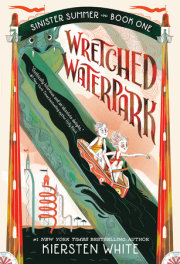
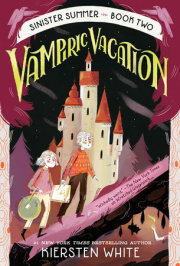
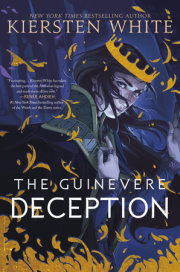
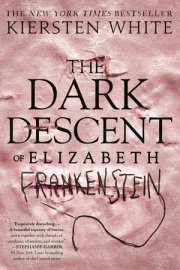
Kiersten White is the #1 New York Times bestselling author of the Camelot Rising, And I Darken, and Paranormalcy series and many more novels. She is also the author of the Sinister Summer series for middle grade readers. She lives with her family near the ocean in San Diego, which, in spite of its perfection, spurs her to dream of faraway places and even further-away times. View titles by Kiersten White
additional book photo

About

An obsession with an immortal serial killer entangles a vampire hunter’s daughter in a sapphic romance in this enthralling gothic fantasy from the #1 New York Times bestselling author of Lucy Undying.

“Grisly and electrifying, innovating and moving . . . Kiersten White never misses.”—Allison Saft, author of A Dark and Drowning Tide

This stunning hardcover edition features an illustrated book case with character art underneath the jacket.

Anneke has a complicated relationship with her father, Abraham Van Helsing—doctor, scientist, and madman devoted to the study of vampires—until the night she comes home to find him murdered, with a surreally beautiful woman looming over his body. A woman who leaves no trace behind, other than the dreams and nightmares that now plague Anneke every night.

Spurred by her desire for vengeance and armed with the latest forensic and investigatory techniques, Anneke puts together a team of detectives to catch this mysterious serial killer. Because her father isn’t the only inexplicable dead body. There’s a trail of victims across Europe, and Anneke is certain they’re all connected.

But during the years spent relentlessly hunting the killer, Anneke keeps crucial evidence to herself: infuriatingly coy letters, addressed only to her, occasionally soaked in blood, and always signed Diavola.

The closer Anneke gets to her devil, though, the less sense the world makes. Maybe her father wasn’t a madman after all. Diavola might be something much worse than a serial killer . . . and much harder to destroy. Yet as Anneke unearths more of Diavola’s tragic past, she suspects there’s still a heart somewhere in that undead body.

A heart that beats for Anneke alone.

Excerpt

1

Amsterdam, September 15, 1895

It is a strange thing to be necessary—­essential, even—­and still merely tolerated. Waves of distrust and anger fill the room around me as I circle the body splayed out on the floor, careful not to let my skirts trail in the pooled blood.

I make a mental note to have my hems tailored a few inches shorter. Not enough to draw attention, but enough that I won’t have to risk disturbing blood splatters.

“Does someone have trousers Miss Van Helsing can borrow?” hateful de Lange drawls. I can see the sneer beneath his thick, pale mustache. “Or do you have a social engagement to attend after this? A meal with the queen, perhaps? Don’t let us detain you.”

Mocking my gender, my family’s fall from grace, and my outfit all at the same time. I should give de Lange more credit. He’s not completely incompetent, after all. He knows how to find sore spots, even if he doesn’t know how to find clues. I bite back my immediate retort. I refuse to argue my qualifications. I trained more extensively in forensic detective work, crime scene analysis, and cadaver examination than any of these men. They need me; otherwise, they would never have sent for me.

Giving de Lange a sickly sweet smile, I say, “Tea with the queen is tomorrow. I have all the time in the world tonight.”

Then I shut him out and look closer at the scene around me, puzzled.

There’s something wrong in the room. Setting aside the flayed man in the center, it’s a beautiful space. The wallpaper is hand-­painted with delicate tulips. There’s a long sofa in dark green silk, a leather reading chair, and a polished side table. The rug is Turkish or a very good imitation, the pattern mostly lost to this new stain. There are three lamps, each angled toward the center of the rug.

The lamps. They’re all positioned and tilted to lend illumination to the hideous tableau. Why would anyone choose to orient the lighting in a room around a rug rather than places for reading or conversation?

I crouch and run my finger along the floorboards. “Every contact leaves a trace,” I whisper.

“Beg pardon, Miss Anneke—­erm, Miss Van Helsing?” a young man with a ruddy complexion and charmingly large ears asks. He stumbles a bit over my name, unsure how to address me. Though I wear my copper waves in as matronly a style as I can stomach, I cannot fake being older than my twenty-­five years. He looks younger than I am, though that may be the ears conveying a puppy-­like impression.

“Locard’s exchange principle,” I answer. When no recognition lights his eyes, I hold back a sigh and direct a disapproving glance at de Haas, the lead detective. His men, no matter how junior, should know this. I wrote an entire paper on it after Edmond Locard studied with our own Joren Van Engelenhoven for a few months. I sent copies to every detective in Amsterdam and The Hague, as well as to every journal with topics encompassing forensic work, crime, and even a few more general scientific publications, just in case. I also sent it to all my friends. Not that I have many of those.

“It’s the principle that two objects coming into contact, whether they be knife and skin, or victim and murderer, or”—­I pause and run my fingers along another floorboard—­“photographer and subject, always leave a trace on each other. Evidence of contact.”

I straighten and stare down the three men. “What else did the photographer move?”

“Who?” de Haas asks. He’s a balding man with kind blue eyes and tremendous red sideburns. He doesn’t like me, but he still calls me in whenever a situation is truly puzzling, which I think means he respects me.

I do my best to return that respect and answer patiently, despite his failure to spread the word of Locard’s exchange principle. “The photographer. He adjusted the lamps to light the body better. I need to know what else was done to the room.”

De Haas and de Lange share a look I can’t interpret, before de Haas shakes his head. “We haven’t sent for a photographer yet.”

So, either the victim was posing for a photo in the center of the room right before an intruder entered and sliced him open from throat to pubis, or . . .

I breathe in deeply. There’s still a faint residue of smoke from the flash chemicals, plus something sweet I can’t quite place. “Who opened that?” I point to the window on the far side of the room, cracked to let in the chill evening air. Underneath everything else is an icy scent, too biting for early autumn. It makes my jaw ache.

“We haven’t moved a thing.” De Lange makes a show of pulling out his pocket watch to check the time.

I bend and touch some of the blood on the wood floor, rubbing it between my fingers. Barely sticky anymore. I carefully step to the corpse, a macabre dance with evidence of death as my partner, and touch his cheek. There are bumps of stubble but also acne. He was so young. I want to close his brown eyes, staring upward. Or stroke his cheek and offer him comfort I know he can no longer feel.

Neither action would serve any purpose, and would only make me look sentimental. I straighten.

“Accounting for the chill in the room from the open window, I estimate that he’s been dead for around two hours. Whoever did this took photographs after. Or during, and also after. If they’d been taken before, the smoke would no longer be detectable.”

I place my hands on my hips, taking in the room one more time. I have perfected the art of the impassive face, the confident posture of someone who can handle anything. Straight but not stiff. Ready but not anxious. I actually patterned it on de Haas, but I’ll never tell him.

“The photos were taken during or after, but they prepared the room before the death,” I say. “There would be bloody fingerprints on the lamps if they’d been moved after the deed, or evidence that they’d been wiped clean. Check to make certain I’m right,” I say to the eager young man. He does as he’s told.

I’ve read accounts of crimes in other countries—­most notably a fascinating case in Argentina—being solved through fingerprints. It’s all I can do not to explain the science behind it to the other detectives. It won’t do any of us good right now, anyway. They should have begun implementing fingerprint examination training as soon as the Argentinians proved it was possible. Hopefully my mentor Joren can use his position as police coroner to push them in the right direction. They haven’t responded to any of my letters on the subject.

“They prepared the room?” de Haas asks. “You think there was more than one killer?”

“That seems unlikely, given the cruelty of the crime and the lack of an obvious motive like robbery. I say they because we have no way of knowing their sex.”

De Lange audibly scoffs. “Surely you aren’t implying a woman is capable of such violence.”

“I know for a fact we are, sir.”

I try not to twitch as I remember long black hair and a long white dress. Eyes bigger than any I’d seen before or since, eyes that have haunted me waking and asleep. Bare feet covered in blood, leaving a trail that ended at the garden gate.

But those were my bare feet, I remind myself. Not hers. The dreams I’ve had since sometimes complicate my recollection. I can’t let memories of her derail my concentration. This is about her, after all. It always is. Every crime I help solve, every murderer I help catch—­all to atone for the one I couldn’t.

“They staged the scene,” I say, “but didn’t move the body once the wounds were delivered.” I pace the perimeter of the thick rug, then bend down once more. “Here,” I say, pointing. “These divots. Is there any furniture that matches them? There are two, but there could be a third and fourth, here.” I run my fingers across the wood floor. It’s old, so there’s no way to say whether any marks are recent.

The young detective is fully engaged now, and even de Haas is on task. They measure the marks I point out and check them against the side table and the chairs.

“None, miss,” says my friend with the ears.

The divots are deep and narrow. I dig a finger into one, careful not to disrupt the outline. “A tripod. To steady the camera.”

“But there are no other marks,” de Haas says. “They only wanted to photograph one angle?” He frames the scene with his thumbs and forefingers, frowning.

“Perhaps they weren’t only taking photos. Have you heard of a kinetograph? Or a cinematograph?” I hear the excitement raising my tone, and flatten it once more. But it’s hard to appear emotionless when I make connections I know in my bones are right.

“No,” de Haas says, blunt but not dismissive.

“Invented by Thomas Edison. They take a rapid series of connected photos which, when run together, create a sort of moving picture. They can capture and replay life as it happens.” I pause, staring down at the body. “Or death.”

Reviews

The Fox and The Devil is both a tale of obsession, guilt, and serial murder—and a love story between two women dragging each other toward the light. Grisly and electrifying, innovative and moving. Kiersten White never misses.”—Allison Saft, #1 New York Times bestselling author of A Dark and Drowning Tide

“Delicious and immersive . . . Anneke is a heroine of wit, courage and imagination, and she leads us through an intricate gothic mystery in a richly imagined past.”—Claudia Gray, New York Times bestselling author of The Murder of Mr. Wickham

“Deeply immersive . . . From each exquisite murder to each obsessive encounter, The Fox and the Devil is as mesmerizing as its otherworldly characters.”—Chloe Gong, New York Times bestselling author of Immortal Longings

“Utterly captivating! Kiersten White just keeps getting better with every new release. I couldn’t get enough!”—Katee Robert, New York Times bestselling author of Electric Idol

“Grisly and electrifying, innovative and moving . . . The Fox and The Devil is both a tale of obsession, guilt, and serial murder—and a love story between two women dragging each other toward the light. Kiersten White never misses.”—Allison Saft, #1 New York Times bestselling author of A Dark and Drowning Tide

“Unholy, exquisite, and utterly hypnotic, The Fox and the Devil prowls through the darkest reaches of the human heart with lyrical menace. This velvet-dark fever dream drips with dread and beauty, its monsters rendered with aching elegance. Anneke and Diavola’s twisted bond unfurls like a blood-stained ribbon—lush, terrifying, and impossible to turn away from. A decadent, shadow-crowned masterpiece: haunting, brutal, and breathtaking.”—Carolina Flórez-Cerchiaro author of Bochica

“Horror’s most versatile author strikes gold once again with The Fox and the Devil, a chilling twist on classic detective stories that propels readers through a macabre, kaleidoscopic tour of fin de siècle Europe. I fell completely under the sway of these indelible characters.”—Jennifer Thorne, author of Diavola

“White (Lucy Undying) writes another fantastic twist on vampire/revenant mythology with this book that offers a sapphic romance and tidily pulls the next generation of Van Helsings into the story. Grim and gruesome, this novel isn’t for the faint of heart, but it is an excellent read.”—Library Journal, starred review

Author

© Noah White
Kiersten White is the #1 New York Times bestselling author of the Camelot Rising, And I Darken, and Paranormalcy series and many more novels. She is also the author of the Sinister Summer series for middle grade readers. She lives with her family near the ocean in San Diego, which, in spite of its perfection, spurs her to dream of faraway places and even further-away times. View titles by Kiersten White

Photos

additional book photo
  • More Websites from
    Penguin Random House
  • Common Reads
  • Library Marketing