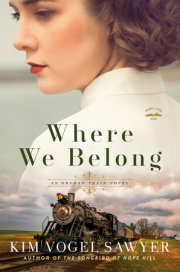
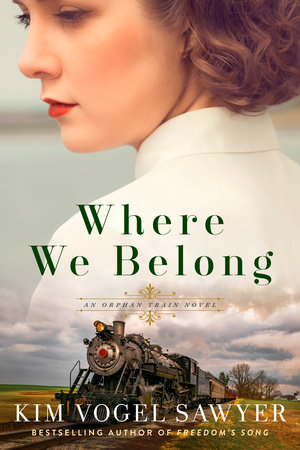
Where We Belong

An Orphan Train Novel

Look inside
Four lives from Kansas and New York cross paths in a joyful novel of love, determination, and the unbreakable bonds of family—from the beloved and bestselling author of Hope's Enduring Echo.

“A heartwarming, faith-filled historical novel that captured me from the first page. I highly recommend it!”—Carrie Turansky, author of A Token of Love and The Legacy of Longdale Manor

The life of Hester Haak, a widow with no children of her own, takes an unexpected turn when she opens her Kansas home to children from the bustling streets of New York City. The orphan asylum has entrusted her with two sisters and a young boy, and Hester is determined to provide a safe and loving environment for them. Despite the looming uncertainty of their stay, she rises to the challenge, embracing the opportunity to make a difference in their lives.

Meanwhile, Callum Holbrook is grappling with the loss of his wife and the despair that followed. Unable to provide for his family, he made the heart-wrenching decision to place his daughters in an orphanage, promising it was only temporary. Now, with a stable job and a renewed sense of purpose, Callum is horrified to learn that his daughters have been sent halfway across the country. Fueled by determination and love, he embarks on the difficult journey to bring them back.

Through their struggles and triumphs, Hester and Callum discover that family and love can be found in the most surprising places—and that the journey home is paved with hope.
Chapter One

New York City
March 1931
Callum Holbrook

The subway car hissed to a stop, and Callum found himself jostled to and fro by those hurrying to exit while others hurried to board. Such a crushing mass of people. More crowded, even, than the shift change at the factory because the subway tunnel was a narrower space. For a moment, he worried he’d be pushed back inside for another ride, but he took a sideways step and stayed on the platform. The doors closed, a bell clanged, and the car clattered into motion.

He blew out a breath of relief and joined the throng milling in the direction of the staircase that led to the city sidewalk above. He didn’t use the underground railway much. No need to most days. But today wasn’t like most days. A smile tugged at the corners of his lips, and he let it grow. Today was special—­the start of being a family again.

A chill wind whooshed down the cement-­walled staircase, carrying the mingled odors of garbage and fish. “’Tis the perfume of the Bronx,” his Freida used to say with a laugh. He was so used to the smell he didn’t even crinkle his nose. But the well-­dressed lady moving along beside him, her heels click-­clicking against the painted concrete floor, muttered something about a vile stench and wrapped a flowered scarf around the bottom half of her face. Her elbow bumped his shoulder, and she shot him a glare. He was tempted to glare back. After all, he wasn’t the one at fault. But no snooty lady could take the shine off this day. He offered a polite “Excuse me,” then bounded up the remaining steps two at a time and entered the flow of foot traffic on the wide sidewalk.

A shiver rattled through him, and he pulled up the collar of his tattered jacket. Not for the first time, he wished he owned a slicker to wear on damp spring days. Wool was fine for warmth, but it sucked up moisture—­even misty drizzle—­like a sponge. By the time he reached the block with the three-­story, brown brick structure, the wet wool stank like a creek-­dunked dog. Not that the jacket smelled any worse than he did after a week of work.

His feet slowed as he took in the Mission Church Home for Orphaned and Destitute Children, standing like a proud giant between humble single-­family dwellings. Maybe he should’ve waited until he’d had his Saturday bath before coming to see his girls. Thirteen months had slipped by since his last visit to the orphan asylum. Would one more day matter? Then he shook his head. No, he’d made the trek across the city to give Evvie and Winnie his good news today. He opened the creaky iron gate and strode up the short pathway dividing two patches of sparse still-­brown grass. He leaped onto the cracked concrete stoop outside the pair of tall wood-­paneled doors and reached for the doorbell key. But something brought to mind the subway woman’s sour look, and he paused and glanced down his length.

Ugh.

Tiny metal pieces scattered by the grinder peppered his clothes. Those little bits were sharper than glass shards. His hands bore tiny recent cuts and dozens of old scars from the flying fragments that wiggled their way under the leather gloves he always wore when he worked. The bits could get into a child’s socks or shoes just as easily. He wouldn’t risk the children being hurt. Even though eagerness to see his girls tugged at him, he stopped to yank off his newsboy cap and smack away as many of the shiny flecks of steel clinging to his work trousers as possible.

Satisfied the remaining shavings were too embedded in the rough fabric to fall free on the floor, he tucked his cap under his elbow, finger combed his hair into place, and finally rang the bell. Several seconds ticked by before the right-­hand door swung wide.

A young woman wearing a plain brown dress and carrying a feather duster stood framed in the doorway. “Yes, sir? Are you here to see the property?”

See the property? She must’ve been expecting someone else. Callum cleared his throat. “No. I’ve come to see my girls.”

A frown marred her narrow face. “Your girls?”

He remembered the woman. One of the asylum’s housekeepers. But he didn’t recall her name, and she didn’t remember him at all. Shame hunched his shoulders. He’d gone too long between visits. “I’m Callum Holbrook. My girls are Evelyn and Edwina Holbrook.” He leaned sideways slightly and peered beyond her into the shadowy foyer. By this hour of the day, the children would have finished their supper. They should be playing in the hallways or out here in the yard, but those areas were empty. The whole place was quiet. Too quiet.

A sense of foreboding fell over him. He jerked upright. “Miss, where are the children?”

She whirled on her heel and scurried toward the opposite end of the foyer. “Miss Armstrong! Miss Armstrong!” Her shrill voice echoed against the tin ceiling tiles.

Callum charged after the housekeeper. His heart pounded with such force he could hardly draw a breath. The girl disappeared beyond a doorway ahead, still calling for the asylum’s matron. If Callum’s memory served correctly, she’d gone into the matron’s office. A gentleman would stop outside the door and knock before entering, but at that moment, Callum didn’t much care about being gentlemanly. He rounded the corner so fast the damp soles of his old boots slid and he bounced his shoulder off the doorframe on his way in.

Wincing, he pointed at the stern-­looking tall woman on the opposite side of a massive desk. “Ma’am, I’m here to see Evvie and Winnie Holbrook. Fetch them quick.” Imagining how Freida would feel about his forcefulness, he added, “Please.”

Miss Armstrong turned to the housekeeper. “Mildred, return to your cleaning.” The younger woman scuttled past Callum, clutching the feather duster like a shield in front of her. Her footsteps faded away. The matron gestured to a ladder-­back chair in front of her desk. “Please have a seat, Mr. Holbrook.”

“I don’t wanna sit, ma’am. I wanna see my girls.” He crushed his cap in his fist. “I have a surprise for ’em. I’ve got a real good job now at the Remington Metalworks Factory. Been there a full three months. At the end of last month, I signed papers on an apartment with two bedrooms.” Evvie was so big already she’d probably rather have her own room. But after sharing a room with a dozen other girls here at the asylum, sharing with only Winnie would still be mighty nice. “I’ve been rounding up furnishings and such, getting it ready, and now it’s all set.” None of the things were fancy. None of them were even new. But new and fancy didn’t matter. Being together again was all that mattered. “So I’m gonna pull the girls from here today, and they—­”

“Mr. Holbrook.”

Callum went silent, but his mouth still hung open. He clacked his jaw closed.

The woman settled in her seat and held her hand toward the chair she’d pointed out earlier. “Sit down, please. We need to talk.”

He could tell by her sad face this would be bad news. He’d rather take it on his feet. He’d stayed standing when the doctor told him his wife hadn’t survived Winnie’s birthing. He stood straight when the boss at the docks told him he didn’t have a job there anymore. He stood through countless other bosses turning him away. Callum might not be educated or wealthy or powerful, but he was strong. He’d stand, no matter what Miss Armstrong said. He shook his head.

Miss Armstrong huffed out a sigh that let Callum know she wasn’t pleased. “Very well, then.” She linked her hands and looked directly into his face. “Your girls aren’t here. Nor, as you’ve likely already discerned, are any of the other children. They’ve all been sent away.”

“To another asylum in New York?”

“No, sir. They’ve been sent west.”

His knees wobbled. Maybe he should have sat. He braced himself against the doorjamb. “Ma’am, you aren’t making any sense. What does that even mean, ‘west’?” Realization struck with as much force as a two-­by-­four against his skull. He staggered forward a few feet and gaped at her. “You don’t mean west, do you?”

She sighed again, this time sounding more regretful than aggravated. “Mr. Holbrook, when you placed Evelyn and Edwina with us, you were informed of our involvement in home finding. Our mission has always been to see our children placed with families rather than forever residing in an institution.”

He took another shaky step in her direction. “An’ I told you the girls’ being here was only for a while. Until Winnie was big enough to go to school.” Winnie wasn’t quite school-­age yet, but Evvie was in her seventh year. That was plenty of book learning for a girl—­two years more than either he or Freida got. She could take care of Winnie and the apartment.

Miss Armstrong stood and rested her fingertips on the desktop. “Mr. Holbrook, you must be aware that our country is in a difficult period.”
Where We Belong is a heartwarming, faith-filled historical novel that captured me from the first page. The theme of caring for orphans and children in need is dear to my heart, and that made the story even more meaningful. The small-town feeling and unique characters added depth and warmth. This book is well written, and I highly recommend it!”—Carrie Turansky, author of A Token of Love and The Legacy of Longdale Manor
© David Vogel
Kim Vogel Sawyer is an award-winning, bestselling author with more than 1.5 million books in print in seven languages. Her work has received numerous awards, including the ACFW Carol Award and the Inspirational Readers' Choice Award. She lives in central Kansas with her husband, Don, and enjoys writing stories of hope, petting cats, and spending time with her family. View titles by Kim Vogel Sawyer

About

Four lives from Kansas and New York cross paths in a joyful novel of love, determination, and the unbreakable bonds of family—from the beloved and bestselling author of Hope's Enduring Echo.

“A heartwarming, faith-filled historical novel that captured me from the first page. I highly recommend it!”—Carrie Turansky, author of A Token of Love and The Legacy of Longdale Manor

The life of Hester Haak, a widow with no children of her own, takes an unexpected turn when she opens her Kansas home to children from the bustling streets of New York City. The orphan asylum has entrusted her with two sisters and a young boy, and Hester is determined to provide a safe and loving environment for them. Despite the looming uncertainty of their stay, she rises to the challenge, embracing the opportunity to make a difference in their lives.

Meanwhile, Callum Holbrook is grappling with the loss of his wife and the despair that followed. Unable to provide for his family, he made the heart-wrenching decision to place his daughters in an orphanage, promising it was only temporary. Now, with a stable job and a renewed sense of purpose, Callum is horrified to learn that his daughters have been sent halfway across the country. Fueled by determination and love, he embarks on the difficult journey to bring them back.

Through their struggles and triumphs, Hester and Callum discover that family and love can be found in the most surprising places—and that the journey home is paved with hope.

Excerpt

Chapter One

New York City
March 1931
Callum Holbrook

The subway car hissed to a stop, and Callum found himself jostled to and fro by those hurrying to exit while others hurried to board. Such a crushing mass of people. More crowded, even, than the shift change at the factory because the subway tunnel was a narrower space. For a moment, he worried he’d be pushed back inside for another ride, but he took a sideways step and stayed on the platform. The doors closed, a bell clanged, and the car clattered into motion.

He blew out a breath of relief and joined the throng milling in the direction of the staircase that led to the city sidewalk above. He didn’t use the underground railway much. No need to most days. But today wasn’t like most days. A smile tugged at the corners of his lips, and he let it grow. Today was special—­the start of being a family again.

A chill wind whooshed down the cement-­walled staircase, carrying the mingled odors of garbage and fish. “’Tis the perfume of the Bronx,” his Freida used to say with a laugh. He was so used to the smell he didn’t even crinkle his nose. But the well-­dressed lady moving along beside him, her heels click-­clicking against the painted concrete floor, muttered something about a vile stench and wrapped a flowered scarf around the bottom half of her face. Her elbow bumped his shoulder, and she shot him a glare. He was tempted to glare back. After all, he wasn’t the one at fault. But no snooty lady could take the shine off this day. He offered a polite “Excuse me,” then bounded up the remaining steps two at a time and entered the flow of foot traffic on the wide sidewalk.

A shiver rattled through him, and he pulled up the collar of his tattered jacket. Not for the first time, he wished he owned a slicker to wear on damp spring days. Wool was fine for warmth, but it sucked up moisture—­even misty drizzle—­like a sponge. By the time he reached the block with the three-­story, brown brick structure, the wet wool stank like a creek-­dunked dog. Not that the jacket smelled any worse than he did after a week of work.

His feet slowed as he took in the Mission Church Home for Orphaned and Destitute Children, standing like a proud giant between humble single-­family dwellings. Maybe he should’ve waited until he’d had his Saturday bath before coming to see his girls. Thirteen months had slipped by since his last visit to the orphan asylum. Would one more day matter? Then he shook his head. No, he’d made the trek across the city to give Evvie and Winnie his good news today. He opened the creaky iron gate and strode up the short pathway dividing two patches of sparse still-­brown grass. He leaped onto the cracked concrete stoop outside the pair of tall wood-­paneled doors and reached for the doorbell key. But something brought to mind the subway woman’s sour look, and he paused and glanced down his length.

Ugh.

Tiny metal pieces scattered by the grinder peppered his clothes. Those little bits were sharper than glass shards. His hands bore tiny recent cuts and dozens of old scars from the flying fragments that wiggled their way under the leather gloves he always wore when he worked. The bits could get into a child’s socks or shoes just as easily. He wouldn’t risk the children being hurt. Even though eagerness to see his girls tugged at him, he stopped to yank off his newsboy cap and smack away as many of the shiny flecks of steel clinging to his work trousers as possible.

Satisfied the remaining shavings were too embedded in the rough fabric to fall free on the floor, he tucked his cap under his elbow, finger combed his hair into place, and finally rang the bell. Several seconds ticked by before the right-­hand door swung wide.

A young woman wearing a plain brown dress and carrying a feather duster stood framed in the doorway. “Yes, sir? Are you here to see the property?”

See the property? She must’ve been expecting someone else. Callum cleared his throat. “No. I’ve come to see my girls.”

A frown marred her narrow face. “Your girls?”

He remembered the woman. One of the asylum’s housekeepers. But he didn’t recall her name, and she didn’t remember him at all. Shame hunched his shoulders. He’d gone too long between visits. “I’m Callum Holbrook. My girls are Evelyn and Edwina Holbrook.” He leaned sideways slightly and peered beyond her into the shadowy foyer. By this hour of the day, the children would have finished their supper. They should be playing in the hallways or out here in the yard, but those areas were empty. The whole place was quiet. Too quiet.

A sense of foreboding fell over him. He jerked upright. “Miss, where are the children?”

She whirled on her heel and scurried toward the opposite end of the foyer. “Miss Armstrong! Miss Armstrong!” Her shrill voice echoed against the tin ceiling tiles.

Callum charged after the housekeeper. His heart pounded with such force he could hardly draw a breath. The girl disappeared beyond a doorway ahead, still calling for the asylum’s matron. If Callum’s memory served correctly, she’d gone into the matron’s office. A gentleman would stop outside the door and knock before entering, but at that moment, Callum didn’t much care about being gentlemanly. He rounded the corner so fast the damp soles of his old boots slid and he bounced his shoulder off the doorframe on his way in.

Wincing, he pointed at the stern-­looking tall woman on the opposite side of a massive desk. “Ma’am, I’m here to see Evvie and Winnie Holbrook. Fetch them quick.” Imagining how Freida would feel about his forcefulness, he added, “Please.”

Miss Armstrong turned to the housekeeper. “Mildred, return to your cleaning.” The younger woman scuttled past Callum, clutching the feather duster like a shield in front of her. Her footsteps faded away. The matron gestured to a ladder-­back chair in front of her desk. “Please have a seat, Mr. Holbrook.”

“I don’t wanna sit, ma’am. I wanna see my girls.” He crushed his cap in his fist. “I have a surprise for ’em. I’ve got a real good job now at the Remington Metalworks Factory. Been there a full three months. At the end of last month, I signed papers on an apartment with two bedrooms.” Evvie was so big already she’d probably rather have her own room. But after sharing a room with a dozen other girls here at the asylum, sharing with only Winnie would still be mighty nice. “I’ve been rounding up furnishings and such, getting it ready, and now it’s all set.” None of the things were fancy. None of them were even new. But new and fancy didn’t matter. Being together again was all that mattered. “So I’m gonna pull the girls from here today, and they—­”

“Mr. Holbrook.”

Callum went silent, but his mouth still hung open. He clacked his jaw closed.

The woman settled in her seat and held her hand toward the chair she’d pointed out earlier. “Sit down, please. We need to talk.”

He could tell by her sad face this would be bad news. He’d rather take it on his feet. He’d stayed standing when the doctor told him his wife hadn’t survived Winnie’s birthing. He stood straight when the boss at the docks told him he didn’t have a job there anymore. He stood through countless other bosses turning him away. Callum might not be educated or wealthy or powerful, but he was strong. He’d stand, no matter what Miss Armstrong said. He shook his head.

Miss Armstrong huffed out a sigh that let Callum know she wasn’t pleased. “Very well, then.” She linked her hands and looked directly into his face. “Your girls aren’t here. Nor, as you’ve likely already discerned, are any of the other children. They’ve all been sent away.”

“To another asylum in New York?”

“No, sir. They’ve been sent west.”

His knees wobbled. Maybe he should have sat. He braced himself against the doorjamb. “Ma’am, you aren’t making any sense. What does that even mean, ‘west’?” Realization struck with as much force as a two-­by-­four against his skull. He staggered forward a few feet and gaped at her. “You don’t mean west, do you?”

She sighed again, this time sounding more regretful than aggravated. “Mr. Holbrook, when you placed Evelyn and Edwina with us, you were informed of our involvement in home finding. Our mission has always been to see our children placed with families rather than forever residing in an institution.”

He took another shaky step in her direction. “An’ I told you the girls’ being here was only for a while. Until Winnie was big enough to go to school.” Winnie wasn’t quite school-­age yet, but Evvie was in her seventh year. That was plenty of book learning for a girl—­two years more than either he or Freida got. She could take care of Winnie and the apartment.

Miss Armstrong stood and rested her fingertips on the desktop. “Mr. Holbrook, you must be aware that our country is in a difficult period.”

Reviews

Where We Belong is a heartwarming, faith-filled historical novel that captured me from the first page. The theme of caring for orphans and children in need is dear to my heart, and that made the story even more meaningful. The small-town feeling and unique characters added depth and warmth. This book is well written, and I highly recommend it!”—Carrie Turansky, author of A Token of Love and The Legacy of Longdale Manor

Author

© David Vogel
Kim Vogel Sawyer is an award-winning, bestselling author with more than 1.5 million books in print in seven languages. Her work has received numerous awards, including the ACFW Carol Award and the Inspirational Readers' Choice Award. She lives in central Kansas with her husband, Don, and enjoys writing stories of hope, petting cats, and spending time with her family. View titles by Kim Vogel Sawyer
  • More Websites from
    Penguin Random House
  • Common Reads
  • Library Marketing