Close Modal
Download high-resolution image
Listen to a clip from the audiobook
audio pause button
0:00
0:00

Under Story: A GMA Book Club Pick

Listen to a clip from the audiobook
audio pause button
0:00
0:00
GOOD MORNING AMERICA BOOK CLUB PICK

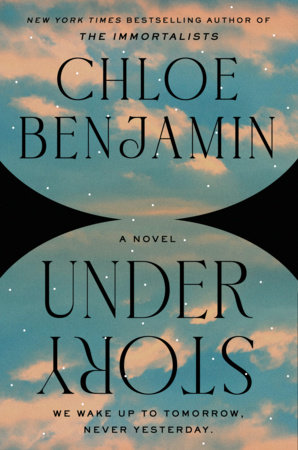
The New York Times bestselling author of The Immortalists returns with an intimate yet epic love story—and a sweeping odyssey of scientific discovery. Under Story invites us to consider the promise of this life, what might lie beyond it, and how far we would go for more time with the people we love, cementing Chloe Benjamin’s place among our best, and most lasting, storytellers.

“We wake up to tomorrow, never yesterday.”


At the edge of the world, biologist Laurel Salter is hiding from everything she’s ever known. For ten hours a day, six days per week, she works as a dishwasher at McMurdo Station, an isolated research base in Antarctica. She tells no one that before she arrived, she was a renowned young scientist with a promising career and a family.

But even in this remote outpost, Laurel can’t escape her past. When a strange light appears across the ice—and draws a group of physicists to McMurdo—her former husband, Eli, won't be far behind. Laurel is captivated by the Arc: its surreal glow; the way it seems almost alive. And though Eli is reluctant to test her wildest theory, Laurel is convinced that the Arc leads down a rabbit hole and into a world they can barely imagine. Can she persuade him to risk everything to fix the burden that hangs between them—to turn back the clock and live their story a second time?

A breathless page-turner and a love letter to our planet, Under Story grapples with the great questions of our time: human hubris, the precarity of the natural world, and the mysterious webs of consciousness that bind us. A modern epic of science and soul, of bravery and redemption, it offers a vision of the future that demands we reckon with what we owe to one another, and to the earth itself.
CAUTION: This email originated from outside of Penguin Random House. Please be extra cautious when opening file attachments or clicking on links.

1

Terra Australis

The descent into Antarctica takes Laurel by surprise. There are no windows on the plane, so she can't see the ice rise to meet her.

The aircraft, a C-17, is taller than any commercial vessel; ten feet above her head, the ceiling curves like a spaceship. People sit along the perimeter, most wearing headphones, some sleeping in the Big Red jackets they received at the Clothing Distribution Center in New Zealand. The newcomers keep their seat belts on. One of the old-timers-a man in Carhartts, sunglasses, and a short-sleeved shirt-unbuckles, ducks below chains, and lies down against a wooden cargo container, a novel tucked under his elbow.

Across from Laurel, a Black woman crosses her arms over her stomach, her short Afro behind a headband. A white man dozes into his scarf; little more than his brown curls are visible. He opens his eyes just before they touch down. During spring and summer-which take place, at the bottom of the world, from October to February-the Ross Sea is still eight feet thick, strong enough to serve as a runway.

Passengers shoulder into their jackets and begin to deplane: the old-timers sure-footed, the newcomers waddling in their government-issued boots. Cold sweeps over them in waves. The sky reminds Laurel less of Earth than of some gaseous planet, streams of indigo and violet and shocking pink, the setting sun layered between them. The mountain ranges glint behind a haze of blowing snow.

A giant red vehicle trundles toward them; "IVAN" THE TERRA BUS is painted on one side. Ivan's driver, a cheerful man in a balaclava, tells them that the bus weighs seventy thousand pounds. Laurel takes a seat beside the woman who sat across from her on the plane. After fifteen minutes, the driver announces that they've crossed the transition point where ice gives way to solid rock, and Laurel's hands unclench. Soon she sees the drab mid-century buildings that make up McMurdo Station.

The woman sitting next to Laurel snorts. "I didn't think Antarctica would look like February in Wisconsin."

Laurel smiles. "Crusty slush? Check. Giant Caterpillar machines?"

"Check." The woman pushes her sunglasses on top of her head and holds out a hand. "Charlie Morrison, from Milwaukee."

"Laurel Salter, from Madison."

"We could have carpooled to O'Hare."

"Should have. I'd have been a lot less nervous," says Laurel. "Is it your first time, too?"

Charlie nods. She looks to be near Laurel's age, thirty-six. Her eyes are perceptive, and her broad cheekbones taper to a delicate chin.

They walk together as the experts lead the newbies to the dorms. Laurel doesn't ask what brought Charlie to McMurdo, and Charlie doesn't ask her. Beyond the dirt roads of the base, the landscape is cratered, white, and endless. Pale yellow ribbons weave between clouds; mist swirls with the body of dust.

Laurel's tendency is to observe. When foraging for fungi, she looks for aberration: fleshy folds against wood, roundness amid angles. Here, something interrupts the line of the horizon. A small dome of light appears to sit over the ocean. It reminds Laurel of a bubble cut in two: faintly pink and translucent, with an iridescent skin.

The sight pulls her. It looks not of this world. Even from miles away, it seems to make a sound: a crackle, low but generative, constant.

But when she blinks, it disappears.

"Did you see that?" Laurel asks, stopping. In its absence, the sky looks innocuous, like a theater after a play.

"See what?" asks Charlie.

Laurel shakes her head. "I haven't slept well in forty-eight hours. I think I'm losing my mind."

"You wouldn't be the only one. Have you heard what they say around here? 'When you shake the world,'" Charlie says, "'the oddballs fall to the bottom.'"

oo


It was Laurel’s mother, Clare, who told her about the job in Antarctica. In July, Laurel was describing her trouble at work-how she moved robotically through tasks; how even nature’s miracles were stripped, for her, of awe-when Clare put a hand on her wrist.

"Do you know," she said, as if this were related, "where Julie Javurek is living at the moment?"

"Jules?" asked Laurel. They sat in folding chairs in Laurel's backyard. She hadn't spoken to Jules Javurek, her childhood neighbor, in fifteen years. "Where?"

"Guess," said Clare.

Laurel had always thought of her mother as ruthlessly practical. During Laurel's childhood, Clare had not allowed herself to sit until the entire kitchen had been cleaned, or the last apple tree pruned. In older age, though, she had adopted a playfulness that aggravated Laurel, if only because it had come after-and therefore seemed related to-the death of Pete Salter, Laurel's father.

"I don't know," said Laurel. "Chicago?"

"Chicago!" Clare laughed. "No, a little further south. Antarctica."

Laurel had brought an ice pack outside, to counter the heat, and now she put it behind her neck. "Antarctica? What's she doing there?"

"Washing dishes, apparently," said Clare. "Before that, she was bartending in Buenos Aires. I suppose she's some kind of professional traveler."

That night, unable to sleep, Laurel Googled "dishwasher Antarctica." The correct term, she learned, was kitchen steward. Stewards at McMurdo Station were tasked with cooking and cleaning for the base's eclectic group of residents: scientists, construction workers, engineers, janitors, firefighters, administrators, employees at the world's southernmost post office. On shift six days per week, she would have little time to think. It was work she could do, might even enjoy doing-manual work, meditative in its way, and useful. Researchers on base studied solar physics and ocean systems, climate change and geology. She could support these efforts, even if she wasn't working as a scientist herself.

At three in the morning, she put the computer away. Crazy, she told herself.

But the next day, Laurel thought of Antarctica again. The landscape was nothing like the one she knew: she would trade Wisconsin's pastures and fertile prairie for volcanic rock and ice. There would be almost none of the fungi she studied, which associated with plant roots. Children weren't allowed on base. Even the light-six months of sun followed by six months of darkness-would fool her, make her think she was living someone else's life.

She found an old email address for Jules. One month later, Jules replied with the name of a recruiter to contact in the States. The tone of the email was friendly, but Jules asked no questions. Maybe she knew what had happened, and this was a gesture of kindness-a mercy, not making Laurel explain. Or maybe Jules was surrounded by the people Clare had described, these professional travelers. Maybe she wasn't surprised to hear from someone who wanted to escape.

Laurel told no one she was applying. It was a lark, a double life she was only fantasizing about-until she received a call from the recruiter. He was intrigued by her application, a scientist submitting to be a dishwasher. Had she applied for the right position? Laurel shut the door to her office. She babbled about the value of a break. He asked if she had experience living remotely, or communally. The conversation stalled. She imagined the recruiter tossing her résumé in favor of twenty-five-year-olds with restaurant experience, young people whose applications made sense.

"The truth is," she said, "I need to change my life."

Two days later, she received an email with an alternate contract. There was no guarantee of a job-those came with primary contracts-but Laurel should get physically qualified as soon as possible. There was a medical check, a dental check, shots. The recruiter wrote again: if Laurel completed additional work, she could be cleared for the winter season, too, when the population shrank and healthcare was scarce. She had an EKG and a gallbladder ultrasound. Her dentist removed two wisdom teeth. The next day-drifting on oxycodone, her mouth full of gauze-her cell phone rang. A steward had failed the physical qualification. Laurel could fly out in October, when the Antarctic summer began.

It was surprisingly easy to prepare. She applied for an extended leave of absence from the university; she had no spouse, no dependents. She had already begun the process of selling the house, which was too big for her alone. In late September, the Realtor called with an offer, young parents moving to town for professorships. Negotiations went quickly, and Laurel found herself packing the rest of her belongings, as well as the two suitcases she was allowed to take to Antarctica.

She sent three emails: one to her mother; the second to Maisie O'Brien, her best friend; and the third to Gloria Albert, the graduate school advisor who had become her mentor. The next morning, she found a package on her front stoop, wrapped in penguin-patterned paper. On top was a note in Gloria's scrawl: For some reason, I feel that you're meant to have this. It belonged to my mother, Olga, and kept her warm on the opposite pole.

Laurel uncovered a fur hat, Soviet in style, with ear flaps that could be fastened at the crown or the chin. The golden fur was impossibly soft, and the leather felt like butter. As she packed it in her duffel, her mother called twice.

"Laurel?" Clare said, in the breathless tone she used when talking about Walter. "I just wanted to tell you that Walter will be joining us for dinner."

Clare had met Walter three months earlier on Our Time, a dating website for seniors. Since then, she had talked of little else. Almost everything reminded her of him: elevator music ("Walter works for the orchestra"), the nonfiction book on Laurel's couch ("Walter prefers novels"), even a parked Mini Cooper ("Walter"-over six feet-"would never fit"). Laurel felt as though her mother were progressing in reverse-as though she'd become a teenager after seventy years on earth.

Now she wedged the phone between her ear and shoulder. "But this is the last time we'll see each other."

"I know. But you still haven't met him, and we don't know how long you'll be gone. What if he asks me to marry him?"

"I'll be back by summer at the latest. Surely you won't be engaged by then."

"You act like we have all the time in the world," Clare said.

At Walter's favorite Italian restaurant, he and Clare were giddy. Laurel chastised herself: she was happy for her mother, and Walter seemed kind. It wasn't his fault that he wasn't Laurel's father.

Maisie helped Laurel to transfer her belongings into storage. On her last night, they ate Chinese food on the floor of the empty living room. Laurel leaned her head against Maisie's shoulder, the way she had in high school. Maisie's body was profoundly familiar: her freckles and slender fingers; her thick, copper-colored hair. Laurel had no siblings, but Maisie came close. Even now, when something notable happened, they had the same instinct they did as teenagers: to grab each other and hold on. It was impossible to re-create that physical comfort with the friends Laurel had met in adulthood. Before they had partners-and, in her case, after-Laurel and Maisie had each other.

"I don't want to be so far away from you," Laurel said.

"Well," said Maisie, patting Laurel's hair, "it's your fault for going to the one place where I can't visit."

Only staff at research stations were permitted to stay on the continent.

"You could take a cruise," suggested Laurel. "For just twenty thousand dollars."

"Sold!" said Maisie, giggling.

Laurel hadn't liked living by herself, despite Gloria's encouragement. ("Now, listen to me. There are benefits to being alone. You can live in your bathrobe, eating tangerines and fudge.") Even after Eli moved out, he was everywhere: in the kitchen he'd painted yellow; in the dresser they'd shared, half of it now empty; in the apple trees that grew in the front yard. Eli had surprised her with the first, a Prairie Spy with dark, glossy leaves. He draped a sheet on top and tied a bow around the middle, walked Laurel outside with his hands over her eyes. When he removed them, she laughed, both in delight at his thoughtfulness and because he hadn't known that they would need two trees-different varieties, cross-pollinated-to bear fruit. They drove back to the nursery, where she found a sturdy Sweet Sixteen.

Now Laurel put her suitcase in Maisie's trunk. She would spend the night at Maisie and Noah's before flying out of O'Hare. Quickly she picked the ripe apples and carried them next door.

"Prairie Spies," Laurel said, when her neighbor, Beth, came to the porch. "Your favorite."

"Oh, Laurel," said Beth. "You're sweet. I wish you could have stayed, but I understand. I do."

Beth, an elementary school art teacher, was two decades older than Laurel. She lived with her mother, Helen, who had recently been diagnosed with cancer.

"How are you doing?" asked Laurel.

"Coping, I guess. It's funny: Mom turns eighty-eight next week, but that still doesn't feel like enough time." Reversing, Beth covered her mouth. "Forgive me. I'm being greedy. She's lived a good, long life."

oo


The scene at the dorm reminds Laurel of college move-in day. Residents leave their doors open, and every few minutes, she hears a shriek of recognition. Duffel bags slump in the doorways; cross-country skis lean against the walls. Laurel sees more than a handful of musical instruments, protected inside latched and shapely cases.

She has two roommates. Charlie is the first; the second is Nita Choudhury, a marine biologist who studies octopuses in the Southern Ocean. This is Nita's sixth summer at McMurdo, "and no," she says, helping to lug their suitcases over the threshold, "I still don't have a single, but neither does anyone else. I've been waiting for the two of you all day."

Nita is tall, her thick hair secured in a silver clip. She wears a purple zip-up sweater with jeans and knitted slippers. A pendant necklace, also silver, hangs between her collarbones, and the room smells like her gardenia perfume. There are two bunk beds and a single; the desk and closet are shared. Nita maintains a steady stream of chatter ("We're lucky to be in the same building as the galley; most people have to gear up just to get their morning coffee") while Laurel and Charlie unpack. They take the bunk beds out of respect for her seniority. As Laurel unpacks, it's hard not to feel that she's regressed. In Madison, her house wasn't large, but all of it was hers.

Nita gives them a tour. "There's a landline in every room for calls on base-cell phones don't work, but you'll know that already. Don't bother with the television unless you want to watch the military satellite feed or you brought a video game hookup, which, no judgment-a few years ago I roomed with an astrobiologist who was addicted to The Legend of Zelda, and by the end of the summer, I couldn't believe how much I cared about the two-handed Biggoron's Sword. Take a left at the chili pepper lights for the bathroom; there's no electrical ground here, so don't be surprised if you get shocked in the shower. This is the lounge-microwave, comfy couches, giant selection of VHS tapes if you want to travel back to 1995. Over here's the Skype computer, which is mostly for morale: we all get one thirty-minute session per week and cross our fingers that the internet is working."
GOOD MORNING AMERICA BOOK CLUB PICK

"[An] expansive speculative saga… Benjamin could have written a far shorter novel. Some may say that less is more. But “Under Story” isn’t meant to be a minimalist work.
Leaning away from her austere contemporaries, Benjamin delights in the details of love and the everyday world, the smell of Laurel’s family’s apple orchard, communal living, the discovery of letters, unexpected second chances. Like Laurel and Eli, Benjamin wants so much more from this life than what we’re offered — she wants to embrace the interconnectedness of nature and humanity. Ever-shifting and blooming with tremendous tenderness, Under Story expands our expectations of living.” —New York Times Book Review

“An ambitious and fantasy-inflected adventure story that unfolds in parallel universes.” —Wall Street Journal

“[An] elegant blend of realistic fiction and uncanny sci-fi. [Benjamin’s] third novel is a beguiling, unpredictable study in sorrow and an uplifting ode to nature’s regenerative genius…Smart and wonderfully strange, Benjamin’s novel is a paean to life’s impermanence and to its capacity for renewal.” —San Francisco Chronicle

"So thought-provoking, and twisty that you won't want the book to end." —Los Angeles Times

“an epic sci-fi love story” —NPR

“Part science epic and part sweeping love story, Chloe Benjamin’s latest novel is an ode to the natural world and humanity’s place within it… Under Story grapples with the unknown, ultimately delivering a powerful message on the precarious and precious nature of the universe and human life itself.” –Harper's Bazaar

"Soulful sci-fi…[An] astounding, mind-bending story about the lengths we’ll go to for the people we love.” –Real Simple

“… it’s extremely unique and unlike anything I have read before. But the real beauty and story lies in the mundane as the couple learns to navigate their new world while revisiting their past. I devoured this nearly 500-page novel in three days, unable to turn away.” –New York Magazine "Book Gossip "

“Lives converge, and so do timelines, at a remote Antarctic base in this sweeping novel about family, loss, love and time from the author of The Immortalists." –Today.com

"Under Story is an astoundingly imaginative and immersive work of fiction that veers off any sort of traditional pathway and takes us all the way to a parallel universe... There is almost a hallucinogenic quality to Benjamin's prose that is both mystical and reality based." —Book and Film Globe

“Picking up the hardcover of Chloe Benjamin’s new speculative epic may appear daunting at first, all 516 pages of it, but that feeling will turn to an emotion of pure awe once you read it. That’s when you will realize that the magnitude of worlds and existence and meaning that she managed to contain in those pages, is actually an accomplishment in concision. The book is many, many things, all wound together beautifully in an intricate and comprehensive saga of love lost, of death, and of healing…. Benjamin takes on an enormous project of speculative majesty in these pages: a world so built and contained that it’s no surprise that it took her almost a decade to write. But that’s not the impressive part. The jaw-dropping, heart-stopping core of this novel is about grief, and about the unwavering march of time. About the constant, devastating nature of life itself, of allowing yourself to love, even when we all know how the story ends. I felt these lines from Mary Oliver reverberating in my head as I read this book that is, above all, an oceanic expanse of love and grief: To live in this world / you must be able / to do three things: / to love what is mortal; / to hold it / against your bones knowing / your own life depends on it; / and, when the time comes to let it / go, / to let it go.” —LitHub

“Chloe Benjamin's third novel, Under Story, is a riveting story of grief, love, and science that spans time and universes in an utterly original (and mysterious) way…. A careful, wonderfully thorough researcher, Benjamin includes beautiful passages on topics as diverse as neutrino physics, apple orchard cultivation, extreme cold water diving, and Antarctic marine life. And she meaningfully entwines that information with characters who show Laurel the warmth of found family amidst grief and loss. Benjamin (The Immortalists; The Anatomy of Dreams) continues to explore a potent theme readers will recognize from her previous work, namely the concept of free will versus an ordained future (or past), and how one reckons with a lack of control in life and death. Under Story is a luminous exploration of what makes us human.” —Shelf Awareness

“Since The Immortalists, Chloe Benjamin has shown a rare ability to blend intimate family drama with boldly imaginative ideas...Part love story, part speculative epic, and part meditation on grief, Under Story asks how far we would go for more time with the people we love.” –Book and Film Globe

“…a sweep­ing, tender tale about love, life and grief….A stun­ning epic of “what ifs.””–Woman's World


“Omg! Read this book…this was one of my favorite books of the whole year, and I will never be over the fact that Chloe Benjamin does not have a background in science. Loved it!” –Scratch Pad Substack

“Count on Benjamin to ask the big questions—what makes a life worth living? What is the nature of time? Where do we belong?—and entertain us fully all the while. Cannot wait to read.” –Lit Hub, "Most Anticipated Books of 2026"

“Author Chloe Benjamin, as she did in The Immortalists, blends literary fiction with fantasy and science in this moving novel.” –Town & Country

“One of the fall’s most intriguing novels…author Chloe Benjamin delivers a book about hope, science, ecology, family, and consciousness itself.” –GoodReads

“Benjamin’s imaginative rendering of the antiuniverse offers truly unique ways of thinking about time, nature, progress, duty, and aging….Blending literary fiction, science fiction, fantasy, and scientific research, Benjamin has created a genre-bending novel that is deeply concerned with the tenuous, mysterious, and enduring symbiotic relationship between humans and nature. Ambitious, poignant, and deeply human.” –Kirkus

“Benjamin (The Immortalists) blends speculative fiction and romance in this sui generis story of an erstwhile couple who discover a parallel universe. Benjamin holds the reader’s attention with well-conceived depictions of the Duoverse, where people age in reverse from death to birth, but the heart of the story is in Laurel and Eli’s desperate attempt to mend their lives and recover their love. This captivates.” –Publishers Weekly (Starred Review)

“Benjamin’s immersive and atmospheric novel is a heartfelt and intellectually gripping missive to the planet, to loss, and to connection. Fans of Benjamin’s The Immortalists will be thrilled as she again delivers on all levels. Equally appropriate for fans of mycelium, odes to the magic of the Earth, and speculation on the myriad possibilities for humanity.” –Library Journal (Starred Review)

“In Chloe Benja­min’s exquisitely imagined and emo­tionally rich Under Story (Putnam, $32, 9780593545218), a woman moves to Ant­arctica in search of a fresh start and finds far more than she expected…What’s most remarkable about Under Story is how Benjamin (The Immortalists) balances specu­lative physics with a deeply relatable story of love and grief. For a book involving multi­ple dimensions and timelines, Under Story is incredibly grounded. Anyone who’s ever endured profound loss or felt stuck will recog­nize Laurel’s state of mind. Benjamin draws the depth of what Laurel and Eli are going through with aching precision, in prose that often reads like poetry, making this expan­sive literary sci-fi tale powerfully resonant.” –BookPage (Starred Review)

“Billed as a love letter to the planet, Benjamin’s book explores matters of science, ecology, family, and consciousness itself.” –GoodReads "Readers' 60 Most Anticipated Fall Books"

"Ultimately this capacious, suspenseful, and deeply moving novel of scientific and emotional quests offers provocative perspectives on obsession, parenting, time, forgiveness, and love." –Booklist

“Chloe Benjamin returns with Under Story — a sweeping literary novel that blends love, science, and mystery.” –BookBub

"
Not only is this a thrilling sci-fi love story, but it'll leave you thinking about all of life's 'what-ifs'" –Country Living, "The Most Anticipated New Books of Fall"

“Under Story explores a theory of the universe through the lens of one family, and it’s a beautiful triumph of love and lives well-lived. Its connections and overlays are stunningly executed, showcasing dual natures of existence that play off one another in perfect synchronicity. Laurel and Eli’s story is unforgettable, and will leave you thinking long after the last page.” –Gloss Book Club

“I inhaled Chloe Benjamin’s Under Story, a dazzling novel about two scientists who travel to a research base in Antarctica after a devastating loss. It was the best book I read this summer with breathtaking lines about love, time, grief, and family. I underlined the heck out of it. Also, you guys, it has literal sparkles (!) on the cover.” –Big Salad

“One of the beautiful things about science fiction is that not every story has to be aliens or high tech or even a full-on thriller to be beautiful, complex, and thought provoking and that’s why we’re so interested in Under Story by Chloe Benjamin….More parallel universe than time travel, Under Story tinkers with physics to create a story that is, at its heart, profoundly human….It’s a story we can’t wait to dive into and the idea of following Laurel and Eli on what is sure to be a huge, emotional journey is something we would love to see come to life off the page as well. There’s not nearly enough sci-fi love stories, after all.” –ComicBook.com

"Loss, love, and sacrifice are weighty topics, but in Under Story, Benjamin does an incredible job of weaving them together into a pager-turner."–Science Magazine

"A page-turning read that will have readers curled up in their beds all fall long." –Woman's World

“…once I started I couldn’t stop turning the pages. This book is positively brain-melting. (Complimentary.) About mid-way through I found myself googling whether the author has a PhD in a scientific field. (She doesn’t.) Like, how did this come out of someone’s brain?! It’s truly a feat of book writing…I predict people are going to be talking about this one this month.” –Book Enthusiast (Substack)

“Under Story is one of those reads that I literally have not been able to stop thinking about since I finished it at the beginning of the month. Sci-fi isn’t usually one of my go-to genres, but after getting swept away in the speculative world Chloe Benjamin created, my eyes have been opened to all the genre possibilities. Equal parts science epic and love story…” –The EveryGirl Book Club (Substack)

"This novel absolutely blew my mind. The fact that this insane, beautiful, sweeping story came out of one woman's brilliant brain makes me so happy." –ChickLits

“This is one of the best books I’ve read in ages. It’s hard to explain what it’s about; the less you know going in, the better! Set aside a weekend — you’ll love it, I promise.” –Scratch Pad (Substack)

“Chloe Benjamin is an astonishing writer who conjures an entire parallel universe to illuminate one family’s loss. Under Story is the most ingenious novel I’ve read in a long time, and yet its scenes depicting the ordinary joys and sorrows of parenthood, marriage, and friendship are perhaps most magical of all. If this speculative masterpiece has a flaw, it’s that at 500 pages it feels too short."–Anthony Marra, New York Times bestselling author of A Constellation of Vital Phenomena

"A rapturously beautiful novel. I was in awe of Chloe Benjamin’s universe-straddling imagination, her profound writing on love and grief, and her telescopic vision that lets her zoom into the smallest chambers of the human heart and far out again into the laws of theoretical physics. I loved Under Story."—Kaliane Bradley, New York Times bestselling author of The Ministry of Time

"A head-spinning novel, daringly imaginative. Even as she plays with physics and fantasy, Chloe Benjamin has much to say about the nature of friendship, family, mortality and love."–Geraldine Brooks, Pulitzer Prize–winning author of March

"An absolute feat of storytelling, and a once in a lifetime novel. Under Story will stay with you long after you read the final, dazzling page." –Rebecca Serle, New York Time bestselling author of In Five Years

“Under Story
is phenomenal, and one of the best books I've read in years. Wondrous, wildly ambitious, an epic love story that I’m so grateful exists in the world.” –Ann Napolitano, New York Times bestselling author of Hello Beautiful

“A fiendishly clever, utterly original novel that gets to the heart of what it means to be alive. Under Story is dazzling: it will change you.” –Emilia Hart, New York Times bestselling author of Weyward

“Under Story
is a spectacular novel. It is utterly transporting, with an imaginative scope that feels both breathtaking and profound. I was blown away by it." –Clare Leslie Hall, New York Times bestselling author of Broken Country

“A mind-bending, head-popping sci-fi love story full of intrigue and tenderness.” –Claire Fuller, author of Swimming Lessons

“At once intimate and sweeping, Chloe Benjamin’s new novel looks at the magic of science and the power of love, examines life’s spark from the smallest atoms to the furthest cosmos, and braids together two worlds with astonishing imagination. Beautifully crafted and tenderly felt, Under Story is a feat—for readers in search of a gripping exploration of the strange mystery of life, loss, and time.” –Aja Gabel, author of The Lightbreakers
© (C) David Enloe
Chloe Benjamin is the author of The Immortalists, a New York Times bestseller, and The Anatomy of Dreams. A Barnes & Noble Discover Great New Writers selection, LibraryReads favorite, and #1 Indie Next pick, The Immortalists was named a best book of 2018 by NPR, The Washington Post, Entertainment Weekly, and others. The Anatomy of Dreams received the Edna Ferber Fiction Book Award and was longlisted for the 2014 Center for Fiction First Novel Prize. Originally from San Francisco, CA, Chloe is a graduate of Vassar College and the M.F.A. in fiction at the University of Wisconsin. Her work has been translated into over thirty languages. She lives with her husband in the San Francisco Bay Area. View titles by Chloe Benjamin

Discussion Guide for Under Story: A GMA Book Club Pick

Provides questions, discussion topics, suggested reading lists, introductions and/or author Q&As, which are intended to enhance reading groups’ experiences.

(Please note: the guide displayed here is the most recently uploaded version; while unlikely, any page citation discrepancies between the guide and book is likely due to pagination differences between a book’s different formats.)

About

GOOD MORNING AMERICA BOOK CLUB PICK

The New York Times bestselling author of The Immortalists returns with an intimate yet epic love story—and a sweeping odyssey of scientific discovery. Under Story invites us to consider the promise of this life, what might lie beyond it, and how far we would go for more time with the people we love, cementing Chloe Benjamin’s place among our best, and most lasting, storytellers.

“We wake up to tomorrow, never yesterday.”


At the edge of the world, biologist Laurel Salter is hiding from everything she’s ever known. For ten hours a day, six days per week, she works as a dishwasher at McMurdo Station, an isolated research base in Antarctica. She tells no one that before she arrived, she was a renowned young scientist with a promising career and a family.

But even in this remote outpost, Laurel can’t escape her past. When a strange light appears across the ice—and draws a group of physicists to McMurdo—her former husband, Eli, won't be far behind. Laurel is captivated by the Arc: its surreal glow; the way it seems almost alive. And though Eli is reluctant to test her wildest theory, Laurel is convinced that the Arc leads down a rabbit hole and into a world they can barely imagine. Can she persuade him to risk everything to fix the burden that hangs between them—to turn back the clock and live their story a second time?

A breathless page-turner and a love letter to our planet, Under Story grapples with the great questions of our time: human hubris, the precarity of the natural world, and the mysterious webs of consciousness that bind us. A modern epic of science and soul, of bravery and redemption, it offers a vision of the future that demands we reckon with what we owe to one another, and to the earth itself.

Excerpt

CAUTION: This email originated from outside of Penguin Random House. Please be extra cautious when opening file attachments or clicking on links.

1

Terra Australis

The descent into Antarctica takes Laurel by surprise. There are no windows on the plane, so she can't see the ice rise to meet her.

The aircraft, a C-17, is taller than any commercial vessel; ten feet above her head, the ceiling curves like a spaceship. People sit along the perimeter, most wearing headphones, some sleeping in the Big Red jackets they received at the Clothing Distribution Center in New Zealand. The newcomers keep their seat belts on. One of the old-timers-a man in Carhartts, sunglasses, and a short-sleeved shirt-unbuckles, ducks below chains, and lies down against a wooden cargo container, a novel tucked under his elbow.

Across from Laurel, a Black woman crosses her arms over her stomach, her short Afro behind a headband. A white man dozes into his scarf; little more than his brown curls are visible. He opens his eyes just before they touch down. During spring and summer-which take place, at the bottom of the world, from October to February-the Ross Sea is still eight feet thick, strong enough to serve as a runway.

Passengers shoulder into their jackets and begin to deplane: the old-timers sure-footed, the newcomers waddling in their government-issued boots. Cold sweeps over them in waves. The sky reminds Laurel less of Earth than of some gaseous planet, streams of indigo and violet and shocking pink, the setting sun layered between them. The mountain ranges glint behind a haze of blowing snow.

A giant red vehicle trundles toward them; "IVAN" THE TERRA BUS is painted on one side. Ivan's driver, a cheerful man in a balaclava, tells them that the bus weighs seventy thousand pounds. Laurel takes a seat beside the woman who sat across from her on the plane. After fifteen minutes, the driver announces that they've crossed the transition point where ice gives way to solid rock, and Laurel's hands unclench. Soon she sees the drab mid-century buildings that make up McMurdo Station.

The woman sitting next to Laurel snorts. "I didn't think Antarctica would look like February in Wisconsin."

Laurel smiles. "Crusty slush? Check. Giant Caterpillar machines?"

"Check." The woman pushes her sunglasses on top of her head and holds out a hand. "Charlie Morrison, from Milwaukee."

"Laurel Salter, from Madison."

"We could have carpooled to O'Hare."

"Should have. I'd have been a lot less nervous," says Laurel. "Is it your first time, too?"

Charlie nods. She looks to be near Laurel's age, thirty-six. Her eyes are perceptive, and her broad cheekbones taper to a delicate chin.

They walk together as the experts lead the newbies to the dorms. Laurel doesn't ask what brought Charlie to McMurdo, and Charlie doesn't ask her. Beyond the dirt roads of the base, the landscape is cratered, white, and endless. Pale yellow ribbons weave between clouds; mist swirls with the body of dust.

Laurel's tendency is to observe. When foraging for fungi, she looks for aberration: fleshy folds against wood, roundness amid angles. Here, something interrupts the line of the horizon. A small dome of light appears to sit over the ocean. It reminds Laurel of a bubble cut in two: faintly pink and translucent, with an iridescent skin.

The sight pulls her. It looks not of this world. Even from miles away, it seems to make a sound: a crackle, low but generative, constant.

But when she blinks, it disappears.

"Did you see that?" Laurel asks, stopping. In its absence, the sky looks innocuous, like a theater after a play.

"See what?" asks Charlie.

Laurel shakes her head. "I haven't slept well in forty-eight hours. I think I'm losing my mind."

"You wouldn't be the only one. Have you heard what they say around here? 'When you shake the world,'" Charlie says, "'the oddballs fall to the bottom.'"

oo


It was Laurel’s mother, Clare, who told her about the job in Antarctica. In July, Laurel was describing her trouble at work-how she moved robotically through tasks; how even nature’s miracles were stripped, for her, of awe-when Clare put a hand on her wrist.

"Do you know," she said, as if this were related, "where Julie Javurek is living at the moment?"

"Jules?" asked Laurel. They sat in folding chairs in Laurel's backyard. She hadn't spoken to Jules Javurek, her childhood neighbor, in fifteen years. "Where?"

"Guess," said Clare.

Laurel had always thought of her mother as ruthlessly practical. During Laurel's childhood, Clare had not allowed herself to sit until the entire kitchen had been cleaned, or the last apple tree pruned. In older age, though, she had adopted a playfulness that aggravated Laurel, if only because it had come after-and therefore seemed related to-the death of Pete Salter, Laurel's father.

"I don't know," said Laurel. "Chicago?"

"Chicago!" Clare laughed. "No, a little further south. Antarctica."

Laurel had brought an ice pack outside, to counter the heat, and now she put it behind her neck. "Antarctica? What's she doing there?"

"Washing dishes, apparently," said Clare. "Before that, she was bartending in Buenos Aires. I suppose she's some kind of professional traveler."

That night, unable to sleep, Laurel Googled "dishwasher Antarctica." The correct term, she learned, was kitchen steward. Stewards at McMurdo Station were tasked with cooking and cleaning for the base's eclectic group of residents: scientists, construction workers, engineers, janitors, firefighters, administrators, employees at the world's southernmost post office. On shift six days per week, she would have little time to think. It was work she could do, might even enjoy doing-manual work, meditative in its way, and useful. Researchers on base studied solar physics and ocean systems, climate change and geology. She could support these efforts, even if she wasn't working as a scientist herself.

At three in the morning, she put the computer away. Crazy, she told herself.

But the next day, Laurel thought of Antarctica again. The landscape was nothing like the one she knew: she would trade Wisconsin's pastures and fertile prairie for volcanic rock and ice. There would be almost none of the fungi she studied, which associated with plant roots. Children weren't allowed on base. Even the light-six months of sun followed by six months of darkness-would fool her, make her think she was living someone else's life.

She found an old email address for Jules. One month later, Jules replied with the name of a recruiter to contact in the States. The tone of the email was friendly, but Jules asked no questions. Maybe she knew what had happened, and this was a gesture of kindness-a mercy, not making Laurel explain. Or maybe Jules was surrounded by the people Clare had described, these professional travelers. Maybe she wasn't surprised to hear from someone who wanted to escape.

Laurel told no one she was applying. It was a lark, a double life she was only fantasizing about-until she received a call from the recruiter. He was intrigued by her application, a scientist submitting to be a dishwasher. Had she applied for the right position? Laurel shut the door to her office. She babbled about the value of a break. He asked if she had experience living remotely, or communally. The conversation stalled. She imagined the recruiter tossing her résumé in favor of twenty-five-year-olds with restaurant experience, young people whose applications made sense.

"The truth is," she said, "I need to change my life."

Two days later, she received an email with an alternate contract. There was no guarantee of a job-those came with primary contracts-but Laurel should get physically qualified as soon as possible. There was a medical check, a dental check, shots. The recruiter wrote again: if Laurel completed additional work, she could be cleared for the winter season, too, when the population shrank and healthcare was scarce. She had an EKG and a gallbladder ultrasound. Her dentist removed two wisdom teeth. The next day-drifting on oxycodone, her mouth full of gauze-her cell phone rang. A steward had failed the physical qualification. Laurel could fly out in October, when the Antarctic summer began.

It was surprisingly easy to prepare. She applied for an extended leave of absence from the university; she had no spouse, no dependents. She had already begun the process of selling the house, which was too big for her alone. In late September, the Realtor called with an offer, young parents moving to town for professorships. Negotiations went quickly, and Laurel found herself packing the rest of her belongings, as well as the two suitcases she was allowed to take to Antarctica.

She sent three emails: one to her mother; the second to Maisie O'Brien, her best friend; and the third to Gloria Albert, the graduate school advisor who had become her mentor. The next morning, she found a package on her front stoop, wrapped in penguin-patterned paper. On top was a note in Gloria's scrawl: For some reason, I feel that you're meant to have this. It belonged to my mother, Olga, and kept her warm on the opposite pole.

Laurel uncovered a fur hat, Soviet in style, with ear flaps that could be fastened at the crown or the chin. The golden fur was impossibly soft, and the leather felt like butter. As she packed it in her duffel, her mother called twice.

"Laurel?" Clare said, in the breathless tone she used when talking about Walter. "I just wanted to tell you that Walter will be joining us for dinner."

Clare had met Walter three months earlier on Our Time, a dating website for seniors. Since then, she had talked of little else. Almost everything reminded her of him: elevator music ("Walter works for the orchestra"), the nonfiction book on Laurel's couch ("Walter prefers novels"), even a parked Mini Cooper ("Walter"-over six feet-"would never fit"). Laurel felt as though her mother were progressing in reverse-as though she'd become a teenager after seventy years on earth.

Now she wedged the phone between her ear and shoulder. "But this is the last time we'll see each other."

"I know. But you still haven't met him, and we don't know how long you'll be gone. What if he asks me to marry him?"

"I'll be back by summer at the latest. Surely you won't be engaged by then."

"You act like we have all the time in the world," Clare said.

At Walter's favorite Italian restaurant, he and Clare were giddy. Laurel chastised herself: she was happy for her mother, and Walter seemed kind. It wasn't his fault that he wasn't Laurel's father.

Maisie helped Laurel to transfer her belongings into storage. On her last night, they ate Chinese food on the floor of the empty living room. Laurel leaned her head against Maisie's shoulder, the way she had in high school. Maisie's body was profoundly familiar: her freckles and slender fingers; her thick, copper-colored hair. Laurel had no siblings, but Maisie came close. Even now, when something notable happened, they had the same instinct they did as teenagers: to grab each other and hold on. It was impossible to re-create that physical comfort with the friends Laurel had met in adulthood. Before they had partners-and, in her case, after-Laurel and Maisie had each other.

"I don't want to be so far away from you," Laurel said.

"Well," said Maisie, patting Laurel's hair, "it's your fault for going to the one place where I can't visit."

Only staff at research stations were permitted to stay on the continent.

"You could take a cruise," suggested Laurel. "For just twenty thousand dollars."

"Sold!" said Maisie, giggling.

Laurel hadn't liked living by herself, despite Gloria's encouragement. ("Now, listen to me. There are benefits to being alone. You can live in your bathrobe, eating tangerines and fudge.") Even after Eli moved out, he was everywhere: in the kitchen he'd painted yellow; in the dresser they'd shared, half of it now empty; in the apple trees that grew in the front yard. Eli had surprised her with the first, a Prairie Spy with dark, glossy leaves. He draped a sheet on top and tied a bow around the middle, walked Laurel outside with his hands over her eyes. When he removed them, she laughed, both in delight at his thoughtfulness and because he hadn't known that they would need two trees-different varieties, cross-pollinated-to bear fruit. They drove back to the nursery, where she found a sturdy Sweet Sixteen.

Now Laurel put her suitcase in Maisie's trunk. She would spend the night at Maisie and Noah's before flying out of O'Hare. Quickly she picked the ripe apples and carried them next door.

"Prairie Spies," Laurel said, when her neighbor, Beth, came to the porch. "Your favorite."

"Oh, Laurel," said Beth. "You're sweet. I wish you could have stayed, but I understand. I do."

Beth, an elementary school art teacher, was two decades older than Laurel. She lived with her mother, Helen, who had recently been diagnosed with cancer.

"How are you doing?" asked Laurel.

"Coping, I guess. It's funny: Mom turns eighty-eight next week, but that still doesn't feel like enough time." Reversing, Beth covered her mouth. "Forgive me. I'm being greedy. She's lived a good, long life."

oo


The scene at the dorm reminds Laurel of college move-in day. Residents leave their doors open, and every few minutes, she hears a shriek of recognition. Duffel bags slump in the doorways; cross-country skis lean against the walls. Laurel sees more than a handful of musical instruments, protected inside latched and shapely cases.

She has two roommates. Charlie is the first; the second is Nita Choudhury, a marine biologist who studies octopuses in the Southern Ocean. This is Nita's sixth summer at McMurdo, "and no," she says, helping to lug their suitcases over the threshold, "I still don't have a single, but neither does anyone else. I've been waiting for the two of you all day."

Nita is tall, her thick hair secured in a silver clip. She wears a purple zip-up sweater with jeans and knitted slippers. A pendant necklace, also silver, hangs between her collarbones, and the room smells like her gardenia perfume. There are two bunk beds and a single; the desk and closet are shared. Nita maintains a steady stream of chatter ("We're lucky to be in the same building as the galley; most people have to gear up just to get their morning coffee") while Laurel and Charlie unpack. They take the bunk beds out of respect for her seniority. As Laurel unpacks, it's hard not to feel that she's regressed. In Madison, her house wasn't large, but all of it was hers.

Nita gives them a tour. "There's a landline in every room for calls on base-cell phones don't work, but you'll know that already. Don't bother with the television unless you want to watch the military satellite feed or you brought a video game hookup, which, no judgment-a few years ago I roomed with an astrobiologist who was addicted to The Legend of Zelda, and by the end of the summer, I couldn't believe how much I cared about the two-handed Biggoron's Sword. Take a left at the chili pepper lights for the bathroom; there's no electrical ground here, so don't be surprised if you get shocked in the shower. This is the lounge-microwave, comfy couches, giant selection of VHS tapes if you want to travel back to 1995. Over here's the Skype computer, which is mostly for morale: we all get one thirty-minute session per week and cross our fingers that the internet is working."

Reviews

GOOD MORNING AMERICA BOOK CLUB PICK

"[An] expansive speculative saga… Benjamin could have written a far shorter novel. Some may say that less is more. But “Under Story” isn’t meant to be a minimalist work.
Leaning away from her austere contemporaries, Benjamin delights in the details of love and the everyday world, the smell of Laurel’s family’s apple orchard, communal living, the discovery of letters, unexpected second chances. Like Laurel and Eli, Benjamin wants so much more from this life than what we’re offered — she wants to embrace the interconnectedness of nature and humanity. Ever-shifting and blooming with tremendous tenderness, Under Story expands our expectations of living.” —New York Times Book Review

“An ambitious and fantasy-inflected adventure story that unfolds in parallel universes.” —Wall Street Journal

“[An] elegant blend of realistic fiction and uncanny sci-fi. [Benjamin’s] third novel is a beguiling, unpredictable study in sorrow and an uplifting ode to nature’s regenerative genius…Smart and wonderfully strange, Benjamin’s novel is a paean to life’s impermanence and to its capacity for renewal.” —San Francisco Chronicle

"So thought-provoking, and twisty that you won't want the book to end." —Los Angeles Times

“an epic sci-fi love story” —NPR

“Part science epic and part sweeping love story, Chloe Benjamin’s latest novel is an ode to the natural world and humanity’s place within it… Under Story grapples with the unknown, ultimately delivering a powerful message on the precarious and precious nature of the universe and human life itself.” –Harper's Bazaar

"Soulful sci-fi…[An] astounding, mind-bending story about the lengths we’ll go to for the people we love.” –Real Simple

“… it’s extremely unique and unlike anything I have read before. But the real beauty and story lies in the mundane as the couple learns to navigate their new world while revisiting their past. I devoured this nearly 500-page novel in three days, unable to turn away.” –New York Magazine "Book Gossip "

“Lives converge, and so do timelines, at a remote Antarctic base in this sweeping novel about family, loss, love and time from the author of The Immortalists." –Today.com

"Under Story is an astoundingly imaginative and immersive work of fiction that veers off any sort of traditional pathway and takes us all the way to a parallel universe... There is almost a hallucinogenic quality to Benjamin's prose that is both mystical and reality based." —Book and Film Globe

“Picking up the hardcover of Chloe Benjamin’s new speculative epic may appear daunting at first, all 516 pages of it, but that feeling will turn to an emotion of pure awe once you read it. That’s when you will realize that the magnitude of worlds and existence and meaning that she managed to contain in those pages, is actually an accomplishment in concision. The book is many, many things, all wound together beautifully in an intricate and comprehensive saga of love lost, of death, and of healing…. Benjamin takes on an enormous project of speculative majesty in these pages: a world so built and contained that it’s no surprise that it took her almost a decade to write. But that’s not the impressive part. The jaw-dropping, heart-stopping core of this novel is about grief, and about the unwavering march of time. About the constant, devastating nature of life itself, of allowing yourself to love, even when we all know how the story ends. I felt these lines from Mary Oliver reverberating in my head as I read this book that is, above all, an oceanic expanse of love and grief: To live in this world / you must be able / to do three things: / to love what is mortal; / to hold it / against your bones knowing / your own life depends on it; / and, when the time comes to let it / go, / to let it go.” —LitHub

“Chloe Benjamin's third novel, Under Story, is a riveting story of grief, love, and science that spans time and universes in an utterly original (and mysterious) way…. A careful, wonderfully thorough researcher, Benjamin includes beautiful passages on topics as diverse as neutrino physics, apple orchard cultivation, extreme cold water diving, and Antarctic marine life. And she meaningfully entwines that information with characters who show Laurel the warmth of found family amidst grief and loss. Benjamin (The Immortalists; The Anatomy of Dreams) continues to explore a potent theme readers will recognize from her previous work, namely the concept of free will versus an ordained future (or past), and how one reckons with a lack of control in life and death. Under Story is a luminous exploration of what makes us human.” —Shelf Awareness

“Since The Immortalists, Chloe Benjamin has shown a rare ability to blend intimate family drama with boldly imaginative ideas...Part love story, part speculative epic, and part meditation on grief, Under Story asks how far we would go for more time with the people we love.” –Book and Film Globe

“…a sweep­ing, tender tale about love, life and grief….A stun­ning epic of “what ifs.””–Woman's World


“Omg! Read this book…this was one of my favorite books of the whole year, and I will never be over the fact that Chloe Benjamin does not have a background in science. Loved it!” –Scratch Pad Substack

“Count on Benjamin to ask the big questions—what makes a life worth living? What is the nature of time? Where do we belong?—and entertain us fully all the while. Cannot wait to read.” –Lit Hub, "Most Anticipated Books of 2026"

“Author Chloe Benjamin, as she did in The Immortalists, blends literary fiction with fantasy and science in this moving novel.” –Town & Country

“One of the fall’s most intriguing novels…author Chloe Benjamin delivers a book about hope, science, ecology, family, and consciousness itself.” –GoodReads

“Benjamin’s imaginative rendering of the antiuniverse offers truly unique ways of thinking about time, nature, progress, duty, and aging….Blending literary fiction, science fiction, fantasy, and scientific research, Benjamin has created a genre-bending novel that is deeply concerned with the tenuous, mysterious, and enduring symbiotic relationship between humans and nature. Ambitious, poignant, and deeply human.” –Kirkus

“Benjamin (The Immortalists) blends speculative fiction and romance in this sui generis story of an erstwhile couple who discover a parallel universe. Benjamin holds the reader’s attention with well-conceived depictions of the Duoverse, where people age in reverse from death to birth, but the heart of the story is in Laurel and Eli’s desperate attempt to mend their lives and recover their love. This captivates.” –Publishers Weekly (Starred Review)

“Benjamin’s immersive and atmospheric novel is a heartfelt and intellectually gripping missive to the planet, to loss, and to connection. Fans of Benjamin’s The Immortalists will be thrilled as she again delivers on all levels. Equally appropriate for fans of mycelium, odes to the magic of the Earth, and speculation on the myriad possibilities for humanity.” –Library Journal (Starred Review)

“In Chloe Benja­min’s exquisitely imagined and emo­tionally rich Under Story (Putnam, $32, 9780593545218), a woman moves to Ant­arctica in search of a fresh start and finds far more than she expected…What’s most remarkable about Under Story is how Benjamin (The Immortalists) balances specu­lative physics with a deeply relatable story of love and grief. For a book involving multi­ple dimensions and timelines, Under Story is incredibly grounded. Anyone who’s ever endured profound loss or felt stuck will recog­nize Laurel’s state of mind. Benjamin draws the depth of what Laurel and Eli are going through with aching precision, in prose that often reads like poetry, making this expan­sive literary sci-fi tale powerfully resonant.” –BookPage (Starred Review)

“Billed as a love letter to the planet, Benjamin’s book explores matters of science, ecology, family, and consciousness itself.” –GoodReads "Readers' 60 Most Anticipated Fall Books"

"Ultimately this capacious, suspenseful, and deeply moving novel of scientific and emotional quests offers provocative perspectives on obsession, parenting, time, forgiveness, and love." –Booklist

“Chloe Benjamin returns with Under Story — a sweeping literary novel that blends love, science, and mystery.” –BookBub

"
Not only is this a thrilling sci-fi love story, but it'll leave you thinking about all of life's 'what-ifs'" –Country Living, "The Most Anticipated New Books of Fall"

“Under Story explores a theory of the universe through the lens of one family, and it’s a beautiful triumph of love and lives well-lived. Its connections and overlays are stunningly executed, showcasing dual natures of existence that play off one another in perfect synchronicity. Laurel and Eli’s story is unforgettable, and will leave you thinking long after the last page.” –Gloss Book Club

“I inhaled Chloe Benjamin’s Under Story, a dazzling novel about two scientists who travel to a research base in Antarctica after a devastating loss. It was the best book I read this summer with breathtaking lines about love, time, grief, and family. I underlined the heck out of it. Also, you guys, it has literal sparkles (!) on the cover.” –Big Salad

“One of the beautiful things about science fiction is that not every story has to be aliens or high tech or even a full-on thriller to be beautiful, complex, and thought provoking and that’s why we’re so interested in Under Story by Chloe Benjamin….More parallel universe than time travel, Under Story tinkers with physics to create a story that is, at its heart, profoundly human….It’s a story we can’t wait to dive into and the idea of following Laurel and Eli on what is sure to be a huge, emotional journey is something we would love to see come to life off the page as well. There’s not nearly enough sci-fi love stories, after all.” –ComicBook.com

"Loss, love, and sacrifice are weighty topics, but in Under Story, Benjamin does an incredible job of weaving them together into a pager-turner."–Science Magazine

"A page-turning read that will have readers curled up in their beds all fall long." –Woman's World

“…once I started I couldn’t stop turning the pages. This book is positively brain-melting. (Complimentary.) About mid-way through I found myself googling whether the author has a PhD in a scientific field. (She doesn’t.) Like, how did this come out of someone’s brain?! It’s truly a feat of book writing…I predict people are going to be talking about this one this month.” –Book Enthusiast (Substack)

“Under Story is one of those reads that I literally have not been able to stop thinking about since I finished it at the beginning of the month. Sci-fi isn’t usually one of my go-to genres, but after getting swept away in the speculative world Chloe Benjamin created, my eyes have been opened to all the genre possibilities. Equal parts science epic and love story…” –The EveryGirl Book Club (Substack)

"This novel absolutely blew my mind. The fact that this insane, beautiful, sweeping story came out of one woman's brilliant brain makes me so happy." –ChickLits

“This is one of the best books I’ve read in ages. It’s hard to explain what it’s about; the less you know going in, the better! Set aside a weekend — you’ll love it, I promise.” –Scratch Pad (Substack)

“Chloe Benjamin is an astonishing writer who conjures an entire parallel universe to illuminate one family’s loss. Under Story is the most ingenious novel I’ve read in a long time, and yet its scenes depicting the ordinary joys and sorrows of parenthood, marriage, and friendship are perhaps most magical of all. If this speculative masterpiece has a flaw, it’s that at 500 pages it feels too short."–Anthony Marra, New York Times bestselling author of A Constellation of Vital Phenomena

"A rapturously beautiful novel. I was in awe of Chloe Benjamin’s universe-straddling imagination, her profound writing on love and grief, and her telescopic vision that lets her zoom into the smallest chambers of the human heart and far out again into the laws of theoretical physics. I loved Under Story."—Kaliane Bradley, New York Times bestselling author of The Ministry of Time

"A head-spinning novel, daringly imaginative. Even as she plays with physics and fantasy, Chloe Benjamin has much to say about the nature of friendship, family, mortality and love."–Geraldine Brooks, Pulitzer Prize–winning author of March

"An absolute feat of storytelling, and a once in a lifetime novel. Under Story will stay with you long after you read the final, dazzling page." –Rebecca Serle, New York Time bestselling author of In Five Years

“Under Story
is phenomenal, and one of the best books I've read in years. Wondrous, wildly ambitious, an epic love story that I’m so grateful exists in the world.” –Ann Napolitano, New York Times bestselling author of Hello Beautiful

“A fiendishly clever, utterly original novel that gets to the heart of what it means to be alive. Under Story is dazzling: it will change you.” –Emilia Hart, New York Times bestselling author of Weyward

“Under Story
is a spectacular novel. It is utterly transporting, with an imaginative scope that feels both breathtaking and profound. I was blown away by it." –Clare Leslie Hall, New York Times bestselling author of Broken Country

“A mind-bending, head-popping sci-fi love story full of intrigue and tenderness.” –Claire Fuller, author of Swimming Lessons

“At once intimate and sweeping, Chloe Benjamin’s new novel looks at the magic of science and the power of love, examines life’s spark from the smallest atoms to the furthest cosmos, and braids together two worlds with astonishing imagination. Beautifully crafted and tenderly felt, Under Story is a feat—for readers in search of a gripping exploration of the strange mystery of life, loss, and time.” –Aja Gabel, author of The Lightbreakers

Author

© (C) David Enloe
Chloe Benjamin is the author of The Immortalists, a New York Times bestseller, and The Anatomy of Dreams. A Barnes & Noble Discover Great New Writers selection, LibraryReads favorite, and #1 Indie Next pick, The Immortalists was named a best book of 2018 by NPR, The Washington Post, Entertainment Weekly, and others. The Anatomy of Dreams received the Edna Ferber Fiction Book Award and was longlisted for the 2014 Center for Fiction First Novel Prize. Originally from San Francisco, CA, Chloe is a graduate of Vassar College and the M.F.A. in fiction at the University of Wisconsin. Her work has been translated into over thirty languages. She lives with her husband in the San Francisco Bay Area. View titles by Chloe Benjamin

Guides

Discussion Guide for Under Story: A GMA Book Club Pick

Provides questions, discussion topics, suggested reading lists, introductions and/or author Q&As, which are intended to enhance reading groups’ experiences.

(Please note: the guide displayed here is the most recently uploaded version; while unlikely, any page citation discrepancies between the guide and book is likely due to pagination differences between a book’s different formats.)

#FridayReads: Under Story by Chloe Benjamin

The New York Times bestselling author of The Immortalists returns with an intimate yet epic love story—and a sweeping odyssey of scientific discovery. Under Story invites us to consider the promise of this life, what might lie beyond it, and how far we would go for more time with the people we love, cementing Chloe Benjamin’s place among our best, and most lasting, storytellers.

Read more
  • More Websites from
    Penguin Random House
  • Common Reads
  • Library Marketing