Download high-resolution image Look inside
Listen to a clip from the audiobook
audio pause button
0:00
0:00

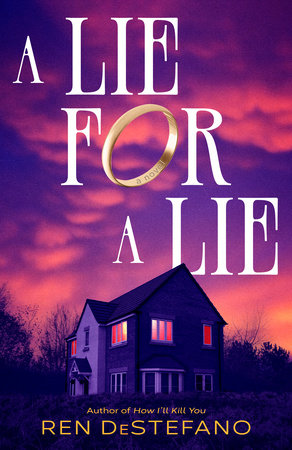
A Lie for a Lie

Look inside
Listen to a clip from the audiobook
audio pause button
0:00
0:00
A deadly game of cat and mouse unfolds when a housewife with a secret life takes on a tech billionaire with secrets darker than her own . . . from the author of How I'll Kill You.

Margaux leads a double life that would make most people dizzy. By day, she's a seemingly ordinary interior decorator with a picture-perfect marriage. By night, she works for a mysterious employer known only as Mr. X. Her specialty: infiltrating the lives of dangerous targets, gaining their trust, and ultimately exposing their crimes. 

Her latest assignment: unraveling the reclusive life of Bertram Casimir, a billionaire tech CEO whose career is as mysterious as his past. His sister claims he stole her app to build his fortune. Not only that, his girlfriend may or may not have recently gone missing.

Bertram sees through Margaux’s carefully constructed facade, matching her move for move. As the lines between hunter and prey blur, Margaux finds herself unexpectedly drawn to Bertram. They share more than she'd like to admit—a dangerous intelligence, a taste for high-stakes manipulation. When the evidence begins to shift, threatening to destroy everything she knows, Margaux realizes this is far more than just another job.

Her hidden past—and her life—are now on the line. One lie remains, and it might just save her.
One

The courtroom is packed.

Today, the highly publicized six-month murder trial comes to an end. At seven this morning, the jury announced that they had reached their verdict. Now we gather to hear the fate of the defendant, Emma Graham.

"Mom," Collette whispers, "I can't be late for school. I have a math test today."

At eleven years old, my daughter is going on thirty.

"It's fine." I wrap my arm around her shoulders, giving her a comforting squeeze. "Not everything is learned in the classroom. This is educational."

Collette cranes her neck to see over the rows of people seated ahead of us. We didn't get here early enough to sit directly behind the attorneys, but with the popularity of this case, it's a miracle we got in at all. Through the window, I can see that the sidewalk outside the courtroom is also packed with people, all of whom are huddled over smartphones waiting for the next update.

Collette was interested in this case because it fascinated her that this crime went down long before even I was born, but also because the murderer could still be found guilty. I explained the statute of limitations to her-how some crimes, like petty theft or even assault, have an expiration date. But murder never does. Even if they find you when you're a hundred years old and on your last days, justice will come for you.

I stare at the back of Emma Graham's head. Her gray hair is cut short, and her skin is still tanned from her long days spent on sunny beaches. Back in 1985, when her husband went missing, she was youthful and radiant, only thirty-two. She wept on the news and pleaded for her husband to return to her, safe and sound. She begged the public to be on the lookout. She alluded weakly to poorly planned-out and vague mental health issues, claiming he'd "been depressed" and that she'd "always known" he "might do something."

This didn't stop her from cashing the insurance check when his van was later found submerged in a river, with him at the wheel. No attempts to escape had been made, and it was deemed an accident. He'd fallen asleep at the wheel and perhaps hit his head, rendering him unconscious on impact.

That was forty years ago. Since then, she's remarried three times-no children-and retired to an upscale condo in sunny Florida. When her husband's death was ruled accidental, the case disappeared from public discussion. And because there are so many tragedies to fill the evening news, the world eventually forgot about her.

The room falls silent when the jury files into the room. Collette eyes them curiously. The jurors aren't shown on the cameras, so this is the first time she's having a look at them.

My husband, Waylen, would be angry if he knew I've taken our daughter here. Yesterday, when he caught Collette watching the trial recap on YouTube, which contained salacious details about Emma's affairs during her first marriage, he took her iPad away. He said the topic is too grown up for her.

But whether or not he wants to admit it, Collette is smart. She knows that criminals exist and finds it reassuring that they can be punished for their crimes. Like me, she's interested in how a grave injustice can be corrected. How criminals who thought they'd gotten away with it can finally be punished.

"You're a good mother," Waylen told me recently, during one of our hushed little late-night arguments while Collette was sleeping across the hall. "A perfect one, really. But you're trying to make her too much like-"

"Like me?" I'd pressed.

"Like an adult," he'd amended, with irritating calm. "Shouldn't she be-I don't know-collecting stickers and coloring books?"

"She's not five, Waylen."

"She's not thirty-five, either." He'd had to fight to keep his voice low. He didn't say the rest of it-the part we've hashed out a thousand times. He wants our life to be more . . . normal. My obsession with spying, he doesn't understand. "What are you trying to prove?" he's asked. But I can never tell him. There's only one person who truly understands, and that's Mr. X, who agrees with me.

Now I sit in the courtroom with Collette, who is eleven-and admittedly I do forget she's not thirty-five sometimes.

The teachers at Collette's esteemed private school would be horrified to know that I'm exposing her to this case. But I wasn't much older than she is when I was in a courtroom as a defendant and stood trial for murder.

I already know the verdict will be guilty. The head juror is a petite college student named Mira Hart, and she's working for me. If there was any evidence of jury tampering that led to this conviction, the courts would have to throw the whole thing out. But that won't be an issue.

Emma Graham sits tall and straight. Maybe she's trying to maintain her pride, or maybe she still thinks she can get away with the crime she committed forty years ago. It happened before they had things like DNA testing, and small-town cops thought a man was more likely to take his own life than his loving wife was. This was back when the news media lined their pockets with sad stories of pigtailed girls who were stolen from their beds or snatched from their bicycles.

I found Emma's story while browsing a thread on Reddit. "What's a solved case that you think the cops got wrong?" Investigators never looked into Emma's motives. Just two months after her husband was found, she cut all communication with her extended family and ran off with a man she'd been having an affair with. These could have been the actions of a desperate widow looking to escape her grief. But the case still intrigued me.

Someone on the forum claimed to have a taped confession. He was an Uber driver, and he'd recently shuttled an intoxicated Emma home from a senior center bingo night. She told the Uber driver that he shouldn't get too cocky about his good looks, because one day he would also be washed up and ugly, like the man she'd murdered for a fifty-thousand-dollar insurance settlement.

Most people assumed the post was a hoax. No shortage of those on the internet. But I reached out and obtained a copy of his dashcam footage. I took on the case-no easy feat-and was able to piece the evidence together.

But I'm not a cop. I'm not even an investigator. I am part of an organization that handles things a bit differently.

Dear Emma, I began my letter to her. Although nothing can bring your loving husband back, today you are given the chance to redeem yourself. In your backyard, below the seashell where you keep the spare key, you'll find a cassette tape of the night you confessed to positioning your sedated husband behind the wheel of his van, putting it in drive, and watching him roll forward into the lake. Some details the police never released, to prove that I'm serious: You'd given him Benadryl in a late-night smoothie, and he threw up on impact. You had tried to tape a rock to the gas pedal, but it kept falling off, so you had to push it yourself. You tell people that your husband was planning to leave you and that's why you were having an affair. But after the truth cocktail my contact slipped into your drink at the bar, you confessed. You don't remember this, but I have the proof.

By signing your latest dearly departed husband's pension checks over to the safe home for battered women and children, you can save lives like the one you ended and make things right. You will not go to prison if you comply.

I'll contact you soon with instructions.


Sometimes, the criminals I contact know a gift when they see it. Not Emma. She was used to the accusations-all of which had been proven false-and she must have assumed this was yet another hoax. She didn’t shutter herself in the house or call an attorney like some have, but she did become increasingly paranoid. Looking over her shoulder when she sat at the seaside bar, jolting whenever the voices of strangers grew too close as she sunned herself in the sand.

Still, when the police finally showed up at her door, I imagine she was surprised.

Throughout the trial, Emma searched the faces of the jurors and sometimes turned to the people in the pews behind her, no doubt searching for her letter writer. No doubt wondering who was watching, who knew her darkest secret. But now that I'm here in person-rather than watching the recaps in my kitchen as I make dinner-she doesn't look for me. She's given up.

The judge, for her part, gives a passionate speech about the abhorrence of Emma's crime, and then she summons the head juror to read the verdict.

Mira Hart, twenty-one and with a melodic theater major's voice, reads from the paper in her hands. "To the charge of murder in the first degree, we the jury find the defendant guilty."

There are more charges, but that was the big one. Collette is perched on the edge of her seat, biting her lip.

When Mira finishes speaking, for a moment it's quiet enough to hear a pin drop. The judge has instructed all of us that we'd be removed from the courtroom if we caused a disturbance.

I wait until the room is mostly empty before I take Collette's hand and lead her outside. She's somber, but when we reach the last step of the courthouse, she leaps into a dancer's pirouette. "That was really cool, Mom," she says. "Thanks for bringing me. Now I can tell my friends I was sitting five feet away from a murderer. Her shoulders got all hunched up when they found her guilty."

"Maybe this should be our secret," I say, opening the door to the SUV for her. "Your father didn't want me to take you."

"Why not?" she asks. "It's not like she's going to kill me, too. They had her in handcuffs."

Collette has Waylen's gold hair and blue eyes. She has his prowess for art and science, and they both love to bake bougie French desserts.

But even though we don't match up on everything, Collette is more like me than she realizes. I knew it very early on. Waylen sees it too, and it scares the hell out of him.

"I don't want this life for her," he's whispered to me while we're lying in bed. He doesn't mean my day job as an interior decorator, or his salaried job editing manuscripts for a Big Five publisher. He means the thing we don't say. The life he gave up. The things I do when I disappear for hours at a time, and the reason Emma Graham will spend the rest of her miserable life in prison.

"She can do anything," he's told me. "Anything but that."


I arrive at the school twenty minutes late. As I turn into the driveway, I hand Collette the note that was tucked in the sun visor. “Give that to your teacher.”

She reads it-the only child on earth to question a permission note that allows her to be late to class. "But we weren't at the dentist," she says. "Isn't that lying?"

"No, it isn't," I say, glancing at her in the mirror. "No plaque buildup. The technician said you did a perfect job."

She hesitates, tucks the note into her pocket.

She hates lying, which as a parent is a trait I appreciate. But I'm working on teaching her the subtle art of playing her cards close to the vest and knowing when to keep a secret.

"Collette, all of that 'honesty is the best policy' stuff you learn about in kindergarten isn't always applicable."

She unbuckles her seat belt. "What's 'applicable'?"

"It means sometimes the rules are bullshit." She doesn't flinch at my language, even though I don't talk this way often. She knows that this morning is special, one of those rare times when we're on the same level. And she knows that I'm going to answer the questions she normally wouldn't ask me.

"Why does Daddy get so mad when I watch trials with you?" she asks.

"You can't be too hard on him," I say. "He still thinks you'll be little forever. That's why he keeps buying you unicorn Squishmallows on your birthday."

"I still like them," she says. "I mean, a little bit." It is true that Waylen wants to preserve her innocence, but that isn't all of it. Really, it's that he doesn't want her to be like me. He doesn't want her to grow up and fall in love with someone like who he used to be when we met.

Collette opens the door, but before she can set foot on the pavement, a woman comes bursting through the double doors of the school's entrance. She paces toward us like a mad bull in pink heels and perfectly dyed platinum hair.

"Who's that?" I ask. Cynthia Nyugen does morning drop-offs, but seeing as we're late, I was expecting the drop-off to be empty.

"Mrs. Blevins," Collette groans. "Finnegan's mom."

"Who's Finnegan? I don't recognize that name," I say.

"The Blevinses just moved here," Collette says. "She's the worst."

"Which one is the worst?" I ask. "Mrs. Blevins or her daughter?"

Before my daughter can answer, Mrs. Blevins is knocking on my passenger-side window and motioning for me to roll it down, as though she's a cop pulling me over for a bank heist.

As the glass comes down, I give her my brightest smile. The one that Waylen says makes me look like a Miss America contestant whose onstage talent is dismembering a corpse. "Good morning," I say, in my best Stepford wife tone.

"This is the drop-off for students who arrive on time," she says by way of greeting. Her perfume floods the car, flowery and potent, like Natalie Portman's fever dream. I suppress a cough. "For tardy students, you're supposed to pull into the commuter lot and walk her into the main office so that she's not marked absent for the day."

"Is that really necessary?" I ask. "She's got a note."

"It's for everyone's safety," she says. Up close, it's infuriating how beautiful she is. Her makeup perfectly blended and contoured, not a single clump in her mascara, perfectly manicured nails. She exudes newness. Someone who understands the power of a first impression.

I can feel Collette's eyes on me, pleading for me to make this easy on her.

I extend a hand to Mrs. Blevins, my smile relaxing into something less robotic. "Margaux," I tell her. "My daughter has spoken so highly of your Finnegan. I'm just sorry that you've caught me on an off day."
Praise for a A Lie for a Lie

“Pitch-perfect pacing makes the pages fly, ratcheting up suspense as DeStefano doles out key details about Margaux’s past. It’s a jaw-dropping, cinematic ride.”
Publishers Weekly (starred review)

“Margaux is a refreshing amateur sleuth whose sardonic voice and intrusive doubts are as alluring as her backstory."
Booklist

Praise for How I'll Kill You

“A triumph… Mark my words: Ren DeStefano—who has achieved a distinctness of voice and vision that is quite rare—is both an author to watch and a name to remember.”
—Criminal Element

“This deceptive thriller opens as a chilling, dispassionate chronicle of murderous triplets devoted to their chosen craft and each other, but it evolves into a twisted love story as layers of loneliness, self-sacrifice, and competing loyalties surface. Readers will find that this sneakily heart-wrenching story lingers with them after Sissy’s final words.”
Booklist
(starred review)

“When it comes to carefully concealed sociopathy, the fascinating protagonist in DeStefano’s adult debut gives Gone Girl’s Amy Elliott a run for her money. Combine this with a cleverly crafted plot that delivers ingenious twists, and you have a novel that will stun readers.”
Library Journal
(starred review)

“This devilishly clever textbook of malicious mayhem is a must for Dexter fans.”
Publishers Weekly
(starred review)

“This chilling book is both twisted and tense. The writing is lean, the plotting is tight, and the story is whip smart. Will have you glued to the page.”
—Samantha Downing
, USA Today bestselling author of My Lovely Wife


© Author
Ren DeStefano lives in Connecticut, where she was born and raised. When she's not writing thrillers, she's listening to true crime podcasts and crocheting way too many blankets. View titles by Ren DeStefano

About

A deadly game of cat and mouse unfolds when a housewife with a secret life takes on a tech billionaire with secrets darker than her own . . . from the author of How I'll Kill You.

Margaux leads a double life that would make most people dizzy. By day, she's a seemingly ordinary interior decorator with a picture-perfect marriage. By night, she works for a mysterious employer known only as Mr. X. Her specialty: infiltrating the lives of dangerous targets, gaining their trust, and ultimately exposing their crimes. 

Her latest assignment: unraveling the reclusive life of Bertram Casimir, a billionaire tech CEO whose career is as mysterious as his past. His sister claims he stole her app to build his fortune. Not only that, his girlfriend may or may not have recently gone missing.

Bertram sees through Margaux’s carefully constructed facade, matching her move for move. As the lines between hunter and prey blur, Margaux finds herself unexpectedly drawn to Bertram. They share more than she'd like to admit—a dangerous intelligence, a taste for high-stakes manipulation. When the evidence begins to shift, threatening to destroy everything she knows, Margaux realizes this is far more than just another job.

Her hidden past—and her life—are now on the line. One lie remains, and it might just save her.

Excerpt

One

The courtroom is packed.

Today, the highly publicized six-month murder trial comes to an end. At seven this morning, the jury announced that they had reached their verdict. Now we gather to hear the fate of the defendant, Emma Graham.

"Mom," Collette whispers, "I can't be late for school. I have a math test today."

At eleven years old, my daughter is going on thirty.

"It's fine." I wrap my arm around her shoulders, giving her a comforting squeeze. "Not everything is learned in the classroom. This is educational."

Collette cranes her neck to see over the rows of people seated ahead of us. We didn't get here early enough to sit directly behind the attorneys, but with the popularity of this case, it's a miracle we got in at all. Through the window, I can see that the sidewalk outside the courtroom is also packed with people, all of whom are huddled over smartphones waiting for the next update.

Collette was interested in this case because it fascinated her that this crime went down long before even I was born, but also because the murderer could still be found guilty. I explained the statute of limitations to her-how some crimes, like petty theft or even assault, have an expiration date. But murder never does. Even if they find you when you're a hundred years old and on your last days, justice will come for you.

I stare at the back of Emma Graham's head. Her gray hair is cut short, and her skin is still tanned from her long days spent on sunny beaches. Back in 1985, when her husband went missing, she was youthful and radiant, only thirty-two. She wept on the news and pleaded for her husband to return to her, safe and sound. She begged the public to be on the lookout. She alluded weakly to poorly planned-out and vague mental health issues, claiming he'd "been depressed" and that she'd "always known" he "might do something."

This didn't stop her from cashing the insurance check when his van was later found submerged in a river, with him at the wheel. No attempts to escape had been made, and it was deemed an accident. He'd fallen asleep at the wheel and perhaps hit his head, rendering him unconscious on impact.

That was forty years ago. Since then, she's remarried three times-no children-and retired to an upscale condo in sunny Florida. When her husband's death was ruled accidental, the case disappeared from public discussion. And because there are so many tragedies to fill the evening news, the world eventually forgot about her.

The room falls silent when the jury files into the room. Collette eyes them curiously. The jurors aren't shown on the cameras, so this is the first time she's having a look at them.

My husband, Waylen, would be angry if he knew I've taken our daughter here. Yesterday, when he caught Collette watching the trial recap on YouTube, which contained salacious details about Emma's affairs during her first marriage, he took her iPad away. He said the topic is too grown up for her.

But whether or not he wants to admit it, Collette is smart. She knows that criminals exist and finds it reassuring that they can be punished for their crimes. Like me, she's interested in how a grave injustice can be corrected. How criminals who thought they'd gotten away with it can finally be punished.

"You're a good mother," Waylen told me recently, during one of our hushed little late-night arguments while Collette was sleeping across the hall. "A perfect one, really. But you're trying to make her too much like-"

"Like me?" I'd pressed.

"Like an adult," he'd amended, with irritating calm. "Shouldn't she be-I don't know-collecting stickers and coloring books?"

"She's not five, Waylen."

"She's not thirty-five, either." He'd had to fight to keep his voice low. He didn't say the rest of it-the part we've hashed out a thousand times. He wants our life to be more . . . normal. My obsession with spying, he doesn't understand. "What are you trying to prove?" he's asked. But I can never tell him. There's only one person who truly understands, and that's Mr. X, who agrees with me.

Now I sit in the courtroom with Collette, who is eleven-and admittedly I do forget she's not thirty-five sometimes.

The teachers at Collette's esteemed private school would be horrified to know that I'm exposing her to this case. But I wasn't much older than she is when I was in a courtroom as a defendant and stood trial for murder.

I already know the verdict will be guilty. The head juror is a petite college student named Mira Hart, and she's working for me. If there was any evidence of jury tampering that led to this conviction, the courts would have to throw the whole thing out. But that won't be an issue.

Emma Graham sits tall and straight. Maybe she's trying to maintain her pride, or maybe she still thinks she can get away with the crime she committed forty years ago. It happened before they had things like DNA testing, and small-town cops thought a man was more likely to take his own life than his loving wife was. This was back when the news media lined their pockets with sad stories of pigtailed girls who were stolen from their beds or snatched from their bicycles.

I found Emma's story while browsing a thread on Reddit. "What's a solved case that you think the cops got wrong?" Investigators never looked into Emma's motives. Just two months after her husband was found, she cut all communication with her extended family and ran off with a man she'd been having an affair with. These could have been the actions of a desperate widow looking to escape her grief. But the case still intrigued me.

Someone on the forum claimed to have a taped confession. He was an Uber driver, and he'd recently shuttled an intoxicated Emma home from a senior center bingo night. She told the Uber driver that he shouldn't get too cocky about his good looks, because one day he would also be washed up and ugly, like the man she'd murdered for a fifty-thousand-dollar insurance settlement.

Most people assumed the post was a hoax. No shortage of those on the internet. But I reached out and obtained a copy of his dashcam footage. I took on the case-no easy feat-and was able to piece the evidence together.

But I'm not a cop. I'm not even an investigator. I am part of an organization that handles things a bit differently.

Dear Emma, I began my letter to her. Although nothing can bring your loving husband back, today you are given the chance to redeem yourself. In your backyard, below the seashell where you keep the spare key, you'll find a cassette tape of the night you confessed to positioning your sedated husband behind the wheel of his van, putting it in drive, and watching him roll forward into the lake. Some details the police never released, to prove that I'm serious: You'd given him Benadryl in a late-night smoothie, and he threw up on impact. You had tried to tape a rock to the gas pedal, but it kept falling off, so you had to push it yourself. You tell people that your husband was planning to leave you and that's why you were having an affair. But after the truth cocktail my contact slipped into your drink at the bar, you confessed. You don't remember this, but I have the proof.

By signing your latest dearly departed husband's pension checks over to the safe home for battered women and children, you can save lives like the one you ended and make things right. You will not go to prison if you comply.

I'll contact you soon with instructions.


Sometimes, the criminals I contact know a gift when they see it. Not Emma. She was used to the accusations-all of which had been proven false-and she must have assumed this was yet another hoax. She didn’t shutter herself in the house or call an attorney like some have, but she did become increasingly paranoid. Looking over her shoulder when she sat at the seaside bar, jolting whenever the voices of strangers grew too close as she sunned herself in the sand.

Still, when the police finally showed up at her door, I imagine she was surprised.

Throughout the trial, Emma searched the faces of the jurors and sometimes turned to the people in the pews behind her, no doubt searching for her letter writer. No doubt wondering who was watching, who knew her darkest secret. But now that I'm here in person-rather than watching the recaps in my kitchen as I make dinner-she doesn't look for me. She's given up.

The judge, for her part, gives a passionate speech about the abhorrence of Emma's crime, and then she summons the head juror to read the verdict.

Mira Hart, twenty-one and with a melodic theater major's voice, reads from the paper in her hands. "To the charge of murder in the first degree, we the jury find the defendant guilty."

There are more charges, but that was the big one. Collette is perched on the edge of her seat, biting her lip.

When Mira finishes speaking, for a moment it's quiet enough to hear a pin drop. The judge has instructed all of us that we'd be removed from the courtroom if we caused a disturbance.

I wait until the room is mostly empty before I take Collette's hand and lead her outside. She's somber, but when we reach the last step of the courthouse, she leaps into a dancer's pirouette. "That was really cool, Mom," she says. "Thanks for bringing me. Now I can tell my friends I was sitting five feet away from a murderer. Her shoulders got all hunched up when they found her guilty."

"Maybe this should be our secret," I say, opening the door to the SUV for her. "Your father didn't want me to take you."

"Why not?" she asks. "It's not like she's going to kill me, too. They had her in handcuffs."

Collette has Waylen's gold hair and blue eyes. She has his prowess for art and science, and they both love to bake bougie French desserts.

But even though we don't match up on everything, Collette is more like me than she realizes. I knew it very early on. Waylen sees it too, and it scares the hell out of him.

"I don't want this life for her," he's whispered to me while we're lying in bed. He doesn't mean my day job as an interior decorator, or his salaried job editing manuscripts for a Big Five publisher. He means the thing we don't say. The life he gave up. The things I do when I disappear for hours at a time, and the reason Emma Graham will spend the rest of her miserable life in prison.

"She can do anything," he's told me. "Anything but that."


I arrive at the school twenty minutes late. As I turn into the driveway, I hand Collette the note that was tucked in the sun visor. “Give that to your teacher.”

She reads it-the only child on earth to question a permission note that allows her to be late to class. "But we weren't at the dentist," she says. "Isn't that lying?"

"No, it isn't," I say, glancing at her in the mirror. "No plaque buildup. The technician said you did a perfect job."

She hesitates, tucks the note into her pocket.

She hates lying, which as a parent is a trait I appreciate. But I'm working on teaching her the subtle art of playing her cards close to the vest and knowing when to keep a secret.

"Collette, all of that 'honesty is the best policy' stuff you learn about in kindergarten isn't always applicable."

She unbuckles her seat belt. "What's 'applicable'?"

"It means sometimes the rules are bullshit." She doesn't flinch at my language, even though I don't talk this way often. She knows that this morning is special, one of those rare times when we're on the same level. And she knows that I'm going to answer the questions she normally wouldn't ask me.

"Why does Daddy get so mad when I watch trials with you?" she asks.

"You can't be too hard on him," I say. "He still thinks you'll be little forever. That's why he keeps buying you unicorn Squishmallows on your birthday."

"I still like them," she says. "I mean, a little bit." It is true that Waylen wants to preserve her innocence, but that isn't all of it. Really, it's that he doesn't want her to be like me. He doesn't want her to grow up and fall in love with someone like who he used to be when we met.

Collette opens the door, but before she can set foot on the pavement, a woman comes bursting through the double doors of the school's entrance. She paces toward us like a mad bull in pink heels and perfectly dyed platinum hair.

"Who's that?" I ask. Cynthia Nyugen does morning drop-offs, but seeing as we're late, I was expecting the drop-off to be empty.

"Mrs. Blevins," Collette groans. "Finnegan's mom."

"Who's Finnegan? I don't recognize that name," I say.

"The Blevinses just moved here," Collette says. "She's the worst."

"Which one is the worst?" I ask. "Mrs. Blevins or her daughter?"

Before my daughter can answer, Mrs. Blevins is knocking on my passenger-side window and motioning for me to roll it down, as though she's a cop pulling me over for a bank heist.

As the glass comes down, I give her my brightest smile. The one that Waylen says makes me look like a Miss America contestant whose onstage talent is dismembering a corpse. "Good morning," I say, in my best Stepford wife tone.

"This is the drop-off for students who arrive on time," she says by way of greeting. Her perfume floods the car, flowery and potent, like Natalie Portman's fever dream. I suppress a cough. "For tardy students, you're supposed to pull into the commuter lot and walk her into the main office so that she's not marked absent for the day."

"Is that really necessary?" I ask. "She's got a note."

"It's for everyone's safety," she says. Up close, it's infuriating how beautiful she is. Her makeup perfectly blended and contoured, not a single clump in her mascara, perfectly manicured nails. She exudes newness. Someone who understands the power of a first impression.

I can feel Collette's eyes on me, pleading for me to make this easy on her.

I extend a hand to Mrs. Blevins, my smile relaxing into something less robotic. "Margaux," I tell her. "My daughter has spoken so highly of your Finnegan. I'm just sorry that you've caught me on an off day."

Reviews

Praise for a A Lie for a Lie

“Pitch-perfect pacing makes the pages fly, ratcheting up suspense as DeStefano doles out key details about Margaux’s past. It’s a jaw-dropping, cinematic ride.”
Publishers Weekly (starred review)

“Margaux is a refreshing amateur sleuth whose sardonic voice and intrusive doubts are as alluring as her backstory."
Booklist

Praise for How I'll Kill You

“A triumph… Mark my words: Ren DeStefano—who has achieved a distinctness of voice and vision that is quite rare—is both an author to watch and a name to remember.”
—Criminal Element

“This deceptive thriller opens as a chilling, dispassionate chronicle of murderous triplets devoted to their chosen craft and each other, but it evolves into a twisted love story as layers of loneliness, self-sacrifice, and competing loyalties surface. Readers will find that this sneakily heart-wrenching story lingers with them after Sissy’s final words.”
Booklist
(starred review)

“When it comes to carefully concealed sociopathy, the fascinating protagonist in DeStefano’s adult debut gives Gone Girl’s Amy Elliott a run for her money. Combine this with a cleverly crafted plot that delivers ingenious twists, and you have a novel that will stun readers.”
Library Journal
(starred review)

“This devilishly clever textbook of malicious mayhem is a must for Dexter fans.”
Publishers Weekly
(starred review)

“This chilling book is both twisted and tense. The writing is lean, the plotting is tight, and the story is whip smart. Will have you glued to the page.”
—Samantha Downing
, USA Today bestselling author of My Lovely Wife


Author

© Author
Ren DeStefano lives in Connecticut, where she was born and raised. When she's not writing thrillers, she's listening to true crime podcasts and crocheting way too many blankets. View titles by Ren DeStefano
  • More Websites from
    Penguin Random House
  • Common Reads
  • Library Marketing