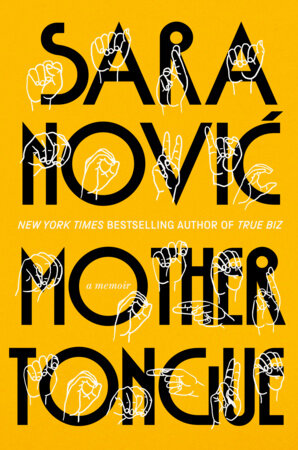
Mother Tongue

A Memoir

Author Sara Novic
Look inside
Hardcover
$29.00 US
| $39.99 CAN
On sale May 05, 2026 | 272 Pages | 9780593241530
Grades 9-12 + AP/IB

See Additional Formats
The New York Times bestselling author of True Biz retraces her path out of the hearing world and into the deaf community—and seeks to understand what it means to raise children who are different from her—in this emotionally rich memoir.

“In this enraging history and big-hearted family saga, Sara Nović has skillfully subverted the dividing lines of identity, her deafness becoming the thread that connects us all.”—Sierra Crane Murdoch, author of Yellow Bird


Sara Nović’s early years were steeped in music, Bible study, and a strong desire to fit in. But when she failed her school’s mandated hearing test, her worldview was thrown into chaos. Desperate not to be marked as different, she told no one, staying in the hearing world for as long as she could by brute force.

Eventually unable to ignore the fact that she was deaf, Nović sought out other deaf people and was welcomed into a tight knit community rooted in the beauty and joy of American Sign Language. Nović realized that rather than maintaining the facade of her old life or trying to straddle two worlds, she would need to cultivate an existence in the space between.

Now the mother of two young sons—one, biological and hearing, the other, adopted and deaf—Nović reflects on her life both before and after parenthood. She’s raising her children within the deaf world, offering them things her younger self needed, all the while knowing that as her children grow, their own paths will branch off from hers in ways she cannot fully predict or plan for.

Interwoven with Nović's personal story is a remarkable portrait of America through reflections on some of its most complex histories: the rise of the Christian right, the thorny world of international adoption, and above all, the deaf and disabled communities’ stubborn survival in the face of persistent oppression.

Nović’s clear, bold voice is one readers will hold onto, learn from, argue with, and be inspired by, as she asks us to recognize difference as a source of opportunity rather than fear, as a chance to draw families and communities together, and to build something new.
Two Boys

Sometimes strangers approach me on the street and ask if my sons are twins. The first few times it happened, I laughed. It’s a defense mechanism I often use in interactions with hearing people, an attempt to disarm them in case of misunderstanding, though in this case, even after I was sure of what they were saying, I really did think it was a joke. Now five and six, the boys are close in height and often holding hands, but by most other visible metrics they’re opposites. S fair, with a spray of freckles across the bridge of his nose, and the lingering roundness of a toddler’s tummy; K with brown skin, sinewy muscles, and the jack-o’-lantern smile of so many first graders. S a chatterbox, who prattles in multiple languages and rushes to cover his ears at any loud sound; K with neon pink and blue hearing aids, who signs fluidly and delights in all things noisy.

And these are only the differences passersby can see. Their beginnings, too, are at odds: S a born Philadelphian, lover of stoop-sitting and Eagles green, having experienced nearly every moment of his first three years within my arms’ reach; K who, half a world away, was forced to exchange the safety of his birth mother’s womb for the harsh lights of the NICU, then spent the next four and a half years in a government orphanage. In taking stock of their personalities, their skills, their favorite foods, games, and toys, there are so many ways they are more different than alike. These early years have marked and continue to shape them, sometimes in ways that seem clear and predictable, and other times surprising, my parental joy or interventions scrambling to catch up.

Eventually, after I realized strangers weren’t kidding about the twin thing, I began to take stock. It could be the boys’ insistence on identical leopard print shirts and rubber rain boots (in all weather), or because in our first months together they often traveled by double-wide stroller, brandishing dual thumbs-up at everyone we passed. Maybe strangers are simply struck by what is plainly there—an unbridled delight in each other.

Watching them, I’m reminded of the best part of what it is to have a sibling, that unhesitating belief in another person’s greatness, someone who will not only cheer on your silliest idea, but who will throw their weight behind the plan. My own sister and I are also opposites in many ways—appearance, personality, skills, dreams—but we, too, had a bond of unwavering loyalty to each other’s harebrained schemes and imaginary worlds and most deeply held secrets that transcended those differences and grew into what remains one of the most important relationships in my life today. Now, as these two boys traverse the backyard, crafting traps and wielding branches against invisible villains, holding on to each other as they stake out uncharted territory, I am able to glimpse a bit of what those strangers see: They are brothers, through and through, their closeness as effortless as it is miraculous, as if they’d always been together.

How do we know, or come to know, the things that make us us—our tastes and values, our predispositions and prejudices, our histories and mother tongues? In the social sciences, experts studying the acquisition of culture and language use three overarching categories of transmission—vertical, oblique, and horizontal—to talk about the way humans learn from one another. Vertical cultural transmission occurs when a language or culture is handed down from an older generation to a younger one, as from grandparent to parent to child. Oblique transmission occurs when that knowledge is passed down by an older generation but not one’s parents, like an older relative, teacher, or mentor, while horizontal transmission is the passage and exchange of cultural knowledge between peers, intragenerationally.

The methods aren’t mutually exclusive—most people receive this information from various sources, the proportions dependent on a variety of factors within a family, local community, and overarching society. Still, when people conceptualize the dispersion of culture, most assume a vertical trajectory; the path is embedded in our very language for the concept, the way we talk about knowledge or traditions being “passed down.” But what happens when the vertical threads by which we’re bonded to our elders fray or are severed, if they existed at all?

For deaf and hard-of-hearing children, the overwhelming majority of whose parents are hearing and choose not to engage with other deaf people or to learn sign language, there is rarely an opportunity to receive culture or language vertically. If these children are lucky, they may have access to an oblique source of transmission—a deaf mentor or teacher in a school setting. But most of the time, deaf people receive sign language and deaf culture horizontally and late, the way I did, or not at all. Deaf children with deaf parents are the exception.

Deafness and disability are far from the only horizontally transmitted cultures, of course—it is perhaps best known as a tenet of the LGBTQ+ community, whose store of knowledge, practices, values, and social norms are largely passed through peers and small groups of “chosen family.” Like in the deaf world, most queer people don’t have queer parents, and just as communication barriers cordon many deaf people off from their families of origin, queerness is sometimes cause for families to cut those vertical ties. Due to centuries of stigma that kept people closeted, followed by the mass losses of the AIDS epidemic, most queer people also have limited opportunity for oblique transmission of queer cultural information, though we can hope this is changing for today’s youngest generations.

Adoption, too, is a subversion of traditional schematics. While I can provide an effortless vertical transmission of the deaf culture that is also inherently K’s, I can never give him the satisfaction of seeing his own genes reflected back at him, and can offer only opportunities for oblique and horizontal ports of learning about Thai culture, his birthright. This is a failing of adoption on the fundamental level, but it is not the whole story, either. Because we are together, he’s also gained a fully accessible language, without which so many things—his culture of origin included—might have remained a mystery to him even as he stood in its midst, as is the case for so many deaf people. American Sign Language is for K, for us, a chance at the long way home.

After three years as a unit, our family is recognizable throughout the neighborhood. People know us when we turn up at the library, or as I chase the boys down the sidewalk on their bikes toward karate class; we stick in people’s memories, no doubt because of our gamut of skin tones and the miry mix of languages we use together. It is not within my nature to desire visibility. In fact, I’ve spent a good portion of my life trying to conceal myself; it took years for me to come to terms with the attention signing in public often garners, and that shift was seismic. But this next stage is different, too—the ability to be fully myself out loud—and has only become possible because of this motley family.

At times I’ve struggled in getting this story down, in ways that differ from the typical writer’s block I experience when writing fiction, but are probably familiar to anyone who has tried to tell a true story. A degree of protectiveness remains in these pages, as I try to share parts of myself that are not mine alone. Others’ experiences of events described here are—filtered through their own sensory inputs and deficits, beliefs, desires, selves—necessarily different from how those same experiences felt to me. My impulse to shield applies particularly to my boys, not only because I think the world of them, but because they can’t yet consent to being beheld. So if there are occasional walls and ellipses in these pages, I hope readers will forgive the places they wish for more, and know that I would have offered it up if it were mine to give.

When I started this book, I’d planned to write mostly about deaf history and culture, and the ways I envisioned passing those things to my children. I assumed, with all their differences, each of them would require distinct stories, histories, and advice, and I attempted to parcel up bits of memory and ideology into discrete sets for each of them. But in the process—of writing and of living our first years as a family—something else became clear to me: Just as our lives have become knitted so tightly together, deafness, too, is plaited through every other facet of my identity. As a result, these pages have transformed into a broader examination of what I’ve learned so far about finding oneself in places where our paths diverge from our parents’, and what it might mean to grow a family in those gaps.

Maybe admitting that loss has carved out straits before and within us is the first part of healing, that initial suture in closing a wound. Or maybe closure isn’t the goal. What if, in remaining cracked open, we create—more room to explore, to build something new.
“In this enraging history and big-hearted family saga, Sara Nović has skillfully subverted the dividing lines of identity, her deafness becoming the thread that connects us all. Mother Tongue is a moral force, and a salve.”—Sierra Crane Murdoch, author of Yellow Bird

Mother Tongue is funny, intimate, honest, and deeply moving. At the same time, it's full of rich historical detail, dazzling critical inquiry, and political fury. I finished it—as I do all of Nović's work—brimming with equal parts rage and hope.”—Andrew Leland, author of The Country of the Blind

Mother Tongue is one of the most powerful memoirs I have read in years, a book I defy anyone to read without being challenged or changed. . . . A revelation and a reckoning.”—Nicole Chung, author of A Living Remedy

“An unruly, defiant, and breathtaking history of becoming. You could say it’s about becoming deaf and becoming a parent, but it’s also about how ordinary people dismantle oppression one word, one sign, one bold act of love at a time.”—Greg Marshall, author of Leg

“This is not just a tremendous entry into the world of disability literature, it is a poignant tale of parenthood that should be mandatory reading for everyone. Nović gets to the heart of humanness without making loss, grief, or difference a disadvantage. . . . A miracle of a book.”—Porochista Khakpour, author of Sick

Mother Tongue dismantles everyday ableism with precision, tracing Nović's journey from isolation to disability activism. It's a book that refuses to let us look away from how we fail disabled people—and shows us how we can do better.”—Esmé Weijun Wang, author of The Collected Schizophrenias

“A stirring personal tale of coming of age as a deaf woman in America, woven through with a sweeping portrait of deaf history and culture, it resonates with an impassioned call to action, an appeal to decency and equality for people of all abilities and disabilities.”—Thomas Fuller, author of The Boys of Riverside

“Lucid and rigorously researched, Nović’s memoir offers a powerful critique of the systems that have marginalized deaf Americans across the decades. It’s a sobering must-read.”Publishers Weekly, starred review

“A powerful and poignant account of learning to cherish differences . . . For anyone who has felt the need to hide their true self, who has struggled with the demands of parenting or found themselves underestimated, Mother Tongue looks at loss and adversity and what makes moving forward possible.”—Booklist, starred review

© Zachary Stone
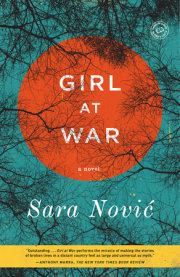
Sara Nović is the author of the New York Times bestseller True Biz and Girl at War, which won the American Library Association’s Alex Award and was a finalist for the Los Angeles Times Book Prize. She holds an MFA from Columbia University, where she studied fiction and literary translation, and is an instructor of Deaf studies and creative writing. She lives in Philadelphia with her family. View titles by Sara Novic

About

The New York Times bestselling author of True Biz retraces her path out of the hearing world and into the deaf community—and seeks to understand what it means to raise children who are different from her—in this emotionally rich memoir.

“In this enraging history and big-hearted family saga, Sara Nović has skillfully subverted the dividing lines of identity, her deafness becoming the thread that connects us all.”—Sierra Crane Murdoch, author of Yellow Bird


Sara Nović’s early years were steeped in music, Bible study, and a strong desire to fit in. But when she failed her school’s mandated hearing test, her worldview was thrown into chaos. Desperate not to be marked as different, she told no one, staying in the hearing world for as long as she could by brute force.

Eventually unable to ignore the fact that she was deaf, Nović sought out other deaf people and was welcomed into a tight knit community rooted in the beauty and joy of American Sign Language. Nović realized that rather than maintaining the facade of her old life or trying to straddle two worlds, she would need to cultivate an existence in the space between.

Now the mother of two young sons—one, biological and hearing, the other, adopted and deaf—Nović reflects on her life both before and after parenthood. She’s raising her children within the deaf world, offering them things her younger self needed, all the while knowing that as her children grow, their own paths will branch off from hers in ways she cannot fully predict or plan for.

Interwoven with Nović's personal story is a remarkable portrait of America through reflections on some of its most complex histories: the rise of the Christian right, the thorny world of international adoption, and above all, the deaf and disabled communities’ stubborn survival in the face of persistent oppression.

Nović’s clear, bold voice is one readers will hold onto, learn from, argue with, and be inspired by, as she asks us to recognize difference as a source of opportunity rather than fear, as a chance to draw families and communities together, and to build something new.

Excerpt

Two Boys

Sometimes strangers approach me on the street and ask if my sons are twins. The first few times it happened, I laughed. It’s a defense mechanism I often use in interactions with hearing people, an attempt to disarm them in case of misunderstanding, though in this case, even after I was sure of what they were saying, I really did think it was a joke. Now five and six, the boys are close in height and often holding hands, but by most other visible metrics they’re opposites. S fair, with a spray of freckles across the bridge of his nose, and the lingering roundness of a toddler’s tummy; K with brown skin, sinewy muscles, and the jack-o’-lantern smile of so many first graders. S a chatterbox, who prattles in multiple languages and rushes to cover his ears at any loud sound; K with neon pink and blue hearing aids, who signs fluidly and delights in all things noisy.

And these are only the differences passersby can see. Their beginnings, too, are at odds: S a born Philadelphian, lover of stoop-sitting and Eagles green, having experienced nearly every moment of his first three years within my arms’ reach; K who, half a world away, was forced to exchange the safety of his birth mother’s womb for the harsh lights of the NICU, then spent the next four and a half years in a government orphanage. In taking stock of their personalities, their skills, their favorite foods, games, and toys, there are so many ways they are more different than alike. These early years have marked and continue to shape them, sometimes in ways that seem clear and predictable, and other times surprising, my parental joy or interventions scrambling to catch up.

Eventually, after I realized strangers weren’t kidding about the twin thing, I began to take stock. It could be the boys’ insistence on identical leopard print shirts and rubber rain boots (in all weather), or because in our first months together they often traveled by double-wide stroller, brandishing dual thumbs-up at everyone we passed. Maybe strangers are simply struck by what is plainly there—an unbridled delight in each other.

Watching them, I’m reminded of the best part of what it is to have a sibling, that unhesitating belief in another person’s greatness, someone who will not only cheer on your silliest idea, but who will throw their weight behind the plan. My own sister and I are also opposites in many ways—appearance, personality, skills, dreams—but we, too, had a bond of unwavering loyalty to each other’s harebrained schemes and imaginary worlds and most deeply held secrets that transcended those differences and grew into what remains one of the most important relationships in my life today. Now, as these two boys traverse the backyard, crafting traps and wielding branches against invisible villains, holding on to each other as they stake out uncharted territory, I am able to glimpse a bit of what those strangers see: They are brothers, through and through, their closeness as effortless as it is miraculous, as if they’d always been together.

How do we know, or come to know, the things that make us us—our tastes and values, our predispositions and prejudices, our histories and mother tongues? In the social sciences, experts studying the acquisition of culture and language use three overarching categories of transmission—vertical, oblique, and horizontal—to talk about the way humans learn from one another. Vertical cultural transmission occurs when a language or culture is handed down from an older generation to a younger one, as from grandparent to parent to child. Oblique transmission occurs when that knowledge is passed down by an older generation but not one’s parents, like an older relative, teacher, or mentor, while horizontal transmission is the passage and exchange of cultural knowledge between peers, intragenerationally.

The methods aren’t mutually exclusive—most people receive this information from various sources, the proportions dependent on a variety of factors within a family, local community, and overarching society. Still, when people conceptualize the dispersion of culture, most assume a vertical trajectory; the path is embedded in our very language for the concept, the way we talk about knowledge or traditions being “passed down.” But what happens when the vertical threads by which we’re bonded to our elders fray or are severed, if they existed at all?

For deaf and hard-of-hearing children, the overwhelming majority of whose parents are hearing and choose not to engage with other deaf people or to learn sign language, there is rarely an opportunity to receive culture or language vertically. If these children are lucky, they may have access to an oblique source of transmission—a deaf mentor or teacher in a school setting. But most of the time, deaf people receive sign language and deaf culture horizontally and late, the way I did, or not at all. Deaf children with deaf parents are the exception.

Deafness and disability are far from the only horizontally transmitted cultures, of course—it is perhaps best known as a tenet of the LGBTQ+ community, whose store of knowledge, practices, values, and social norms are largely passed through peers and small groups of “chosen family.” Like in the deaf world, most queer people don’t have queer parents, and just as communication barriers cordon many deaf people off from their families of origin, queerness is sometimes cause for families to cut those vertical ties. Due to centuries of stigma that kept people closeted, followed by the mass losses of the AIDS epidemic, most queer people also have limited opportunity for oblique transmission of queer cultural information, though we can hope this is changing for today’s youngest generations.

Adoption, too, is a subversion of traditional schematics. While I can provide an effortless vertical transmission of the deaf culture that is also inherently K’s, I can never give him the satisfaction of seeing his own genes reflected back at him, and can offer only opportunities for oblique and horizontal ports of learning about Thai culture, his birthright. This is a failing of adoption on the fundamental level, but it is not the whole story, either. Because we are together, he’s also gained a fully accessible language, without which so many things—his culture of origin included—might have remained a mystery to him even as he stood in its midst, as is the case for so many deaf people. American Sign Language is for K, for us, a chance at the long way home.

After three years as a unit, our family is recognizable throughout the neighborhood. People know us when we turn up at the library, or as I chase the boys down the sidewalk on their bikes toward karate class; we stick in people’s memories, no doubt because of our gamut of skin tones and the miry mix of languages we use together. It is not within my nature to desire visibility. In fact, I’ve spent a good portion of my life trying to conceal myself; it took years for me to come to terms with the attention signing in public often garners, and that shift was seismic. But this next stage is different, too—the ability to be fully myself out loud—and has only become possible because of this motley family.

At times I’ve struggled in getting this story down, in ways that differ from the typical writer’s block I experience when writing fiction, but are probably familiar to anyone who has tried to tell a true story. A degree of protectiveness remains in these pages, as I try to share parts of myself that are not mine alone. Others’ experiences of events described here are—filtered through their own sensory inputs and deficits, beliefs, desires, selves—necessarily different from how those same experiences felt to me. My impulse to shield applies particularly to my boys, not only because I think the world of them, but because they can’t yet consent to being beheld. So if there are occasional walls and ellipses in these pages, I hope readers will forgive the places they wish for more, and know that I would have offered it up if it were mine to give.

When I started this book, I’d planned to write mostly about deaf history and culture, and the ways I envisioned passing those things to my children. I assumed, with all their differences, each of them would require distinct stories, histories, and advice, and I attempted to parcel up bits of memory and ideology into discrete sets for each of them. But in the process—of writing and of living our first years as a family—something else became clear to me: Just as our lives have become knitted so tightly together, deafness, too, is plaited through every other facet of my identity. As a result, these pages have transformed into a broader examination of what I’ve learned so far about finding oneself in places where our paths diverge from our parents’, and what it might mean to grow a family in those gaps.

Maybe admitting that loss has carved out straits before and within us is the first part of healing, that initial suture in closing a wound. Or maybe closure isn’t the goal. What if, in remaining cracked open, we create—more room to explore, to build something new.

Reviews

“In this enraging history and big-hearted family saga, Sara Nović has skillfully subverted the dividing lines of identity, her deafness becoming the thread that connects us all. Mother Tongue is a moral force, and a salve.”—Sierra Crane Murdoch, author of Yellow Bird

Mother Tongue is funny, intimate, honest, and deeply moving. At the same time, it's full of rich historical detail, dazzling critical inquiry, and political fury. I finished it—as I do all of Nović's work—brimming with equal parts rage and hope.”—Andrew Leland, author of The Country of the Blind

Mother Tongue is one of the most powerful memoirs I have read in years, a book I defy anyone to read without being challenged or changed. . . . A revelation and a reckoning.”—Nicole Chung, author of A Living Remedy

“An unruly, defiant, and breathtaking history of becoming. You could say it’s about becoming deaf and becoming a parent, but it’s also about how ordinary people dismantle oppression one word, one sign, one bold act of love at a time.”—Greg Marshall, author of Leg

“This is not just a tremendous entry into the world of disability literature, it is a poignant tale of parenthood that should be mandatory reading for everyone. Nović gets to the heart of humanness without making loss, grief, or difference a disadvantage. . . . A miracle of a book.”—Porochista Khakpour, author of Sick

Mother Tongue dismantles everyday ableism with precision, tracing Nović's journey from isolation to disability activism. It's a book that refuses to let us look away from how we fail disabled people—and shows us how we can do better.”—Esmé Weijun Wang, author of The Collected Schizophrenias

“A stirring personal tale of coming of age as a deaf woman in America, woven through with a sweeping portrait of deaf history and culture, it resonates with an impassioned call to action, an appeal to decency and equality for people of all abilities and disabilities.”—Thomas Fuller, author of The Boys of Riverside

“Lucid and rigorously researched, Nović’s memoir offers a powerful critique of the systems that have marginalized deaf Americans across the decades. It’s a sobering must-read.”Publishers Weekly, starred review

“A powerful and poignant account of learning to cherish differences . . . For anyone who has felt the need to hide their true self, who has struggled with the demands of parenting or found themselves underestimated, Mother Tongue looks at loss and adversity and what makes moving forward possible.”—Booklist, starred review

Author

© Zachary Stone
Sara Nović is the author of the New York Times bestseller True Biz and Girl at War, which won the American Library Association’s Alex Award and was a finalist for the Los Angeles Times Book Prize. She holds an MFA from Columbia University, where she studied fiction and literary translation, and is an instructor of Deaf studies and creative writing. She lives in Philadelphia with her family. View titles by Sara Novic
  • More Websites from
    Penguin Random House
  • Common Reads
  • Library Marketing