Download high-resolution image Look inside
Listen to a clip from the audiobook
audio pause button
0:00
0:00

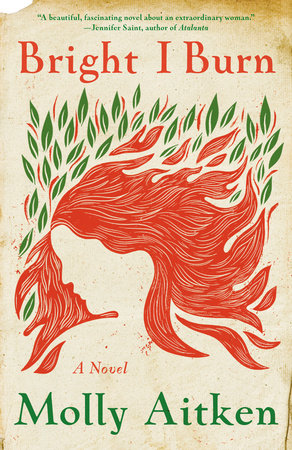
Bright I Burn

A Novel

Look inside
Listen to a clip from the audiobook
audio pause button
0:00
0:00
A fierce, electrifying novel inspired by the true story of the first woman to be condemned as a witch in Ireland

In thirteenth-century Ireland, a woman with power is a woman to be feared.

Alice, the daughter of a wealthy innkeeper in Kilkenny, grows up watching her mother wither under the constraints of family responsibilities—and she vows that she will never suffer the same fate. In time, she discovers she has a flair for making money, and takes her father's flourishing business to new heights. But as her riches and stature grow, so too do rumors about her private life. By the time she marries her fourth husband—the three earlier are dead—a storm of local gossip and resentment culminates in a life-threatening accusation . . . 

A breathtaking act of imagination, Bright I Burn gives voice to a woman lost to history, who dared to carve a space of her own in a man’s world.
= Whispers =

“She’s dead.”

“Dead?”

“The Kyteler woman.”

“On the riverbank.”

“At the end of their garden.”

“As if asleep.”

“Killed, wasn’t she?”

“That’s what I heard.”

“Just the daughter left now.”

“The father, a usurer. The daughter, his muse.”

= January 1279 =

A girl comes of age clasped in the jaws of the beast. She must learn to tame it. To stroke its silken fur. To sing it lullabies. To feed it raw meat, and somehow still look beautiful slinking away, whenever it gets too close.

My mother was just fourteen when she married my father. On their wedding day, her purse was empty except for a handful of flame berries plucked from a rowan tree. Her protection against death. She brought with her a rough wooden chest filled with bags of seeds, sprouting bulbs and vials of cures. My grandmother had taught her that the blood moon rising foretells many regrets by sunrise and that a brew of yew needles will slow a heart. None of this my father knew, nor did he care to. She was a woman, his wife. Her purpose was children. Her purpose was me, except she ought to have birthed more than just me, but when I was nine years old I had no brothers and no sisters, and I heard Alma, my mother’s servant, tell the cook that the mistress no longer bled. Even then, I knew what that meant. She had lost her value. Even then, I feared for her.

My mother was always quiet. When she did speak, her words described the taste of rain or the shrill call of the blackbird. If I got near her, she smelt of damp green earth, but mostly she was at a distance, digging weeds in the garden or standing beside the deep black waters of the River Nore. It was there, the evening after I met my lynx, that she was strangled.

g

She is dead seven years now, and not once since then have I met my wildcat again.

These days when I snatch a morning away from the warmth and labour of my father’s workroom, I go in search of memories of her or better yet my wildcat, who I sense swallowed some part of my mother on her death and now roams the forest in search of the daughter she has lost.

It’s just after sunrise, the sky still pink. I drag my feet through the snow. Sheep scatter ahead, bleating with fright. I ought to hurry before Father sends someone to search for me. Still, I turn back just once to catch a glimpse of a furred head peeking from behind a bush, or the dimples of paw prints in the snow, but all I see are the trees, quiet and cold and distant.

I step onto the slush-­churned road. Ahead, the city walls rise grey and damp from the snow, only relieved by the open gate. Kilkenny has nine, which allow for brief escapes by daylight before curfew hits and we must be home, apparently safe in our own beds. There have been no raids by the Gaels, who are after us settlers since before I was born, but no matter. Each night we are locked in.

As I enter Kilkenny I make my back rigid, firm my jaw and fix my gaze straight ahead. Like the city, I must armour myself, not against the blades of enemies, but instead as protection from the whispers of the watchers. I am sixteen years alone in this skin, and with each season, their hunger for me increases.

I pass the castle, obnoxiously bulbous and large, seat of the Marshalls to whom we all must pay our unquestioning gratitude for building Kilkenny up from a mere monastic town to the grand place it is now, flame for the moths: the merchants, knights and all those seeking gold and wool.

This is Kilkenny. Every morning, our guard dog is beaten awake. Every afternoon, I watch the fish seller drag his cart of silver bodies: mackerel two pennies, salmon twelve pennies, a shark your soul.

Standing outside the cloth merchant’s guild, my father’s friends are wrapped in furs. To avoid their attention, I look up at the roofs which here, unlike most of the city, are too far apart for a cat to jump between. All the merchants pretend gentle godliness, but each of them, in their way, has grasped for my flesh, and I have escaped them all with a smile, a compliment to his clothes, or a vicious remark, depending on what I judge to be his particular frailty. Before they can stop me with their lisping compliments about the colour of my cheeks in the snow, I turn into an alley, where the air is dense with the smell of rotting fish. I hurry down it, stepping into the clearer air of the wider street below. I pass the main door of my family’s establishment, Kyteler’s Inn. Travellers from all over the world pass through our rooms. Any one of them might be convinced to take me away to live in a land where the air tastes of citrus and raisins, but Father has refused them all. I shake off the impossible and head towards the side entrance, which is accessed by crossing a shitbrook. The garden door appears shut, but I left it unbolted when I slipped out before sunrise. The planks over the ditch have rotted over winter and groan beneath my tread. I glance into the piss runnel, assessing the fall, and see a mass of fur half-­covered with snow. I kneel and search for a movement, even slight. There are four, no five, kittens. The mother’s eyes are grey, glazed.

“Alice Kyteler.” A bright, violent voice shatters the ice air.

The space above me has shifted to make room for something new. Slowly, I stand. A monk wearing a grey woollen tunic lounges in the arch of the wall, the door to the garden hanging open behind him. He has the strange wild look of a sleepwalker, and like all those who inhabit the dreaming, I sense I ought not to startle him.

“You don’t look like a killer,” he says.

He means the cats.

“Well, you don’t know me,” I say and stare.

His relaxed stance tells me he knows he’s pleasing to look at. I suspect he’s three or four years older than I. His skin is uncommonly clear, no pockmarks embedded on his cheeks; nor do any hunger lines frame his mouth. He has the face of a rich man. I know him from somewhere. I just can’t yet place him. But I know his type. I have dealt with men who worship at the altars of themselves all my life, and like most of them he wants me to gaze at him with adoration, and so I stare now at the dead cats. Soon, a dog will rip out their eyes and tongues and the bright squishy innards beneath their soft fur.

“I was just speaking with your father about you,” the man dressed as a monk says.

Half the unwed men in Ireland have come on their knees to my father, begging for my hand as if I were Heaven and Father the priest who can be bribed for salvation.

“I always knew I was capable of turning a holy man to Satan.”

“What vanity,” he says. “Your father mentioned you. Not I. You assume I would lower myself to your kind.”

We lenders are always hated, but still. I cannot help but glare, and, of course, he laughs.

“As if I would marry into your family,” I say. “Oh, yes. I know who you are.”

“A man of God.”

I point at his shoes which are sewn with delicate embroidery. No monk would ever own such a pair. His smirk broadens, and I hate that I can’t seem to pull my gaze away, and this is when the faces of his family appear in my mind’s eye.

“Le Poer’s your name,” I say.

“Caught.”

He is John, the son of a baron who is landed in Waterford.

“I don’t care which one you are,” I say. “A criminal or a baron. You’re all the same. Murderers and thieves, the lot of you.”

Now, I am smirking.

I expect his face to turn red with fury, but he just rubs his forehead, and suddenly I see the child in him, the boy attempting to convince his father of his quick intellect and strength to hold his title.

“You want to know why I’m dressed as a monk,” he says.

“Not really,” I say. “Now, move, so I can go into the garden and no longer have to look at you.”

He beams. His teeth are uncommonly clean. “Did you never wish to know what it is to be ordinary, unseen?”

“No, and I certainly never will.”

I step forward to force him to stride back or sidle around me, but he does neither, and so we’re both standing, face to face, inside the narrow doorway. He rests his hand on the wall just above my head. His breath is warm and smells of beer and cloves, and I am almost tempted to take his hand, run now to the church and never return to my father’s side. But I don’t move. He is the one who reaches inside his tunic and pulls out a small, dark cake. Before I can refuse, he presses it into my hand.

“Bite,” he says, and I do.

It’s gritty and sweet and cloying. His lips soften into a smile, his mouth almost vulnerable, and I think I could press the tip of my knife against his ribs and he would let me slide it between his bones.

“One day,” he says, stepping out of the doorway. “Alice Kyteler.”

I cannot help myself. I watch him kneeling on the planks, his hand lost inside the pile of dead fur. I watch him pull out a flame-­coloured, mewing kitten. I watch him as he strides towards the river, whistling, one hand holding the kitten against his chest.
"Gripping." The New Yorker

“An imaginative, very stylishly written, and entertaining book." —Irish Times

“Blistering. . . . Beguiling. . . . A fiercely intelligent and often surprising examination of a woman’s choices and their consequences.” Publishers Weekly

“Molly Aitken gives a powerful voice to Alice Kyteler, weaving a haunting and lyrical story from the strands of history. This was a beautiful, fascinating novel about an extraordinary woman that will linger in readers’ memories for a long time after they finish it.” —Jennifer Saint, author of Atalanta

“Aitken’s vivid prose cuts with an edge as sharp as Alice herself.” Booklist

“An astonishing second novel after her brilliant debut, Molly Aitken takes Alice Kyteler—the first woman condemned as a witch in Ireland—and breathes life into a woman as gentle as a candle’s flame, and as destructive as an inferno. Lyrical and wildly imaginative, readers will love and fear Alice in equal measure and remember her story long after they’ve finished the last page.” —Megan Barnard, author of Jezebel

"An incredible medieval life rendered in incandescent flashes." Kirkus Reviews

“Complex and heartbreaking. . . . Quick-moving yet immersive. . . . The author’s prowess in character building helps bring Alice’s story to life.” BookPage

“This is lustrous elemental writing, full of rich earth, smouldering flames and roiling waters—which left me gasping for air. It consumed me like a fire.” —Katie Hale, author of The Edge of Solitude

“Exciting and triumphant . . . There’s poetry here, in this lyrical, deeply human, fiercely feminist story. A book that burns brighter than even its title suggests.” —Nydia Hetherington, author of A Girl Made of Air

“Aitken’s beguiling lyricism reminds us of the deeper truths that linger in the shadows of the riverbank, at the edge of the woods.” —Karen Powell, author of Fifteen Wild Decembers

“Bright, bold and riotous . . . The prose is distinct and memorable from an author who is unafraid to breathe life and humanity into history and legend.” —Sophie Parkes, author of Out of Human Sight

“A story of power and destruction, that surprised me at every turn . . . We need narratives like these, which bring the past to life in new ways and challenge us to think differently about women and their influence.” —India Rakusen, producer

“Extraordinary . . . Some of the best prose I’ve read.” —Elaine Feeney, author of How to Build a Boat

“A gorgeous, blazing novel, that makes history crackle to life. Fans of Maggie O’Farrell’s Hamnet or A.K. Blakemore’s The Manningtree Witches will love Aitken’s complex, sensual anti-heroine.” —Clare Pollard, author of Delphi

“A lushly fevered tale of marriage, murder and moneylending . . . Haunting and powerful.” —Jane Healey, author of The Beantown Girls

“An incandescent story, ablaze with the passion and determination of a woman centuries ahead of her time.” —Polly Crosby, author of The Book of Hidden Wonders

“Spellbinding . . . A stunning rendition of one fierce Irish woman’s voice pitted against the patriarchal power constructs of Medieval Ireland.” —Anya Bergman, author of The Witches of Vardø

“Aitken is a distinct, singular, stunning voice in historical fiction, and Bright I Burn is a triumph. It took my breath away.” —Jenny Mustard, author of Okay Days

“I was captivated. Every sentence reads like poetry. A stunning, magical, beguiling book.” —Huma Qureshi, author of Playing Games

“Beautifully told, full of passion and fire, Aitken evokes a vivid sense of time and place through her powerful depiction of a woman determined to maintain her position in a society driven by men. Stunning.” —Jenny Quintana, author of Missing Girl

“Darkly atmospheric, this beautiful novel transported me straight to Medieval Ireland.” —Haleh Agar, author of Out of Touch

“Gripping, poetic, a glorious story of a remarkable woman’s passion and her revenge.” —Louisa Reid, author of The Poet
© Christy Ku
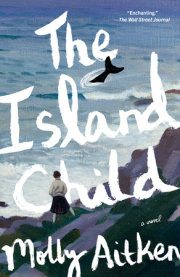
MOLLY AITKEN grew up on the south coast of Ireland. Her first novel, The Island Child, was longlisted for the Authors’ Club First Novel Award. Her short fiction has appeared in Ploughshares, for which she won the Alice Hoffman Prize for Fiction, and has been dramatized for BBC Radio 4. She is currently studying for a PhD in Creative Writing and History at Sheffield Hallam University. View titles by Molly Aitken

About

A fierce, electrifying novel inspired by the true story of the first woman to be condemned as a witch in Ireland

In thirteenth-century Ireland, a woman with power is a woman to be feared.

Alice, the daughter of a wealthy innkeeper in Kilkenny, grows up watching her mother wither under the constraints of family responsibilities—and she vows that she will never suffer the same fate. In time, she discovers she has a flair for making money, and takes her father's flourishing business to new heights. But as her riches and stature grow, so too do rumors about her private life. By the time she marries her fourth husband—the three earlier are dead—a storm of local gossip and resentment culminates in a life-threatening accusation . . . 

A breathtaking act of imagination, Bright I Burn gives voice to a woman lost to history, who dared to carve a space of her own in a man’s world.

Excerpt

= Whispers =

“She’s dead.”

“Dead?”

“The Kyteler woman.”

“On the riverbank.”

“At the end of their garden.”

“As if asleep.”

“Killed, wasn’t she?”

“That’s what I heard.”

“Just the daughter left now.”

“The father, a usurer. The daughter, his muse.”

= January 1279 =

A girl comes of age clasped in the jaws of the beast. She must learn to tame it. To stroke its silken fur. To sing it lullabies. To feed it raw meat, and somehow still look beautiful slinking away, whenever it gets too close.

My mother was just fourteen when she married my father. On their wedding day, her purse was empty except for a handful of flame berries plucked from a rowan tree. Her protection against death. She brought with her a rough wooden chest filled with bags of seeds, sprouting bulbs and vials of cures. My grandmother had taught her that the blood moon rising foretells many regrets by sunrise and that a brew of yew needles will slow a heart. None of this my father knew, nor did he care to. She was a woman, his wife. Her purpose was children. Her purpose was me, except she ought to have birthed more than just me, but when I was nine years old I had no brothers and no sisters, and I heard Alma, my mother’s servant, tell the cook that the mistress no longer bled. Even then, I knew what that meant. She had lost her value. Even then, I feared for her.

My mother was always quiet. When she did speak, her words described the taste of rain or the shrill call of the blackbird. If I got near her, she smelt of damp green earth, but mostly she was at a distance, digging weeds in the garden or standing beside the deep black waters of the River Nore. It was there, the evening after I met my lynx, that she was strangled.

g

She is dead seven years now, and not once since then have I met my wildcat again.

These days when I snatch a morning away from the warmth and labour of my father’s workroom, I go in search of memories of her or better yet my wildcat, who I sense swallowed some part of my mother on her death and now roams the forest in search of the daughter she has lost.

It’s just after sunrise, the sky still pink. I drag my feet through the snow. Sheep scatter ahead, bleating with fright. I ought to hurry before Father sends someone to search for me. Still, I turn back just once to catch a glimpse of a furred head peeking from behind a bush, or the dimples of paw prints in the snow, but all I see are the trees, quiet and cold and distant.

I step onto the slush-­churned road. Ahead, the city walls rise grey and damp from the snow, only relieved by the open gate. Kilkenny has nine, which allow for brief escapes by daylight before curfew hits and we must be home, apparently safe in our own beds. There have been no raids by the Gaels, who are after us settlers since before I was born, but no matter. Each night we are locked in.

As I enter Kilkenny I make my back rigid, firm my jaw and fix my gaze straight ahead. Like the city, I must armour myself, not against the blades of enemies, but instead as protection from the whispers of the watchers. I am sixteen years alone in this skin, and with each season, their hunger for me increases.

I pass the castle, obnoxiously bulbous and large, seat of the Marshalls to whom we all must pay our unquestioning gratitude for building Kilkenny up from a mere monastic town to the grand place it is now, flame for the moths: the merchants, knights and all those seeking gold and wool.

This is Kilkenny. Every morning, our guard dog is beaten awake. Every afternoon, I watch the fish seller drag his cart of silver bodies: mackerel two pennies, salmon twelve pennies, a shark your soul.

Standing outside the cloth merchant’s guild, my father’s friends are wrapped in furs. To avoid their attention, I look up at the roofs which here, unlike most of the city, are too far apart for a cat to jump between. All the merchants pretend gentle godliness, but each of them, in their way, has grasped for my flesh, and I have escaped them all with a smile, a compliment to his clothes, or a vicious remark, depending on what I judge to be his particular frailty. Before they can stop me with their lisping compliments about the colour of my cheeks in the snow, I turn into an alley, where the air is dense with the smell of rotting fish. I hurry down it, stepping into the clearer air of the wider street below. I pass the main door of my family’s establishment, Kyteler’s Inn. Travellers from all over the world pass through our rooms. Any one of them might be convinced to take me away to live in a land where the air tastes of citrus and raisins, but Father has refused them all. I shake off the impossible and head towards the side entrance, which is accessed by crossing a shitbrook. The garden door appears shut, but I left it unbolted when I slipped out before sunrise. The planks over the ditch have rotted over winter and groan beneath my tread. I glance into the piss runnel, assessing the fall, and see a mass of fur half-­covered with snow. I kneel and search for a movement, even slight. There are four, no five, kittens. The mother’s eyes are grey, glazed.

“Alice Kyteler.” A bright, violent voice shatters the ice air.

The space above me has shifted to make room for something new. Slowly, I stand. A monk wearing a grey woollen tunic lounges in the arch of the wall, the door to the garden hanging open behind him. He has the strange wild look of a sleepwalker, and like all those who inhabit the dreaming, I sense I ought not to startle him.

“You don’t look like a killer,” he says.

He means the cats.

“Well, you don’t know me,” I say and stare.

His relaxed stance tells me he knows he’s pleasing to look at. I suspect he’s three or four years older than I. His skin is uncommonly clear, no pockmarks embedded on his cheeks; nor do any hunger lines frame his mouth. He has the face of a rich man. I know him from somewhere. I just can’t yet place him. But I know his type. I have dealt with men who worship at the altars of themselves all my life, and like most of them he wants me to gaze at him with adoration, and so I stare now at the dead cats. Soon, a dog will rip out their eyes and tongues and the bright squishy innards beneath their soft fur.

“I was just speaking with your father about you,” the man dressed as a monk says.

Half the unwed men in Ireland have come on their knees to my father, begging for my hand as if I were Heaven and Father the priest who can be bribed for salvation.

“I always knew I was capable of turning a holy man to Satan.”

“What vanity,” he says. “Your father mentioned you. Not I. You assume I would lower myself to your kind.”

We lenders are always hated, but still. I cannot help but glare, and, of course, he laughs.

“As if I would marry into your family,” I say. “Oh, yes. I know who you are.”

“A man of God.”

I point at his shoes which are sewn with delicate embroidery. No monk would ever own such a pair. His smirk broadens, and I hate that I can’t seem to pull my gaze away, and this is when the faces of his family appear in my mind’s eye.

“Le Poer’s your name,” I say.

“Caught.”

He is John, the son of a baron who is landed in Waterford.

“I don’t care which one you are,” I say. “A criminal or a baron. You’re all the same. Murderers and thieves, the lot of you.”

Now, I am smirking.

I expect his face to turn red with fury, but he just rubs his forehead, and suddenly I see the child in him, the boy attempting to convince his father of his quick intellect and strength to hold his title.

“You want to know why I’m dressed as a monk,” he says.

“Not really,” I say. “Now, move, so I can go into the garden and no longer have to look at you.”

He beams. His teeth are uncommonly clean. “Did you never wish to know what it is to be ordinary, unseen?”

“No, and I certainly never will.”

I step forward to force him to stride back or sidle around me, but he does neither, and so we’re both standing, face to face, inside the narrow doorway. He rests his hand on the wall just above my head. His breath is warm and smells of beer and cloves, and I am almost tempted to take his hand, run now to the church and never return to my father’s side. But I don’t move. He is the one who reaches inside his tunic and pulls out a small, dark cake. Before I can refuse, he presses it into my hand.

“Bite,” he says, and I do.

It’s gritty and sweet and cloying. His lips soften into a smile, his mouth almost vulnerable, and I think I could press the tip of my knife against his ribs and he would let me slide it between his bones.

“One day,” he says, stepping out of the doorway. “Alice Kyteler.”

I cannot help myself. I watch him kneeling on the planks, his hand lost inside the pile of dead fur. I watch him pull out a flame-­coloured, mewing kitten. I watch him as he strides towards the river, whistling, one hand holding the kitten against his chest.

Reviews

"Gripping." The New Yorker

“An imaginative, very stylishly written, and entertaining book." —Irish Times

“Blistering. . . . Beguiling. . . . A fiercely intelligent and often surprising examination of a woman’s choices and their consequences.” Publishers Weekly

“Molly Aitken gives a powerful voice to Alice Kyteler, weaving a haunting and lyrical story from the strands of history. This was a beautiful, fascinating novel about an extraordinary woman that will linger in readers’ memories for a long time after they finish it.” —Jennifer Saint, author of Atalanta

“Aitken’s vivid prose cuts with an edge as sharp as Alice herself.” Booklist

“An astonishing second novel after her brilliant debut, Molly Aitken takes Alice Kyteler—the first woman condemned as a witch in Ireland—and breathes life into a woman as gentle as a candle’s flame, and as destructive as an inferno. Lyrical and wildly imaginative, readers will love and fear Alice in equal measure and remember her story long after they’ve finished the last page.” —Megan Barnard, author of Jezebel

"An incredible medieval life rendered in incandescent flashes." Kirkus Reviews

“Complex and heartbreaking. . . . Quick-moving yet immersive. . . . The author’s prowess in character building helps bring Alice’s story to life.” BookPage

“This is lustrous elemental writing, full of rich earth, smouldering flames and roiling waters—which left me gasping for air. It consumed me like a fire.” —Katie Hale, author of The Edge of Solitude

“Exciting and triumphant . . . There’s poetry here, in this lyrical, deeply human, fiercely feminist story. A book that burns brighter than even its title suggests.” —Nydia Hetherington, author of A Girl Made of Air

“Aitken’s beguiling lyricism reminds us of the deeper truths that linger in the shadows of the riverbank, at the edge of the woods.” —Karen Powell, author of Fifteen Wild Decembers

“Bright, bold and riotous . . . The prose is distinct and memorable from an author who is unafraid to breathe life and humanity into history and legend.” —Sophie Parkes, author of Out of Human Sight

“A story of power and destruction, that surprised me at every turn . . . We need narratives like these, which bring the past to life in new ways and challenge us to think differently about women and their influence.” —India Rakusen, producer

“Extraordinary . . . Some of the best prose I’ve read.” —Elaine Feeney, author of How to Build a Boat

“A gorgeous, blazing novel, that makes history crackle to life. Fans of Maggie O’Farrell’s Hamnet or A.K. Blakemore’s The Manningtree Witches will love Aitken’s complex, sensual anti-heroine.” —Clare Pollard, author of Delphi

“A lushly fevered tale of marriage, murder and moneylending . . . Haunting and powerful.” —Jane Healey, author of The Beantown Girls

“An incandescent story, ablaze with the passion and determination of a woman centuries ahead of her time.” —Polly Crosby, author of The Book of Hidden Wonders

“Spellbinding . . . A stunning rendition of one fierce Irish woman’s voice pitted against the patriarchal power constructs of Medieval Ireland.” —Anya Bergman, author of The Witches of Vardø

“Aitken is a distinct, singular, stunning voice in historical fiction, and Bright I Burn is a triumph. It took my breath away.” —Jenny Mustard, author of Okay Days

“I was captivated. Every sentence reads like poetry. A stunning, magical, beguiling book.” —Huma Qureshi, author of Playing Games

“Beautifully told, full of passion and fire, Aitken evokes a vivid sense of time and place through her powerful depiction of a woman determined to maintain her position in a society driven by men. Stunning.” —Jenny Quintana, author of Missing Girl

“Darkly atmospheric, this beautiful novel transported me straight to Medieval Ireland.” —Haleh Agar, author of Out of Touch

“Gripping, poetic, a glorious story of a remarkable woman’s passion and her revenge.” —Louisa Reid, author of The Poet

Author

© Christy Ku
MOLLY AITKEN grew up on the south coast of Ireland. Her first novel, The Island Child, was longlisted for the Authors’ Club First Novel Award. Her short fiction has appeared in Ploughshares, for which she won the Alice Hoffman Prize for Fiction, and has been dramatized for BBC Radio 4. She is currently studying for a PhD in Creative Writing and History at Sheffield Hallam University. View titles by Molly Aitken
  • More Websites from
    Penguin Random House
  • Common Reads
  • Library Marketing