There were fires in the gorge outside of Portland and there were fires in the hills in LA. From the plane as we departed PDX I had seen the river of smoke flowing above the actual river and now, as we made our initial approach to LAX, I saw a slightly different version of the same thing over again: whole hills were missing, or their topmost reaches peeked out like islands from this other smoke. The flight attendant, a narrow-featured man with a soul patch, noticed my noticing this.
He said, “It’s not as bad as it looks.” A breath. “Or it is but it isn’t, I mean it feels normal at this point, doesn’t it?”
I nodded.
“Still better than lockdown,” he continued.
“Yes,” I said. “My business was closed nearly a year.”
“Were you shooting a movie?”
“I own a bar. A restaurant, really. A bar and restaurant.”
“In LA?”
“In Portland.”
“Oh.”
He asked if I wanted another drink before we landed. I said no.
Thank you, but no.
I was trying this new thing where I only drank in moderation. I know what that must sound like, and I admit that this wasn’t the first time that I was trying it, but hear me out. I wasn’t one of those people who couldn’t walk past a bar without ducking inside, or who counted down the minutes until the liquor store opened. I was never a morning or a maintenance drunk. I was capable of keeping bottles in the house, and sometimes when people offered me drinks I said no, No, thank you, not tonight. Saying no was simple, at least to the first round. My problem was—or rather, it had been—that once I said yes I wanted yes to last forever. Once I started, I didn’t stop.
So I quit cold turkey. A few fits and starts there: one step forward, two back, you know how it goes. Two back, or three or four. Whatever. Then I tried AA, which went better, seemed to be working, but lockdown put an end to the meetings, and the Zoom version didn’t do it for me, so there were a couple of bigger slips. Then I went rogue. I started watching cognitive-behavioral therapy videos on YouTube, treacly self-help and smug “one weird trick”–type life hacks promoted by self-licensed life coaches. But you know what? It worked. I hated it, but it worked. Maybe it worked because I hated it. Night after night I let myself in to my locked-down bar and sat there and streamed videos and built willpower, discipline, self-awareness, self-control. Control, control, I would repeat to myself, sometimes aloud and sometimes just in my head, as a little grounding mantra, almost a prayer. I taught myself—or the internet taught me—to catch the bad thought before it hatches, patch the egg back up. Bad birds stay unborn.
Now I can have a glass of wine with dinner, two beers at a ball game—not that I go to ball games, but if I did. I can even have liquor if I want, though I usually don’t, though for whatever reason, I did today. I’d ordered a Woodford when I took my seat, and when the flight attendant came by an hour later to ask if I wanted another, I’d said yes without thinking, and he poured it before I could retract what I’d said. I suppose I could have let it sit untouched. I had that power now. Instead I drank it slowly and reminded myself that two was my self-imposed daily limit and that I would be fine as long as I refused a third drink. As you’ve seen for yourself, this is exactly what I did.
A lot of bad nights began with bourbon, but all the worst ones ended with gin. Something about the juniper, I suppose, or maybe it’s the quinine in the tonic. (I’m kidding; there was no tonic.) I’d be out on the town, or at home, enjoying some run-of-the-mill debauchery, and I’d get this kind of psychic prickle, like the first twinge of a hard-on crossed with the feeling of walking alone at night and knowing you’re being watched. The feeling would plant its flag in me. Palm sweat and salivation. I’d wake up in a strange bed or a wrecked car. (Strange cars and wrecked beds were not unheard of, either.) One time I came to on a small yacht full of workers from the main office of the network that used to broadcast the TV show I had used to star on: secretaries, assistants, payroll, a couple of janitors. Why did they invite me to the company picnic? I wondered. And why did I accept? They explained to me, delicately, that I had chartered and provisioned this ship and invited all of them aboard.
Gin is my final boss, the Big Bad of a game I’ve almost beaten. Oblivion tastes like cucumbers. But all that was a long, long time ago. As ancient as my so-called fame.
The flight attendant returned with my would-be third bottle of Woodford and a fresh plastic cup full of ice. “I know you said no,” he said, “but then I thought—this is David freaking Crader! How am I not gonna hook him up?”
I understood that he thought he was impressing me; he may have believed he was being kind. There was murder in his heart, though he did not know it. He wanted a story to tell his friends later, or perhaps he hoped to embed himself in a memory of mine, small and gleaming like a sliver of glass. I asked him not to pour it. I said thank you but no, I’m really serious, I can’t. Abruptly, he got it; apologized. I said I appreciated the gesture all the same. He asked if he could take a selfie with me, and I said sure.
“I’d be there,” he said, seeming to mean the fan convention where I was headed, “if I didn’t have this shift.” He was kneeling in the aisle now, scrunching his shoulder into mine. I could smell his Old Spice, beads of forehead sweat, and I knew that he would have liked to throw an arm around me but wasn’t sure if he should. If I had accepted the drink he would have done it, but he didn’t want to risk a second offense before he got his pic.
“When does your day end?” I asked.
“Eleven tonight,” he said. “In Dallas.”
The pilot called for seat belts.
“Better hurry,” I said. “We don’t want to get in trouble.” He snapped the picture.
“It’s an honor,” he said. “I grew up on you.” Then he hurried off to finish the preparations for landing, and I noticed that he’d left the Woodford on my tray. I pocketed it. You will still be unopened tomorrow, I told the little bottle. I am the man I think I am, and I know how to mean what I say.
This was my first time flying in a while. I’d taken this gig less for the money (though I wanted the money) than for the excuse to get on a plane. I’d weathered quarantine largely alone and entirely sober, aforementioned slips notwithstanding. During lockdown I sometimes had strange, immersive dreams that felt more real than reality while I was in them and were difficult to shake upon waking, perhaps since the actual locked-down day was something of a strange dream itself. The idea for a Rev Beach reboot had come to me in one of these.
In the dream, me and Corey Burch were standing on a beach; there were all these flashbulbs firing off, but I couldn’t see any cameras. As near as I could tell we were entirely alone, the lone and level sands stretching out in both directions and the resort hotels looking oddly desolate, unoccupied but more than that, sort of—deflated? Defeated. Used-up, somehow, like in Stephen King’s The Langoliers. Do you remember this one? I’ve never read the book, but I’ve seen the miniseries that Tom Holland made for ABC in the mid-nineties with Dean Stockwell and Bronson Pinchot. It’s the one where the LAX to BOS red-eye flies through a rip in the fabric of time so when the plane lands in Boston they’re stuck in yesterday, where everything tastes stale, matches don’t strike, colors are faded, and so on. A used-up world awaiting consignment to oblivion, a place no living thing belongs. That’s where me and Corey were, in the dream, in a used-up place where the only sign of life was these disembodied flashbulb flashes bursting in the storm-warning sky. I couldn’t tell which coast we were on, East or West, i.e., Florida or California, and if it was—as I suspected—Florida, whether we were on the East or West coast of that epic accursed peninsula. There was no sun in the sky with which to orient us. All I knew was that I stood with my back to the water and Corey stood with his back to the resorts. We were talking to each other, but I couldn’t understand what we were saying. It was like the Parseltongue parts of the Harry Potter movies except without the subtitles. It sounded a little like Hebrew, but I don’t know Hebrew any more than I know Harry Potter snake language, so whatever intelligence we were sharing remained wholly unintelligible to me. To him, too, perhaps, though that made no sense insofar as “he” was only an element of my dream, which was precisely what I was having a hard time keeping in mind. So I listened to him, and I listened to myself, and I couldn’t parse a word that passed between us. And the ghost bulbs kept flashing, and then I woke up.
I woke up wanting, for the first time in a very long time, to talk to Corey. To see his face. Instead of trying to track down his contact info, I texted Grace Travis, our old costar and my first ex-wife, to tell her that we should reboot Rev Beach for the upcoming twentieth anniversary of its premiere. She did not answer me. I made coffee, shook the dream, white-knuckled through the rest of lockdown alone save for CBT YouTube, CBD soda, and scheduled visits with my son.
There had been a time when I was a frequent flier. For the first season of Rev Beach, we faked Florida. But the breakout second and disastrous (unfinished) third seasons were shot on location in and around a gulf town south of Tampa called Guiding Star. There was plenty of back-and-forth in those days between TPA and LAX or JFK. Talk shows, fashion shoots. Just going to go. To get out, to get seen. Back to Portland for Christmas, maybe. Vegas for a weekend. Sundance, Cannes. Flying became second nature, and flying first class of course made it much easier to get settled, tune out, run lines, nod off. Whatever. I know I say that a lot: whatever. It’s a tic but also honest, which is why I won’t let my ghostwriter edit it out.
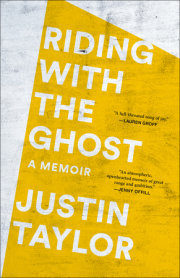
That’s a joke about celebrity memoirs, if you were wondering. But it’s also true.
My point is only this: for a long time whatever was the way it was.
These days I rarely have reason to fly, and it’s not nearly as much fun when you’re paying your own way. My medallion status is long since lapsed. But there is still something special about flying, the mystic terror of takeoff, how the city pixelates and grids itself as you pull away from earth, and then the glorious disappearing into banks of cloud. In the old days the flight was just the long delay between me and wherever I was headed, whatever I thought I had coming when I arrived. These days I find pleasure in the experience itself, all the little rituals and subroutines of the security line and the coffee kiosk and the meal service, of scrolling through the seatback screen for the perfect movie to not quite pay attention to, or digging around in your bag for the book or magazine you brought from home or perhaps bought at the newsstand just before or after the coffee, the gambler’s thrill of thumbing to the first page and hoping that your former self’s decision will satisfy the present self who is stuck with what seemed like a safe bet against boredom when you chose it yesterday or this morning.
I love to switch my phone into airplane mode. I never buy Wi-Fi. It’s a wonderful feeling, and vanishingly rare, to be utterly unreachable for a set stretch of hours, not that anyone needs anything from me so badly, but it’s nice to know that they wouldn’t get it even if they did. It’s nice too to gift yourself a brief hiatus from all the scrolling, clicking, and skimming that defines our distracted days.
A world of muffled noise and muted color, personal space that speaks in inches, bland food served cool. It’s an apt time for reflection. Retrospection, I guess you’d say. On a long enough flight you could screen the whole movie of your life, director’s cut and all the bonus features. But the Portland–LA flight was barely two hours, and I wasn’t looking to root around in the archives of my memory palace. I was mulling and brooding, yes, but not over ancient history. It was the events of the previous day that demanded my attention, that refused to let themselves be Langoliered. I reclined my seat, set my gaze window-ward, pressed the play button in my mind.
The polar bear moped in his luxe enclosure. There was a white concrete hill to remind him of ice floes, a blue pool for diving, toys strewn about the ample grounds. The polar bear ignored all this. He lazed in his patch of shade, to the deep chagrin of my six-year-old son.
This was yesterday, visitation day, mine and his. The fires had started that morning but still seemed modest, containable. That’s what the city had said, was saying, which was why we’d decided to go ahead with our planned trip to the zoo.
“What’s he waiting for?” Henry asked.
There was a strained quality in his voice that I prayed wasn’t a prelude to tears. Look at the bright side, I thought. Nobody’s wearing a mask. They say the fires are under control. The sky is normal. Normality is making a comeback. You are a father making good use of his visitation. You are making memories and spending quality time.
To my son I said, “It’s the middle of the afternoon, Hank, he’s probably tired. Animals rest to save energy for when they need to hunt.” Hank was a nickname only I was allowed to use. It was a special thing we had, maybe the only one. Give it time, I thought. He’s young yet. To my son I said, “Give it time.”
“Doesn’t he know we’re here?” he said. “We paid to see him. Our tickets were eighteen dollars each.”
Copyright © 2024 by Justin Taylor. All rights reserved. No part of this excerpt may be reproduced or reprinted without permission in writing from the publisher.