Download high-resolution image
Listen to a clip from the audiobook
audio pause button
0:00
0:00

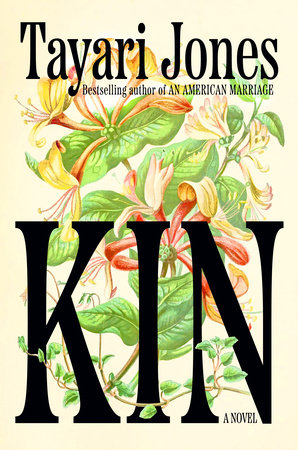
Kin: Oprah's Book Club

A Novel

Author Tayari Jones On Tour
Listen to a clip from the audiobook
audio pause button
0:00
0:00
Ebook (EPUB)
On sale Feb 24, 2026 | 368 Pages | 9780525659198
Grades 9-12 + AP/IB

See Additional Formats
OPRAH'S BOOK CLUB PICK • NEW YORK TIMES BESTSELLER •
A magnificent new novel from the bestselling, award-winning author of An American Marriage—Tayari Jones has written an unforgettable novel that sparkles with wit and intelligence and deep feeling about two lifelong friends whose worlds converge after many years apart in the face of a devastating tragedy.

“Tayari Jones’s storytelling washed over me like a trip back home. . . . Kin is a masterpiece of a novel that will live with you long after you turn the last page.” —Oprah Winfrey


Vernice and Annie, two motherless daughters raised in Honeysuckle, Louisiana, have been best friends and neighbors since earliest childhood but are fated to live starkly different lives. Raised by a fierce aunt determined to give her a stable home in the wake of her mother’s death, Vernice leaves Honeysuckle at eighteen for Spelman College, where she joins a sisterhood of powerfully connected Black women and discovers a world of affluence, manners, aspiration, and inequality. Annie, abandoned by her mother as a child and fixated on the idea of finding her and filling the bottomless hole left by her absence, sets off on a journey that will take her into a world of peril and adversity, as well as love and adventure, culminating in a battle for her life.

A novel about mothers and daughters, friendship and sisterhood, and the complexities of being a woman in the American South, Kin is an exuberant, emotionally rich, unforgettable work from one of the brightest and most irresistible voices in contemporary fiction.
Chapter 1
VERNICE

My first word was “mother,” spoken out loud and with texture. MOTHER. There was a host of witnesses, including Aunt Irene, who called out for God and con­sidered running down the block to fetch the pastor. But before she could even straighten her skirt, she decided that this wasn’t a pot to be stirred by any man’s spoon. It was August, canning season, and the women were gathered to put away snap peas and pole beans. It was Louisiana hot, but even more so, due to the water boiling to purify the mason jars. Aunt Irene, never at home in the kitchen, busied herself plaiting my hair while everyone else hulled and cut up the harvest. The Ward Sisters sang out amid the thick radio static as Aunt Irene added her col­orful soprano to the arrangement. Sitting between her knees, I rested my face on her thigh, still as stone and just as quiet. Sharp against my scalp, a rat-tailed comb created precise parts.

After the death of my parents, I had shown myself to be a peculiar child. No one could say if I was born that way or if I turned that way. I walked early and would do so in my sleep, escaping my crib. I once found my way to the front porch, where I was discovered humming with my face resting on the matted fur of a stray puppy.

At two and a half, I had yet to speak. Folks worried that I was slow. My cradle friend, Annie, was already talking up a storm. She even gave me my nickname, because Vernice had been too many letters for her to hold in her mouth at the same time. “Niecy!” she called, determined to shake loose a response. When shouting didn’t work, she tried kindness, breaking her shortbread cookie in two. I smiled in gratitude, and sometimes offered sloppy baby kisses in return, yet I didn’t say a word.

Annie’s grandmother joked that Aunt Irene should be grate­ful for my silence. Annie never shut up, not even when she was asleep. Shut eyes quivering, she mumbled the name of her own mother, Hattie Lee.

“This baby will talk when she has something to say.” Aunt Irene knew there was quickness in my eyes but feared that see­ing my mama shot dead had shocked the words right out of my mouth. Others worried that I had been taken over. Spirits can be hardheaded and hold grudges—purposely missing their ride to the next place. When this happens, they might just set up house in a defenseless body. Aunt Irene shut that conversation down, dismissing it as “hoodoo”—her catchall word for anything not of this world that didn’t involve our Lord and Savior. That said, even though there could be substance to that hoodoo talk, she knew her dead sister, my mother. When Aunt Irene held my face to hers, she didn’t see Arletha staring back.

Because of this, but not only this, my aunt didn’t indulge any gossip. She knew what it was to be whispered about and couldn’t bear loose tongues lashing an orphan baby. But she was worried for a colored girl who seemed slow, even if she wasn’t, a girl who couldn’t say what had happened to her. I made people nervous, which is probably why no one objected when Aunt Irene ducked out from the canning kitchen and sat on the couch to fix my hair. I had been touched by blood, and not the blood of the lamb.

There I was, this haunted child, not even whimpering as Aunt Irene raked the comb through the thicket at the nape of my neck.

“Mother,” I said, softly at first. As I raised my voice to a bellow, every heart in the house contracted, vulnerable as a scalded tomato gripped in a tiny greedy fist.


Only three women stood in that tight kitchen, but nearly the entire congregation would let the story play on their lips, shar­ing details as vivid as those of any eyewitnesses. Some say their throats closed to hear me call for Arletha, dead by then just over two years. They lost their breaths, the way you choke in your sleep when witches ride your dreams. Annie’s granny said she heard wonder in my voice like I gazed into the eyes of an angel. Aunt Irene said she understood it as a command, her dead sis­ter telling her that I was hers for life. Only Mrs. Ola Mae, the midwife, attended to me. Scooping me into her stout arms, she cooed, “I hear you, baby.” Annie, who had been in the kitchen yapping away, toddled up to Mrs. Ola Mae, arms raised to be held as well. We were both crowded onto her lap. I kept saying my new word over and over, but Annie was quiet for once, suck­ing my thumb as though it were her own.
___

Women in my family have never been particularly fruitful. My grandmother had only the pair of daughters to show for some thirty years of marriage. She never gave Granddaddy a son, though word on the street was that there was a boy down in Bogalusa who shared his middle name and narrow feet. Four years in the marriage bed, and my mother hatched only me, and I hadn’t come gently. (Mrs. Ola Mae told my mother to name me Miracle but instead, she called me Vernice up top, and Irene just after—like all the women in our family.)

Aunt Irene was what the old folks called “barren” but what she called “lucky.” She figured this out when she was just a teen­ager, the summer a revival came to town. Aunt Irene heard that altar call and what was done, was done. When the tent came down and the saints moved on to Jacksonville, Aunt Irene had joined the choir. She also joined the associate pastor in whatever accommodations were available for colored travelers who hap­pened to be servants of the Lord. “Have mercy, he was a pretty man,” she said. “Listen. If you ever get a chance in life, grab you a preacher—but just temporarily. Don’t fool around and end up being somebody’s First Lady.” She laughed at the memory, grin­ning into whatever was on the rocks. “I was wild when I was a girl.”

Eight months later, she returned home slender as a daisy. Granddaddy flogged her like she was a runaway slave, so that the neighbors would be sure to hear her crying and know what was and wasn’t allowed in his house. My mother, just nine, passed on the words whispered by the ladies in the parlor. These were grown women who dared not lift a finger while a skinny girl was beaten like a man.

“They say you must can’t get pregnant, after all the you-know-what you been doing.”

Aunt Irene lay on the narrow bed that would end up being mine. “They just jealous,” she said. “All these heifers got nine-ten kids pulling at their titties.”

“Not Mama. She just got us.”

“So what?” Aunt Irene said. “It’s the worst when you resent your own daughters.”

My mother said, “I’m going to have me a whole bunch of babies.”

Aunt Irene said, “You’re not. But have yourself a lot of fun trying.”


As soon as she was healed enough to sit on a bus for four days running, Aunt Irene left Honeysuckle. She had some money that the reverend had given her and also the cash her mother squir­reled away in a crystal candy dish. She left a note. In those days folks wanted to make things plain, putting it all in writing. She didn’t write “Dear” because what she had to say was addressed to everyone on God’s beautiful earth. You can’t stay where they beat you. I don’t care who they is.


She ended up in Ohio, just over the Mason-Dixon, where she lived for eleven years. No babies, no beatings.
___

“Don’t let nobody sprinkle dirt in your pocketbook.” She shook her head at her folly. “There I was sneaking off in the night and Mama was two steps ahead of me. When I opened up my bag and I felt that grit and saw that crop soil in the corners, all I could do was laugh. But that was because I didn’t have sense enough to believe in bewitchment.”

By the time Aunt Irene entertained me with her stories, I had grown into a normal-seeming little girl, bubbling with wonder. “How come you didn’t put Ohio dirt in your suitcase, so it could pull you back up there?”

She gave a little nod to let me know that I had asked a good question. “First off, I don’t practice none of that hoodoo. I don’t believe in it, and I don’t not believe in it. Second, it’s only home dirt that can pull you back.”


Up in Ohio, as the purple cornflowers and lemon puffs were doing their thing, Aunt Irene had received a letter saying her mama was on her deathbed and wanted to make amends for let­ting her daddy whip her like that. Saying she understood why Irene didn’t come back for his funeral. Services are for the dead anyway. Wouldn’t Irene come on home while her mama was still living? Her mother, who was deeply sorry, was dying of regret as much as diabetes. Sleep with this paper under your pillow for three nights before you say yes or no.


It didn’t take but two nights. Without the protection of any talis­man or charm, Aunt Irene returned to Honeysuckle. No matter who your mama is, or how long she’s been gone, you can’t help but miss her. When you are born, she marks you with her milk, even if you never tasted her breast. That’s not hoodoo, it’s just the way the body and the spirit come together to make you a person.

Despite Aunt Irene’s man already having himself a wife, he kept her content in a yellow-shuttered house. When she told him she needed to go home for one last moment with her mother, he paid her round-trip bus fare and kissed her like he would never see her again.
. . .

Whether it was the letter or the crop dirt that brought her back, it was me that kept her there. Six weeks before she buried her mama, she ended up burying her sister—my mother. I was just six months old, so new that I had lived inside the womb longer than I had been breathing air. I took a bottle at night, but in the morning, Arletha opened her pink-checked duster and fed me from her body. I looked just like her with my thick dark hair and flat nose. “See my sweet baby?” she said to anybody that caught her eye. I remember. This is not an orphan’s fantasy or me mak­ing Aunt Irene’s memories my own. If you have ever experienced motherlove, you can never forget the fragrance of it.

On the day that turned out to be the Day, Aunt Irene pranced around town, enjoying herself in the way a person does when she knows she’s not here to stay. She was a little too dressed up in a seersucker sundress and nylon panties with a bra to match. Yes, her mother was dying, but she was passing softly, her spir­its buoyed because her oldest girl didn’t hate her. By the same token, Aunt Irene was lifted, letting go of the anger holding her down like the sandbags tethering hot air balloons. She had come to understand that despite it all, she had a perfectly fine life. No, she wasn’t a wife, but she wasn’t a whore and there were no out-of-wedlock kids desperate for a last name. A relationship that kept you dressed like a lady, even if maybe you weren’t really one, was worth it for the dignity alone.

I was with my aunt, buttoned into a little romper made of the same pink piped fabric as her cross-back frock. Aunt Irene toted me on her hip over to Mrs. Ola Mae’s place. The midwife liked to love on the babies she ushered into the world. “Look at this little wonder!” I gummed on a sugar tit while Aunt Irene talked about Dayton and her man. His given name was Josiah, but everyone called him Van.

The Day had been lovely. War raged overseas, but those storm clouds were not visible from Honeysuckle, where the afternoon was as peaceful as a field of buttercups. No bad mojo stirred the air. Nothing odd happened in threes. The blind boy who sold pencils in front of the post office didn’t make any eerie pronouncements. But now Aunt Irene thinks that the thing that should have let us know that something was wrong was that nothing was wrong. This was Louisiana in 1941. We were col­ored. Something was always wrong.


That night, Aunt Irene planned to wear a red dress and dip into The Den, letting the men fill her glass. Prideful, prideful. Smok­ing a cigarette with the midwife, she said, “The best part about being an auntie is that you can take the baby back home when it’s time to go cut a rug.” Everyone laughed, and agreed. With a smile lingering on her lips, Aunt Irene climbed the front steps of my mother’s house. Her arm was raised to knock when she smelled the burnt-copper scent of gunpowder.

On the other side of the door, there was my mama, dead as Jesus, and my daddy lay on the carpet, moaning. What kind of idiot can’t even figure out how to kill his own fool self? Aunt Irene swung her leg, driving her shoe into his face as he groaned and wept.


Preparing to lay my mother in the plot she had bought for her own mother, Aunt Irene wrote to her man, asking him to pray for her and telling him that she wouldn’t be returning to Dayton for a month, maybe two. Certainly, there was a family in town willing to take in a motherless infant. When I was clean and dressed up, I was pretty cute. Even my aunt, who didn’t cotton to children, found herself kissing my plump face.

Aunt Irene’s first choice for me would have been Mrs. Ola Mae, who lived by herself with Miss Jemison the schoolteacher. People whispered about the two of them, but Aunt Irene didn’t give that no never mind. She liked Mrs. Ola Mae and her lady friend, too. They’d be excellent mothers. But this is how life works—the women who would be capable mothers too often don’t want kids. And too many of those with children probably should have just sat that one out. Luckily, most were in between. Maybe not baby-crazy, but willing. And while they were not the sorts of matriarchs who would raise up a race of heroes, they could get the job done.

What Irene hadn’t counted on was that the women of Hon­eysuckle wanted to see her tamed. As folks came to the house to pay their respects, no one asked Aunt Irene when she would be heading back to Dayton. Even though they coochie-cooed in my face, nobody even joked about adding this precious little girl to their own families.

The day before my mother’s homegoing, Aunt Irene walked about a mile to the east to visit Annie’s granny. “I don’t have a husband. I don’t have work down here. My situation in Ohio can’t accommodate children.”

Annie’s granny acted like she thought my aunt was seeking advice, rather than relief. She said, “Irene, nobody knows any­thing about raising children. Each one is different and you just have to do the best you can to make sure that Jesus will accept them when they get to heaven. And you can find work. You got two hands, don’t you? I raised every child that Jesus has seen fit to give me. And I will continue. But only the ones the Lord gives.”

Just then, Annie woke up from one of the back rooms and gave a little bleat. Her granny disappeared into the back of the house and returned with Annie hooked on her hip. With one hand, Annie’s granny prepared a glass of sweet tea and a slice of buttered toast that she offered to my aunt on a chipped plate. “Our girls can be friends,” she said.
“Kin is a lush, beautiful novel about the family we make. . . . Jones maintains a light touch and a gift for effortless portraiture. . . . When reading Kin, I wanted nothing more than to keep reading it. That’s the circle Jones creates, the one that connects her voice, her characters and her readers.” —Radhika Jones, The New York Times Book Review

“Propulsive and compelling.” The Boston Globe

“Tayari Jones’s great subject is family loyalty. . . . Kin alternates with metronomic precision between her main characters' first-person narratives. . . . Loyalties and fortitude are repeatedly tested in this immersive drama. Resilience abounds.” The Wall Street Journal

“Jones’s dazzling novel traces the complex range of the Black experience—rich and poor, queer and straight, blessed and cursed—in the Jim Crow South.” People

“One of the many pleasures of Kin is how deftly Jones builds the story within the context of the Jim Crow South in mid-twentieth century America. . . . Another novelist might have made these broad social concerns the focus of the story, but Jones foregrounds her characters and lets them navigate these national tensions as naturally and confidently as they move through the streets of Atlanta and Memphis.” —Ron Charles

“Jones’s emotional directness lends her prose a deep warmth. . . . Kin bucks contemporary expectations by hewing to older ones. In doing so, Jones gives the novel the same sense of inevitable tragedy that animates Edith Wharton’s books.” The Atlantic

“Wise, often side-splittingly funny. . . . [Kin] is a pleasure to read.” The Minnesota Star Tribune


Kin is the kind of all-encompassing reading experience I’m always hoping to find: smart and funny and deftly profound. This is Tayari Jones’s very best work.” —Ann Patchett, author of Tom Lake

“A triumphant return of one of the most important literary voices today. Vibrant, funny, moving and powerful, Kin is an unforgettable read.” —Nguyễn Phan Quế Mai, author of The Mountains Sing

“A riveting and deeply moving portrait of indelible female friendship, found family and finding your way. . . . This gorgeous novel already feels like a future classic.” —Roisin O’Donnell, author of Nesting

“Beautifully written and powerfully compelling. . . . Tayari Jones interrogates social injustice through the lens of personal relationships while exploring the ways in which it shapes those relationships, and she does this in language that is intimate, conversational, and musical all at once.” Kirkus (starred review)

“Jones delivers a triumphant novel of two motherless girls from rural Honeysuckle, Louisiana, who follow very different paths into adulthood. . . . Throughout, Jones tells her protagonists’ stories with grace, humor, and pathos. Kin is a tour de force.” ­Publishers Weekly (starred review)

“Jones deftly coneys the nuances of Southern Black culture in this novel full of depth, pain, and beauty. . . . A tender love song to southern Black families, communities, and female friendships.” Booklist (starred review)

“Tayari Jones once again stuns with a novel full of uninhibited love. . . . Jones develops her protagonists’ personalities slowly and with nuance, subtly evolving them into characters one just can’t help but root for.” BookPage (starred review)

“Ambitious and accessible, emotionally challenging without pushing readers away. . . . Kin shows off Jones’s considerable skill through strong pacing and a plot that is emotionally taut without feeling unnecessarily dramatic. Without fail, Jones delivers a brilliant turn of phrase, at turns witty and insightful.” Shelf Awareness
© Julie Yarborough
TAYARI JONES is the author of four novels, most recently An American Marriage, which was an Oprah’s Book Club selection and also appeared on Barack Obama’s summer reading list and his year-end roundup. It won the Women’s Prize for Fiction, the Aspen Words Literary Prize, and an NAACP Image Award and has been published in two dozen countries. Jones is the C.H. Candler Professor of English and Creative Writing at Emory University and lives in Atlanta. View titles by Tayari Jones

Discussion Guide for Kin: Oprah's Book Club

Provides questions, discussion topics, suggested reading lists, introductions and/or author Q&As, which are intended to enhance reading groups’ experiences.

(Please note: the guide displayed here is the most recently uploaded version; while unlikely, any page citation discrepancies between the guide and book is likely due to pagination differences between a book’s different formats.)

About

OPRAH'S BOOK CLUB PICK • NEW YORK TIMES BESTSELLER •
A magnificent new novel from the bestselling, award-winning author of An American Marriage—Tayari Jones has written an unforgettable novel that sparkles with wit and intelligence and deep feeling about two lifelong friends whose worlds converge after many years apart in the face of a devastating tragedy.

“Tayari Jones’s storytelling washed over me like a trip back home. . . . Kin is a masterpiece of a novel that will live with you long after you turn the last page.” —Oprah Winfrey


Vernice and Annie, two motherless daughters raised in Honeysuckle, Louisiana, have been best friends and neighbors since earliest childhood but are fated to live starkly different lives. Raised by a fierce aunt determined to give her a stable home in the wake of her mother’s death, Vernice leaves Honeysuckle at eighteen for Spelman College, where she joins a sisterhood of powerfully connected Black women and discovers a world of affluence, manners, aspiration, and inequality. Annie, abandoned by her mother as a child and fixated on the idea of finding her and filling the bottomless hole left by her absence, sets off on a journey that will take her into a world of peril and adversity, as well as love and adventure, culminating in a battle for her life.

A novel about mothers and daughters, friendship and sisterhood, and the complexities of being a woman in the American South, Kin is an exuberant, emotionally rich, unforgettable work from one of the brightest and most irresistible voices in contemporary fiction.

Excerpt

Chapter 1
VERNICE

My first word was “mother,” spoken out loud and with texture. MOTHER. There was a host of witnesses, including Aunt Irene, who called out for God and con­sidered running down the block to fetch the pastor. But before she could even straighten her skirt, she decided that this wasn’t a pot to be stirred by any man’s spoon. It was August, canning season, and the women were gathered to put away snap peas and pole beans. It was Louisiana hot, but even more so, due to the water boiling to purify the mason jars. Aunt Irene, never at home in the kitchen, busied herself plaiting my hair while everyone else hulled and cut up the harvest. The Ward Sisters sang out amid the thick radio static as Aunt Irene added her col­orful soprano to the arrangement. Sitting between her knees, I rested my face on her thigh, still as stone and just as quiet. Sharp against my scalp, a rat-tailed comb created precise parts.

After the death of my parents, I had shown myself to be a peculiar child. No one could say if I was born that way or if I turned that way. I walked early and would do so in my sleep, escaping my crib. I once found my way to the front porch, where I was discovered humming with my face resting on the matted fur of a stray puppy.

At two and a half, I had yet to speak. Folks worried that I was slow. My cradle friend, Annie, was already talking up a storm. She even gave me my nickname, because Vernice had been too many letters for her to hold in her mouth at the same time. “Niecy!” she called, determined to shake loose a response. When shouting didn’t work, she tried kindness, breaking her shortbread cookie in two. I smiled in gratitude, and sometimes offered sloppy baby kisses in return, yet I didn’t say a word.

Annie’s grandmother joked that Aunt Irene should be grate­ful for my silence. Annie never shut up, not even when she was asleep. Shut eyes quivering, she mumbled the name of her own mother, Hattie Lee.

“This baby will talk when she has something to say.” Aunt Irene knew there was quickness in my eyes but feared that see­ing my mama shot dead had shocked the words right out of my mouth. Others worried that I had been taken over. Spirits can be hardheaded and hold grudges—purposely missing their ride to the next place. When this happens, they might just set up house in a defenseless body. Aunt Irene shut that conversation down, dismissing it as “hoodoo”—her catchall word for anything not of this world that didn’t involve our Lord and Savior. That said, even though there could be substance to that hoodoo talk, she knew her dead sister, my mother. When Aunt Irene held my face to hers, she didn’t see Arletha staring back.

Because of this, but not only this, my aunt didn’t indulge any gossip. She knew what it was to be whispered about and couldn’t bear loose tongues lashing an orphan baby. But she was worried for a colored girl who seemed slow, even if she wasn’t, a girl who couldn’t say what had happened to her. I made people nervous, which is probably why no one objected when Aunt Irene ducked out from the canning kitchen and sat on the couch to fix my hair. I had been touched by blood, and not the blood of the lamb.

There I was, this haunted child, not even whimpering as Aunt Irene raked the comb through the thicket at the nape of my neck.

“Mother,” I said, softly at first. As I raised my voice to a bellow, every heart in the house contracted, vulnerable as a scalded tomato gripped in a tiny greedy fist.


Only three women stood in that tight kitchen, but nearly the entire congregation would let the story play on their lips, shar­ing details as vivid as those of any eyewitnesses. Some say their throats closed to hear me call for Arletha, dead by then just over two years. They lost their breaths, the way you choke in your sleep when witches ride your dreams. Annie’s granny said she heard wonder in my voice like I gazed into the eyes of an angel. Aunt Irene said she understood it as a command, her dead sis­ter telling her that I was hers for life. Only Mrs. Ola Mae, the midwife, attended to me. Scooping me into her stout arms, she cooed, “I hear you, baby.” Annie, who had been in the kitchen yapping away, toddled up to Mrs. Ola Mae, arms raised to be held as well. We were both crowded onto her lap. I kept saying my new word over and over, but Annie was quiet for once, suck­ing my thumb as though it were her own.
___

Women in my family have never been particularly fruitful. My grandmother had only the pair of daughters to show for some thirty years of marriage. She never gave Granddaddy a son, though word on the street was that there was a boy down in Bogalusa who shared his middle name and narrow feet. Four years in the marriage bed, and my mother hatched only me, and I hadn’t come gently. (Mrs. Ola Mae told my mother to name me Miracle but instead, she called me Vernice up top, and Irene just after—like all the women in our family.)

Aunt Irene was what the old folks called “barren” but what she called “lucky.” She figured this out when she was just a teen­ager, the summer a revival came to town. Aunt Irene heard that altar call and what was done, was done. When the tent came down and the saints moved on to Jacksonville, Aunt Irene had joined the choir. She also joined the associate pastor in whatever accommodations were available for colored travelers who hap­pened to be servants of the Lord. “Have mercy, he was a pretty man,” she said. “Listen. If you ever get a chance in life, grab you a preacher—but just temporarily. Don’t fool around and end up being somebody’s First Lady.” She laughed at the memory, grin­ning into whatever was on the rocks. “I was wild when I was a girl.”

Eight months later, she returned home slender as a daisy. Granddaddy flogged her like she was a runaway slave, so that the neighbors would be sure to hear her crying and know what was and wasn’t allowed in his house. My mother, just nine, passed on the words whispered by the ladies in the parlor. These were grown women who dared not lift a finger while a skinny girl was beaten like a man.

“They say you must can’t get pregnant, after all the you-know-what you been doing.”

Aunt Irene lay on the narrow bed that would end up being mine. “They just jealous,” she said. “All these heifers got nine-ten kids pulling at their titties.”

“Not Mama. She just got us.”

“So what?” Aunt Irene said. “It’s the worst when you resent your own daughters.”

My mother said, “I’m going to have me a whole bunch of babies.”

Aunt Irene said, “You’re not. But have yourself a lot of fun trying.”


As soon as she was healed enough to sit on a bus for four days running, Aunt Irene left Honeysuckle. She had some money that the reverend had given her and also the cash her mother squir­reled away in a crystal candy dish. She left a note. In those days folks wanted to make things plain, putting it all in writing. She didn’t write “Dear” because what she had to say was addressed to everyone on God’s beautiful earth. You can’t stay where they beat you. I don’t care who they is.


She ended up in Ohio, just over the Mason-Dixon, where she lived for eleven years. No babies, no beatings.
___

“Don’t let nobody sprinkle dirt in your pocketbook.” She shook her head at her folly. “There I was sneaking off in the night and Mama was two steps ahead of me. When I opened up my bag and I felt that grit and saw that crop soil in the corners, all I could do was laugh. But that was because I didn’t have sense enough to believe in bewitchment.”

By the time Aunt Irene entertained me with her stories, I had grown into a normal-seeming little girl, bubbling with wonder. “How come you didn’t put Ohio dirt in your suitcase, so it could pull you back up there?”

She gave a little nod to let me know that I had asked a good question. “First off, I don’t practice none of that hoodoo. I don’t believe in it, and I don’t not believe in it. Second, it’s only home dirt that can pull you back.”


Up in Ohio, as the purple cornflowers and lemon puffs were doing their thing, Aunt Irene had received a letter saying her mama was on her deathbed and wanted to make amends for let­ting her daddy whip her like that. Saying she understood why Irene didn’t come back for his funeral. Services are for the dead anyway. Wouldn’t Irene come on home while her mama was still living? Her mother, who was deeply sorry, was dying of regret as much as diabetes. Sleep with this paper under your pillow for three nights before you say yes or no.


It didn’t take but two nights. Without the protection of any talis­man or charm, Aunt Irene returned to Honeysuckle. No matter who your mama is, or how long she’s been gone, you can’t help but miss her. When you are born, she marks you with her milk, even if you never tasted her breast. That’s not hoodoo, it’s just the way the body and the spirit come together to make you a person.

Despite Aunt Irene’s man already having himself a wife, he kept her content in a yellow-shuttered house. When she told him she needed to go home for one last moment with her mother, he paid her round-trip bus fare and kissed her like he would never see her again.
. . .

Whether it was the letter or the crop dirt that brought her back, it was me that kept her there. Six weeks before she buried her mama, she ended up burying her sister—my mother. I was just six months old, so new that I had lived inside the womb longer than I had been breathing air. I took a bottle at night, but in the morning, Arletha opened her pink-checked duster and fed me from her body. I looked just like her with my thick dark hair and flat nose. “See my sweet baby?” she said to anybody that caught her eye. I remember. This is not an orphan’s fantasy or me mak­ing Aunt Irene’s memories my own. If you have ever experienced motherlove, you can never forget the fragrance of it.

On the day that turned out to be the Day, Aunt Irene pranced around town, enjoying herself in the way a person does when she knows she’s not here to stay. She was a little too dressed up in a seersucker sundress and nylon panties with a bra to match. Yes, her mother was dying, but she was passing softly, her spir­its buoyed because her oldest girl didn’t hate her. By the same token, Aunt Irene was lifted, letting go of the anger holding her down like the sandbags tethering hot air balloons. She had come to understand that despite it all, she had a perfectly fine life. No, she wasn’t a wife, but she wasn’t a whore and there were no out-of-wedlock kids desperate for a last name. A relationship that kept you dressed like a lady, even if maybe you weren’t really one, was worth it for the dignity alone.

I was with my aunt, buttoned into a little romper made of the same pink piped fabric as her cross-back frock. Aunt Irene toted me on her hip over to Mrs. Ola Mae’s place. The midwife liked to love on the babies she ushered into the world. “Look at this little wonder!” I gummed on a sugar tit while Aunt Irene talked about Dayton and her man. His given name was Josiah, but everyone called him Van.

The Day had been lovely. War raged overseas, but those storm clouds were not visible from Honeysuckle, where the afternoon was as peaceful as a field of buttercups. No bad mojo stirred the air. Nothing odd happened in threes. The blind boy who sold pencils in front of the post office didn’t make any eerie pronouncements. But now Aunt Irene thinks that the thing that should have let us know that something was wrong was that nothing was wrong. This was Louisiana in 1941. We were col­ored. Something was always wrong.


That night, Aunt Irene planned to wear a red dress and dip into The Den, letting the men fill her glass. Prideful, prideful. Smok­ing a cigarette with the midwife, she said, “The best part about being an auntie is that you can take the baby back home when it’s time to go cut a rug.” Everyone laughed, and agreed. With a smile lingering on her lips, Aunt Irene climbed the front steps of my mother’s house. Her arm was raised to knock when she smelled the burnt-copper scent of gunpowder.

On the other side of the door, there was my mama, dead as Jesus, and my daddy lay on the carpet, moaning. What kind of idiot can’t even figure out how to kill his own fool self? Aunt Irene swung her leg, driving her shoe into his face as he groaned and wept.


Preparing to lay my mother in the plot she had bought for her own mother, Aunt Irene wrote to her man, asking him to pray for her and telling him that she wouldn’t be returning to Dayton for a month, maybe two. Certainly, there was a family in town willing to take in a motherless infant. When I was clean and dressed up, I was pretty cute. Even my aunt, who didn’t cotton to children, found herself kissing my plump face.

Aunt Irene’s first choice for me would have been Mrs. Ola Mae, who lived by herself with Miss Jemison the schoolteacher. People whispered about the two of them, but Aunt Irene didn’t give that no never mind. She liked Mrs. Ola Mae and her lady friend, too. They’d be excellent mothers. But this is how life works—the women who would be capable mothers too often don’t want kids. And too many of those with children probably should have just sat that one out. Luckily, most were in between. Maybe not baby-crazy, but willing. And while they were not the sorts of matriarchs who would raise up a race of heroes, they could get the job done.

What Irene hadn’t counted on was that the women of Hon­eysuckle wanted to see her tamed. As folks came to the house to pay their respects, no one asked Aunt Irene when she would be heading back to Dayton. Even though they coochie-cooed in my face, nobody even joked about adding this precious little girl to their own families.

The day before my mother’s homegoing, Aunt Irene walked about a mile to the east to visit Annie’s granny. “I don’t have a husband. I don’t have work down here. My situation in Ohio can’t accommodate children.”

Annie’s granny acted like she thought my aunt was seeking advice, rather than relief. She said, “Irene, nobody knows any­thing about raising children. Each one is different and you just have to do the best you can to make sure that Jesus will accept them when they get to heaven. And you can find work. You got two hands, don’t you? I raised every child that Jesus has seen fit to give me. And I will continue. But only the ones the Lord gives.”

Just then, Annie woke up from one of the back rooms and gave a little bleat. Her granny disappeared into the back of the house and returned with Annie hooked on her hip. With one hand, Annie’s granny prepared a glass of sweet tea and a slice of buttered toast that she offered to my aunt on a chipped plate. “Our girls can be friends,” she said.

Reviews

“Kin is a lush, beautiful novel about the family we make. . . . Jones maintains a light touch and a gift for effortless portraiture. . . . When reading Kin, I wanted nothing more than to keep reading it. That’s the circle Jones creates, the one that connects her voice, her characters and her readers.” —Radhika Jones, The New York Times Book Review

“Propulsive and compelling.” The Boston Globe

“Tayari Jones’s great subject is family loyalty. . . . Kin alternates with metronomic precision between her main characters' first-person narratives. . . . Loyalties and fortitude are repeatedly tested in this immersive drama. Resilience abounds.” The Wall Street Journal

“Jones’s dazzling novel traces the complex range of the Black experience—rich and poor, queer and straight, blessed and cursed—in the Jim Crow South.” People

“One of the many pleasures of Kin is how deftly Jones builds the story within the context of the Jim Crow South in mid-twentieth century America. . . . Another novelist might have made these broad social concerns the focus of the story, but Jones foregrounds her characters and lets them navigate these national tensions as naturally and confidently as they move through the streets of Atlanta and Memphis.” —Ron Charles

“Jones’s emotional directness lends her prose a deep warmth. . . . Kin bucks contemporary expectations by hewing to older ones. In doing so, Jones gives the novel the same sense of inevitable tragedy that animates Edith Wharton’s books.” The Atlantic

“Wise, often side-splittingly funny. . . . [Kin] is a pleasure to read.” The Minnesota Star Tribune


Kin is the kind of all-encompassing reading experience I’m always hoping to find: smart and funny and deftly profound. This is Tayari Jones’s very best work.” —Ann Patchett, author of Tom Lake

“A triumphant return of one of the most important literary voices today. Vibrant, funny, moving and powerful, Kin is an unforgettable read.” —Nguyễn Phan Quế Mai, author of The Mountains Sing

“A riveting and deeply moving portrait of indelible female friendship, found family and finding your way. . . . This gorgeous novel already feels like a future classic.” —Roisin O’Donnell, author of Nesting

“Beautifully written and powerfully compelling. . . . Tayari Jones interrogates social injustice through the lens of personal relationships while exploring the ways in which it shapes those relationships, and she does this in language that is intimate, conversational, and musical all at once.” Kirkus (starred review)

“Jones delivers a triumphant novel of two motherless girls from rural Honeysuckle, Louisiana, who follow very different paths into adulthood. . . . Throughout, Jones tells her protagonists’ stories with grace, humor, and pathos. Kin is a tour de force.” ­Publishers Weekly (starred review)

“Jones deftly coneys the nuances of Southern Black culture in this novel full of depth, pain, and beauty. . . . A tender love song to southern Black families, communities, and female friendships.” Booklist (starred review)

“Tayari Jones once again stuns with a novel full of uninhibited love. . . . Jones develops her protagonists’ personalities slowly and with nuance, subtly evolving them into characters one just can’t help but root for.” BookPage (starred review)

“Ambitious and accessible, emotionally challenging without pushing readers away. . . . Kin shows off Jones’s considerable skill through strong pacing and a plot that is emotionally taut without feeling unnecessarily dramatic. Without fail, Jones delivers a brilliant turn of phrase, at turns witty and insightful.” Shelf Awareness

Author

© Julie Yarborough
TAYARI JONES is the author of four novels, most recently An American Marriage, which was an Oprah’s Book Club selection and also appeared on Barack Obama’s summer reading list and his year-end roundup. It won the Women’s Prize for Fiction, the Aspen Words Literary Prize, and an NAACP Image Award and has been published in two dozen countries. Jones is the C.H. Candler Professor of English and Creative Writing at Emory University and lives in Atlanta. View titles by Tayari Jones

Guides

Discussion Guide for Kin: Oprah's Book Club

Provides questions, discussion topics, suggested reading lists, introductions and/or author Q&As, which are intended to enhance reading groups’ experiences.

(Please note: the guide displayed here is the most recently uploaded version; while unlikely, any page citation discrepancies between the guide and book is likely due to pagination differences between a book’s different formats.)

  • More Websites from
    Penguin Random House
  • Common Reads
  • Library Marketing