Download high-resolution image Look inside
Listen to a clip from the audiobook
audio pause button
0:00
0:00

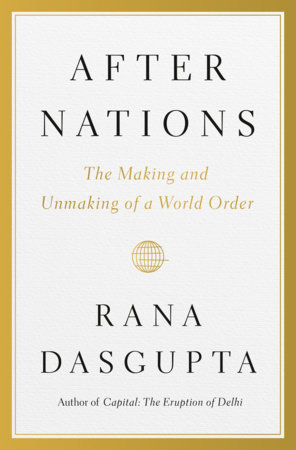
After Nations

The Making and Unmaking of a World Order

Look inside
Listen to a clip from the audiobook
audio pause button
0:00
0:00
“A brilliant and visionary book.” —Anne-Marie Slaughter, CEO, New America

What has happened to the nation-state? From a prize-winning writer, a sweeping history of this most unquestioned of modern structures and a bold imagining of its future


Until recently, the system of nation-states appeared settled and eternal. Not anymore. As American hegemony unwinds and Western countries slide into anxiety and debt, there is a resurgence of tyranny, imperialism and war. It is no longer clear that states can deliver minimal services, let alone defeat inequality and climate change. Even in rich countries, many feel they are being progressively neglected; in some parts of the world, populations are entirely abandoned by nation-states and must depend on improvised systems of their own.

Rana Dasgupta traces the formation and rise of the nation-state system in order to explain its multiple failures today. He takes us from the fall of ancient empires and the expansion of European concepts of money and law right up to the emergence of twenty-first-century tech firms—the first significant new geopolitical actors to emerge since the inception of nation-states—and the epochal restoration of Chinese power. He posits that the time has come to develop a new conception of citizenship, law, and economy—one that corresponds to our globalized and ecologically fragile condition.

Richly detailed, urgent, and told with remarkable clarity, After Nations is an essential text for anyone looking to understand why we seem to be losing our political hold on the world, and how we might try to restore it.
A Foreign Policy Most Anticipated Book of the Year

“Beautifully written, based on a wealth of reading and full of sharp observations . . . Dasgupta’s book is a timely one. He is right to insist that the ‘nation-state is not natural or immutable.’ He is also right to urge that we should be responding to these challenges with fresh forms of political creativity.” Financial Times

“What makes After Nations compelling is its range. Theology, colonial property law, climate change, [and] artificial intelligence are not treated as separate debates, but as interconnected strands of one political story. The argument unfolds with intellectual confidence. . . . It asks readers to think rather than react.” —Aaron Bastani, Novara Media

“After Nations is a brilliant and visionary book. The sweep of Dasgupta's analysis is breathtaking, but so is its bite. He does not traffic in utopias; rather, he sees the failings of our present systems clearly enough to imagine and sketch a theological, financial, legal, and ecological revolution. A must-read for anyone who wants to choose hope over despair.” —Anne-Marie Slaughter, CEO, New America

“Simply astonishing—After Nations offers an original perspective on the recent history of world affairs, and in the process opens new vistas onto the future of global politics. Dasgupta is consistently insightful, thought-provoking, and on point. Above all, this book is a call to rediscover our species’ most basic and important form of freedom: to create new social worlds and alternative political realities.” —David Wengrow, co-author of The Dawn of Everything: A New History of Humanity

“The definitive story of the nation-state could only have been told at its end. God, money, law and nature were harnessed to forge the state—but now each force is undermining it. Fluidity is the norm of history, whether under empires of the past or—as Rana Dasgupta imagines in this sweeping narrative—through a new constitution for civilization co-created by all of us: citizens of the new Enlightenment.” —Parag Khanna, author of Connectography

“A splendid book.” —Branko Milanovic, author of The Great Global Transformation

“With After Nations, Rana Dasgupta has given us the new political breviary of our century. It is the most incisive, urgent, and necessary reflection on political philosophy I have read in decades — the first in a very long time that does not leave me with a sense of despair, but instead fills me with profound hope. A new classic, the twenty-first century’s counterpart to Hobbes’s Leviathan.” —Emanuele Coccia, author of The Life of Plants and Philosophy of the Home

“Rana Dasgupta's After Nations is a tour de force, an astonishingly comprehensive and exceptionally eloquent, at times wry, account of how humanity has arrived at this moment of global crisis, and how we the people may yet create parallel systems that will deliver what the nation-state no longer can, and never fully did.” —Mira Kamdar, author of India in the Twenty-First Century

“After Nations is an innovative and erudite historical reflection on our contemporary crisis. Dasgupta provides a riveting global account of how the nation-state established itself. But, Dasgupta argues, this success of the nation-state was both contingent and fragile. It is increasingly ‘not fit for purpose,’ undermined by the very forces it unleashed. His book boldly sketches out a vision for what might come After Nations.” —Pratap Bhanu Mehta, author of The Burden of Democracy

“A provocative thought experiment in what might succeed the nation-state . . . [After Nations is] a novel, sobering approach to geopolitics that invites rethinking how the world is ruled.” Kirkus Reviews
© Nina Subin
Rana Dasgupta is the author of two novels and a non-fiction portrait of twenty-first century Delhi. Dasgupta was a visiting fellow in the humanities at Princeton University and has taught as a visiting lecturer at Brown University. His essays have been published in The Guardian, New Statesman, and BBC.com, and his writing has won the Windham Campbell Prize, the Commonwealth Prize, and the Ryszard Kapuściński Award. He lives in Delhi. View titles by Rana Dasgupta

About

“A brilliant and visionary book.” —Anne-Marie Slaughter, CEO, New America

What has happened to the nation-state? From a prize-winning writer, a sweeping history of this most unquestioned of modern structures and a bold imagining of its future


Until recently, the system of nation-states appeared settled and eternal. Not anymore. As American hegemony unwinds and Western countries slide into anxiety and debt, there is a resurgence of tyranny, imperialism and war. It is no longer clear that states can deliver minimal services, let alone defeat inequality and climate change. Even in rich countries, many feel they are being progressively neglected; in some parts of the world, populations are entirely abandoned by nation-states and must depend on improvised systems of their own.

Rana Dasgupta traces the formation and rise of the nation-state system in order to explain its multiple failures today. He takes us from the fall of ancient empires and the expansion of European concepts of money and law right up to the emergence of twenty-first-century tech firms—the first significant new geopolitical actors to emerge since the inception of nation-states—and the epochal restoration of Chinese power. He posits that the time has come to develop a new conception of citizenship, law, and economy—one that corresponds to our globalized and ecologically fragile condition.

Richly detailed, urgent, and told with remarkable clarity, After Nations is an essential text for anyone looking to understand why we seem to be losing our political hold on the world, and how we might try to restore it.

Reviews

A Foreign Policy Most Anticipated Book of the Year

“Beautifully written, based on a wealth of reading and full of sharp observations . . . Dasgupta’s book is a timely one. He is right to insist that the ‘nation-state is not natural or immutable.’ He is also right to urge that we should be responding to these challenges with fresh forms of political creativity.” Financial Times

“What makes After Nations compelling is its range. Theology, colonial property law, climate change, [and] artificial intelligence are not treated as separate debates, but as interconnected strands of one political story. The argument unfolds with intellectual confidence. . . . It asks readers to think rather than react.” —Aaron Bastani, Novara Media

“After Nations is a brilliant and visionary book. The sweep of Dasgupta's analysis is breathtaking, but so is its bite. He does not traffic in utopias; rather, he sees the failings of our present systems clearly enough to imagine and sketch a theological, financial, legal, and ecological revolution. A must-read for anyone who wants to choose hope over despair.” —Anne-Marie Slaughter, CEO, New America

“Simply astonishing—After Nations offers an original perspective on the recent history of world affairs, and in the process opens new vistas onto the future of global politics. Dasgupta is consistently insightful, thought-provoking, and on point. Above all, this book is a call to rediscover our species’ most basic and important form of freedom: to create new social worlds and alternative political realities.” —David Wengrow, co-author of The Dawn of Everything: A New History of Humanity

“The definitive story of the nation-state could only have been told at its end. God, money, law and nature were harnessed to forge the state—but now each force is undermining it. Fluidity is the norm of history, whether under empires of the past or—as Rana Dasgupta imagines in this sweeping narrative—through a new constitution for civilization co-created by all of us: citizens of the new Enlightenment.” —Parag Khanna, author of Connectography

“A splendid book.” —Branko Milanovic, author of The Great Global Transformation

“With After Nations, Rana Dasgupta has given us the new political breviary of our century. It is the most incisive, urgent, and necessary reflection on political philosophy I have read in decades — the first in a very long time that does not leave me with a sense of despair, but instead fills me with profound hope. A new classic, the twenty-first century’s counterpart to Hobbes’s Leviathan.” —Emanuele Coccia, author of The Life of Plants and Philosophy of the Home

“Rana Dasgupta's After Nations is a tour de force, an astonishingly comprehensive and exceptionally eloquent, at times wry, account of how humanity has arrived at this moment of global crisis, and how we the people may yet create parallel systems that will deliver what the nation-state no longer can, and never fully did.” —Mira Kamdar, author of India in the Twenty-First Century

“After Nations is an innovative and erudite historical reflection on our contemporary crisis. Dasgupta provides a riveting global account of how the nation-state established itself. But, Dasgupta argues, this success of the nation-state was both contingent and fragile. It is increasingly ‘not fit for purpose,’ undermined by the very forces it unleashed. His book boldly sketches out a vision for what might come After Nations.” —Pratap Bhanu Mehta, author of The Burden of Democracy

“A provocative thought experiment in what might succeed the nation-state . . . [After Nations is] a novel, sobering approach to geopolitics that invites rethinking how the world is ruled.” Kirkus Reviews

Author

© Nina Subin
Rana Dasgupta is the author of two novels and a non-fiction portrait of twenty-first century Delhi. Dasgupta was a visiting fellow in the humanities at Princeton University and has taught as a visiting lecturer at Brown University. His essays have been published in The Guardian, New Statesman, and BBC.com, and his writing has won the Windham Campbell Prize, the Commonwealth Prize, and the Ryszard Kapuściński Award. He lives in Delhi. View titles by Rana Dasgupta
  • More Websites from
    Penguin Random House
  • Common Reads
  • Library Marketing